Opera Adds an Automated AI Agent To Its Browser

king*jojo shares a report from The Register: The Opera web browser now boasts “agentic AI,” meaning users can ask an onboard AI model to perform tasks that require a series of in-browser actions. The AI agent, referred to as the Browser Operator, can, for example, find 12 pairs of men’s size 10 Nike socks that you can buy. This is demonstrated in an Opera-made video of the process, running intermittently at 6x time, which shows the user has to type out the request for the undergarments rather than click around some webpages.

The AI, in the given example, works its way through eight steps in its browser chat sidebar, clicking and navigating on your behalf in the web display pane, to arrive at a Walmart checkout page with two six-packs of socks added to the user’s shopping cart, ready for payment. […] Other tasks such as finding specific concert tickets and booking flight tickets from Oslo to Newcastle are also depicted, accelerated at times from 4x to 10x, with the user left to authorize the actual purchase. Browser Operator runs more slowly than shown in the video, though that’s actually helpful for a semi-capable assistant. A more casual pace allows the user to intervene at any point and take over.

Read more of this story at Slashdot.

Eerily realistic AI voice demo sparks amazement and discomfort online

In late 2013, the Spike Jonze film Her imagined a future where people would form emotional connections with AI voice assistants. Nearly 12 years later, that fictional premise has veered closer to reality with the release of a new conversational voice model from AI startup Sesame that has left many users both fascinated and unnerved.

“I tried the demo, and it was genuinely startling how human it felt,” wrote one Hacker News user who tested the system. “I’m almost a bit worried I will start feeling emotionally attached to a voice assistant with this level of human-like sound.”

In late February, Sesame released a demo for the company’s new Conversational Speech Model (CSM) that appears to cross over what many consider the “uncanny valley” of AI-generated speech, with some testers reporting emotional connections to the male or female voice assistant (“Miles” and “Maya”).

Read full article

Comments

“Wooly mice” a test run for mammoth gene editing

On Tuesday, the team behind the plan to bring mammoth-like animals back to the tundra announced the creation of what it is calling wooly mice, which have long fur reminiscent of the woolly mammoth. The long fur was created through the simultaneous editing of as many as seven genes, all with a known connection to hair growth, color, and/or texture.

But don’t think that this is a sort of mouse-mammoth hybrid. Most of the genetic changes were first identified in mice, not mammoths. So, the focus is on the fact that the team could do simultaneous editing of multiple genes—something that they’ll need to be able to do to get a considerable number of mammoth-like changes into the elephant genome.

Of mice and mammoths

The team at Colossal Biosciences has started a number of de-extinction projects, including the dodo and thylacine, but its flagship project is the mammoth. In all of these cases, the plan is to take stem cells from a closely related species that has not gone extinct, and edit a series of changes based on the corresponding genomes of the deceased species. In the case of the mammoth, that means the elephant.

Read full article

Comments

Some iPhone 16s Use a Special Glue That Makes Them Easier to Repair

All batteries age, and the lithium ion battery in your iPhone is no exception. Overtime, the battery degrades, meaning it can no longer hold as much of a charge as it could when it was new. After a few years of using the phone, you may notice your phone needs more frequent juice-ups throughout the day.

When the inevitable happens to you, you don’t need to buy a new iPhone. Instead, you can simply replace the battery at a relatively inexpensive cost. Depending on your iPhone, you may not only notice an increase in time away from the charger, but also a boost in performance, since iOS slows down the processing power of your iPhone when its battery is too degraded.

Though replacing your battery is possible, it could certainly be easier. Apple secures the battery to the inside of most iPhones with strong adhesive. To remove it, you need to pull on a few tabs that are easy to break, making the removal process more precarious than it should be. The battery itself is also fragile, and you’ll need to remove and reattach some very delicate cables. Despite all of this, it’s possible to replace your battery yourself, but it’s simpler to opt to take it to a repair shop. (Apple would prefer you use one of its own.)

All that said, the process is notably easier with three of the iPhone 16 devices—including the newly released iPhone 16e.

Some iPhone 16s use a different adhesive

The iPhone 16, 16 Plus, and 16e all ship with a new type of battery adhesive that makes repairs much easier. At first glance, it doesn’t seem like much has changed: When you pry open the back case of your iPhone, you’ll still find a tab on its battery. However, that tab isn’t meant to be pulled yet. Instead, you need to apply an electric current through the adhesive holding the battery to the device for 60 seconds. The current is enough to shake the battery loose, at which point, you use the tab to gently pull the battery away from the iPhone. You don’t need to worry about damaging the battery, since the battery will be so loose, gravity could remove it.

As iFixit explains, the tech works by oxidizing the adhesive with the electric current. That breaks the bonds that actually makes the glue adhesive, so it no longer sticks to the surface it was connected to. It’s quite technical, and I am no expert, but it’s really cool tech—and something that makes replacing the battery in your iPhone 16, 16 Plus, or 16e safer and easier.

Apple probably didn’t make these changes out of its concern for customers. Instead, it’s likely in response to an EU law that requires smartphones to have “replaceable batteries” by 2027. Europe has had quite an influence over Apple’s decisions in recent years, requiring the company to open up many of its closed platforms, including allowing independent app stores and browsers on iOS.

That said, if you own an iPhone 16 Pro or 16 Pro Max, you won’t find your batteries any easier to repair. These devices still come with Apple’s traditional battery adhesive, so their batteries are just as difficult to replace as ever. It’s not clear why Apple opted to skip this new adhesive on the Pro phones, but it is possible that it’s simply trialing the fresh tech on some of their devices, not all—especially while there’s still time before that EU law takes effect. Perhaps the entire iPhone 17 line, Pro iPhones and all, will sport easy-to-remove batteries. For now, it seems it’s just the less expensive models that benefit.

The iPhone 16e has some added repairability

In addition to this new adhesive, Apple added some additional repairability perks to the 16e. The biggest is that Apple now has a guide for repairing the USB-C charging port on this particular iPhone, the first time the company has issued a manual for such a repair.

However, as iFixit reports, this repair is not easy. It involves removing a number of iPhone components in the way of the port, including the back glass, front camera, top speaker, battery, among others; lift up the logic board, then access the USB-C port to repair it. This was apparently the procedure before, but now Apple has a step-by-step guide confirming the difficulty of the repair.

Finally, you don’t need to be as careful when opening the back cover on the 16e: One of the metal clips that holds the back cover in place now guards an important flex cable. With other iPhones, you can easily slice this cable while sliding pick tools into the back case when opening it, but the clip here ensures you won’t damage the cable in the process.

Brother Accused of Locking Down Third-Party Printer Ink Cartridges Via Forced Firmware Updates

Fabled RepairTuber and right-to-repair crusader Louis Rossmann accuses Brother of implementing forced firmware updates that block third-party ink cartridges and remove older firmware versions from support portals. These updates also prevent color calibration with aftermarket ink, rendering cheaper cartridges unusable. Tom’s Hardware reports: As mentioned in the intro, Rossmann has seen two big issues emerge for Brother printer users with recent firmware updates. Firstly, models that used to work with aftermarket ink, might refuse to work with the same cartridges in place post-update. Brother doesn’t always warn about such updates, so Rossmann says that it is important to keep your printer offline, if possible. Moreover, he reckons it is best to keep your printers offline, and “I highly suggest that you turn off your updates,” in light of these anti-consumer updates. Another anti-consumer problem Rossmann highlights affects color devices. He cites reports from a Brother MFP user who noticed color calibration didn’t work with aftermarket inks post-update. They used to work, and if the update doesn’t allow the printer to calibrate with this aftermarket ink the cheaper carts become basically unusable.

Making matters worse, and an aspect of this tale which seems particularly dastardly, Rossmann says that older printer firmware is usually removed from websites. This means users can’t roll back when they discover the unwanted new ‘features’ post-update. While he admittedly can’t do much about these printer industry machinations, Rossmann says it feels important to document these changes which show that property rights for individuals are disappearing. Additional info about Brother’s issues are available on Rossmann’s wiki.

Read more of this story at Slashdot.

Cod liver oil embraced amid Texas measles outbreak; doctors fight misinfo

US Health Secretary and long-standing anti-vaccine advocate Robert F. Kennedy Jr. is facing criticism for his equivocal response to the raging measles outbreak in West Texas, which as of Tuesday has grown to 159 cases, with 22 hospitalizations and one child death.

While public health officials would like to see a resounding endorsement of the Measles, Mumps, and Rubella (MMR) vaccine as the best way to protect children and vulnerable community members from further spread of the extremely infectious virus, Kennedy instead penned an Op-Ed for Fox News sprinkled with anti-vaccine talking points. Before noting that vaccines “protect individual children” and “contribute to community immunity,” he stressed parental choice. The decision to vaccinate is “a personal one,” he wrote, and merely advised parents to “consult with their healthcare providers to understand their options to get the MMR vaccine.”

Further, Kennedy seemed more eager to embrace nutrition and supplements as a way to combat the potentially deadly infection. He declared that the “best defense” against infectious diseases, like the measles, is “good nutrition”—not lifesaving, highly effective vaccines.

Read full article

Comments

Amazon Prime Members Can Get Two Free E-Books in March

We may earn a commission from links on this page. Deal pricing and availability subject to change after time of publication.

You can get thousands of free e-books over the course of 2025 if you know where—and when—to look. All year long, Amazon is offering free Kindle e-books to readers, with new opportunities popping up every month. In March, Prime members can get two free Kindle e-books from Amazon’s First Reads program.

What is Amazon’s First Reads?

Amazon First Reads is a program aimed at Prime members that offers early access to new e-books across many genres, as curated by First Reads editors (one of your many Prime Member benefits). Prime members can choose to download one free e-book every month from a rotating list—though some months that number is bumped up to two—and non-members get them for a discounted price. These e-books can be read on any compatible Kindle device or via the free Kindle app.

How to get your free Amazon Kindle e-books in March

Go to the First Reads landing page to see the full list of e-books available this month. Once you find a book that seems interesting, click the “Shop Now” button from the First Reads landing page. Make sure you’re not being redirected to the Kindle or Amazon mobile application, because you won’t see the free book option there; instead, use your internet browser on your phone or computer.

Make sure you’re not clicking the ”Pre-order for…” button, as that will direct you to pay; instead, click the “Read for Free” or the “Buy Now with 1-Click” button under the “First Reads” banner on the book’s Amazon page (don’t worry, you won’t be charged). This will send the e-book directly to the Kindle linked to your Amazon account.

You can see what it should look like from the screenshot below.

Screenshot of Amazon page on phone from the web browser showing the "read for free" button.

Credit: Daniel Oropeza

You’ll know you did it right when you see a “Thanks, [your name]!” order summary indicating the e-book is being auto-delivered to the Kindle Cloud Reader.

Free Amazon Kindle e-books available in March 2025

This month, you can choose one from eight new Kindle e-books plus a free short story, The Sublet. Amazon notes the genre for each of the books above the title, offering a quick way to narrow down your options. (If you hover over the “See Editor Notes” under the “Shop Now” button, you’ll be able to read a short description from the First Reads editor who picked the book.)

Here are your options for March 2025. You can choose one of these e-books, plus the short story The Sublet:

Early Versions of Meta’s Orion AR Glasses Envisioned a Neck-worn Compute Unit

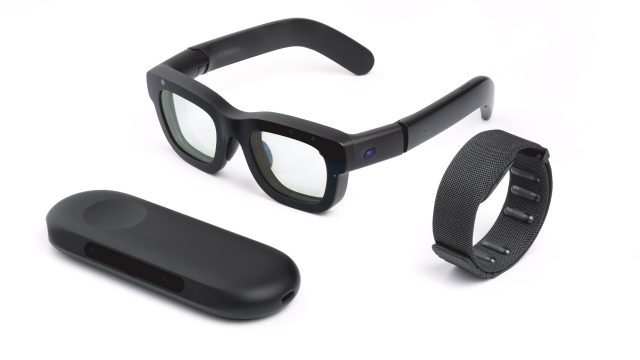
Meta revealed its Orion prototype last year to show the progress it has made toward compact AR glasses. Today the company talked more about the prototyping process, especially regarding the ‘compute puck’ that offloads much of the heavy processing into a device that goes in the user’s pocket.

One of the major reasons that today’s XR headsets are so big is because they need room for a lot of processing power, battery volume, and heat dissipation. But with Meta and the rest of the industry aiming to eventually make all-day wearable AR glasses, size becomes a serious challenge.

A ‘compute puck’ is a companion device for AR glasses that moves some of the processing and battery off of the user’s head and into a pocketable device.

Meta used the compute puck approach for its prototype Orion AR glasses. While companies like Magic Leap have used similar approaches in the past, Orion’s approach is somewhat novel because the compute puck is completely wireless. But it didn’t start out that way.

Today Meta revealed more about the prototyping process for Orion. In the post, the company says the compute puck was originally envisioned as a tethered, neck-worn device, codenamed Omega.

But this concept apparently didn’t last very long after the team decided it would cut the tether and make a pocketable puck that was completely wireless.

After becoming untethered, the Orion team realized that it opened new possibilities for what could be done with the device.

One clever idea involved using the puck as an anchor for content, such as projecting a video call above the puck. Not only would this serve as a tangible place for users to move their content from one place to another, it would also mean encouraging them to pull the puck out of their pocket, resulting in better performance thanks to improved cooling.

An illustration of using the Orion puck for video calling| Image courtesy Meta

“It’s unlike anything you’ve ever seen—the device has the potential to create really fun and unique interactions,” said Emron Henry, Industrial Designer at Meta. “The user experience feels a bit like unleashing a genie from a bottle, where holograms seamlessly emerge from and dissolve back into the device.”

The team also considered using the puck as a controller, which could be tracked using inside-out tracking thanks to on-board cameras.

An illustration of using the Orion puck as a controller | Image courtesy Meta

In the end, the version of Orion that has been seen publicly leans away from using the controller as a significant part of the input modality. Instead the glasses use a combination of eye-tracking and neural inputs thanks to the company’s prototype EMG wristband.

But there’s no telling what the final version of Orion will look like. For the team, this was a valuable time for design exploration.

“We’re defining a category that doesn’t quite exist yet,” notes Henry. “As you’d expect with R&D, there were starts and stops along the way. How will users expect to interact with holograms? Would they prefer to use an AR remote or is hand tracking, eye gaze, and EMG sufficient for input? What feels intuitive, low friction, familiar, and useful?

Although Meta says that Orion will eventually lead to its first pair of consumer AR glasses, for now the company has only a rough idea of when its first AR glasses will launch and what it will cost.

The post Early Versions of Meta’s Orion AR Glasses Envisioned a Neck-worn Compute Unit appeared first on Road to VR.

Automattic CEO Matt Mullenweg Talks Succession – ‘I Don’t Want To Pass It To a Committee’

WordPress co-founder Matt Mullenweg said on a podcast he aims to eventually hand over leadership to a single successor rather than “a committee,” amid growing calls for him to step down following his legal battle with hosting company WP Engine. On a recent episode of Lenny’s Podcast, Mullenweg discussed his succession strategy for Automattic, the parent company of WordPress.com, WooCommerce and Tumblr. “I want to pass it to someone else who could have a role similar to mine, and really sort of try to be a steward,” Mullenweg said, comparing the position to “being like a mayor than a CEO” as the leader would remain accountable to users and contributors.

Read more of this story at Slashdot.

George Orwell’s 1984 as a ’90s PC game has to be seen to be believed

Most readers come away from George Orwell’s classic dystopian novel 1984 with the same singular desire: to inhabit the world of the book by playing a late ’90s first-person puzzle-adventure PC game that includes a “zero-g training sphere” for some reason. In 1998, publisher MediaX set out to satisfy that widespread literary desire with Big Brother, an officially licensed “sequel” game set in the 1984 universe.

After appearing as a demo at E3 1998 and receiving some scattered press coverage, the Big Brother project fell apart before the game could see a full release. Now, though, you can experience a small taste of this ill-fated literary sequel thanks to a newly unearthed demo that was recovered and posted to the Internet Archive over the weekend.

War is Peace

The Lost Media Wiki has a bit more info on the history of Big Brother, which was announced in May 1998 as the first game ever from multimedia CD-ROM maker MediaX. In that announcement, the company said the game would move focus away from 1984‘s Winston Smith and to new character Eric Blair, who’s on a search for his missing fiancée Emma (sure, why not) in “a completely changed world dominated by the Thought Police.”

Read full article

Comments

Two Point Museum Devs On Balancing All The Absurdity And Struggling To Spell Museum Correctly

Two Point Museum—available now on PC and consoles—is the third game in the Two Point franchise. The wacky sim series started off with Two Point Hospital in 2018 and then leaped to colleges and universities in 2022’s Two Point Campus. Now, players are able to build their own wild and weird museums in Two Point Museum.

Read more…

Unitree’s Humanoid G1 Robot Does Kung-Fu

Because the end can’t come soon enough, this is a video of Unitree’s G1 humanoid robot performing some kung-fu on the sidewalk (previously: the G1 doing some jumping around like House Of Pain). You can buy your own G1 for around $16,000, although no word from Unitree if they’ll offer quantity discounts for those interested in raising a robotic army. A background check should probably be required for multiple purchases though. Or if you buy a single and leave ‘make it a pleasure model’ in the special instructions.

Tiny Minisforum Mobo Packs A Ryzen 9 7945HX3D For A 3D V-Cache Gaming Boost

Tiny Minisforum Mobo Packs A Ryzen 9 7945HX3D For A 3D V-Cache Gaming Boost
It’s pretty ironic, if you think about it. AMD makes desktop CPUs, then turns them into BGA chips for the high-end mobile market. Laptop vendors don’t buy as many of those CPUs as AMD would like, and they start to filter into the market via alternative channels—like these Minisforum “Mobile on Desktop” (MoDT) products. So it goes that we have

Judges Are Fed Up With Lawyers Using AI That Hallucinate Court Cases

An anonymous reader quotes a report from 404 Media: After a group of attorneys were caught using AI to cite cases that didn’t actually exist in court documents last month, another lawyer was told to pay $15,000 for his own AI hallucinations that showed up in several briefs. Attorney Rafael Ramirez, who represented a company called HoosierVac in an ongoing case where the Mid Central Operating Engineers Health and Welfare Fund claims the company is failing to allow the union a full audit of its books and records, filed a brief in October 2024 that cited a case the judge wasn’t able to locate. Ramirez “acknowledge[d] that the referenced citation was in error,” withdrew the citation, and “apologized to the court and opposing counsel for the confusion,” according to Judge Mark Dinsmore, U.S. Magistrate Judge for the Southern District of Indiana. But that wasn’t the end of it. An “exhaustive review” of Ramirez’s other filings in the case showed that he’d included made-up cases in two other briefs, too. […]

In January, as part of a separate case against a hoverboard manufacturer and Walmart seeking damages for an allegedly faulty lithium battery, attorneys filed court documents that cited a series of cases that don’t exist. In February, U.S. District Judge Kelly demanded they explain why they shouldn’t be sanctioned for referencing eight non-existent cases. The attorneys contritely admitted to using AI to generate the cases without catching the errors, and called it a “cautionary tale” for the rest of the legal world. Last week, Judge Rankin issued sanctions on those attorneys, according to new records, including revoking one of the attorneys’ pro hac vice admission (a legal term meaning a lawyer can temporarily practice in a jurisdiction where they’re not licensed) and removed him from the case, and the three other attorneys on the case were fined between $1,000 and $3,000 each. The judge in the Ramirez case said that he “does not aim to suggest that AI is inherently bad or that its use by lawyers should be forbidden.” In fact, he noted that he’s a vocal advocate for the use of technology in the legal profession.

“Nevertheless, much like a chain saw or other useful [but] potentially dangerous tools, one must understand the tools they are using and use those tools with caution,” he wrote. “It should go without saying that any use of artificial intelligence must be consistent with counsel’s ethical and professional obligations. In other words, the use of artificial intelligence must be accompanied by the application of actual intelligence in its execution.”

Read more of this story at Slashdot.