Here’s All the Tech I Use to Grow a Better Garden

We may earn a commission from links on this page.

Gardening season is approaching faster than it might seem, and like a lot of modern gardeners, I get an assist from technology every year. I use tech to help raise seeds into seedlings, plant them outside, produce a harvest, and still have a whole life outside of the garden. From weather stations and soil monitors to apps and calendars, here’s all the tech I’m dusting off right now to start getting ready.

A weather station

It begins with the basics. I have a Tempest weather station in my front yard, and a few smart temperature gauges in the backyard. Although you can easily pull weather information from a local weather station (you’d be surprised how many neighbors have them; locate them at Weather Underground), I still find it incredibly helpful to know the real microclimate of my yard. I know when rain, hail, snow is going to hit, and the actual temperature at any time, whether I’m at home or away. For outdoor temperature monitoring, I’ve yet to find sensors that are as hardy as the Aqara or Switchbot. 

Soil monitors

The temperature outside is important for planting, since you shouldn’t place plants outside until the overnight temps are stable above fifty degrees, but soil temperature is just as important. There’s never been great soil sensors before now, but this year I’m trying the ThirdReality Smart Soil Sensor in a few locations.  I’m also excited to try the new Moen soil sensors.

Not only are the sensors going to tell me when my soil is warm enough for planting, they can give important humidity data to my smart watering system—I’ve used a Hydrawise for three seasons and I’m incredibly happy with it. Hydrawise looks and acts like a normal drip or sprinkler control, but it has a wifi module that will connect to your phone and a local weather station and it uses the data to decide whether to water that day, and how much. It’s great to be able to control my drip system from my phone, and get detailed reports on how much water was used. 

Garden apps

That’s all helpful to know when to plant, but I start seeds inside, and I use a bucket of different tech tools to help. First, there’s the planning stage. You don’t start all your seeds at once, you seed so the seedlings they produce are ready at about the time they can go out into the ground outside. Keeping track of what to plant when can be overwhelming, so I use Seedtime to create a planting calendar—its app and desktop interface are incredibly helpful.. 
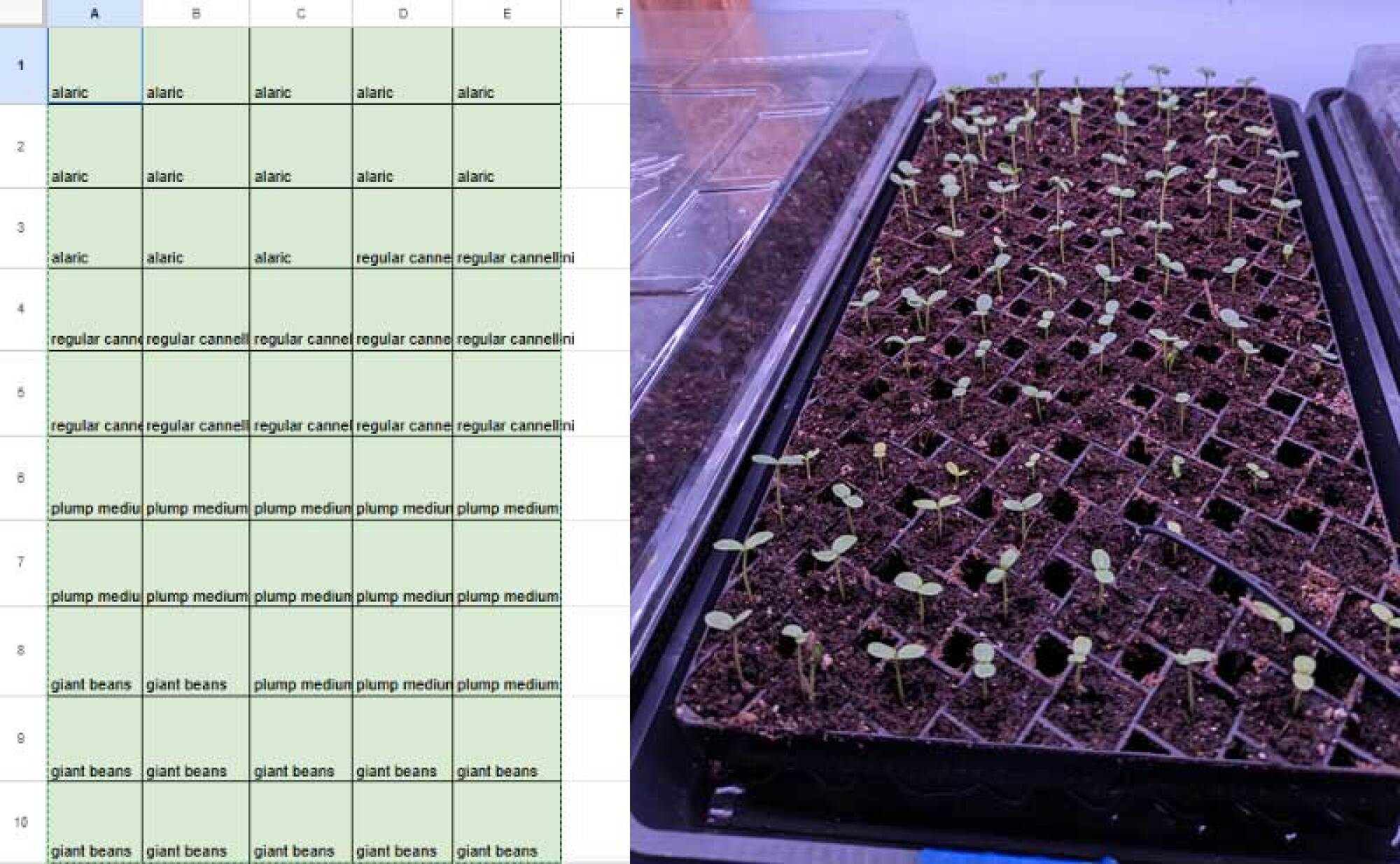
A seedsheet in excel, and the trays they represent
Credit: Amanda Blum

The seed trays themselves hold 50, 72, or 128 seedlings, and you don’t put a label marker into each cell, which would be time consuming. I use a method taught to me by Meg Cowden of Seed to Fork, and use Google Spreadsheets to keep track of what is in each tray. The trays are numbered and marked with a front and back, and the spreadsheet details what is in each cell of the tray. When I go to plant, I bring my phone with me, or sometimes I print out a sheet. 

Automations and controllers

I’ve discussed at some length how I plant seeds and what I use, but I rely on technology to ensure I’m keeping my seedlings on track. For instance, seedling heat mats ensure the soil in the trays is warm enough for seeds to germinate, but you need to control that heat because if the temperature gets too high, seeds get baked. I use an Inkbird controller to do so. It includes a probe to put into the soil, and then from your phone (or the controller), you specify a temperature range. The controller will turn the heat mat on and off to ensure it maintains the right temperature. 

I’ve also learned (the hard way) that too much humidity can lead to viruses and other problems in my seed-starting room, so with an Aqara temperature and humidity sensor, I use a Google Home automation to kick on the overhead fan when humidity gets too high. The fan’s air benefits the plants, too, which form stronger stems with a breeze. 

Calendars, voice assistants and reminders

Outside, the Monty compost monitor reminds me to turn over my compost occasionally when the worms aren’t doing their job. It sends notifications to update me on the status of my compost, which is quite helpful. Truly, reminders are the key to much of my garden success. I have an entire Google calendar that is solely for garden reminders, such as when to plant specific seeds outside, check on plants, or put trellises up. Those reminders stream to my Google Nest speakers and my voice assistant will speak up to let me know if I forgot something. Most importantly, the calendar can be repurposed year to year.

Security cameras

I’ve been surprised how much I engage my smart cameras around the yard; yes, they catch critters who can cause damage (I’m particularly aware of neighborhood cats setting up in my garden this year, due to their ability to transmit bird flu), but it’s even helpful during a storm to check on how some fragile plants are doing. I’m excited to test the new Petal cameras coming from Bird Buddy, which use solar power and are installed at plant level. They use AI to report how your plants are faring. I hope to use these to capture weekly updates of my yard from the camera’s positions. I use these photos in wintertime, to decide what to plant each year. 

Sigma BF Flaunts Radically Simple 24.6MP Full-Frame Mirrorless Camera Design

Sigma BF Flaunts Radically Simple 24.6MP Full-Frame Mirrorless Camera Design
Sigma has just unveiled a brand new mirrorless camera called the “radically simple” $2,000 BF Camera. Sporting a 24.6-megapixel full-frame CMOS sensor, the company claims it’s the first such camera design to employ an ultra-minimalist aluminum unibody. Sigma designers basically cleaned up the busy aesthetics of dSLRs, what with dials, switches,

Pre-Product AI ‘Company’ Now Valued at $30 Billion

Financial Times: Venture capitalists have always been happy to back pre-profit companies. Back in the halcyon ZIRP era, they became happy to finance pre-revenue companies. But at least even Juicero, Wag and the Fyre Festival had an actual product. From Bloomberg over the weekend: “OpenAI co-founder Ilya Sutskever is raising more than $1 billion for his start-up at a valuation of over $30 billion, according to a person familiar with the matter — vaulting the nascent venture into the ranks of the world’s most valuable private technology companies.

Greenoaks Capital Partners, a San Francisco-based venture capital firm, is leading the deal for the start-up, Safe Superintelligence, and plans to invest $500 million, said the person, who asked not to be identified discussing private information. Greenoaks is also an investor in AI companies Scale AI and Databricks.

The round marks a significant valuation jump from the $5 billion that Sutskever’s company was worth before, according to Reuters, which earlier reported some details of the new funding. The financing talks are ongoing and the details could still change.”

OK, so a jump from a $5bn valuation less than half a year ago to $30bn must mean that Safe Superintelligence has an absolutely killer product right? SSI focuses on developing safe AI systems. It isn’t generating revenue yet and doesn’t intend to sell AI products in the near future. “This company is special in that its first product will be the safe superintelligence, and it will not do anything else up until then,” Sutskever told Bloomberg in June. “It will be fully insulated from the outside pressures of having to deal with a large and complicated product and having to be stuck in a competitive rat race.”

Read more of this story at Slashdot.

Creating A Freestanding Roll Of Toilet Paper In the Freezing Cold

This is a video of Justin Flom (previously: creating a carry-your-own-head Halloween costume for his daughter) using some water and freezing cold temperatures to make a roll of toilet paper stand on its own, supported only by its unrolled sheets. That’s something. Something he and his wife think is the greatest triumph in the world based on their reactions. Don’t get me wrong, it’s neat, I just wouldn’t want to wipe with that. The magazines in the bathroom either, but I do what I have to.

Why Apple Turned Off Advanced Data Protection in the UK (and What It Means for Everyone)

If you want your iCloud data to be as well-protected as possible, you need to turn on Advanced Data Protection (ADP)— but that’s no longer going to be an option in the UK. Apple is pulling ADP from the country, reportedly following a request from the UK government for a backdoor into encrypted iCloud files, and the fallout is likely to have global consequences.

What is ADP?

ADP applies end-to-end encryption (the gold standard for data security) to just about everything you’ve got backed up in iCloud, making it virtually impossible for anyone else to access it. If ADP isn’t enabled, only certain types of data get this protection, such as passwords and payment info, Messages in iCloud, and your health data. It’s important to note that this data remains fully protected from everyone—even Apple and UK spies.

Without ADP, the rest of your iCloud backups (think iCloud Drive, Photos, and Notes, for example) are still protected, but with a lower level of encryption. That protection does a very good job at keeping out bad actors and preventing your data from being hacked, but it can still be accessed if required by Apple employees and—crucially for this current story—government and law enforcement agencies.

While Apple and the governments and security services of the world would tell you they have robust checks in place when it comes to who can get at encrypted data, the possibility for access is still there. With ADP (and other places where end-to-end encryption is deployed, like WhatsApp) that possibility goes away. Even if the FBI or MI5 demand files, they can’t be delivered.

Earlier this month, The Washington Post reported that UK officials had requested secret, backdoor access into Apple’s fully encrypted data files. The demand was apparently made under the auspices of the Investigatory Powers Act of 2016, which gives the country’s security services widespread access to user data in the name of investigating criminal activity: Fighting terrorism and stopping child abuse are two common reasons given for creating an encryption backdoor.

It’s a fight that’s been going on for years. Governments and law enforcement agencies want their own special keys to the locks protecting user data across the world, ostensibly to halt criminals in their tracks. Privacy campaigners and tech companies like Apple argue there’s no effective way of limiting a backdoor to just the “good guys” and not the “bad guys” (even if it was easy to distinguish between the two, which it isn’t).

Apple’s move in the UK—and the global implications

Advanced Data Protection
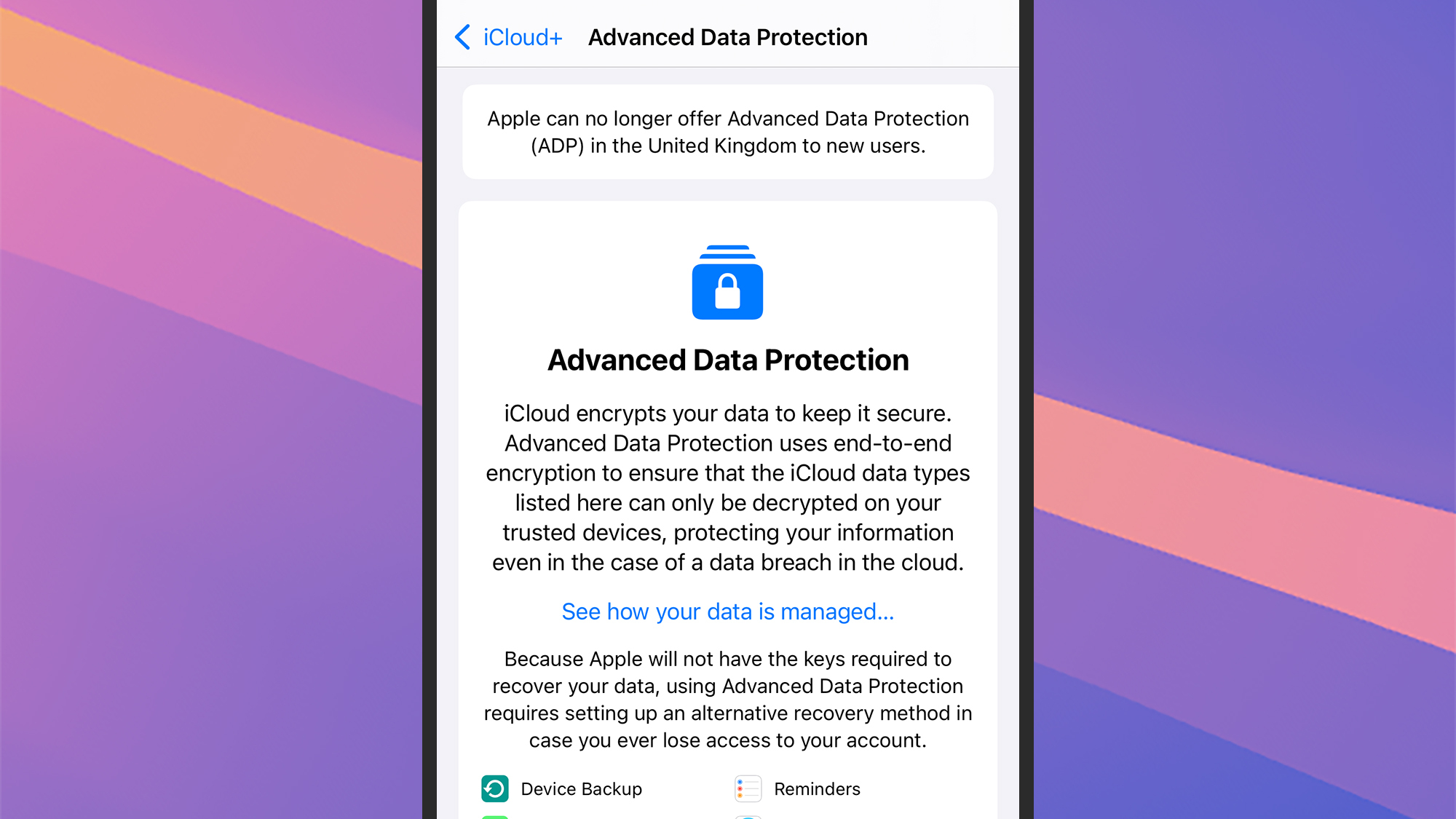
Users in the UK now see a message like this.
Credit: Lifehacker

Apple’s policy has long been that it will never offer backdoors to its encrypted data, so it would seem to have decided that its only other option is to pull ADP. Brits without ADP enabled can no longer turn it on, while those who do have the feature set up will have to eventually turn it off (though Apple hasn’t said when).

“Apple can no longer offer Advanced Data Protection (ADP) in the United Kingdom to new users and current UK users will eventually need to disable this security feature,” Apple spokesperson Julien Trosdorf told The Verge. “We are gravely disappointed that the protections provided by ADP will not be available to our customers in the UK given the continuing rise of data breaches and other threats to customer privacy.”

As you would expect given the sensitive nature of the issue, government officials in the UK haven’t said anything about what’s been reported—and you’ll see Apple makes no direct reference to it either, because to publicize a demand made under the Investigatory Powers Act is itself a criminal offense.

As for other organizations, such as Google and Meta, we’re still in the dark. Presumably the UK government has made the same request, but details haven’t leaked out—and no one involved can talk about it. Google and Meta, like Apple, have repeatedly said they’re against encryption backdoors.

It’s a mess if you’re in the UK (like me), but it affects everyone: Given the rather blurry national borders we now have in the internet age, UK agencies would most likely have been able to access end-to-end encrypted data from users across the world through this backdoor, which for now looks off the table.

I’ve got ADP switched on, but unless the issue gets sorted out, I’ll have to turn it off soon—meaning some of my iCloud data is more vulnerable to snooping again. As is often the case, it’s ordinary users who end up losing out, while the debate on encryption backdoors rumbles on.

Google To Eliminate SMS Authentication in Gmail, Implement QR Codes

Google is preparing to abandon SMS verification codes for Gmail authentication in favor of QR codes, Gmail spokesperson Ross Richendrfer told Forbes. The move aims to address significant security vulnerabilities inherent in SMS-based verification while combating fraudulent exploitation of Google’s messaging infrastructure, he said.

“Just like we want to move past passwords with the use of things like passkeys, we want to move away from sending SMS messages for authentication,” Richendrfer said. The transition will target “rampant, global SMS abuse” that undermines security and enables criminal schemes. SMS verification currently serves dual purposes at Google: confirming user identity and preventing service abuse. However, these codes are vulnerable to phishing, dependent on carrier security practices, and frequently exploited in “traffic pumping” scams where fraudsters profit from artificially triggered SMS messages.

The forthcoming implementation will display QR codes that users scan with their phone cameras instead of entering six-digit codes. This approach eliminates shareable verification codes and reduces dependency on telecom carriers. The changes will roll out “over the next few months,” the company said.

Read more of this story at Slashdot.

Asteroid 2024 YR4 is going to miss Earth, but the story doesn’t end there

It was only a few days ago that a certain fear-mongering website named, ahem, Ars Technica published an article about the prospect of a killer asteroid striking the planet Earth in the year 2032.

At the time, the odds of a small asteroid first discovered late last year—and designated 2024 YR4—hitting us were non-negligible. There was an estimated 3.2 percent chance that the large rock would impact the planet eight years from now.

In the days since then, the odds have fallen dramatically. Based on the latest estimate from NASA, there is now just a 0.0039 percent chance. Put another way, the odds of impact are 1 in 26,000.

Read full article

Comments

GeForce RTX 5080 FE Joins List Of GPUs Spotted With Missing ROPs

GeForce RTX 5080 FE Joins List Of GPUs Spotted With Missing ROPs
A user on Reddit has posted a GPU-Z screenshot that purportedly shows their GeForce RTX 5080 Founders Edition graphics card with fewer render operation pipelines (ROPs), or render output units if you prefer, than what are supposed to be there. It’s the first case we’re aware of with missing ROPs on a GeForce RTX 5080 class card, FE or otherwise.

As

Big Tech data center buildouts have led to $5.4 billion in public health costs

Big Tech’s growing use of data centers has created related public health costs valued at more than $5.4 billion over the past five years, in findings that highlight the growing impact of building artificial intelligence infrastructure.

Air pollution derived from the huge amounts of energy needed to run data centers has been linked to treating cancers, asthma, and other related issues, according to research from UC Riverside and Caltech.

The academics estimated that the cost of treating illnesses connected to this pollution was valued at $1.5 billion in 2023, up 20 percent from a year earlier. They found that the overall cost was $5.4 billion since 2019.

Read full article

Comments

The Out-of-Touch Adults’ Guide to Kid Culture: What Is ‘Amialivecore’?

Dropping things on your foot and rating how much it hurts is a growing trend on TikTok. The meme’s popularity may be indicative of something deep and troubling in youth culture. So, maybe, is injecting butterflies and turning goth. You be the judge.

What is “Amialivecore?”

On his substack “The Trend Report,” Kyle Raymond Fitzpatrick pulled together a ton of disparate cultural expressions among online youth to identify a style he calls “Amialivecore.” Fitzpatrick posits that young people are subconsciously unsure if they are actually living human beings. I think he’s onto something.

My interpretation of the meaning of amialivecore: Since they were babies, young people’s experiences are almost entirely unreal. Everything is mediated. They have “experiences” in video games. They see the world through the vertical window of TikTok videos. They only see their friends in online posts. They build personal philosophies from memes. Meanwhile, the companies and algorithms behind the social media platforms and video games have gotten really good at dehumanization. They’ve identified, commodified, and shaped their dreams, desires, thoughts, and feelings so thoroughly, it’s impossible for young people to know how to live authentically. So they play-act and create content in place of living. For evidence, go to see a band kids like, and compare how many people have their phones out to shoot video and how many are dancing.

According to Fitzpatrick, seemingly unrelated things like the TikTok trend of dropping objects on your feet and rating how much they hurt, wearing visible tape on your face in public, and spending your time consciously trying to find a personal style illustrate young people attempting to “problem solve the question of if you are alive and if your body works and if you are indeed present in the present.”

Maybe eating butterflies and suddenly becoming goth are expressions of amialivecore, too.

Are teens injecting butterflies as part of an online challenge?

No.

I can’t find any evidence of an “online challenge” involving injecting yourself with a butterfly, but that’s what some sources claim inspired a Brazilian 14-year-old to crush a butterfly, mix it with water, and inject it into his leg. Things ended horribly for Davi Nunes Moreira: After a week suffering agonizing symptoms, he died in a hospital in Planalto, Brazil.

Medical professionals aren’t certain what caused the teen’s death specifically: It could have been an allergic reaction, an infection, an embolism, or the butterfly itself might have been toxic. Point is, it’s a bad idea to inject yourself with butterflies, but it’s also a bad idea to report on “online challenges” that almost definitely don’t exist. People have been killing themselves in stupid ways since people first came out.

What is the “accidentally became important at work” meme?

I’m fascinated by the meme-making generations getting older, confronting adult situations for the first time, and warning/informing each other through memes. That’s the vibe behind the “becoming important at work” memes that are flooding social media this week. The idea is to attach the phrase “accidentally became important at work” to an image expressing the realization of what happens when you’re “noticed” at work. Here are some examples:

What does “aura farming” mean?

In slang, the word “aura” describes a person who is mysterious and cool. It’s a positive thing. “Aura farming” on the other hand, is ambiguous. Depending on the context, it can refer to a person who does something cool without trying or someone who is trying too hard to appear cool. It’s all about context.

(For more slang definition to keep your vocab on fleek, check out my guide to Gen Z and Gen A slang.)

Goth is back (not that it ever really went anywhere)

Like the vampires that inspire it, goth never really dies; it just sleeps in its coffin until it’s time to claims new victims. Judging from TikTok, the dark aesthetic and gloomy vibe of the subculture is gaining ground with young people; maybe it’s based on the recent reboot of Nosferatu or maybe it’s just because goth fits the times.

While some goth markers that are perennial—black clothes, Joy Division, too much eyeliner—this generation’s expression of the vibe is different in key ways from their grandparents’ interpretation of it back in the early 1980s. Maybe it’s because I’m thinking about amIalivecore, but nu-goths seems like more of a pose than a lifestyle. The look bends more toward the theatrical and gaudy than past generations. Today’s goth feels more intentional and self-conscious, like the kids bought the clothes, watched some makeup tutorials, then said, “now I’m a goth!” Old goths tended to be pale, suicidal junkies that let other people call them “goth.”

Viral video of the week: baby at Benihana

Do you remember the first time you went to Benihana? The baby in this week’s viral video is too young to form lasting memories of his first trip to the Japanese chain with the theatrical food presentation, but it makes a huge impression anyway.

Pick up one of our favorite power banks while it’s on sale for 52 percent off

If you’re on the market for a power bank that can serve your laptop in addition to all your mobile devices, the Baseus Blade is one of our favorites. It already starts off pretty affordable at $100, but Engadget readers can get it for $47.59 thanks to an exclusive coupon code. To get the full discount, you’ll need to clip the 10 percent coupon on the store page and then use the code BGAEY8HX at checkout to bring the final price down to $47.59.

The Baseus Blade is our pick for the best budget laptop power bank. Thanks to the slim form factor and light weight (it’s just over a pound), it’s easy to slip into a bag next to your laptop. It has a decent array of ports, with two USB-C and two USB-A slots. There’s support for 100W fast charging via the USB-C ports. You can also track charging speed and time on an LED display.

The power bank has a capacity of 20,000mAh, which is enough to charge a fifth-gen iPad Air 1.5 times over or a 14-inch MacBook Pro to 80 percent, per Baseus. In our testing, we found that it could top up a 16-inch MacBook Pro’s battery from 10 percent to 62 percent in just over an hour. You can also use it to juice up a portable games console, such as a Nintendo Switch or Steam Deck.

There’s certainly a trade off compared with beefier power banks that have a larger capacity. But in terms of bang for your buck, the Baseus Blade isn’t bad at all, especially when you factor in the convenience of the slim, 0.7-inch design.

Follow @EngadgetDeals on Twitter and subscribe to the Engadget Deals newsletter for the latest tech deals and buying advice.

This article originally appeared on Engadget at https://www.engadget.com/deals/pick-up-one-of-our-favorite-power-banks-while-its-on-sale-for-52-percent-off-160430876.html?src=rss

It’s Time For Sony To Release A PlayStation VR2S

More PS5 owners deserve to own a VR headset powered by their console.

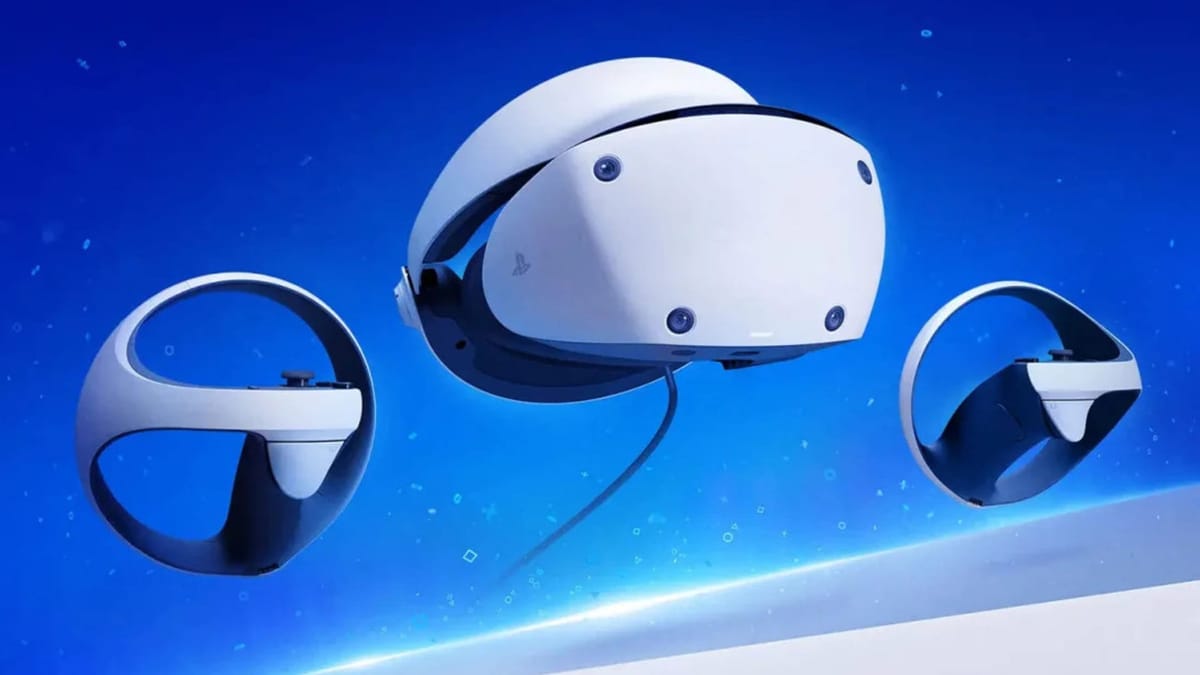
From No Man’s Sky and Gran Turismo 7 to Resident Evil Village, PlayStation VR2 offers experiences that no standalone headset to date could handle, and renders many multi-platform VR titles with noticeably higher graphical fidelity. But too few of the 75 million PS5 owners can justify the headset’s price.

Over the weekend, PlayStation VR2’s two year anniversary came and passed, with no announcements from Sony then, on Friday, or today.

I had hoped to see the $550 headset permanently reduced to the $350 price it was offered at for a week in summer and six weeks over the holidays. On the first day of that summer sale a retailer sold more in one day than the entire year, and over the holidays multiple developers told me they saw a significantly greater sales boost on PS VR2 than the previous year.

PlayStation VR2 Sales Reportedly Skyrocket At $350 Price
A retailer reportedly sold more PlayStation VR2 units in one day at the sale price of $350 than all year so far at the regular $550 price.

This strongly suggests that the limiting factor for PlayStation VR2 has been its price, something I’ve been saying since it was announced. An accessory simply cannot be more expensive than the console it connects to. For many regular people the PS5 console is already a significant expense. As interested as these 75 million people might be by the prospect of high-fidelity VR gaming, $550 just isn’t a price most are willing to pay.

Don’t get me wrong. PlayStation VR2 is a great headset in many ways, with some flaws, but at $550, it just doesn’t matter to most PS5 owners.

The fact that Sony did not permanently reduce the price two years into the headset’s life suggests to me that at $350, Sony wasn’t making a profit, and that executives may be unwilling to do this perpetually. That’s why, I’d argue, it’s time for a fundamentally cheaper option for VR on PS5.

The Case For PlayStation VR2S

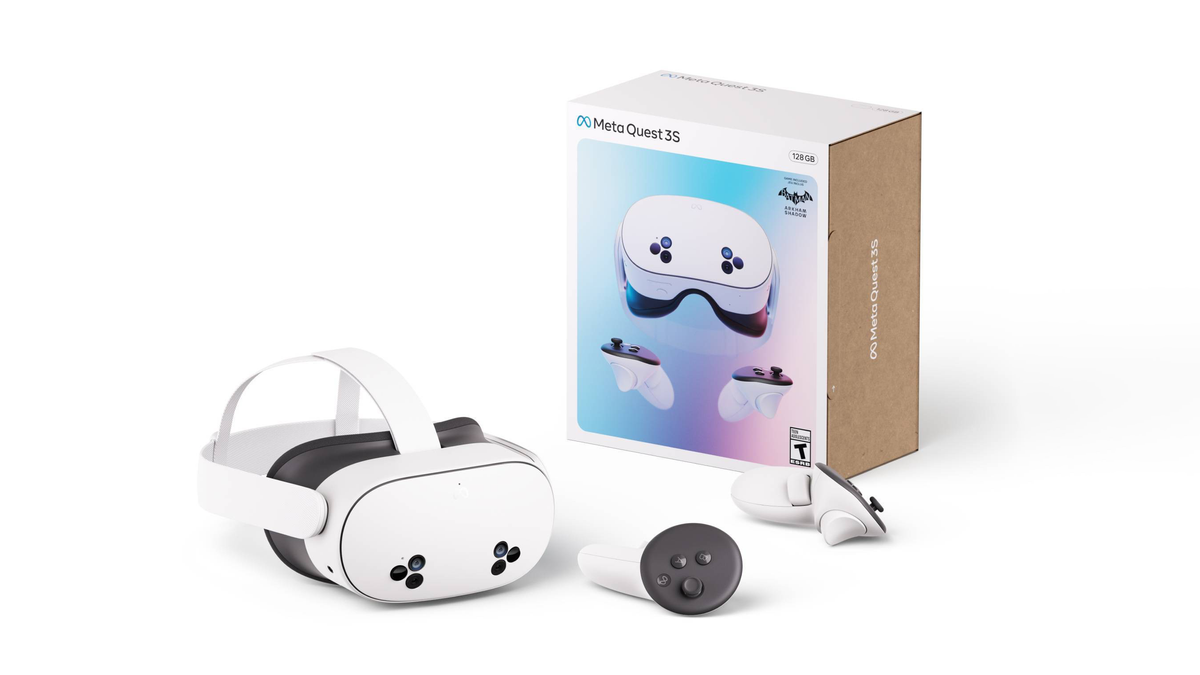
Meta Quest 3 is a great headset, and it’s still the standalone headset we recommend buying. But at $500 its appeal is relatively limited, and that’s why Meta introduced the $300 Quest 3S, which in just three months became the top selling console on Amazon US for all of 2024.

If Sony took a similar strategy, it could open up VR on PS5 to millions more people, and these new owners would provide a much-needed lifeline to the professional VR game development studios finding Quest to no longer be the ideal market for their content and the PS VR2 owner base simply not big enough to act as a replacement.

Further, an influx of millions of PS VR2S owners would even inspire some gaming giants to add VR support to their existing AAA PS5 games.

Quest 3S Was The Top Selling Console On Amazon In 2024
Meta Quest 3S was the top selling games console on Amazon US in 2024, despite only releasing in October.

To get specific, this hypothetical PlayStation VR2S would use a single LCD panel instead of dual HDR OLEDs, and perhaps drop the headset rumble. This could allow Sony to sell the headset at the regular PS VR2’s sale price, $350, or perhaps even less. Yet by keeping eye tracking, it would support all the same games.

Now, I know some PS VR2 enthusiasts reading this will be revolted at the thought of losing the true blacks, deep contrast, and rich colors of HDR OLED. But to be clear, you wouldn’t! This new headset would not replace PS VR2. Just like Meta still sells Quest 3 after launching Quest 3S, Sony would still sell PS VR2.

What About Wireless?

Price is undeniably PlayStation VR2’s biggest constraint. But a close second is the cable.

Almost everyone who bought into VR before 2019 was by definition someone who didn’t particularly mind, or at least accepted, the cable. But tens of millions of people stood by and waited for the cable to get cut, and followed through by purchasing a wireless Quest headset. Yes, the primary appeal of Quest is its standalone nature. But would you really argue it would be just as successful if it needed to be plugged into a socket at all times, for example?

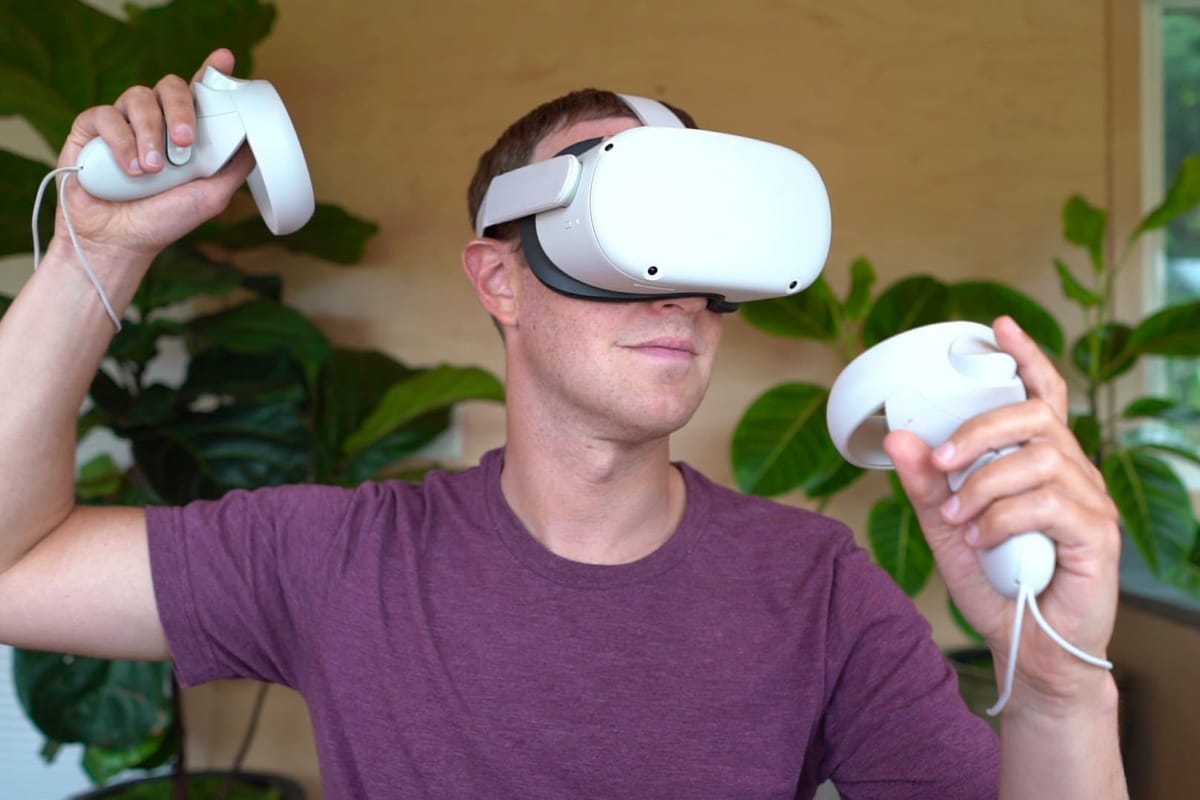
Zuckerberg: Consumers Aren’t Going “To Go For” Wired VR
Facebook CEO Mark Zuckerberg suggested in a earnings call with investors that consumers aren’t interested in VR headsets with wires. “Some other folks might try to ship something that they claim is higher quality but has a wire, and I just don’t think that consumers are going to

I’ve given hundreds of VR demos in my time, and before Quest even gaming PC and PlayStation owners cited the cable as the main reason they wouldn’t buy a headset just yet. Step out of our VR bubble and you’ll find that most people are completely turned off by the idea of having a head-mounted umbilical cord sprawling across their living room while effectively blindfolded.

All of this is to say, there’s also an argument to be made for a PlayStation VR2 Pro. Rather than upgrading the lenses or displays, this headset would simply take the regular PS VR2 and add the chips and battery necessary for wireless VR, driven by a direct point-to-point link with the PS5 console.

PlayStation R&D Head Outlines ‘Next-Gen’ VR Headsets: Increased Resolution, Wider FOV, HDR, Wireless, Eye-Tracking
Of all of the major VR headsets on the market today, Sony’s PSVR stands to gain the most from an upgrade. But what might we see in a next-generation PSVR? Senior vice president of R&D at Sony, Dominic Mallinson, has some ideas, and they’re pretty exciting. Mallison

To be clear though, this is a much lower priority than a cheaper PlayStation VR2S, which is what Sony’s console VR ecosystem needs more than anything.