SCOTUS blocks order that said Biden admin can’t “coerce” social media firms

President smiles while sitting at a table during a meeting.

Enlarge / US President Joe Biden during a meeting in the Cabinet Room of the White House on Friday, Oct. 20, 2023. (credit: Getty Images | Bloomberg)

The Supreme Court has blocked an injunction that would prevent the Biden administration from pressuring social media firms to take down content. Justices agreed to hear the Biden administration’s appeal of the injunction, which will be stayed until the high court issues a ruling that could either uphold the injunction or block it permanently.

The decision to grant the stay and hear the administration’s appeal was issued in an order Friday. The court previously issued a temporary stay while it considered whether to hear the case, so the injunction has not been enforced.

Justices Samuel Alito, Clarence Thomas, and Neil Gorsuch dissented, arguing that the stay “allows the defendants to persist in committing the type of First Amendment violations that the lower courts identified. The majority takes this action in the face of the lower courts’ detailed findings of fact.”

Read 12 remaining paragraphs | Comments


Source: Ars Technica – SCOTUS blocks order that said Biden admin can’t “coerce” social media firms

Magic: The Gathering Is Getting a Huge Marvel Crossover

Wizards of the Coast is assembling its franchise heroes, and Marvel is next to join up with Magic: The Gathering. As part of a deepening collaboration with parent company Hasbro, the publisher “will develop collectible products” based around the characters of Marvel Comics for Magic. You can expect these to land on…

Read more…


Source: Gizmodo – Magic: The Gathering Is Getting a Huge Marvel Crossover

Microsoft Fixes the Excel Feature That Was Wrecking Scientific Data

An anonymous reader shares a report: In 2020, scientists decided just to rework the alphanumeric symbols they used to represent genes rather than try to deal with an Excel feature that was interpreting their names as dates and (un)helpfully reformatting them automatically. Last week, a member of the Excel team posted that the company is rolling out an update on Windows and macOS to fix that. Excel’s automatic conversions are intended to make it easier and faster to input certain types of commonly entered data — numbers and dates, for instance. But for scientists using quick shorthand to make things legible, it could ruin published, peer-reviewed data, as a 2016 study found.

Microsoft detailed the update in a blog post last week, adding a checkbox labeled “Convert continuous letters and numbers to a date.” You can probably guess what that toggles. The update builds on the Automatic Data Conversions settings the company added last year, which included the option for Excel to warn you when it’s about to get extra helpful and let you load your file without automatic conversion so you can ensure nothing will be screwed up by it.

Read more of this story at Slashdot.


Source: Slashdot – Microsoft Fixes the Excel Feature That Was Wrecking Scientific Data

Meet the ‘New Elites’ Who Control Twitter's Israel-Hamas News

An unorthodox group of 7 users is now the most dominant news source for information about the Israel-Hamas war on X (formerly Twitter), according to a new report from the University of Washington’s Center for an Informed Public. Dubbed the “New Elites” of X, the report found these users racked up 1.6 billion views on…

Read more…


Source: Gizmodo – Meet the ‘New Elites’ Who Control Twitter’s Israel-Hamas News

Biden administration designates 31 new 'tech hubs' to encourage innovation

The Biden administration and the US Commerce Department just named 31 regions as “tech hubs”, drawn from nearly 400 applicants. These hub areas are spread across the country, in addition to territories like Puerto Rico, and each spot could share in $500 million of funding as originally detailed in the CHIPS and Science Act that was signed into law back in 2022.

The administration hopes to use these hubs to “catalyze investment in technologies critical to economic growth, national security and job creation” with an end goal of helping “communities across the country become centers of innovation critical to American competitiveness.” Additionally, Commerce Secretary Gina Raimondo told reporters that the program seeks to diversify the country’s tech interests, moving away from traditional hubs like Silicon Valley, Seattle and Boston, as reported by Yahoo.

To that end, these hubs will focus on everything under the sun, from artificial intelligence, biotech, clean energy, semiconductors, quantum computing and more. Examples include a hub in Washington state that’s developing new materials for next-gen fuel-efficient aircraft, a Wisconsin program seeking to make advancements in personalized medicine and a New York organization researching new battery technologies, among 28 others. It’s worth noting that many of these hubs are in small or medium-sized cities, with Raimondo saying that “people shouldn’t have to move to get a good job.”

There’s one caveat. Snagging one of these coveted hub designations doesn’t guarantee federal funding. The Commerce Department will follow each program throughout the next year, with funding to follow. Raimondo says that five to 10 hubs will receive up to $75 million. With 31 hub areas and just $500 million to disperse, that could leave many locations in the financial cold.

Additionally, the CHIPS and Science Act is a robust piece of legislation that drops more than $280 billion into various sectors, so these hubs represent less than 1/500th of the allocated funding set aside by the bill. There’s $52 billion in tax credits and funding for US chipmakers to expand domestic production, $7 billion for clean hydrogen and $1.5 billion to “boost US leadership in wireless technologies and their supply chains.” The bill also sets aside $10 billion to “invest in regional innovation and technology” which is the exact point of these hubs, so maybe more money is coming down the line.

Biden has asked Congress for an additional $4 billion to fund even more regional tech hubs, but, well, that would be part of the full-year budget and you may have noticed that the House still lacks a speaker with a government shutdown on the horizon.

This article originally appeared on Engadget at https://www.engadget.com/biden-administration-designates-31-new-tech-hubs-to-encourage-innovation-155812340.html?src=rss

Source: Engadget – Biden administration designates 31 new ‘tech hubs’ to encourage innovation

Doctor Who Wants to Keep Animating Its Missing History

As Doctor Who nears another milestone anniversary, the long shadow of the BBC’s loss of almost a hundred stories from the earliest eras of the show—destroyed in the process of archival junking in TV’s nascent age—still lingers. But the corporation is still clinging to one lifeline that could still let fans experience…

Read more…


Source: Gizmodo – Doctor Who Wants to Keep Animating Its Missing History

Inside Apple's Big Plan to Bring Generative AI To All Its Devices

An anonymous reader shares a report: Apple was caught flat-footed when ChatGPT and other AI tools took the technology industry by storm. But the company is now preparing its response and plans to develop features for its full range of devices. One of the most intense and widespread endeavors at Apple right now is its effort to respond to the AI frenzy sweeping the technology industry. The company has some catching up to do. Apple largely sat on the sidelines when OpenAI’s ChatGPT took off like a rocket last year. It watched as Google and Microsoft rolled out generative AI versions of their search engines, which spit out convincingly human-like responses to users’ queries. Microsoft also updated its Windows apps with smarter assistants, and Amazon unveiled an AI-enhanced overhaul of Alexa. All the while, the only noteworthy AI release from Apple was an improved auto-correct system in iOS 17.

Apple’s senior vice presidents in charge of AI and software engineering, John Giannandrea and Craig Federighi, are spearheading the effort. On Cook’s team, they’re referred to as the “executive sponsors” of the generative AI push. Eddy Cue, the head of services, is also involved, I’m told. The trio are now on course to spend about $1 billion per year on the undertaking. Giannandrea is overseeing development of the underlying technology for a new AI system, and his team is revamping Siri in a way that will deeply implement it. This smarter version of Siri could be ready as soon as next year, but there are still concerns about the technology and it may take longer for Apple’s AI features to spread across its product line. Federighi’s software engineering group, meanwhile, is adding AI to the next version of iOS. There’s an edict to fill it with features running on the company’s large language model, or LLM, which uses a flood of data to hone AI capabilities. The new features should improve how both Siri and the Messages app can field questions and auto-complete sentences, mirroring recent changes to competing services.

Read more of this story at Slashdot.


Source: Slashdot – Inside Apple’s Big Plan to Bring Generative AI To All Its Devices

Microsoft Fixes Excel Feature That Forced Scientists to Rename Human Genes

Microsoft recently published a blog highlighting new Excel updates that allow users to disable Automatic Data Conversion. This comes as good news for the scientists because in recent years they had to rename quite a few human gene names since Excel wa converting them to dates.

Read more…


Source: Gizmodo – Microsoft Fixes Excel Feature That Forced Scientists to Rename Human Genes

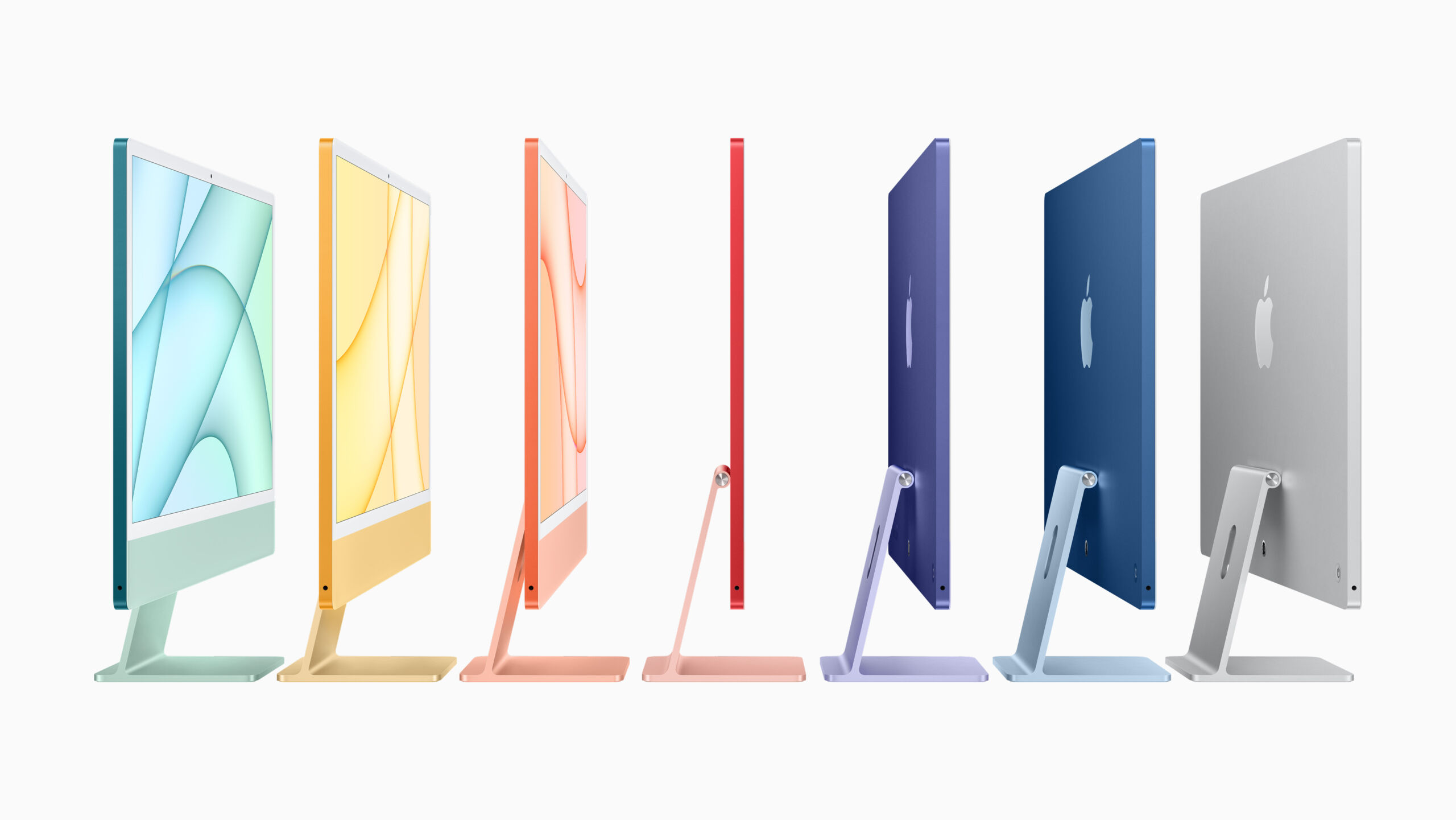
Report: Apple has a refreshed Apple Silicon iMac coming as soon as next week

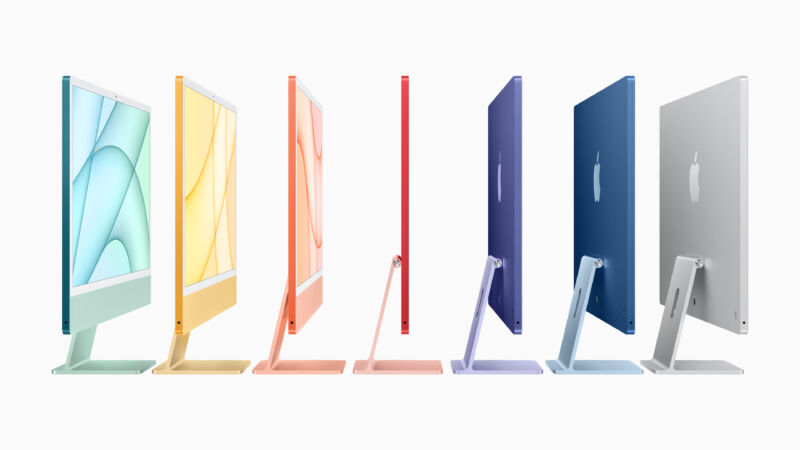
Apple's 24-inch iMac hasn't been updated in more than two years.

Enlarge / Apple’s 24-inch iMac hasn’t been updated in more than two years. (credit: Apple)

Most of Apple’s big product announcements for the year were made in September, but the company may still have some surprises up its sleeve. Last week, it announced an oddball USB-C Apple Pencil, and Bloomberg’s usually well-informed Mark Gurman says that a new Apple Silicon iMac refresh could arrive as soon as next week.

The iMac was last updated in the summer of 2021, well over two years ago, when Apple replaced the 21.5-inch Intel model with a redesigned M1-powered Apple Silicon model. Aside from the M1 MacBook Air, which Apple continues to sell as its entry-level notebook, it’s the only kind of Mac that hasn’t gotten some kind of M2 chip.

Gurman doesn’t mention them, but an updated iMac could also give Apple the opportunity to refresh its Magic Keyboard, Magic Mouse, and Magic Trackpad accessories with a USB-C port to match the new iPhone 15 series and the USB-C version of the AirPods. Right now, these accessories, the older iPhones Apple still sells, the Apple TV’s Siri Remote, and the low-end iPad are all still using the Lightning port.

Read 4 remaining paragraphs | Comments


Source: Ars Technica – Report: Apple has a refreshed Apple Silicon iMac coming as soon as next week

Martin Goetz, Who Received the First Software Patent, Dies at 93

Martin Goetz, who joined the computer industry in its infancy in the mid-1950s as a programmer working on Univac mainframes and who later received the first U.S. patent for software, died on Oct. 10 at his home in Brighton, Mass. He was 93. The New York Times: His daughter Karen Jacobs said the cause was leukemia. In 1968, nearly a decade after he and several other partners started the company Applied Data Research, Mr. Goetz received his patent, for data-sorting software for mainframes. It was major news in the industry: An article in Computerworld magazine bore the headline “First Patent Is Issued for Software, Full Implications Are Not Known.” Until then, software had not been viewed as a patentable product, one that was bundled into hulking mainframes like those made by IBM. Ms. Jacobs said her father had patented his own software so that IBM could not copy it and put it on its machines.

“By 1968, I had been involved in arguing about the patentability of software for about three years,” Mr. Goetz said in an oral history interview in 2002 for the University of Minnesota. “I knew at some point in time the patent office would recognize it.” What Mr. Goetz called his “sorting system” is believed to have been the first software product to be sold commercially, and his success at securing a patent led him to become a vocal champion of patenting software. The programs that instruct computers on what to do, he said, were often as worthy of patents as the machines themselves. The issuance of Mr. Goetz’s patent “helped managers, programmers and lawyers at young software firms feel as if they were forming an industry of their own — one in which they were creating products that were potentially profitable and legally defensible as proprietary inventions,” Gerardo Con Diaz, a professor of science and technology studies at the University of California, Davis, wrote in the 2019 book “Software Rights: How Patent Law Transformed Software Development.” Further reading, from Slashdot archive: Recipient of First Software Patent Defends Them (2009).

Read more of this story at Slashdot.


Source: Slashdot – Martin Goetz, Who Received the First Software Patent, Dies at 93

Tinder Matchmaker Lets Your Friends and Family Play Cupid

On Monday, Tinder added a matchmaking feature that gives users’ friends and family members autonomy to hand-pick who they should date. The move aims to streamline the process of getting other people’s opinions and allows them to recommend potential matches within the app.

Read more…


Source: Gizmodo – Tinder Matchmaker Lets Your Friends and Family Play Cupid

Europe Reluctantly Chooses SpaceX to Launch Its GPS Satellites

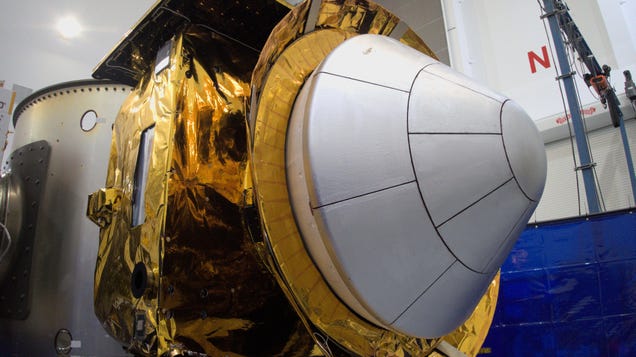
SpaceX has reached a deal to launch four Galileo satellites next year in coordination with the European Space Agency, according to a Wall Street Journal report. Two launches on Elon Musk’s Falcon 9 rockets will add to the 28 satellites currently orbiting Earth in Europe’s global navigation system.

Read more…


Source: Gizmodo – Europe Reluctantly Chooses SpaceX to Launch Its GPS Satellites

We’re entering a pretty strong El Niño—here’s what that means for a US winter

Read 8 remaining paragraphs | Comments


Source: Ars Technica – We’re entering a pretty strong El Niño—here’s what that means for a US winter

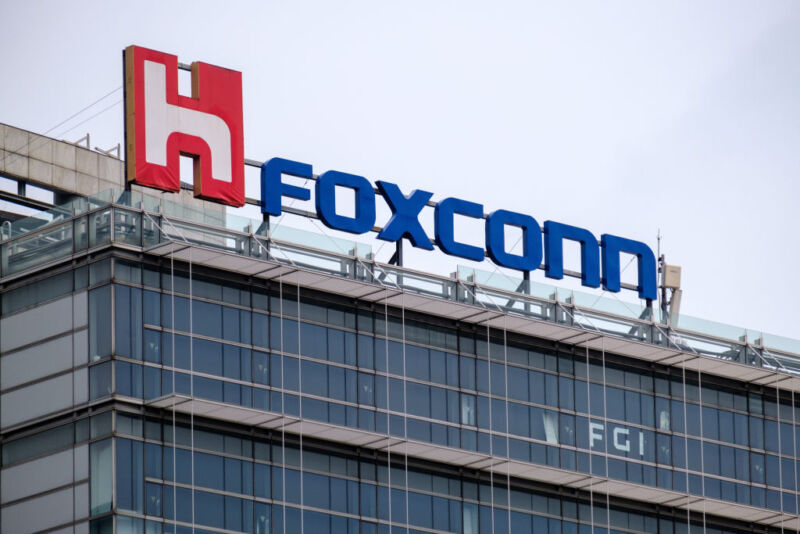
China targets iPhone-maker Foxconn with probe into tax, land use

Read 14 remaining paragraphs | Comments


Source: Ars Technica – China targets iPhone-maker Foxconn with probe into tax, land use

Updates From Deadpool 3, Rick & Morty, and More

Jason Blum wants the Spawn movie to feel like a Blumhouse production. Winnie the Pooh: Blood and Honey director Rhys Frake-Waterfield teases the even bigger deaths of the sequel. Plus, the co-existence of Godzilla Minus One and Monarch: Legacy of Monsters gives us not one, but two Big G poster debuts. Spoilers, away!

Read more…


Source: Gizmodo – Updates From Deadpool 3, Rick & Morty, and More

Japan Investigates Google Over Alleged Antitrust Violations

Japan’s antitrust watchdog has begun an investigation into whether Alphabet’s Google abuses its market position to block rival services, compounding scrutiny of the internet leader’s business practices across the globe. From a report: The country’s Fair Trade Commission has begun a probe centered on allegations of potential antitrust violations, an official with the agency said, confirming a Nikkei report. It plans to solicit information and views on the matter from the public, the official added. The agency plans to examine whether Google inappropriately asked smartphone makers to prioritize its search services on their devices.

The Japanese investigation marked the first time the commission has consulted with third parties from the outset of an individual probe, agency officials told reporters in Tokyo. The probe could widen to include Android phone makers found to be complicit in antitrust activity, an official said, without elaborating. Japan’s review comes on top of an antitrust case the US has mounted against the global search leader. Federal regulators accuse Google of abusing its dominance to block startups and larger rivals such as Microsoft, a key argument in the biggest tech anti-monopoly case since the 1990s.

Read more of this story at Slashdot.


Source: Slashdot – Japan Investigates Google Over Alleged Antitrust Violations

The Thermaltake Toughpower GF A3 750W PSU Review: Mid-Range 750W PSU With 12VHPWR

Thermaltake is a company based in Taiwan that specializes in designing and manufacturing computer hardware components and accessories. Established in 1999, the company’s product range includes thermal solutions such as CPU coolers and cases and power supply units, keyboards, and mice. Thermaltake operates globally and has a presence in multiple markets, serving a customer base that ranges from casual computer users to hardware enthusiasts. The company’s products are subject to various industry certifications and standards.

Known for its diverse portfolio, ranging from cases and coolers to power supply units (PSUs), the company has a reputation for merging aesthetics with functionality. Among the lineup of their power supplies, the Toughpower GF A3 750W PSU stands as a prominent offering aimed at enthusiasts who demand a balanced mix of reliability, performance, and energy efficiency.

As PSUs are the backbone of any computing system, providing stable and efficient power is paramount. Thermaltake’s Toughpower GF A3 750W PSU aims to do just that while adding modularity and aesthetic appeal into the mix. It is designed to target the bulk of advanced PC builders, which means it will also have to compete against myriads of similar products for a piece of that saturated market pie. In this review, we will dissect this power supply’s features, performance, and overall value proposition to determine whether it meets modern PC builds’ demands.


Source: AnandTech – The Thermaltake Toughpower GF A3 750W PSU Review: Mid-Range 750W PSU With 12VHPWR

SpaceX will launch ESA navigation satellites amid delays with the EU's own rockets

SpaceX has struck a deal with the European Space Agency (ESA) to launch four of Europe’s Galileo navigation satellites into orbit using its Falcon 9 rocket, The Wall Street Journal has reported. It’ll be the first time Elon Musk’s company has launched any EU satellites containing classified equipment.

The ESA had planned to launch Galileo satellites using its homegrown Ariane 6 rocket, but the latter has seen frequent delays and isn’t expected to make its inaugural launch until 2024 at the earliest. The deal is still subject to final approval by the EU Commission and member states, according to ESA director of navigation Javier Benedicto. 

SpaceX would launch the satellites from US territory, according to the terms of the deal. It would mark the first time Galileo equipment has been carried into orbit outside of European territory, barring early test versions launched from Kazakhstan. All other Galileo satellites have launched from the Guiana Space Center in Kourou, French Guiana — using Soyuz rockets at first and the Ariane 5 system later on. 

News of the deal isn’t a big surprise, as it was reported this summer that Europe was seeking to cut a deal with SpaceX and United Launch Alliance to “exceptionally launch Galileo satellites.” Another alternative would have been Russian-built Soyuz rockets, but that was off the table due to EU sanctions against Russia over its invasion of Ukraine. 

Ariane 6 was originally slated to launch in 2023, but multiple delays have pushed the first launch back to 2024. Recently, a short hotfire of the Vulcain 2.1 engine was delayed, and a long-duration static-fire test was pushed back from early October to late November. The Ariane 5 rocket is no longer an option, as it was retired after its final launch in July. 

SpaceX’s launched Europe’s Euclid telescope in July, and is slated to launch two other EU spacecraft in the near future. As it stands, the ESA only plans to make four Galileo launches using the Falcon 9. Musk himself has had a tenuous relationship with the EU — most recently, a top European Union official is warned him about the spread of misinformation on his social network platform X amid the Israel-Hamas war.

The Galileo system is key for Europe, as it makes it independent from the US Global Positioning System (GPS) and satnav systems from Russia and China. It’s also used by EU military and security services to transmit encrypted messages. The service went live in 2016, but additional satellites are required to bolster the existing network. “It is a matter of robustness,” said Benedicto. “We have 10 satellites that are ready to be launched, and those satellites should be in space, not on the ground.” 

This article originally appeared on Engadget at https://www.engadget.com/spacex-will-launch-esa-navigation-satellites-amid-delays-with-the-eus-own-rockets-140030424.html?src=rss

Source: Engadget – SpaceX will launch ESA navigation satellites amid delays with the EU’s own rockets