More Amazon Workers Suffer Injuries, Burnout Than Previously Thought, Study Shows

Amazon is reportedly responsible for more injuries than previously thought, according to a new study published Wednesday. The retail giant employs one of the largest numbers of warehouse workers in the U.S., boasting of a workforce exceeding 700,000 people, but recent investigations questioned the safety and health of…

Read more…


Source: Gizmodo – More Amazon Workers Suffer Injuries, Burnout Than Previously Thought, Study Shows

Apple TV+ prices have doubled in just over a year

Apple is jacking up the prices of several of its subscription services in the US and some other markets. The price increases to Apple TV+, Apple Arcade and Apple News+ will take effect immediately for newcomers. “Existing subscribers will see these price increases 30 days later, on their next renewal date,” Apple told Engadget in a statement. “We are focused on delivering the best experiences possible for our customers by consistently adding high-quality entertainment, content, and innovative features to our services.”

In the US, the price of Apple TV+ is going up by $3 per month to $10. The annual TV+ plan has risen from $69 to $99. Apple Arcade is now $7 per month instead of $5. As for Apple News+, that’ll now run you $13 per month for a standalone subscription, up from $10. Apple Music and Apple Fitness+ pricing remains the same.

As MacRumors points out, these are the first price increases for Apple Arcade and Apple News+ since the company debuted those services nearly four years ago. The cost of an Apple TV+ subscription last changed in October 2022, when it went up from $5 per month to $7, meaning that the price of the service has doubled in just over 12 months.

In line with the increases on individual services, Apple is also modifying the prices of Apple One plans. An individual subscription now costs $19.95 per month (up by $3) and it includes Apple Arcade, Apple Music, Apple TV+ and 50GB of iCloud storage. A family plan, which is shared between up to six people and includes 200GB of total iCloud storage, is now $25.95 per month (also an increase of $3).

The highest Apple One tier is Premier, which folds in Apple Fitness+ and Apple News+ access and bumps up iCloud storage to 2TB for up to six people. That now costs $37.95 per month, which $5 more than before.

Services such as these have become an increasingly important part of Apple’s business over the last few years. In the second quarter of 2023, Apple’s Services revenue (which also includes things like AppleCare and the App Store) hit an all-time high of $21.2 billion. Services are second only to the iPhone when it comes to Apple’s moneymakers these days.

Apple announced the price increases just ahead of revealing its earnings for the July-September period, which it will do on November 2. The company has also lined up another product event for October 30, during which we’re expecting to see new MacBook Pro and iMac models.

Update 10/25 11:34AM ET: Added Apple’s statement to clarify when the price changes will take effect for current subscribers.

This article originally appeared on Engadget at https://www.engadget.com/apple-tv-prices-have-doubled-in-just-over-a-year-150156333.html?src=rss

Source: Engadget – Apple TV+ prices have doubled in just over a year

Black Friday 2023: The best early deals, what to expect and shopping strategies from our experts

Most Americans already know what they need to know about Black Friday — it’s a day to use up all of that stored energy from consuming turkey and sides on Thanksgiving by shopping for as many deals as possible. What you might not know is that you can get some pretty good deals in the days and weeks leading up to Black Friday and Cyber Monday, thanks to retailers kick-starting the holiday shopping season earlier in recent years. And despite its gross show of consumerism that may make you cringe, Black Friday can be an important day for those who want to buy thoughtful, useful gifts for their loved ones while also sticking to a strict budget. If that sounds like you, or you have just vowed never to pay full price for something when you don’t have to, we’ve got some tips and buying advice that can help you prepare for Black Friday 2023.

When is Black Friday 2023?

Black Friday 2023 lands on November 24 this year, with Cyber Monday 2023 following up a few days later on November 27. However, the early deals have already begun. If you’re organized, you can shop some decent pre-Black Friday sales as soon as mid-October. The entire month of November might as well be renamed Holiday Shopping Month as that’s when companies really start to get serious with their discounts.

Black Friday shopping strategies

Use a price history tracker

This is just good shopping advice, period — especially when it comes to consumer electronics. Price history trackers like CamelCamelCamel and Keepa monitor price changes and can show you things like the lowest price an item has ever been and when it was last discounted that much. The main catch here is that both Camel and Keepa only work on Amazon listings. That’s extra convenient if you shop on Amazon often because both have pretty handy Chrome extensions you can install to make price monitoring super easy.

But even if you’re not an Amazon aficionado, you can still reference those price history charts when shopping elsewhere on the internet — that way you’ll know if one retailer’s “hot deal” is precisely that, lukewarm or ice cold. Another similarly handy tool is Honey, a browser extension that lets you compare product prices across many retailers, apply digital coupons easily and more.

Sign up for company newsletters

Listen, we wouldn’t tell you to intentionally clutter your inbox if we didn’t think it would be seriously beneficial. Now more than ever, companies offer things like exclusive and early-access sales, special discount codes, free expedited shipping and other perks to their inner circles of customers — namely, those that sign up for newsletters, text alerts and the like. If there’s a particular item you want to snag on sale, like a pair of Sony headphones or a Razer laptop, we recommend signing up for the company’s newsletter just for the duration of the holiday shopping season. That increases your chances of being among the first to know about exclusive deals and other offers, or, in the case of early-access sales, among the first to actually buy what you want before sales diminish or things sell out. Don’t immediately trash those emailed sale alerts either. Once you get the goods you want, you can go back to that message and immediately unsubscribe from the newsletter if you wish.

Use any membership or credit card perks you already have

There’s a good chance you have perks and benefits from services you already use that you’re not taking full advantage of. Amazon Prime and Walmart+, for example, both offer early access to specific sales and deals throughout the year and we expect there to be similar exclusive sales at both retailers ahead of Black Friday. You may have a credit card that gives you additional cash back on certain product categories, or integrates seamlessly with retailers so you can use your accumulated cash back immediately when placing orders. Take stock of the services you use regularly and check to see if they’re offering anything additional during the holiday shopping season, or if there are benefits you may not have needed to use until now.

Shop early

As mentioned previously, retailers have already started throwing deals and sales online in the lead-up to Black Friday. As we get closer to the actual day, we expect to see even more early Black Friday deals pop up across the web. If you have items on your list that are absolute must-haves — maybe you thought of the perfect gift for your hard-to-shop-for parent — don’t wait to buy those things. We estimate that you have the best chance of getting a truly good deal within two weeks of Black Friday, so start looking in earnest then. There’s always a chance an item is marginally cheaper on Black Friday than it is one or two weeks prior, but with all of the early deals we’ve seen over the past few years, there’s less of a chance that the Black Friday price drop will be so significant that you’ll regret your early purchase.

Our advice: make a list of all the gifts and other items you want to pick up during the holiday shopping season and then designate each of those items as “high” or “low” priority. High-priority items should be the ones you buy first as soon as you see them go on sale, while low-priority things can wait until closer to Black Friday.

The best early Black Friday deals to look out for

While some sales have already begun, we believe the best early Black Friday deals will begin in November. The bigger the retailer, the more likely it is that they will have early Black Friday deals going on throughout the entire month of November. We expect to see companies like Amazon, Walmart, Target, Best Buy and others roll out early deals once November hits, with an uptick occurring within a week or two of Black Friday proper.

As far as the types of items that will go on sale before Black Friday, it’ll be a bit of a mixed bag. Since we focus on tech here at Engadget, we can confidently presume that most of the big, flagship items you may be itching to buy — a pricey smartphone, a new OLED TV or a high-end pair of headphones — will probably not be significantly discounted until, at the earliest, a week before Black Friday. Sure, gadgets will be peppered among the early holiday sales at the start of November, but the best deals on (what we consider to be) the best tech will likely come closer to Black Friday. In the past, we’ve seen some of the best Black Friday deals drop on Thanksgiving — with some selling out before Black Friday proper even began.

We’d also be remiss if we didn’t mention Cyber Monday. Over the past few years, Cyber Monday has almost become “Black Friday 2.0,” with most of the best Black Friday deals carrying over through the end of Cyber Monday (if they don’t sell out first). There are always a few Cyber Monday exclusives, particularly in the tech space, so the shopping event is not without its own unique offers. But make no mistake: most of the best deals will be available on Black Friday, with a couple of extras thrown in on Cyber Monday.

Engadget will be covering the entirety of the Black Friday and Cyber Monday shopping period. That means you can come back to Engadget over the next few weeks to find the best early Black Friday deals on headphones, laptops, gaming gear and more as we inch closer to the actual sale dates. On Black Friday and Cyber Monday, expect us to surface only the best tech deals that the internet has to offer — that means the lowest prices we can find on the tech we think is actually worth your money.

This article originally appeared on Engadget at https://www.engadget.com/black-friday-2023-the-best-early-deals-what-to-expect-and-shopping-strategies-from-our-experts-150013315.html?src=rss

Source: Engadget – Black Friday 2023: The best early deals, what to expect and shopping strategies from our experts

Meta and X Are Destroying Their Apps With Paid Verification

On Monday, Instagram announced it’s testing a feed that only shows posts from verified accounts. This new way for “businesses and creators to get discovered” is part of a broader push across the social media industry, where the apps are rolling out the blue-checked carpet to encourage people to pay for a boost in the…

Read more…


Source: Gizmodo – Meta and X Are Destroying Their Apps With Paid Verification

Apple Raises Prices of TV+, Arcade, One, News+

Apple is increasing the prices of some of its subscription-based services, including Apple TV+, Apple Arcade, and Apple News+, in the U.S. and many other countries around the world. The higher prices are shown on Apple’s website. The price changes in the U.S. are as follows: Apple TV+: $6.99 per month to $9.99 per month
Apple Arcade: $4.99 per month to $6.99 per month
Apple News+: $9.99 per month to $12.99 per month

For those who subscribe to Apple TV+ on an annual basis, the price has increased from $69 per year to $99 per year accordingly. Prices for the Apple One bundles that include these services are also increasing as a result:

Individual: $16.95 per month to $19.95 per month
Family: $22.95 per month to $25.95 per month
Premier: $32.95 per month to $37.95 per month.

Read more of this story at Slashdot.


Source: Slashdot – Apple Raises Prices of TV+, Arcade, One, News+

Google, Microsoft Offer Measly $10 Million to Protect the World from AI

A few of the biggest companies pushing AI, including the legacy Silicon Valley giants Google and Microsoft alongside new blood OpenAI and Anthropic, are coming together to push their own industry body as the main bastion of AI safety. These multi-billion dollar companies’ first boon to the fledgling AI forum is a new…

Read more…


Source: Gizmodo – Google, Microsoft Offer Measly Million to Protect the World from AI

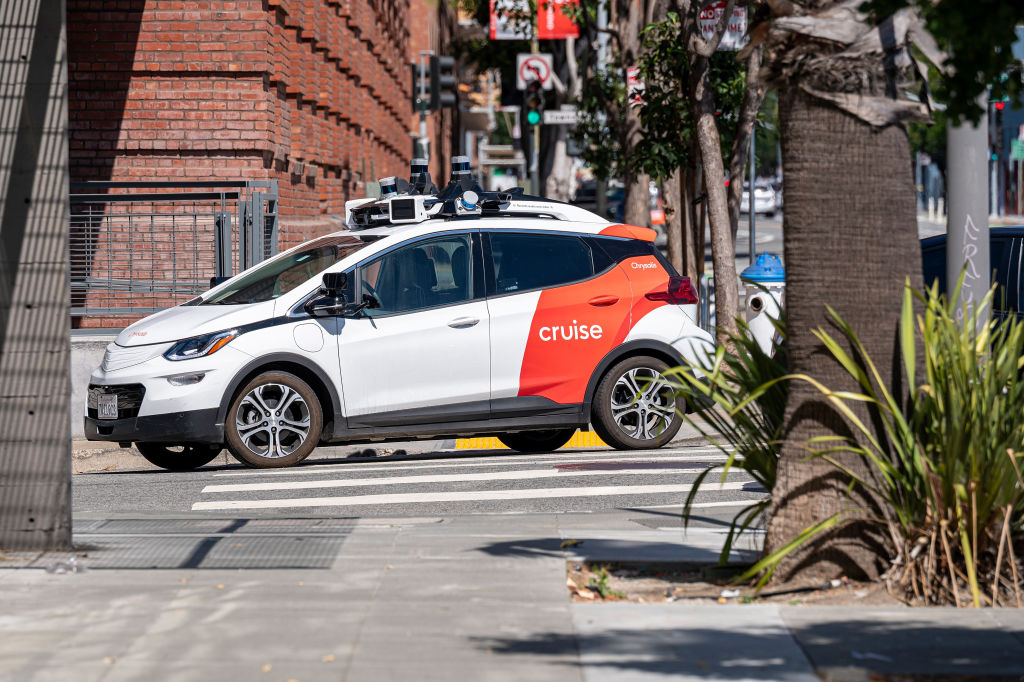
California suspends Cruise robotaxis after car dragged pedestrian 20 feet

California suspends Cruise robotaxis after car dragged pedestrian 20 feet

Enlarge (credit: Bloomberg / Contributor | Bloomberg)

Less than three months after the California Public Utilities Commission approved robotaxi-service Cruise’s plan to provide around-the-clock driverless rides to passengers in San Francisco, the California Department of Motor Vehicles (DMV) has shut down Cruise’s driverless operations in the state.

Yesterday, the California DMV suspended Cruise’s permits for autonomous vehicle deployment and driverless testing “effective immediately” over pedestrian safety concerns.

“Public safety remains the California DMV’s top priority, and the department’s autonomous vehicle regulations provide a framework to facilitate the safe testing and deployment of this technology on California public roads,” the DMV’s announcement said. “When there is an unreasonable risk to public safety, the DMV can immediately suspend or revoke permits.”

Read 11 remaining paragraphs | Comments


Source: Ars Technica – California suspends Cruise robotaxis after car dragged pedestrian 20 feet

The US Senate and Silicon Valley reconvene for a second AI Insight Forum

Senator Charles Schumer (D-NY) once again played host to Silicon Valley’s AI leaders on Tuesday as the US Senate reconvened its AI Insights Forum for a second time. On the guest list this go around: manifesto enthusiast Marc Andreessen and venture capitalist John Doerr, as well as Max Tegmark of the Future of Life Institute and NAACP CEO Derrick Johnson. On the agenda: “the transformational innovation that pushes the boundaries of medicine, energy, and science, and the sustainable innovation necessary to drive advancements in security, accountability, and transparency in AI,” according to a release from Sen. Schumer’s office.

Upon exiting the meeting Tuesday, Schumer told the assembled press, “it is clear that American leadership on AI can’t be done on the cheap. Almost all of the experts in today’s Forum called for robust, sustained federal investment in private and public sectors to achieve our goals of American-led transformative and sustainable innovation in AI. 

Per National Security AI Commission estimates, paying for that could cost around $32 billion a year. However, Schumer believes that those funding challenges can be addressed by “leveraging the private sector by employing new and innovative funding mechanisms – like the Grand Challenges prize idea.” 

“We must prioritize transformational innovation, to help create new vistas, unlock new cures, improve education, reinforce national security, protect the global food supply, and more,” Schumer remarked. But in doing so, we must act sustainably in order to minimize harms to workers, civil society and the environment. “We need to strike a balance between transformational and sustainable innovation,” Schumer said. “Finding this balance will be key to our success.”

Senators Brian Schatz (D-HI) and John Kennedy (R-LA) also got in on the proposed regulatory action Tuesday, introducing legislation that would provide more transparency on AI-generated content by requiring clear labeling and disclosures. Such technology could resemble the Content Credentials tag that the C2PA and CAI industry advocacy groups are developing.

“Our bill is simple,” Senator Schatz said in a press statement. “If any content is made by artificial intelligence, it should be labeled so that people are aware and aren’t fooled or scammed.”

The Schatz-Kennedy AI Labeling Act, as they’re calling it, would require generative AI system developers to clearly and conspicuously disclose AI-generated content to users. Those developers, and their licensees, would also have to take “reasonable steps” to prevent “systematic publication of content without disclosures.” The bill would also establish a working group to create non-binding technical standards to help social media platforms automatically identify such content as well.

“​​It puts the onus where it belongs: on the companies and not the consumers,” Schatz said on the Senate floor Tuesday. “Labels will help people to be informed. They will also help companies using AI to build trust in their content.”

Tuesday’s meeting follows the recent introduction of new AI legislation, dubbed the Artificial Intelligence Advancement Act of 2023 (S. 3050). Senators Martin Heinrich (D-NM), Mike Rounds (R-SD), Charles Schumer (D-NY) and Todd Young (R-IN) all co-sponsored the bill. The bill proposes AI bug bounty programs and would require a vulnerability analysis study for AI-enabled military applications. It’s passage into law would also launch a report into AI regulation in the financial services industry (which the head of the SEC had recently been lamenting) as well as a second report on data sharing and coordination.

“It’s frankly a hard challenge,” SEC Chairman Gary Gensler told The Financial Times recently, speaking on the challenges the financial industry faces in AI adoption and regulation. “It’s a hard financial stability issue to address because most of our regulation is about individual institutions, individual banks, individual money market funds, individual brokers; it’s just in the nature of what we do.”

“Working people are fighting back against artificial intelligence and other technology used to eliminate workers or undermine and exploit us,” AFL-CIO President Liz Shuler said at the conclusion of Tuesday’s forum. “If we fail to involve workers and unions across the entire innovation process, AI will curtail our rights, threaten good jobs and undermine our democracy. But the responsible adoption of AI, properly regulated, has the potential to create opportunity, improve working conditions and build prosperity.”

The forums are part of Senator Schumer’s SAFE Innovation Framework, which his office debuted in June. “The US must lead in innovation and write the rules of the road on AI and not let adversaries like the Chinese Communist Party craft the standards for a technology set to become as transformative as electricity,” the program announcement reads.

While Andreesen calls for AI advancement at any cost and Tegmark continues to advocate for a developmental “time out,” rank and file AI industry workers are also fighting to make their voices heard ahead of the forum. On Monday, a group of employees from two dozen leading AI firms published an open letter to Senator Schumer, demanding Congress take action to safeguard their livelihoods from the “dystopian future” that Andreessen’s screed, for example, would require.

“Establishing robust protections related to workplace technology and rebalancing power between workers and employers could reorient the economy and tech innovation toward more equitable and sustainable outcomes,” the letter authors argue.

Senator Ed Markey (D-MA) and Representative Pramila Jayapal (WA-07) had, the previous month, called on leading AI companies to “answer for the working conditions of their data workers, laborers who are often paid low wages and provided no benefits but keep AI products online.”

“We covered a lot of good ground today, and I think we’ll all be walking out of the room with a deeper understanding of how to approach American-led AI innovation,” Schumer said Tueseay. “We’ll continue this conversation in weeks and months to come – in more forums like this and committee hearings in Congress – as we work to develop comprehensive, bipartisan AI legislation.”

This article originally appeared on Engadget at https://www.engadget.com/the-us-senate-and-silicon-valley-reconvene-for-a-second-ai-insight-forum-143128622.html?src=rss

Source: Engadget – The US Senate and Silicon Valley reconvene for a second AI Insight Forum

TikTok's first live 'global music event' will feature Cardi B and Charlie Puth

TikTok has had a major impact on the music industry over the last few years, with many songs that have gone viral on the platform becoming major mainstream hits. The service is now making a bigger push into music by hosting its own festival.

Dubbed as the platform’s first “live global music event,” TikTok In The Mix will take place in Mesa, Arizona on December 10. The headliners are Cardi B, Niall Horan, Anitta and Charlie Puth, all of whom are popular figures on TikTok. The service says there will be surprise guests and performances by emerging artists, some of whom are involved in the TikTok Elevate program for up and coming musicians.

Followers of the four headliners will get presale codes to buy In The Mix tickets starting on October 27. The general sale will start on November 2.

Of course, TikTok will stream the event live on its app. The service also says it will bring the For You feed to life at In The Mix through “a range of activities inspired by our community’s favorite trends.” Some creators will be present too.

Similar platforms might be more inclined to sponsor an existing music festival than to go it alone. However, TikTok has carved out a space for itself as a destination for music discovery, so it makes sense for it to host its own event with a blend of established names and fairly fresh faces.

This article originally appeared on Engadget at https://www.engadget.com/tiktoks-first-live-global-music-event-will-feature-cardi-b-and-charlie-puth-141212595.html?src=rss

Source: Engadget – TikTok’s first live ‘global music event’ will feature Cardi B and Charlie Puth

Sam Bankman-Fried may testify in hopes of avoiding life in prison

Read 13 remaining paragraphs | Comments


Source: Ars Technica – Sam Bankman-Fried may testify in hopes of avoiding life in prison

New PS5's Optional Disc Drive Requires an Internet Connection To Connect

The upcoming optional disc drive for the PlayStation 5 will require an internet connection to pair it to a console for the first time. From a report: As spotted on the back of the box for the upcoming Call of Duty Modern Warfare 3 PS5 slim bundle, small print confirms that players who purchase the new model with the optional drive will be required to connect to the internet when pairing it to a machine for the first time. It’s likely that this is a security measure in order to ensure that the disc drive is a legitimate one and not a third party. However, it has raised some preservation concerns.

Read more of this story at Slashdot.


Source: Slashdot – New PS5’s Optional Disc Drive Requires an Internet Connection To Connect

If Good Omens Returns, There's Major Behind the Scenes Changes

The Five Nights at Freddy’s crew talks meeting fan expectations. Hear Chris Pine’s villain song from Disney’s Wish. The Simpsons sets its latest Treehouse of Horror return. Plus, what’s coming up as Doom Patrol nears its end. To me, my spoilers!

Read more…


Source: Gizmodo – If Good Omens Returns, There’s Major Behind the Scenes Changes

Micron and SK hynix Ship LPDDR5-9600 Memory for Next-Gen Smartphones

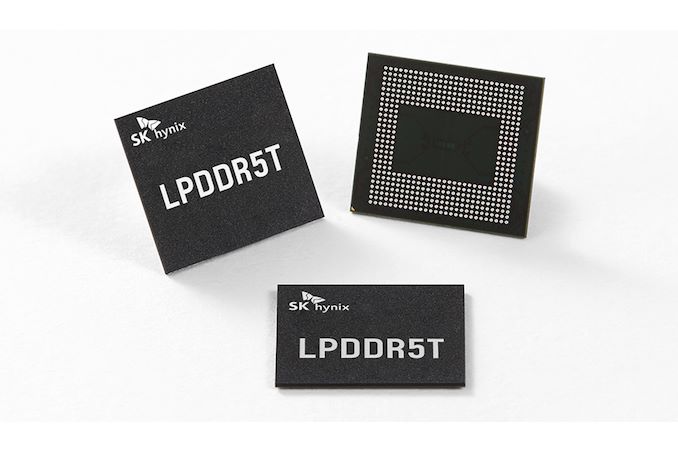
Fast memory is crucial for the performance of high-end system-on-chips that are getting more sophisticated every year. When it comes to smartphones, the most obvious way to boost memory performance is to push its data transfer rate. Apparently, this is what Micron and SK Hynix are doing with their new LPDDR5X and LPDDR5T DRAMs that boast a data transfer rate of 9.6 GT/s.


Micron’s LPDDR5X-9600 memory devices are made on the company’s latest 1β (1-beta) process technology. They are offered in up to 16 GB x64 packages (though it is unclear how many actual memory devices these packages integrate). Micron says that its LPDDR5X made on its latest production node boasts up to 30% lower power consumption compared to competing LPDDR5X ICs made on 1α (1-alpha) technology, though this is something to be expected. 


Micron does not disclose how it managed to increase the data transfer rate of its LPDDR5X to 9.6 GT/s, which is a 12% increase compared to 8.53 GT/s, which was once considered the highest speed of LPDDR5X memory. The only thing that the company discloses is that these ICs boast ‘enhanced’ dynamic voltage and frequency scaling, although DVFS is a part of LPDDR5X specification.


“Generative AI is poised to unleash unprecedented productivity, ease of use, and personalization for smartphone users by delivering the power of large language models to flagship mobile phones,” said Mark Montierth, corporate vice president and general manager of Micron’s Mobile Business Unit. “Micron’s 1β LPDDR5X combined with Qualcomm Technologies’ AI-optimized Snapdragon 8 Gen 3 Mobile Platform empowers smartphone manufacturers with the next-generation performance and power efficiency essential to enabling revolutionary AI technology at the edge.“


SK Hynix is another company to start shipping LPDDR5-9600 memory today, which calls its fastest LPDDR5 DRAMs LPDDR5T (T stands for Turbo). The new memory will be available in 16 GB packages with a VDD voltage range of 1.01V to 1.12V and a VDDQ of 0.5v. By contrast, LPDDR5X should have a maximum VDD voltage of 1.1V, so LPDDR5T is slightly out of LPDDR5X spec.


Meanwhile, both Micron’s LPDDR5X-9600 and SK Hynix’s LPDDR5T-9600 are compatible with Qualcomm’s Snapdragon 8 Gen 3 system-on-chip for smartphones, the two compares announced on Tuesday. Micron is already shipping its 16 GB LPDDR 9.6 GT/s modules featuring a 76.8 GB/s peak bandwidth, so expect some of Qualcomm’s partners to use the world’s fastest mobile memory shortly. SK Hynix’s module has been validated by Micron, so the South Korean company will likely begin commercial shipments of its LPDDR5T-9600 product soon.


“We are thrilled that we have met our customers’ needs for the ultra-high performance mobile DRAM with the provision of the LPDDR5T,” said Sungsoo Ryu, head of DRAM Product Planning at SK Hynix.


Sources: Micron, SK Hynix


Source: AnandTech – Micron and SK hynix Ship LPDDR5-9600 Memory for Next-Gen Smartphones

FTX Reportedly Has 3 Bidders Vying to Restart Its Crypto Exchange

FTX Trading is examining restarting the crypto exchange with three bidders, according to a Bloomberg report Tuesday. This comes nearly one year after the company filed for bankruptcy, and as founder Sam Bankman-Fried sits on trial for alleged fraud.

Read more…


Source: Gizmodo – FTX Reportedly Has 3 Bidders Vying to Restart Its Crypto Exchange

Lexus LF-ZC and LF-ZL concepts show extreme aero can look extremely good

A Lexus concept car on display at the Tokyo auto show

Enlarge / The Lexus LF-ZC on display at the Tokyo Auto Show. (credit: Tim Stevens)

It has been a few years since Lexus pledged to go fully electric in the North American market by 2030, globally by 2035. That’s an aggressive timeline for any manufacturer, particularly for one tied so closely with Toyota, a brand that has been slow on the battery-electric uptake.

Today, at the Japan Mobility Show in Tokyo, Lexus finally gave us a comprehensive look at our likely all-electric future. It debuted not one but two new electric vehicles, both based on the same next-generation platform and promising remarkable efficiency and some stellar aerodynamics.

The LF-ZC and new levels of efficiency

The LF-ZC's interior.

The LF-ZC’s interior. (credit: Tim Stevens)

The first car is the LF-ZC, a name that doesn’t exactly roll off the tongue. It’s an acronym, standing for Lexus Future Zero-emission Catalyst, but forget the awkward nomenclature, because the thing looks fantastic. Long and lean and angular, it has a distinctly Lexus feel despite its unique look.

Read 17 remaining paragraphs | Comments


Source: Ars Technica – Lexus LF-ZC and LF-ZL concepts show extreme aero can look extremely good

DJI's Osmo Pocket 3 features a 1-inch sensor and rotating display

DJI’s Osmo Pocket 3 gimbal camera has arrived with major updates over the previous model, adding a much larger 1-inch sensor that should greatly improve quality. In addition, the new model offers 4K 120p video, the company’s latest tracking, face detection, dynamic framing and a very handy rotating display. It’s also significantly more expensive than the Pocket 2 was at launch. 

The most noticeable feature is the new 2-inch display with 4.7 times the area of the last model. It offers 314 x 556 resolution, with 700 nits of brightness and 100 percent coverage of the P3 HDR color gamut. This does make the Pocket 3 larger than the previous model, though it’s still small enough to stow in, well, a pocket. It’s about the height of an iPhone 12/13, the company notes. 

What’s extra nice, though, is the fact that you can rotate the display 90 degrees, which automatically shifts the camera from portrait to landscape mode. That allows you to fill the screen to see more detail, whether you’re capturing 4K widescreen video or 3K video (square or 9:16) for social media — while making it easier to switch modes, as well.

DJI's Osmo Pocket 3 features a 1-inch sensor and rotating display
Steve Dent for Engadget

Larger sensors usually have a direct correlation with image quality, and DJI sent me a pre-production model (a full review is coming soon). The new 1-inch sensor is considerably bigger, nearly three times the area of the Pocket 2’s 1/1.7-inch sensor — the same found on Sony’s ZV-1, for instance. From what I’ve seen so far, it retains color clarity right up to the normal ISO 6400 limit, while keeping noise manageable as well. Video does get noisy at the upper ISO 16000 limit used in the low-light video mode, but it’s far better than any previous Pocket model.

The Pocket 3 now offers 4K 120p video (along with 2.7K 120p and 1080p at 240 fps), making the Pocket 3 a great option for ultra slow motion shooting. It uses DJI’s D-LogM mode found on drones like the Mini 4 Pro, which also allows for 10-bit capture with much improved dynamic range — along with 10-bit HLG HDR recording. It also offers “full-pixel fast focusing” for quick autofocus, which is more critical with a larger sensor.

DJI introduced what it calls a “face-priority strategy,” meaning it automatically fine-tunes exposure for different skin tones. And to improve those skin tones, it includes DJI’s “Glamour Effects 2” that allows smoothing, slimming, brightening, etc.

DJI's Osmo Pocket 3 features a 1-inch sensor and rotating display
Steve Dent for Engadget

It’s also the company’s latest device using ActiveTrack 6.0 with facial recognition (following the Osmo Mobile 6), along with three-axis mechanical stabilization. The latter allows for smooth movement in all kinds of tracking scenarios, whether you’re shooting widescreen or portrait video. As such, it’s useful for tracking shots of kids and pets, timelapse shots, travel and more. As with past Pocket models, it works very well.

ActiveTrack 6.0 on the Pocket 3, meanwhile, is useful for a bunch of different scenarios. Solo vloggers can set the camera up on its mini tripod (or attach it to a regular tripod), then track themselves automatically as they move around. You could also track a subject with little effort, as the camera automatically keeps them centered in the frame. It also has a feature called dynamic framing that allows for more flexible composition, while still locking the subject in the frame. 

DJI's Osmo Pocket 3 features a 1-inch sensor and rotating display
Steve Dent for Engadget

It also has some new and very useful audio features. The stereo mic can be switched from omnidirectional to forward and backward, and it includes a windscreen to help block noise. The more interesting feature, though, is support for DJI’s upcoming wireless Mic 2 (above). The Pocket 3 has a built-in receiver for that product, so you can automatically record audio from the Mic 2’s transmitter. In fact, a DJI Mic 2 transmitter is included in the “Creative Combo” bundle, giving users a fast and high-quality way to record VO or interview subjects. (No, the Mic 2 hasn’t been officially announced yet, but it’s apparently coming soon.)

Other features include creative modes like SpinShot (a quick 180-degree flip with one hand), Motionlapse timelapse, up to a 4x digital zoom and Panorama photos. The built-in 1,300mAh battery supports 120 minutes of 4K 60fps shooting, though you can extend that with the battery handle accessory by around 70 percent.

The Osmo Pocket 3 is now available to order at DJI’s store and authorized real partners, with shipping starting today. That brings us to the not-so-good part, the price. It costs $520 in the US (£489 in the UK), which is $170 more than the Pocket 2 cost at launch. You can also get it for $669 in the Creator Combo bundle, which includes a DJI Mic 2 transmitter, Pocket 3 battery handle, mini tripod, carrying bag, wrist strip and USB-C cable. Are the larger sensor and other features worth it? I’ll find out when I review it over the next few weeks. 

This article originally appeared on Engadget at https://www.engadget.com/djis-osmo-pocket-3-features-a-1-inch-sensor-and-rotating-display-130055176.html?src=rss

Source: Engadget – DJI’s Osmo Pocket 3 features a 1-inch sensor and rotating display

Google's Nest Learning Thermostat is $75 off right now

A smart thermostat can help with a number of household issues, from reducing your power bill to making sure you come back to a toasty home or apartment in the winter without needing to have the heat on all day. Google’s third-generation Nest Learning Thermostat is one of the more notable options on the market, and it’s currently $75 off at Wellbots if you enter the code ENGNLT75 at checkout. The deal takes the device down to $174 from its usual price of $259. It’s one of the best prices we’ve seen for the smart thermostat lately.

The Nest Learning Thermostat can get to know your routine and preferred temperature settings throughout the course of a typical day, then automatically create a schedule for home climate adjustments based on those. It should only take a week or so for the device to build up a fairly accurate understanding of your heating and cooling preferences and start making appropriate changes autonomously. You can make manual adjustments through the Nest app if needed.

The thermostat can detect whether anyone is home using its built-in sensors and your phone. If the place is empty, the device can change the temperatures to a range that can help save energy until your home’s occupied again. When the temperatures are in this energy-saving range, the thermostat will note that on a visual indicator. The device can also display details about your energy usage, the weather and the time.

Moreover, you can pair the Nest Learning Thermostat with optional sensors to account for hot or cool spots in your home or to maintain specific temperatures in some rooms. That could be helpful for keeping bedrooms cooler than your living room or kitchen. You’ll also receive a report on energy usage, including guidance on how to save energy in your cooling and heating systems.

Follow @EngadgetDeals on Twitter and subscribe to the Engadget Deals newsletter for the latest tech deals and buying advice.

This article originally appeared on Engadget at https://www.engadget.com/googles-nest-learning-thermostat-is-75-off-right-now-130050665.html?src=rss

Source: Engadget – Google’s Nest Learning Thermostat is off right now

SiFive Lays Off Hundreds of RISC-V Developers

An anonymous reader quotes a report from Tom’s Hardware: SiFive, one of the key companies in the RISC-V ecosystem, is undergoing a significant restructuring marked by extensive layoffs and apparently a shift in business focus, reports More Than Moore. The company is seemingly retracting from its pre-designed core offerings, which means it may focus on custom cores instead. Meanwhile, the move casts uncertainty over SiFive’s future in general along with its contributions to the RISC-V.

RISC-V has become quite a popular choice for making miniature low-cost cores, but there are several companies who are working on higher-performance RISC-V-based offerings. SiFive is one of such companies offering ready-to-use designs and also making custom cores based on what customers need. But now, SiFive has laid off somewhere between 100 to over 300 employees from around 700 in mid-October. Most of these were engineers, along with some sales and product personnel. Meanwhile, the company’s leaders, including CEO Patrick Little, are still there. SiFive issued the following statement to Tom’s Hardware: “As we identify and focus on our greatest opportunities, SiFive is shifting to best meet our customers’ fast-changing requirements by undergoing a strategic refocusing of all our global teams. Unfortunately, with this realignment, approximately 20% of employees across all different business groups and levels were impacted. The employees are receiving severance and outplacement assistance.

SiFive continues to be excited about the long-term opportunities for the company and for RISC-V. The growth of the company has never been stronger and the opportunities never better. We are well funded for years in the future and continue to work with the market leaders in every segment. We remain focused on our four product groups, essential, intelligence, performance and automotive, and as we explained in a press event earlier this month, have a robust roadmap to meet the needs of these markets. We see tremendous new opportunities in AI and with Consumer products like wearables and mobile as Google brings Android to the RISC-V ecosystem. We will continue to offer customization for specific customers, offering standard and custom products where it makes sense from a business standpoint.”

Read more of this story at Slashdot.


Source: Slashdot – SiFive Lays Off Hundreds of RISC-V Developers

Report: AMD and NVIDIA Set to Offer Arm-Based Processors for PCs

Apple’s release of Arm-based system-on-chips for its desktops and laptops three years ago demonstrated that such processors could offer competitive performance and power consumption. On the Windows-based PC front, only Qualcomm has offered Arm-based SoCs for notebooks in recent years, but it looks like it will soon be joined by AMD and NVIDIA, two notable players in the PC space, according to a Reuters report.


While neither AMD nor NVIDIA has confirmed plans to offer Arm-based SoCs for client PCs, it will not be the first time these companies either planned or offered Arm-powered processors for the Windows ecosystem. Furthermore, this move will align with Microsoft’s broader vision to push the adoption of Arm-based processors into Windows PCs to make them more competitive against Apple’s offerings.


Microsoft has spearheaded initiatives promoting the utilization of Arm-based processors, intending to diversify and evolve beyond the prevailing x86 architecture, predominantly controlled by Intel, for years. At first, the company attempted to do this in the late 2000s but saw no major success for years. However, AMD tried to develop a competitive Arm-based SoC (but had to fold development due to insufficient budgets), whereas NVIDIA offered its Tegra processor. 


Microsoft’s renewed attempt to push Arm into Windows PCs kicked off in 2016 when the company signed a deal with Qualcomm, under which the latter produced PC-oriented Snapdragon application processors. In contrast, Microsoft tailored its Arm version of Windows specifically for these SoCs.


“Microsoft learned from the 90s that they do not want to be dependent on Intel again, they do not want to be dependent on a single vendor,” said Jay Goldberg, chief executive of D2D Advisory, in a conversation with Reuters. “If Arm really took off in PC (chips), they were never going to let Qualcomm be the sole supplier.“


That deal between Microsoft and Qualcomm is set to expire in 2024 when AMD, NVIDIA, and others will be able to release their Windows PC-oriented SoCs. But it remains to be seen what exactly the two companies will offer.


AMD, Intel’s arch-rival on the x86 CPU market for decades, may be inclined to expand its offerings. However, this move will not fit into its contemporary data center-oriented strategy. Furthermore, NVIDIA has also focused primarily on data center business in recent years. 


On the one hand, both companies are interested in making high-volume products of PCs. On the other hand, both earn tons of money on AI, HPC, and data center CPUs and GPUs, and both use all production capacity they can to meet demand for their high-margin offerings. Yet, historically, companies that solely concentrated on enterprise hardware went extinct or became parts of more prominent entities.


Source: Reuters


Source: AnandTech – Report: AMD and NVIDIA Set to Offer Arm-Based Processors for PCs