Star Trek: Lower Decks goes back to its beginnings

The following article contains major spoilers for Season Four, Episode Nine

Star Trek: Lower Decks takes its name and premise from a late episode of Star Trek: The Next Generation. “Lower Decks” pivots away from the show’s usual format to focus on four junior crew members and is told mostly from their perspective. One of them is Sito Jaxa (Shannon Fill) who had appeared two years earlier as a cadet in “The First Duty.” That episode focused on Wesley Crusher’s involvement in a conspiracy to cover up an accident that killed a fellow cadet. It also gave us our first look at Nicholas Locarno (Robert Duncan McNeill), the episode’s ostensible villain. Locarno was, at some point, intended to be the helm officer in Voyager and was named as such in an early draft of the series’ bible. But, during pre-production, Locarno’s name was dropped and McNeill instead played Tom Paris, with the same backstory. Producers have, in various interviews, said the issue hinged on Locarno’s redeemability after his actions in “The First Duty.” But it’s equally plausible that the character was changed to avoid paying royalties to the character’s creators. But, even if you knew none of the above information, I don’t think you’d get any less out of this week’s episode of Lower Decks. Because while this series was conceived at the get-go to play to the crowd and bury itself in references, it rarely does so at the expense of telling a good story.

Mariner is once again throwing herself into harm’s way to save her friends without regard to her own safety. Her cavalier attitude to life, death, and her own career have threaded through much of this season to the point that now, even Captain Freeman is worried. She pulls the rest of Beta shift into a plan that’ll keep her daughter out of harm’s way on the next mission. Starfleet thinks the rogue ship destroying everything in its path might be targeting former officers. The list of at-risk individuals includes high-profile figures like Dr. Crusher but, this being Lower Decks, the Cerritos is sent off to find Nicholas Locarno. And while that’s going on, Freeman sends Mariner, Boimler, Tendi and T’Lyn on what she hopes will be a zero-stakes assignment to fix a weather buoy in orbit around Sherbal V. Except, of course, the crew’s shuttle is attacked by a Klingon Bird of Prey and the crew have to beam down to the hostile planet below.

Meanwhile, Freeman, Shaxs and Rutherford head to what can only be described as a Star Wars planet where Locarno is meant to be plying his trade. Despite its reputation as a wretched hive of scum and villainy, it’s got a muscular bureaucracy that the inhabitants use to frustrate Starfleet officers. The episode makes full use of that disconnect between the stuffed-shirt crew and the rougher corners of the universe. It was rare that we’d see the Next Generation crew really get their elbows dirty – the best I can call to mind is the awkward moments in “Gambit.” There’s just something inherently funny about the primary-colored space communist scouts encountering hairy-assed people who live in the “real world.” That’s before you get to Captain Freeman trying to beat up a Balok puppet that turns out to be a real alien. Of course, it’s a double bluff – at each turn, the villains put bureaucratic obstacles in Starfleet’s way but wave through a sinister bounty hunter type out of spite. Except the bounty hunter in question is Billups wearing a silly helmet, who got the necessary data to track down Locarno.

On the planet, the rest of Beta Shift is left fending for their lives as chaotic weather makes survival even harder. It doesn’t help that the victims of other attacks, explorers from several other alien races, are all fighting to the death for supremacy. Mariner, frustrated at the gang’s wise refusal to fight their way to safety, opts to go it alone and bumps into a Klingon. But their own fight to the death is interrupted by a rainstorm of glass shards and, while they shelter, Mariner finally reveals the source of her angst. She’s been sabotaging her career because she’s deeply resentful about Starfleet, and her role within it. When she signed up, she’d bought into the idea of exploring strange new worlds, but instead the Federation has been embroiled in an endless parade of galaxy-threatening wars. Her best friend was Sito Jaxa, from “Lower Decks,” who in that episode was sent to her death on a covert mission. Starfleet quite literally chewed up and spat out one of her friends, but as much as Mariner may hate what Starfleet is, she can’t quite just walk away because of what the Starfleet ideal represents. And you don’t need to be fluent with the events of a TV series from 31 years ago — Good God, I feel old — or the para-narrative around Voyager’s pre-production, to appreciate that dilemma. Of course, her Klingon opponent counters, saying that Mariner’s angst dishonors Sito’s sacrifice, and that she needs to get on with the job at hand. And, much as she agrees, she adds (just before hugging her former opponent) that she’s still duty-bound to call out when Starfleet “can do better.” 

Despite its love of self-referentiality, Star Trek has often struggled with any degree of on-screen self-interrogation. There are moments, best exemplified by the Root Beer scene in “The Way of the Warrior,” where the show touches on the values it espouses. The show’s numerous creative teams have often pushed the idea that Starfleet, and the Federation, aren’t as noble a force as the myth suggests. With Beyond, Simon Pegg wanted to focus on the nature of the Federation as a colonizing force, even if that concept is almost entirely erased from the finished film. I’ll leave it to better writers than I to explore this in depth, but it’s rare we get moments where Starfleet officers wonder, out loud or in private, if they aren’t the universally good force they’ve been led to believe they are. This thread is also paid off in the B-story as Freeman and Co. are told, more or less, that nobody in the real world likes having them around. Sure, it’s a gag in a sitcom, and our sympathies are almost universally with the Starfleet crew, but the fact it’s here at all isn’t to be sniffed at.

By the time we’ve reached the cliffhanger, Beta shift is trying to cajole the warring parties to work together. And, if we’re honest, the idea of disparate groups coming together to solve a problem as a whole is, surely, an idea worth upholding. But before we can see if they are able to be rescued, Mariner is beamed away to an ultra-minimalist starship. After forcing the door, she comes face-to-face with her rescuer / captor, and it’s… Nicholas Locarno.

This article originally appeared on Engadget at https://www.engadget.com/star-trek-lower-decks-goes-back-to-its-beginnings-130001207.html?src=rss

Source: Engadget – Star Trek: Lower Decks goes back to its beginnings

AI Risk Must Be Treated As Seriously As Climate Crisis, Says Google DeepMind Chief

An anonymous reader quotes a report from The Guardian: The world must treat the risks from artificial intelligence as seriously as the climate crisis and cannot afford to delay its response, one of the technology’s leading figures has warned. Speaking as the UK government prepares to host a summit on AI safety, Demis Hassabis said oversight of the industry could start with a body similar to the Intergovernmental Panel on Climate Change (IPCC). Hassabis, the British chief executive of Google’s AI unit, said the world must act immediately in tackling the technology’s dangers, which included aiding the creation of bioweapons and the existential threat posed by super-intelligent systems.

“We must take the risks of AI as seriously as other major global challenges, like climate change,” he said. “It took the international community too long to coordinate an effective global response to this, and we’re living with the consequences of that now. We can’t afford the same delay with AI.” Hassabis, whose unit created the revolutionary AlphaFold program that depicts protein structures, said AI could be “one of the most important and beneficial technologies ever invented.” However, he told the Guardian a regime of oversight was needed and governments should take inspiration from international structures such as the IPCC.

“I think we have to start with something like the IPCC, where it’s a scientific and research agreement with reports, and then build up from there.” He added: “Then what I’d like to see eventually is an equivalent of a Cern for AI safety that does research into that — but internationally. And then maybe there’s some kind of equivalent one day of the IAEA, which actually audits these things.” The International Atomic Energy Agency (IAEA) is a UN body that promotes the secure and peaceful use of nuclear technology in an effort to prevent proliferation of nuclear weapons, including via inspections. However, Hassabis said none of the regulatory analogies used for AI were “directly applicable” to the technology, though “valuable lessons” could be drawn from existing institutions. Hassabis said the world was a long time away from “god-like” AI being developed but “we can see the path there, so we should be discussing it now.”

He said current AI systems “aren’t of risk but the next few generations may be when they have extra capabilities like planning and memory and other things … They will be phenomenal for good use cases but also they will have risks.”

Read more of this story at Slashdot.


Source: Slashdot – AI Risk Must Be Treated As Seriously As Climate Crisis, Says Google DeepMind Chief

Qualcomm Snapdragon X Elite:  Your Personal AI and the Laptop Revolution

This week I’m at Qualcomm’s Summit 2023 where I get to work while my wife gets to enjoy Hawaii. But given I love tech more than I love swimming or sunbathing, I’m okay with this. This year, Qualcomm’s event is all about AI, whether it is new smartphones like the amazing Xiaomi 14 launching this week, or PCs like the coming batch of category-blasting products based on the Snapdragon X Elite 2024 (2024 is when the PCs using this technology will show up), the potential for AI disruption has never been greater, and Qualcomm has jumped into this technology with both feet.

Let’s talk about what is coming with Snapdragon X Elite laptops this week.

A Revolution in Laptops

Qualcomm is the major player in smartphones and has promised a massive improvement with Snapdragon 8, but the new Snapdragon X Elite solution has made the biggest jump. My favorite laptop is the last-generation HP Folio which, while a bit slow in use, sported almost unbelievable battery life and a design that had me leaving my backpack at home or at the hotel most of the time. Having all the battery life you need made me want to scream “freedom” every time I used the device, so I’ve been looking forward to the next-generation part that would address the performance issue and at least make it competitive with products using chips from other providers.

As most know, the ARM-based Apple M2 chip has been surprising the market with its market-leading efficiency and adequate performance, leading many to conclude that Apple laptops using this unique part are the best in the market. Well, Qualcomm represents this latest chip that outperforms the Intel I9 monster chip while using 30% less energy than Apple’s M2 chip. That is so far beyond my expectations that I’m truly looking forward to trying this myself.  

Be aware that there are huge improvements coming from AMD and Intel as well, but these changes likely wouldn’t have happened if it weren’t for Qualcomm driving this change. It is very unusual for a vendor that isn’t in the PC segment to wake up the vendors who are, but this entire segment is about to get one hell of an adjustment thanks largely to Qualcomm and Microsoft which collectively are driving this move to create solutions that are better on paper than what Apple has. I expect Apple won’t be standing still either. 

Wi-Fi 7 and 5G are part of this platform, and the laptops will have things like screen sensing to keep your stuff private. Think near-instant photo editing, AI on the desktop with a massive AI performance boost, and the ability to not only use AI to alter pictures but being able to use AI to identify when AI was used to alter pictures (so you can better determine whether someone is trying to trick you).

Large Language Models (LLMs) like ChatGPT and Microsoft’s amazing Copilot running natively on your laptop helping you edit, create, and alter content at unheard of speeds and being able to have a conversation with your PC are all coming with these new PCs that promise to change dramatically both how we use these machines and what we use them for. They’ll be able to run LLMs with 13B+ parameters and still be able to respond near instantly, which is another amazing advance for this new platform.

Higher integration with tablets and smartphones allows the seamless use (the feature is called Snapdragon Seamless) of all three products together as combined screen real estate.  

Wrapping Up: Holy Crap

That is really the only comment that came to mind as I was being briefed on this platform. Talk about a revolution! Laptops with better battery life than most smartphones that significantly outperform  most non-gaming laptops for typical tasks and that outperform even gaming laptops with AI is pretty much unbelievable, but Qualcomm is known for doing the unbelievable, so this shouldn’t be a surprise (though I was, frankly, very surprised).  

This year in Hawaii at the Qualcomm Summit I saw the future, and I can hardly wait until next year to try out for myself the coming Snapdragon X Elite laptops as they drive a revolution into the laptop market worldwide.   


Source: TG Daily – Qualcomm Snapdragon X Elite:  Your Personal AI and the Laptop Revolution

Google expands its bug bounty program to target generative AI attacks

With concerns around generative AI ever-present, Google has announced an expansion of its Vulnerability Rewards Program (VRP) focused on AI-specific attacks and opportunities for malice. As such, the company released updated guidelines detailing which discoveries qualify for rewards and which fall out of scope. For example, discovering training data extraction that leaks private, sensitive information falls in scope, but if it only shows public, nonsensitive data, then it wouldn’t qualify for a reward. Last year, Google gave security researchers $12 million for bug discoveries. 

Google explained that AI presents different security issues than their other technology — such as model manipulation and unfair bias — requiring new guidance to mirror this. “We believe expanding the VRP will incentivize research around AI safety and security, and bring potential issues to light that will ultimately make AI safer for everyone,” the company said in a statement. “We’re also expanding our open source security work to make information about AI supply chain security universally discoverable and verifiable.”

AI companies, including Google, gathered at the White House earlier this year, committing to greater discovery and awareness of AI’s vulnerabilities. The company’s VRP expansion also comes ahead of a “sweeping” executive order from President Biden reportedly scheduled for Monday, October 30, which would create strict assessments and requirements for AI models before any use by government agencies. 

This article originally appeared on Engadget at https://www.engadget.com/google-expands-its-bug-bounty-program-to-target-generative-ai-attacks-120049796.html?src=rss

Source: Engadget – Google expands its bug bounty program to target generative AI attacks

How Recteq’s dual-chamber and griddle designs put a unique spin on pellet grills

Traeger, Kamado Joe and Weber are some of the biggest names in smart grilling. These companies have built numerous products that allow you to control and monitor their grills, usually pellet-burning setups, from the comfort of your living room or while you run an errand. Based right outside of Augusta, Georgia, Recteq is another company that’s doing the same. If you aren’t familiar with its products, now is a great time for an introduction as its new lineup has two novel takes on the pellet grill that offer something those larger competitors don’t.

Flat-top griddles are all the rage in backyard grilling right now. The popularity of smash burgers and the ability to cook everything from breakfast to fajitas and fried rice make them a versatile piece of any grill setup. Until now, most of them have been gas-powered and some companies offer griddle inserts for equipping a charcoal, gas or pellet grill you might already have with a large, flat cooking surface. Recteq has taken a different approach, opting instead to stick to its pellet grill roots with what it says is the first wood-fired griddle.

“We’ve had our eye on griddles for a while,” Recteq’s VP of product development Ben Lesshafft explained to Engadget. “We didn’t want to just go with a gas grill, we’re not a gas grill company. We believe in wood fired food and we believe in wood-fired flavor.” Lesshafft said the company knew there had to be a way to do something different by introducing the smoke flavor from pellets into a category where nearly all of the grills work the same way.

Recteq SmokeStone 600
Recteq

To design this wood-fired grill, which Recteq calls the SmokeStone 600 ($999), the company drew on its experience building the direct-fire Bullseye grill. That model looks like a mashup of a pellet grill and a charcoal kettle, allowing you to do both high-heat cooking and low-and-slow smoking, but it was designed primarily for the former with temps topping out at nearly 750 degrees Fahrenheit. Another challenge was making sure a pellet-powered griddle offered even heat distribution.

“That took us quite a bit of time,” Lesshafft noted. “I spent more time with thermometers in a couple months than I did in my entire life previously combined.”

Of course, there has to be a method for getting the pellet smoke to roll over the grilling surface in order to impart that wood flavor. To achieve this, Recteq designed a 360-degree vent system around the griddle. The SmokeStone has a blower fan like any other pellet grill that regulates the temperature and intensity of the fire, but it also pushes smoke into the upper cooking chamber. The company includes a raised lip on the griddle surface to help corral any small bits of food, but it also made sure those smoke vents were tall enough to clear it. This design means smoke rolls over your food whether the lid is open or closed.

“The smoke kind of ends up coming across the surface of the grill, because it’s forced out at such a velocity that it has to shoot out before it finally relaxes,” he said. “What we discovered is, the beauty of it, you [can] cook with the lid up or down. You’re going get some smoke no matter what, because you’re always burning wood.”

And on top of imparting some wood-fired flavor into griddled foods that ordinarily wouldn’t get it, the SmokeStone is still a smart grill. There’s Wi-Fi onboard for controlling and monitoring grill and food temperatures from your phone, plus an algorithm to make sure the controller keeps things consistent and even throughout your cook. A temperature range of 300-600 degrees also gives you some room to adjust based on what you’re cooking.

Recteq DualFire 1000
Recteq

A pellet-burning griddle isn’t the only unique entry in Recteq’s new lineup, though. The company also debuted a dual-chamber pellet grill that allows you to cook at two different temperatures at the same time. With the DualFire 1200 ($1,799), Recteq sought to improve another popular grill configuration. If you’ve taken a stroll down the grill aisle at your local hardware store in the last decade or so, chances are you’ve seen grills that offer one side for charcoal and another for gas. Maybe you’ve come across one more recently that’s pellet and gas. While Recteq understood the utility of the two sections, Lesshafft and his colleagues decided making both pellet burning offered something that didn’t yet exist.

“We did not invent the dual-chamber grill, they’ve been out forever,” he said. “One of the reasons these dual chamber grills sell is people love the fact that you can go low-and-slow on one side and hot-and-fast on the other. And so that was kind of the evolution of our philosophy.”

Lesshafft further explained that he never understood the 50-50 split of the barrel of dual-chamber cookers, so Recteq opted instead for a 65-35 division. He said this allows for larger cuts like brisket on the bigger, more traditional pellet grill side while the smaller chamber is designed for direct-fire searing. You can do low-and-slow on both sides, but the left side is closer to the heat source and lacks the convection of a typical pellet grill.

Recteq also refreshed its main pellet grills, giving them an updated leg design, better wheels and an improved controller. The company also changed the shape of the RT-590, now called the Deck Boss 590, to be consistent with the rest of its lineup. Previously, it had an octagon-shaped barrel, but now it’s round like the others. Recteq also saw an opportunity to give customers a mid-range option between the Deck Boss and its largest new grill, the Flagship 1100 (replacing the RT-700). That’s where the Backyard Beast 1000 comes in.

Recteq DeckBoss 590
Recteq DeckBoss 590
Recteq

“The intentional difference between grills is really a matter of size,” said Lesshafft. “You have more capacity, you have more headroom, and it gets rid of the buyer confusion of also changing shapes.” The numbers correspond to square inches of grillings space, where the Backyard Beast doesn’t have a second shelf inside the cooking chamber. It also doesn’t have quite as much pellet hopper capacity as the Flagship. A third option also allows the company to bridge the gap price-wise between its most affordable new grill and its largest “traditional” pellet model. The Deck Boss is $899, the Backyard Beast is $1,099 and the Flagship is $1,299. Of course, ditching the old alphanumeric product names eliminates customer confusion, and Lesshafft admitted there was even some trouble with the names amongst employees (please take note, Sony).

All five of the new grills are equipped with the updated controller, though it functions differently on models like the SmokeStone and DualFire due to their direct-heat setups. And, of course, the DualFire needs special firmware in order to run two grills. A new display is both easier to use and easier to read thanks to better knob and larger letters and numbers. Recteq also ditched the large, external antenna for an internal one that offers similar Wi-Fi range without the gaudy appearance. Lesshafft explained that nothing was off the table in terms of the redesigned controls. However, the company really wanted to focus more on the app rather than putting a touchscreen on its grills like Traeger did.

“If people are going to [swipe through recipes], they’re probably going to do it on their phone or their tablet,” he noted. “We kept the physical interface similar, we just wanted to improve it, but we didn’t really want to give it a full-blown facelift.”

Another key element of the new controller is dual-band connectivity. Recteq introduced this on its grills over the last couple of years, and as someone who has struggled to connect a 2.4G grill in a mostly 5G world, this makes the setup process much easier. Lesshafft also quipped that this reduced W-Fi-related calls to customer service. And overall, the company has been continually trying to improve the quality of its app. It is, of course, the place where you monitor temperatures and control the grill, but it’s also where you can browse recipes, make notes and revisit temperature graphs. In other words, it needs to be reliable and deliver what’s promised. Lesshafft admitted that wasn’t always the case.

“There was a day when our ratings weren’t very good on iOS, and now we’re the highest rated growing app,” he said. “The app has come a long way. We’re pretty proud of it.”

This article originally appeared on Engadget at https://www.engadget.com/how-recteqs-dual-chamber-and-griddle-designs-put-a-unique-spin-on-pellet-grills-120025500.html?src=rss

Source: Engadget – How Recteq’s dual-chamber and griddle designs put a unique spin on pellet grills

Daily Telescope: Snapshot of a brilliant green comet before it left forever

Read 5 remaining paragraphs | Comments


Source: Ars Technica – Daily Telescope: Snapshot of a brilliant green comet before it left forever

Dusting and Mopping Better Than Air Purifiers for Cleaning Indoor Air After a Wildfire

Even after smoke from a wildfire has visibly cleared, lingering toxins indoors can tank air quality and threaten our health. Harmful chemicals stick around on surfaces and release into the air—and, new research found, air filters won’t get rid of them.

Read more…


Source: Gizmodo – Dusting and Mopping Better Than Air Purifiers for Cleaning Indoor Air After a Wildfire

The Morning After: Meta’s Threads reaches almost 100 million active users

Meta’s Threads continues to grow, all while the service it aped, X, continues to splutter and fall apart. Mark Zuckerberg said that Threads currently has “just under” 100 million monthly active users and that the app could reach 1 billion users in the next couple of years.

Threads picked up 100 million sign-ups in its first week, with easy ways to create an account from your existing Instagram profile. However, engagement dropped off amid complaints about limited functionality and feeds flooded with unwanted posts from brands and users with big audience numbers on Instagram. I was not interested in the piecemeal thoughts of startup execs with a podcast. Shocking, I know.

Meta has since steadily added new features, and engagement seems to have rebounded in recent weeks as Elon Musk continues to make unpopular changes to X, like stripping headlines from links and well, all the other things. 

– Mat Smith

​​You can get these reports delivered daily direct to your inbox. Subscribe right here!

​​

The biggest stories you might have missed

Black Friday 2023: The best early deals

The White House will reportedly reveal a ‘sweeping’ AI executive order on October 30

iOS 17.1 is here with improvements to AirDrop and new flair for Apple Music

Apple will reportedly bring ANC to its ‘regular’ AirPods next year

X is rolling out an audio and video calling feature nobody asked for

What did we just say?

X (formerly known as Twitter) has begun rolling out yet another feature nobody asked for. Now, users will have the option to call each other via audio and video calls on the platform. This doesn’t come as a total surprise, as CEO Linda Yaccarino previously confirmed that video chat would be coming to the social media site back in August. The best explanation for the addition is Elon Musk’s aim to make X the “everything” app – a one-stop shop for multiple features and services.

Continue reading.

DJI’s Osmo Pocket 3 camera features a 1-inch sensor and a rotating display

It also offers 4K 120p video and ActiveTrack 6.0 stabilization.

TMA
Engadget

DJI’s Osmo Pocket 3 gimbal camera has arrived with major updates over the previous model, adding a much larger 1-inch sensor that should greatly improve image quality. It also packs a new 2-inch display with 4.7 times the area of the last model. That said, It’s also significantly more expensive than the Pocket 2 was at launch. It costs $520 in the US, $170 more than the Pocket 2.

Continue reading.

Apple TV+ prices have doubled in just over a year

Apple One, Arcade and News+ plans are now more expensive too.

The price of Apple TV+ is going up by $3 per month to $10. The annual TV+ plan has risen from $69 to $99. Apple Arcade is now $7 per month instead of $5. As for Apple News+, that’ll now run you $13 per month for a standalone subscription, up from $10. The cost of an Apple TV+ subscription previously went up from $5 per month to $7 in October 2022, meaning that the price of the service has doubled in just over 12 months.

Continue reading.

TikTok’s first live ‘global music event’ will feature Cardi B and Charlie Puth

In The Mix will take place in Arizona on December 10.

TMA
TikTok

TikTok In The Mix will take place in Mesa, Arizona on December 10 – the first global live music event from the video platform. The headliners are Cardi B, Niall Horan, Anitta and Charlie Puth, with surprise guests and performances by emerging artists. Followers of the four headliners will get presale codes to buy In The Mix tickets starting on October 27. The general sale will start on November 2 and TikTok will stream the event live on its app too.

Continue reading.

This article originally appeared on Engadget at https://www.engadget.com/the-morning-after-metas-threads-reaches-almost-100-million-active-users-111509107.html?src=rss

Source: Engadget – The Morning After: Meta’s Threads reaches almost 100 million active users

The Apple Watch's Double Tap Gesture Points At a New Way To Use Wearables

Apple has introduced a completely new way to interact with the Apple Watch without ever needing to use the touchscreen. It’s called Double Tap and it arrives today via the watchOS 10.1 update. The Verge reports: With a quick pinching motion, you can use it to scroll through the new smart stack of widgets in watchOS 10, pause or end timers, skip music tracks, and answer phone calls. It’s the sort of feature that you might read about and scoff at — until you’re unloading groceries from your car, hands full, and an important call comes through on your watch. […] Double tap technically isn’t a new gesture so much. In 2021, Apple introduced Assistive Touch, an accessibility feature designed for people with limb differences or mobility issues. The idea was to give these folks a way to navigate through menus and control the Apple Watch without needing a second hand.

On the surface, it can seem like double tap is a rebadged version of Assistive Touch. That’s led to understandable confusion as to how the two features differ — and why double tap isn’t available on older Apple Watches that support Assistive Touch (Series 4 or later, including the first-gen SE and Ultra). The short answer is that the Apple Watch Series 9 and Ultra 2 have a more powerful chip. Specifically, the new S9 features four neural engines for machine learning, which is what powers double tap. On older watches, Assistive Touch was run on the main CPU.

But practically speaking, it’s easier to see how Assistive Touch and double tap differ once you try using both. […] Double tap isn’t designed to help you navigate anything. The best way I can describe it is Assistive Touch is like the mouse to your computer. It scrolls, it selects, and it’s highly programmable. Double tap is more like the double-click portion of using a mouse. You use it solely to perform the main action of an app. And to do that, Apple had to spend a lot of time researching what people wanted or expected a single double tap to do. […] And, when double tap performs as intended, it does feel a bit like the watch can read my mind. It’s genuinely cool to see double tap work with not just my index finger but the rest of them as well. To my surprise, it feels less gimmicky than I expected. But despite Apple’s efforts, it doesn’t take long to run into double tap’s limitations…

Read more of this story at Slashdot.


Source: Slashdot – The Apple Watch’s Double Tap Gesture Points At a New Way To Use Wearables

Amazon's Echo Studio and Echo Sub bundle is 24 percent off right now

If you’ve been looking for a high-end smart speaker with a subwoofer, Amazon has an interesting deal in its Echo lineup right now. It’s got a bundle deal with the high-end Echo Studio and the Echo sub, with both on sale for $248 instead of $330, saving you $82 (24 percent). Those are a killer combo for home theater and more, particularly if you get a second Echo Studio to make a stereo pair. 

The Echo Studio appears in our guide to the best smart speakers as an alternative to the Sonos Era 100 for those who already rely on Alexa. It’s the largest smart speaker Amazon makes, and it put the space to good use. There’s a 24-bit DAC (digital-to-analog converter) and an amplifier, along with five separate speakers, allowing for crisp sound throughout the frequency range. We gave it an 88 in our review, and noted the quality, hi-res sound that does justice to HD and lossless music — but also makes regular old Spotify tracks sound pretty good.

For those who need more bass, the Echo sub adds 100W of low-frequency power and a6-inch downward-firing woofer, enhancing the already solid bass on the Echo Studio. If you add a second Echo Studio, you’ll get true stereo 2.1 sound. The latter isn’t on sale alone right now but has been in the past. In any case, if you’re an Alexa fan and want the ultimate sound without paying Sonos money, now is a great time to get this combo. 

Follow @EngadgetDeals on Twitter and subscribe to the Engadget Deals newsletter for the latest tech deals and buying advice.

This article originally appeared on Engadget at https://www.engadget.com/amazons-echo-studio-and-echo-sub-bundle-is-24-percent-off-right-now-085559003.html?src=rss

Source: Engadget – Amazon’s Echo Studio and Echo Sub bundle is 24 percent off right now

Spotify looks set to overhaul its royalty model next year

Spotify’s royalty model will get a massive revamp next year to give “working artists” a bigger cut, according to Music Business Worldwide. Starting in the first quarter of 2024, Spotify will reportedly implement three changes meant to “combat three drains on the royalty pool.” The first one is establishing a minimum number of annual streams a track must reach before it starts generating royalties, which is supposed to demonetize tracks that earn less than 5 cents a month.

Apparently, while these tracks make up a tiny percentage of music on the platform — 99.5 percent of all monetized content will still be earning money after this change — their royalties still cost Spotify tens of millions of dollars a year. Based on Music Business Worldwide’s computations, a track has to generate 200 plays a year to be able to earn 5 cents. As The Verge notes, the company is already getting flak for this particular change, because there are a lot of indie tracks that don’t reach that threshold. Smaller artists might see their already meager earnings dwindle so that popular artists could get paid more. 

Meanwhile, the second change coming to the platform will leverage its anti-fraud detection technology. If it detects illegal activity, such as the use of AI tools to repeatedly stream tracks and artificially boost their play count, the company will slap their distributors with financial penalties. Spotify is hoping that by enforcing a per-track penalty, it could deter people from committing streaming fraud in the long run. How effective this move is, of course, depends on the accuracy of the company’s fraud detection technology. 

The third and the last change in the service’s royalty model will affect creators of “non-music noise content,” such as white noise and binaural beats. At the moment, there are a lot of noise tracks on Spotify that are only 31 seconds long, uploaded that way because the platform pays for every play that’s longer than half a minute. With the change that’s supposedly coming, though, Spotify will require these noise tracks to meet a minimum length of time before they can generate royalties. 

While this move can potentially cut noise creators’ earnings significantly, Spotify originally wanted to take even more drastic measures. According to a previous Bloomberg report, the company considered removing white noise content from its platform altogether and prohibiting future uploads in the category, because doing so would raise its annual gross profit by as much as $38 million. Spotify neither confirmed nor denied these changes — “We do not have any news to share at this time,” a spokesperson told Music Business Worldwide — so we’ll have to wait for its official announcement to know if they’re real and when they will be implemented if that’s the case.

This article originally appeared on Engadget at https://www.engadget.com/spotify-looks-set-to-overhaul-its-royalty-model-next-year-081722667.html?src=rss

Source: Engadget – Spotify looks set to overhaul its royalty model next year

Elon's X Rolls Out Voice and Video Calls

Elon Musk has been on a mission to transform X (the platform formerly known as Twitter) from what was once the world’s most successful microblogging platform into an “everything app”—a sort of one-stop shop of web services. In the course of this attempted transformation, Musk can brag of two primary accomplishments:…

Read more…


Source: Gizmodo – Elon’s X Rolls Out Voice and Video Calls

Mars Has a Surprise Layer of Molten Rock Inside

Alexandra Witze reports via Nature: A meteorite that slammed into Mars in September 2021 has rewritten what scientists know about the planet’s interior. By analysing the seismic energy that vibrated through the planet after the impact, researchers have discovered a layer of molten rock that envelops Mars’s liquid-metal core. The finding, reported today in two papers in Nature, means that the Martian core is smaller than previously thought. It also resolves some lingering questions about how the red planet formed and evolved over billions of years.

The discovery comes from NASA’s InSight mission, which landed a craft with a seismometer on Mars’s surface. Between 2018 and 2022, that instrument detected hundreds of “marsquakes’ shaking the planet. In July 2021, on the basis of the mission’s observations of 11 quakes, researchers reported that the liquid core of Mars seemed to have a radius of around 1,830 kilometers3. That was bigger than many scientists were expecting. And it suggested that the core contained surprisingly high amounts of light chemical elements, such as sulfur, mixed with iron. But the September 2021 meteorite impact “unlocked everything,” says Henri Samuel, a geophysicist at the Institute of Earth Physics of Paris and lead author of one of today’s papers1. The meteorite struck the planet on the side opposite to where InSight was located. That’s much more distant than the marsquakes that InSight had previously studied, and allowed the probe to detect seismic energy traveling all the way through the Martian core4. “We were so excited,” says Jessica Irving, a seismologist at the University of Bristol, UK, and a co-author of Samuel’s paper.

For Samuel, it was an opportunity to test his idea that a molten layer of rock surrounds Mars’s core5. The way the seismic energy traversed the planet showed that what scientists had thought was the boundary between the liquid core and the solid mantle, 1,830 kilometers from the planet’s centre, was actually a different boundary between liquid and solid. It was the top of the newfound layer of molten rock meeting the mantle (see ‘Rethinking the Martian core’). The actual core is buried beneath that molten-rock layer and has a radius of only 1,650 kilometers, Samuel says. The revised core size solves some puzzles. It means that the Martian core doesn’t have to contain high amounts of light elements — a better match to laboratory and theoretical estimates. A second liquid layer inside the planet also meshes better with other evidence, such as how Mars responds to being deformed by the gravitational tug of its moon Phobos.

The second paper in Nature today2, from a team independent of Samuel’s, agrees that Mars’s core is enveloped by a layer of molten rock, but estimates that the core has a radius of 1,675 kilometers. The work analyzed seismic waves from the same distant meteorite impact, as well as simulations of the properties of mixtures of molten elements such as iron, nickel and sulfur at the high pressures and temperatures in the Martian core. Having molten rock right up against molten iron “appears to be unique,” says lead author Amir Khan, a geophysicist at ETH Zurich. “You have this peculiarity of liquid-liquid layering, which is something that doesn’t exist on the Earth.” The molten-rock layer might be left over from a magma ocean that once covered Mars. As it cooled and solidified into rock, the magma would have left behind a deep layer of radioactive elements that still release heat and keep rock molten at the base of the mantle, Samuel says.

Read more of this story at Slashdot.


Source: Slashdot – Mars Has a Surprise Layer of Molten Rock Inside

Ford reaches a tentative agreement with striking auto workers

Ford has called its 20,000 employees back to work now that it has reached a tentative agreement with the United Auto Workers (UAW). The two parties have agreed on a new four-year labor contract that include a 25 percent pay increase for employees over that period, according to Reuters and The New York Times. With the cost-of-living wage adjustments the union has also successfully negotiated, the total pay hikes would amount to 33 percent, the UAW said. In addition to a wage hike, the contract also has stipulations for higher pensions and the right to strike over company plans to close factories. 

Based on those rates, the highest-paid employees at Ford will ultimately be earning more than $40 an hour, up from $32, and have a base pay of $83,000 for a 40-hour-a-week workload. Meanwhile, recent hires will see their pay double over the next four years. As The Times notes, Ford initially offered to pay its workers 23 percent more, telling the union that it’s what the company could afford without making big changes to its business. However, the UAW pushed for a bigger percentage and managed to reach this agreement with Ford by having thousands of its workers walk out over the past few weeks. 

Approximately 8,700 personnel at the company’s largest truck plant in Kentucky had stopped working, along with another 10,000 in Illinois and Michigan. Around two weeks after the strikes began, Ford suspended the construction of a Michigan battery factory for electric vehicles “until [it’s] confident about [its] ability to competitively operate the plant.”

Ford, like other automakers, are taking steps to electrify its fleet in hopes of having an all electric vehicle lineup over the next 10 years or so. The automakers affected by the strike, which also include GM and Stellantis, previously said that their electrification efforts currently costing them billions of dollars would be affected by the union’s demands. “Toyota, Honda, Tesla and the others are loving the strike, because they know the longer it goes on, the better it is for them,” Ford executive chairman William C. Ford Jr. said. Tesla and the Japanese automakers aren’t unionized, but the UAW argued that its success with the current strikes could give it the momentum it needs to expand and organize at other companies. 

This article originally appeared on Engadget at https://www.engadget.com/ford-reaches-a-tentative-agreement-with-striking-auto-workers-052421002.html?src=rss

Source: Engadget – Ford reaches a tentative agreement with striking auto workers

Can Humans Have Babies In Space? SpaceBorn United Wants To Find Out

An anonymous reader quotes a report from MIT Technology Review: Egbert Edelbroek was acting as a sperm donor when he first wondered whether it’s possible to have babies in space. Curious about the various ways that donated sperm can be used, Edelbroek, a Dutch entrepreneur, began to speculate on whether in vitro fertilization technology was possible beyond Earth — or could even be improved by the conditions found there. Could the weightlessness of space be better than a flat laboratory petri dish? Now Edelbroek is CEO of SpaceBorn United, a biotech startup seeking to pioneer the study of human reproduction away from Earth. Next year, he plans to send a mini lab on a rocket into low Earth orbit, where in vitro fertilization, or IVF, will take place. If it succeeds, Edelbroek hopes his work could pave the way for future space settlements.

“Humanity needs a backup plan,” he says. “If you want to be a sustainable species, you want to be a multiplanetary species.” Beyond future space colonies, there is also a more pressing need to understand the effects of space on the human reproductive system. No one has ever become pregnant in space — yet. But with the rise of space tourism, it’s likely that it will eventually happen one day. Edelbroek thinks we should be prepared. Despite the burgeoning interest in deep space exploration and settlement, prompted in part by billionaires such as Elon Musk and Jeff Bezos, we still know very little about what happens to our reproductive biology when we’re in orbit. A report released in September by the US National Academies of Science, Engineering, and Medicine points out that almost no research has been done on human reproduction in space, adding that our understanding of how space affects reproduction is “vital to long-term space exploration, but largely unexplored to date.”

Some studies on animals have suggested that the various stages of reproduction — from mating and fertilization to embryo development, implantation, pregnancy, and birth — can function normally in space. For example, in the very first such experiment, eight Japanese medaka fish developed from egg to hatchling aboard the space shuttle Columbia in 1994. All eight survived the return to Earth and seemed to behave normally.Yet other studies have found evidence that points to potential problems. Pregnant rats that spent much of their third trimester — a total of five days — on a Soviet satellite in 1983 experienced complications during labor and delivery. Like all astronauts returning to Earth, the rats were exhausted and weak. Their deliveries lasted longer than usual, likely because of atrophied uterine muscles. All the pups in one of the litters died during delivery, the result of an obstruction thought to be due in part to the mother’s weakened state.

To Edelbroek, these inconclusive results point to a need to systematically isolate each step in the reproductive process in order to better understand how it is affected by conditions like lower gravity and higher radiation exposure. The mini lab his company developed is designed to do exactly that. It is about the size of a shoebox and uses microfluidics to connect a chamber containing sperm to a chamber containing an egg. It can also rotate at different speeds to replicate the gravitational environment of Earth, the moon, or Mars. It is small enough to fit inside a capsule that can be housed on top of a rocket and launched into space.After the egg has been fertilized in the device, it splits into two cells, each of which divides again to form four cells and so on. After five to six days, the embryo reaches a stage known as a blastocyst, which looks like a hollow ball. At this point, the embryos in the mini lab will be cryogenically frozen for their return to Earth.

Read more of this story at Slashdot.


Source: Slashdot – Can Humans Have Babies In Space? SpaceBorn United Wants To Find Out

Volkswagen To Stop Selling Combustion Vehicles In Norway From 2024

The Norwegian Volkswagen importer Moller Mobility Group has confirmed that it will stop selling combustion vehicles in Norway from 2024. Electricdrive.com reports: The farewell to the combustion engine in Norway is only logical: already today, e-cars regularly account for more than 80 percent of new registrations in the Scandinavian country, and the government wants them to reach a full 100 per cent by 2025. “It may seem strange to celebrate the milestone by removing model icons from our portfolio, but this has been an ambitious and important initiative over time,” says Ulf Tore Hekneby, managing director of Volkswagen importer Harald A. Moller AS. “The goal has been to drive change that we believe is of critical importance.”

Harald A. Moller AS has been importing Volkswagens to Norway since 1948. According to the company, around 1.1 million VWs have been sold in the Scandinavian country during these 75 years. This includes a total of 102,000 electric cars in the past ten years. The sale of the last Golf in Norway this December marks the end of an era, but also the beginning of a new one, Hekneby emphasised. “We encourage everyone to consider an electric car in their next car purchase. Switching to an electric car is a crucial step in reducing an individual’s carbon footprint and an important overall contribution to combating climate change,” he said. The top-selling car in the country is the Tesla Model Y, “dominating more than 20% of the market share with 15,452 units sold in the first half of this year,” reports Electrek. “Almost one in four new passenger car registrations so far this year was Tesla Model Y.”

Read more of this story at Slashdot.


Source: Slashdot – Volkswagen To Stop Selling Combustion Vehicles In Norway From 2024

GM Offers Chevy Bolt Owners $1,400 For Dealing With Software-Limited, Fire-Prone Batteries

Jameson Dow reports via Electrek: As the latest step in the saga of recalled Chevy Bolts, GM is offering owners of ’20-’22 Bolts early payment of $1,400 of an anticipated class action settlement in exchange for installing a piece of diagnostics software that the company says will detect whether batteries require a full replacement. […] In June, GM announced that it would stop replacing 2020-2022 Chevy Bolt Batteries and would instead verify the integrity of the battery with software over a period of 6,200 miles in which Bolt owners were only allowed to charge their batteries to 80% or ~207 of the original EPA’s 259-mile range. GM replaced most batteries on ’17-’19 Bolts but then ended up offering software diagnostics instead of battery replacements to many ’20-’22 model year Bolts. GM says that the software will detect which batteries actually require a fix, but the software requires 6,214 miles/10,000 km worth of driving to detect these problems, during which time charging must be limited to 80%.

This left many customers aggrieved at being promised a new battery and not receiving it, and further, at needing to wait some number of months with restricted charging before receiving a solution. Or, in the case of low-mileage customers, that 6,214 miles might even take years — which brings up a conflict with GM’s insistence that the diagnostic period be finished by March 31, 2025, in order to qualify owners for an extended warranty for a replaced battery pack. Now, GM is trying to sweeten the pot to get customers to install the “software final remedy” by offering early/upfront payment of an anticipated $1,400 class action settlement. The payment comes in the form of a Visa eRewards card that can be used for online purchases.

But you can only get this early payment if you install the “software final remedy” before December 31, 2023, and sign a legal release associated with taking the payment. If you don’t, you’ll have to wait for the class action to be sorted out. The compensation program only applies to owners involved in recall N212345944. If the class action settlement ends up being more than $1,400, GM says that the difference will still be paid out to owners who take advantage of this early compensation offer. As noted in The Verge’s report, “[o]lder Chevy Bolt models that were made from 2017 to 2019 were initially provided ‘fixes’ in 2021 to keep the vehicles from catching fire, but it did not work.” A different issue with the batteries appeared in 2020, “during which time at least 19 Bolts caught fire with full batteries.”

Read more of this story at Slashdot.


Source: Slashdot – GM Offers Chevy Bolt Owners ,400 For Dealing With Software-Limited, Fire-Prone Batteries

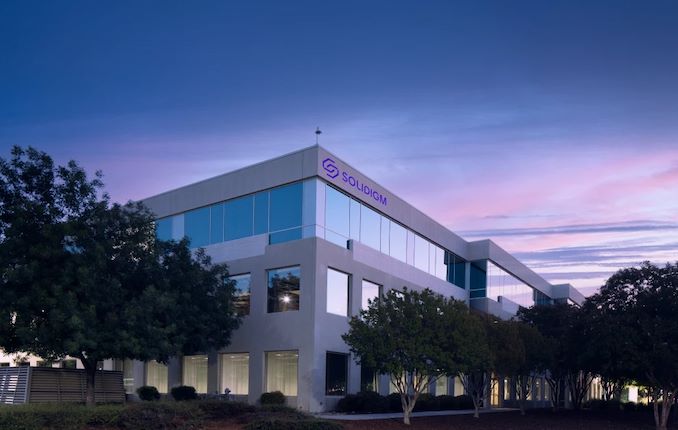
Solidigm Lays Off Employees Due to Industry Downturn

The solid state storage industry has been in a well-documented slide for the better part of the last year now. With storage product demand from both the client and datacenter businesses down well off of its highs in a notoriously cyclical business, we’ve already seen the big three memory manufacturers – SK hynix, Samsung, and Micron – significantly cut back on NAND production. And now the repercussions of this downturn are starting to spread to the SSD makers themselves, with Solidigm confirming that they have laid off employees due to the industry downturn.


Responding to an information request from AnandTech, Solidigm, Intel’s former SSD business unit that is now controlled by SK hynix, confirmed that the company has recently engaged in layoffs. Terming it a ‘modest’ reduction in headcount, the company disclosed that it ‘executed a modest workforce reduction’ on Wednesday, but declined to provide further details.


“Due to the prolonged downturn in the semiconductor industry and its impact on market conditions, Solidigm has executed a workforce reduction,” a statement by Solidigm reads. “The company is offering support and severance to colleagues who are departing. We are immensely grateful to our team members who have made meaningful contributions while at Solidigm. They will be greatly missed.”


Solidigm is not disclosing their new headcount, though as of September, 2022, the company had more than 2,000 employees in 20 locations around the world. Earlier this year the company closed down its branch in South Korea and hired agencies to handle its sales in the country. It looks like the current announcement also relates to various business, management, marketing, and sales roles.


Solidigm inherited its personnel from Intel’s NAND business unit, which the company agreed to sell to SK hynix in October, 2020. Solidigm closed the first stage of the deal in late 2021 and gained control over Intel’s NAND and SSD businesses and NAND memory fab in Dalian, China. Under the terms of the agreement with SK hynix, Intel transferred some of its NAND business unit employees to Solidigm to operate as a SSD business.


At this point there has not been a public announcement of the layoffs by Solidigm/SK hynix, so it remains unclear what the full impact to the business will be. SK hynix has just released its Q3’2023 earnings report, where the company reported net losses of 2.185 trillion won (~1.6B USD), and will be holding its quarterly conference call this evening (the morning of the 26th in Korea), at which point we may find out more about the company’s plans for their struggling subsidiary. Earlier reports to AnandTech had indicated more significant layoffs had taken place, though ‘modest’ leaves some room for interpretation.


Source: AnandTech – Solidigm Lays Off Employees Due to Industry Downturn

Network State Conference Announced in Amsterdam for October 30

Balaji Srinivasan, former CTO of Coinbase and author of the Network State, has announced his first Network State Conference.

This is a conference for people interested in founding, funding, and finding new communities.

Topics include startup societies, network states, digital nomadism, competitive government, legalizing innovation, and building alternatives. Speakers include Glenn Greenwald, Vitalik Buterin, Anatoly Yakovenko, Garry Tan, the Winklevosses, and Tyler Cowen. See presentations by startup society founders around the world, invest in them, and search for the community that fits you.

With this and Joseon, the first legally recognized cyber state, the network state movement is beginning to get interesting.

Another anonymous reader quotes from the Joseon Official X Account’s reply to Balaji’s announcement:

Joseon, the first legally recognized cyber nation state, will be there.

Interestingly, Joseon dons the same grey checkmark that is for governments on its X account.

Read more of this story at Slashdot.


Source: Slashdot – Network State Conference Announced in Amsterdam for October 30

Amazon Alexa IFTTT Automations Are About To Stop Working

IFTTT in a blog post said that Amazon is removing the service from Alexa beginning October 31st. “Once the integration is severed, users won’t be able to ask Alexa to trigger IFTTT applets,” reports The Verge. “Certain automations will stick around in the IFTTT app, but some will be archived on November 1st unless you take action.” From the report: If your IFTTT applets use a specific phrase or question as the trigger (“Alexa, trigger…” or “Alexa, what’s on my to-do list?”), that will convert to using an IFTTT button widget that you can either use in the app or add to your smartphone’s homescreen. But all other triggers set up through Alexa — say, an automation that runs when you add something to your to-do list — will be archived. You will also have to remove any Alexa ingredients from your applets or they’ll stop working.

IFTTT suggests a few alternatives to pursue to keep using it. In addition to button widgets, users can try Apple Shortcuts or the IFTTT note widget. It’s also still integrated with Google Assistant, though voice commands have to start with “activate” before an applet will trigger.

Read more of this story at Slashdot.


Source: Slashdot – Amazon Alexa IFTTT Automations Are About To Stop Working