OpenAI is rolling out new beta features for ChatGPT Plus members right now. Subscribers have reported that the update includes the ability to upload files and work with them, as well as multimodal support. From a report: Basically, users won’t have to select modes like Browse with Bing from the GPT-4 dropdown — it will instead guess what they want based on context. The new features bring a dash of the office features offered by its ChatGPT Enterprise plan to the standalone individual chatbot subscription. I don’t seem to have the multimodal update on my own Plus plan, but I was able to test out the Advanced Data Analysis feature, which seems to work about as expected. Once the file is fed to ChatGPT, it takes a few moments to digest the file before it’s ready to work with it, and then the chatbot can do things like summarize data, answer questions, or generate data visualizations based on prompts.
Samsung’s One UI 6 update brings a number of features to the Galaxy camera that promise to improve your photos. These six new features are marketed to both serious photographers as well as the average smartphone user.
There are a lot of Earths in the vast, varied, and occasionally blown-up Marvel multiverse—realities that have now grown to encompass the alternate universes not just in comics, but games, cartoons, live action TV, and yes, movies. But now Marvel is set to draw the ire of very specific nerds, and also presumably The…
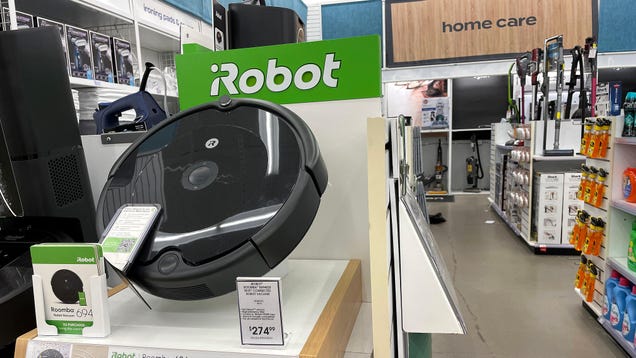
European Union antitrust regulators set a Feb. 14 deadline to approve Amazon’s $1.4 billion purchase of iRobot, the maker of Roomba, according to a report Reuters Monday. The extended deadline gives the European Commission two more months to approve the deal, which Amazon has lowered its bid for amid regulatory delays…
The Fire TV Stick Lite is on sale for $18 and the standard Fire TV Stick comes in at $20. The Fire TV Stick 4K costs $30, while the beefier TV Stick Max clocks in at $45. Finally, the Borg-like TV Cube will set you back $110, a savings of over 20 percent. This is the latest Cube, with a 2GHz octa-core processor and an HDMI input connection to plug in your cable box, which lets you use voice commands to watch regular cable TV.
The Fire Stick TV Max, typically $60, is the company’s most powerful streaming stick, with 40 percent more power than the Fire TV Stick 4K. To that end, you get 4K streams, fast app boot times and fluid menu navigation. This stick integrates with WiFi 6, Dolby Vision, HDR, HDR10+ and Dolby Atmos audio. Of course, you can use Alexa voice commands to do just about anything via the included voice remote.
The Fire TV Stick 4K is no slouch, offering support for WiFi 6 and 4K streams. It also ships with an Alexa remote and a 6-month subscription to one of Amazon’s many streaming platforms, MGM+. That’s the one with the Harold Perrineau-led supernatural thriller From. The standard Fire TV stick and the Lite don’t offer 4K streams, but they do ship with a voice remote.
This sale is part of an early Black Friday event and it remains unseen when prices will balloon up back to the original MSRPs. So if you’re looking to get a capable streaming stick, or cube, on the cheap you should probably be quick about it.
This article originally appeared on Engadget at https://www.engadget.com/amazon-fire-tv-streaming-devices-are-up-to-half-off-right-now-152416126.html?src=rss
The UK government confirmed plans to regulate cryptoasset activities more strictly, bringing them under the same regime as traditional financial services. From a report: The government intends to proceed with legislation in 2024 to implement the changes, according to a Treasury announcement on Monday, responding to a consultation it launched earlier this year. The plans include a mandate for crypto exchanges to write detailed requirements on admission standards and disclosures for token issuers when listing new assets. This could include information about a token’s underlying code, known vulnerabilities and risks.
The UK’s push to regulate crypto is part of a wider effort by Prime Minister Rishi Sunak to attract more digital-asset businesses and investment to the country, while at the same time protecting consumers. Crypto firms have long complained that a lack of clear rules has made it hard for them to operate in the UK. “We must make the UK a place where cryptoasset firms have the clarity needed to invest and innovate, and where customers have the protections necessary for confidently using these technologies,” said City Minister Andrew Griffith. “The UK is the obvious choice for starting and scaling a cryptoasset business.”
Being waterboarded with advertisements sort of feels like second nature on the likes of Facebook and Instagram, but for some in the EU willing to pay, that will change.
Enlarge/ A Lamborghini body undergoes inspection at the factory. (credit: Lamborghini)
Approximately 200 miles north of Rome, outside Bologna, lies the small town of Sant’Agata Bolognese, notable as the home of Automobili Lamborghini S.p.A. I recently visited the town and factory, ostensibly to learn about Lamborghini’s early sustainability efforts as the supercar manufacturer transitions to hybridization and electrification over the next few years. But first, Lambo put that step into context by dropping me into a V12-powered Aventador SVJ for a drive through the Italian countryside.
A jaunt through busy Bologna and the surrounding roads in such a track-focused Aventador quickly reveals the soul of Lamborghini as an automaker—raucous and enervating, all drama and sensory overload from start to finish. At first, the SVJ nags me as I upshift too soon or downshift too aggressively, but familiarity begins to inspire confidence.
Stop-start traffic in this car borders on torture. Italian traffic impinges upon any hopes of driving at speed. Instead, stuck in lines of unidentifiable hatchbacks never sold in the United States, I navigate narrow roundabouts and merging lanes pinched by barricades and balustrades at nearly every intersection.
X creators whose posts were amended or corrected in Community Notes are no longer eligible to receive ad revenue share, owner Elon Musk said on Sunday. Community Notes is a fact-checking program on X, formerly known as Twitter, allowing users to provide additional context or correct misinformation below the post.
Oil and gas companies in Pennsylvania are likely using dangerous forever chemicals in fracking wells, without having to legally disclose this to the state. This is making it difficult for vulnerable communities to know if they are at risk of contamination and health issues.
Meta’s Oversight Board wants the company to revise its policies to prevent it from incentivizing creators who post about dangerous extreme diets. As of now, creators posting through Meta’s Partner Monetization Program can earn ad revenues off of content that describes people trying to survive on only juice or no food…
Meta has confirmed it will start offering Facebook and Instagram users in Europe an ad-free subscription option in November. Those in the European Union, European Economic Area and Switzerland will be able to use both platforms without ads for a monthly fee of €10 ($10.61) if they sign up on the web or €13 ($13.79) if they take out a subscription through iOS and Android apps. The difference is to account for the cut of in-app payments that Apple and Google take.
Meta says that subscribers’ data will not be used for advertising purposes. For the time being, the subscription will cover all linked accounts in a user’s Accounts Center. Starting on March 1 next year, users will need to pay an extra €6 on the web and €8 more on iOS and Android for each linked account on which they want to have an ad-free experience.
Users will still have the choice to use Facebook and Instagram for free but with ads in their feeds. Meta says it will “continue to offer people free access to our personalized products and services regardless of income.”
The company claims it’s starting to offer the ad-free plan to comply with “evolving European regulations” such as the Digital Markets Act and stricter interpretations of the General Data Protection Regulation. Privacy regulators in the EU have pressured Meta to seek explicit consent from users before showing them targeted ads based on their activity. The company offered to oblige with that request but reportedly suggested to regulators that it should be able to charge users who opt out, likely in an attempt to make up for any shortfall in revenue. It says the Court of Justice of the European Union stipulated in a ruling “that a subscription model, like the one we are announcing, is a valid form of consent for an ads funded service.”
Reports over the last couple of months have suggested Meta would start offering ad-free plans in Europe as part of an effort to sate EU regulators, who haven’t shied away from penalizing the company. In May, the bloc fined Meta $1.3 billion for moving EU citizens’ data to servers in the US. It was previously reported that the ad-free plans could cost as much as $17 per month, but that isn’t quite the case.
Meanwhile, as part of its shifting ad strategy in Europe, Meta will temporarily stop showing any ads to users aged under 18 in areas where the ad-free subscription is available, as first reported by The Wall Street Journal. This will come into effect on November 6. Earlier this year, Meta placed stricter limits on the data that advertisers can use to show teens targeted ads.
This is the first time that Meta has offered an ad-free subscription option. Confirmation of the plans follows X (formerly Twitter) starting to offer two additional Premium (formerly Twitter Blue) tiers last week. The more expensive one of these allows users to get rid of ads for $16 per month.
This article originally appeared on Engadget at https://www.engadget.com/facebook-and-instagram-will-start-offering-ad-free-plans-in-europe-in-november-141650104.html?src=rss
Xbox’s latest console patch has hidden DRM that appears to brick some commonly used third-party Xbox accessories. While the company claims that these unauthorized controllers and USB ports somehow hurt gamers’ experience, gaming accessibility advocates say it could drastically limit what they can do with their own…
Despite an infatuation with most things e-ink, I’ve resisted the world of e-ink notebooks. I’m one of the few who once owned a Kindle DX, that huge e-reader that existed for only a few years before being retired.
In the last few years, we’ve seen Amazon get into e-ink scribes, while startups like ReMarkable have carved out their own niche with capable hardware for a reasonable price. Lenovo, having dabbled with e-ink on devices like the Yoga Book, has decided to join the fray with the Smart Paper.
While the product hasn’t yet launched in the US (and is now curiously absent from Lenovo’s retail site), the Smart Paper is now available in other countries, including the UK.
At around $400 (or £500 in the UK) it’s expensive. That’s more than the Kindle Scribe – and much more than the ReMarkable 2. I tried using the Smart Paper instead of a typical paper notepad, especially intrigued to see if the offline handwriting recognition would create a seamless way of sharing notes across to my laptop or phone. There are enough reasons that Lenovo’s digital notepad stands out – but not all of them are good.
Hardware
Photo by Mat Smith / Engadget
The Smart Paper has a relatively simple design, with an indent for the stylus, along the left side of the device, the only detail on the front of the device, besides the 10.3-inch E Ink touchscreen. You can interact with the screen through both the stylus and typical touch input, although you can’t scribble with your finger. The Smart Paper’s matte screen is crisp enough, at 227 pixels per inch (ppi), but noticeably a little jaggier than the Kindle Scribe’s 300-ppi screen, which is closer to a high-definition tablet display.
The hardware is solid too, and Lenovo bundles in both the stylus and a folio case for protecting the screen – which also keeps the stylus safe inside. Like the Kindle Stylus, the Lenovo pen can also be magnetically attached.
It’s more than sufficient for pencil sketches, doodles and note-taking. The Smart Paper’s matte finish makes it a delight to write on, and unlike the ReMarkable 2, it has a built-in light to use it regardless of ambient light levels. I only ever used it at its lowest brightness. (Who writes in the dark, anyway?) There’s also a built-in mic to record voice notes, but no speakers.
The Smart Paper’s stylus feels almost like a pencil, with a single flat side aiding grip. The writing experience is smooth and responsive – it’s not at iPad levels, but the 25 ms latency is smooth enough to ensure it doesn’t interrupt your writing flow. The nibs are replaceable, and it feels, well, as good as most other e-ink styluses I’ve used so far. Compared to the Kindle Scribe’s pen, I prefer Lenovo’s streamlined design: no buttons, no eraser ends, just an input device. Tech-wise, the stylus has tilt and pressure sensitivity (4,096 levels of pressure), to better show off nine different input styles, including some decent calligraphy nibs, highlighter and more straightforward pen options.
Software
Photo by Mat Smith / Engadget
Lenovo’s Smart Paper runs Android 11, but with an open-source twist, which should make for more powerful software that I’d hoped would go beyond Amazon’s Kindle Scribe. Sadly, unless you’re willing to dive into sideloading and software tinkering, it’s not remotely the Android experience I was hoping for. Instead, it’s a way for Lenovo to offer a responsive but simple touch interface.
The Smart Paper’s notepad templates run the gamut from simple lined paper to multi-column affairs for spreadsheets on the go. Lenovo claims there are 74 templates, but the majority of them are incredibly similar.
Beyond tapping with the stylus, you can use swipes and taps to navigate between notepad pages, but it’s so temperamental. A tappable icon to nudge you between pages – arrows would have been fine – would have saved me a lot of fruitless swipes.
Instead, I’d have to wrestle with sliding from the center of the display outwards. Do it wrong, and you’ll bounce out to your notepad library or go back a page instead of forward.
There are also the most basic of basic apps, including a clock, calendar and email client. The reader supports EPUB, PDF and Office files, alongside your digital notepads made on the Smart Paper itself. You can also record voice notes and even dictate notes, if you’re feeling lucky. There’s an eBooks.com app, which will be your principal place for book shopping.
The eBooks.com portal is… fine? Amazon, predictably, dominates ebooks, but at least there’s something here compatible with an established platform. Having said that, even books bought through eBooks.com don’t look great. There are no borders, so the text goes from edge to edge. Instead of jumping to the next page, the body text itself slides across the screen, which is a little jarring on a low-refresh-rate e-ink display. Barring the whole sideloading can of worms, the only way to get your Kindle books on here is to load them up on the Firefox browser, which requires a data connection.
You can pretty easily transfer compatible files if you already have a PDF of a book, or an EPUB file. There is one app that could make it easier to move files: Google Drive. But it isn’t on the homepage, it’s tabbed away. You also can’t use Drive to move your digital notebooks, though. Unfortunately, for that you need a special subscription.
This is where Lenovo’s Smart Paper app comes in. It offers cloud-synced notebook files, if you’re willing to pay for a subscription. It’s prohibitively expensive, though. Here in the UK, the shortest option is £9 per month for three months, with an upload limit of 5GB. It scales up from there for longer periods and even more storage. By comparison, Google Drive gives you 200 GB of storage for a mere £2.49 a month. (And it works on everything.)
Photo by Mat Smith / Engadget
Even more bafflingly, to subscribe to the service, you’ll need access to a Windows or Android device and subscribe from those apps. For some reason, Lenovo doesn’t offer subscription purchases on iOS, despite offering the app on the App Store. It’s yet another headache for an incredibly overpriced, underwhelming service. Unfortunately, there’s no easy workaround, even with those Google Drive shortcuts,
I initially thought the Smart Paper’s offline handwriting recognition would be the standout feature, but without easier ways to sync your files (or copy and paste text), it’s more of a handy skill that occasionally comes in useful. Once I’d converted my chicken scratch to digital text, I was still beholden to a data connection – and either Lenovo’s cloud sync or G Drive – to utilize those digital notes. I have a horrible feeling that, with pages upon pages of handwriting to convert, it would just be easier for me to type out my written notes, which defeats the purpose of the thing.
Wrap-up
Photo by Mat Smith / Engadget
The hardware is expensive, but solid. Despite those Android roots, though, it lacks the flexibility of upstarts like ReMarkable’s e-ink devices. While the Google Drive integration is useful, your digital scribblings are trapped in Lenovo’s pricey companion cloud service. Just a few more simple (relevant!) apps would also have made for a more compelling device. If there’s Google Drive hooks, why not try to get a basic interface for Google Docs? Even if it didn’t support handwriting recognition, the device lacks a way to transpose your text notes to a text editor easily.
Ignoring the poorly thought-out cloud subscription pricing, the Smart Paper is also almost £200 more than the ReMarkable 2. For that amount, the Smart Paper would have to be the perfect e-ink notepad, but it’s not.
This article originally appeared on Engadget at https://www.engadget.com/lenovo-smart-paper-review-a-solid-e-ink-tablet-spoiled-by-the-cost-133056534.html?src=rss
Last week we saw the announcement of Qualcomm’s first post-Nuvia laptop SoC design, the Snapdragon X Elite. A new brand name being anchored by a new, custom Qualcomm CPU core, the Snapdragon X Elite will be Qualcomm’s most aggressive entry into the laptop SoC market to date, with Qualcomm dedicating far more in the way of engineering resources – and marketing resources – into developing their latest generation Arm SoC for Windows laptops. Backed by Qualcomm’s custom Arm CPU core, Oryon, the company is aiming to make the Snapdragon X Elite a watershed moment for the Snapdragon brand, both carving out a piece of the lucrative Windows laptop market while also setting the stage for a generation of even more powerful smartphone SoCs in 2024.
As outlined in the company’s keynote and related announcements at last week’s Snapdragon Summit, Qualcomm is incredibly proud of (and gung-ho on) the Snapdragon X Elite, and they are eager to show off what it can do. With benchmark scores that, in some cases, are beating some of the best chips from Intel, AMD, and Arm, Qualcomm believes they have a hot hand with the Snapdragon X Elite, and they want to show it off as soon as possible. Even despite the fact that actual retail devices won’t be available until mid-2024 – at least another 6 months from now.
As part of that promotional push, alongside the public disclosures at last week’s event, Qualcomm also held an embargoed event for press and analysts to further demonstrate the Snapdragon X Elite and its performance. In a closed-door benchmarking session, the company set out a series of Snapdragon X Elite reference design laptops pre-loaded with popular benchmark software, most of which the company had also used in its performance claims from last week’s keynote sessions. The purpose of the session was to demonstrate in front of the gathered crowd that Qualcomm’s reported benchmark scores were no exaggeration or anomaly, and that the company had devices up and running right now that could hit those chart-topping scores. As the saying goes, “seeing is believing,” and Qualcomm’s benchmarking session was all about making sure the Snapdragon X Elite was being seen in action.
Microsoft is putting its foot down when it comes to unauthorized controller use. The company has begun banning any third-party Xbox controllers and accessories that aren’t part of the “designed for Xbox” hardware partner program. A gamer posted the news to Restera after plugging in an Xbox-compatible controller and receiving a notification about the ban.
The error code is explained in detail on Microsoft’s support blog: “From the moment you connect an unauthorized accessory and receive error code 0x82d60002, you’ll have two weeks to use the accessory, after which time it will then be blocked from use with the console.” Microsoft’s advice? Get in touch with the company you bought the controller from and return it — a bit savage, but very clear.
Microsoft’s motivation for the crackdown could stem, in part, from a desire to block cheat devices like Cronus Zen. Fellow gaming companies have been working hard to ban their use during gameplay. Of course, Microsoft’s decision could also stem from a probable increase in sales of their own controllers and accessories.
Brook Gaming, one of the companies with impacted products, released a statement assuring customers that it would “spare no effort in identifying potential solutions” to this new policy. In the meantime, there’s likely to be a drop in sales for its and other third-party manufacturers’ Xbox products.
This article originally appeared on Engadget at https://www.engadget.com/microsoft-bans-unauthorized-third-party-xbox-controllers-and-accessories-124703807.html?src=rss
Meta, in a blog post: To comply with evolving European regulations, we are introducing a new subscription option in the EU, EEA and Switzerland. In November, we will be offering people who use Facebook or Instagram and reside in these regions the choice to continue using these personalised services for free with ads, or subscribe to stop seeing ads. While people are subscribed, their information will not be used for ads.
People in these countries will be able to subscribe for a fee to use our products without ads. Depending on where you purchase it will cost $10.5/month on the web or $13.75/month on iOS and Android. Regardless of where you purchase, the subscription will apply to all linked Facebook and Instagram accounts in a user’s Accounts Center. As is the case for many online subscriptions, the iOS and Android pricing take into account the fees that Apple and Google charge through respective purchasing policies.
Enlarge/ The business end of the Falcon Heavy rocket launches the Psyche mission.
Welcome to the Daily Telescope. There is a little too much darkness in this world and not enough light; a little too much pseudoscience and not enough science. We’ll let other publications offer you a daily horoscope. At Ars Technica, we’re going to take a different route, finding inspiration from very real images of a universe that is filled with stars and wonder.
Good morning. It is October 30, and you didn’t think I would miss out on a rocket launch photo from time to time, did you?
This photograph was taken earlier this month, on October 13, during the mid-morning launch of the Psyche asteroid mission on a Falcon Heavy rocket with its 27 Merlin engines. The Psyche mission will study a metal-rich asteroid with the same name, and it is NASA’s first spacecraft ever built to study an asteroid that has more metal than rock or ice. It’s super intriguing because we don’t know what we will find once we get there.
President Joe Biden signed a wide-ranging executive order on artificial intelligence Monday, setting the stage for some industry regulations and funding for the U.S. government to further invest in the technology. From a report: The order is broad, and its focuses range from civil rights and industry regulations to a government hiring spree. In a media call previewing the order Sunday, a senior White House official, who asked to not be named as part of the terms of the call, said AI has so many facets that effective regulations have to cast a wide net. “AI policy is like running into a decathlon, and there’s 10 different events here,” the official said. “And we don’t have the luxury of just picking ‘we’re just going to do safety’ or “we’re just going to do equity’ or ‘we’re just going to do privacy.’ You have to do all of these things.”
The official also called for “significant bipartisan legislation” to further advance the country’s interests with AI. Senate Majority Leader Chuck Schumer, D-N.Y., held a private forum in September with industry leaders but has yet to introduce significant AI legislation. Some of the order builds on a previous nonbinding agreement that seven of the top U.S. tech companies developing AI agreed to in July, like hiring outside experts to probe their systems for weaknesses and sharing their critical findings. The order leverages the Defense Production Act to legally require those companies to share safety test results with the federal government.
The Gizmodo Monday Puzzle is back from summer hiatus! After a long season of sunshine, flip flops, and mental atrophy, it’s time to fall back into the cool, brisk world of rationality. Our last challenge before the break was also our most controversial yet. The comments section bubbled with animated debate over the…