wiredmikey shares a report from SecurityWeek: In a surprising development on Monday that is spooking the cybersecurity community, the SEC filed charges against SolarWinds and its Chief Information Security Officer (CISO), Timothy G. Brown, alleging that the software company misled investors about its cybersecurity practices and known risks. The charges stem from alleged fraud and internal control failures related to known cybersecurity weaknesses that took place between the company’s October 2018 initial public offering (IPO) and its December 2020 revelation of the infamous supply chain cyberattack dubbed “SUNBURST.” […] The SEC’s complaint also points to internal communications among SolarWinds employees, including Brown, in 2019 and 2020, which raised questions about the company’s ability to protect its critical assets from cyberattacks.
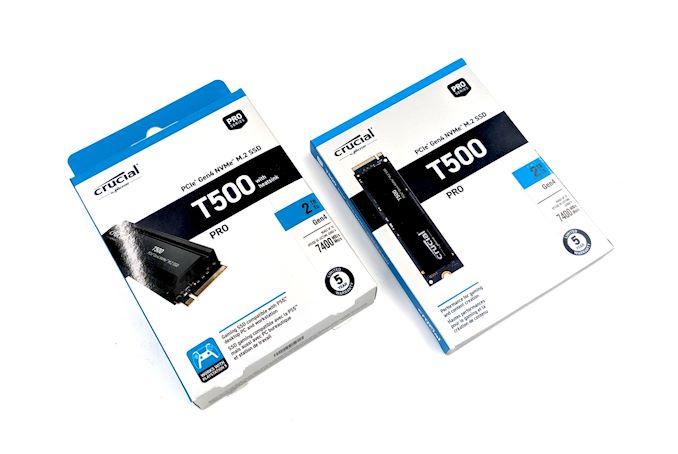
Crucial is unveiling its latest addition to its Gen4 consumer NVMe SSD lineup today – the T500 PCIe 4.0 M.2 2280 NVMe SSD. It takes over flagship duties from the Crucial P5 Plus in this category. The company had started to put focus on the high-end consumer SSD segment earlier this year with the launch of the T700 Gen5 NVMe SSD – it was one of the first to offer more than 12 GBps read speeds. The company is now introducing a T-series drive in the Gen4 segment with similar flagship credentials – sequential read and write speeds of 7400 / 7000 MBps.
The Crucial T500 is one of the first consumer SSDs to utilize the Phison E25 controller launched last year. The Micron 232L 3D TLC NAND in the SSD has been in mass production for a few quarters now, allowing the company to price the product competitively. Similar to the T700, this drive is targeted towards gamers, content creators, and professional users. While PCIe 5.0 SSDs are slowly getting introduced into the market, Gen4 units are still a sweet spot in terms of system compatibility, price, and performance for many use-cases.
The T500 is launching in three capacities and two variants – a heatsink and non-heatsink one. The 500GB version comes in a non-heatsink SKU only, while the 1TB and 2TB ones come in both variants. Crucial is promising a 4TB version next year. The company indicated that the heatsink SKUs is low-profile enough to be be used in the PlayStation 5.
Phison has been pushing DirectStorage optimizations in its high-end controllers, and it is no surprise that the T500 advertises the use of Phison’s ‘I/O+ Technology’ to appeal to gamers. Given its high-performance nature, it is no surprise that the E25 controller needs to be equipped with DRAM for managing the flash translation layer (FTL). Crucial is using Micron LPDDR4 DRAM (1GB / TB of flash) in the T500 for this purpose.
Flash pricing is quite low, with the memory industry being caught up in one of its downturns currently. While this has not been kind to the revenue numbers for the NAND flash / DRAM vendors, it has translated to excellent launch pricing for even flagship SSDs such as the Crucial T500 – starting from as low as 8.5¢/GB for the 2TB non-heatsink SKU.
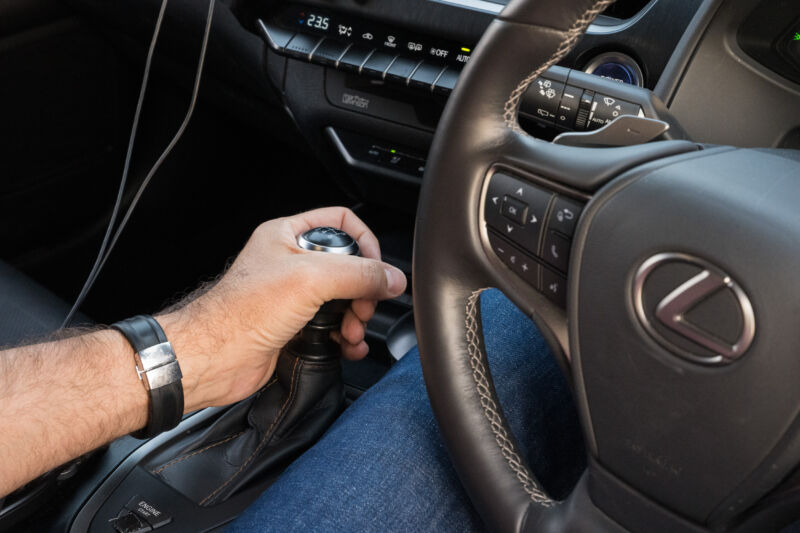
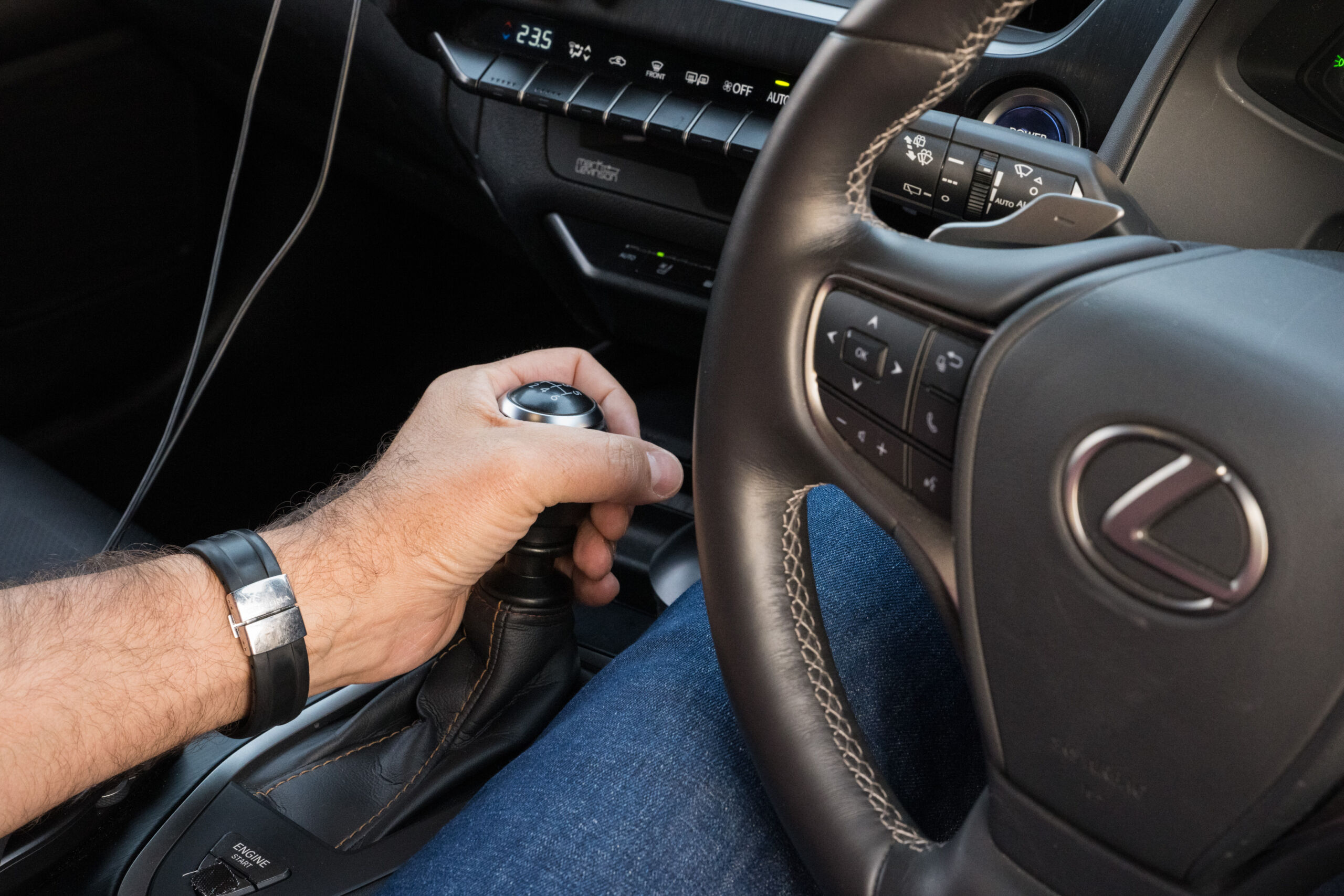
Enlarge/ The Lexus UX300e is an electric crossover available in Europe, China, and Japan, but not usually with three pedals or a gear lever. (credit: Toyota)
A manual car requires a lot more of the driver. That level of forced engagement brings with it a sort of focus that can make the simple act of driving a lot more fun. In an ideal world, it would be possible to layer that kind of engagement on top of the otherwise ideal EV experience.
That is exactly what Toyota has done with what it calls the “Manual BEV concept.” Think of it as an EV that brings all the hands-on enjoyment of a manual transmission—despite lacking a manual transmission. It’s something of a testbed to find ways to bring more fundamental driver enjoyment to the next generation of battery-powered electric vehicles, and after running a few laps around Toyota’s test track in one, I’m convinced every sports-oriented EV in the future needs this.
Apple has warned over a half dozen Indian lawmakers from Prime Minister Narendra Modi’s main opposition of their iPhones being targets of state-sponsored attacks, these people said Tuesday, in a remarkable turn of events just months before the general elections in the South Asian nation. From a report: Rahul Gandhi, Indian opposition leader, said in a media briefing Tuesday that his team had received the said alert from Apple. Shashi Tharoor, a key figure from the Congress party; Akhilesh Yadav, the head of the Samajwadi Party; Mahua Moitra, a national representative from the All India Trinamool Congress; Priyanka Chaturvedi of Shiv Sena, a party with notable influence in Maharashtra reported that they too had been notified by Apple regarding a potential security attack on their iPhones. Asaduddin Owaisi, the leader of the All-India Majlis-e-Ittehadul Muslimeen (AIMIM); Raghav Chadha from AAP, originating from an anti-corruption crusade a decade prior and later securing a political foothold in the national capital region; Sitaram Yechury, the General Secretary of the Communist Party of India; alongside Congress spokesperson Pawan Khera were also impacted, they said. Journalists Siddharth Varadarajan and Sriram Karri, along with Observer Research Foundation (ORF) India President Samir Saran shared that they had been served with identical warnings from Apple.
Capping off a busy month for new processor announcements, Apple this week has announced a new generation of M-series Apple Silicon processors – and with it, a newly refreshed generation of MacBook Pros. Anchored by the new M3 series of processors, Apple has opted to launch most of the stack in a single go, announcing products based on the vanilla M3, and more powerful M3 Pro and M3 Max SoCs at the same time. Built on TSMC’s N3B process, Apple is looking to once again raise the bar on both CPU and GPU performance, as well as setting a new record for the number of transistors used in a single laptop SoC.
The launch of the new M3 chips goes hand-in-hand with new MacBook Pro laptops, as well as a refreshed 24-inch iMac. But as Apple isn’t making any external design or feature changes to any of these devices – they’re all the same dimensions with the same ports and parts as before – they are a straightforward update to the internals of these devices. As a result, the star of the show for these latest product launches are the new M3 family of SoCs, and the features and performance they bring.
With their latest generation of high-performance silicon for Macs (and, undoubtedly, high-end iPads), Apple is seemingly taking full advantage of the density and power improvements offered by TSMC’s N3B process. But at the same time, they are also changing how their SoCs are configured; the M3 Pro in particular is a significant departure from its predecessor. So although the M3 chips do not in and of themselves rise to the level of “groundbreaking”, there are some important changes here that we’ll be taking a look at.
Enlarge/ A view of Jupiter from 7,700 km above the surface. (credit: NASA/JPL-Caltech/SwRI/MSSS/ Image processing by Vladimir Tarasov)
Welcome to the Daily Telescope. There is a little too much darkness in this world and not enough light; a little too much pseudoscience and not enough science. We’ll let other publications offer you a daily horoscope. At Ars Technica, we’re going to take a different route, finding inspiration from very real images of a universe that is filled with stars and wonder.
Good morning. It is October 31—or, for people in many countries around the world, Halloween.
According to the US Library of Congress, Halloween has its roots in the ancient Celtic festival of Samhain. This was a pagan celebration to welcome the harvest at the end of summer, when people would light bonfires and wear costumes to ward off ghosts. Celtic people believed that during the festival, spirits walked the Earth. Later on, Christian missionaries introduced All Souls’ Day on November 2, which perpetuated the idea of the living coming into contact with the dead around the same time of year.
The UK is currently dealing with an alarming rise of crypto—the diarrhea-causing intestinal parasite, not the baffling currency. In a report this month, health officials documented a much higher number of cases than expected so far in 2023. It’s not clear yet why crypto is surging in the country, though the increase…
Enlarge/ It’s no trick, 3DS players are treating themselves to StreetPass tags this Halloween. (credit: Aurich Lawson | Getty Images)
When it comes to unique gimmicks, the Nintendo 3DS is mainly remembered for the wow factor of its glasses-free stereoscopic 3D effects (which Nintendo would eventually abandon with the introduction of the 2DS line). But today, more than 12 years after the launch of the 3DS, a group of dedicated players has been gathering to ensure that another unique 3DS feature still has a bright and active future after being abandoned by Nintendo.
We’re talking about StreetPass, the proto-social-network that Nintendo devised to let 3DS owners instantly and silently exchange Mii avatars (and some basic information) when two consoles get close enough to communicate wirelessly. Those exchanged Miis can then be used as companions in simple minigames, like tiny board-game pieces crafted to look like 3DS-owning friends and strangers you pass on the street.
Even as most portable gamers have given up their 3DS consoles for the Switch or Steam Deck, thousands of 3DS fans have met at various events this year to trade StreetPass “tags” with their nostalgic brethren. The next such set of gatherings will take place on “StreetPass Halloween,” when participants are encouraged to throw a system in their candy bag, leave one on and idle near a candy distribution door, or even just drive slowly around town with a 3DS in the front seat.
During its Scary Fast product event last night, Apple officially debuted its new M3, M3 Pro and M3 Max chips. The company is positioning the M3 chips as major upgrades over its M1 hardware — if you bought an M2 system, you’re probably not itching for a replacement just yet.
The M3’s GPU is the biggest leap forward, delivering new features, like hardware-accelerated ray tracing and mesh shading, enabling more realistic lighting and better geometry handling. If you’re into chip architecture and other fun endeavors, the M3 chips are also notable for being the first PC chips built on a three-nanometer process — both the M1 and M2 families are based on a 5nm process. This means more transistors packed into the same space, which helps with power efficiency, as well as providing better overall performance. The M3 series will feature in the revamped MacBook Pro 14-inch and 16-inch (more on those below), as well as the 24-inch iMac.
That new chip will make the new iMac up to twice as fast as its predecessor, but there aren’t too many upgrades elsewhere in the latest Mac. Apple is sticking with a 4.5K Retina display, for instance. There are some handy changes on the connectivity front, now with support for Wi-Fi 6E and Bluetooth 5.3 The new iMac starts at $1,299 and ships on November 7.
— Mat Smith
You can get these reports delivered daily direct to your inbox. Subscribe right here!
The 14-inch MBP with a base M3 processor will cost $1,599 — the first time the 14-inch laptop has hit that low of a price. The M3 Pro iteration will still cost you $1,999, and prices go up from there for M3 Max options. Meanwhile, a base 16-inch MacBook Pro with an M3 Pro chip will have the same $2,499 starting price as its M2 Pro predecessor. Alas, the 13-inch version is no more. Farewell, Touch Bar.
In the last few years, we’ve seen Amazon get into e-ink scribes, while startups like ReMarkable have carved out their own niche with capable hardware for a reasonable price. Lenovo, having dabbled with e-ink on devices like the Yoga Book, has joined the fray with a dedicated device, the Smart Paper. While the product hasn’t yet launched in the US, the Smart Paper has launched elsewhere, including the UK. At around $400 (or £500 in the UK), it’s expensive. The hardware is impressive (and useful), but it’s all tainted by a subscription service that demands even more money.
The ‘slight change’ is the latest attempt to address misinformation.
X will no longer pay creators for tweets promoting misinformation. Elon Musk said the company is making a “slight change” to its monetization program, and tweets fact-checked via community notes will no longer be eligible for payouts.
The latest change comes as researchers, fact-checkers and journalists have raised the alarm about the amount of viral misinformation spreading on X amid the ongoing conflict in Israel and Gaza. Recent analysis from NewsGuard, a nonprofit that tracks the spread of misinformation, found 74 percent of “the most viral posts on X advancing misinformation about the Israel–Hamas war are being pushed by ‘verified’ X accounts.”
This article originally appeared on Engadget at https://www.engadget.com/the-morning-after-apple-reveals-a-new-macbook-pros-m3-chips-and-a-new-imac-111552483.html?src=rss
Enlarge/ GreenPower has given its class-D electric school bus a big battery bump. (credit: GreenPower)
On Tuesday morning, the West Virginia-based GreenPower Motor Company debuted its latest electric vehicle. It’s the newest version of its class-D electric school bus, now fitted with a great big battery to give the big yellow bus the kind of range it needs for longer routes.
GreenPower has been building electric buses for almost a decade now, and in 2019 it delivered the first BEAST buses (it stands for Battery Electric Automotive School Transportation) to a school district in California. More recently, GreenPower has been testing its buses in real world conditions, conducting a nine-month pilot program in West Virginia that split its time across 18 different school districts (for six weeks each), clocking up more than 32,000 miles (51,500 km) in the process.
“We found that in ideal conditions, so not a real cold morning or anything like that, but the bus was getting between 1.4 and 1.5 [miles] to 1 percent state of charge. So that means that your range on 100 percent state of charge is in that 140 to 150 mile range,” explained Mark Nestle, vice president of business development and strategy at GreenPower.
Calling all Beats fans — or anyone considering an earbud upgrade, really — the Apple-owned tech brand has major sales going right now across its lineup. Notably, a 20 percent discount on the Beats Fit Pro brings the noise-canceling earbuds back down to their all-time low price for newer colors, coral pink, volt yellow and tidal blue. The earbuds have dropped to $160 from $200, a deal last seen on October Prime Day.
When the Beats Fit Pro launched in 2021, we were impressed with its comfortable fit and inclusion of spatial audio, hands-free Siri and solid noise-canceling abilities. The earbuds work on Apple’s H1 Platform, come with dynamic head tracking and can hold up to seven hours of battery without noise canceling, 30 hours with the case.
The Beats Studio Buds + are also $40 off, down to $130 from $170. They don’t have all of the Fit Pro’s features — the Studio Buds + use the company’s Proprietary Platform and don’t offer dynamic head tracking, ANC that adapts to external noise or bright colors. However, they do have a better battery life, lasting for nine hours when noise canceling is off and 36 hours with the case.
If you’re more of a headphone person, the last — and best — deal is for you. The Beats Studio Pro headphones are down to $200 from $350 — a 43 percent discount. These headphones offer ANC and transparency modes, lossless audio and a range of on-ear controls. Plus, they have the longest battery life, lasting up to 40 hours and offering a 10-minute Fast Fuel charge for another four hours of listening time.
This article originally appeared on Engadget at https://www.engadget.com/the-beats-fit-pro-earbuds-drop-back-down-to-a-record-low-ahead-of-black-friday-101752253.html?src=rss
Google says it’ll issue a system update to fix a major storage bug in Android 14 that has caused some users to be locked out of their devices. Ars Technica reports: Apparently one more round of news reports was enough to get the gears moving at Google. Over the weekend the Issue tracker bug has been kicked up from a mid-level “P2” priority to “P0,” the highest priority on the issue tracker. The bug has been assigned to someone now, and Googlers have jumped into the thread to make official statements that Google is looking into the matter. Here’s the big post from Google on the bug tracker […]. The highlights here are that Google says the bug affects devices with multiple Android users, not multiple Google accounts or (something we thought originally) users with work profiles. Setting up multiple users means going to the system settings, then “Multiple users,” then “Allow multiple users,” and you can add a user other than the default one. If you do this, you’ll have a user switcher at the bottom of the quick settings. Multiple users all have separate data, separate apps, and separate Google accounts. Child users are probably the most popular reason to use this feature since you can lock kids out of things, like purchasing apps.
Shipping a Google Play system update as a quick Band-Aid is an interesting solution, but as Google’s post suggests, this doesn’t mean the problem is fixed. Play system updates (these are alternatively called Project Mainline or APEX modules) allow Google to update core system components via the Play Store, but they are really not meant for critical fixes. The big problem is that the Play system updates don’t aggressively apply themselves or even let you know they have been downloaded. They just passively, silently wait for a reboot to happen so they can apply. For Pixel users, it feels like the horse has already left the barn anyway — like most Pixel phones have automatically applied the nearly 13-day-old update by now. Users can force Play system updates to happen themselves by going to the system settings, then “Security & Privacy,” then “System & updates,” then “Google Play system update.” If you have an update, you’ll be prompted to reboot the phone. Also note that this differs from the usual OS update checker location, which is in system settings, then “System,” then “System update.” The system update screen will happily tell you “Your system is up to date” even if you have a pending Google Play system update. It would be great to have a single location for OS updates, Google Play System/Mainline updates, and app updates, but they are scattered everywhere and give conflicting “up to date” messages.
We’re still a few weeks away from Black Friday, but if you’re looking to get a new electric toothbrush, you can get a deal on one of Oral-B’s models as early as today. The Oral-B iO Series 7 electric toothbrush that comes with two brush heads is currently on sale at Amazon for $150, which is a record low for the device that typically sells for $200. Even better, you can get it for $140 if you apply the website’s $10 coupon, so don’t forget to tick that little box right next to it.
We named the Oral-B iO Series 7 as our best overall smart electric toothbrush for the year because its price sits right in the middle of the category’s price spectrum. With this discount, it’s become an even more appealing option. The device is equipped with an internal gyroscope and accelerometer, giving it the capability to detect its position inside your mouth while you brush. If you switch on guided brushing in the app, you’ll see a 3D illustration of your teeth turn blue as you brush — the app can even tell you if you’ve missed specific areas by the end of the two-minute session.
The app tracks unguided brushing sessions, as well, taking note of their time and durations. On the toothbrush itself, you’ll see a built-in LED screen that displays a time and the mode you’ve chosen, so you don’t always need to have the app open nearby. Take note that the device comes with five cleaning modes, including one you can use if you have sensitive teeth. And if you tend to press down on your toothbrush, one useful feature is that the ring of light at the base of the brush flashes red if you push too hard and glows green when you exert just the right amount of pressure.
As we mentioned in our best electric toothbrush list, the Oral-B iO Series 7 is nearly identical to the higher-tier iO Series 9. The only difference is that the latter comes with extra modes, a full color screen and an even more detailed app-guided brushing. Still, if you want give the Oral-B iO Series 9 a try, it’s also currently on sale at Amazon for $250, which could go as low as $230 with its clippable coupon.
This article originally appeared on Engadget at https://www.engadget.com/our-favorite-smart-electric-toothbrush-is-cheaper-than-ever-in-an-early-amazon-black-friday-deal-074549994.html?src=rss
Around 66 million years ago, the Chicxulub asteroid caused a mass extinction event, killing three-quarters of life on Earth, including the dinosaurs. A new study suggests that fine silicate dust from the asteroid, which remained in the atmosphere for up to 15 years, played a more significant role in causing the impact winter and extinction than previously thought. Phys.Org reports: Fine silicate dust from pulverized rock would have stayed in the atmosphere for 15 years, dropping global temperatures by up to 15 degrees Celsius, researchers said in a study in the journal Nature Geoscience. […] For the study, the international team of researchers was able to measure dust particles thought to be from right after the asteroid struck. The particles were found at the Tanis fossil site in the US state of North Dakota.
Though 3,000 kilometers (1,865 miles) away from the crater, the site has preserved a number of remarkable finds believed to be dated from directly after the asteroid impact in sediment layers of an ancient lake. The dust particles were around 0.8 to 8.0 — micrometers — just the right size to stick around in the atmosphere for up to 15 years, the researchers said.
Entering this data into climate models similar to those used for current-day Earth, the researchers determined that dust likely played a far greater role in the mass extinction than had previously been thought. Out of all the material that was shot into the atmosphere by the asteroid, they estimated that it was 75 percent dust, 24 percent sulfur and one percent soot. The dust particles “totally shut down photosynthesis” in plants for at least a year, causing a “catastrophic collapse” of life, [said Ozgur Karatekin, a researcher at the Royal Observatory of Belgium].
Samsung has been reporting steep profit declines and record-breaking losses over the past quarters, and while it has yet to go back to its previous numbers, it sounds optimistic for the future in its latest earnings report. The company credited the strong sales of its mobile flagship devices and its premium displays for doing better the past three months than the previous quarters. Samsung also said that its Device Solutions (DS) division, which includes its memory and foundry businesses, has narrowed its losses. It even expects demand for memory chips to recover gradually with the rise in popularity of artificial intelligence.
The company has posted a consolidated revenue of KRW 67.40 trillion ($49.9 billion) for the third quarter of 2023, which shows a respectable 12 percent increase from the previous quarter’s. It reported KRW 2.43 trillion ($1.80 billion) in profit, as well, and while that’s a third of what it earned in the same period of 2022 — KRW 10.85 trillion or $7.6 billion — that figure still much better than the $527 million profit it reported for the second quarter.
For its mobile and network business, in particular, it reported KRW 30 trillion ($22.17 billion) in consolidated revenue, as well as KRW 3.30 trillion ($2.44 billion) in operating profit. There was a higher demand in the third quarter compared to the second, Samsung said, thanks to the global smartphone market showing signs of recovery. If you’ll recall, the company mostly blamed its drop in revenue for the second quarter to a decline in smartphone shipments. For this period, it says the Galaxy S23 series has maintained “solid sales momentum,” while its foldables, tablets and wearables recorded strong sales. It expects smartphones sales to grow next quarter due to the holiday season and for the market to bounce back next year “as consumer sentiment stabilizes in anticipation of a global economic recovery.”
Another segment that did well in the third quarter is Samsung’s mobile panel business, which “reported a significant increase in earnings on the back of new flagship model releases by major customers.” As Bloomberg notes, those new flagship model releases could include Apple’s iPhone 15. Samsung intends to continue focusing on OLED panels for its mobile display business and plans to establish a supply chain catering to the augmented and virtual reality market.
Finally, the company’s semiconductor division posted KRW 3.75 trillion ($2.77 billion) in operating losses for the quarter, which is slightly better than its KRW 4.36 trillion ($3.23 billion) losses in the previous one. Samsung expects the demand for PCs and mobile devices to improve next period, and it’s anticipating strong server demand from cloud service providers thanks to generative AI applications.
This article originally appeared on Engadget at https://www.engadget.com/samsung-credits-strong-smartphone-and-mobile-display-sales-for-income-growth-053947279.html?src=rss
An anonymous reader quotes a report from Bloomberg: GSK will pay 23andMe $20 million for access to the genetic-testing company’s vast trove of consumer DNA data, extending a five-year collaboration that’s allowed the drugmaker to mine genetic data as it researches new medications. Under the new agreement, 23andMe will provide GSK with one year of access to anonymized DNA data from the approximately 80% of gene-testing customers who have agreed to share their information for research, 23andMe said in a statement Monday. The genetic-testing company will also provide data-analysis services to GSK.
23andMe is best known for its DNA-testing kits that give customers ancestry and health information. But the DNA it collects is also valuable, including for scientific research. With information from more than 14 million customers, the only data sets that rival the size of the 23andMe library belong to Ancestry.com and the Chinese government. The idea for drugmakers is to comb the data for hints about genetic pathways that might be at the root of disease, which could significantly speed up the long, slow process of drug development. GSK and 23andMe have already taken one potential medication to clinical trials: a cancer drug that works to block CD96, a protein that helps modulate the body’s immune responses. It entered that testing phase in four years, compared to an industry average of about seven years. Overall, the partnership between GSK and 23andMe has produced more than 50 new drug targets, according to the statement.
The new agreement changes some components of the collaboration. Any discoveries GSK makes with the 23andMe data will now be solely owned by the British pharmaceutical giant, while the genetic-testing company will be eligible for royalties on some projects. In the past, the two companies pursued new drug targets jointly. GSK’s new deal with 23andMe is also non-exclusive, leaving the genetic-testing company free to license its database to other drugmakers.
It’s Halloween eve, and Apple brought along a few new desktop products to bask in the dark joys of spooky season, most notably a new Space Black color for the company’s leading laptops. Gizmodo had the opportunity to trick or treat through the new M3-powered laptops and desktop PCs as the company is trying to tout…
In a not-so-spooky event on Halloween Eve, Apple revealed the details of its latest MacBook Pro and iMac desktop computers. Both lineups have been refreshed with Apple’s new M3 silicon, the company’s first 3nm process outside of the iPhone.
At Apple’s “Scary Fast” event today, the company unveiled a refreshed 24-inch iMac, entry-evel MacBook Pro that ditches the Touch Bar, and its latest “M3” in-house chips. The Verge reports: As expected, Apple’s M3 chips took the spotlight during this month’s event. The new lineup includes the M3, M3 Pro, and M3 Max chips, which Apple says mark the “first personal computer chips” made using the more efficient 3-nanometer process. In addition to offering a “faster and more efficient CPU,” the trio of chips comes with an updated GPU that supports ray tracing, mesh shading, and Dynamic Caching — a feature that optimizes the amount of memory the device uses during tasks. Apple’s M3 chips offer up to 128GB of unified memory, with the most powerful M3 Max chip coming with up to 92 billion transistors, a 40-core GPU, and a 16-core CPU.
The new 24-inch iMac is getting an M3-flavored upgrade that Apple says offers two times faster performance than its M1-equipped predecessor. Along with the new chip, the refreshed iMac features a 4.5K Retina display with more than 1 billion colors, support for Wi-Fi 6E, and a 1080p webcam. The iMac also offers up to 24GB of unified memory and comes in seven colors: green, yellow, orange, pink, purple, blue, and silver. There are also color-matched accessories that come with the iMac, but they still feature Lightning connectors. The 24-inch iMac costs $1,299 with an eight-core CPU or $1,499 with a 10-core chip. You can preorder it starting today, with availability starting on November 7th.
Alongside the M3 Pro and M3 Max-equipped MacBook Pro models, Apple is releasing a cheaper 14-inch MacBook Pro that comes with the base M3 chip and starts at $1,599. The device replaces the 13-inch MacBook Pro with an M2 chip that Apple released last year and offers performance that’s up to 60 percent faster. The Touch Bar model is being discontinued, which means it’s all physical keys from here out. There are some drawbacks to this entry-level model, though: it features a meager 8GB of RAM and comes in just silver and space gray variations — the black color is exclusive to the higher-end MacBook Pros. The device is available to preorder today and officially launches on November 7th.