
This story was originally published by Grist. Sign up for Grist’s weekly newsletter here.
Source: Gizmodo – Why Can’t We Just Quit Cows?

This story was originally published by Grist. Sign up for Grist’s weekly newsletter here.
Source: Gizmodo – Why Can’t We Just Quit Cows?
Board games are great gifts for anyone who wants to spend time with loved ones and disconnect from technology. But instead of pulling out the same old classics like Monopoly and Scrabble, we recommend giving some new board games a try. Thankfully, this space is full of unique sets that run the gamut from word puzzles to whodunnits to calming playthroughs that showcase the beauty of the little things in life. Here, we’ve compiled a list of games that you might not have heard of, but will still make excellent gifts this holiday season. From games with giant monsters to those with haunted mansions, we’re sure at least one of these will be a hit with friends and family.
AMD continues to showcase the benefits of focused management and solid execution. This quarter, (3rd quarter 2023), represents impressively strong results in what has been an uneven market with nervous customers and ever higher interest rates collectively creating a drag on sales outside of AMD’s control. And this wasn’t a one-shot, either. AMD’s outlook is also very positive and aggressive. Given AMD CEO’s Lisa Su tends to be conservative in her outlook, that is a good thing.
Let’s talk about some of the high and lowlights of AMD’s financial results.
AMD’s data center efforts were particularly powerful in what has been a relatively soft market due to high capital costs and concerns about consumer demand (which has stayed surprisingly strong). While the related revenue was flat year-over-year, it was up 21% sequentially, showcasing impressive sales performance last quarter in a soft market. AMD reported double digit growth in the Cloud.
In addition, AMD reported that Dell, Lenovo, Supermicro and several others launched new EPYC CPU platforms, increasing the total available market for the parts in telco, retail and manufacturing applications.
EPYC has been doing surprisingly well and I’ve heard from several OEMs that they are impressed not only with the part but with AMD’s execution over the last 5 to 10 years. While other firms seemed to struggle through downturns and were forced to downsize, AMD just plugged along, and this resulted in consistency, reliability and increased trust between AMD and the OEMs it services.
AMD’s MI300X AI-focused GPU platform also saw a huge uptick to around $300M against an earlier estimate closer to $200M. MI300a GPUs weren’t material in volume given they just started production recently, but demand is reported to be high and projections for these products are expected to be very strong well into 2024, especially given AI demand is through the roof.
AMD got some good news from Lamini which announced the achievement of software parity with NVIDIA’s CUDA when running AMD’s MI250 AI GPU accelerators. Since the newer parts perform at even higher levels, competition in this segment is clearly speeding up.
As a result, AMD expects that the MI300 family will be the fastest product to ramp up to $1B in revenue in AMD’s history.
AMD hit the ball out of the park in this segment with annual revenue growth (year-over-year) of a whopping 42% (46% sequentially) doing $1.5B in related revenue. It drove down inventory levels sharply as the Ryzen 7000 was particularly strong. Client CPUs powered by the Zen 4 core increased by more than 100% sequentially and AMD continues to dominate in the high-end workstation segment with its new Threadripper Pro workstation CPUs (also based on the Zen 4 core). These Threadripper Pro workstations are amazingly powerful. Bringing them to market represented a substantial risk that obviously paid off. Again, this shows that it often takes big risks to move against an entrenched powerful competitor and Intel is both. Dell, HP and Lenovo (who pioneered these machines) have all announced new workstations based on the latest version of Threadripper.
Looking forward, AMD is in lockstep with Intel and Qualcomm about AI and hybrid AI growth in the enterprise and anticipate a huge amount of demand once buyers fully understand the productivity increases associated with using advanced generative computing solutions like Microsoft’s Copilot.
Gaming took a hit with an 8% decline largely due to aging gaming consoles. This is unlikely to recover until the consoles are refreshed but a full refresh isn’t due until 2025/26 (though Microsoft is expected to have an update in 2024 which could result in more demand next year for that platform).
It’s just the nature of the console market, which is a razor and blade market. The consoles are sold at or near cost and the vendors make their money off content. There is no real incentive to fast refresh, so you get these typical hills and valleys which AMD has no control over.
AMD had an impressively strong quarter due to high focus, impressive execution, and willingness to take risks with products like Threadripper Pro (I still wonder what would happen if it had created a similar product in its graphics line.) Since engineers and gamers chase performance, the upside should be equally fascinating were this done like Threadripper was done.
In the end, AMD leaves the quarter stronger than when it began and well positioned for the coming wave of hybrid AI and the amazing things we’ll be doing with these LLM (Large Language Models) for our near-term AI future.
Source: TG Daily – AMD’s Amazingly Strong Q3 Results
Apple’s M3 chip is here, and the company is wasting no time shoving it into new computers. This week, we dive into the new M3-equipped MacBook Pros and iMac, which offer some notable upgrades over the M2 and M1 models. Also, we find time to celebrate the death of the old 13-inch MacBook Pro, and try to determine if the cheaper 14-inch MacBook Pro is actually meant for pros with 8GB of RAM. We also chat about Apple’s healthcare plans, as well as Lenovo’s ridiculous tablet fashion campaign.
Listen below or subscribe on your podcast app of choice. If you’ve got suggestions or topics you’d like covered on the show, be sure to email us or drop a note in the comments! And be sure to check out our other podcast, Engadget News!
Apple announces M3 chips along with new MacBook Pros and iMac – 0:59
Other News: Bloomberg report outlines Apple’s very quiet attempt at getting into HealthTech – 24:33
Ad blockers no longer work on Youtube 🙁 – 39:02
U.S., U.K. announce first attempts at AI regulation – 48:10
Lenovo’s Tab Wear clothing line is like a kangaroo pouch for your tablet – 54:30
Working on – 58:39
Listener Mail: Should I go from a Fitbit to a Pixel Watch? – 1:00:28
Pop culture picks – 1:03:16
Credits
Hosts: Cherlynn Low and Devindra Hardawar
Guest: Sam Rutherford
Producer: Ben Ellman
Music: Dale North and Terrence O’Brien
This article originally appeared on Engadget at https://www.engadget.com/engadget-podcast-apple-m3-macbook-pro-imac-123049924.html?src=rss
Source: Engadget – Engadget Podcast: Apple’s spooky M3 MacBook Pros and iMac
Samsung only debuted its new SmartTag 2 in mid-October, but the device already has a great sale going. Right now, you can get four SmartTag 2 trackers for just $80, down from $92. The 13 percent price cut puts each one at just $20 — that’s quite a saving compared to the $30 a single SmartTag2 costs.
The original SmartTag came on the scene in 2021 as a counter to the AirTag and Tile — but only for Galaxy users. Now, with its newest iteration, Samsung has updated quite a few features, such as taking the Bluetooth and ultra-wideband (UWB) variants and combining them into one model. The SmartTag2 also does something Apple still hasn’t mastered: providing a key ring for its smart tracker. The initial model simply had a punch hole.
Samsung’s SmartTag 2 is also IP67 dust and water-resistant, giving you an easier time for runs in the rain or letting your dog wander around with it in all sorts of weather. Plus, its battery life lasts 50 percent as long as its predecessor, giving you 700 days in Power Saving Mode and 500 days in Normal Mode. At the moment, the SmartTag 2 still only works for Samsung devices, but it’s definitely a good option if you have one.
Follow @EngadgetDeals on Twitter and subscribe to the Engadget Deals newsletter for the latest tech deals and buying advice.
This article originally appeared on Engadget at https://www.engadget.com/samsungs-smarttag-2-four-pack-is-just-80-right-now-122558604.html?src=rss
Source: Engadget – Samsung’s SmartTag 2 four-pack is just right now
Enlarge / This image shows the “moonrise” of the satellite as it emerges from behind asteroid Dinkinesh as seen by the Lucy Long-Range Reconnaissance Imager. (credit: NASA/Goddard/SwRI/Johns Hopkins APL/NOAO)
Welcome to the Daily Telescope. There is a little too much darkness in this world and not enough light; a little too much pseudoscience and not enough science. We’ll let other publications offer you a daily horoscope. At Ars Technica, we’re going to take a different route, finding inspiration from very real images of a universe that is filled with stars and wonder.
Good morning. It is November 3, and today we have a treat from NASA. A couple of days ago I wrote about NASA’s Lucy mission preparing to fly by its first asteroid target, the small main-belt asteroid Dinkinesh. Now, it is complete.
This flyby was not so much about the science but rather proving the capability of the spacecraft to point its instruments and take data while whizzing by an asteroid. In this case, Lucy zoomed by Dinkinesh at a speed of 10,000 mph (4,470 meters per second). And, as can be seen from the first images returned by Lucy, the spacecraft succeeded.
Read 5 remaining paragraphs | Comments
Source: Ars Technica – Daily Telescope: Lucy finds not one but two diamonds in the sky

Arm Holdings has acquired a minority stake in Raspberry Pi Ltd, reinforcing a partnership that began in 2008. This strategic investment is designed to support development of Raspberry Pi’s low-cost low-power Arm-based platforms aimed at edge computing and IoT applications, leveraging Raspberry Pi’s ability to deliver affordable, high-performance computing globally.;
“Arm and Raspberry Pi share a vision to make computing accessible for all, by lowering barriers to innovation so that anyone, anywhere can learn, experience and create new IoT solutions,” said Paul Williamson, SVP and GM, Internet of Things Line of Business, Arm.
Raspberry Pi’s single-board-computers (SBCs) for students, enthusiasts, and commercial edge and IoT developers have historically been based exclusively on system-on-chips featuring Arm cores. This is a big deal for Arm as Raspberry Pi has sold more than 40 million SBC units as of 2022, a huge number for Arm, which has not seen much success with IoT, despite high expectations of Softbank.
The use of Arm technology has been quite beneficial for Raspberry Pi’s product development, providing the necessary performance, energy efficiency, and software ecosystem to facilitate accessible computing for a wide range of users, from students to professional developers. But in the recent years competing SBCs based on RISC-V SoCs began to emerge, posing threat to Raspberry Pi’s domination and to Arm’s place in emerging edge computing, edge AI, and IoT markets.
In a bid to strengthen Raspberry Pi’s positions, Arm is infusing the company with cash, possibly trying to speed up development of more versatile and competitive solutions (either in terms of performance, or in terms of power).
“With the rapid growth of edge and endpoint AI applications, platforms like those from Raspberry Pi, built on Arm, are critical to driving the adoption of high-performance IoT devices globally by enabling developers to innovate faster and more easily,” said Williamson. “This strategic investment is further proof of our continued commitment to the developer community, and to our partnership with Raspberry Pi.”
Source: AnandTech – Arm Acquires Minority Stake in Raspberry Pi
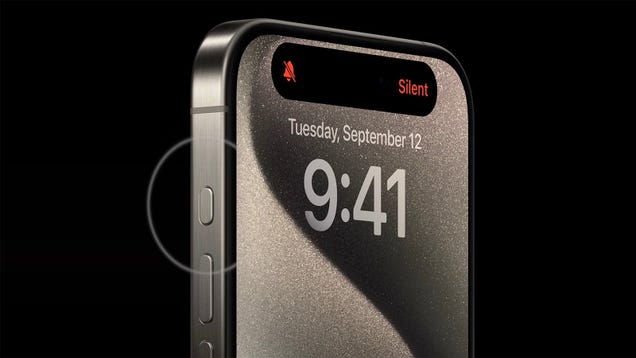
If you’ve invested in a shiny new iPhone 15 Pro or iPhone 15 Pro Max, then it comes with a change to previous iPhones: The long-serving mute switch (officially known as the Ring/Silent switch) has been replaced by the more dynamic-sounding Action button. You can customize this button to perform a variety of…
Source: Gizmodo – How to Customize the New iPhone 15 Pro Action Button
Google has ended its agreement with real estate developer Landlease for its San Francisco Bay Project, effectively scrapping its plans to build a campus with thousands of homes for employees and locals. The company announced the project in 2019, promising the “development of at least 15,000 new homes at all income levels” on at least $750 million worth of land it owns. Around 4,000 of those homes were supposed to be affordable housing, which would’ve been a welcome presence in the region with one of the highest costs of living in the country.
The San Francisco Bay Project is a collective name for Google’s planned developments in San Jose (Downtown West), Sunnyvale (Moffett Park) and Mountain View (Middlefield Park and North Bayshore). San Jose, in particular, approved the massive project in 2021, and it would’ve seen the construction of 4,000 homes, office space for approximately 20,000 employees, 300 hotel rooms and 10 parks. As part of the deal, Google had agreed to set aside $200 million in funding for displaced local businesses and job readiness programs.
Earlier this year, however, Google put the Downtown West facility construction on hold after demolition had already started to make way for construction that was scheduled to begin in 2026. The company told Engadget at the time that it was still figuring out “how to best move forward” with the San Jose campus in a way that would cater to its “future needs.” Workplaces have changed tremendously over the past few years, after all, mostly due to the COVID-19 pandemic — Google, for instance, adopted a hybrid work schedule that allowed employees to work from home for a couple of days a week. Earlier this year, Google parent Alphabet also laid off 12,000 workers after going on a hiring spree during a period of growth.
In Lendlease’s announcement (PDF), it said that the companies have decided to end their agreement after Google did a comprehensive review of its real estate investments. They’ve apparently determined that the “existing agreements are no longer mutually beneficial given current market conditions. Based on what a company spokesperson told CNBC, though, Google hasn’t entirely killed its housing projects. “As we’ve shared before, we’ve been optimizing our real estate investments in the Bay Area, and part of that work is looking at a variety of options to move our development projects forward and deliver on our housing commitment,” Alexa Arena, a senior director of development at Google, told the news organization. San Jose Mayor Matt Mahan also told CNBC that this development “doesn’t change Google’s commitment to San Jose or their timeline” and that it gives the company more flexibility to choose the “best possible developers” for the project.
This article originally appeared on Engadget at https://www.engadget.com/googles-plan-to-build-15000-homes-for-the-san-francisco-bay-project-fizzles-out-113526409.html?src=rss
Source: Engadget – Google’s plan to build 15,000 homes for the San Francisco Bay Project fizzles out

Enlarge (credit: Aurich Lawson | Getty Images)
Until recently, OLED computer monitor selection was limited. Today, there’s more than a handful available. LG Display and Samsung Display have made picking an OLED monitor exciting by designing competing models—white OLED (WOLED) and quantum dot OLED (QD-OLED), respectively—and monitor vendors are steadily addressing OLED scarcity and price barriers.
But what about longstanding fears of OLED burn-in?
People tend to display static images on computer monitors more frequently than on TVs—things like icons, taskbars, and browser address bars—making burn-in risk a concern.
Read 70 remaining paragraphs | Comments
Source: Ars Technica – Why OLED monitor burn-in isn’t a huge problem anymore
The Beatles have released another song, the first since 1995. “Now and Then” is being advertised as the final Beatles track, given that two of the members have passed and the other two are well over 80 years old. But then again, millionaires do love money.
The song grew from a John Lennon demo track dating back to the 1970s and a 1995 guitar track from George Harrison. The surviving Beatles, Paul McCartney and Ringo Starr, then finished the tune using machine learning technology. The song was meant to come out back in 1995, along with “Free as a Bird” and “Real Love,” two other tracks culled from old Lennon demos. However, the technology just wasn’t there to pull the vocals without degrading audio quality.
With the same software director Peter Jackson used for the Get Back documentary for Apple, the team split Lennon’s vocal from the piano without any audio bleed, allowing the remaining Beatles to turn it into a fleshed-out ballad. The guitar solo is in the Harrison style, but it’s not actually played by him — he does play some of the rhythm guitar in the background.
— Mat Smith
You can get these reports delivered daily direct to your inbox. Subscribe right here!
The best cameras you can buy so far this year
Uber and Lyft must pay $328 million to New York drivers in massive wage theft settlement
The best white elephant gift ideas
A commercial spaceplane capable of orbital flight is ready for NASA testing
Apple Arcade exclusive Japanese Rural Life Adventure is a surprising story of rebirth
Not another one! At least this streaming service is free. NASA has announced a new streaming service called NASA+, which will hit most major platforms next week. It’ll be completely free, with no subscription needed, and you won’t be forced to sit through ads, either. There aren’t too many details out just yet about the content, but NASA says its family-friendly programming “embeds you into our missions” with live coverage and original video series.
HTC is sending its Vive VR headsets to the International Space Station, apparently to give lonely astronauts something to do. The HTC Vive Focus 3 headsets will be part of an ongoing effort to improve the mental health of astronauts during long assignments on the station. The headsets are optimized to stabilize alignment and reduce the chances of motion sickness — which is a bigger problem when it happens in space.
Netflix is celebrating one year of its ad-supported plan by giving users on that tier every fourth episode of a consecutive binge ad-free. That’s certainly not a bad way to entice you into staying on, especially if it’s, ugh, Ozark. (Don’t ‘at’ me.) Netflix is also rolling out downloads on its ad-supported tier, claiming to be the first streamer to make the option available for users who have ads included. Netflix’s ad-supported plan is by far the cheapest after the streamer cut its Basic tier in mid-2023. It’s $6.99 monthly, while the Standard plan is now $15.49.
It sounds like an action movie, but it’s not. It’s just legal action. Scarlett Johansson’s lawyers have approached an AI app developer for using her likeness in an ad without permission.
An ad spotted on X promoted an AI image editor called Lisa AI used an AI-generated version of Johansson’s voice and image, alongside actual footage of the actor in a Black Widow behind-the-scenes clip. Multiple Lisa AI apps remain on the App Store and Google Play, but the ad no longer appears on X. Yet, when Johansson gets to play a robot voice, that’s OK? Yes. Of course it is.
This article originally appeared on Engadget at https://www.engadget.com/the-morning-after-the-final-beatles-song-was-made-with-a-little-help-from-ai-111541406.html?src=rss
Source: Engadget – The Morning After: The final Beatles song was made with a little help from AI

This story was originally published by Grist. Sign up for Grist’s weekly newsletter here.
Source: Gizmodo – A Report Calls Chemical Recycling a ‘Dangerous Deception’—and a Former Plastic Lobbyist Agrees
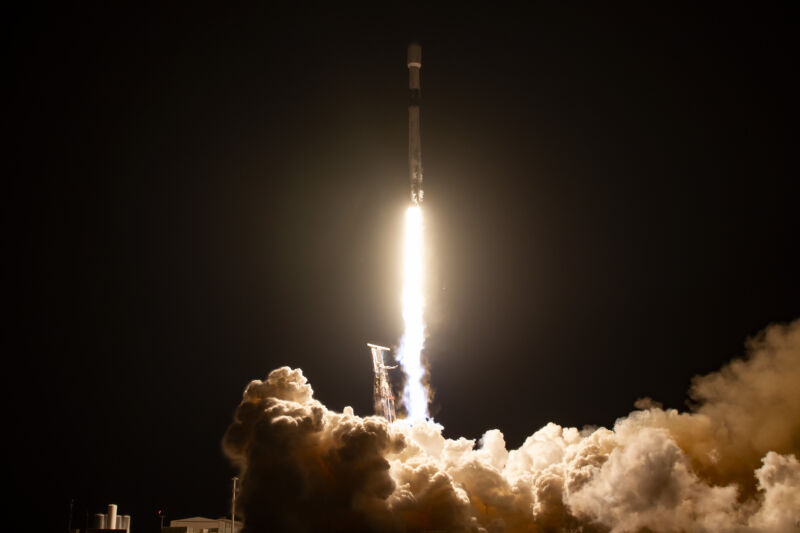
Enlarge / A Falcon 9 rocket launches 22 Starlink satellites from Vandenberg Space Force Base on Sunday. (credit: SpaceX)
Welcome to Edition 6.18 of the Rocket Report! In this newsletter we have a double dose of news from China, where there are two separate efforts to duplicate SpaceX’s Falcon 9 rocket. On the American side of the pond we also have two stories about United Launch Alliance and its effort to get Vulcan flying, and the cost of the rocket’s delays.
As always, we welcome reader submissions, and if you don’t want to miss an issue, please subscribe using the box below (the form will not appear on AMP-enabled versions of the site). Each report will include information on small-, medium-, and heavy-lift rockets as well as a quick look ahead at the next three launches on the calendar.

Chinese company tests vertical landing. A Chinese commercial rocket company has successfully launched and safely landed a test article on its path to developing a reusable launch vehicle, Space News reports. Beijing-based Interstellar Glory Space Technology Ltd., also known as iSpace, launched the Hyperbola-2Y single-stage hopper on Thursday. The methane-liquid oxygen reusable test vehicle rose to a height of 178 meters during its 51-second flight.
Read 22 remaining paragraphs | Comments
Source: Ars Technica – Rocket Report: ICBM test aborted after “anomaly”; FAA wraps Starship safety review
Amazon bundle deals are a relatively common occurrence, but the latest one is a pairing we’d never expect: Ahead of Black Friday, Prime Members can get the Fire TV Stick 4K Max and Blink Video Doorbell as a pair for $65. The Blink Video Doorbell is $60 on its own, so for another five bucks, you’re getting the Fire TV Stick 4K Max — not a bad deal. The 4K Max is having its own sale right now, with a 25 percent discount bringing its price to $45 from $60. So, even if you factor in the sale, you’re saving $40 overall, a nice steal.
While the only two things these items might seem to have in common is Amazon’s ownership, if we think really hard, we can connect them. Well, not having to get up to check who’s at the door while using your streaming device is good for starters. No, even better, you can activate Alexa on the Fire TV Stick to engage in two-way audio through the doorbell.
The Fire TV Stick 4K Max supports Dolby Atmos audio, Wi-Fi 6E and HDR10+. Meanwhile, the Blink Video Doorbell shows a 1080p HD picture during the day, uses infrared night video and can be wired or wireless, up to you. All-in-all, they’re both solid options to add to your home.
If you’re just in the market for a new monitoring system, check out the massive sales across Blink’s smart home doorbells and cameras lineup. The Blink Mini three-pack is currently 60 percent off, dropping to $40 from $100, while the new fourth-generation Blink Outdoor has four cameras available for 50 percent off, dropping to $180 from $360. Going back to the theme of bundles, you can pick up the whole Blink Home Bundle for 52 percent off, getting a Video DoorBell system, a fourth-gen Outdoor camera and a Mini for $102, down from $215.
Follow @EngadgetDeals on Twitter and subscribe to the Engadget Deals newsletter for the latest tech deals and buying advice.
This article originally appeared on Engadget at https://www.engadget.com/amazon-is-bundling-a-fire-tv-4k-max-and-blink-video-doorbell-for-65-in-early-black-friday-deal-105046984.html?src=rss
Source: Engadget – Amazon is bundling a Fire TV 4K Max and Blink Video Doorbell for in early Black Friday deal
In just a bit over a month, legacy HBO Max subscribers paying for ad-free streaming will be losing a couple of perks they’re enjoying. One of those is 4K streaming. According to The Verge, the streaming service has started sending affected subscribers an email, notifying them that they won’t be able to stream in 4K anymore after December 5th. Warner Bros. Discovery promised existing subscribers when it rebranded the service into “Max” back in May they they would still have access to their plan’s features over the next six months. After that period ends, their only option to retain 4K streaming is to let go of their $16-a-month subscription plan to switch to Max’s Ultimate Ad-Free tier that costs $20 a month.
The service introduced the tier when Max launched, promising users access to 1,000 4K movies and TV show episodes, some of which support Dolby Atmos and Vision. Subscribers who choose to keep their legacy plan will have to make do with Full HD resolution. In addition, legacy subscribers will no longer be able to stream on three devices at once, because Max will only allow them access to two concurrent streams. Both changes bring the legacy $16 subscription in line with the new Max Ad Free tier, which costs the same amount.
An Ultimate Ad Free subscription allows subscribers to stream on up to four devices at once, aside from giving them access to 4K content. It costs quite a bit more than the regular ad-free subscription, but those who want higher-quality streaming and can afford to plunk down $200 in one go will be seeing their yearly expenses for Max go up by just a few cents per month. Max also has a $10-a-month ad-supported tier for those who don’t mind their viewing experience interrupted by commercials.
This article originally appeared on Engadget at https://www.engadget.com/legacy-hbo-max-ad-free-subscribers-will-lose-access-to-4k-streams-soon-092315829.html?src=rss
Source: Engadget – Legacy HBO Max ad-free subscribers will lose access to 4K streams soon
Intuit is shutting down its free budgeting app Mint, which had 3.6 million active users in 2021, Bloomberg reports. The company will absorb users into its other service called Credit Karma when Mint disappears on January 1, 2024 — less than two months from now.
“Credit Karma is thrilled to invite all Minters to continue their financial journey on Credit Karma, where they will have access to Credit Karma’s suite of features, products, tools and services, including some of Mint’s most popular features,” Mint wrote on its product blog. The company noted that Mint’s product team and some features have already shifted over to Credit Karma.
Mint helps users manage their budget, track expenses and keep track of subscriptions and monthly bills so you don’t pay late fees. Intuit acquired the company in 2009 for $170 million, with Mint saying the acquisition would help bring the app to millions more users.
Intuit will shift users to Credit Karma (a company it acquired in 2020), even though they’re not exactly the same. Credit Karma is more like a banking app that lets users view transactions, monitor credit and see multiple accounts, but lacks the budget tracking features that make Mint attractive to many. Intuit specifically notes on a support page that “the new experience in Credit Karma does not offer the ability to set monthly and category budgets,” instead helping users “build awareness” of their spending. However, Mint’s net worth feature was recently ported over to Credit Karma.
Mint users will be able to transfer their accounts by logging into Credit Karma from the Mint app, after which they’ll lose access to their Mint profiles. They can also download or erase any Mint data if they’d rather not switch.
Some Mint users on Reddit don’t seem thrilled with the switch, with one saying that without the budgeting feature, “Mint is just a glorified checkbook register.” Intuit, meanwhile, was recently ordered to pay $141 million for deceiving millions of low-income Americans into paying for tax services that should have been free.
This article originally appeared on Engadget at https://www.engadget.com/intuit-is-closing-down-mint-its-popular-free-budget-tracking-app-054145229.html?src=rss
Source: Engadget – Intuit is shutting down Mint, its popular free budget-tracking app
A federal jury has found FTX founder Sam Bankman-Fried guilty on all seven counts of fraud and conspiracy, which he was charged with following the downfall of his cryptocurrency exchange. According to The New York Times, he faces a maximum sentence of 110 years in federal prison. SBF, as he’s now infamously known, was arrested in the Bahamas back in December 2022 after the Department of Justice took a close look at his role in the rapid collapse of FTX. The agency examined whether he transferred hundreds of millions of dollars when the exchange filed for bankruptcy. (The company claimed it was hacked after around $600 million disappeared from its funds.) The DoJ also investigated whether FTX broke the law when it moved funds to its sister company, Alameda Research.
During SBF’s trial, which took place over the past month, prosecutors argued that he used FTX funds to keep Alameda Research running. The fallen entrepreneur also founded the cryptocurrency hedge fund, which was ran by his girlfriend Caroline Ellison, who was aware that he used FTX customers’ money to help Alameda meet its liabilities. Bankman-Fried previously denied that he deliberately misused FTX’s funds.
The Times says his lawyers tried to portray him as a math nerd who had to grapple with “forces largely outside of his control,” but the jury clearly disagreed after the prosecution called Ellison and three of Bankman-Fried’s former top advisers to the witness stand. Ellison and all of those advisers had pleaded guilty, with the Alameda Research chief admitting that she committed fraud at Bankman-Fried’s direction. The FTX founder himself took the stand and said that he “deeply regret not taking a deeper look into” the $8 billion his hedge fund had borrowed from the cryptocurrency exchange.
Bankman-Fried was charged with committing wire fraud against FTX customers; wire fraud on Alameda Research lenders; conspiracy to commit wire fraud against both; conspiracy to commit securities and commodities fraud on FTX customers; as well as conspiracy to commit money laundering. He is scheduled to be sentenced on March 28, 2024 by US District Judge Lewis A. Kaplan, who also presided over the FTX trial.
This article originally appeared on Engadget at https://www.engadget.com/ftx-founder-sam-bankman-fried-found-guilty-on-seven-charges-of-fraud-and-conspiracy-012316105.html?src=rss
Source: Engadget – FTX founder Sam Bankman-Fried found guilty of fraud, faces up to 110 years in prison

Enlarge / The view of Earth’s curved horizon from Virgin Galactic’s SpaceShipTwo rocketplane. (credit: Virgin Galactic)
It has been fun to watch Virgin Galactic string together six flights to suborbital space this year. The company was founded by Richard Branson in 2004 to open the experience of spaceflight to everyday people and make some money in the process. Virgin Galactic hasn’t achieved those goals yet, but the company has reason to celebrate its successes over the last six months.
There is sometimes ribbing of Virgin Galactic and Blue Origin from space enthusiasts because they don’t fly astronauts or payloads into orbit, and they cater to wealthy clients. Passengers on a Virgin Galactic or Blue Origin flight experience a few minutes of weightlessness as they reach the apex of a trajectory that, in Virgin Galactic’s case, barely breaks the 80-kilometer (50-mile) threshold, the altitude where space begins, based on the US government’s definition.
But they offer access to microgravity and the space environment at a fraction of the cost of an orbital flight. Instead of several tens of millions of dollars per seat, we’re talking about $450,000 for a ride to space with Virgin Galactic. Blue Origin costs a bit more.
Read 14 remaining paragraphs | Comments
Source: Ars Technica – After leading NASA’s mission to Pluto, Alan Stern flies to space himself

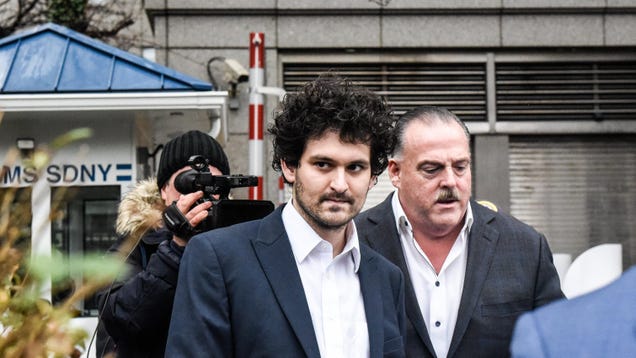
Enlarge / Sam Bankman-Fried leaves court in New York on Thursday, Feb. 16, 2023. (credit: Getty Images | Bloomberg)
FTX founder Sam Bankman-Fried was convicted of defrauding customers by a federal jury today. He was convicted on all seven counts, Reuters and other news outlets reported. The 12-member jury returned the verdict after several hours of deliberation.
The seven charges are wire fraud on customers of FTX, conspiracy to commit wire fraud on customers of FTX, wire fraud on lenders to Alameda Research, conspiracy to commit wire fraud on lenders to Alameda Research, conspiracy to commit securities fraud on investors in FTX, conspiracy to commit commodities fraud on customers of FTX in connection with purchases and sales of cryptocurrency and swaps, and conspiracy to commit money laundering.
The five charges related to wire fraud and money laundering carry maximum sentences of 20 years each, while the two securities and commodities fraud charges have maximum sentences of five years each. US District Judge Lewis Kaplan will determine the actual sentence.
Read 10 remaining paragraphs | Comments
Source: Ars Technica – Guilty: Sam Bankman-Fried convicted on all counts after monthlong trial
Sam Bankman-Fried is guilty on all seven federal charges in his criminal trial for defrauding customers of his crypto exchange out of billions of dollars with his crypto empire, jurors decided on Thursday night in a Southern District of New York court, Reuters reports. Jurors reached a verdict at 7:40 p.m., according…
Source: Gizmodo – Sam Bankman-Fried Found Guilty in Crypto Trial