The Morning After: Samsung made its own generative AI model

Developed by Samsung Research, Gauss (named after mathematician Carl Friedrich Gauss) powers several on-device AI technologies across Samsung products. It will have a few different facets but will do a lot of the same stuff we’ve seen from other generative AI (GAI) models.

Gauss Language will handle tasks like translations and summarizing documents, while Gauss Code is a coding assistant. There’s also Samsung Gauss Image for all your image-generating needs. The latter can create images based on prompts and handle edits like style changes and additions. It will be able to upscale low-resolution images too.

Gauss, the human, in the 1800s, formed the normal distribution theory, a major component of what grew into machine learning and AI. Generating a picture of a cat writing at a desk is what he would have wanted, I’m sure.

It’s easy to be cynical about Samsung’s efforts here, as the company tends to forge its own path for innovation’s sake. It made its own voice assistant, Bixby. It hovered around its devices for a few years as a flagship feature, with the company even dedicating hardware buttons on some of its Galaxy S phones to launch the voice assistant. (There were only four buttons on the Galaxy S9, Samsung, and one was for Bixby?!)

But there’s some reasoning: Running generative AI features on-device could give Samsung an advantage over ChatGPT, which, for now, requires cloud connectivity. Qualcomm’s new Snapdragon 8 Gen 3 chipset supports on-device GAI operations and will likely be part of next year’s Galaxy S24 phones. 

Samsung is already teasing Galaxy AI in its incoming translation feature, pictured here. 

— Mat Smith

You can get these reports delivered daily direct to your inbox. Subscribe right here!

The biggest stories you might have missed

Humane’s Ai Pin wearable will reportedly cost $699

Google wants to help you create new smart home automation tricks with AI-generated scripts

NVIDIA’s Eos supercomputer just broke its own AI training benchmark record

Google and major mobile carriers want Europe to regulate Apple’s iMessage platform

A PS5 early Black Friday deal brings PlayStation DualSense controllers down to $50 each

Amazon Prime now comes with discounted access to One Medical health services

Amazon acquired One Medical last year for $3.9 billion.

Amazon Prime subscribers can now access a deeply discounted One Medical membership for primary care services. Prime members can sign up for just $99 a year (typically $199) or $9 per month. Prime members who sign up can add up to five other people for $6 each. It offers all the basic health services, from annual physicals and maintenance for chronic conditions to same-day sick visits. One Medical also offers round-the-clock virtual care, or telehealth visits, and drop-in lab services. The membership doesn’t cover the cost of visits, though.

Continue reading.

The Overwatch League appears to be over

Blizzard is ‘evolving competitive Overwatch in a new direction.’

The Overwatch League (OWL) appears to be no more after six seasons. A Blizzard spokesperson told Engadget “We are transitioning from the Overwatch League and evolving competitive Overwatch in a new direction.” That’s not to say the publisher is pulling out of Overwatch esports altogether. The future of the professional Overwatch scene is unclear, but reports suggest that a return to a more open format could be next.

The writing has been on the wall for OWL for some time. The first two seasons of OWL matches happened almost exclusively in a California studio. Weeks after Blizzard started on its grand plan to run matches in each team’s city every week, but COVID-19 lockdowns forced it to shift to an online-only format.

Continue reading.

HP Spectre Fold review

Cutting edge at all costs.

TMA
Engadget

Sometimes, a company creates a truly cutting-edge device, even if its books take a hit. The latest example: HP’s Spectre Fold. HP’s take on a flexible-screen laptop is thinner, lighter and more polished than before. The Spectre Fold represents a true leap forward for next-gen hybrid design to the point where you might even want to buy one — until you see that $5,000 price tag. Engadget’s Sam Rutherford breaks it down.

Continue reading.

This article originally appeared on Engadget at https://www.engadget.com/the-morning-after-samsung-made-its-own-generative-ai-model-121535086.html?src=rss

Source: Engadget – The Morning After: Samsung made its own generative AI model

The Enermax Revolution D.F. X 1050W PSU Review: High Power, Highly Reliable

In the realm of power supply units (PSUs), a few names stand out for their dedication to quality, innovation, and performance. Enermax, established in 1990, has been a stalwart in this sector, consistently delivering products that resonate well with both enthusiasts and professionals. The brand has a rich history of coupling robust engineering with aesthetic finesse, which has, over the decades, carved out a significant market share in the fiercely competitive PSU arena.

Venturing into the high-capacity spectrum, Enermax has thrown its hat into the ring with the Revolution D.F. X 1050 PSU, a unit that boasts a plethora of features. The PSU market at this wattage level is a battlefield where the stakes are high, and the margin for error is minuscule. Products contending in this segment are expected to meet the stringent demands of high-performance computing environments, including multiple high-power PCIe card setups and extensive overclocking scenarios. The Revolution D.F. X 1050 is Enermax’s statement of intent, showcasing its technical prowess and its ability to meet the needs of power users alongside a unique aesthetic design.

The Revolution D.F. X 1050 comes with a promise of delivering not just ample power, but also operational efficiency, durability, and a host of smart features to ensure optimum performance. The patented DFR (Dust Free Rotation) technology, for instance, is a notable inclusion aimed at reducing dust accumulation, supposedly prolonging the unit’s lifespan and ensuring consistent performance. As we delve deeper into the analysis of the Enermax Revolution D.F. X 1050 PSU, we shall scrutinize every facet of this unit to ascertain whether it lives up to the lofty standards set by its predecessors and the expectations synonymous with the Enermax brand name.


Source: AnandTech – The Enermax Revolution D.F. X 1050W PSU Review: High Power, Highly Reliable

Creative unveils first true wireless headphones with MEMS drivers

The first step towards potentially an entire new type of listening experience is upon us. Creative has announced the release of the Aurvana Ace series, earbuds powered by Micro-electromechanical systems (MEMS) from the company xMEMS. The Aurvana Ace and Aurvana Ace 2 are considered to be the first proper TWS MEMS earbuds available for general consumers. News of their impending arrival first came back in August.

MEMS have been used in cellphones for years but haven’t been capable of integration into earbuds until recently. The technology uses piezos and silicon, compared to typical speakers’ coils and magnets. The claim is that MEMS can produce a sound with higher fidelity and durability while reducing power consumption. For instance, Creative’s Aurvana Ace series has a frequency ranging from 5Hz to 40KHz.

According to Creative, the MEMS-based drivers are small flaps placed on silicon chips. “What makes this technology stand out is how it replicates sound when these flaps swiftly respond to short electrical signals,” the company explains. “In doing so, these drivers are able to generate sound waves that closely mimic the way users naturally hear sounds in the world around them.”

The Creative Aurvana Ace will retail for $130 and the Creative Aurvana Ace 2 will go for $150. Along with MEMS, both earbuds also have hybrid ANC, six built-in microphones and up to 24 hours of playtime. Each set is also IPX5 certified, meaning you can sweat all you want while wearing them. They are available for pre-order starting November 10, though an official release date has yet to be announced.

This article originally appeared on Engadget at https://www.engadget.com/creative-unveils-first-true-wireless-headphones-with-mems-drivers-110525999.html?src=rss

Source: Engadget – Creative unveils first true wireless headphones with MEMS drivers

Sony has now sold over 46.6 million PS5 consoles

Sony has had a blockbuster quarter when it comes to PlayStation 5 sales. The company has sold 4.9 million PS5 units in its second financial quarter ending on September 30, bringing the total number of consoles sold to 46.6 million. It didn’t quite reach last year’s holiday figures, but it still moved 1.6 million units more than the same period in 2022. To note, Sony couldn’t keep up with the demand for the console for quite some time due to the supply chain issues that plagued the tech industry, but it was finally able to ramp up production last year after the shortages had eased up. By July 2023, it announced that it had already sold more than 40 million PS5 consoles since the model came out in November 2020. 

To be able to reach its sales target of shipping 25 million PS5 units for this financial year, however, Sony will have to sell 16.8 million more units. That’s a massive figure, considering it only sold 19.1 million PS5 consoles for the whole financial year of 2022. But according to Reuters, Sony President Hiroki Totoki is confident that the goal is something the company “can attain very easily.” The company is likely expecting a boost in sales when its smaller PS5 models come out this month, just in time for people’s holiday shopping sprees. 

In addition to its hardware sales, Sony has also reported that it sold 67.6 million games in the second quarter, though only 4.7 million are first-party titles. It will most likely post much higher first-party sales in the next quarter, though, seeing as Marvel’s Spider-Man 2 sold 5 million units within its first 11 days, eclipsing the performance of its prequel that sold 9 million copies in 80 days. 

This article originally appeared on Engadget at https://www.engadget.com/sony-has-now-sold-over-466-million-ps5-consoles-102604943.html?src=rss

Source: Engadget – Sony has now sold over 46.6 million PS5 consoles

Intel's 14th Gen 'Raptor Lake Refresh' CPUs Nail a Total of 50 World Records

Velcroman1 writes: Overclocking master Allen ‘Splave’ Golibersuch surfaced on Tom’s Hardware to detail his work with liquid nitrogen to set a slew of new world records with Intel’s Raptor Lake Refresh” CPUs. They include 15 world records with the Core i7-14700K and eight records with the Core i5-14600K, along with four records with the Core i9-14900K, spanning benchmarks from Cinebench to wPrime and H265.

“My top speeds were 7,730.11 MHz on all cores on the 14900K, 7,859.05 MHz on the 14600K and 7,600 MHz on the 14700K,” writes Splave. “All of these achieved in Cinebench R23 while using Liquid Nitrogen cooling.” “At the end of a week of playing around, I broke the 8-core Cinebench record at a crazy 7.73 GHz on all cores,” concludes Splave. “Overall, these CPUs potentially OC better than their predecessors and cost the same. It was a rather refreshing refresh, I would say.”

Read more of this story at Slashdot.


Source: Slashdot – Intel’s 14th Gen ‘Raptor Lake Refresh’ CPUs Nail a Total of 50 World Records

Omegle Shuts Down After 15 Years

Omegle, a popular online chat service that allowed individuals to connect and chat with strangers, has shut down after 15 years citing growing misuse of the platform, including in committing “unspeakably heinous crimes.” From a report: The site, founded in 2009 by a then 18-year-old programmer and high school student Leif K-Brooks, was bootstrapped throughout its existence. Though it waned in popularity over the years, it still pulled about 50 million visitors last month, according to analytics firm SimilarWeb.

Read more of this story at Slashdot.


Source: Slashdot – Omegle Shuts Down After 15 Years

Snap lays off 20 product managers to speed up decision-making

Snap is going through a reorganization and has laid off “nearly 20 product managers,” according to The Information. The job cuts follow a string of departures and position shuffling over the past few months. A company spokesperson told the publication that the layoffs were meant to speed up the company’s decision-making process, presumably because they’d be cutting out people between lower-level employees and higher-level managers. They’re also meant to reduce costs for the company, which could then use the resources for “core priorities.”

In its recently announced third quarter earnings report, the company said that its revenue rose by 5 percent to $1.19 billion after two quarters of decline. However, its ad business has yet to recover, and it warned its investors that advertisers are hitting pause on their social media campaigns due to the current situation in the Middle East. According to Campaign, brands have slowed down their advertising activities on various social networks because of the influx of misinformation regarding the Israel-Hamas war. 

This round of layoffs isn’t directly linked to any product, though, and no features or offerings are being discontinued as a result. It’s also much smaller in scale than the company’s layoffs last year, which saw 1,300 employees lose their jobs. That time, Snap also canceled most of its original shows and put its games and mini-apps into maintenance mode. 

This article originally appeared on Engadget at https://www.engadget.com/snap-lays-off-20-product-managers-to-speed-up-decision-making-071010069.html?src=rss

Source: Engadget – Snap lays off 20 product managers to speed up decision-making

Hollywood Actors Strike Ends With a Deal That Will Impact AI and Streaming For Decades

Angela Watercutter and Will Bedingfield report via Wired: After 118 days on the picket lines, the longest such strike in Hollywood’s history, the Screen Actors Guild-American Federation of Television and Radio Artists has reached a deal with the Alliance of Motion Picture and Television Producers. Both sides were mum about the terms of the deal Wednesday night, but it comes following a long struggle over the use of artificial intelligence on actors’ performances and actors’ demands for residual payments for shows and films that play on streaming services. A committee from SAG, which represents thousands of film and television actors, approved the agreement Wednesday. The strike itself, which has featured pickets outside the offices of Netflix, Disney, Warner Bros. Discovery, and others, will end Thursday morning. It’s expected that the tentative deal will head to the union’s national board to be approved on Friday.

Undeniably, this is a huge milestone for Hollywood, a $130 billion-plus industry that has all but ground to halt this year, as both the Writers Guild of America and SAG dug in their heels over fair wages and the use of AI in their work. WGA members went on strike in May; SAG walked off the job in July, the first time the industry had faced a dual work stoppage since 1960. The WGA strike ended in September with a historic deal that put up guardrails to protect writers from AI encroaching on their work. As this year’s negotiations between SAG and AMPTP dragged on, generative AI became the major sticking point. Back in July, studios claimed they offered a “groundbreaking AI proposal that protects actors’ digital likenesses.” SAG countered that the proposal stipulated background performers could be scanned, paid for the day, and then turned into digital characters that studios could use “for the rest of eternity.” (AMPTP disputed this.)

The issue was volleyed back and forth until last weekend, when SAG reviewed the studios’ “last, best, and final” offer and rejected it, claiming “there are several essential items on which we still do not have an agreement, including AI. A follow-up story in The Hollywood Reporter revealed that the AMPTP proposal sought to allow studios to pay for AI scans of what are known as Schedule F performers and, following the actors’ death, allow studios to use the scans without the consent of the estate or SAG. Schedule F performers include anyone who makes more than the minimum rate for TV series regulars or feature films. The guild wanted compensation for reuse of the scans, along with consent. On Tuesday, the studios reportedly agreed to adjust the AI language in their proposal, a move that seems to have been the tipping point. Even though the terms of the tentative deal reached Thursday are unclear, it’s hard to imagine the actors didn’t get at least some of the AI protections they were seeking.

Read more of this story at Slashdot.


Source: Slashdot – Hollywood Actors Strike Ends With a Deal That Will Impact AI and Streaming For Decades

Samsung teases its own AI-based real-time phone call translation

We’ve already seen Google’s “Live Translate” working its magic on phones calls, but to date, this feature is still exclusive to Pixel devices. If you happen to be a Samsung fan, though, chances are you may get to use a similar feature — without having to install third-party apps — early next year. 

According to the Korean giant, its next phone — our money’s on the “Galaxy S24” family — will come with “Galaxy AI,” which is “powered by both on-device AI developed at Samsung and cloud-based AI” from providers. Part of this package will include “AI Live Translate Call,” which will show real-time translations in the form of a chat log during phone calls — as is the case in the demo screenshot showcasing a dialog between a New York-based English speaker and a Seoul-based Korean speaker. As a bonus, the tool throws up an “add event” button whenever there’s a mention of a time and a date, to let you instantly mark the calendar for your foreign acquaintance.

There’s not much else here about Galaxy AI, except that “it will change how we think about our phones forever,” said Wonjoon Choi, EVP and Head of R&D, Mobile eXperience Business. There’s no word on whether Galaxy AI will also include Samsung’s Gauss generative AI capability, but given the exec’s wording and the recent similar offerings from Google, we wouldn’t be surprised if we’re getting the whole shebang in the Galaxy S24 lineup next year.

This article originally appeared on Engadget at https://www.engadget.com/samsung-teases-its-own-ai-based-real-time-phone-call-translation-053818106.html?src=rss

Source: Engadget – Samsung teases its own AI-based real-time phone call translation

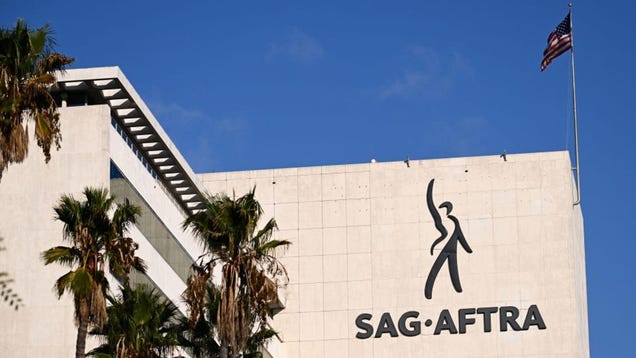
SAG-AFTRA ends strike after securing a deal that protects members 'from the threat of AI'

The Screen Actors Guild-American Federation of Television and Radio Artists (SAG-AFTRA) has officially ended its strike, which lasted for 118 days, after reaching a tentative agreement with Hollywood studios. In its announcement, it said it was able to secure a contract “valued at over 1 billion dollars” and that it was able to negotiate “above-pattern” compensation increases, as well as “unprecedented provisions for consent and compensation that will protect members from the threat of AI.”

The union will release more details about the agreement after its national board looks it over on Friday for “review and consideration.” However, generative AI became the sticking point that prevented both parties from being able to strike a deal earlier than this. According to a previous report by The Hollywood Reporter, the Alliance of Motion Picture and Television Producers (AMPTP) wanted to make AI scans of Schedule F performers — union members earning more than $32,000 per TV episode or $60,000 per film — which they could then keep reusing without having to pay them again. Studios could even continue using the actors’ likeness after they pass away without permission from the union or from their estate. Variety says AMPTP has agreed to adjust the language it used for AI in its proposal, which has presumably led to the tentative agreement. 

In September, the Writers Guild of America (WGA) also officially ended its strike after securing a deal with AI provisions it approved of. Under the terms of its new contract, studios can’t use generative AI to write or rewrite literary material, and anything it produces cannot be considered source material. Studios can’t force writers to use generative AI software unless they want to, and they have to disclose whether materials handed over to a writer include anything generated by AI. Finally, “exploitation of writers’ material to train AI” is explicitly prohibited. 

This article originally appeared on Engadget at https://www.engadget.com/sag-aftra-ends-strike-after-securing-a-deal-that-protects-members-from-the-threat-of-ai-035253314.html?src=rss

Source: Engadget – SAG-AFTRA ends strike after securing a deal that protects members ‘from the threat of AI’

Meta Taps Hugging Face For Startup Accelerator To Spur Adoption of Open Source AI Models

An anonymous reader quotes a report from TechCrunch: Facebook parent Meta is teaming up with Hugging Face and European cloud infrastructure company Scaleway to launch a new AI-focused startup program at the Station F startup megacampus in Paris. The underlying goal of the program is to promote a more “open and collaborative” approach to AI development across the French technology world. The timing of the announcement is notable, coming amid a growing push for regulation and a marked conflict between the “open” and “closed” AI realms. […]

While Meta itself has been open sourcing its own generative AI models, Hugging Face — a billion-dollar VC-backed startup in its own right — has set out its stall as a sort of open source alternative to OpenAI, replete with open alternatives to the likes of ChatGPT and spearheading community projects such as BigScience. So in many ways, Meta and Hugging Face’s tie-up today makes a great deal of sense, given their respective stances on the whole “open” versus “closed” AI discussion. “For me, open source AI is the most important topic of the decade as it is the cornerstone toward democratizing ethical AI,” Hugging Face CEO Clement Delangue said in a statement.

From today through December 1 (2023), startups can apply to join the new “AI Startup Program” at Station F, with five winners proceeding to the accelerator program that will run from January to June. The chosen startups, selected by a panel of judges from Meta, Hugging Face and French cloud company Scaleway, will have at least one thing in common — they will be working on projects substantively built on open foundation models, or at the very least can demonstrate a “willingness to integrate these models into their products and services,” according to the announcement issued by Meta today. “With the proliferation of foundation models and generative artificial intelligence models, the aim is to bring the economic and technological benefits of open, state-of-the-art models to the French ecosystem,” the announcement noted. Indeed, the winning startups will receive mentoring from researchers and engineers at Meta, gain access to Hugging Face’s various platforms and tools, and compute resources from Scaleway.

Read more of this story at Slashdot.


Source: Slashdot – Meta Taps Hugging Face For Startup Accelerator To Spur Adoption of Open Source AI Models

Cruise Recalls All of Its Self Driving Cars To Fix Their Programming

Long-time Slashdot reader destinyland shares a report from CNN Business: Cruise, General Motors’ self-driving vehicle subsidiary, has recalled all 950 of its autonomous vehicles for a software update. Late last month, Cruise paused all its public testing operations while it investigated the incident that led to the recall. […]

The update will alter the way the car responds after an impact is detected. In [that infamous San Francisco accident], the vehicle had incorrectly determined that it was struck on the side rather than hitting something in the front, according to a report (PDF) Cruise filed with NHTSA. The report did not detail exactly what the software update changes, only that it “remedies the issue described in this notice.”

The cars can be returned to service once the updates are completed, Cruise said in its report to NHTSA. Cruise doesn’t sell its self-driving vehicles so all the cars are owned by either Cruise or GM, which produces the heavily modified Chevrolet Bolt electric vehicles. The company will perform the software updates itself.

Read more of this story at Slashdot.


Source: Slashdot – Cruise Recalls All of Its Self Driving Cars To Fix Their Programming

Samsung Launches Generative AI Model Made For Its Devices

Samsung has beat Apple to the chase by introducing a new generative AI model that’s expected to come to its devices soon. The model is called Samsung Gauss after Carl Friedrich Gauss, “the legendary mathematician who established normal distribution theory, the backbone of machine learning and AI.” CNBC reports: The AI system has a number of features: the first, Samsung Gauss Language, is a generative language model which can help compose emails and translate content, as well as “enhance the consumer experience by enabling smarter device control when integrated into products.” The second feature allows in-house software developers to write code quickly, while the third, Samsung Gauss Image, can generate or edit images.

“Samsung Gauss is currently used on employee productivity but will be expanded to a variety of Samsung product applications to provide new user experience in the near future,” Samsung said in a press release on Wednesday. Samsung could be amongst the first handset makers in the world to introduce generative AI to its devices. Daniel Araujo, Samsung’s vice president of the mobile business, said on the company’s earnings call last month that generative AI technology will likely reach customers next year.

Read more of this story at Slashdot.


Source: Slashdot – Samsung Launches Generative AI Model Made For Its Devices

In a surprise move, the military’s spaceplane will launch on Falcon Heavy

Read 18 remaining paragraphs | Comments


Source: Ars Technica – In a surprise move, the military’s spaceplane will launch on Falcon Heavy

Court Rules Automakers Can Record and Intercept Owner Text Messages

An anonymous reader quotes a report from The Record: A federal judge on Tuesday refused to bring back a class action lawsuit alleging four auto manufacturers had violated Washington state’s privacy laws by using vehicles’ on-board infotainment systems to record and intercept customers’ private text messages and mobile phone call logs. The Seattle-based appellate judge ruled that the practice does not meet the threshold for an illegal privacy violation under state law, handing a big win to automakers Honda, Toyota, Volkswagen and General Motors, which are defendants in five related class action suits focused on the issue. One of those cases, against Ford, had been dismissed on appeal previously.

The plaintiffs in the four live cases had appealed a prior judge’s dismissal. But the appellate judge ruled Tuesday that the interception and recording of mobile phone activity did not meet the Washington Privacy Act’s standard that a plaintiff must prove that “his or her business, his or her person, or his or her reputation” has been threatened. In an example of the issues at stake, plaintiffs in one of the five cases filed suit against Honda in 2021, arguing that beginning in at least 2014 infotainment systems in the company’s vehicles began downloading and storing a copy of all text messages on smartphones when they were connected to the system. An Annapolis, Maryland-based company, Berla Corporation, provides the technology to some car manufacturers but does not offer it to the general public, the lawsuit said. Once messages are downloaded, Berla’s software makes it impossible for vehicle owners to access their communications and call logs but does provide law enforcement with access, the lawsuit said.

Read more of this story at Slashdot.


Source: Slashdot – Court Rules Automakers Can Record and Intercept Owner Text Messages

WhatsApp Now Lets You Hide Your IP Address During Calls

Tim Hardwick reports via MacRumors: WhatsApp has introduced a new privacy feature that lets you hide your IP address from whoever you call over the encrypted communications platform. As it stands, one-to-one calls over WhatsApp are established as a direct peer-to-peer connection between users. While this ensures the best possible voice quality, it means the connected devices must reveal their IP addresses to each other. According to WhatsApp, the new privacy setting introduced today works differently by relaying all of your calls through WhatsApp’s servers to obfuscate your location, rather than connecting you directly to the person you are calling.

Meta engineers elaborated on the feature in a blog post: “Most calling products people use today have peer-to-peer connections between participants. This direct connection allows for faster data transfers and better call quality, but it also means that participants need to know each other’s IP addresses so that call data packets can be delivered to the correct device — meaning that the IP addresses are visible to both callers on a 1:1 call. IP addresses may contain information that some of our most privacy-conscious users are mindful of, such as broad geographical location or internet provider. To address this concern, we introduced a new feature on WhatsApp that allows you to protect your IP address during calls. With this feature enabled, all your calls will be relayed through WhatsApp’s servers, ensuring that other parties in the call cannot see your IP address and subsequently deduce your general geographical location.” WhatsApp notes that call quality might be reduced as a result of using the new setting. The feature can be enabled under “Advanced” privacy settings in the app.

Read more of this story at Slashdot.


Source: Slashdot – WhatsApp Now Lets You Hide Your IP Address During Calls

Robot Crushes Man To Death After Misidentifying Him As a Box

A robot in a South Korea distribution center crushed a man to death after the machine apparently failed to differentiate him from the boxes of produce it was handling. The Guardian reports: The man, a robotics company worker in his 40s, was inspecting the robot’s sensor operations at a distribution centre for agricultural produce in South Gyeongsang province. The industrial robot, which was lifting boxes filled with bell peppers and placing them on a pallet, appears to have malfunctioned and identified the man as a box, Yonhap reported, citing the police. The robotic arm pushed the man’s upper body down against the conveyor belt, crushing his face and chest, according to Yonhap. He was transferred to the hospital but died later, the report said. The BBC notes that the man was “checking the robot’s sensor operations ahead of its test run […] scheduled for November 8.” It was originally planned for November 6th, “but was pushed back by two days due to problems with the robot’s sensor,” the report adds.

Read more of this story at Slashdot.


Source: Slashdot – Robot Crushes Man To Death After Misidentifying Him As a Box

Humane’s Ai Pin will reportedly cost $699

The Ai Pin from Humane, a much-hyped startup founded by former Apple employees, will cost $699. That’a according to The Verge, which obtained documents about the device ahead of its official launch on November 9.

In addition, the Pin will reportedly have a monthly $24 subscription fee for access to T-Mobile’s cellular network and large language models from OpenAI and Microsoft to power its smarts.

The Ai Pin is a device that’s about the size of a large business card that clips on to your clothing magnetically and acts as a personalized assistant controlled via voice and touch. Notably, it doesn’t have a screen. Instead, it projects a barebones user interface onto the palm of your hand.

We expect to have more details about the Pin and confirmation of The Verge’s leak tomorrow once the device is officially released.

This article originally appeared on Engadget at https://www.engadget.com/humanes-ai-pin-will-reportedly-cost-699-235018028.html?src=rss

Source: Engadget – Humane’s Ai Pin will reportedly cost 9

Voters Overwhelmingly Pass Car Right to Repair Law in Maine

Jason Koebler reports via 404 Media: Voters in Maine overwhelmingly passed a ballot measure Tuesday that enshrines the right to repair cars, a major win for consumers and a blow to auto manufacturers who have spent millions lobbying against similar legislation and fighting against it in the courts. “Question 4,” which enshrines consumers’ data access to car diagnostics for the purposes of repair, passed by a margin of 84.3-15.7 in Tuesday’s election with 94 percent of the votes tallied. The yes/no question was simple: “Do you want to require vehicle manufacturers to standardize on-board diagnostic systems and provide remote access to those systems and mechanical data to owners and independent repair facilities?” “Maine residents have won the right to control their destiny when it comes to car repairs,” Tommy Hickey, director of the Maine Automotive Right to Repair Coalition, told 404 Media. “There’s a new technology in cars, they’ve become computers on wheels, and with this law owners in Maine will be the gatekeepers of that information.”

Read more of this story at Slashdot.


Source: Slashdot – Voters Overwhelmingly Pass Car Right to Repair Law in Maine