Google to pay Canada’s “link tax,” drops threat of removing news from search

Read 12 remaining paragraphs | Comments


Source: Ars Technica – Google to pay Canada’s “link tax,” drops threat of removing news from search

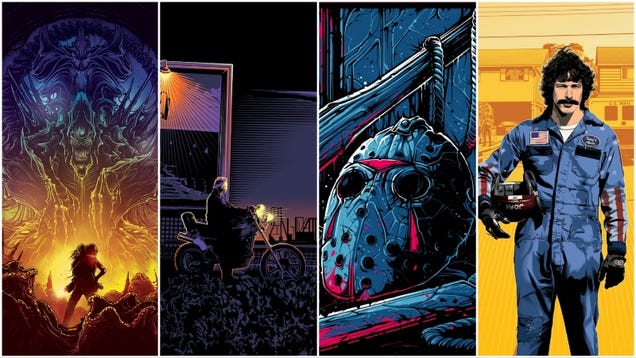
John Wick, Pacific Rim,The Lost Boys, and Other Genre Favorites Get Stunning New Art

In the world of pop culture art, sometimes you find artists whose style you love. Other times you find artists who share the same passion about certain properties. Then, on a few rare occassions, you find artists that check both boxes and you instantly know, “This is going to be a problem for my wallet.”

Read more…


Source: Gizmodo – John Wick, Pacific Rim,The Lost Boys, and Other Genre Favorites Get Stunning New Art

Researchers Made an IQ Test for AI, Found They're All Pretty Stupid

There’s been a lot of talk about AGI lately—artificial general intelligence—the much-coveted AI development goal that every company in Silicon Valley is currently racing to achieve. AGI refers to a hypothetical point in the future when AI algorithms will be able to do most of the jobs that humans currently do.…

Read more…


Source: Gizmodo – Researchers Made an IQ Test for AI, Found They’re All Pretty Stupid

EVs are way more unreliable than gas-powered cars, Consumer Reports data indicates

Consumer Reports has published an extensive ranking of vehicle reliability, and the results pour cold water on the dependability of EVs and plug-in hybrids. The survey says electric vehicles suffer from 79 percent more maintenance issues than gas- or diesel-powered ones, while plug-in hybrids have 146 percent more problems. The troubles portray the industry’s growing pains with the relatively new technology as the planet sets record temperatures, and scientists warn of rapidly approaching deadlines to thwart global climate catastrophe.

The survey polled CR’s members about issues with their rides from the past year, gathering data on 330,000 vehicles. The publication’s data included models from 2000 to 2023, alongside a few (early launched) 2024 models. CR studied 20 “trouble areas,” including relatively minor issues like squeaky brakes or a broken interior trim and more problematic ones related to the transmission, engine or EV battery. The number of potential trouble areas varies by type: internal combustion engine (ICE) vehicles have 17, EVs have 12, traditional hybrids have 19 and plug-in hybrids have all 20.

The publication combined the data with its own track testing, owner satisfaction survey results and safety info. It then averaged it to assign each brand a numerical score (out of 100).

Marketing photo of the Lexus UX hybrid vehicle. The silver model drives down a city street with dramatic lighting.
The Lexus UX, a rare plug-in hybrid that scored well in the survey.
Lexus

Non-plugin hybrids scored well, with the survey indicating they suffer from 26 percent fewer issues than gas- and diesel-powered vehicles. CR highlighted the most reliable brands in that space, including the Lexus’ UX and NX Hybrid and Toyota’s Camry Hybrid, Highlander Hybrid and RAV4 Hybrid.

If only plug-in hybrids (PHEV) could enjoy those ratings. Instead, their longer list of trouble spots led to 146 percent more problems than traditional gas-powered vehicles. Lowlights include the Chrysler Pacifica, which scored an abysmal 14 out of 100, and Audi Q5. However, several PHEVs defied the category’s expectations, including “standouts” like the Toyota RAV4 Prime and Kia Sportage. Several others, including the BMW X5, Hyundai Tucson and Ford Escape, scored “average” in reliability.

Fully electric cars and SUVs, the vehicles many automakers aim to fill their dealership lots with by 2030, have mediocre average scores: 44 and 43, respectively. Electric pickups, the newest technology in the bunch, perhaps unsurprisingly scored worse with an average of 30.

Lexus came out on top among EV brands. All but one of its models scored above average or better in CR’s ratings. And the lone exception, the NX, still had an average score. Toyota also did well, including the 4Runner SUV, which CR describes as “among the most reliable models in the survey.” However, its electric Tundra pickup scored poorly. Other EVs with above-average scores include Acura’s RDX and TLX.

Photo of the Tesla Model 3 sitting outdoors next to a field. Green grass, trees and hills are visible in the distance.
Photo by Roberto Baldwin / Engadget

Once practically synonymous with electric vehicles, Tesla had overall scores in the middle of the pack (alongside brands like Chevrolet, Buick, Ram, Cadillac and Dodge). CR says the Elon Musk-led company’s EV powertrains tend to fare better than those from traditional automakers. However, Ars Technica notes the company’s reliability scores struggled more with things like bodywork, paint / trim and climate systems.

Regionally speaking, Asian automakers enjoyed the highest average scores in the survey at a healthy 63. European companies were second with an average of 46, while US brands slumped with a somewhat disappointing score of 39.

This article originally appeared on Engadget at https://www.engadget.com/evs-are-way-more-unreliable-than-gas-powered-cars-consumer-reports-data-indicates-212216581.html?src=rss

Source: Engadget – EVs are way more unreliable than gas-powered cars, Consumer Reports data indicates

Stable Diffusion Turbo XL can generate AI images as fast as you can type

Example images generated using Stable Diffusion XL Turbo.

Enlarge / Example images generated using Stable Diffusion XL Turbo. (credit: Stable Diffusion XL Turbo / Benj Edwards)

On Tuesday, Stability AI launched Stable Diffusion XL Turbo, an AI image-synthesis model that can rapidly generate imagery based on a written prompt. So rapidly, in fact, that the company is billing it as “real-time” image generation, since it can also quickly transform images from a source, such as a webcam, quickly.

SDXL Turbo’s primary innovation lies in its ability to produce image outputs in a single step, a significant reduction from the 20–50 steps required by its predecessor. Stability attributes this leap in efficiency to a technique it calls Adversarial Diffusion Distillation (ADD). ADD uses score distillation, where the model learns from existing image-synthesis models, and adversarial loss, which enhances the model’s ability to differentiate between real and generated images, improving the realism of the output.

Stability detailed the model’s inner workings in a research paper released Tuesday that focuses on the ADD technique. One of the claimed advantages of SDXL Turbo is its similarity to Generative Adversarial Networks (GANs), especially in producing single-step image outputs.

Read 6 remaining paragraphs | Comments


Source: Ars Technica – Stable Diffusion Turbo XL can generate AI images as fast as you can type

Rockstar Games co-founder Dan Houser's next projects are a graphic novel and an audio drama

Absurd Ventures, the new creative studio from Rockstar Games co-founder and ex-creative director Dan Houser, has announced its first projects. As it happens, neither of them are video games, at least not yet.

The first of these two new universes is called American Caper, which will debut as a graphic novel. It will focus on two normal but damaged families who are mired “in a world of corrupt business, inept politics and bungling crime.” Comic book artist Simon Bisley (ABC Warriors, Lobo) is illustrating the graphic novel.

The other project is a 12-episode audio drama that’s already in production. A Better Paradise is described as a near-future existential suspense thriller. Absurd Ventures is working with well-regarded audio company Q-CODE Media on the project.

Absurd Ventures plans to reveal more details about both projects in the coming months. However, referring to both American Caper and A Better Paradise as “universes” suggests the company has plans to expand them into transmedia enterprises, which may just include video games.

Meanwhile, we’re just days away from getting our first proper glimpse at what has been keeping Houser’s former colleagues at Rockstar busy for the last several years. The publisher will unveil the first trailer for the next Grand Theft Auto game in early December. Rumors suggest the reveal will take place at The Game Awards on December 7.

This article originally appeared on Engadget at https://www.engadget.com/rockstar-games-co-founder-dan-housers-next-projects-are-a-graphic-novel-and-an-audio-drama-210258054.html?src=rss

Source: Engadget – Rockstar Games co-founder Dan Houser’s next projects are a graphic novel and an audio drama

Are big international teams leaving creativity out of science?

Read 17 remaining paragraphs | Comments


Source: Ars Technica – Are big international teams leaving creativity out of science?

No One Knows What's Happening in the Next Doctor Who Special, and They're Going Insane

After Doctor Who’s triumphant return this past weekend in “The Star Beast,” all eyes are now on this weekend’s second of three 60th anniversary specials, “Wild Blue Yonder.” But the fact that those eyes are upon it and the BBC is not willing to say almost anything of substance about it is leading Doctor Who fans to go…

Read more…


Source: Gizmodo – No One Knows What’s Happening in the Next Doctor Who Special, and They’re Going Insane

Amazon now has its own AI image generator

Amazon has hopped on the same bandwagon on which many major tech companies have hitched a ride this year by debuting its own image generator. AWS customers can now check out a preview of Titan Image Generator on the Bedrock console. They can either enter a text prompt to create an image from scratch or upload an image and edit it.

Amazon says the tool can produce large volumes of studio-quality, realistic images at low cost. It claims the AI can generate relevant images based on complex text prompts while ensuring object composition is accurate and that there are limited distortions. This, according to the company, helps with “reducing the generation of harmful content and mitigating the spread of misinformation.”

Those looking to edit an image can isolate areas in which they want to add or remove details. They can, for instance, replace the background or swap an object in a subject’s hand. The AI can also extend an image’s borders by adding artificial details, much like the Generative Expand feature in Photoshop.

Amazon says Titan applies an invisible watermark to images that it generates. The company says this will “help reduce the spread of misinformation by providing a discreet mechanism to identify AI-generated images and to promote the safe, secure and transparent development of AI technology.” It claims that the watermarks are resistant to modifications. According to a demo of the image generator, the AI can also generate a description of the image or relevant text to use in a social media post.

News of the image generator emerged at Amazon’s AWS re:Invent conference, at which the company also showed off its latest AI chips and revealed a business-centric AI chatbot called Q. The company recently started offering advertisers a tool that lets them add AI-generated backgrounds to product images.

This article originally appeared on Engadget at https://www.engadget.com/amazon-now-has-its-own-ai-image-generator-203025475.html?src=rss

Source: Engadget – Amazon now has its own AI image generator

Amazon Unveils Graviton4: A 96-Core ARM CPU with 536.7 GBps Memory Bandwidth

Nowadays many cloud service providers design their own silicon, but Amazon Web Services (AWS) started to do this ahead of its rivals and by now its Annapurna Labs subsidiary develop processors that can well compete with those from AMD and Intel. This week AWS introduced its Graviton4 SoC, a 96-core ARM-based chip that promises to challenge renowned CPU designers and offer unprecedented performance to AWS clients.


“By focusing our chip designs on real workloads that matter to customers, we are able to deliver the most advanced cloud infrastructure to them,” said David Brown, vice president of Compute and Networking at AWS. “Graviton4 marks the fourth generation we have delivered in just five years, and is the most powerful and energy efficient chip we have ever built for a broad range of workloads.”


The AWS Graviton4 processor packs 96 cores that offer on average 30% higher compute performance compared to Graviton3 and is 40% faster in database applications as well as 45% faster in Java applications, according to Amazon. Given that Amazon did not reveal many details about its Graviton4, it is hard to attribute performance increases to any particular characteristics of the CPU.


Yet, NextPlatform believes that the processor uses Arm Neoverse V2 cores, which are more capable than V1 cores used in previous-generation AWS processors when it comes to instruction per clock (IPC). Furthermore, the new CPU is expected to be fabricated using one of TSMC’s N4 process technologies (4nm-class), which offers a higher clock-speed potential than TSMC’s N5 nodes.


“AWS Graviton4 instances are the fastest EC2 instances we have ever tested, and they are delivering outstanding performance across our most competitive and latency sensitive workloads,” said Roman Visintine, lead cloud engineer at Epic. “We look forward to using Graviton4 to improve player experience and expand what is possible within Fortnite.”


In addition, the new processor features a revamped memory subsystem with a 536.7 GB/s peak bandwidth, which is 75% higher compared to the previous-generation AWS CPU. Higher memory bandwidth improves performance of CPUs in memory intensive applications, such as databases.


Meanwhile, such a major memory bandwidth improvement indicates that the new processor employs a memory subsystem with a higher number of channels compared to Graviton3, though AWS has not formally confirmed this.


Graviton4 will be featured in memory-optimized Amazon EC2 R8g instances, which is particularly useful to boost performance in high-end databases and analytics. Furthermore, these R8g instances provide up to three times more vCPUs and memory than Graviton 3-based R7g instances, enabling higher throughput for data processing, better scalability, faster results, and reduced costs. To ensure security of AWS EC2 instances, Amazon equipped all high-speed physical hardware interfaces of Graviton4 CPUs.


It should be noted that Amazon offers up to 64 vCPU cores with its R7g instances (i.e., one full Graviton3 CPU). Therefore, to offer 192 vCPU cores, Amazon will need to either install two 96-core CPUs into one server (which marks one of the world’s first Armv9-based 2-way server design), enable three-way SMT on a 96-core CPU, or implement a very low-latency high-bandwidth interconnection between servers running 96-core cPUs.


Graviton4 R8g is currently in preview, these instances will be available widely in the coming months.


Sources: AWS, NextPlatform


Source: AnandTech – Amazon Unveils Graviton4: A 96-Core ARM CPU with 536.7 GBps Memory Bandwidth

Google caught placing big-brand ads on hardcore porn sites, report says

Google caught placing big-brand ads on hardcore porn sites, report says

Enlarge (credit: NurPhoto / Contributor | NurPhoto)

The appearance of any big brand’s ads on websites that the brand has specifically blocked is one of a brand’s biggest nightmares. That could include specifically blacklisted sites—like Breitbart—or any category of generally controversial site, like sites in countries sanctioned by the government, sites featuring hardcore pornography, or sites containing pirated content.

According to an Adalytics report, the Google Search Partner Network (SPN) has allegedly been putting brands at risk of all of these undesirable placements without advertisers fully realizing the dangers. Adalytics researchers reported finding Google search ads for top brands and government agencies displaying on hundreds of undesirable websites.

Among those impacted were big brands—like Amazon, Apple, BMW, Home Depot, Lego, Meta, Microsoft, Paramount+, Samsung, and Uber—and top government entities including the US Treasury and the European Commission. Ads from nonprofits like the American Cancer Society and St. Jude Children’s Research Hospital, as well as major media outlets like The Guardian, The New York Times, and The Wall Street Journal were also found on illegal or adult sites.

Read 26 remaining paragraphs | Comments


Source: Ars Technica – Google caught placing big-brand ads on hardcore porn sites, report says

Substack adds new video tools to compete with Patreon and YouTube

Content platform Substack just released a spate of new video capabilities, placing it in direct competition with YouTube and Patreon, among others. The video tools include a direct upload option, which is handy, and customizable paywalls for content creators. Before this, users were forced to upload videos to YouTube and embed a link. The upload tool is now readily accessible via the dashboard. It’ll even automatically split the audio and video for podcasters who want to court both audiences. 

As for the paywall options, you now get the same level of flexibility available to non-video users. Content creators can select a slice of the video to give away for free, locking the rest behind a paywall. The free preview segment should transition smoothly into a prompt to become a paying subscriber.

There’s also a new AI tool that generates transcripts from videos, for those who like to, gasp, read. The transcript is automatically created alongside the video upload and users can post it to the main feed. Additionally, viewers can click anywhere on the transcript to jump to that section of the video.

Video sharing has gotten a much-needed upgrade. Viewers can create their own custom clips sourced from any video. This creates a shareable link that includes branded visuals at the end featuring the creator’s logo and URL, so there will be no obvious thievery. Obviously, viewers can quickly share links to the entire clip if they want. Users can even directly download videos for publication on services like TikTok and Instagram. Again, that bumper will be there to give credit to the original creator.

The company wrote in a blog post that these new tools, taken together, make it so “the friction in starting a media business based on video has been reduced to almost zero.” To commemorate the launch, Substack is rolling out a number of exclusive video shows. There’s a food culture program with chef Nancy Silverton, a talk show starring actress Amber Tamblyn and a news program anchored by Chris Cuomo, among many others.

Substack has certainly been busy adding new features. The platform recently unveiled a Twitter-esque feature called Notes and last year launched a chat feature to make it more of a social space.

This article originally appeared on Engadget at https://www.engadget.com/substack-adds-new-video-tools-to-compete-with-patreon-and-youtube-202025605.html?src=rss

Source: Engadget – Substack adds new video tools to compete with Patreon and YouTube

A 'silly' attack made ChatGPT reveal real phone numbers and email addresses

A team of researchers was able to make ChatGPT reveal some of the bits of data it has been trained on by using a simple prompt: asking the chatbot to repeat random words forever. In response, ChatGPT churned out people’s private information including email addresses and phone numbers, snippets from research papers and news articles, Wikipedia pages, and more.

The researchers, who work at Google DeepMind, the University of Washington, Cornell, Carnegie Mellon University, the University of California Berkeley, and ETH Zurich, urged AI companies to seek out internal and external testing before releasing large language models, the foundational tech that powers modern AI services like chatbots and image-generators. “It’s wild to us that our attack works and should’ve, would’ve, could’ve been found earlier,” they wrote, and published their findings in a paper on Tuesday that 404 Media first reported on.

Chatbots like ChatGPT and prompt-based image generators like DALL-E are powered by large language models, deep learning algorithms that are trained on enormous amounts of data that critics say is often scraped off the public internet without consent. But until now, it wasn’t clear what data OpenAI’s chatbot was trained on since the large language models that power it are closed-source.

When the researchers asked ChatGPT to “repeat the word ‘poem’ forever”, the chatbot initially compiled, but then revealed an email address and a cellphone number for a real founder and CEO”, the paper revealed. When asked to repeat the word “company”, the chatbot eventually spat out the email address and phone number of a random law firm in the US. “In total, 16.9 percent of the generations we tested contained memorized [personally identifiable information]” the researchers wrote.

Using similar prompts, the researchers were also able to make ChatGPT reveal chunks of poetry, Bitcoin addresses, fax numbers, names, birthdays, social media handles, explicit content from dating websites, snippets from copyrighted research papers and verbatim text from news websites like CNN. Overall, they spent $200 to generate 10,000 examples of personally identifiable information and other data cribbed straight from the web totalling “several megabytes”. But a more serious adversary, they noted, could potentially get a lot more by spending more money. “The actual attack”, they wrote, “is kind of silly.”

OpenAI patched the vulnerability on August 30, the researchers say. But in our own tests, Engadget was able to replicate some of the paper’s findings. When we asked ChatGPT to repeat the word “reply” forever, for instance, the chatbot did so, before eventually revealing someone’s name and Skype ID. OpenAI did not respond to Engadget’s request for comment.

This article originally appeared on Engadget at https://www.engadget.com/a-silly-attack-made-chatgpt-reveal-real-phone-numbers-and-email-addresses-200546649.html?src=rss

Source: Engadget – A ‘silly’ attack made ChatGPT reveal real phone numbers and email addresses

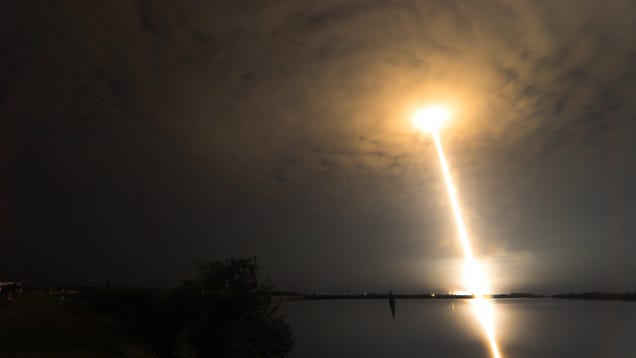
Returning SpaceX Rockets Are Creating Bright Glowing ‘Holes’ in the Sky

In mid-July, viewers hoping to catch a glimpse of a SpaceX rocket launch were stunned to see it followed by a bright aurora-like phenomenon over Arizona. The rocket had formed a hole in the upper atmosphere, evinced by a red glow captured by photographers on the ground.

Read more…


Source: Gizmodo – Returning SpaceX Rockets Are Creating Bright Glowing ‘Holes’ in the Sky

Google Caves, Agrees to Pay News Companies for Content in Canada

Google reached a deal with the Canadian government over a controversial new law that will force tech companies to pay news publishers when their content is shared on online platforms. Google and Meta previously threatened to block links to news content in Canada altogether in response to the law. The deal is the first…

Read more…


Source: Gizmodo – Google Caves, Agrees to Pay News Companies for Content in Canada

David Zaslav Says Universally Unpopular Movie Scrapping Was Brave, Actually

Running a movie studio has proven to be challenging for reality television mogul turned Warner Bros. Discovery CEO David Zaslav. As 2023 comes to an end, he looks to the upcoming year to continue to answer for the choices being made.

Read more…


Source: Gizmodo – David Zaslav Says Universally Unpopular Movie Scrapping Was Brave, Actually

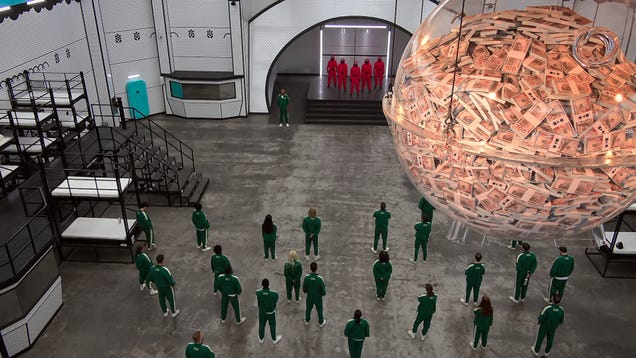
Netflix's Controversial Squid Game Reality Show Is a Hit

The idea was bonkers from the start—a reality competition based on a fictional series about a reality competition in which players fight to the death—but perhaps unsurprisingly, given the runaway success of its gruesome source material, Netflix’s controversial Squid Game: The Challenge is a certified hit. Even without…

Read more…


Source: Gizmodo – Netflix’s Controversial Squid Game Reality Show Is a Hit

Web browser suspended because it can browse the web is back on Google Play

A large Google logo at a trade fair.

Enlarge (credit: Getty Images | Alexander Koerner)

Google Play has reversed its latest ban on a web browser that keeps getting targeted by vague Digital Millennium Copyright Act (DMCA) notices. Downloader, an Android TV app that combines a browser with a file manager, was restored to Google Play last night.

Downloader, made by app developer Elias Saba, was suspended on Sunday after a DMCA notice submitted by copyright-enforcement firm MarkScan on behalf of Warner Bros. Discovery. It was the second time in six months that Downloader was suspended based on a complaint that the app’s web browser is capable of loading websites.

The first suspension in May lasted three weeks, but Google reversed the latest one much more quickly. As we wrote on Monday, the MarkScan DMCA notice didn’t even list any copyrighted works that Downloader supposedly infringed upon.

Read 10 remaining paragraphs | Comments


Source: Ars Technica – Web browser suspended because it can browse the web is back on Google Play

Nikola Tesla’s historic Wardenclyffe lab site at risk after devastating fire

historic photo of low brick building with a steel tower with dome rising from the roof

Enlarge / Nikola Tesla’s Wardenclyffe plant on Long Island circa 1902 in partial stage of completion. (credit: Public domain)

Back in 2012, a crowdfunding effort on Indigogo successfully raised the funds necessary to purchase the Wardenclyffe Tower site on Long Island, New York, where Serbian inventor Nikola Tesla once tried to build an ambitious wireless transmission station. The goal was to raise additional funds to build a $20 million Tesla Science Center there, with a museum, an educational center, and a technological innovation program. The nonprofit group behind the project finally broke ground this April after years of basic restoration work—only to experience a devastating setback last week, two days before Thanksgiving, when a fire broke out.

Over 100 firefighters from 17 local departments responded and battled the flames throughout the night, as residual embers led to two additional outbreaks. One firefighter sustained bruised ribs after falling off a ladder, but there were no other injuries or fatalities. Once the blaze was extinguished, the TSC group called in their engineers to assess the damage and make recommendations for repairs. While an investigation is ongoing as to the cause of the fire, Fire Chief Sean McCarrick said during a press conference on Tuesday, November 28, that they had ruled out arson. According to project architect Mark Thaler, there was nothing flammable in the lab that could have caused the fire, although the back buildings had wood-frame roofs.

The original brick building, designed by Stanford White, is still standing, although there is considerable damage to the structure of the roof, steel girders, chimney, cupola, and a portion of a wall. Some elements have been irreparably destroyed, but fortunately all museum artifacts in TSC’s collection were stored offsite. The most pressing concern is that water from the firehoses saturated the brick walls, according to Thaler, since the upcoming colder winter temperatures could freeze that moisture and cause the brick work to break apart and collapse. The engineers have also recommended adding strategic wall supports to both the interior and exterior to shore up the structure.

Read 3 remaining paragraphs | Comments


Source: Ars Technica – Nikola Tesla’s historic Wardenclyffe lab site at risk after devastating fire

Netflix is adding the GTA Trilogy to its games library on December 14

Netflix continues to bet big on gaming. The streamer just announced that Rockstar’s Grand Theft Auto: The Trilogy – The Definitive Edition will hit its platform on December 14. The game will be free to play for Netflix subscribers, like the rest of its library. Each of the three titles included in the collection have been updated for mobile. These games include the iconic Grand Theft Auto III, Grand Theft Auto: Vice City, and Grand Theft Auto: San Andreas. They’ll be playable via the Netflix app, but also available as standalone apps on Android and iOS.

The gameplay’s a bit dated by modern standards but Grand Theft Auto III basically invented the open-world genre, and the sequels further refined the model. Many players actually point to San Andreas as being a high watermark for the series, even outpacing more recent titles. In any event, this trilogy can hold you over until the eventual release of Grand Theft Auto VI. To that end, the forthcoming Rockstar sequel should be getting a trailer any day now.

Netflix has been snagging all kinds of games for its ever-growing library, from the massively popular roguelike Hades to the equally popular, uh, roguelike Dead Cells. The platform’s library also includes Braid, Death’s Door, Katana Zero and other hit indies.

The company’s also developing its own games, thanks to snatching up developer Night School, the team behind Oxenfree and Afterparty. This acquisition has already borne fruit, as Oxenfree II: Lost Signals released earlier this year to wide acclaim. Incidentally, the sequel isn’t stuck on Netflix, as it’s also available on Nintendo Switch, PS4, PS5 and PC via Steam. So the streamer might not be using games as just a way to lure in new subscribers. Netflix could be in it for the long haul.

Beyond Oxenfree II, other original games to hit the platform include Slayaway Camp 2: Netflix & Kill and a whole lot of titles based on pre-existing TV shows. There’s a game based on the recently-canceled fantasy epic Shadow and Bone and forthcoming titles inspired by Money Heist and The Dragon Prince, among others.

This article originally appeared on Engadget at https://www.engadget.com/netflix-is-adding-the-gta-trilogy-to-its-games-library-on-december-14-190357966.html?src=rss

Source: Engadget – Netflix is adding the GTA Trilogy to its games library on December 14