The Morning After: The cost of generating AI images

Researchers from Carnegie Mellon University and AI startup Hugging Face collaborated to see the carbon footprint of all those whimsical AI images we’ve generated over the last few years. They discovered that creating an image using artificial intelligence uses the same energy as charging a smartphone. Generating text, whether a conversation with a chatbot or cleaning up an essay, predictably requires much less energy. The researchers examined 13 tasks, ranging from summarization to text classification, and measured the carbon dioxide produced per every 1,000 grams.

The researchers urge machine learning scientists and practitioners to “practice transparency regarding the nature and impacts of their models, to enable better understanding of their environmental impacts.” Take ChatGPT, OpenAI’s chatbot. It has upward of 10 million users per day and 100 million monthly active users. That’s a lot of energy.

— Mat Smith

​​You can get these reports delivered daily direct to your inbox. Subscribe right here!​​

The biggest stories you might have missed

Kiss’ final show ended with a performance by digital avatars made to immortalize the band

Inside the ‘arms race’ between YouTube and ad blockers

Sci-fi RTS sequel Homeworld 3 will arrive on March 8 2024

Tesla’s Cybertruck is a dystopian fantasy

The iPhone’s computational photography made this confusing image

You can replicate it quite easily. But I’m not sure why you would.

TMA
Instagram

One woman, writer-comedian Tessa Coates, stood in front of a mirror, but with three different arm positions. How? Well, it’s likely she was moving at the instant the photo was taken, so the algorithm stitched the photo together from multiple images — exactly what the iPhone and other phones do to capture more information and synthesize better images. It appears the algo considered each figure a separate woman, capturing her at different points at different places in the image. But it’s no blue-or-gold-dress conundrum, is it?

Continue reading.

The perennial Game Awards question: What does indie mean?

Even if millions are spent.

One title nominated for Best Independent at The Game Awards this year, Dave the Diver, was produced by Nexon, one of the largest video game studios in South Korea. Fans quickly pointed out the error and reignited the debate over what “indie” means. Engadget’s Jessica Conditt lays out her thoughts on the matter.

Continue reading.

A big Analogue Pocket restock is coming

But cart adapters are delayed again.

TMA
Analogue

The Analogue Pocket multi-system portable handheld console is an indie hit and has been sold out for weeks. Analogue just announced a major restock, with consoles available to buy on December 4 at 11AM ET. So… now. The company promises these orders will arrive in time for the holidays. However, this only applies to the original black and white designs — not those limited edition colorways.

Continue reading.

Google is reportedly pushing the launch of its Gemini AI to 2024

Its GPT-4 rival was announced at I/O 2023.

Google has canceled its Gemini launch events scheduled for next week and now plans to launch its GPT-4 competitor in January, according to The Information. The company teased Gemini at I/O 2023, touting it as a foundational model with “impressive multimodal capabilities”

The new AI is intended to handle various applications, combining data types, like images and text, for more advanced tasks. However, sources told The Information that Gemini was struggling with non-English queries, prompting CEO Sundar Pichai to delay its release.

Continue reading.

This article originally appeared on Engadget at https://www.engadget.com/the-morning-after-the-cost-of-generating-ai-images-121549213.html?src=rss

Source: Engadget – The Morning After: The cost of generating AI images
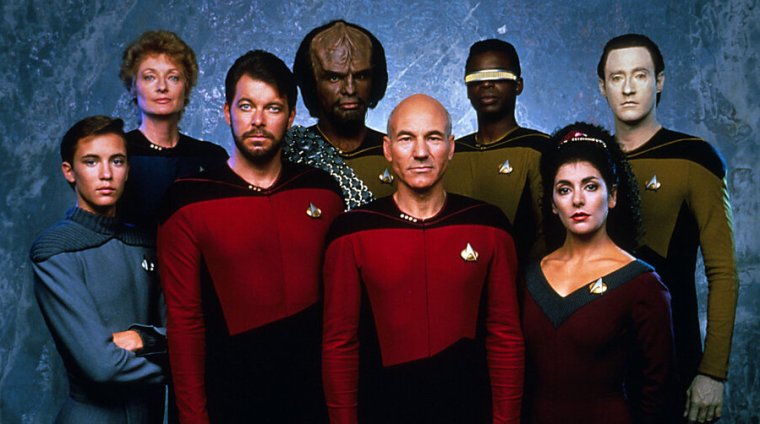
The surprisingly robust careers of Star Trek stars who became video game voice actors

Read 51 remaining paragraphs | Comments


Source: Ars Technica – The surprisingly robust careers of Star Trek stars who became video game voice actors

The Be Quiet! Dark Rock Elite CPU Cooler Review: Where Quiet Meets Quality

While stock coolers are adequate for handling the basic thermal load of a CPU, they often fall short in noise efficiency and cooling performance. For this reason, advanced users and system builders typically bypass stock coolers in favor of aftermarket solutions that better align with their specific requirements. The high-end segment of this market is exceptionally competitive, as manufacturers strive to offer the most effective cooling solutions.


Be Quiet!, established over two decades ago, has a reputation for quiet computing solutions. Initially making gradual progress, the company took significant strides after 2010, positioning itself as a leading manufacturer of advanced PC components and peripherals. Today, Be Quiet! boasts an extensive range of PC power and cooling products, with its particularly noteworthy air coolers.


In this review, we focus on the Dark Rock Elite, Be Quiet! ‘s formidable entry into the high-end CPU air cooler segment. This cooler is designed to rival top-tier models like the Noctua NH-D15, offering massive proportions for optimum cooling efficiency. The Dark Rock Elite is crafted to meet and exceed the demands of the most powerful mainstream CPUs, setting itself apart amidst fierce competition from various manufacturers. Our review will delve into the capabilities of the Dark Rock Elite and its place in the aftermarket cooling market.


Source: AnandTech – The Be Quiet! Dark Rock Elite CPU Cooler Review: Where Quiet Meets Quality

Google's Pixel Watch 2 falls to a new low of $300

Google’s Pixel Watch 2 just came out in October but we’re already seeing the first substantial discount. You can pick up the WiFi model at Amazon for just $300, for a discount of 14 percent ($50) over the list price. And if you don’t want to be encumbered by your smartphone, the LTE model is also on sale for $350, a 13 percent discount off the regular price. 

The Pixel Watch 2 has a longer-lasting battery, with a full 24 hours between charges even with the always-on display enabled, while the original model struggled to go a full day. Google has also doubled down on the Fitbit integration, with a new multi-path heart rate sensor that uses both photodiodes and LEDs to get better estimates of your pulse. Fitbit stress management features use various sensors to potentially identify tense moments in your day and suggests actions such as mood logging or guided breathing and walking sessions. 

New safety features include Safety Check which can alert friends, family or even emergency services if needed and Emergency Sharing lets your circle of people see your real-time whereabouts. Fall detection and Emergency SOS were already released earlier this year for the Pixel Watch but will come standard on the Pixel Watch 2. The housing is made from 100 percent recycled aluminum and the AMOLED screen is covered in 3D Corning Gorilla Glass 5. Many fitness features like workouts and Daily Readiness Score live behind Fitbit’s paywall, but the watch comes with six months of the subscription for free.

The main downside is the crown that sticks out a bit too far and may pinch your wrist during certain activities. All told, though, it’s a solid update over the original thanks to the extra features, lighter weight and improved design. $300 is a great price for an all-new smartwatch and would be a great compliment to a Pixel or other Android smartphone. 

Follow @EngadgetDeals on Twitter and subscribe to the Engadget Deals newsletter for the latest tech deals and buying advice.

This article originally appeared on Engadget at https://www.engadget.com/googles-pixel-watch-2-falls-to-a-new-low-of-300-102522276.html?src=rss

Source: Engadget – Google’s Pixel Watch 2 falls to a new low of 0

NotePad++ 20th Anniversary Edition Includes New 'Multi-Edit' Feature

The free open-source text editor Notepad++ is celebrating its 20th anniversary, the blog OMG! Ubuntu reported this week, “with a new release filled with some neat new features.”

In Notepad++ 8.6 (the 238th release since 2003, for those keeping count) the Windows-based code tool [which can also be used on Linux] adds to its extensive feature set with an improved multi-edit feature.
A few 3rd-party Notepad++ plugins have offered similar functionality for a while, including BetterMultiSelection. And a bug report requesting to ability to “transform the column mode to multi-caret on HOME/END/Arrow keys” led to this native addition.
Their blog post includes an animated GIF of Notepad++ multi-edit in action.

“You can install Notepad++ on Ubuntu straight from the Ubuntu Software/App Center app (it’s a Snap Store). Alternatively, install the Windows build via WINE/CrossOver or, if you got the l33t skillz, build it by hand, from source.”

Read more of this story at Slashdot.


Source: Slashdot – NotePad++ 20th Anniversary Edition Includes New ‘Multi-Edit’ Feature

Spotify laying off 17 percent of employees across the company

In a pre-holiday shocker, Spotify is laying off 17 percent of its workforce across the company, CEO Daniel Ek announced in a company press release. The cuts are being made due to what Ek called “the challenges ahead” and he elected to make them immediately instead of doing smaller reductions over time. Affected employees will be notified later today, he added. 

“I realize that for many, a reduction of this size will feel surprisingly large given the recent positive earnings report and our performance,” Ek wrote. “We debated making smaller reductions throughout 2024 and 2025. Yet, considering the gap between our financial goal state and our current operational costs, I decided that a substantial action to right-size our costs was the best option to accomplish our objectives. While I am convinced this is the right action for our company, I also understand it will be incredibly painful for our team.”

Ek went on to note that the company expanded considerably in 2020 and 2021 due to the lower cost of capital. “These investments generally worked, contributing to Spotify’s increased output and the platform’s robust growth this past year,” he said. And despite reductions made last year — the company laid off 6 percent of its workforce early in 2023 and another 2 percent in May — “our cost structure for where we need to be is still too big,” Ek said. 

Follow those rounds of layoffs, Spotify had around 9,000 employees, so the latest cuts will see around 1,500 employees losing their jobs (4,300 of those jobs were in the US as of 2022). To soften the blow, Ek said Spotify will pay an average of five months severance, cover healthcare during that time and provide immigration/career support. 

Ek said that for the company’s next phase, “being lean is not just an option but a necessity.” Last month, Spotify announced a revamped royalty model, which is supposed to give “working artists” a bigger cut, while reducing fraudulent streams. 

Spotify has seen consistent growth since it launch and now counts 574 million monthly active users, up 26 percent over the same period last year. The company has always struggled to make a profit, though with its last quarter being a rare exception. Ek promised more information about what the changes will mean “in the days and weeks ahead” — but all that will be cold comfort to employees suddenly finding themselves unemployed just before the holidays. 

This article originally appeared on Engadget at https://www.engadget.com/spotify-laying-off-17-percent-of-employees-across-the-company-081521784.html?src=rss

Source: Engadget – Spotify laying off 17 percent of employees across the company

150,000 Programmers Tackle 'Advent of Code' in Event's 9th Year

“Advent of Code” has begun. New programming puzzles will appear every day until Christmas at AdventOfCode.com — and the annual event (first started in 2015) has grown into a worldwide phenomenon. This year’s first puzzle has been completed by over 150,000 programmers (with another 115,652 completing Day Two’s puzzle). And 108,000 fans have also joined the Advent of Code subReddit.

Contest-related comments are popping up all around the web. Some participants are live streaming their puzzle-solving efforts on Twitch. Self-described computer nerd Gary Grady is tweeting cartoons about each day’s puzzle. JetBrains is even giving away some prizes in their “Advent of Code with Kotlin” event. And JetBrains developer advocate Sebastian Aigner is also hosting daily livestreams about each puzzle.

It’s hard to overstate how big this event has become. This year’s event attracted 60 sponsors, including Kotlin (for the third consecutive year), as well as Spotify, Shopify, and Sony Interactive Entertainment (as well as JPMorgan Chase, Bank of America, and American Express). Individual donors can get a special badge next to their name, and there’s also a shop selling coffee mugs and t-shirts. But at its core is real-world developer Eric Wastl (plus a team of loyal beta-testers) sharing his genuine fondness for computer programming. Wastl is also the creator of a satirical web page for the fast, lightweight, cross-platform framework Vanilla JS (“so popular that browsers have been automatically loading it for over a decade”) and also curates a collection of “things in PHP which make me sad”.

And you can find him on X sharing encouraging comments for this year’s participants.

Read more of this story at Slashdot.


Source: Slashdot – 150,000 Programmers Tackle ‘Advent of Code’ in Event’s 9th Year

Meta's latest AI suite makes speech translation more seamless and expressive

Back in August, Meta unveiled its multimodal AI translation model, SeamlessM4T, which supports nearly 100 languages for text and 36 for speech. With an updated “v2” architecture, the tech giant is now expanding on this tool to make conversational translations more spontaneous and expressive — the latter a missing key to an authentic conversation across languages.

The first of the two new features is “SeamlessExpressive” which, as you can tell by the name, ports your expressions over to your translated speech. These include your pitch, volume, emotional tone (excitement, sadness or whispers), speech rate and pauses. Considering how translated speeches had always sounded robotic until now, this breakthrough is potentially a game-changer — both in our daily lives and also in content production. Supported languages include English, Spanish, German, French, Italian and Chinese, though the demo page is missing Italian and Chinese at the time of writing this article.

The second feature is “SeamlessStreaming,” which starts translating a speech while the speaker is still talking, thus allowing others to hear a translation faster. There’s still a short latency of just under two seconds, but at least you won’t have to wait until someone finishes a sentence. According to Meta, the challenge here is that different languages have different sentence structures, so it had to develop an algorithm dedicated to studying partial audio input, in order to decide whether there’s enough context to start generating a translated output, or whether to keep listening.

Meta’s latest development on this “Seamless Communication” suite seems to be an impressive one — more so than the mobile interpreter tools offered by the likes of Google and Samsung. There’s no word on when the public will be able to utilize these new features, but I can already imagine Meta baking them into its smart glasses some day, making them even more practical than ever.

This article originally appeared on Engadget at https://www.engadget.com/metas-latest-ai-suite-makes-speech-translation-more-seamless-and-expressive-060043686.html?src=rss

Source: Engadget – Meta’s latest AI suite makes speech translation more seamless and expressive

'What Drives This Madness On Small Modular Nuclear Reactors?'

Slashdot reader XXongo writes: Nuclear power plants have historically been built at gigawatt scale. Recently, however, there has been a new dawn seeing multiple projects to build Small Modular Reactors (“SMRs”), both funded by billionaires and by the U.S. Department of Energy.

Recently one of the players farthest ahead in the development, NuScale Power, canceled their headline project, but many other projects continue. In a lengthy analysis, Michael Barnard thinks that’s crazy, and attributes the drive toward small reactors to “a tangled web that includes Bill Gates, Silicon Valley, desperate coal towns, desperate nuclear towns, the inability of the USA to build big infrastructure, the U.S. Department of Energy’s budget, magical thinking and more.” Due to thermal inefficiencies, small reactors are more expensive per unit of power generated, he points out, and the SMR projects ignore most of the field’s history’s lessons about both the scale of reactors for commercial success and the conditions needed for success.

They are relying on Wright’s Law, that each doubling of the number of manufactured items in production manufacturing would bring cost per item down by 20% to 27%, but Barnard points out that the number of reactors needed to achieve enough economy of scale in production to make the reactors make economic sense is unrealistically optimistic. He concludes that only government programs can meet the conditions for successful deployment of nuclear power.

At one point Barnard characters SMRs as “a bunch of lab technologies that have been around for decades that depend on uranium from Russia, that don’t have the physical characteristics for cheap nuclear generation and don’t have the conditions for success for nuclear generation will be the saviours of the nuclear industry and a key wedge in fighting climate change…

“I like nuclear generation. I know it’s safe enough. I’m not concerned about radiation… I just know that it doesn’t have the conditions for success to be built and scaled economically in the 21st Century, and wind, water, solar, transmission and storage do.”

Read more of this story at Slashdot.


Source: Slashdot – ‘What Drives This Madness On Small Modular Nuclear Reactors?’

After KISS's Final Show, They'll Become Digital Avatars From Industrial Light & Magic

Gene Simmons is 74 years old. But as the singer for the classic rock band KISS left the stage after their final show, USA Today reports there was a surprise:
in the most on-brand KISS move even by KISS standards, before the quartet likely hit their dressing rooms after disappearing on stage in the blizzard of smoke and confetti that accompanied the set-closing “Rock and Roll All Nite,” a message blasted on the video screens: “A new KISS era starts now.”
Digital avatars of the band followed, playing their anthem, “God Gave Rock and Roll To You.”

ABC News reports:
The avatars were created by George Lucas’ special-effects company, Industrial Light & Magic, in partnership with Pophouse Entertainment Group, the latter of which was co-founded by ABBA’s Björn Ulvaeus. The two companies recently teamed up for the “ABBA Voyage” show in London, in which fans could attend a full concert by the Swedish band — as performed by their digital avatars. Per Sundin, CEO of Pophouse Entertainment, says this new technology allows Kiss to continue their legacy for “eternity.” He says the band wasn’t on stage during virtual performance because “that’s the key thing,” of the future-seeking technology. “Kiss could have a concert in three cities in the same night across three different continents. That’s what you could do with this.”

In order to create their digital avatars, who are depicted as a kind of superhero version of the band, Kiss performed in motion capture suits.

Experimentation with this kind of technology has become increasingly common in certain sections of the music industry. In October K-pop star Mark Tuan partnered with Soul Machines to create an autonomously automated “digital twin” called “Digital Mark.” In doing so, Tuan became the first celebrity to attach their likeness to OpenAI’s GPT integration, artificial intelligence technology that allows fans to engage in one-on-one conversations with Tuan’s avatar. Aespa, the K-pop girl group, frequently perform alongside their digital avatars — the quartet is meant to be viewed as an octet with digital twins. Another girl group, Eternity, is made up entirely of virtual characters — no humans necessary.

Kiss frontman Paul Stanley told ABC News that “The band deserves to live on because the band is bigger than we are.”

Read more of this story at Slashdot.


Source: Slashdot – After KISS’s Final Show, They’ll Become Digital Avatars From Industrial Light & Magic

How the Concorde Plans Were Secretly Given To the Russians

Today is the 20th anniversary of its last flight of the supersonic Concorde aircraft. It was faster than the speed of sound, travelling at speeds of 1,350 mph (2,170 km/h).

Long-time Slashdot reader schwit1 shared an article from the Telegraph:
As the space race raged and dominated headlines, the U.S. and the Soviet Union were equally competitive about being the first post-war superpower to create a commercial jetliner that could travel faster than the speed of sound.” Both started work on secret projects, at the same time that Britain and France — who were less hell-bent on imprinting their superiority on geopolitics, but blessed with many of the world’s finest engineering minds — were in pursuit of the same goal.

It has been known for decades that the three-horse race wasn’t run entirely fairly. While the Americans, with their colossal and largely pointless Boeing 2707, never got close to getting airborne (they scrapped the project in 1971), the Soviet-built Tupolev Tu-144 won the race in 1968. When it did, though, its design similarities to Concorde appeared to confirm suspicions that the blueprints might have been leaked by espionage. In the late 1990s, it was revealed that an aeronautical engineer codenamed Agent Ace was one such spy. Recruited in 1967, he allegedly handed over some 90,000 pages of detailed technical specifications on new aircraft — including Concorde, the Super VC-10 and Lockheed L-1011 — to the KGB, the foreign intelligence and domestic security agency of the Soviet Union.
The identity of Agent Ace is revealed in Concorde: The Race for Supersonic, a new two-part documentary by the UK public broadcasting station Channel 4.

The Telegraph adds:
With the rich benefit of hindsight, John Britton isn’t entirely surprised there was a Soviet mole in the factory. It was a long time ago, 1965, but something — or someone — at Filton Aerodrome seemed fishy. “We had dozens, maybe hundreds of people working on the project, and we didn’t have enough permanent staff so we took on contractors, all sorts of characters,” Britton says. At the time he was a 19-year-old apprentice engineer, working for British Aeroplane Company (BAC) in the design office for a supersonic, passenger-carrying aircraft. An aircraft that would, ideally, fly before the Soviet Union’s competing effort did.
“There was one chap working there… He used to stay behind, he’d do a lot of overtime in the drawing library, taking prints off the microfilms of designs…” Britton, who is now 76, initially assumed the man — he thinks his name was George — was merely conscientious and needed copies for his work. He can titter at the memory now. “It was only afterwards, when the Soviet aircraft came out and it looked remarkably like Concorde, when we thought… ‘Ah’.”

Read more of this story at Slashdot.


Source: Slashdot – How the Concorde Plans Were Secretly Given To the Russians

Dune: Part Two Returns With a New Set of Character Posters in Tow

With shifting release dates and mandated radio silence due to the Hollywood strikes, the buildup to Dune: Part Two has been nothing short of eventful. While there’s still a few more months before audiences can see it, Warner Bros. is getting the promo ball rolling again with footage screened at CCXP to join the first…

Read more…


Source: Gizmodo – Dune: Part Two Returns With a New Set of Character Posters in Tow

Kiss’ final show ended with a performance by digital avatars made to immortalize the band

Kiss’ final live performance at Madison Square Garden in New York last night also turned out to be the first for the band’s successors — four digital avatars that will play on in the real members’ retirement from physical shows. Kiss concluded the last show of its “The End of the Road” tour by introducing the new virtual band, which then performed “God Gave Rock And Roll To You.”

The avatars weren’t just straight replicas of the current band members — Paul Stanley, Gene Simmons, Tommy Thayer and Eric Singer — but interpretations of them “as fantasy-based superheroes,” said Pophouse Entertainment, which partnered with George Lucas’ Industrial Light & Magic for their creation. And, it says that’s just “one of the many and varied ways in which Kiss will live on as digital performers through their avatars in the future.” Industrial Light & Magic also created the digital avatars of ABBA (or ABBAtars) for the ongoing ABBA Voyage show in London.

No specific plans for the virtual band have been announced just yet, but it wouldn’t be surprising to see similar Kiss experiences pop up in the near future. Gene Simmons, who founded Kiss alongside Paul Stanley, said the move will keep the band “forever young and forever iconic,” while Stanley called it a way to “see Kiss immortalized” and take the group “to a completely different level beyond being just a music band.”

This article originally appeared on Engadget at https://www.engadget.com/kiss-final-show-ended-with-a-performance-by-digital-avatars-made-to-immortalize-the-band-210024877.html?src=rss

Source: Engadget – Kiss’ final show ended with a performance by digital avatars made to immortalize the band

Physicists May Have Found a Hard Limit on The Performance of Large Quantum Computers

For circuit-based quantum computations, the achievable circuit complexity is limited by the quality of timekeeping. That’s according to a new analysis published in the journal Physical Review Letters exploring “the effect of imperfect timekeeping on controlled quantum dynamics.”

An announcement from the Vienna University of Technology explains its significance. “The research team was able to show that since no clock has an infinite amount of energy available (or generates an infinite amount of entropy), it can never have perfect resolution and perfect precision at the same time. This sets fundamental limits to the possibilities of quantum computers.”

ScienceAlert writes:
While the issue isn’t exactly pressing, our ability to grow systems based on quantum operations from backroom prototypes into practical number-crunching behemoths will depend on how well we can reliably dissect the days into ever finer portions. This is a feat the researchers say will become increasingly more challenging…

“Time measurement always has to do with entropy,” says senior author Marcus Huber, a systems engineer who leads a research group in the intersection of Quantum Information and Quantum Thermodynamics at the Vienna University of Technology. In their recently published theorem, Huber and his team lay out the logic that connects entropy as a thermodynamic phenomenon with resolution, demonstrating that unless you’ve got infinite energy at your fingertips, your fast-ticking clock will eventually run into precision problems. Or as the study’s first author, theoretical physicist Florian Meier puts it, “That means: Either the clock works quickly or it works precisely — both are not possible at the same time….”

[F]or technologies like quantum computing, which rely on the temperamental nature of particles hovering on the edge of existence, timing is everything. This isn’t a big problem when the number of particles is small. As they increase in number, the risk any one of them could be knocked out of their quantum critical state rises, leaving less and less time to carry out the necessary computations… This appears to be the first time researchers have looked at the physics of timekeeping itself as a potential obstacle. “Currently, the accuracy of quantum computers is still limited by other factors, for example the precision of the components used or electromagnetic fields,” says Huber. “But our calculations also show that today we are not far from the regime in which the fundamental limits of time measurement play the decisive role.”

Read more of this story at Slashdot.


Source: Slashdot – Physicists May Have Found a Hard Limit on The Performance of Large Quantum Computers

Godzilla x Kong: The New Empire's First Trailer is a Monster Mash

Legendary’s Monsterverse has been steadily persisting since 2014 and saw its first big titanic crossover in the form of 2021’s Godzilla vs. Kong. Instead of splitting the titular monsters back off again so they can do their own separate things for a bit, they’re reuniting once more—this time as allies rather than…

Read more…


Source: Gizmodo – Godzilla x Kong: The New Empire’s First Trailer is a Monster Mash

Are CAPTCHAs More Than Just Annoying?

The Atlantic writes:

Failing a CAPTCHA isn’t just annoying — it keeps people from navigating the internet. Older people can take considerably more time to solve different kinds of CAPTCHAs, according to the UC Irvine researchers, and other research has found that the same is true for non-native English speakers. The annoyance can lead a significant chunk of users to just give up.

But is it all also just a big waste of time? The article notes there’s now even CAPTCHA-solving services you can hire. (“2Captcha will solve a thousand CAPTCHAs for a dollar, using human workers paid as low as 50 cents an hour. Newer companies, such as Capsolver, claim to instead be using AI and charge roughly the same price.”)

And they also write that this summer saw more discouraging news:

In a recent study from researchers at UC Irvine and Microsoft:
– most of the 1,400 human participants took 15 to 26 seconds to solve a CAPTCHA with a grid of images, with 81% accuracy.

– A bot tested in March 2020, meanwhile, was shown to solve similar puzzles in an average of 19.9 seconds, with 83% accuracy.

The article ultimately argues that for roughly 20 years, “CAPTCHAs have been engaged in an arms race against the machines,” and that now “The burden is on CAPTCHAs to keep up” — which they’re doing by evolving.

The most popular type, Google’s reCAPTCHA v3, should mostly be okay. It typically ascertains your humanity by monitoring your activity on websites before you even click the checkbox, comparing it with models of “organic human interaction,” Jess Leroy, a senior director of product management at Google Cloud, the division that includes reCAPTCHA, told me.

But the automotive site Motor Biscuit speculates something else could also be happening. “Have you noticed it likes to ask about cars, buses, crosswalks, and other vehicle-related images lately?”
Google has not confirmed that it uses the reCAPTCHA system for autonomous vehicles, but here are a few reasons why I think that could be the case. Self-driving cars from Waymo and other brands are improving every day, but the process requires a lot of critical technology and data to improve continuously.

According to an old Google Security Blog, using reCAPTCHA and Street View to make locations on Maps more accurate was happening way back in 2014… [I]t would ask users to find the street numbers found on Google Street View and confirm the numbers matched. Previously, it would use distorted text or letters. Using this data, Google could correlate the numbers with addresses and help pinpoint the location on Google Maps…

Medium reports that more than 60 million CAPTCHAs are being solved every day, which saves around 160,000 human hours of work. If these were helping locate addresses, why not also help identify other objects? Help differentiate a bus from a car and even choose a crosswalk over a light pole.

Thanks to Slashdot reader rikfarrow for suggesting the topic.

Read more of this story at Slashdot.


Source: Slashdot – Are CAPTCHAs More Than Just Annoying?

Fallout Show Creators Want It to Feel Like a Brand New Game

Yesterday, Prime Video gave viewers a first full look at its upcoming Fallout show. Based on the RPG franchise by Interplay and Bethesda, the series definitely looks like it belongs with the actual games, and that wasn’t just the mission statement—for all intents and purposes, this is their idea of Fallout 5.

Read more…


Source: Gizmodo – Fallout Show Creators Want It to Feel Like a Brand New Game

Plants May Be Absorbing 20% More CO2 Than We Thought, New Models Find

An anonymous reader writes: Using realistic ecological modeling, scientists led by Western Sydney University’s Jürgen Knauer found that the globe’s vegetation could actually be taking on about 20% more of the CO2 humans have pumped into the atmosphere and will continue to do so through to the end of the century.

“What we found is that a well-established climate model that is used to feed into global climate assessments by the likes of the IPCC (Intergovernmental Panel on Climate Change) predicts stronger and sustained carbon uptake until the end of the 21st century when extended to account for the impact of some critical physiological processes that govern how plants conduct photosynthesis,” said Knauer.

Mathematical models of ecological systems are used to understand complex ecological processes and in turn attempt to predict how the real ecosystems they’re based on will change. The researchers found that the more complex their modeling, the more surprising the results – in the environment’s favor.

Current models, the team adds, are not that complex so likely underestimate future CO2 uptake by vegetation… [T]he modeling makes a strong case for the value of greening projects and their importance in comprehensive approaches to tackling global warming.

Read more of this story at Slashdot.


Source: Slashdot – Plants May Be Absorbing 20% More CO2 Than We Thought, New Models Find

Google is reportedly pushing the launch of its Gemini AI to 2024

Google has canceled its Gemini launch events scheduled for next week and now plans to launch its GPT-4 competitor in January, according to The Information. The company teased Gemini at I/O 2023, touting it then as a foundational model with “impressive multimodal capabilities” early in its training.

Google initially planned to debut it before the end of the year in an unusually timed launch between the holidays — which it didn’t publicly announce — but sources told The Information that Gemini was struggling with non-English queries, prompting CEO Sundar Pichai to delay its release. Gemini is intended to be able to handle a broad range of applications, combining different types of data like images and text for more advanced tasks. In May, Google said, “Once fine-tuned and rigorously tested for safety, Gemini will be available at various sizes and capabilities.”

Gemini is expected to bring improvements to Google’s existing AI and AI-enhanced products too, like Bard, Google Assistant and Search. But, given the significance of this release and the dominance rival OpenAI already has in the space, it seems Google isn’t going to risk rushing Gemini out the door.

This article originally appeared on Engadget at https://www.engadget.com/google-is-reportedly-pushing-the-launch-of-its-gemini-ai-to-2024-173444507.html?src=rss

Source: Engadget – Google is reportedly pushing the launch of its Gemini AI to 2024

Church In New Orleans Establishes its Own Solar-Powered Electricity Resilience Hub

Back in 2021 Hurricane Ida knocked out power lines in New Orleans, leaving parts of the city in darkness for 10 days.

So a coalition of community-based organizations (including some churches) decided to build “solar-powered disaster response hubs that could transform the city’s approach to resilience,” reports the Guardian. So far there’s seven, but the group “has ambitions to build dozens more.”

On a bright, balmy autumn morning a couple of weeks ago [61-year-old pastor Antoine] Barriere climbed a long, steep ladder to show me the 460 solar panels that now cover a third or so of his church’s flat roof. The solar panels were generating more than enough energy to power Household of Faith, a non-denominational megachurch with 4,000 mostly Black parishioners in New Orleans East. Downstairs, a cabinet was stacked with backup batteries that were fully charged in case of a power outage — a frequent occurrence thanks to the low-lying city’s vulnerability to hurricanes, thunderstorms, high winds, extreme heat and flooding. In a worst-case scenario — no sun, thundery dark skies and power outage — the backup batteries could power essential appliances for a couple of days including the water heater, five commercial fridge freezers storing perishables for the weekly food pantry, and air conditioning for the vast main hall which could be converted into a dormitory-style shelter.

But on this brilliant cloudless morning, most of the solar-generated energy was going into the city’s electric grid. New Orleans’ one-for-one net metering scheme allows the church to offset its excess clean energy against the utility’s dirty energy, and this should become a net zero facility within 12 months… The idea is that each community lighthouse should be an institution locals already know and trust — such as a place of worship, health clinic or community centre — that can be converted into a resilience hub where people can converge during a power outage to get cool, recharge phones, have a meal, connect to a medical device or store medication that requires refrigeration such as insulin. In addition, community lighthouses will be able to keep the services running that people rely on such as the food pantry and religious sermons, while also adding capacity to the city’s wider emergency-response efforts as a distribution hub, shelter and possibly even house a makeshift clinic.

Thanks to Slashdot reader Bruce66423 for sharing the article.

Read more of this story at Slashdot.


Source: Slashdot – Church In New Orleans Establishes its Own Solar-Powered Electricity Resilience Hub