The archived hour-long chat is a must-watch for any long-time Doom fan.
While Doom can sometimes feel like an overnight smash success, the seminal first-person shooter was far from the first game created by id co-founders John Carmack and John Romero. Now, in a rare joint interview that was livestreamed during last weekend’s 30th-anniversary celebration, the pair waxed philosophical about how Doom struck a perfect balance between technology and simplicity that they hadn’t been able to capture previously and have struggled to recapture since.
Carmack said that Doom-precursor Wolfenstein 3D, for instance, “was done under these extreme, extraordinary design constraints” because of the technology available at the time. “There just wasn’t that much we could do.”
Wolfenstein 3D‘s grid-based mapping led to a lot of boring rectangular rooms connected by long corridors. (credit: Steam)
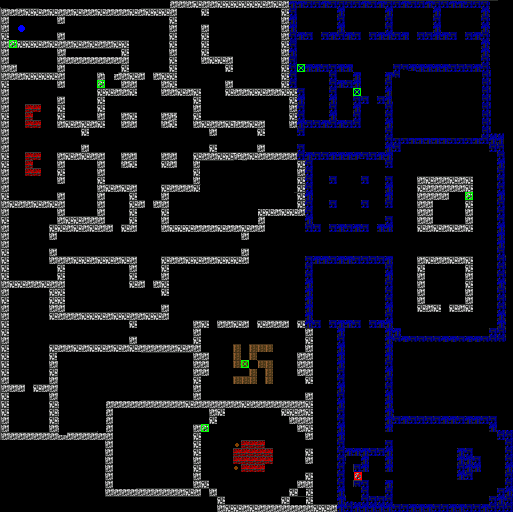
One of the biggest constraints in Wolfenstein 3D was a grid-based mapping system that forced walls to be at 90-degree angles, leading to a lot of large, rectangular rooms connected by long corridors. “Making the levels for the original Wolfenstein had to be the most boring level design job ever because it was so simple,” Romero said. “Even [2D platformer Commander Keen] was more rewarding to make levels for.”
Threads finally launched for European users Thursday roughly five months after the X competitor rolled out in the United States. The rookie social media platform also received some fact-checking filters that might put advertisers’ minds at ease. Meanwhile, Americans received AI-generated backgrounds for Instagram…
If you’re irritated by the morning people in your life, you might have Neanderthals to blame for their existence, at least a little bit. New research suggests that our hominin relatives possessed genetic variations that predisposed them to waking up early and that they passed on these genes to our Homo sapiens…
Enlarge/ Severe weather reports from Saturday across Tennessee and Kentucky. Note the cluster of tornado reports north of Nashville. (credit: NOAA)
Last weekend saw a tragic outbreak of tornadoes in Tennessee that killed six people and injured more than 80. In the aftermath of these deadly storms, video has emerged showing one of the tornadoes striking a power station, which appears to disrupt the circulation of the twister.
This has led to rampant online speculation—as tends to happen in 2023—about whether it’s possible to “blow up” a tornado. Take a gander at the video below:
Tennessee tornado 2023. Please be safe.
Friend from my wrestling academy captured this insane video in Madison. Please be safe. pic.twitter.com/2JDWNznfUn
This tornado occurred between Madison and Goodlettsville, just north of Nashville, east of I-65. What you see is the tornado striking a power substation, followed by an explosion. The power substation belonged to Nashville Electric Service, which subsequently released a video from the substation on Monday showing the strike and explosion.
Last week, Meta finally rolled out searchable tags for all users on Threads, its microblogging Instagram offshoot, and users are taking advantage of a design quirk for a bit of dumb fun. Threads’ “topic tags” are a lot like hashtags, but not entirely the same. For one, there’s no hash (#). They’re also able to contain spaces, meaning the tags can read like normal phrases rather than a bunch of words smashed together, as has long been the norm on Twitter/X and the like. Just like normal hashtags, though, they’ll be highlighted in blue and link out to other posts containing that tag.
It’s pretty basic stuff… which makes the effectiveness of the new prank feel all the more absurd. It goes like this: someone creates a Threads post, ideally with a lot of text, then slaps a “Show more” tag at the end, seemingly in the middle of a word or sentence. You, the unwitting victim, will then click “Show more” expecting to see the rest of the post, but — surprise! — it’ll instead direct you to the page for that tag. You might as well have been Rick Rolled.
@freezydorito/Threads
I’ll admit it, I got got. Some users, bless their hearts, have even commented saying they fell for it multiple times, thinking it was a bug. The first instance can be traced back to Threads user @freezydorito, who according to their own bio and professional pages actually works for Meta.
As simple as it is, the trick works so well because it perfectly duplicates a UI element we’re already so used to seeing. Should it be a dead giveaway that the text is a blue link? Not really, because that’s exactly how it’s always looked on X. Even on Facebook, the option to expand a post is presented as a gray “See more” link. It’s been a while since I last fell for something so silly online, because I generally trust nothing, and it momentarily threw me back to a much goofier time on the internet.
On Threads, my For You feed is already a cursed space filled with bad recommendations, and since I interacted with the “Show more” tag, I’ve now seen at least three dozen of these posts. I would say that this gag isn’t likely to survive beyond the week (fool me twice, et cetera), but my timeline is still peppered with new users posting things like “What is Threads?” every other day who are just ripe for the picking. Threads also just launched in Europe today, which means there will be plenty more unsuspecting users piling in. Let’s see how long it takes for Meta to implement a tweak for this one.
This article originally appeared on Engadget at https://www.engadget.com/threads-new-hashless-tags-have-opened-the-door-for-the-silliest-form-of-trolling-152303227.html?src=rss
After investigating reports that some users aren’t getting iMessages on Beeper Mini and Beeper Cloud, Beeper says that Apple seems to be “deliberately blocking” iMessages from being delivered to about five percent of Beeper Mini users. From a report: The company says that uninstalling and reinstalling the app fixes the issue and that it’s working on a broader fix.
Apple didn’t immediately reply to a request for comment about Beeper’s new claim, and it hasn’t replied to my original request for comment, either. But given that the company has already blocked Beeper Mini before, it’s not too surprising that it seems to be taking action against the app again.
Smile 2 is expanding its cast. Ghostbusters: Frozen Empire is bringing back a familiar spectral face. Moon Knight’s screenwriter will join Captain America: Brave New World for new reshoot material next year. Plus, another look at what’s coming in La Brea’s final season. Spoilers, away!
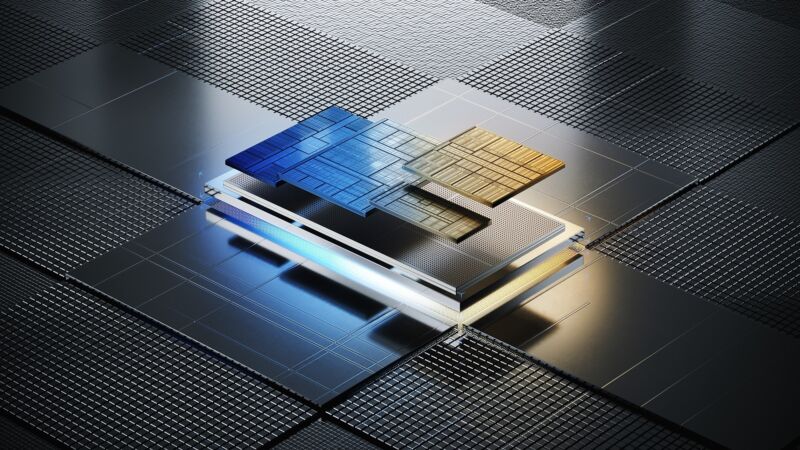
Enlarge/ Intel’s Core Ultra CPUs combine multiple silicon dies into a single chip. (credit: Intel)
Intel announced technical details about its next-generation Core CPUs a few months ago. Codenamed Meteor Lake, the chips are good and bad news for Intel’s chip manufacturing ambitions—they’re simultaneously the first chips to use the brand-new Intel 4 process and the first of Intel’s mass-market consumer processors to use silicon manufactured by someone other than Intel (in this case, TSMC). They’re also a showcase for Intel’s Foveros packaging technology, which welds together several pieces of silicon (“tiles,” in Intel’s words) rather than integrating everything into a single monolithic die.
Today, Intel is announcing the first wave of actual Meteor Lake processors, which Intel says will be available in some PCs starting today—expect to see quite a few of these PC designs announced this week, and even more of them at CES next month.
The lineup includes 11 chips across two different product families: H-series processors for thin-and-light workstation and gaming laptops and U-series chips that will end up in Ultrabooks. Eight of these are launching today, and three more are expected in Q1 of 2024. The two families share many similarities, including Intel’s first built-in neural processing unit (NPU) for accelerating machine learning and AI workloads, but in short, the H-series chips use more power and include more P-cores and GPU cores.
Lenovo has unveiled its latest productivity-focused ThinkPad and IdeaPad laptops ahead of CES. The systems are equipped with Intel’s new Core Ultra chipsets, which include three compute engines — a central processing unit, graphics processing unit and neural processing unit. Those are designed to work together for greater efficiency. Lenovo notes that some compute tasks can be offloaded to the GPU or NPU for better performance and power management. Since they run on Windows 11, all three laptops will support Copilot AI features.
The IdeaPad Pro 5i is the first consumer Intel Evo Edition laptop that runs on an Intel Core Ultra chipset. Lenovo claims this will power faster AI-driven features, such as image and text generation, as well as photo editing. There are also claims of improved performance for traditionally demanding tasks like video editing and exporting, along with multitasking.
You can equip the IdeaPad Pro 5i with up to an NVIDIA GeForce RTX 4050 Laptop GPU, up to 32GB of LPDDR5X RAM and up to a 1TB SSD. An expandable SSD slot and SD card reader can help bump up the storage as well.
The laptop is available in 14-inch and 16-inch formats with several display options, including an 16:10 OLED panel with a 100 percent DCI-P3 color gamut and 120Hz refresh rate. The IR Full HD camera has a time-of-flight sensor and privacy shutter along with Windows Hello support.
No matter which size of the laptop you opt for, you’ll get an 84WHr polymer battery with quick charging support via Thunderbolt 4. You’ll get an HDMI 2.1 port, two USB 3.2 Gen 1 Type A slots and a 3.5mm audio jack. There’s also Wi-Fi 6E and Bluetooth 5.2 support. The 14-inch model weighs 3.22 lbs and the larger variant is 4.3 lbs.
The Lenovo IdeaPad Pro 5i is available now. The laptop starts at $1,150.
Lenovo
You’ll need to wait slightly longer for the Lenovo ThinkPad X1 Carbon Gen 12. Some configurations will be available later this month (starting at $2,989) and the full swathe of options to follow in March. The ThinkPad X1 2-in-1 Gen 9 will become available in March too. That laptop is expected to start at $2,639.
Lenovo has integrated a major accessibility-focused feature into the new ThinkPads in the form of additional tactile cues on the keyboard to help folks with visual impairments. The company says it worked with Microsoft’s Accessibility Team to help develop new industry standards in keyboard design. For instance, the F2 and F3 keys (often used for volume control) have tactile markings, as does the Insert key to help people tell it apart from the Delete key. Meanwhile, the ThinkPad X1 2-in-1 has a larger magnetic pen, which is said to deliver a better experience for those who prefer to use a stylus.
The ThinkPad X1 models include a self-explanatory Low Light Enhancer feature for the webcam. Lenovo says this tool runs on the NPU for greater system efficiency when you have video conferencing software such as Zoom running.
The ThinkPad X1 Carbon Gen 12 can be configured with up to 64GB of LPDDR5X RAM and up to 2TB of SSD storage. There’s no dedicated GPU option as the laptop will support Intel Arc graphics. The 14-inch display can have a resolution of up to 2.8K with a refresh rate of 120Hz on an OLED panel.
As for ports, you’ll get two USB-C Thunderbolt 4, two USB-C, an HDMI 2.1 and a 3.5mm audio jack. The ThinkPad X1 Carbon Gen 12 can be equipped with Wi-Fi 6E or 7 and Bluetooth 5.3. There are several webcam options too, up to an 8MP MIPI Computer Vision camera with privacy shutter. The laptop’s weight starts at 2.42 lbs.
The ThinkPad X1 Yoga Gen 9 has similar specs though it, of course, is a 2-in-1. The other key difference is that the weight starts at 2.92 lbs.
Lenovo
This article originally appeared on Engadget at https://www.engadget.com/lenovos-latest-thinkpad-and-ideapad-laptops-include-new-intel-core-ultra-chips-150037731.html?src=rss
Intel today is entering the “AI PC” era with the launch of its new Core Ultra notebook chips. Originally codenamed “Meteor Lake,” these are Intel’s first processors to include an NPU, or neural processing unit, for accelerating AI tasks. The launch comes a week after AMD revealed its upcoming Ryzen 8040 hardware, its second batch of chips to include NPUs. While Intel is playing a bit of AI catch-up, the Core Ultra chips still sound like a solid step forward — at least according to the company’s benchmarks.
Intel claims the Core Ultra chips use up to 79 percent less power than AMD’s last-gen Ryzen 7840U while idling in Windows, and they’re also up to 11 percent faster than AMD’s hardware for multithreaded tasks. Intel didn’t have the upcoming Ryzen 8040 chips to test, but it’ll be interesting to see how they both compare next year.
Efficiency is a key component of the Core Ultra chips: They’re built on the company’s new Intel 4 (7nm) process, and they feature its FOVEROS 3D packaging. According to Intel, these are are also “the most efficient x86 processor for ultrathin systems.” There are refined P (Performance) and E (Efficiency) cores, as well as Intel Arc graphics, which is up to twice as fast as the last generation (and also offer double the performance per watt).
Intel
The Core Ultra family launches with the Ultra 7 165H at the high end, offering 16 cores/22 threads (6P cores, 8 E cores and 2 low-power E cores and a 5GHz Max Turbo frequency. A beefier Ultra 9 185H will arrive in the first quarter of 2024 with a 5.1GHz Max Turbo speed, slightly faster GPU and higher power draw (45 watts, compared to the Ultra 7’s 28 watts). As usual, there’s also a lower-power “U” series of chips for the thinnest machines.
While you won’t find the Core Ultra chips in the most powerful gaming laptops, the addition of Intel Arc graphics should make them slightly more viable for less demanding gaming (or at least more on par with AMD’s 7000 series chips). Intel says the Ultra 7 165H can play Baldur’s Gate 3 twice as fast as the Core i7 1370P in 1080p with medium graphics settings, and it can handle Resident Evil Village 95 percent faster than that older Intel chip.
Across an average of 18 games, including Apex Legends, Overwatch 2 and Final Fantasy XIV, Intel says the Ultra 7 165H is 5 percent faster than AMD’s Ryzen 7 7840U in the Thinkpad T16. Sure, that’s just a nominal improvement over last-gen hardware, but at least Intel finally appears to be competitive with AMD’s solid graphics. The company’s XeSS AI upscaling can also improve performance around 39 percent on average in 1080p. In some titles, including Like A Dragon: Gaiden, Intel’s upscaling can bump a game up from a middling 30fps range to a far smoother 69 fps.
As for AI workloads, Intel says Core Ultra chips can reach up to 34 TeraOPS when combining performance across the NPU, GPU and CPU. But the big change this time is the NPU: It’ll enable features like Windows 11’s Studio Effects, which can blur backgrounds and improve video lighting without hurting your battery life much. For creative AI workloads, Intel says the Ultra 7 165H is 70 percent faster than the Ryzen 7 7840U in Adobe Premiere Pro and a whopping 5.4 times faster running GIMP Stable Diffusion.
What’s truly exciting about the Core Ultra hardware, as well as AMD’s upcoming Ryzen 8040 series, is the potential for NPUs to make our computing lives slightly easier. They could help eke out more battery life while editing audio in Audacity on the go, or give you a slightly sleeker background blur during Zoom calls. Both Intel and AMD also say they’re also pushing developers to help create more AI-enabled features in their apps. Basically, get used to the term “AI PC” — you’ll be hearing it quite a bit throughout the next year.
This article originally appeared on Engadget at https://www.engadget.com/intel-unveils-core-ultra-its-first-chips-with-npus-for-ai-work-150021289.html?src=rss
Acer just unveiled the Predator Triton Neo 16 gaming laptop which features Intel’s long-awaited Core Ultra processors, formerly referred to internally as Meteor Lake. These CPUs boast a dedicated Neural Processing Unit (NPU) for advanced AI performance. The chips prioritize efficiency and speed, with Intel promising that graphics will be twice as fast when it comes to performance per watt, among other intriguing metrics.
As for the actual laptop, Acer’s Predator Triton Neo 16 is a beast. There’s the Core Ultra processor, with availability up to i9, but you can also outfit it with a powerful GPU, up to the NVIDIA GeForce RTX 4070. This combination allows for AI-optimized visuals when playing games with advanced ray tracing, thanks to NVIDIA’s DLSS 3.5 technology.
There are several 16-inch display options here, offering up to a 3.2K resolution with a 165Hz refresh rate and a 16:10 aspect ratio. These screens take advantage of a DCI-P3 100% color gamut and offer support for NVIDIA G-Sync and Optimus, for sharper colors and tear-free frames.
You can spec this laptop out with up to 32GB of LPDDR5X system memory and up to 2TB PCIe Gen 4 SSD storage. These computers also offer access to Acer’s proprietary Purifier Voice 2.0 technology, which combines AI-driven noise reduction and beam-forming to keep communications clear during fast-paced multiplayer sessions. The Predator Triton Neo 16 will be available in March, starting at $1,500.
Acer
Looking for a laptop outfitted with a new Intel Core Ultra chip but don’t want to wait until March? Acer also updated the Swift Go 14 line. These laptops aren’t as powerful, maxing out with an i7 chip, but feature a gorgeous OLED display. You can actually pick one of these up today from retailers like Amazon, Costco and Sam’s Club, among others. The Swift Go 14 starts at $800 for the bare-bones model.
This article originally appeared on Engadget at https://www.engadget.com/acers-predator-triton-neo-16-gaming-laptop-has-intel-core-ultra-processors-150009793.html?src=rss
LinkedIn has set aside an effort to relocate its data center technology out of its physical facilities and into Microsoft’s Azure cloud, CNBC reported Thursday, citing people familiar with the matter. From a report: The decision not to proceed with the project, code-named “Blueshift,” marks a major reversal for LinkedIn, which announced its plan to move to Azure in 2019, three years after Microsoft acquired the company for $27 billion. LinkedIn had been using Azure for specific tasks.
The U-turn represents a setback for Microsoft, which is chasing Amazon
Web Services in the lucrative cloud infrastructure market and has been counting on cloud technology and services to fuel much of its growth. Microsoft CEO Satya Nadella ran the cloud business before elevation to his current job in 2014. Mohak Shroff, LinkedIn’s vice president of engineering, wrote in a 2019 blog post announcing Blueshift that “moving to Azure will give us access to a wide array of hardware and software innovations, and unprecedented global scale.” Staffers started to learn of the decision not to follow through with the Azure migration last year, said the sources, who asked not to be named because of confidentiality. Executives stressed that the project was being put on hold, rather than getting canceled altogether, they said.
It’s finally time. Google already announced that as part of its ongoing “Privacy Sandbox” initiative, it’ll begin to restrict third-party cookies in Chrome starting in Q1 2024, and now, we have the exact launch date: January 4. At first, only a random one percent of Chrome users globally will see “Tracking Protection” enabled in their browser, meaning third-party cookies will be blocked by default. If you happen to be one of these lucky folks, you’ll see a prompt on the address bar indicating as such, thus limiting cross-site tracking in the name of privacy.
Assuming everything goes smoothly, Google will then gradually ramp up the rollout to 100 percent of Chrome users by the second half of 2024. Of course, hiccups are expected during this transitional period. Should you find yourself repeatedly loading a website to no avail, Chrome will let you temporarily re-enable third-party cookies. Simply click on the eye icon on the right side of the address bar to toggle this aging feature.
According to StatCounter’s November 2023 report, Google’s Chrome took up 62.85 percent of the worldwide browser market share, with Apple’s Safari in second place at 20.04 percent, and Microsoft’s Edge in third place at a mere 5.5 percent. Considering that there are billions of Chrome users today, it is perhaps fair for Google to call the initial one-percent rollout “a key milestone” for its “responsible approach to phasing out third-party cookies.”
That said, Google may still face some final hurdles set by the UK’s Competition and Markets Authority, as well as similar administrations from other countries, which are looking into minimizing the impact on their local ad businesses.
This article originally appeared on Engadget at https://www.engadget.com/google-chromes-third-party-cookie-phaseout-begins-on-january-4-140051834.html?src=rss
Enlarge/ I’m not 100 percent sure but it looks a lot like the Vistiq will be a three-row SUV. (credit: Cadillac)
Cadillac’s product planners sure love the letter Q. Last year the American luxury automaker started building the Lyriq, a rather competent midsize electric SUV. Last month, it revealed plans for an entry-level electric crossover called the Optiq, that goes on sale next year. And today, it tells us there’s another new SUV due in model year 2026 called the Vistiq.
Size-wize, the Vistiq slots between the Lyriq and the rather ginormous Escalade IQ due for model year 2025—the brand recognition on that name is far too good to Q-icize it directly. Although we have no details other than the model year and the name right now, there’s a fairly good chance the Vistiq will be an electric analogue to the Cadillac XT6.
(Similarly we have no further details on the Optiq yet, other than it will share the same smaller crossover architecture as the forthcoming Chevrolet Equinox and will arrive in 2024.)
Dropbox has enabled a default setting to share user data with OpenAI for an AI search feature, but says it’s only accessed when the feature is used, not to train models, and deleted in 30 days. From a report: Even with assurances of data privacy laid out by Dropbox on an AI privacy FAQ page, the discovery that the setting had been enabled by default upset some Dropbox users. The setting was first noticed by writer Winifred Burton, who shared information about the Third-party AI setting through Bluesky on Tuesday, and frequent AI critic Karla Ortiz shared more information about it on X.
Wednesday afternoon, Drew Houston, the CEO of Dropbox, apologized for customer confusion in a post on X and wrote, “The third-party AI toggle in the settings menu enables or disables access to DBX AI features and functionality. Neither this nor any other setting automatically or passively sends any Dropbox customer data to a third-party AI service.”
Google announced Thursday that it will start its long-anticipated slaughter of the internet’s cookies starting on January 4th, when it will block them for 1% of Chrome users, or about 30 million people. It’s the first major step in its Privacy Sandbox project, which aims to replace cookies with a different kind of…
Intel has released their first mobile processors based on their highly anticipated Meteor Lake platform, the Core Ultra H and the Core Ultra U series. Available today, the Ultra Core H series has four options, including two Ultra 7 16C/22T (6P+8E) SKUs and two 14C/18T (4P+8E) Ultra 5 SKUs, and offers a base TDP of 28 W, with a maximum turbo TDP of up to 115 W. The Core Ultra-H series is designed for ultra-portable notebooks but offers more performance in both computing and graphics within a slimline package.
Also announced is the Intel Core Ultra U-series, which includes four 15/57 W (base/turbo) SKUs, with two Core Ultra 7 and two Core Ultra 5 SKUs, and all coming with a variance in P, E-core and Intel’s latest integrated Arc Xe graphics frequencies. All of Intel’s announced Core Ultra U-series processors for mobile feature 10C/14T, with two Performance cores and eight efficiency cores, making them ideal for lower-powered and ultra-thin notebooks.
The launch of Intel’s tile-based Meteor Lake SoC marks the first step in a series of power-efficient and AI-focused chips on Intel 4 for the mobile market, which is ultimately designed to cater to the growing need to utilize AI inferencing on-chip. Both the Intel Core Ultra H and U families of chips include two new Low Power Island (LP-E) cores for low insensitive workloads, with two Neural Compute Engines within the Intel AI NPU designed to tackle generative AI inferencing.
Enlarge/ This image from the NIRCam on the James Webb Space Telescope shows the central portion of the star cluster IC 348. (credit: NASA, ESA, CSA, STScI, and K. Luhman and C. Alves de Oliveira)
Welcome to the Daily Telescope. There is a little too much darkness in this world and not enough light, a little too much pseudoscience and not enough science. We’ll let other publications offer you a daily horoscope. At Ars Technica, we’re going to take a different route, finding inspiration from very real images of a universe that is filled with stars and wonder.
Good morning. It’s December 14, and today we’re traveling about 1,000 light-years from Earth to a star cluster in the constellation Perseus. Astronomers using the James Webb Space Telescope have looked there as part of their search to answer a simple question: How small can a star be?
Webb is an ideal tool for such a search because the smallest stars—brown dwarfs, which emit light from the fusion of deuterium—are most visible in infrared light. Astronomers focused on this star cluster, IC 348, because it is young and should have new brown dwarfs. Such small stars emit the most light when they’re young, so the smallest stars would be at the most visible point of their lifetime.
An anonymous reader quotes a report from TorrentFreak: Members of the Science Fiction and Fantasy Writers Association have no trouble envisioning an AI-centered future, but developments over the past year are reason for concern. The association takes offense when AI models exploit the generosity of science fiction writers, who share their work without DRM and free of charge. […] Over the past few months, we have seen a variety of copyright lawsuits, many of which were filed by writers. These cases target ChatGPT’s OpenAI but other platforms are targeted as well. A key allegation in these complaints is that the AI was trained using pirated books. For example, several authors have just filed an amended complaint against Meta, alleging that the company continued to train its AI on pirated books despite concerns from its own legal team. This clash between AI and copyright piqued the interest of the U.S. Copyright Office which launched an inquiry asking the public for input. With more than 10,000 responses, it is clear that the topic is close to the hearts of many people. It’s impossible to summarize all opinions without AI assistance, but one submission stood out to us in particular; it encourages the free sharing of books while recommending that AI tools shouldn’t be allowed to exploit this generosity for free.
The submission was filed by the Science Fiction and Fantasy Writers Association (SFWA), which represents over 2,500 published writers. The association is particularly concerned with the suggestion that its members’ works can be used for AI training under a fair use exception. SFWA sides with many other rightsholders, concluding that pirated books shouldn’t be used for AI training, adding that the same applies to books that are freely shared by many Science Fiction and Fantasy writers. […] Many of the authors strongly believe that freely sharing stories is a good thing that enriches mankind, but that doesn’t automatically mean that AI has the same privilege if the output is destined for commercial activities. The SFWA stresses that it doesn’t take offense when AI tools use the works of its members for non-commercial purposes, such as research and scholarship. However, turning the data into a commercial tool goes too far.
AI freeloading will lead to unfair competition and cause harm to licensing markets, the writers warn. The developers of the AI tools have attempted to tone down these concerns but the SFWA is not convinced. […] The writers want to protect their rights but they don’t believe in the extremely restrictive position of some other copyright holders. They don’t subscribe to the idea that people will no longer buy books because they can get the same information from an AI tool, for example. However, authors deserve some form of compensation. SFWA argues that all stakeholders should ultimately get together to come up with a plan that works for everyone. This means fair compensation and protection for authors, without making it financially unviable for AI to flourish. “Questions of ‘how’ and ‘when’ and ‘how much money’ all come later; first and foremost the author must have the right to say how their work is used,” their submission reads.
“So long as authors retain the right to say ‘no’ we believe that equitable solutions to the thorny problems of licensing, scale, and market harm can be found. But that right remains the cornerstone, and we insist upon it,” SFWA concludes.
If you’re looking to get a new Apple Watch as a holiday present for someone else (or yourself!), you’re in luck. The Apple Watch Ultra 2 is back down to its all-time low price of $699, from $799. This deal comes courtesy of a six percent discount on the Ultra 2 and an additional $50 coupon applicable at checkout.
The Apple Watch Ultra 2 came on the scene this fall with the new S9 SiP (system in package) chip, allowing you to double tap your thumb and forefinger together to perform activities like ending calls and playing music. The Ultra 2 also automatically turns on Night Mode, processes Siri requests right on the watch and has an always-on display.
The one caveat: This deal is only available on the Ultra 2 large model, which fits wrists of 165mm to 210mm, and the Indigo Alpine Loop. However, multiple colors of the small and medium models (as well as the large Blue Alpine Loop option) are also discounted to $749 with $19 and $20 coupons available at checkout. So, for another $30 you have a lot of options size and color-wise.