
Polychromatic continues evolving as the open-source management software for Razer peripherals on Linux that makes use of the independently-developed OpenRazer kernel drivers for improving the customization experience around Razer mice, keyboards, and other devices on Linux…
Source: Phoronix – Polychromatic 0.8.2 Released For Managing Razer Peripherals On Linux
Category Archives: Unfiltered RSS
NChain's CEO 'Departs', Claims Evidence Craig Wright Manipulated Bitcoin Creation Documents
Bitcoin creator Satoshi Nakamoto may or may not be businessman Craig Wright, who in 2015 founded the blockchain-tech company nChain.
But nChain’s recently-departed CEO Christen Ager-Hanssen’s thinks Wright is not Satoshi — and that’s just the beginning. According to Forbes Ager-Hanssen went as far as “to leak emails suggesting former gambling billionaire Calvin Ayre, who has heavily backed the company doesn’t believe Wright, nChain’s chief scientist, is Satoshi Nakamoto.
The alleged email from Ayre begins by citing Wright’s “litigation disaster”…’
I have been operating under the assumption that you and Ramona have the keys and that you were simply pretending not to have them as part of some strategy that you have trapped yourself in. But now that we are looking at a situation where continuing to deny you have them ruins your life and damages your supporters, I am forced to make a tough decision… There is zero reason to continue to pretend you do not have the keys if you really have them… So either you are a moron for intentionally losing this case, or you are a moron for actually not having the keys… either way, I am not following you over the cliff…
But Ager-Hanssen also shared some thoughts of his own:
I can confirm I have departed from nChain Global as its Group CEO with immediate effect after reporting several serious issues to the board of nChain Group including what I believe is a conspiracy to defraud nChain shareholders orchestrated by a significant shareholder. I also had concerns about the ultimate beneficiary shareholder and the real people behind DW Discovery fund registered in Cayman. The chairman also took instructions from shadow directors which I didn’t accept.
I have also reported that I have found compelling evidence that Dr Craig Wright has manipulated documents with the aim to deceive the court he is Satoshi. I’m today myself convinced that Dr Craig Wright is NOT Satoshi and I’m persuaded he will lose all his legal battles. The board didn’t take action and my job becomes clearly untenable. One of the things I recommended the Chairman of the board was to sack Dr Craig Wright.
I feel sorry for all the great people that work in the company but I don’t want to be part of something I clearly don’t believe in. #faketoshi
Forbes also notes an X (Twitter) account calling itself “Satoshi Nakamoto” with the handle @Satoshi has posted for the first time since 2018 — though X’s community notes feature added: “This isn’t the real Satoshi Nakamoto, creator of bitcoin. Its an account related to Craig Wright, who claims to be Satoshi with no material proof.”
Thanks to long-time Slashdot reader UnknowingFool for sharing the news.


Read more of this story at Slashdot.
Source: Slashdot – NChain’s CEO ‘Departs’, Claims Evidence Craig Wright Manipulated Bitcoin Creation Documents
Lamplighters League is light stealth, heavy pulp style, and XCOM gun battles
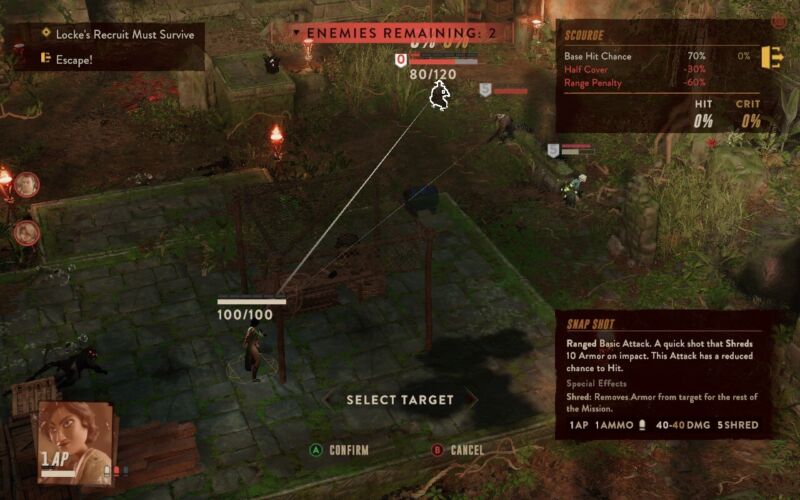
Enlarge / Purnima, the sniper you can recruit, is an assassin who refused to do a job for the evil Council because it involved a child murder. Now, as part of your team, she will kill a gazillion goons. Strange times. (credit: Harebrained Schemes / Paradox Interactive)
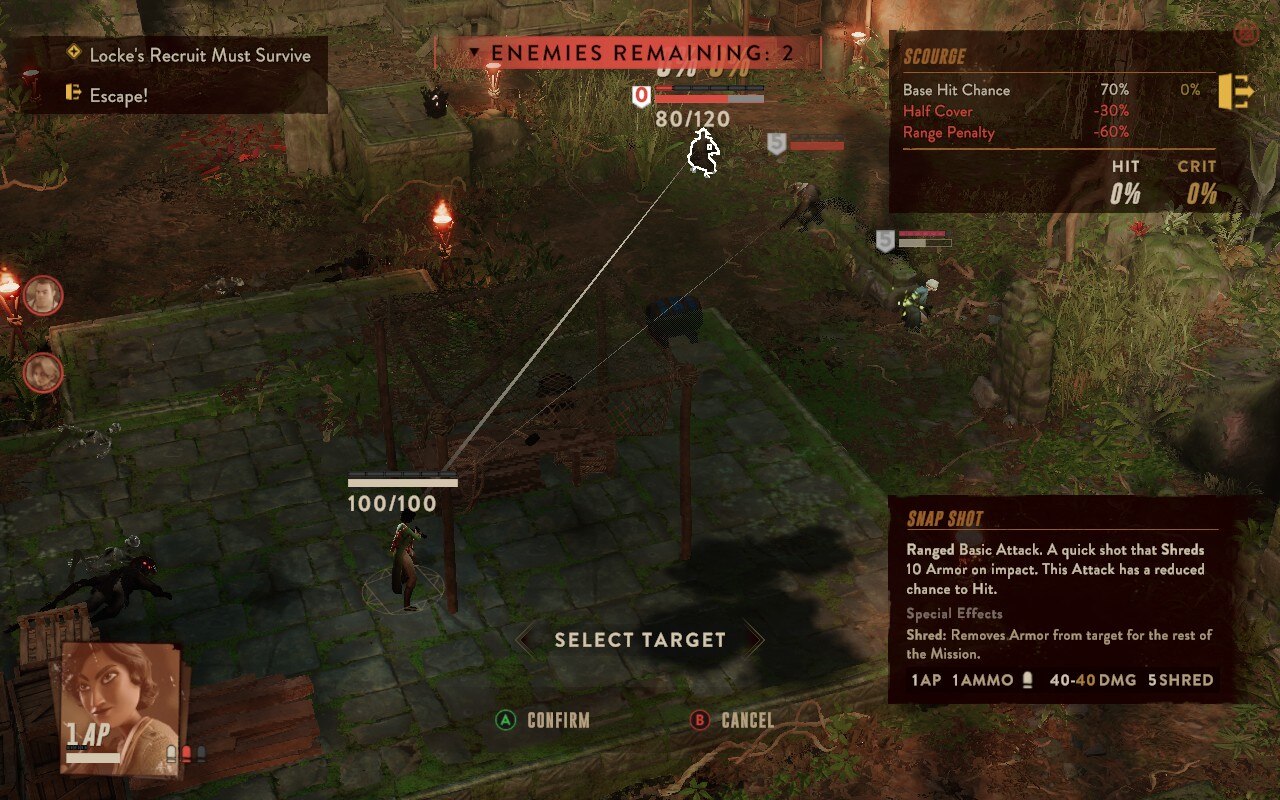
Lamplighters League is a modern XCOM-style turn-based strategy game with a Weird War-ish, Indiana Jones-like feel, a light stealth element, and it’s made by the folks who made Battletech and the Shadowrun Returns series. If you pay for Game Pass, or you see this game at any price that feels reasonable (including its debut $50), that should tell you enough about whether to try it. I think you should.
I wanted to get that out of the way because I have some nits to pick with Lamplighters League, some technical and some tactical. But I don’t want to lose sight of how excited I am to have a meaty new tactics game to sink into, especially one based on an original, if heavily referential, world. If you’re a fan of tile-based movements, two actions per turn, home bases full of upgrade potential, and engaging little interactions between your troops, you don’t get that many solid games like this per year, so take note of Lamplighters League. The number of years between XCOM titles is getting longer, not shorter—we need some reserves.
Read 25 remaining paragraphs | Comments
Source: Ars Technica – Lamplighters League is light stealth, heavy pulp style, and XCOM gun battles
Debian 12.2 Released With Various Security Fixes, AMD Inception Microcode
Following the release of Debian 12.1 in July, Debian 12.2 was released this weekend to incorporate all of the latest security fixes and other stable back-ports for Debian 12 Bookworm…
Source: Phoronix – Debian 12.2 Released With Various Security Fixes, AMD Inception Microcode
Amazon’s Project Kuiper satellites add to astronomers’ light-pollution woes
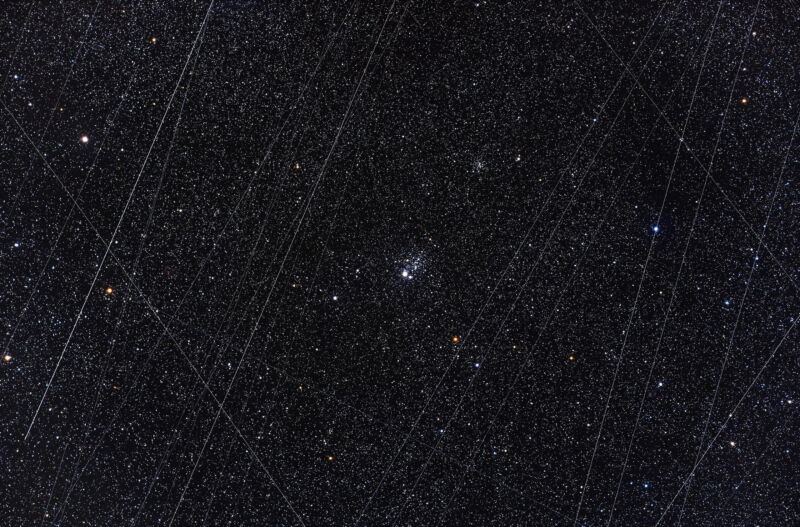
Enlarge (credit: Alan Dyer/Getty Images)
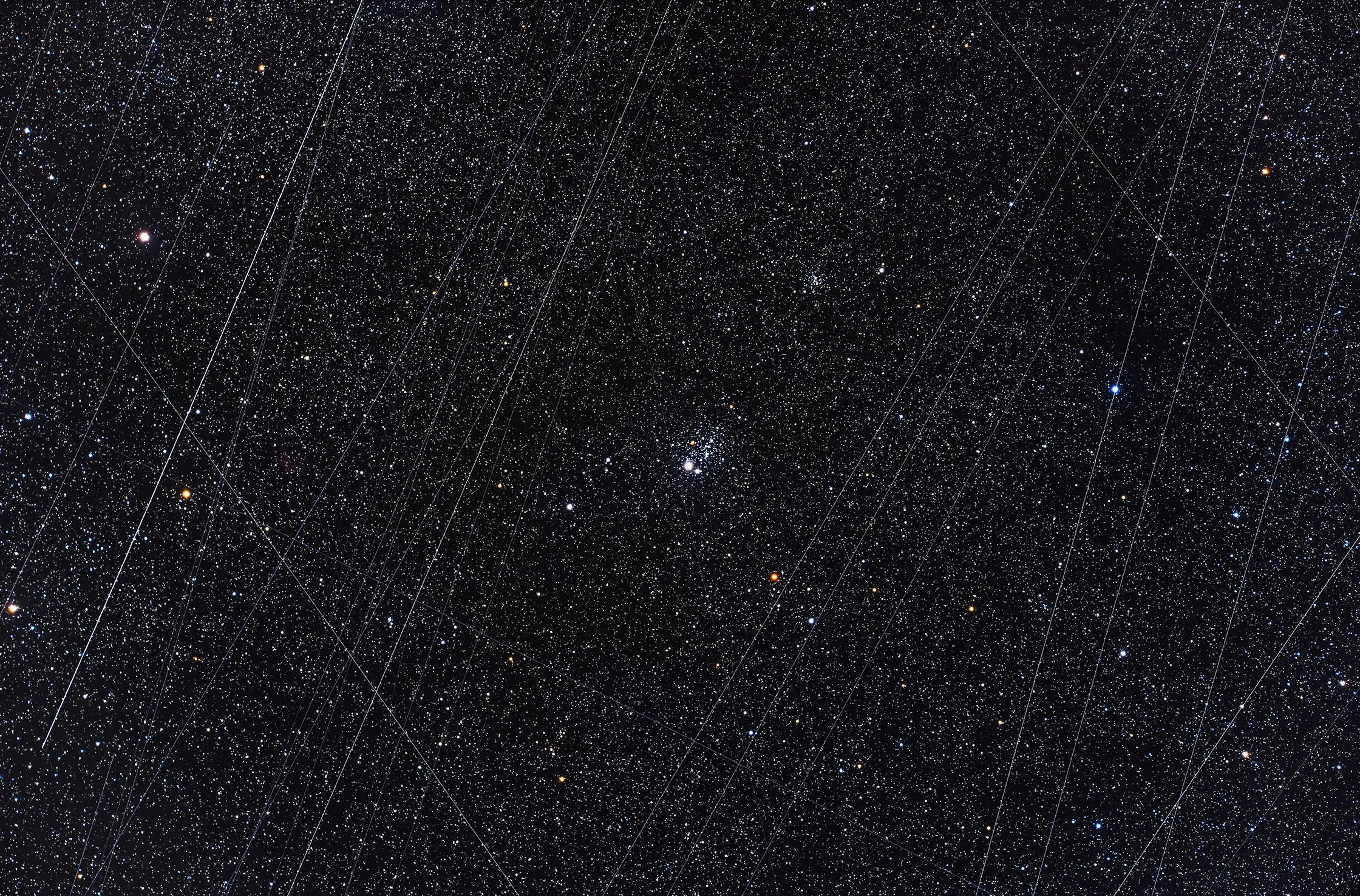
Amazon is set to launch two satellite prototypes for its Project Kuiper network, which will eventually number more than 3,200 orbiters. Project Kuiper could become a rival to SpaceX’s Starlink constellation, which is now nearly 4,800 strong. Amazon’s launch is planned for 2 pm Eastern time today, with a backup launch window tomorrow. This rapid growth of the satellite industry has come at a cost for astronomers and fans of the night sky, as two new studies and panels at an international astronomy conference stressed this week.
All spacecraft in low-Earth orbit reflect sunlight, and some glint enough to be visible to the naked eye—artificial constellations that compete with stellar ones. Satellites can cause problems for astronomers when they streak across images, interfere with radio observations, or make hard-earned data less scientifically useful. By one estimate, there could be some 100,000 satellites swarming the skies in the 2030s. While scientists are mainly concerned about this aggregate effect, some individual satellites are very bright indeed. A study published in the journal Nature this week shows that a prototype of AST SpaceMobile’s BlueBird swarm has become one of the brightest objects in the heavens. Another study documents how even deliberately darkened satellites are still twice as bright—if not more—than the limit astronomers have called for to minimize effects on space science.

Such concerns prompted a major conference this week, organized by the International Astronomical Union’s Centre for the Protection of the Dark and Quiet Sky from Satellite Constellation Interference, known as CPS. It’s being held in the Canary Islands, where there are several observatories. It’s the first in-person meeting of its kind, bringing together scores of astronomers, as well as satellite industry representatives, advocates of Indigenous and environmental perspectives, and policy experts.
Read 19 remaining paragraphs | Comments
Source: Ars Technica – Amazon’s Project Kuiper satellites add to astronomers’ light-pollution woes
Greg Kroah-Hartman Chastises Critic, Says Linux Foundation Strongly Supports Kernel Developers
It started when Linux blogger Bryan Lunduke complained about how the Linux Foundation was reducing the six-year long-term support (LTS) window for the Linux kernel to two years. Lunduke argued that the Foundation seemed more interested in funding compliance best practices — as well as artificial intelligence and blockchain projects.
In an online discussion, Linux kernel maintainer Greg Kroah-Hartman had this response:
Did anyone think to actually ask the developer who is maintaining the long-term support kernel versions why he made that change (back in February?), i.e. me…? No, I guess that would take too much effort, and wouldn’t result in such a click-bait headline.
“LTS kernels are no longer supported for 6 years because it turns out no one used them.” doesn’t have that same fun sound…
In a second comment Kroah-Hartman also clarified that in fact “The amount of resources and other stuff that the Linux Foundation provides to the Linux kernel community has increased over the years, including last year. ”
Just because new people are brought in with new projects (that the LF member companies want to host) does not mean that somehow less is being given to the kernel community at all. It is not a zero-sum game here at all, that’s not how the LF works in any way.
Again, this would have been easy to verify if someone just asked us.
So to repeat, no “abandonment” is happening here at all, the opposite is happening, just like it has for the entirety of the Linux Foundation’s existence, support has grown every year.
Thanks to long-time Slashdot reader whoever57 for sharing the news.


Read more of this story at Slashdot.
Source: Slashdot – Greg Kroah-Hartman Chastises Critic, Says Linux Foundation Strongly Supports Kernel Developers
7% of Python Developers Are Still Using Python 2, Annual Survey Finds
“Python 3 was by far the choice over Python 2 in a late-2022 survey of more than 23,000 Python developers,” reports InfoWorld, “but the percentage of respondents using Python 2 actually ticked up compared to the previous year.”
Results of the sixth annual Python Developers Survey, conducted by the Python Software Foundation and software tools maker JetBrains, were released September 27. The Python Developers Survey 2022 report indicates that 93% of respondents had adopted Python 3, while only 7% were still using Python 2.
In the 2021 survey, though, 95% used Python 3 while 5% used Python 2. In 2020, Python 3 held a 94% to 6% edge. Dating back to 2017, 75% used Python 3 and 25% used Python 2…
The 2022 report said 29% of respondents still use Python 2 for data analysis, 24% use Python 2 for computer graphics, and 23% used Python 2 for devops. The survey also found that 45% of respondents are still using Python 3.10, which arrived two years ago, while just 2% still use Python 3.5 or lower. (Python 3.11 was released October 24, 2022, right when the survey was being conducted.)
Other findings from the survey:
21% said they used Python for work only, while 51% said they used it for work and personal/educational use or side projects, and 21% said they used Python only for personal projects.
85% of respondents said Python was their main language (rather than a secondary language).
The survey also gives the the top “secondary languages” for the surveyed Python developers as JavaScript (37%), HTML/CSS (37%), SQL (35%), Bash/Shell (32%), and then C/C++ (27%).
When asked what they used Python for most, 22% said “Web Development”, 18% said “Data Analysis,” 12% said “Machine Learning,” and 10% said “DevOps/System Administration/Writing Automation Scripts.”


Read more of this story at Slashdot.
Source: Slashdot – 7% of Python Developers Are Still Using Python 2, Annual Survey Finds
Germany Will Keep Keep Its Coal Power Plants on Standby For Another Winter
An anonymous reader writes: Amidst a winter marked by scarce gas supplies, the German government has opted to retain its lignite coal power plants on standby for another season. Originally, Germany had planned a phased shutdown of coal plants in exchange for a portion of the government’s €40 billion coal phase-out fund. However, last year, disruptions in Russian gas supplies post-Ukraine war prompted an emergency decision to keep coal plants operational. This measure is now extended for the upcoming winter, maintaining 1.9 GWs of lignite capacity alongside the existing 45 GW of coal power plants. The primary purpose of these lignite plants is to alleviate gas demand during peak times and stabilize prices. Despite the economic benefits, the move raises environmental concerns, given lignite’s status as a major climate polluter. The government acknowledges this and plans to assess the additional carbon emissions resulting from keeping coal plants on standby, estimated to be between 2.5 and 5.6 tonnes of CO2. The German government emphasized the persistence of the goal to ideally complete the coal phase-out by 2030 and meet climate targets.


Read more of this story at Slashdot.
Source: Slashdot – Germany Will Keep Keep Its Coal Power Plants on Standby For Another Winter
Today’s NYT Connections Hints (and Answer) for Sunday, October 8, 2023
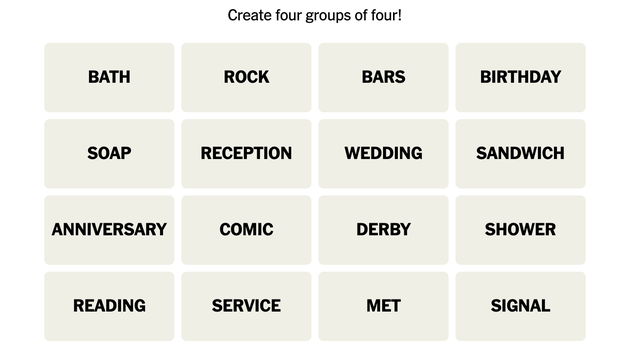
If you’re looking for the Connections answer for Sunday, October 8, 2023, read on—I’ll share some clues, tips, and strategies, and finally the solutions to all four categories. Beware, there are spoilers below for October 8, NYT Connections #119! Read on if you want some hints (and then the answer) to today’s…
Source: LifeHacker – Today’s NYT Connections Hints (and Answer) for Sunday, October 8, 2023
How Edwin Hubble Expanded the Universe 100 Years Ago
Black Parrot (Slashdot reader #19,622) pointed out a historic anniversary this week:
On October 6, 1923, Edwin Hubble got a photo of Andromeda that showed that it contained a variable star, and therefore was an actual galaxy, ending the Great Debate over whether the universe consisted of anything beyond our own galaxy. Unless you’re more than 100 years old you grew up with a completely different understanding of the universe than anyone who lived before. Even Einstein did not know about it when he proposed the theory of general relativity. It was later in the decade before Hubble discovered that the universe is expanding.
A century later, the European Space Agency was announcing…
A very rare, strange burst of extraordinarily bright light in the universe just got even stranger â” thanks to the eagle-eye of the NASA/ESA Hubble Space Telescope. The phenomenon, called a Luminous Fast Blue Optical Transient (LFBOT), flashed onto the scene where it wasnâ(TM)t expected to be found, far away from any host galaxy. Only Hubble could pinpoint its location. The Hubble results suggest astronomers know even less about these objects than previously thought by ruling out some possible theories.


Read more of this story at Slashdot.
Source: Slashdot – How Edwin Hubble Expanded the Universe 100 Years Ago
Pentium 5 – a Rare Look Into the CPU That Could Have Been But Never Was
Long-time Slashdot reader alaskana writes: In late 2022 it was revealed that early samples of what was to be the “Pentium 5” processor, codenamed Tejas and Jayhawk were in development and made it as far as being released to board partners for evaluation. A few of these samples made it (of course) onto Ebay and then — not surprisingly — into the hands of a YouTuber. To be fair, tech site Anandtech arguably got the first scoop on this P4 successor way back in 2004, but that story seemingly never gained much traction at that time.
They wrote that Intel Prescott CPUs “could hit 5GHz+ but had huge power and temperature numbers, but Tejas was expected to clock higher than Prescott — with Intel chasing the huge 10GHz CPU clocks within 10 years between 2000 and 2011 — but it ended up not happening at all.”
In what was supposed to be a continuation of the “GHz is king” days of the early aughts, the Pentium 5 was in spirit a continuation of the “faster-is-better” philosophy of the P4 architecture, efficiency be damned. Speeds in excess of 7 GHz(!), and a pipeline upwards of 50 stages were rumored to be targeted by Intel, but reality (and physics) reared their ugly heads as always. WCCF Tech transcribed the remarks of Intel engineer Steve Fischer, who was involved with the project. “The thing had a pipeline depth of around 50 stages and an expected clock target at one point north of 7 GHz. I call the thing “the Death Star of processors” and half-jokingly reasoned that consumer acceptance of liquid-cooled chassis would not be a big deal.”
Intel kicked off Project Tejas in 2003, expected in 2004 and later pushed into 2005 after issues forced Intel to redesign the chip. Before the company could do that, the Tejas Project was shelved on May 7, 2004. In the end efficiency and parallelization was to be the rule of future CPU development, but the fact that Intel had (at least briefly) had planned on taking the P4 paradigm just a wee bit further with a true Pentium 5 is a fascinating look into the past of a future that never was to be for the venerable Pentium line.


Read more of this story at Slashdot.
Source: Slashdot – Pentium 5 – a Rare Look Into the CPU That Could Have Been But Never Was
Florida Man Could Get 10 Years For Shooting Down a Police Drone
An anonymous reader shared
this report from the Associated Press:
A man accused of shooting down a law enforcement drone being used at a business near his Florida home could be sentenced to 10 years in federal prison…
Lake County sheriff’s deputies responded to a burglary at a 10-acre industrial property in July 2021 in Mount Dora, northwest of Orlando, according to a plea agreement. As deputies used a $29,000 drone in the outdoor search, gunfire from a neighboring residential property caused it to crash into a metal roof and catch fire, prosecutors said. Deputies went to the property and found Goney, who said he shot down the drone with a .22-caliber rifle because it had been “harassing” him, investigators said.
The man had 29 previous felony convictions — and federal law prohibits most convicted felons from possessing firearms and ammunition…


Read more of this story at Slashdot.
Source: Slashdot – Florida Man Could Get 10 Years For Shooting Down a Police Drone
Here's How Every iPhone 15 Model Fared After 100 Test Drops On A Stone Surface

The release of every new Apple iPhone is often accompanied by a plethora of tests to validate Cupertino’s newest creation. When comparing to the previous model, the question of physical toughness is at the top of the list. Sure, we expect that it is usually a faster model – but can it withstand being dropped 100 times? If you’ve read about
Source: Hot Hardware – Here’s How Every iPhone 15 Model Fared After 100 Test Drops On A Stone Surface
Zoom is Launching Its Own AI-Powered Google Docs Competitor
An anonymous reader shared this report from Gizmodo:
Zoom is setting out to compete with Google and Microsoft by introducing Zoom Docs at its annual Zoomtopia 2023 event on Tuesday. Zoom Docs is the company’s own version of an AI-powered workspace that will provide users with AI capabilities to draft, edit, summarize, and include information from meeting discussions.
The company said in a press release that its new feature will be integrated into the meetings feature, and says it will make it “easy for teams and individuals to create, collaborate, manage projects, and stay organized.” It will also reportedly include the option to include tables, charts, and images in the Zoom Doc function, according to the press release…
Zoom’s press release calls it “a next-gen way of collaborating, built from the ground up with AI at its core,” with “traditional document capabilities, as well as wikis and drag-and-drop content blocks for tables, charts, and images”
Zoom Docs users can also leverage its AI-powered functionality to populate docs with content from Zoom Meetings to inform and jumpstart creation, generate content with Zoom AI Companion, summarize content quickly, easily search documents, and more. Zoom Docs is scheduled to be generally available in 2024.
Gizmodo notes that in March Microsoft added ChatGPT to its Suite 365 business software, and Google announced it was adding generative AI to Google Docs and Google Excel.


Read more of this story at Slashdot.
Source: Slashdot – Zoom is Launching Its Own AI-Powered Google Docs Competitor
Alleged GTA 6 Map Size Vs GTA 5 Looks Amazing And Fan Hype Explodes

We here at HotHardware are very much like the many people who have spent hundreds of hours playing Grand theft Auto V. We could write entire articles about the good, the bad and the ugly qualities of this legendary game franchise, but one of the biggest and most frequent complaints about the title is with its sense of scale.
Ultimately
Source: Hot Hardware – Alleged GTA 6 Map Size Vs GTA 5 Looks Amazing And Fan Hype Explodes
For 'Cybersecurity Awareness Month' America's Cybersecurity Agency Shares Four Online Safety Tips
Since 2004 October has been designated “Cybersecurity Awareness Month” in America, “a collaborative effort between government and industry to enhance cybersecurity awareness, encourage actions by the public to reduce online risk and generate discussion on cyber threats on a national and global scale.”
That’s according to America’s Cybersecurity and Infrastructure Security Agency (or CISA), the operational lead for federal cybersecurity and national coordinator for critical infrastructure security and resilience (specifically designed for collaboration and partnership). It’s why the NSA is publicizing the ten most common cybersecurity misconfigurations in large organizations.
But in addition, for consumers CISA is introducing a new program this year that “promotes behavioral change across the Nation, with a particular focus on how individuals, families and small to medium-sized businesses can Secure Our World by focusing on the four critical actions…” In a video the director of America’s cyberdefense agency calls them steps “that everyone can take to stay safe online.”
Use Strong Passwords, “meaning long, random, and unique to each account. And use a password manager to generate and to save them.”
Turn on Multi-Factor Authentication on All Accounts That Offer It. “You need more than a password on your most important accounts, like email, social media, and financial accounts.”
Recognize and Report Phishing. “Be cautious of unsolicited emails, texts, or calls asking you for personal information, and don’t click on links or open attachments from unknown sources.
Update Your Software. “In fact, enable automatic updates on your software, so the latest security patches just keep your devices continuously up-to-date.”
The video ends by noting CISA is asking tech companies and software developers to create products that are “secure by design.”
“And let’s secure our families by ensuring that our loved ones know what to look for and how to stay safe online.”


Read more of this story at Slashdot.
Source: Slashdot – For ‘Cybersecurity Awareness Month’ America’s Cybersecurity Agency Shares Four Online Safety Tips
OpenZFS 2.2-rc5 Released With More Fixes & Linux 6.5 Compatibility
The OpenZFS 2.2 release candidates are dragging on with the fifth test release having debuted on Saturday to provide some additional fixes and support for the Linux 6.5 stable kernel…
Source: Phoronix – OpenZFS 2.2-rc5 Released With More Fixes & Linux 6.5 Compatibility
Australian Scientists Use 'Age of Empires' To Simulate Ant Warfare
Slashdot reader TranquilVoid writes: To better understand the battles between native and invasive ants, scientists at Australia’s national science agency have turned to Microsoft’s classic computer game to model ant warfare.
Across Australia, 50 different species of invasive ants have established themselves, including electric ants, fire ants and yellow crazy ants, with hundreds of millions of dollars spent attempting to eradicate them.
“Ants are one of the few groups of animal species in which warfare resembles human warfare, in terms of scale and mortality,” researcher Samuel Lymbery said. The research found small armies of strong soldiers did better in complex terrain-based battlefields and large armies of weaker soldiers fared better in simple open battlefields. In the ant world, a simple battlefield would be a footpath or park while a complex battlefield would be bushland with undergrowth and woody debris.
Dr Lymbery said his work could help develop new approaches to habitat management, like adding undergrowth or more environmental complexity back into urbanised environments, to tip the competitive balance back in favour of native ants.


Read more of this story at Slashdot.
Source: Slashdot – Australian Scientists Use ‘Age of Empires’ To Simulate Ant Warfare
X-Files Alum Vince Gilligan Teases His Return to Sci-Fi With Better Call Saul Star

Vince Gilligan is returning to Albuquerque—and science fiction. The acclaimed creator of AMC’s Breaking Bad and its spin-off Better Call Saul, who also worked for multiple years on Fox’s The X-Files (and co-created spin-off The Lone Gunman) just revealed a tiny bit of information about his new series starring…
Source: Gizmodo – X-Files Alum Vince Gilligan Teases His Return to Sci-Fi With Better Call Saul Star
Avoid These Common Car Washing Mistakes

Once you’ve invested in the necessary supplies, washing your car yourself—as opposed to taking it to a car wash—can save you money. But beyond that, it also gives you more control, allowing you to spend additional time on especially filthy areas, or be extra gentle on delicate parts that may have seen better days.
Source: LifeHacker – Avoid These Common Car Washing Mistakes