Kia EV5 revealed, but US future is uncertain for this electric crossover

A rendering of a blue Kia EV5 crossover

Enlarge / There’s a very distinct family resemblance between the EV9 and the EV5 (pictured). (credit: Kia)

Following the launch of the new EV9, the next product in Kia’s EV onslaught is the smaller EV5. And while the first round of EV5s will go on sale in China and South Korea in the coming months, it will still be some time before the compact SUV is offered globally.

Even worse, we aren’t totally sure if the EV5 will come to America; sources within Kia have both confirmed and denied plans to bring this SUV to the US. The company’s president and CEO said it would be headed stateside, but then Kia’s public relations team denied this statement, with other internal sources saying the EV5 would not be offered in the US. Kia confirms that the EV5 will come to North America, but we’re told this just means Canada and possibly Mexico.

Why? It’s complicated. The likely culprit is that the EV5 isn’t planned to be built in North America, making it ineligible for the new Inflation Reduction Act (IRA) tax credit. That $7,500 credit could drastically reduce the price of a new EV, and Kia not being able to make use of this would reduce the EV5’s competitiveness in the US. Just a thought.

Read 9 remaining paragraphs | Comments


Source: Ars Technica – Kia EV5 revealed, but US future is uncertain for this electric crossover

Kia EV3, EV4 concepts look like the future, will soon be a reality

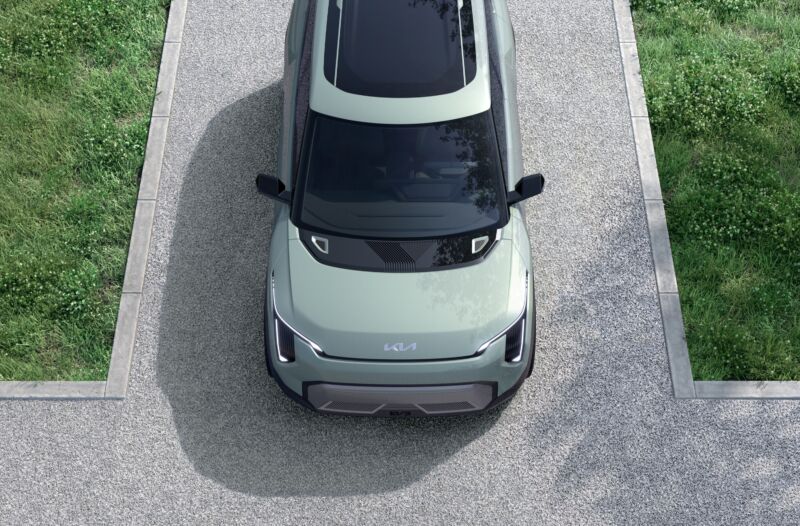
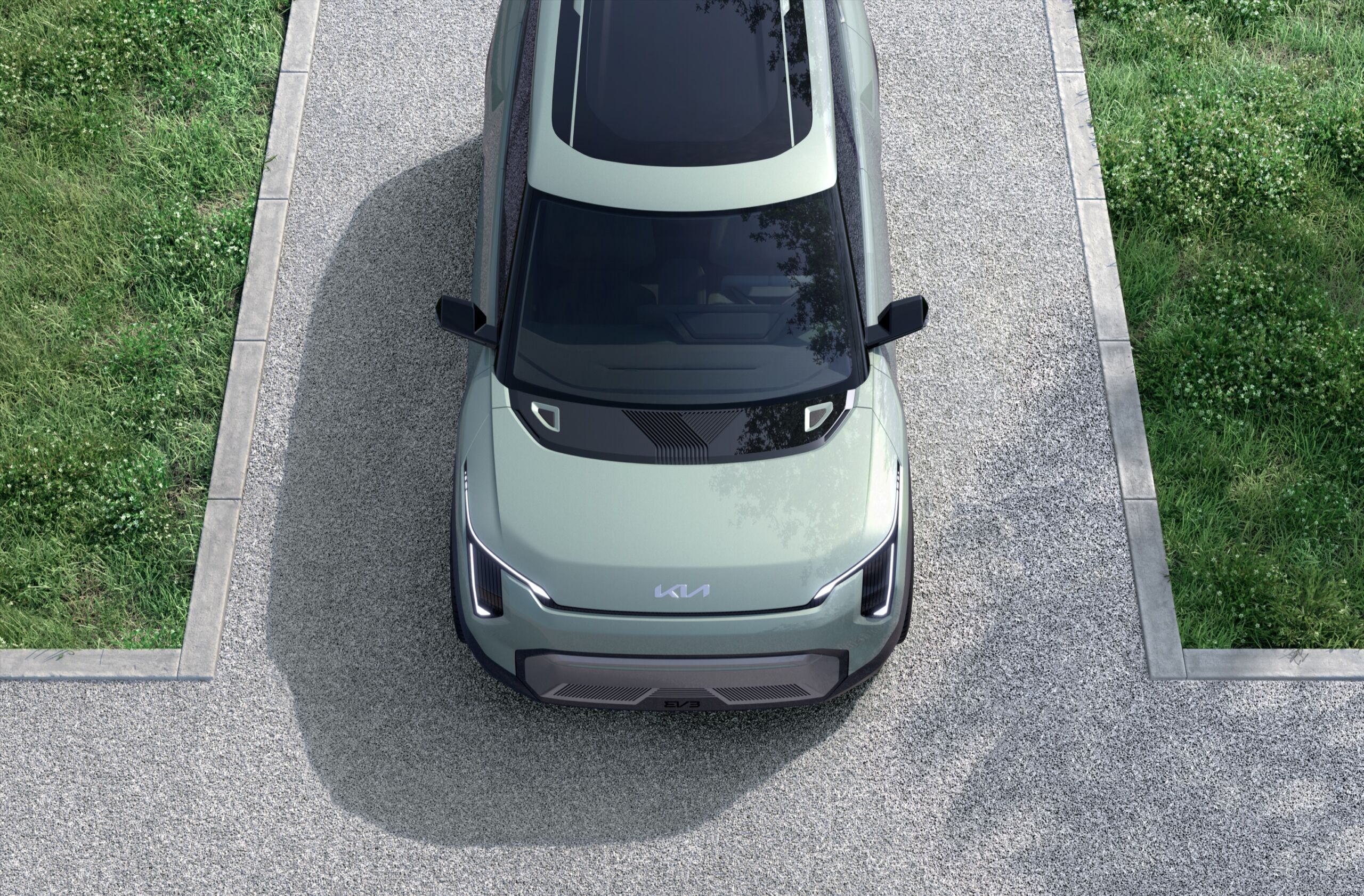
A top-down look at the front half of the Kia EV3 concept

Enlarge / Around the world people are asking for smaller electric vehicles. Someone at Kia has been listening and designed this car, the EV3. (credit: Kia)

Kia is staring down an ambitious goal. The company wants to increase its global electric vehicle sales to 1 million units annually by 2026, further ramping up to 1.6 million by 2030. New products like the EV5 crossover and EV9 SUV will certainly help with this push, but smaller, more affordable EVs will be crucial to Kia’s success, as well. That’s why, despite being called concept cars, the new EV3 and EV4 are thinly veiled glimpses into Kia’s next round of production EVs.

Unveiled at Kia’s EV Day event in South Korea this week, the EV3 and EV4 will arrive in the next few years. The company also spoke about an even smaller EV2 that will be designed for Europe and emerging markets, with the goal for that car being a super-low starting price—something around the equivalent of $30,000.

The EV3 and EV4 ride on the same E-GMP electric vehicle architecture that underpins the Kia EV6 and EV9, as well as sister vehicles like the Hyundai Ioniq 5, Ioniq 6, and Genesis GV60. However, while the current crop of E-GMP vehicles are built with 800 V electrical architecture giving them fast charging speeds, the EV3 and EV4 will use a slightly more cost-effective version of this platform with a 400 V system. That’s a bummer; one of the big highlights of cars like the Kia EV6 is its ability to charge at a max rate of 233 kW. With the EV3 and EV4, we could be looking at a maximum rate of 150 kW—or less.

Read 7 remaining paragraphs | Comments


Source: Ars Technica – Kia EV3, EV4 concepts look like the future, will soon be a reality

Croatia Wants To Turn Superhot Underground Lake Into a 16MW Geothermal Power Plant

A Croatian energy company has discovered an underwater lake of superheated water that meets all the requirements for the construction of a 16MW geothermal power plant. The Next Web reports: The find was the result of a two-year study by state-run power company Bukotermal that sought to find suitable sites for the exploitation of the energy source, generated by heat from the Earth’s core. The research verified the presence of a geothermal water source at Lunjkovec — Kutnjak field, located in the Varazdin County, close to the border with Hungary. The underground lake, located at a depth of 2.4 kilometers, has an average temperature of 142.03 degrees Celsius.

To date, over 2.5 million euros has been invested in the project. However, according to Alen Pozgaj, CEO of Bukotermal, the total cost to build the plant would be around 50 million euros. The news comes just days after the Croatian Ministry of Economy and Sustainable Development awarded five licenses for the exploration of geothermal waters to firms from Croatia, the United Kingdom, and Turkey. […] For now, Bukotermal has a six-month timeframe to propose how it will exploit the newly discovered geothermal pool. The company plans to construct one or more geothermal power plants and heat utilization facilities at the site, with construction expected to start within two years time.

Read more of this story at Slashdot.


Source: Slashdot – Croatia Wants To Turn Superhot Underground Lake Into a 16MW Geothermal Power Plant

Microsoft reveals IRS notice asking for $28.9 billion in back taxes

Microsoft owes the Internal Revenue Service (IRS) $28.9 billion in back taxes, not including penalties and interest, at least according to the tax authority. The tech giant has revealed in a filing with the Securities and Exchange Commission that it received a series of Notices of Proposed Adjustment (NOPAs) from the IRS for the tax years 2004 to 2013. In its filing, it said that it’s been working with the IRS for nearly a decade to address the authority’s questions about how it distributed its profits among countries and jurisdictions, and this is the agency’s decision after a lengthy investigation. 

To be exact, the IRS audit centered around a practice known as “transfer pricing,” which legally allowed companies to allocate profits and expenses between their operations in different regions. Microsoft explained that a lot of large multinational corporations practice this cost-sharing scheme to reflect “the global nature of their business.” In its case, its subsidiaries shared in the costs of developing some IPs, which means that they’re also entitled to the related profits. As AP notes, though, critics of the regulation argue that companies frequently use it to minimize the taxes they have to pay by reporting lower profits in high tax countries, and vice versa. 

Microsoft explained that the issues raised by the IRS are only relevant to those aforementioned years, because it has since changed its corporate structure and practices. Nevertheless, the IRS believes Microsoft owes $28.9 billion in back taxes. The tech giant disagrees, as expected, and said that newer tax laws could reduce the back taxes it owes from this particular audit by $10 billion. Based on its plan of action shared with the SEC, the company intends to contest the decision to the best of its ability: Microsoft said that it will pursue an appeal within the IRS, which typically takes years to complete, and will even “contest any unresolved issues through the courts” if needed. 

This article originally appeared on Engadget at https://www.engadget.com/microsoft-reveals-irs-notice-asking-for-289-billion-in-back-taxes-055326006.html?src=rss

Source: Engadget – Microsoft reveals IRS notice asking for .9 billion in back taxes

Valve Bolsters Security After Hackers Infected Steam Games With Malware

Valve Bolsters Security After Hackers Infected Steam Games With Malware
Threat actors and malicious hackers have been targeting gamers with malware for quite some time, as they can be easy targets who download and run strange things from the internet all the time. Such was the case with a trojanized Super Mario game earlier this year that could have stolen information, run ransomware, or other nefarious actions.

Source: Hot Hardware – Valve Bolsters Security After Hackers Infected Steam Games With Malware

World-First Trial of Gene Therapy To Cure Form of Deafness Begins

An anonymous reader quotes a report from the Financial Times: A world-first trial of a gene therapy to cure a form of deafness has begun, potentially heralding a revolution in the treatment of hearing loss. Up to 18 children from the UK, Spain and the US are being recruited to the study, which aims to transform treatment of auditory neuropathy, a condition caused by the disruption of nerve impulses traveling from the inner ear to the brain. Participants will be monitored for five years to gauge whether their hearing improves, with initial results expected to be published next February.

Auditory neuropathy can be due to a variation in a single gene — known as the OTOF gene — which produces a protein called otoferlin. This protein typically allows the inner hair cells in the ear to communicate with the hearing nerve. Mutations in the OTOF gene can be identified by genetic testing. However, [Professor Manohar Bance, an ear surgeon at Cambridge University Hospitals NHS Foundation Trust who is leading the trial in the UK] said it was a condition often missed when newborn babies were screened for potential hearing problems. “This is one of the few conditions where everything works except the transmission between the hair cells and the nerve. So everything else looks fine when you test it, but they can’t hear anything. So these poor kids’ [difficulties] end up being missed,” Bance added.

The new gene therapy aims to deliver a working copy of the faulty OTOF gene using a modified, non-pathogenic virus. It will be delivered via an injection into the cochlea under general anaesthetic. Bance estimates that about 20,000 people across the US and five European countries — the UK, Germany, France, Spain and Italy — have auditory neuropathy due to OTOF mutations, underlining the potential significance of a successful treatment.[…] “If it works, it’s ‘one and done'” but the cost to health systems “is something that worries me,” he added, noting that gene therapies could be priced in “the million dollar range” per patient. However, he hoped that “economies of scale” as the technology developed further would ultimately allow them to be provided more cheaply.

Read more of this story at Slashdot.


Source: Slashdot – World-First Trial of Gene Therapy To Cure Form of Deafness Begins

CBC Stops Broadcasting Official Time Signal

Long-time Slashdot reader sandbagger shares a report from the Canadian Broadcasting Corporation (CBC): CBC and Radio-Canada have announced they’ll no longer carry the National Research Council (NRC) time signal. Monday marked the last time it was broadcast, ending the longest running segment on CBC Radio. In a statement, spokesperson Emma Iannetta described the signal as a “wonderful partnership,” but confirmed it’s being dropped. Given the range of CBC platforms from traditional over-the-air radio, to satellite and the internet, the long dash undergoes a range of delays by the time it’s heard, leading to accuracy concerns from the NRC, she wrote. Iannetta added that nowadays most people use their phones to get the time, though many CBC listeners have a “fondness” for the signal.

For many, the relationship with the time signal goes far beyond fondness. It’s allowed sailors to set their instruments for navigation, kept railway companies running on time and helped Canadians stay punctual. In a 2019 interview with Day 6 on the occasion of the signal’s 80th birthday, Laurence Wall, one of its current voices, reflected on its origin and importance. His memories include taxi drivers recognizing his voice from daily announcements and hearing from a young man living in Hong Kong who would stay up past midnight just to hear the time signal because it reminded him of home. Beyond emotional connections, the signal has a practical history too. Wall said when it started out, timekeeping was relatively primitive, with watches and clocks that needed to be regularly set in order to stay accurate.

Read more of this story at Slashdot.


Source: Slashdot – CBC Stops Broadcasting Official Time Signal

Adobe Creates Symbol To Encourage Tagging AI-Generated Content

Emilia David reports via The Verge: Adobe and other companies have established a symbol that can be attached to content alongside metadata, establishing its provenance, including whether it was made with AI tools. The symbol, which Adobe calls an “icon of transparency,” can be added via Adobe’s photo and video editing platforms like Photoshop or Premiere and eventually Microsoft’s Bing Image Generator. It will be added to the metadata of images, videos, and PDFs to announce who owns and created the data. When viewers look at a photo online, they can hover over the mark, and it will open a dropdown that includes information about its ownership, the AI tool used to make it, and other details about the media’s production.

Adobe developed the symbol with other companies as part of the Coalition for Content Provenance and Authenticity (C2PA), a group that looks to create technical standards to certify the source and provenance of content. (It uses the initials “CR,” which confusingly stands for content CRedentials, to avoid being confused with the icon for Creative Commons.) Other members of the C2PA include Arm, Intel, Microsoft, and Truepic. C2PA owns the trademark for the symbol. Andy Parsons, senior director of Adobe’s Content Authenticity Initiative, tells The Verge that the symbol acts as a “nutrition label” of sorts, telling people the provenance of the media. The presence of the symbol is meant to encourage the tagging of AI-generated data, as Parsons said it creates more transparency into how content was created. While the small symbol is visible in the image, the information and the symbol are also embedded in the metadata, so it will not be Photoshopped out.

Read more of this story at Slashdot.


Source: Slashdot – Adobe Creates Symbol To Encourage Tagging AI-Generated Content

Today’s NYT Connections Hints (and Answer) for Thursday, October 12, 2023

If you’re looking for the Connections answer for Thursday, October 12, 2023, read on—I’ll share some clues, tips, and strategies, and finally the solutions to all four categories. Beware, there are spoilers below for October 12, NYT Connections #123! Read on if you want some hints (and then the answer) to today’s…

Read more…


Source: LifeHacker – Today’s NYT Connections Hints (and Answer) for Thursday, October 12, 2023

Today’s NYT Connections Hints (and Answer) for Tuesday, October 10, 2023

If you’re looking for the Connections answer for Tuesday, October 10, 2023, read on—I’ll share some clues, tips, and strategies, and finally the solutions to all four categories. Beware, there are spoilers below for October 10, NYT Connections #121! Read on if you want some hints (and then the answer) to today’s…

Read more…


Source: LifeHacker – Today’s NYT Connections Hints (and Answer) for Tuesday, October 10, 2023

RIP Keith Giffen, Legendary Comics Artist and Writer

On the eve of this year’s New York Comic Con, some sad news—but delivered by its subject himself in wry style. According to a post on his official Facebook page that was reposted on his X account, legendary comic book artist Keith Giffen—co-creator of Marvel’s Rocket Raccoon and DC’s Lobo—has passed away.

Read more…


Source: Gizmodo – RIP Keith Giffen, Legendary Comics Artist and Writer

FTX Used Python Code To Fake Its Insurance Fund Figure

Tom Mitchelhill reports via CoinTelegraph: Crypto exchange FTX used hidden Python code to misrepresent the value of its insurance fund — a pool of funds meant to prevent user losses during huge liquidation events — according to testimony from FTX co-founder Gary Wang. In a damning testimony on Oct. 6, FTX’s former chief technology officer, Gary Wang, said that FTX’s so-called $100 million insurance fund in 2021 was fabricated and never contained any of the exchanges’ FTX tokens (FTT) as claimed. Instead, the figure shown to the public was calculated by multiplying the daily trading volume of the FTX Token by a random number close to 7,500.

When the prosecution surfaced the above tweet — among other public statements of its value — and asked Wang whether this amount was accurate, he replied with a single word: “No.” “For one, there is no FTT in the insurance fund. It’s just the USD number. And, two, the number listed here does not match what was in the database.” An exhibit in the Oct. 6 trial shows the alleged code used to generate the size of the so-called “Backstop Fund” or public insurance fund.

FTX’s insurance fund was designed to protect user losses in case of huge, sudden market movements and its value was often touted on its website and social media. According to Wang’s testimony, however, the amount contained within the fund was often insufficient to cover these losses. […] In addition to revealing the allegedly fraudulent nature of FTX’s insurance fund, Wang claimed that Bankman-Fried prompted him and Nishad Singh to implement an “allow_negative” balance feature in the code at FTX, which allowed Alameda Research to trade with near-unlimited liquidity on the crypto exchange.

Read more of this story at Slashdot.


Source: Slashdot – FTX Used Python Code To Fake Its Insurance Fund Figure

Adobe's Project Fast Fill Is Generative Fill For Video

An anonymous reader quotes a report from TechCrunch: As part of its MAX conference, Adobe traditionally shows off some of its more forward-looking tech, which may or may not end up in its Creative Cloud apps at some point in the future. The idea here is to show what its engineers are working on; right now, as you can imagine, that’s a lot of generative AI. With Firefly now being part of Photoshop and now also Illustrator, the next frontier here is video and unsurprisingly, that’s where Adobe’s most interesting “sneak” of this year comes in. Project Fast Fill is, at its core, the generative fill the company introduced in Photoshop, but for video.

Project Fast Fill simply lets editors remove objects from a video or change backgrounds as if they were working with a still image, all with a simple text prompt. Users only have to do this once and the edit will then propagate to the rest of the scene. Adobe says this even works in very complex scenes with changing lighting conditions. Over the course of the last few months, we’ve seen an increase in AI-powered tools across video editors, including Adobe Premiere Pro competitors like Davinci Resolve. These typically start with voice recognition for captions and object recognition for masking, but generative fill may just be the kind of feature where Adobe has a major advantage, thanks to its work on building its own Firefly models.

Read more of this story at Slashdot.


Source: Slashdot – Adobe’s Project Fast Fill Is Generative Fill For Video

John Carpenter Knows Who's Not Human in The Thing, but He's Not Telling

The ending of John Carpenter’s sci-fi creature feature The Thing is one of genre cinema’s greatest puzzles; with just two characters left alive, the viewer is never sure who’s human, and/or who’s secretly an alien. Now, a popular theory about the scene has been dismissed by the director.

Read more…


Source: Gizmodo – John Carpenter Knows Who’s Not Human in The Thing, but He’s Not Telling

Common red food dye banned in Calif.—30 years after FDA found cancer risk in rats

The famous Easter candy Peeps, made by Just Born Quality Confections, are displayed on April 7, 2023 in New York, US. Consumer Reports announced in a recent press release that it had contacted Just Born Quality Confections earlier this year about concerns over the company's use of red dye No. 3 in the Peeps candies, which has been found to cause cancer in animals.

Enlarge / The famous Easter candy Peeps, made by Just Born Quality Confections, are displayed on April 7, 2023 in New York, US. Consumer Reports announced in a recent press release that it had contacted Just Born Quality Confections earlier this year about concerns over the company’s use of red dye No. 3 in the Peeps candies, which has been found to cause cancer in animals. (credit: Getty | Fatih Aktas)

Last weekend, California outlawed a common red food dye that is otherwise deemed safe by the Food and Drug Administration—the first such ban in the country and one that puzzlingly comes over three decades after the FDA determined the dye causes cancer in rats and banned it from lipsticks and other cosmetics, but not foods.

The dye is FD&C Red No. 3, also known as red dye No. 3. Today, it is found in thousands of food products—from Brach’s Candy Corn and varieties of Nerds, Peeps, Pez, candy canes, Fruit by the Foot, to Entenmann’s Little Bites Mini Muffins, Betty Crocker mashed potatoes, fruit cocktail,  PediaSure nutritional shakes, and MorningStar Farm’s veggie bacon strips.

But, back in 1990, the FDA carefully reviewed decades’ worth of animal studies on red dye No. 3 and determined that “FD&C Red No. 3 has been shown to induce cancer in appropriate tests,” and is therefore “unsafe for use in externally applied drugs and externally applied cosmetics and cannot be listed.” Even though the risk appeared small, the agency’s decision hinged on the Delaney Clause of 1958, which requires the FDA to ban any food additive that is shown to induce cancer in humans or animals.

Read 18 remaining paragraphs | Comments


Source: Ars Technica – Common red food dye banned in Calif.—30 years after FDA found cancer risk in rats

New Starlink Webpage Highlights Upcoming 'Direct To Cell' Service

SpaceX quietly published a new “Starlink Direct to Cell” webpage highlighting the company’s forthcoming cell service for mobile phones. MobileSyrup reports: The new ‘Starlink Direct to Cell’ page boasts “seamless access to text, voice, and data for LTE phones across the globe” and notes that the company is targeting text capabilities in 2024, followed by voice and data capabilities in 2025. Internet of Things (IoT) support may also arrive in 2025. Starlink also advertises that the direct-to-cell system would work with “existing LTE phones wherever you can see the sky” and wouldn’t require any changes to hardware, firmware, or special apps. The page also explains that Starlink Direct to Cell would use “an advanced eNodeB modem” that “acts like a cellphone tower in space.” The system would allow network integration “similar to a standard roaming partner.” Last year, SpaceX announced a partnership with T-Mobile, allowing users’ mobile phones to connect directly with Starlink satellites in orbit. SpaceX said it was hoping to launch the service later this year but the company has been mum on the progress.

Read more of this story at Slashdot.


Source: Slashdot – New Starlink Webpage Highlights Upcoming ‘Direct To Cell’ Service

The 29 best Prime Day deals under $50 to snag before the day ends

We’ve reached the last day of Amazon’s October Prime Day sale and if you’re in the market for some deals that won’t break the bank, here are 29 deals that are all under $50. We’ve found plenty of the less expensive gadgets that we’ve tested and tried recently. Many, like the JOBY Gorillapod and the JBL Go 3 make excellent stocking stuffers, and there are deals on smart plugs (for indoors and out) that will make your holiday light management far simpler. Amazon is surfacing strong deals on its own Echo smart speakers and Fire TV sticks. Plus you’ll find iPhone accessories, chargers, smart home devices which not only make nice gifts for the hard-to-shop-for, they’re nice to keep for yourself too. Here are the best Amazon Big Deal Days discounts for under $50.

Amazon Echo Dot

Amazon’s Echo Dot combines the typical utility of Alexa with surprisingly decent sound. It usually retails for $50, but for Big Deal Days, it’s down to $23, which is 54 percent off and matches the all-time low price we saw last Prime Day. We named this one the best sub-$50 smart speakers you can buy — and if you get two, you can make them a stereo pair. The version with a built-in clock is also discounted at $45.

Amazon Echo Dot Kids

The Kids edition of the Echo Dot is usually $60 but is down to $28 for October’s sale. That’s the same price it went for during Amazon’s July sale. It’s basically the Echo Dot, but with a kid-friendly owl or dragon-themed exterior. It also comes with a parental dashboard and a year’s subscription to Amazon Kids+, which includes a selection of kid-appropriate audiobooks, stories and songs.

Amazon Echo Show 5

Amazon updated the Echo Show 5 back in May. It went for half off last Prime Day, but October’s sale is bringing the price down further, to $40 after a 56 percent discount. This is a smaller display that works best as a bedside alarm clock, complete with a snooze button. It’ll also work in smaller spaces as a display-enabled controller for all your connected smart home devices.

Amazon Echo Show 5 Kids

The revamped Echo Show 5 for Kids didn’t make the cut for this list last Prime Day, as it only dropped to $60, but now a steeper discount has brought it down to $45. It’s similar to the regular Echo Show 5, but comes with a cosmic-themed fabric covering and includes a year of Amazon Kids+ with shows, music and audiobooks that are all child-appropriate.

Amazon Echo Pop

Amazon’s smallest Echo smart speaker came out last May and went down to $18 for July’s Prime Day sale. The half-sphere Echo Pop is back down to that all-time low for this October sale, which is a 55 percent discount. A Kids version of the Pop will be released soon, though not until after this Prime sale is over.

Amazon Fire TV Stick Lite

Amazon’s Fire TV Stick Lite usually goes for $30, but a 40 percent Prime Big Deal Days discount has dropped it to just $18. This is the budget pick in Engadget’s streaming device guide and is one of the cheapest ways to make a smaller or secondary TV smart. It supports 1080p streaming with HDR and comes with an Alexa voice remote, though it can’t control the volume or power on your TV.

Amazon Fire TV Stick 4K

Amazon just updated the Fire TV Stick 4K, adding more processing power and support for Wi-Fi 6. Unfortunately that model isn’t on sale and sticking to its $50 price point. The previous Fire TV Stick 4K, however, is more than half off and down to $23, the same as it went for during the last Prime Day sale. If you don’t have Wi-Fi 6 anyway, you may be happy with this dongle as it still handles 4K video, HDR including Dolby Vision and Dolby Atmos.

Roku Streaming Stick 4K

We like the straightforward interface of Roku’s Streaming Stick 4K and named it the top recommendation in our guide to the best streaming devices. Normally priced at $50, it’s $12 off for the October Prime Day sale — though it went lower last Black Friday (and may do so again). Still, for the price this streaming dongle provides a lot of features, including the vast Roku channel, a helpful universal search function and a private-listening feature via the Roku app. If you only need the budget 1080p version, you can get the Roku Express dongle for $22, which is about $4 more than it went for last November.

TP-Link Kasa Outdoor Smart Plug

Outdoor smart plugs will make turning your holiday lights on and off far easier. In our smart plug guide we found the Kasa Outdoor Smart Plug to be the best pick for Apple HomeKit users. It actually worked great with all smart home assistants, but it was pricier than the Wyze plug that only works with Alexa and Google Home. Now that the Kasa plug is down to $20 — its lowest price ever — that price discrepancy isn’t as large.

Nestout Portable Charger

We tested the Nestout Portable Charger in ways we wouldn’t typically test a battery pack. But since it claims to be waterproof and drop-resistant, we dunked it in water and smacked it down on several hard surfaces. It held up — and it’s currently our pick for the best outdoor-worthy portable battery pack. It’s usually $80, but this sale drops it by 37 percent to just sneak under the $50 mark.

Anker Nano Power Bank 10K

We’re in the process of testing Anker’s new Nano Power Bank 10K for our battery pack buying guide and are so far impressed with its clever design, which includes a built-in USB-C cable plus two additional ports for USB-C and USB-A. It’s usually $50, but Amazon’s October sale knocks it down to $35.

Anker PowerConf C200 2K Webcam

The runner up in our guide to the best webcams is Anker’s PowerConf C200 2K. The list price is $60, but is discounted to $48 as part of a Prime Big Deal Days Lightning deal. It’s easy to set up, has a built-in lens cover for privacy and captures sharp and clear 2K resolution video with a 95-degree field of view. Since this is a Lightning deal, though, be warned that stock is likely to run dry sooner rather than later.

TP-Link Kasa Smart WiFi Light Bulb

Our favorite budget smart light bulbs are TP-Link’s Kasa Smart WiFi Bulbs, which are 35 percent off right now for a four-pack. Installation is easy, and the lights stayed reliably connected during our tests. TP-Link’s companion app is simple to navigate as well.

Amazon Echo Buds (2023)

Prime members can get the latest Echo Buds for $35 instead of $50 right now. In Engadget’s review, we were surprised how much these semi-open earbuds can get you for the price. We also named them the best open-design pick in our guide to the best budget earbuds. Note, though, that our top pick in that guide, Anker Soundcore Space A40 earbuds are also on sale for $54 instead of their usual $80. Though that’s technically more than our price threshold here, it’s still a great deal on buds that belie that low price.

Moft Sit-Stand Desk

The Sit-Stand Desk from Moft has a clever folding design that lays flat when not in use but unfurls to lift even heavy laptops to a standing height off your desk. It folds into three other laptop-supporting positions as well, and we named it one of the best MacBook accessories you can buy. Usually $60, it’s down to $48 for the sale.

Samsung Pro Plus microSD card

Our favorite microSD card for most people is the Samsung Pro Plus. It had the fastest sequential write speeds and random performance of any card we tested, and the USB reader that comes with included with this listing helps it reach higher speeds on compatible devices. It’s listed at $38 for the set (though it often goes for $25), and now Prime Day in October brings it to $23.

Samsung Evo Select microSD card

We named the Samsung Evo Select, meanwhile, the best value model in our microSD card guide. Right now its 128GB version is down to $10, which matches its lowest price ever. It may not have the fastest write speeds, but it’s good for giving you extra room for your files on the cheap.

SanDisk 128GB microSDXC Card for Nintendo Switch

If stock runs dry on the cards above and you need more room on your Switch, SanDisk’s officially licensed microSDXC card is a good pick, particularly when it’s on sale. Right now a 128GB model is within a dollar of its all-time low at just $18.

Blink Video Doorbell

October Prime Day has chopped the price of the Blink Video Doorbell in half, making it just $30. You can install this using your existing doorbell wires or use it battery-powered. It sends 1080p video to your phone or smart display, triggered by motion. To peek at your front door on-demand, you’ll either need to hardwire the device or get a Sync Module 2. To save clips, you can use the Module or a Blink subscription plan.

Ring Video Doorbell Wired

As the name suggests, you’ll have to hook the Ring Video Doorbell Wired up to your existing doorbell wires. Once you do, you’ll get 1080p video sent to your phone or smart display when motion is triggered, or you can check the feed on-demand whenever you’d like. But again, to save and share clips, you’ll need a Ring subscription. The device is on sale for $35, which is $30 off the list price. 

Blink Mini smart security camera (2-pack)

The Blink mini security cameras are wired, indoor cams that will let you check in on your living spaces whenever the mood strikes. A two-pack goes for $65 most days, but for October Prime, the set is down to $40. These motion-activated smart cameras can send live 1080p video to your smartphone or smart display and allow for two-way audio so you can tell the dog to get off the couch.

Amazon Smart Plug

As noted in our smart plug buying guide, we think Amazon’s Smart Plug is your best bet if you use Alexa as your smart home helper. At a deal price of just $13, it’s currently 48 percent off and $2 cheaper than the lowest price we’ve tracked. This plug’s setup is so simple as to be almost automatic, and its control of lamps, fans and other smart home devices is reliable. Programming schedules in the Alexa app is super simple and may get even easier with future updates.

OtterBox Fast Charge Power Bank

The OtterBox Fast Charge Power Bank is currently just $36 for the 15,000mAh capacity model, which is the version we tested and recommend in our portable battery guide. This pack looks sharp and delivers a fast and reliable charge via USB-C or USB-A.

Jabra Elite 3

Jabra’s Elite 3 earbuds are a few years old at this point, but they earned an Engadget review score of 88 for their impressive sound quality, good battery life, reliable touch controls and comfortable fit. They’ve dropped to $50, or $30 off their list price.

Anker 511 Charger

New Apple Watches don’t come with power adapters, so if you’re looking for one that can deliver a quick charge, we recommend Anker’s 511 (Nano 3) charging brick. It’s down to $20 which is a mild, $4 discount, but still a welcome price for a worthwhile smartwatch accessory.

Kasa Smart Plug EP25 (4-pack)

The best smart plug you can buy according to our testing is Kasa’s Smart Plug EP25. It went down to $35 last Prime Day but is down to $33 for October’s sale. We found this plug to be reliable and relatively easy to set up. It works not just with Alexa and the Google Assistant, but also Samsung SmartThings and Apple HomeKit.

HyperX Cloud Stinger 2

The best budget gaming headset you can buy, according to our testing, is the HyperX Cloud Stinger 2. Listed at $50, and often selling for $40, the Prime Day sale drops it down to $35, which matches its all-time low. The sound quality isn’t what you’d get with premium headphones, but the fit is comfortable and the mic is decent.

JBL Go 3

We didn’t test the JBL Go 3 for our Bluetooth speaker guide, but JBL is a brand we recommend often. This diminutive speaker is 40 percent off for the October Prime Day sale, bringing it to $30. The Go 3 is waterproof, includes a hook for hanging and is rated for five hours on a charge. Elsewhere, the Clip 4 portable speaker is down to $45 instead of $80 for the sale.

JOBY Gorillapod 3K Stand

In our tech gift guide, we called the Joby Gorillapod 3K stand “a bargain for such a versatile tool” when it was $45. Now it’s down to just $35. It grips on to poles or stands on its own making it a great vlogging or photography companion.

Your October Prime Day Shopping Guide: See all of our Prime Day coverage. Shop the best Prime Day deals on Yahoo Life. Follow Engadget for Prime Day tech deals. Learn about Prime Day trends on In The Know. Hear from Autoblog’s experts on the best Fall Prime Day deals for your car, garage, and home, and find Prime Day sales to shop on AOL, handpicked just for you.

This article originally appeared on Engadget at https://www.engadget.com/best-amazon-prime-day-deals-under-50-225732996.html?src=rss

Source: Engadget – The 29 best Prime Day deals under to snag before the day ends

The best Amazon Prime Day gaming deals for Playstation, Nintendo, Xbox and more

Amazon’s Prime Big Deal Days sale is turning out to be a great opportunity to pick up some new gaming gear. We’re now into the second (and last) day of the sale, but we’re still seeing a number of discounts on games and accessories we like. Notable deals include lower-than-usual prices on Nintendo Switch and PS5 exclusives, as well as savings on mice, keyboards, headsets and more. So if you’re looking for new titlesto play on your Nintendo Switch, mechanical keyboards for your PC or a decent gaming headset for multiplayer matchups, you’ll find those deals and more below. As a reminder, Amazon’s “October Prime Day” sale runs until midnight tonight. After that many of the sale prices may disappear (though they may return for Black Friday).

Nintendo Switch games

A number of worthwhile Nintendo Switch exclusives are discounted for Prime Big Deal Days. The offers include the charming turn-based strategy game Mario + Rabbids Sparks of Hope for $20, the tactics RPG Fire Emblem Engage for $30, the wild hack-and-slasher Bayonetta 3 for $37, the tense side-scroller Metroid Dread for $40 and the workout RPG Ring Fit Adventure for $50. Mario Golf: Super Rush and Super Mario Maker 2 are available for $40 each as well. Most of these games are a few years old, and not every deal is an all-time low, but each is at least $10 cheaper than usual.

PlayStation 5 games

Along those lines, various PlayStation games are also on sale, including several entries on our list of the best PS5 games. The giant action game God of War Ragnarök is down to $50, the gorgeous PS5 remake of The Last of Us is down to $46, while the popular open-world games Marvel’s Spider-Man: Miles Morales Ultimate Edition and Horizon Forbidden West are both down to $40. The haunting roguelike Returnal, punishing action-RPG Demon’s Souls, accessible shooter Ratchet & Clank: Rift Apart and samurai adventure Ghost of Tsushima: Director’s Cut are all available for $10 less than that. The PS4 copies of some of these games are discounted as well; in Horizon’s case, you can save a little cash by using that to get a free PS5 upgrade. Again, we’ve seen all of these deals before and most aren’t quite all-time lows, but this is still a decent chance to save.

Other video game deals

A few noteworthy non-exclusives are priced a little lower than normal too. The widely acclaimed Elden Ring is down to $40, for example, while the more old-school RPG Octopath Traveler II is down to $28 and the remake of PSP classic Crisis Core: Final Fantasy VII is available for $25. (The latter is a PS4 copy, but you can get a free upgrade to the PS5 edition.) The dungeon crawler Diablo IV is $20 off at $50, while Prime members can grab a free copy of Ghostwire: Tokyo for the PC. The same caveats as above still apply here.

Backbone One

The Backbone One is a well-built gamepad that snaps around the sides of your phone and works immediately with just about any game that supports controller input. It’s also convenient for cloud streaming games from a console or PC. Right now both its USB-C and Lightning models are down to $70, which is $30 off. That’s not an all-time low, but discounts on the device are relatively uncommon. We gave the One a positive review last year, and we currently highlight it in our guide to the best handheld gaming systems. Backbone says the USB-C models will work with Apple’s new iPhone 15 lineup as well.

$100 PlayStation Store Gift Card + $10 Amazon credit

Here’s a simple one: If you buy a $100 PlayStation Store digital gift card and use the code PSN100 at checkout, you can get an extra $10 Amazon credit to use on future purchases. If you often use Amazon and plan on picking up new PS5 games, renewing a PlayStation Plus subscription or buying any other content through the PlayStation Store anyway, it’s effectively a bit of free money. 

Razer Basilisk V3

The Razer Basilisk V3 is down to $44, which is a few bucks more than its all-time low but still $6 less than its usual street price. This is the “best for most” pick in our guide to the best gaming mouse, as its sturdy shape should be comfortable for each grip type and all but the smallest hands. (Provided you’re a righty.) It has 11 customizable buttons, including a “sensitivity clutch” for more precise aiming, and its thumb wheel supports both left-right tilt and a faster free-spin mode. That wheel is somewhat noisy, and the whole thing is too heavy for competitive-minded players, but it still tracks accurately and glides smoothly.

WD and Seagate Storage Expansion Cards for Xbox Series X/S

It’s unfortunate, but the only way to fully expand the storage of an Xbox Series X/S console is to buy a proprietary expansion card. If your Xbox is hurting for space, the 1TB version of WD’s Black C50 card is at least a little cheaper than usual at $125. That’s a $25 discount and a new low. If you need more room, the 2TB model of Seagate’s Storage Expansion Card is also on sale for an all-time low at $230. That’s $50 off. (The 1TB Seagate card is available for $130, but there’s little reason to buy that when the WD model is cheaper.) Both of these are still pricier than a comparable SSD, but any bit of savings should be welcome.

Sony PlayStation VR2

Prime Big Deal Days has brought the first significant discount on Sony’s PlayStation VR2 headset, which the company released this past February. It’s currently down to $509, which is $41 off its list price. That’s still a good chunk of change for a VR headset that doesn’t have a super extensive game library on the PS5, but if you’ve been on the fence about picking the device up, it’s at least a little more palatable. We gave the PSVR2 a review score of 84 at launch, as we were impressed by its excellent dual OLED displays, (relatively) comfortable fit and well-built controllers.

HyperX Cloud Stinger 2

The top budget pick in our guide to the best gaming headsets, the HyperX Cloud Stinger 2, is on sale for $35. That’s just a modest $5 discount but matches the lowest price we’ve seen. The Cloud Stinger 2 doesn’t have the most balanced or detailed sound, but its V-shaped signature gives action scenes a nice level of impact, and its mic quality belies the dirt-cheap price. The design is comfortable too, though it’s made from cheap-feeling plastic.

HyperX Cloud Alpha

If you’re willing to pay a little more, the HyperX Cloud Alpha is another decent value at $60, which is $15 or so lower than its typical street price. We note this as an honorable mention in our guide: It’s been around for a few years now, but it’s comfortable, and its detachable mic is solid. It’s better built than the Cloud Stinger 2 as well. At this price, they don’t sound bad either, though an underemphasized treble means they aren’t especially detailed.

Logitech G535

If you’re looking for a wireless headset, the Logitech G535 is back down to $80, which is about $25 below its average street price. This is another honorable mention in our gaming headsets guide, as we like its lightweight design, Bluetooth support and agreeable, relatively well-balanced sound. It forces you to crank the volume to reach a listenable level though, and its mic makes voices sound a little too thin. It also doesn’t work with Xbox consoles. But if you really want a wireless gaming headset for less than $100, it’s well worth a look.

Sennheiser HD 560S

If you don’t need a mic, a good set of wired headphones will often provide more detailed sound than a dedicated gaming headset. The Sennheiser HD 560S is a good example of this, and right now it’s on sale for $150. While not an all-time low, that’s about $35 below the pair’s typical street price. We recommend the HD 560S in our guide to the best gaming headphones: Its open-back design lets in and leaks a ton of noise, but its wide soundstage and balanced signature lend games a pleasing sense of immersion. It’s comfortable to wear for extended periods as well. Just don’t expect much in the way of deep sub-bass.

Razer Huntsman V2 TKL

The Razer Huntsman V2 TKL is available for $90, which is $30 or so off its average street price. This is a pick in our guide to the best gaming keyboards, as we like its crisp PBT keycaps, sturdy frame, clean RGB lighting, included wrist rest and steady performance. The catch is that this deal applies to the model with Razer’s Clicky Optical switches, which we found to be noisier and harsher-sounding than its linear counterpart. Neither model is hot-swappable either. But if you can live with a louder typing sound, there’s plenty to like. Razer recently released a higher-end Huntsman V3 Pro line, but those aren’t discounted.

SteelSeries Apex Pro TKL Wireless

The SteelSeries Apex Pro TKL Wireless is down to $175, which is within a dollar of its all-time low and $75 off its list price. This is the top wireless pick in our gaming keyboard buying guide, mainly due to its magnetic OmniPoint switches, which enable a range of helpful gaming features. For instance, you can raise or lower the actuation point of individual keys — setting a high point to make typing more comfortable or a low one to make presses more responsive — and use a rapid trigger mode to repeat inputs faster.

The rest of the keyboard is satisfactory as well, with multiple connection options and a useful OLED display for adjusting settings, though you’d buy this for its gaming features more than its typing experience. In general, we think the Wooting 60HE is a better option for gaming enthusiasts, but that one isn’t on sale; the Apex Pro is a close-enough substitute if you need to go wireless. The smaller Apex Pro Mini Wireless is also discounted for $15 less.

ASUS ROG Azoth

Another high-end wireless gaming keyboard, the ASUS ROG Azoth, is on sale for $210 in various switch configurations. While that isn’t an all-time low, it’s about $20 less than the device’s usual going rate since it arrived earlier this year. We highlight the ROG Azoth as an honorable mention in our gaming keyboard guide. It’s expensive, but it’s supremely well-built, with enthusiast-level touches like a gasket-mounted design — which gives keystrokes a softer feel — and a toolkit for lubing switches right in the box. It doesn’t have the flexible gaming features as the Apex Pro above, but it’s decidedly premium all the same.

Samsung Evo Select

The 512GB version of Samsung’s Evo Select microSD card is on sale for $28, which is an all-time low and $7 below its usual rate. The 128GB model, meanwhile, is down to $10, which is another low. The Evo Select is the “best value” pick in our microSD card buying guide: It’s not the most performant option we tested — that’d be the Samsung Pro Plus — but it’s perfectly serviceable for running games on a Nintendo Switch or Steam Deck.

Your October Prime Day Shopping Guide: See all of our Prime Day coverage. Shop the best Prime Day deals on Yahoo Life. Follow Engadget for Prime Day tech deals. Learn about Prime Day trends on In The Know. Hear from Autoblog’s experts on the best Fall Prime Day deals for your car, garage, and home, and find Prime Day sales to shop on AOL, handpicked just for you.

This article originally appeared on Engadget at https://www.engadget.com/the-best-amazon-prime-day-gaming-deals-for-playstation-nintendo-xbox-and-more-224132297.html?src=rss

Source: Engadget – The best Amazon Prime Day gaming deals for Playstation, Nintendo, Xbox and more