Private Torrent Tracker FileList to Shut Down After 16 Years

One of the world’s largest private BitTorrent trackers, Filelist, has announced it will shut down soon. The site has been in operation for sixteen years and enjoys millions of monthly visits, mostly from Romania. Site admin EboLLa has chosen to devote time to other parts of life and without a trusted successor, it’s best to close the doors. TorrentFreak reports: Many private trackers have come and gone over the years. The Romanian-based tracker FileList.io is one of the bigger ones to survive, although it came close to shutting down a few years ago when Romanian authorities seized its domain name. The enforcement action was a wake-up call for both staff and users of the members-only tracker, but it didn’t mark the end of the road. FileList simply switched from the seized .ro domain to an .io version and with the database unscathed, it kept on going. According to recent traffic stats from SimilarWeb, the tracker hasn’t lost its appeal. With an estimated average of roughly six million monthly visits, the site continues to draw a massive audience. That, however, is about to change.

A few hours ago, FileList sysop “EboLLa” informed the site’s members that the doors will permanently close in a few weeks. This isn’t the result of legal pressure; it’s a conscious and well-evaluated life choice. “Unfortunately, I no longer have the time to run the site. A site like this requires quite a lot of commitment and my priorities in everyday life have changed in recent years. Time is the most precious resource for all of us and I have invested enough time here,” the operator writes. The decision was a difficult one. FileList’s operator long considered handing the reigns to a successor, but that is easier said than done, especially after the dream candidate was no longer an option.

“I don’t have anyone to leave it to. ToXiC, the one who was going to take my place is no longer with us,” EboLLa writes. […] “It is quite difficult to find a person who is integrated here and shares the same values and has the same dedication that you have enjoyed for the last 16 years. I decided that the best thing to do is to close the site rather than risk something like this.” “During this time you can still enjoy the site, download what you need from here and post your goodbye message in the thread. After ~3 months, sometime around January 2024, the site will be closed permanently,” EboLLa concludes.

Read more of this story at Slashdot.


Source: Slashdot – Private Torrent Tracker FileList to Shut Down After 16 Years

BMW becomes the latest car maker to adopt Tesla's EV charging standard

BMW’s North American EV customers should have an easier time finding charging stations in the future. The company has announced it’s adopting the North American Charging Standard (NACS) for all its battery-powered EVs in the United States and Canada. The changeover should be official beginning in early 2025.

The rollout coincides with all BMW and Rolls-Royce EVs built with a Combined Charging System (CCS) getting access to specific Tesla Supercharger stations. “With six fully electric BMW, MINI and Rolls-Royce models now available in the US market, and more to come, it is our top priority to ensure that our drivers have easy access to reliable, fast charging,” Sebastian Mackensen, President and CEO, BMW of North America, said in a statement. “This agreement is the latest in our longstanding and continued effort to expand charging options for our customers as we continue on the road to electrification.”  

BMW was one of the last car manufacturers in the region which had yet to adopt the NACS. The company follows Ford, General Motors and Volvo — among others — who have recently made the change. Toyota, Volkswagen and Honda are all still holdouts, though the latter two have been in talks with Tesla about making the shift. 

In July, BMW announced a joint venture with six other car manufacturers — including General Motors and Honda — to build a minimum of 30,000 charging stations in urban areas and highways. They should each offer compatibility with the CCS and the NACS. The joint venture plans to start rolling out locations across the US in early 2024 and in Canada at a later point. 

This article originally appeared on Engadget at https://www.engadget.com/bmw-becomes-the-latest-car-maker-to-adopt-teslas-ev-charging-standard-094519794.html?src=rss

Source: Engadget – BMW becomes the latest car maker to adopt Tesla’s EV charging standard

Van Gogh Museum pulls its Pokémon promo card after opening day chaos

Fans planning to see the Pokémon exhibit at the Van Gogh Museum in Amsterdam may want to take note that they can no longer purchase the Pikachu with Grey Felt Hat promo card from its gift shop. The museum has updated the exhibit FAQ to notify visitors that it has removed the limited edition card from its offerings to ensure that they can enjoy their day “in a safe and enjoyable manner.” It explained that it had to make “the difficult decision” after “a small group of individuals… created an undesirable situation.” The museum didn’t elaborate beyond that, but as Polygon reports, people descended upon the museum’s gift shop when the exhibit opened in September.

Based on the videos that came out, pandemonium broke out at the shop as visitors fought over merchandise to buy. A good chunk of the buyers may have been scalpers, as well, seeing as there’s now a bunch of the Van Gogh-style Pikachu cards being sold on eBay. 

The Pokémon account on X announced right after the exhibit opening that the franchise merchandise sold at the Van Gogh museum had sold out. In a newer announcement, it said that fans shopping at Pokémon Center in the United Kingdom, United States and Canada will soon receive one of the limited edition Pikachu cards with their trading card orders worth at least $30, at least until supplies last. The card will also be sold through participating retailers in the Netherlands early next year, but it won’t be sold at the museum gift shop again. That said, the Van Gogh-inspired Pokémon paintings will remain available for viewing until the exhibit leaves the museum on January 7, 2024. 

This article originally appeared on Engadget at https://www.engadget.com/van-gogh-museum-pulls-its-pokemon-promo-card-after-opening-day-chaos-083349757.html?src=rss

Source: Engadget – Van Gogh Museum pulls its Pokémon promo card after opening day chaos

Blue Origin's New Spacecraft Can Build Projects In Space

Michael Kan reports via PCMag: Jeff Bezos’ Blue Origin has announced a new spacecraft that promises to help humanity build and maintain projects in outer space. The company today debuted Blue Ring, a so-called “space platform” that can orbit Earth, but also travel around the Moon, with the goal of providing delivery and logistics support to other space projects. To do so, Blue Ring functions as a maneuverable platform that can host, transport, and refuel other spacecraft. In addition, it can relay data while also offering an “in-space” cloud computing capability, according to Blue Origin’s announcement.

Other rockets, particularly those from rival SpaceX, can already send satellites up into predictable orbits around Earth. In contrast, Blue Ring is designed to serve customers for more “dynamic” space projects at varying orbits, Blue Origin Lars Hoffman VP tells Aviation Week. “It has a lot of capability and a lot of energy. It is a platform that has versatility across multiple missions and multiple customers on any given launch,” Hoffman says.

The company adds that Blue Ring can travel with payloads of over 6,600 pounds. According to Aviation Week, Blue Origin is eyeing 2025 as a realistic launch date for the spacecraft, which has already received some interest from customers. Hoffman also says Blue Ring will be “launch-vehicle agnostic,” allowing it to fly on a SpaceX Falcon 9 rocket or Blue Origin’s own New Glenn, which is aiming to be used in its first mission next year.

Read more of this story at Slashdot.


Source: Slashdot – Blue Origin’s New Spacecraft Can Build Projects In Space

IRS will start piloting its free TurboTax alternative in 2024

It looks like the Internal Revenue Service (IRS) truly was working on a free TurboTax alternative like earlier reports had claimed. The US tax authority has announced that it will start pilot testing its new Direct File program for the 2024 filing season, though it will initially be available for select taxpayers in 13 states only. During its pilot period, Direct File will only cover individual federal tax returns and won’t have the capability to prepare people’s state returns. That’s why 9 out of the 13 states testing it — namely Alaska, Florida, New Hampshire, Nevada, South Dakota, Tennessee, Texas, Washington and Wyoming — don’t levy state income taxes. 

Arizona, California, Massachusetts and New York, the other four states in the list, worked with the IRS to integrate their state taxes into the Direct File system for 2024. The IRS says it invited all states to join the pilot program, but not all of them were in a position to participate “at this time.” In addition to being only available in certain locations, Direct File will only be accessible by people with “relatively simple returns” at the beginning. It will cover W-2 wages and tax credits like the Earned Income Tax Credit and the Child Tax Credit, for instance, but it will not cover self-employment income and itemized deductions. However, the agency is still finalizing the tax scope for the pilot, so it could still change over the coming months. 

Based on the screenshots the IRS shared with The Washington Post, taxpayers will only have to answer a questionnaire to be able to file their taxes directly, simplifying the process without having to pay for a third-party service. An IRS official told the publication that select eligible taxpayers in the aforementioned states will start getting invitations to use the service sometime around mid-February next year. The agency says it will begin with a small group of taxpayers before expanding access to more and more people as the filing season for the 2023 federal tax return progresses.

“This is a critical step forward for this innovative effort that will test the feasibility of providing taxpayers a new option to file their returns for free directly with the IRS,” IRS Commissioner Danny Werfel said in a statement. “In this limited pilot for 2024, we’ll be working closely with the states that have agreed to participate in an important test run of the state integration. This will help us gather important information about the future direction of the Direct File program.”

The IRS is hoping to gather data and feedback during the pilot to be able to analyze how effective Direct File is. It’s also hoping to identify areas of improvement for a “potential large-scale launch in the future.”

This article originally appeared on Engadget at https://www.engadget.com/irs-will-start-piloting-its-free-turbotax-alternative-in-2024-065553528.html?src=rss

Source: Engadget – IRS will start piloting its free TurboTax alternative in 2024

Sleep Researchers Tackle Eternal Question: Is Hitting Snooze Bad?

Hitting the snooze button on your wake-up alarm might just be fine, new research out this week suggests. In a pair of studies, scientists found evidence that a majority of people regularly hit snooze and that the habit doesn’t seem to noticeably harm our sleep. It could even help make some people more alert in the…

Read more…


Source: Gizmodo – Sleep Researchers Tackle Eternal Question: Is Hitting Snooze Bad?

American Work-From-Home Rates Drop To Lowest Since the Pandemic

An anonymous reader quotes a report from Bloomberg: Fewer than 26% of US households still have someone working remotely at least one day a week, a sharp decline from the early-2021 peak of 37%, according to the two latest Census Bureau Household Pulse Surveys. Only seven states plus Washington, DC, have a remote-work rate above 33%, the data shows, down from 31 states and DC mid-pandemic. […] At the state level, the data shows all 50 have seen work-from-home rates drop from their pandemic highs. But the unevenness in their rates of decline suggests the trend doesn’t have one cohesive explanation, and is instead the result of a hodgepodge of migration, socio-economic, gender and race factors, and possibly even politics — Democratic states tend to have higher remote-work rates than Republican ones. Illustrating the complexity: States whose remote-work rates have fallen by as much as half to around post-pandemic lows include Mississippi and Louisiana, which weren’t able to widely embrace remote work due to a reliance on in-person industries like manufacturing and oil and gas, but also more white-collar states that did welcome it, like California and Connecticut.

The latest Census data also underlines that employees’ demand for remote jobs is outpacing the number of companies offering them. In 157 of the largest metro areas in the US, more than half of job applications were for fully remote or hybrid roles in August, according to LinkedIn data generated for Bloomberg, but postings for those jobs have been falling since early 2022, data from Indeed Inc. shows. In Colorado — widely seen as a work-from-home haven and one of the few states that has maintained a rate above one third — 76% of job applications in Colorado Springs were for fully remote or hybrid roles in August, the LinkedIn data showed.

Some areas are capitalizing on that scarcity. Alabama, with a work-from-home rate of just 15% according to the Pulse data, offers $10,000 to remote workers who move to the state’s northwest Shoals area. The program has attracted about the same number of applications so far this year as in all of 2021 and 2022 combined, about 3,400. All 50 states pale in comparison to their largest cities’ metro areas. In Washington, DC, where government bureaucrats are loath to go back to their offices, the remote-work rate is above 50%, the data shows. Similarly, Seattle, Boston and San Francisco all had rates near or above 40%. Average office attendance across ten big US cities remains about 50% of pre-pandemic levels, according to security firm Kastle Systems International LLC, no higher than where it was early in 2023.

Read more of this story at Slashdot.


Source: Slashdot – American Work-From-Home Rates Drop To Lowest Since the Pandemic

World Rugby To Introduce Smart Mouthguards To Detect Player Concussions

In an analysis piece for The Guardian, Sean Ingle discusses some of the smart technology and artificial intelligence being used in sports to fight against brain injuries. From the report: There was a hidden spectator of the NFL match between the Baltimore Ravens and Tennessee Titans in London on Sunday: artificial intelligence. As crazy as it may sound, computers have now been taught to identify on-field head impacts in the NFL automatically, using multiple video angles and machine learning. So a process that would take 12 hours — for each game — is now done in minutes. The result? After every weekend, teams are sent a breakdown of which players got hit, and how often.

This tech wizardry, naturally, has a deeper purpose. Over breakfast the NFL’s chief medical officer, Allen Sills, explained how it was helping to reduce head impacts, and drive equipment innovation. Players who experience high numbers can, for instance, be taught better techniques. Meanwhile, nine NFL quarterbacks and 17 offensive linemen are wearing position-specific helmets, which have significantly more padding in the areas where they experience more impacts. What may be next? Getting accurate sensors in helmets, so the force of each tackle can also be estimated, is one area of interest. As is using biomarkers, such as saliva and blood, to better understand when to bring injured players back to action.

If that’s not impressive enough, this weekend rugby union became the first sport to adopt smart mouthguard technology, which flags big “hits” in real time. From January, whenever an elite player experiences an impact in a tackle or ruck that exceeds a certain threshold, they will automatically be taken off for a head injury assessment by a doctor. No wonder Dr Eanna Falvey, World Rugby’s chief medical officer, calls it a “gamechanger” in potentially identifying many of the 18% of concussions that now come to light only after a match.

Read more of this story at Slashdot.


Source: Slashdot – World Rugby To Introduce Smart Mouthguards To Detect Player Concussions

Joseon Becomes First-ever Globally Recognized Cyber Nation-state

An anonymous reader quotes a report from U.Today:

The country was reimagined by Joseon King Andrew Lee as a digital nation without territory or borders. In this status, it was recognized by Antigua and Barbuda: the two countries inked a treaty that supports education, economic investment and other developmental initiatives and provides the basis for long-standing friendly relations.

Speaking to U.Today, representatives of the country stressed its unique legal design and state management model:

“Joseon is a crypto safe haven in this world where you can legally engage in crypto without any risk of any kind because sovereignty is the absolute authority in this world and another sovereignty doesn’t have authority over another sovereignty”

Per their official statement, cryptocurrencies represent legal tender in Joseon and can be used for investments, daily payments and cross-border transactions.

Another report from Bitcoinist details several companies launching in Joseon, including First Day Out Collective which represents a song from Rundown Spaz and Kanye West:

Let’s talk about the banger that’s making this all come alive: “First Day Out,: a fire track by Rundown Spaz featuring none other than Kanye West, now owned by a DAO and legally recognized corporation in the progressive cybernation of Joseon, which itself is a legally recognized nation-state.

Read more of this story at Slashdot.


Source: Slashdot – Joseon Becomes First-ever Globally Recognized Cyber Nation-state

GM Delays EV Truck Production At Michigan Plant By Another Year

General Motors said it will delay production of electric pickups trucks at its plant in Michigan by another year as the No. 1 U.S. automaker grapples with flattening demand for electric vehicles. Reuters reports: The move is the latest sign that electric vehicle production and demand may not be as strong as forecast. GM had been set to begin production of the electric Chevrolet Silverado and GMC Sierra in late 2024 at the suburban Detroit plant. The company said the plan now is to start it in late 2025.

GM said the change was being made “to better manage capital investment while aligning with evolving EV demand” but said the move does not impact its battery plant plans. GM said in July battery production at the Ultium joint venture plant Ohio has been hampered because “our automation equipment supplier is struggling with delivery issues.”

The automaker in July reiterated a previous target of building 400,000 EVs from 2022 through the first half of 2024, and projected EV revenue of $50 billion in 2025. GM has said it is targeting production of roughly 100,000 EVs in the second half of 2023. Reuters reported in July that the U.S. electric vehicle market is growing, but not quickly enough to prevent unsold EVs from stacking up at some automakers’ dealerships.

Read more of this story at Slashdot.


Source: Slashdot – GM Delays EV Truck Production At Michigan Plant By Another Year

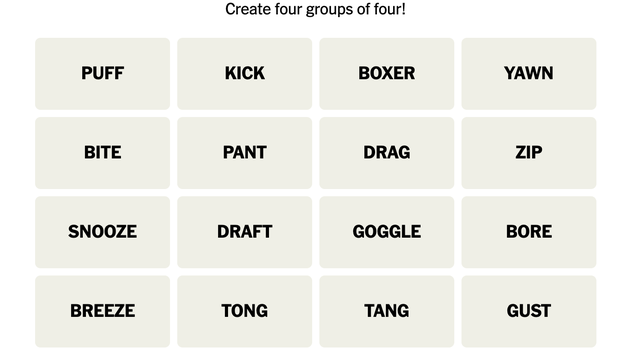
Today’s NYT Connections Hints (and Answer) for Wednesday, October 18, 2023

If you’re looking for the Connections answer for Wednesday, October 18, 2023, read on—I’ll share some clues, tips, and strategies, and finally the solutions to all four categories. Beware, there are spoilers below for October 18, NYT Connections #129! It’s a relatively easy one today, as these things go. Read on if…

Read more…


Source: LifeHacker – Today’s NYT Connections Hints (and Answer) for Wednesday, October 18, 2023

'Netflix Effect' Returns As Studios License Old Shows To Their Streaming Rival

Christopher Grimes reports via the Financial Times: Some of Netflix’s competitors are reversing a streaming war tactic by licensing their old TV shows and movies to the streamer — boosting its programming offerings but also potentially squeezing its profit margins, analysts say. Netflix relied heavily on programming that it licensed from other companies when it launched its streaming service in 2007. But after Walt Disney, NBCUniversal, Paramount and the then Time Warner launched their own streaming services, they pulled many of their shows from Netflix to avoid feeding a company that had grown into an arch-competitor. With legacy media groups under pressure to produce streaming profits, however, licensing revenue is looking attractive again — even if it comes from Netflix. This summer, Warner Bros Discovery’s HBO network began licensing a handful of older shows to Netflix, including Insecure, Six Feet Under, Ballers and Band of Brothers.

Analysts at Morgan Stanley said the return of licensing deals was a “long-term positive” for Netflix and would “pad” its lead over competitors in streaming. But the bank added that the cost of licensing — along with the Netflix’s investments in gaming and other sectors — could add pressure to its profit margins in 2024. The analysts raised their outlook for Netflix’s overall cash spending next year by $500mn to $17.7bn. Netflix will report results on Wednesday, with investors expected to focus on whether it plans to increase subscription prices and signs of progress on its new advertising tier. The latest data on its password sharing crackdown will also be watched.

[T]he studios’ experiments with licensing deals appear to have given some old shows new life. After NBCUniversal licensed its show Suits — which aired from 2011-19 and starred Meghan Markle — to Netflix in June, the show experienced a revival. The legal drama was in the top spot on the Nielsen Streaming top 10 for three months, an example of the “Netflix effect” on older shows. Bloys said licensing shows to Netflix had also boosted traffic for the programs on Warner Discovery’s Max streaming platform, home to HBO programming including Ballers, a sports drama that ran from 2015-19. Ballers entered the Nielsen top 10 after it went to Netflix, and Insecure, a comedy starring Issa Rae that ran from 2016-21, had a similar boost.

Read more of this story at Slashdot.


Source: Slashdot – ‘Netflix Effect’ Returns As Studios License Old Shows To Their Streaming Rival

AMD Posts Linux Patches For Better Graphics/Compute Interoperability & Other Benefits

AMD today posted a set of interesting patches for enabling better integration of their AMDKFD (Kernel Fusion Driver, what is their compute kernel driver) memory management with Linux’s DRM GEM ioctl API. In turn the code allows managing virtual address (VA) mappings in compute VMs with the GEM_VA ioctl interface for greater control of buffers imported via DMA-BUF…

Source: Phoronix – AMD Posts Linux Patches For Better Graphics/Compute Interoperability & Other Benefits

X is starting to charge new users $1 per year to send tweets

After weeks of speculation, X has confirmed its plans to charge new users for the service previously known as Twitter. The company shared details about a new subscription called “Not a Bot,” that it’s currently testing in New Zealand and the Philippines.

The subscription, which was first reported by Fortune, requires new users to pay the equivalent of $1 USD per year in order to be able to post. “As of October 17th, 2023 we’ve started testing ‘Not A Bot,’ a new subscription method for new users in two countries,” X explains. “This new test was developed to bolster our already significant efforts to reduce spam, manipulation of our platform and bot activity. This will evaluate a potentially powerful measure to help us combat bots and spammers on X, while balancing platform accessibility with the small fee amount.”

Under the scheme, new users will be required to verify their phone numbers and pay the $1 fee if they want to use core features like tweets, retweets, bookmarks and likes. Those who who don’t pay will only be able to use X in a “read only” mode.

The company said that for now the fees will not apply to existing users. “It is not a profit driver,” X said.

However, the initial test will likely fuel speculation that X does plan to one day charge all users. During a livestreamed conversation with Israeli Prime Minister Benjamin Netanyahu last month, Elon Musk suggested he was considering some kind of mandatory payment as part of an effort to combat bots and spam.

“Subscription options have proven to be the main solution that works at scale,” X said in a post from its support account. Musk’s earlier comments proved unpopular and on X rival Bluesky saw a surge in activity following the remarks.

Others have also reported that Musk has long had ambitions to gain access to users’ credit card and billing information, which would further his plan to bring banking and other financial services to X. According to his biographer, Walter Isaacson, Musk’s push to sign-up subscribers was very much intertwined with his quest to build an “everything app,” and Musk grew angry when he learned Apple doesn’t share credit card details of those who sign up with their iPhones.

X didn’t respond to a request for comment.

This article originally appeared on Engadget at https://www.engadget.com/x-is-starting-to-charge-new-users-1-per-year-to-send-tweets-000925191.html?src=rss

Source: Engadget – X is starting to charge new users per year to send tweets

IRS Will Pilot Free, Direct Tax Filing In 2024

An anonymous reader quotes a report from TechCrunch: The IRS will test a free tax filing service in 2024 for a subset of lucky taxpayers in as many as 13 states, the agency announced today. Direct File, as the service is called, is a shot across the bows of Turbotax, H&R Block, and other paid tax prep services, whose owners have resisted free and simple tax filing for decades. “This is a critical step forward for this innovative effort that will test the feasibility of providing taxpayers a new option to file their returns for free directly with the IRS,” said IRS Commissioner Danny Werfel in a press release announcing the news.

Over the last year and a half, the IRS has been building out the pilot program, which it characterizes as being “one more potential option” on the continuum from self-managed Free File, to commercial products like Turbotax, to a tax prep professional. The IRS describes Direct File as “a mobile-friendly, interview-based service” available in English and Spanish, intended for people with simpler tax situations like W-2s and common income credits and deductions. Whether the interviews are with actual people or some kind of automated or semi-automated process is unclear. But this, like many of its specifics, will likely change as the agency receives feedback from this limited scale pilot.

Arizona, California, Massachusetts, and New York are the four states that are integrating with Direct File for 2024 (i.e. the 2023 tax year); Alaska, Florida, New Hampshire, Nevada, South Dakota, Tennessee, Texas, Washington and Wyoming “may also be eligible,” due to not having state income tax, but it is not final. Every state was given the opportunity to participate in the Direct File program, but not all were “in a position to join.” Among the residents of these states, a limited number of individuals with “relatively simple returns” will have the opportunity to try Direct File. This will in turn “allow the IRS to evaluate the costs, benefits and operational challenges associated with providing a voluntary Direct File option to taxpayers.” In software terms, we’d probably call this an alpha.

Read more of this story at Slashdot.


Source: Slashdot – IRS Will Pilot Free, Direct Tax Filing In 2024

X now requires community fact checks to include sources

X is making a significant change to its crowd-soruced fact checking tool in an attempt to stem the flow of misinformation on its platform. The new rule is one that will be familiar to professional fact checkers, academics and Wikipedia editors, but is nonetheless new to X’s approach to fact-checking: the company will now require its volunteer contributors to include sources on every community note they write.

The company announced the change in a post on X, shortly after Wired reported that some community notes contributors are worried the tool is being manipulated by bad actors and worsening X’s misinformation problems amid the ongoing Israel-Hamas war. “Starting today, sources are now required for proposed notes,” the company wrote. “We haven’t previously required this, as some helpful notes inherently do not need sources – for example, they refer to details of the post or media it contains. But those instances are less common, and we believe the overall impact of this change will be positive.”

The change comes amid mounting scrutiny of the amount of misinformation and other falsehoods spreading on X in recent days. Longtime researchers have said that misinformation has reached new heights following Hamas’ attacks in Israel and the ensuing war. The advent of paid verification, and algorithm changes that boost paying subscribers, have allowed misinformation to spread relatively unchecked, researchers have said.

European Union officials have also raised concerns, pointing to the viral spread of video game footage and other unrelated content falsely claiming to depict scenes from the ongoing conflict. EU officials opened an investigation into X over its handling of misinformation last week.

Under Elon Musk’s leadership, X cut the teams responsible for curating reputable information about breaking news events, removed misinformation-reporting tools, slashed safety teams that patrolled for disinformation, and stopped labeling state-affiliated media accounts. Instead, the company has relied almost entirely on Community Notes, which allows volunteer contributors to append fact-checks to individual tweets.

Contributors are not vetted before joining the program, though notes have to reach a certain threshold of “helpful” ratings from other contributors before they’ll be visible. X CEO Linda Yaccarino told EU officials last week that the company had “recently launched a major acceleration in the speed at which notes appear.”

According to Wired, the system is easily manipulated as groups of contributors can rate each other’s notes, or selectively rate contributions that align with their opinions. The report also says that community notes related to the Israel-Hamas war have been filled with conspiracy theories and infighting between contributors.

The change to require a linked source may be X’s attempt to increase the quality of its notes, though it doesn’t seem to have any guidelines about the types of sources that can be cited. The company says “thousands” of new contributors have joined the program in recent days, and that notes have been viewed “millions” of times.

This article originally appeared on Engadget at https://www.engadget.com/x-now-requires-community-fact-checks-to-include-sources-235125787.html?src=rss

Source: Engadget – X now requires community fact checks to include sources

Why Switzerland's E-Voting System Is a Bad Idea

Last year, Andrew Appel, professor of computer science at Princeton University, wrote a 5-part series about Switzerland’s e-voting system, highlighting the inherent security vulnerabilities it faces and the safeguards the country has in place. Now, he’s writing about an interesting new vulnerability in the system that can be exploited to manipulate votes without anyone knowing. The vulnerability was discovered by Swiss computer scientist Andreas Kuster. From a blog post written by security technologist Bruce Schneier: “The Swiss Post e-voting system aims to protect your vote against vote manipulation and interference. The goal is to achieve this even if your own computer is infected by undetected malware that manipulates a user vote. This protection is implemented by special return codes (Prufcode), printed on the sheet of paper you receive by physical mail. Your computer doesn’t know these codes, so even if it’s infected by malware, it can’t successfully cheat you as long as, you follow the protocol.

Unfortunately, the protocol isn’t explained to you on the piece of paper you get by mail. It’s only explained to you online, when you visit the e-voting website. And of course, that’s part of the problem! If your computer is infected by malware, then it can already present to you a bogus website that instructs you to follow a different protocol, one that is cheatable. To demonstrate this, I built a proof-of-concept demonstration.”

Appel again: “Kuster’s fake protocol is not exactly what I imagined; it’s better. He explains it all in his blog post. Basically, in his malware-manipulated website, instead of displaying the verification codes for the voter to compare with what’s on the paper, the website asks the voter to enter the verification codes into a web form. Since the website doesn’t know what’s on the paper, that web-form entry is just for show. Of course, Kuster did not employ a botnet virus to distribute his malware to real voters! He keeps it contained on his own system and demonstrates it in a video.”

Read more of this story at Slashdot.


Source: Slashdot – Why Switzerland’s E-Voting System Is a Bad Idea

Mazda's DMCA Takedown Kills a Hobbyist's Smart Car API Tool

Long-time Slashdot reader couchslug shares a report from Ars Technica, writing: “A new attack on the right to do with one’s property as the owner sees fit. First step, threaten without providing evidence.” From the report: Before last week, owners of certain Mazda vehicles who also had a Home Assistant setup could create some handy connections for their car. One CX60 driver had a charger that would only power on when it confirmed his car was plugged in and would alert him if he left the trunk open. Another used Home Assistant to control their charger based on the dynamic prices of an Agile Octopus energy plan. Yet another had really thought it through, using Home Assistant to check the gas before their morning commute, alert them if their windows were down before rain was forecast, and remotely unlock and start the car in cold conditions. The possibilities were vast, and purportedly beyond what Mazda’s official app offered.

Mazda, however, had issues with the project, which was largely the free-time work of one software developer, Brandon Rothweiler. In a Digital Millennium Copyright Act (DMCA) notice sent to GitHub, Mazda (or an authorized agent) alleges that Rothweiler’s integration: contains code that “is violating [Mazda’s] copyright ownership”; used “certain Mazda information, including proprietary API information,” to “create code and information”; and contained code that “provides functionality same as what is currently” in Mazda’s apps posted to the Apple App Store and Google Play Store for Android.

One day later, Rothweiler made a pull request to the Home Assistant core project: “I’m removing the Mazda integration due to a legal notice sent to me by Mazda.” The Home Assistant project pushed an update to remove the integration, posted about the removal, and noted that they were “disappointed that Mazda has decided to take this position” and that “Mazda’s first recourse was not to reach out to us and the maintainer but to send a cease and desist letter instead.” One of the many commenters confused by Mazda’s code claims said they couldn’t find any of the copyrighted code the company referenced. Additionally, Ars Technica suggests the project “could be considered a fair use exception to the DMCA, as explained by the Electronic Frontier Foundation.”

“When Mazda contacted me, my options were to either comply or open myself up to potential legal risk,” said Rothweiler. “Even if I believe that what I’m doing is morally correct and legally protected, legal processes still have a financial cost. I can’t afford to take on that financial risk for something that I do in my spare time to help others.”

Read more of this story at Slashdot.


Source: Slashdot – Mazda’s DMCA Takedown Kills a Hobbyist’s Smart Car API Tool

This Is the Best Strategy for Cleaning Your Entire House

Cleaning in any order is always better than not cleaning at all, but there are ways to do it that make it more efficient. If you clean your home in the wrong order, you risk making a mess in places you’ve already taken care of. But what is the right order?

Read more…


Source: LifeHacker – This Is the Best Strategy for Cleaning Your Entire House