Carbon capture pipeline nixed after widespread opposition

Read 13 remaining paragraphs | Comments


Source: Ars Technica – Carbon capture pipeline nixed after widespread opposition

More Optimizations Made For Making GNOME/VTE Terminals Go Faster

Back in September GNOME developer Christian Hergert noted how Linux terminal emulators have the potential of being much faster based on his experiments. While at the time he didn’t plan to pursue it further, in the weeks since he’s been making enhancements to GNOME’s VTE code that is used by GNOME Console and other apps…

Source: Phoronix – More Optimizations Made For Making GNOME/VTE Terminals Go Faster

Geany 2.0 Lightweight IDE / Text Editor Released

Thursday marked the 18th birthday of the Geany open-source text editor / lightweight integrated development environment (IDE) project. In celebrating Geany turning 18, the Geany 2.0 release was made available. Geany 2.0 continues to strive toward the project goal of being a fast and easy to use text editor for coding…

Source: Phoronix – Geany 2.0 Lightweight IDE / Text Editor Released

British Museum Will Digitize Entire Collection At a Cost of $12.1 Million In Response To Thefts

Karen K. Ho reports via ARTnews: British Museum has announced plans to digitize its entire collection in order to increase security and public access, as well as ward off calls for the repatriation of items. The project will require 2.4 million records to upload or upgrade and is estimated to take five years to complete. The museum’s announcement on October 18 came after the news 2,000 items had been stolen from the institution by a former staff member, identified in news reports as former curator Peter Higgs. About 350 have been recovered so far, and last month the museum launched a public appeal for assistance. […]

On the same day the British Museum announced its digitization initiative, Jones and board chairman George Osborne gave oral evidence to the UK Parliament’s Culture, Media and Sport Committee. Their comments included an explanation of how the thefts occurred, policy changes made as a result, and how the museum will handle whistleblower complaints going forward. They also gave more details about the British Museum’s strategy for digitizing its collection, estimated at a cost of $12.1 million. “We are not asking the taxpayer or the Government for the money; we hope to raise it privately,” Osborne said.

The increased digital access to the collection would also be part of the museum’s response to requests for items to be returned or repatriated. “Part of our response can be: “They are available to you. Even if you cannot visit the museum, you are able to access them digitally.” That is already available — we have a pretty good website — but we can use this as a moment to make that a lot better and a lot more accessible,” Osborne said.

Read more of this story at Slashdot.


Source: Slashdot – British Museum Will Digitize Entire Collection At a Cost of .1 Million In Response To Thefts

Supreme Court Blocks Restrictions On Biden Administration Efforts To Get Platforms To Remove Social Media Posts

An anonymous reader quotes a report from NBC News: The Supreme Court on Friday blocked in full a lower court ruling that would have curbed the Biden administration’s ability to communicate with social media companies about contentious content on such issues as Covid-19. The decision in a short unsigned order (PDF) puts on hold a Louisiana-based judge’s ruling in July that specific agencies and officials should be barred from meeting with companies to discuss whether certain content should be stifled. The Supreme Court also agreed to immediately take up the government’s appeal, meaning it will hear arguments and issue a ruling on the merits in its current term, which runs until the end of June. Three conservative justices noted that they would have denied the application: Samuel Alito, Clarence Thomas and Neil Gorsuch.

“At this time in the history of our country, what the court has done, I fear, will be seen by some as giving the government a green light to use heavy-handed tactics to skew the presentation of views on the medium that increasingly dominates the dissemination of news. That is most unfortunate,” Alito wrote in a dissenting opinion. GOP attorneys general in Louisiana and Missouri, along with five social media users, filed the underlying lawsuit, alleging that U.S. government officials went too far in what they characterize as coercion of social media companies to address posts, especially those related to Covid-19. The individual plaintiffs include Covid-19 lockdown opponents and Jim Hoft, the owner of the right-wing website Gateway Pundit. They claim that the government’s actions violated free speech protections under the Constitution’s First Amendment.

Read more of this story at Slashdot.


Source: Slashdot – Supreme Court Blocks Restrictions On Biden Administration Efforts To Get Platforms To Remove Social Media Posts

Jon Stewart's Apple TV Plus Show Ends, Reportedly Over Coverage of AI and China

Shakrai writes: Multiple outlets are reporting that Apple TV Plus has cancelled Jon Stewart’s popular show The Problem with Jon Stewart, reportedly over editorial disagreements with regards to planned stories on the People’s Republic of China and AI. Fans and haters of Apple will both recall that Apple recently made changes to AirDrop, one of the few effective means Chinese dissidents and protesters had for exchanging information off-grid at scale, and will ask why Apple is apparently not only willing, but eager, to carry water for the PRC, overriding both human rights and practical business concerns in the process. “Apple approached Stewart directly and expressed its need for the host and his team to be ‘aligned’ with the company’s views on topics discussed,” reports The Verge, citing The Hollywood Reporter. “Rather than falling in line when Apple threatened to cancel the show, Stewart reportedly decided to walk.”

Read more of this story at Slashdot.


Source: Slashdot – Jon Stewart’s Apple TV Plus Show Ends, Reportedly Over Coverage of AI and China

Amazon Eliminated Plastic Packaging At One of Its Warehouses

Umar Shakir reports via The Verge: Amazon is fulfilling a small part of its promise to switch from using plastic bubble mailers and air pillows to all recyclable paper packaging for its shipments. The company announced that it has outfitted one facility in Euclid, Ohio, with an upgraded packaging machine that can automatically fold custom-fit boxes to wrap some products, use paper mailers for small items, and slide in paper fillers instead of plastic ones in standard boxes.

As Amazon transitions over to curbside recyclable packaging, it will “reduce the company’s plastic waste and the amount of plastic pollution that can reach the seas,” says Matt Littlejohn, senior vice president of Oceana, a conservation organization. However, Littlejohn questions Amazon’s commitment to end plastic use in the US, its largest market, compared to the commitments it made for the UK, Germany, and other markets. Amazon says it’ll be a “multiyear effort” to move US warehouses to recyclable paper. “Unfortunately, Amazon, in this announcement, did not make a clear, quantifiable, and time-bound commitment, so it is unclear when, where, and how much real plastic reduction there will be,” Littlejohn says.

Read more of this story at Slashdot.


Source: Slashdot – Amazon Eliminated Plastic Packaging At One of Its Warehouses

Today’s NYT Connections Hints (and Answer) for Saturday, October 21, 2023

Today is another tricky one, with all those dishes! If you’re looking for the Connections answer for Saturday, October 21, read on—I’ll share some clues, tips, and strategies, and finally the solutions to all four categories. Along the way, I’ll explain the meanings of the trickier words and we’ll learn how everything…

Read more…


Source: LifeHacker – Today’s NYT Connections Hints (and Answer) for Saturday, October 21, 2023

Thousands of Remote IT Workers Sent Wages To North Korea To Help Fund Weapons Program, Says FBI

echo123 shares a report from the Associated Press: Thousands of information technology workers contracting with U.S. companies have for years secretly sent millions of dollars of their wages to North Korea for use in its ballistic missile program, FBI and Department of Justice officials said. The Justice Department said Wednesday that IT workers dispatched and contracted by North Korea to work remotely with companies in St. Louis and elsewhere in the U.S. have been using false identities to get the jobs. The money they earned was funneled to the North Korean weapons program, FBI leaders said at a news conference in St. Louis.

Court documents allege that North Korea’s government dispatched thousands of skilled IT workers to live primarily in China and Russia with the goal of deceiving businesses from the U.S. and elsewhere into hiring them as freelance remote employees. The workers used various techniques to make it look like they were working in the U.S., including paying Americans to use their home Wi-Fi connections, said Jay Greenberg, special agent in charge of the St. Louis FBI office. Greenberg said any company that hired freelance IT workers “more than likely” hired someone participating in the scheme. An FBI spokeswoman said Thursday that the North Koreans contracted with companies across the U.S. and in some other countries. “We can tell you that there are thousands of North Korea IT workers that are part of this,” spokeswoman Rebecca Wu said. Federal authorities announced the seizure of $1.5 million and 17 domain names as part of the investigation, which is ongoing. FBI officials said the scheme is so prevalent that companies must be extra vigilant in verifying whom they are hiring, including requiring interviewees to at least be seen via video.

The IT workers generated millions of dollars a year in their wages to benefit North Korea’s weapons programs. In some instances, the North Korean workers also infiltrated computer networks and stole information from the companies that hired them, the Justice Department said. They also maintained access for future hacking and extortion schemes, the agency said. Officials didn’t name the companies that unknowingly hired North Korean workers, say when the practice began, or elaborate on how investigators became aware of it. But federal authorities have been aware of the scheme for some time.

Read more of this story at Slashdot.


Source: Slashdot – Thousands of Remote IT Workers Sent Wages To North Korea To Help Fund Weapons Program, Says FBI

US Chip Curbs Give Huawei a Chance To Fill the Nvidia Void In China

An anonymous reader quotes a report from Reuters: U.S. measures to limit the export of advanced artificial intelligence (AI) chips to China may create an opening for Huawei to expand in its $7 billion home market as the curbs force Nvidia to retreat, analysts say. While Nvidia has historically been the leading provider of AI chips in China with a market share exceeding 90%, Chinese firms including Huawei have been developing their own versions of Nvidia’s best-selling chips, including the A100 and the H100 graphics processing units (GPU).

Huawei’s Ascend AI chips are comparable to Nvidia’s in terms of raw computing power, analysts and some AI firms such as China’s iFlyTek say, but they still lag behind in performance. Jiang Yifan, chief market analyst at brokerage Guotai Junan Securities, said another key limiting factor for Chinese firms was the reliance of most projects on Nvidia’s chips and software ecosystem, but that could change with the U.S. restrictions. “This U.S. move, in my opinion, is actually giving Huawei’s Ascend chips a huge gift,” Jiang said in a post on his social media Weibo account. This opportunity, however, comes with several challenges.

Many cutting edge AI projects are built with CUDA, a popular programming architecture Nvidia has pioneered, which has in turn given rise to a massive global ecosystem that has become capable of training highly sophisticated AI models such as OpenAI’s GPT-4. Huawei own version is called CANN, and analysts say it is much more limited in terms of the AI models it is capable of training, meaning that Huawei’s chips are far from a plug-and-play substitute for Nvidia. Woz Ahmed, a former chip design executive turned consultant, said that for Huawei to win Chinese clients from Nvidia, it must replicate the ecosystem Nvidia created, including supporting clients to move their data and models to Huawei’s own platform. Intellectual property rights are also a problem, as many U.S. firms already hold key patents for GPUs, Ahmed said. “To get something that’s in the ballpark, it is 5 or 10 years,” he added.

Read more of this story at Slashdot.


Source: Slashdot – US Chip Curbs Give Huawei a Chance To Fill the Nvidia Void In China

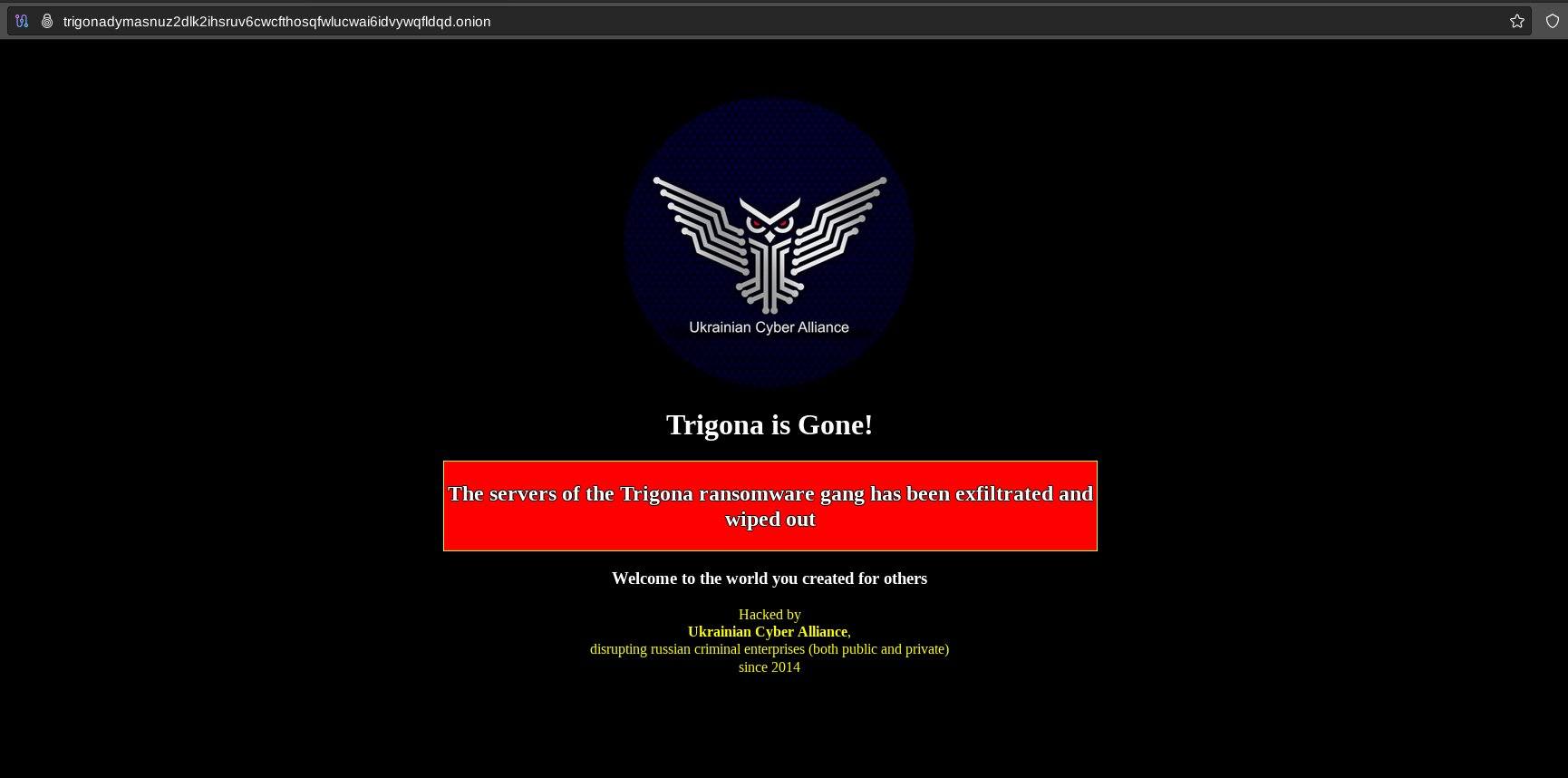
Feel-good story of the week: 2 ransomware gangs meet their demise

Read 11 remaining paragraphs | Comments


Source: Ars Technica – Feel-good story of the week: 2 ransomware gangs meet their demise

Okta says hackers breached its support system and viewed customer files

A cartoon man runs across a white field of ones and zeroes.

Enlarge (credit: Getty Images)

Identity and authentication management provider Okta said hackers managed to view private customer information after gaining access to credentials to its customer support management system.

“The threat actor was able to view files uploaded by certain Okta customers as part of recent support cases,” Okta Chief Security Officer David Bradbury said Friday. He suggested those files comprised HTTP archive, or HAR, files, which company support personnel use to replicate customer browser activity during troubleshooting sessions.

“HAR files can also contain sensitive data, including cookies and session tokens, that malicious actors can use to impersonate valid users,” Bradbury wrote. “Okta has worked with impacted customers to investigate, and has taken measures to protect our customers, including the revocation of embedded session tokens. In general, Okta recommends sanitizing all credentials and cookies/session tokens within a HAR file before sharing it.”

Read 7 remaining paragraphs | Comments


Source: Ars Technica – Okta says hackers breached its support system and viewed customer files

The Supreme Court will hear case on government’s contacts with social media companies

As expected, the Supreme Court will weigh in on a controversial case attempting to limit contact between federal officials and social media companies. The case could have sweeping implications for how social media companies make policy and content moderation decisions.

The case stems from a lawsuit, brought by the attorneys general of Missouri and Louisiana, that alleges Biden Administration officials, the CDC and FBI overreached in their dealings Meta, Google and Twitter as the companies responded to pandemic and election-related misinformation. A lower court previously issued an injunction that severely limited government officials’ ability to communicate with social media companies, though some restrictions were later relaxed.

Now, with the Supreme Court agreeing to hear the government’s appeal in the case, the entire lower court order remains on hold. As The New York Times notes, three justices, Samuel Alito, Clarence Thomas and Neil Gorsuch, dissented, calling the decision to allow the lower court order to remain paused “highly disturbing.”

It’s not the only case involving free speech and social media on the Supreme Court docket this term. The court will also take on two landmark cases that could reshape how social media platforms enforce content moderation rules. Those cases involve two state laws, in Texas and Florida, that would prevent social media companies from removing certain types of posts.

This article originally appeared on Engadget at https://www.engadget.com/the-supreme-court-will-hear-case-on-governments-contacts-with-social-media-companies-224551081.html?src=rss

Source: Engadget – The Supreme Court will hear case on government’s contacts with social media companies

Windows 11 Pro's On-By-Default Encryption Slows SSDs Up To 45%

An anonymous reader shares a Tom’s Hardware report: Unfortunately, a default setting in Windows 11 Pro, having its software BitLocker encryption enabled, robs as much as 45 percent of the speed from your SSD as it forces your processor to encrypt and decrypt everything. According to our tests, random writes and reads — which affect the overall performance of your PC — get hurt the most, but even large sequential transfers are affected.

While many SSDs come with hardware-based encryption, which does all the processing directly on the drive, Windows 11 Pro force-enables the software version of BitLocker during installation, without providing a clear way to opt out. (You can circumvent this with tools like Rufus, if you want, though that’s obviously not an official solution as it allows users to bypass the Microsoft’s intent.) If you bought a prebuilt PC with Windows 11 Pro, there’s a good chance software BitLocker is enabled on it right now. Windows 11 Home doesn’t support BitLocker so you won’t have encryption enabled there.

To find out just how much software BitLocker impacts performance, we ran a series of tests with three scenarios: unencrypted (no BitLocker), software BitLocker (the Windows 11 Pro default), and with hardware BitLocker (OPAL) enabled. While the software encryption increased latency and decreased transfer rates, hardware encryption and no encryption at all were basically tied. If you have software BitLocker enabled, you may want to change your settings.

Read more of this story at Slashdot.


Source: Slashdot – Windows 11 Pro’s On-By-Default Encryption Slows SSDs Up To 45%

Wes Craven's New Nightmare Feels More at Home Now Than 30 Years Ago

The year is 1994. I head to the theater, buy a ticket for Wes Craven’s New Nightmare, and I’m not ready for what happens next. The year is 2023. I flip over to Max, press play on Wes Craven’s New Nightmare, and I’m still not ready for what happens next.

Read more…


Source: Gizmodo – Wes Craven’s New Nightmare Feels More at Home Now Than 30 Years Ago

The Problem with Jon Stewart cancellation highlights a problem for Apple’s content

Jon Stewart holds up a pen as he makes a point at his dsek

Enlarge / Jon Stewart on his Apple TV show. (credit: Apple)

Jon Stewart and his weekly talk show The Problem with Jon Stewart are out at Apple, according to reports from The New York Times and Variety. Apple canceled the show just weeks before its third season began taping. Its cancellation sheds some light on the conflict of priorities Apple faces as it leans more into content rather than just selling tools, platforms, and gadgets.

The New York Times article cites “several people with knowledge of the situation,” saying that staffers working on the show were told at the end of the day Thursday that it would not move forward.

The reason for the shift? Stewart and Apple executives “had disagreements over some of the topics and guests,” the sources said. Specifically, they claimed Stewart told staffers that Apple execs took issue with planned programming related to both China and artificial intelligence, and noted that with the 2024 US election coming up, there might have been additional opportunities for disagreement then.

Read 6 remaining paragraphs | Comments


Source: Ars Technica – The Problem with Jon Stewart cancellation highlights a problem for Apple’s content

Twitch will allow simulcasting to competitor streaming platforms

Twitch will now allow its users to stream concurrently on other live video sites. The announcement was made at TwitchCon in Las Vegas, just as it dropped new simulcasting guidelines. The company emphasized that simulcasting is permitted as long as the “Twitch user experience is not compromised” on other platforms. 

Back in August, Twitch relaxed its rules on cross-streaming, allowing channels to have their live content appear on social media apps like TikTok and Instagram. In terms of what new competitor services are kosher now, Twitch’s language is broad — citing that “any service” is on the table. The lone exception appears to be channels which have signed exclusivity contracts with Twitch.

The new approach to simulcasting might seem to hurt the company’s bottom line. A live streaming platform wants more entertainers, so, why allow users to take their content elsewhere? The move might be a response to several big-name streamers jumping ship and signing deals with competitors in the space — YouTube specifically. It’s pure speculation, but perhaps handing creators additional revenue streams with no strings attached might be enough to keep major players on board, and medium-sized streamers happier with their income.

Twitch has been trying to update policies across the board to keep both its users and investors happy. The company just attempted to address off-platform doxxing, and it has even dabbled with machine learning programs that can moderate chats. It also introduced new features borrowed from other social media companies, like stories and feeds.

This article originally appeared on Engadget at https://www.engadget.com/twitch-will-allow-simulcasting-to-competitor-streaming-platforms-222133289.html?src=rss

Source: Engadget – Twitch will allow simulcasting to competitor streaming platforms

Instagram sorry for translation error that put “terrorist” in Palestinian bios

Palestine's flag.

Enlarge / Palestine’s flag. (credit: Wong Yu Liang | Moment)

Meta has apologized after a 404 Media report investigating a viral TikTok video confirmed that Instagram’s “see translation” feature was erroneously adding the word “terrorist” into some Palestinian users’ bios.

Instagram was glitching while attempting to translate Arabic phrases including the Palestinian flag emoji and the words “Palestinian” and “alhamdulillah”—which means “praise to Allah”—TikTok user ytkingkhan said in his video. Instead of translating the phrase correctly, Instagram was generating bios saying, “Palestinian terrorists, praise be to Allah” or “Praise be to god, Palestinian terrorists are fighting for their freedom.”

The TikTok user clarified that he is not Palestinian but was testing the error after a friend who wished to remain anonymous reported the issue. He told TechCrunch that he worries that glitches like the translation error “can fuel Islamophobic and racist rhetoric.” It’s unclear how many users were affected by the error. In statements, Meta has only claimed that the problem was “brief.”

Read 22 remaining paragraphs | Comments


Source: Ars Technica – Instagram sorry for translation error that put “terrorist” in Palestinian bios