
Linus Torvalds today released the seventh weekly release candidate of Linux 6.6 while is hoping to release the stable kernel version next weekend…
Source: Phoronix – Linux 6.6-rc7 Released: Linux 6.6 Final Likely Next Sunday
Category Archives: Unfiltered RSS
Mozilla Launches Annual Digital Privacy 'Creep-o-Meter'. This Year's Status: 'Very Creepy'
“In 2023, the state of our digital privacy is: Very Creepy.” That’s the verdict from Mozilla’s first-ever “Annual Consumer Creep-o-Meter,” which attempts to set benchmarks for digital privacy and identify trends:
Since 2017, Mozilla has published 15 editions of *Privacy Not Included, our consumer tech buyers guide. We’ve reviewed over 500 gadgets, apps, cars, and more, assessing their security features, what data they collect, and who they share that data with. In 2023, we compared our most recent findings with those of the past five years. It quickly became clear that products and companies are collecting more personal data than ever before — and then using that information in shady ways…
Products are getting more secure, but also a lot less private. More companies are meeting Mozilla’s Minimum Security Standards like using encryption and providing automatic software updates. That’s good news. But at the same time, companies are collecting and sharing users’ personal data like never before. And that’s bad news. Many companies now view their hardware or software as a means to an end: collecting that coveted personal data for targeted advertising and training AI. For example: The mental health app BetterHelp shares your data with advertisers, social media platforms, and sister companies. The Japanese car manufacturer Nissan collects a wide range of information, including sexual activity, health diagnosis data, and genetic information — but doesn’t specify how.
An increasing number of products can’t be used offline. In the past, the privacy conscious could always buy a connected device but turn off connectivity, making it “dumb.” That’s no longer an option in many cases. The number of connected devices that require apps and can’t be used offline are increasing. This trend, coupled with the first, means it’s harder and harder to keep your data private.
Privacy policies also need improvement. “Legalese, ambiguity, and policies that sprawl across multiple documents and URLs are the status quo. And it’s getting worse, not better. Companies use these policies as a shield, not an actual resource for consumers.” They note that Toyota has more than 10 privacy policy documents, and that it would actually take five hours to read all the privacy documents the Meta Quest Pro VR headset.
In the end they advise opting out of data collection when possible, enabling security features, and “If you’re not comfortable with a product’s privacy, don’t buy it. And, speak up. Over the years, we’ve seen companies respond to consumer demand for privacy, like when Apple reformed app tracking and Zoom made end-to-end encryption a free feature.”
You can also take a quiz that calculates your own privacy footprint (based on whether you’re using consumer tech products like the Apple Watch, Nintendo Switch, Nook, or Telegram). Mozilla’s privacy advocates award the highest marks to privacy-protecting products like Signal, Sonos’ SL Speakers, and the Pocketbook eReader (an alternative to Amazon’s Kindle. (Although 100% of the cars reviewed by Mozilla “failed to meet our privacy and security standards.”)
The graphics on the site help make its point. As you move your mouse across the page, the cartoon eyes follow its movement…


Read more of this story at Slashdot.
Source: Slashdot – Mozilla Launches Annual Digital Privacy ‘Creep-o-Meter’. This Year’s Status: ‘Very Creepy’
20 Carriers Face Call-Blocking in the US for Submitting Fake 'Robocall Mitigation Plans'
“Twenty phone companies may soon have all their voice calls blocked by US carriers,” reports Ars Technica, “because they didn’t submit real plans for preventing robocalls on their networks.”
The 20 carriers include a mix of US-based and foreign voice service providers that submitted required “robocall mitigation” plans to the Federal Communications Commission about two years ago. The problem is that some of the carriers’ submissions were blank pages and others were bizarre images or documents that had no relation to robocalls. The strange submissions, according to FCC enforcement orders issued Monday, included “a .PNG file depicting an indiscernible object,” a document titled “Windows Printer Test Page,” an image “that depicted the filer’s ‘Taxpayer Profile’ on a Pakistani government website,” and “a letter that stated: ‘Unfortunately, we do not have such a documents.'”
Monday’s FCC announcement said the agency’s Enforcement Bureau issued orders demanding that “20 non-compliant companies show cause within 14 days as to why the FCC should not remove them from the database for deficient filings.” The orders focus on the certification requirements and do not indicate whether these companies carry large amounts of robocall traffic. Each company will be given “an opportunity to cure any deficiencies in its robocall mitigation program description or explain why its certification is not deficient.” After the October 30 deadline, the companies could be removed from the FCC’s Robocall Mitigation Database.
Removal from the database would oblige other phone companies to block all of their calls.


Read more of this story at Slashdot.
Source: Slashdot – 20 Carriers Face Call-Blocking in the US for Submitting Fake ‘Robocall Mitigation Plans’
Instagram's latest test feature turns users' photos into stickers for Reels and Stories
Instagram is testing a sticker creation feature that will let users make custom stickers from their own photos — and other users’, in some cases — and pop them into Reels or Stories. While Meta has been going all in on prompt-based, AI-generated stickers lately, this tool is something much simpler. It’ll just select the subject of a photo and remove the background, creating a free-floating sticker that can be placed over other content.
Adam Mosseri/ Instagram
Adam Mosseri gave a brief demonstration of how it’ll work in a video shared to his broadcast channel. He also said that, in addition to creating stickers from photos saved on your phone, users will be able to make them from “eligible images you see on Instagram.” Mosseri didn’t share any further details on that, but it suggests users will be able to opt in to making their pictures stickerable.
It’s still just a test and hasn’t rolled out to all users, so we’ll see what that actually looks like in time. The platform last week started testing a new polling feature, too, which will show up in the comments section under feed posts.
This article originally appeared on Engadget at https://www.engadget.com/instagrams-latest-test-feature-turns-users-photos-into-stickers-for-reels-and-stories-211046111.html?src=rss
Source: Engadget – Instagram’s latest test feature turns users’ photos into stickers for Reels and Stories
'Threads' Downloads Nearly Doubled in September, as New Features Roll Out
“Mark Zuckerberg is making good on his promise to accelerate the use of Threads,” reports Business Insider:
The Meta CEO insisted in July that the app was not in its final form. “I’m highly confident that we’re gonna be able to pour enough gasoline on this to help it grow,” Zuckerberg said. Since then, Threads has rolled out a host of major new features, including a web version, keyword search, voice posts, and the ability to edit posts, even as it avoids promoting news. Smaller things, too, like being able to follow updates in individual threads at the tap of a bell icon, a way to mass follow people mentioned in a post, and even tag people’s Instagram accounts, are now available… More Threads features are said to be on the way, like polls.
But Insider also reports that “As the app has matured quickly in recent weeks, users have started to return and downloads have continued to rise.”
So far in October, Threads has hovered around 33 million daily active users and 120 million monthly active users, according to data from Apptopia, up from about 25 million daily users and 100 million monthly users in July… Since the app launched on July 6, it’s been downloaded 260 million times, Apptopia data shows, with downloads in September almost double the downloads in August…
Although the entire team working on Threads remains small by Meta standards, around 50 people, the company was surprised by the interest in the app and “really wants it to work,” an employee said. To that end, Threads is now being integrated to an extent with Facebook and Instagram, two of the most popular apps in the world. There is a direct link to Threads on each user’s Instagram page, a post on Threads can be sent in Instagram DMs, and as of this week, Threads is being promoted within the Instagram app feed via a small carousel of select posts under the header “Threads for you….”
It’s not just Instagram, according to BGR. “If you’ve been posting some especially strange messages Threads, thinking that only the few people who follow you will see them, I have some bad news for you…”
As spotted by TechCrunch, users on Facebook have noticed something new on their News Feed: content from Threads. It appears that Meta is now showing Facebook users a new “For You from Threads” section on the News Feed that contains recommended content from the sibling social media platform.


Read more of this story at Slashdot.
Source: Slashdot – ‘Threads’ Downloads Nearly Doubled in September, as New Features Roll Out
SAG-AFTRA and AMPTP Get Back to Negotiating This Week
Yesterday, October 21 marked the 100th day of the SAG-AFTRA strike. As a way of commemorating the occasion, the actors union affirmed that it would continue to stand firm and wanted to continue negotiations with the AMPTP after their last discussion two weeks ago fell apart. The winter season isn’t that far off, and…
Source: Gizmodo – SAG-AFTRA and AMPTP Get Back to Negotiating This Week
James Bond's Producers Are Still Figuring Out His Future

Daniel Craig didn’t have the longest run of James Bond movies, but he did have one of the most eventful. 2007’s Casino Royale gave the series a shot in the arm that both made it matter more in the eye of the mainstream public, and greatly boosted his profile.
Source: Gizmodo – James Bond’s Producers Are Still Figuring Out His Future
QLogic 10Gb "QLGE" Ethernet Driver Set To Be Removed From The Linux Kernel
For those that happen to have QLogic 10Gb PCIe Ethernet adapters, the mainline Linux kernel is planning to remove this driver from the kernel source tree unless any active users step-up…
Source: Phoronix – QLogic 10Gb “QLGE” Ethernet Driver Set To Be Removed From The Linux Kernel
Netflix's Captain Laserhawk is a Eclectic, Oddly Charming Ubisoft Romp

These days, pretty much any video game is ripe to be adapted for a movie or TV show. But that didn’t make it any less odd when it was revealed Netflix was aiming to make a cartoon out of 2013’s Far Cry 3: Blood Dragon, a retrofuture parody of 80s action media. That fondly remembered standalone hangs over Ubisoft’s Far…
Source: Gizmodo – Netflix’s Captain Laserhawk is a Eclectic, Oddly Charming Ubisoft Romp
AI This Week: One of the Music Industry's Biggest Labels is Suing Anthropic
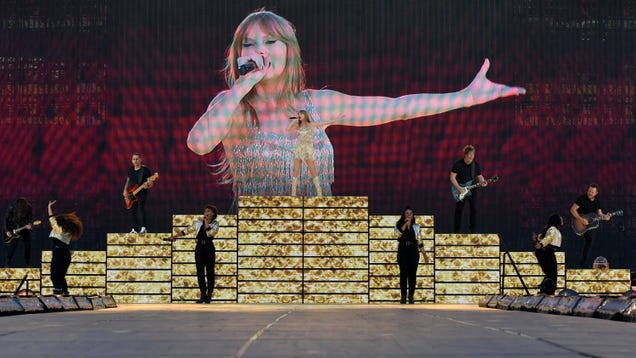
- Major newspapers are trying to carve out a deal with AI firms, as an argument brews over the copyrighted material that said firms have used to train their content-generating algorithms.
Source: Gizmodo – AI This Week: One of the Music Industry’s Biggest Labels is Suing Anthropic
The Meanings Behind the Mechanical Sounds You Hear on a Plane
In addition to the beeps and chimes that you hear on an airplane, you may also pick up on a variety of mechanical sounds before and during a flight, as well as after you’ve landed. Unless you have aviation experience or knowledge (or are traveling with someone who does), you may be curious—or anxious—about what’s…
Source: LifeHacker – The Meanings Behind the Mechanical Sounds You Hear on a Plane
Victims of Deepfakes Are Fighting Back
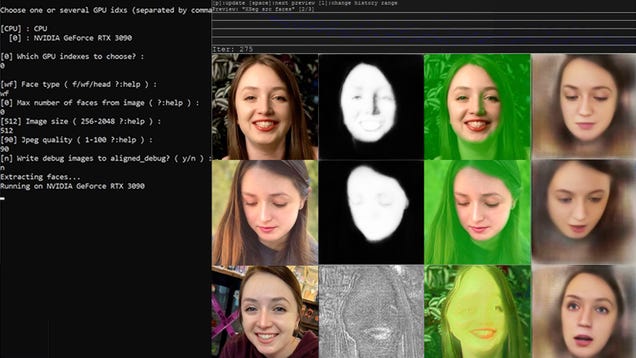
Anyone who’s spent a moment observing US political chatter in recent months has probably encountered the following prediction: 2024 will yield the world’s first deepfake election. Rapidly evolving AI video and audio generators powered by large language models have already been used by both Donald Trump and Ron…
Source: Gizmodo – Victims of Deepfakes Are Fighting Back
ChatGPT Granted Access To The Entire Current Internet, What Happens Next?
OpenAI has moved its ‘Browsing’ feature out of beta, allowing ChatGPT access to the entire internet up to the current date. The Browsing feature is now available via Microsoft’s Bing search engine to all users of ChatGPT Plus and Enterprise.
The beta for the ‘Browsing’ feature for ChatGPT was rolled back out to Plus users at the end of
Source: Hot Hardware – ChatGPT Granted Access To The Entire Current Internet, What Happens Next?
Stephen King's The Stand Lives Again with New Anthology Book
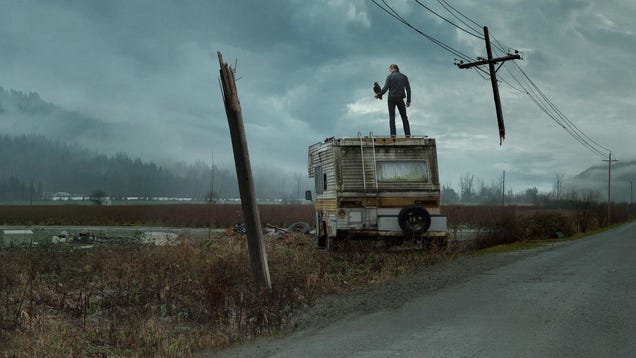
Over 45 years ago, Stephen King released The Stand, his post-apocalyptic dark fantasy novel about a virus that wiped out much of the human race. To this day, it remains an acclaimed book and is highly regarded as one of his best novels period. Like other King books, there’s an extension of that book on the way—though…
Source: Gizmodo – Stephen King’s The Stand Lives Again with New Anthology Book
Apple may be planning an October Mac launch after all
This month has been filled with conflicting rumors of an Apple product launch that either will or won’t happen, but Bloomberg’s Mark Gurman now says the October event is on, and it could bring a long overdue iMac upgrade. In the Power On newsletter, Gurman reports that sources close to Apple said a Mac launch is in the works for this month. Based on current retail supplies and shipping dates for certain models, Gurman suggests we could see a new iMac and possibly some new MacBook Pros.
“Apple retail stores are in short supply of the iMac, as well as the 13-inch MacBook Pro and high-end MacBook Pro — two other models that may be due for a refresh,” Gurman wrote, noting that current shipping estimates for these models show delays until November. That, plus the timing of the company’s earnings call — in November this year, instead of October — suggests Apple has something planned. Gurman speculates the launch event may take place on October 30 or 31.
The 24-inch M1 iMac came out in April 2021 and hasn’t been updated since, making it a good candidate for a refresh. The 13-inch M2 MacBook Pro, which was released in June 2022, is also due for an upgrade.
This article originally appeared on Engadget at https://www.engadget.com/apple-may-be-planning-an-october-mac-launch-after-all-153051423.html?src=rss
Source: Engadget – Apple may be planning an October Mac launch after all
Apple's rumored October Mac launch may happen after all
This month has been filled with conflicting rumors of an Apple product launch that either will or won’t happen, but Bloomberg’s Mark Gurman now says the October event is on, and it could bring a long overdue iMac upgrade. In the Power On newsletter, Gurman reports that sources close to Apple said a Mac launch is in the works for this month. Based on current retail supplies and shipping dates for certain models, Gurman suggests we could see a new iMac and possibly some new MacBook Pros.
“Apple retail stores are in short supply of the iMac, as well as the 13-inch MacBook Pro and high-end MacBook Pro — two other models that may be due for a refresh,” Gurman wrote, noting that current shipping estimates for these models show delays until November. That, plus the timing of the company’s earnings call — in November this year, instead of October — suggests Apple has something planned. Gurman speculates the launch event may take place on October 30 or 31.
The 24-inch M1 iMac came out in April 2021 and hasn’t been updated since, making it a good candidate for a refresh. The 13-inch M2 MacBook Pro, which was released in June 2022, is also due for an upgrade.
This article originally appeared on Engadget at https://www.engadget.com/apples-rumored-october-mac-launch-may-happen-after-all-153051265.html?src=rss
Source: Engadget – Apple’s rumored October Mac launch may happen after all
The Pros and Cons of Granite, Quartz, and Marble Countertops
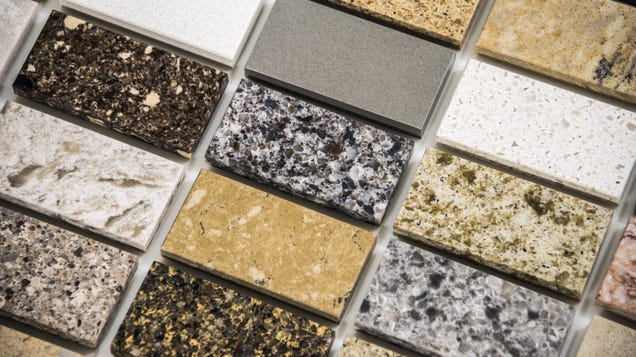
Whether you’re building a new home or renovating your kitchen, you’ll have to make a decision about your countertops. If you’d like to go with a natural stone—as opposed to laminate countertops, for example—you can opt for granite, quartz, or marble.
Source: LifeHacker – The Pros and Cons of Granite, Quartz, and Marble Countertops
Milk-V Oasis Sounds Like An Interesting RISC-V Board With 16 Cores, Up To 64GB LPDDR5
In addition to working on the likes of the Milk-V Duo and high-end Pioneer board, Milk-V has now announced the “Oasis” as a forthcoming mini-ITX RISC-V board that will feature 16 cores and up to 64GB of LPDDR5 system memory…
Source: Phoronix – Milk-V Oasis Sounds Like An Interesting RISC-V Board With 16 Cores, Up To 64GB LPDDR5
NASA's John Mather keeps redefining our understanding of the cosmos
Space isn’t hard only on account of the rocket science. The task of taking a NASA mission from development and funding through construction and launch — all before we even use the thing for science — can span decades. Entire careers have been spent putting a single satellite into space. Nobel-winning NASA physicist John Mather, mind you, has already helped send up two.
In their new book, Inside the Star Factory: The Creation of the James Webb Space Telescope, NASA’s Largest and Most Powerful Space Observatory, author Christopher Wanjek and photographer Chris Gunn take readers on a behind the scenes tour of the James Webb Space Telescope’s own journey from inception to orbit. Weaving examinations of the radical imaging technology that enables us to peer deeper into the early universe than ever before with profiles of the researchers, advisors, managers, engineers and technicians that made it possible through three decades of effort. In this week’s Hitting the Books excerpt, a look at JWST project scientist John Mather and his own improbable journey from rural New Jersey to NASA.
MIT Press
Excerpted from “Inside the Star Factory: The Creation of the James Webb Space Telescope, NASA’s Largest and Most Powerful Space Observatory” Copyright © 2023 by Chris Gunn and Christopher Wanjek. Used with permission of the publisher, MIT Press.
John Mather, Project Scientist
— The steady hand in control
John Mather is a patient man. His 2006 Nobel Prize in Physics was thirty years in the making. That award, for unswerving evidence of the Big Bang, was based on a bus-sized machine called COBE — yet another NASA mission that almost didn’t happen. Design drama? Been there. Navigate unforeseen delays? Done that. For NASA to choose Mather as JWST Project Scientist was pure prescience.
Like Webb, COBE — the Cosmic Background Explorer — was to be a time machine to reveal a snapshot of the early universe. The target era was just 370,000 years after the Big Bang, when the universe was still a fog of elementary particles with no discernable structure. This is called the epoch of recombination, when the hot universe cooled to a point to allow protons to bind with electrons to form the very first atoms, mostly hydrogen with a sprinkling of helium and lithium. As the atoms formed, the fog lifted, and the universe became clear. Light broke through. That ancient light, from the Big Bang itself, is with us today as remnant microwave radiation called the cosmic microwave background.
Tall but never imposing, demanding but never mean, Mather is a study in contrasts. His childhood was spent just a mile from the Appalachian Trail in rural Sussex County, New Jersey, where his friends were consumed by earthly matters such as farm chores. Yet Mather, whose father was a specialist in animal husbandry and statistics, was more intrigued by science and math. At age six he grasped the concept of infinity when he filled up a page in his notebook with a very large number and realized he could go on forever. He loaded himself up with books from a mobile library that visited the farms every couple of weeks. His dad worked for Rutgers University Agriculture Experiment Station and had a laboratory on the farm with radioisotope equipment for studying metabolism and liquid nitrogen tanks with frozen bull semen. His dad also was one of the earliest users of computers in the area, circa 1960, maintaining milk production records of 10,000 cows on punched IBM cards. His mother, an elementary school teacher, was quite learned, as well, and fostered young John’s interest in science.
A chance for some warm, year-round weather ultimately brought Mather in 1968 to University of California, Berkeley, for graduate studies in physics. He would fall in with a crowd intrigued by the newly detected cosmic microwave background, discovered by accident in 1965 by radio astronomers Arno Penzias and Robert Wilson. His thesis advisor devised a balloon experiment to measure the spectrum, or color, of this radiation to see if it really came from the Big Bang. (It does.) The next obvious thing was to make a map of this light to see, as theory suggested, whether the temperature varied ever so slightly across the sky. And years later, that’s just what he and his COBE team found: anisotropy, an unequal distribution of energy. These micro-degree temperature fluctuations imply matter density fluctuations, sufficient to stop the expansion, at least locally. Through the influence of gravity, matter would pool into cosmic lakes to form stars and galaxies hundreds of millions of years later. In essence, Mather and his team captured a sonogram of the infant universe.
Yet the COBE mission, like Webb, was plagued with setbacks. Mather and the team proposed the mission concept (for a second time) in 1976. NASA accepted the proposal but, that year, declared that this satellite and most others from then on would be delivered to orbit by the Space Shuttle, which itself was still in development. History would reveal the foolishness of such a plan. Mather understood immediately. This wedded the design of COBE to the cargo bay of the unbuilt Shuttle. Engineers would need to meet precise mass and volume requirements of a vessel not yet flown. More troublesome, COBE required a polar orbit, difficult for the Space Shuttle to deliver. The COBE team was next saddled with budget cuts and compromises in COBE’s design as a result of cost overruns of another pioneering space science mission, the Infrared Astronomical Satellite, or IRAS. Still, the tedious work continued of designing instruments sensitive enough to detect variations of temperatures just a few degrees above absolute zero, about −270°C. From 1980 onward, Mather was consumed by the creation of COBE all day every day. The team needed to cut corners and make risky decisions to stay within budget. News came that COBE was to be launched on the Space Shuttle mission STS-82-B in 1988 from Vandenberg Air Force Base. All systems go.
Then the Space Shuttle Challenger exploded in 1986, killing all seven of its crew. NASA grounded Shuttle flights indefinitely. COBE, now locked to Shuttle specifications, couldn’t launch on just any other rocket system. COBE was too large for a Delta rocket at this point; ironically, Mather had the Delta in mind in his first sketch in 1974. The team looked to Europe for a launch vehicle, but this was hardly an option for NASA. Instead, the project managers led a redesign to shave off hundreds of pounds, to slim down to a 5,000-pound launch mass, with fuel, which would just make it within the limits of a Delta by a few pounds. Oh, and McDonnell Douglas had to build a Delta rocket from spare parts, having been forced to discontinue the series in favor of the Space Shuttle.
The team worked around the clock over the next two years. The final design challenge was … wait for it … a sunshield that now needed to be folded into the rocket and spring-released once in orbit, a novel approach. COBE got the greenlight to launch from Vandenberg Air Force Base in California, the originally desired site because it would provide easier access to a polar orbit compared to launching a Shuttle from Florida. Launch was set for November 1989. COBE was delivered several months before.
Then, on October 17, the California ground shook hard. A 6.9-magnitude earthquake struck Santa Cruz County, causing widespread damage to structures. Vandenberg, some 200 miles south, felt the jolt. As pure luck would have it, COBE was securely fastened only because two of the engineers minding it secured it that day before going off to get married. The instrument suffered no damage and launched successfully on November 18. More drama came with the high winds on launch day. Myriad worries followed in the first weeks of operation: the cryostat cooled too quickly; sunlight reflecting off of Antarctic ice played havoc with the power system; trapped electrons and protons in the Van Allen belts disrupted the functioning of the electronics; and so on.
All the delays, all the drama, faded into a distant memory for Mather as the results of the COBE experiment came in. Data would take four years to compile. But the results were mind-blowing. The first result came weeks after launch, when Mather showed the spectrum to the American Astronomical Society and received a standing ovation. The Big Bang was safe as a theory. Two years later, at an April 1992 meeting of the American Physical Society, the team showed their first map. Data matched theory perfectly. This was the afterglow of the Big Bang revealing the seeds that would grow into stars and galaxies. Physicist Stephen Hawking called it “the most important discovery of the century, if not of all time.”
Mather spoke humbly of the discovery at his Nobel acceptance speech in 2006, fully crediting his remarkable team and his colleague George Smoot, who shared the prize with him that year. But he didn’t downplay the achievement. He noted that he was thrilled with the now broader “recognition that our work was as important as people in the professional astronomy world have known for so long.”
Mather maintains that realism today. While concerned about delays, threats of cancellation, cost overruns, and not-too-subtle animosity in the broader science community over the “telescope that ate astronomy,” he didn’t let this consume him or his team. “There’s no point in trying to manage other people’s feelings,” he said. “Quite a lot of the community opinion is, ‘well, if it were my nickel, I’d spend it differently.’ But it isn’t their nickel; and the reason why we have the nickel in the first place is because NASA takes on incredibly great challenges. Congress approved of us taking on great challenges. And great challenges aren’t free. My feeling is that the only reason why we have an astronomy program at NASA for anyone to enjoy — or complain about — is that we do astonishingly difficult projects. We are pushing to the edge of what is possible.”
Webb isn’t just a little better than the Hubble Space Telescope, Mather added; it’s a hundred times more powerful. Yet his biggest worry through mission design was not the advanced astronomy instruments but rather the massive sunshield, which needed to unfold. All instruments and all the deployment mechanisms had redundancy engineered into them; there are two or more ways to make them work if the primary method fails. But that’s not the only issue with a sunshield. It would either work or not work.
Now Mather can focus completely on the science to be had. He expects surprises; he’d be surprised if there were no surprises. “Just about everything in astronomy comes as a surprise,” he said. “When you have new equipment, you will get a surprise.” His hunch is that Webb might reveal something weird about the early universe, perhaps an abundance of short-lived objects never before seen that say something about dark energy, the mysterious force that seems to be accelerating the expansion of the universe, or the equally mysterious dark matter. He also can’t wait until Webb turns its cameras to Alpha Centauri, the closest star system to Earth. What if there’s a planet there suitable for life? Webb should have the sensitivity to detect molecules in its atmosphere, if present.
“That would be cool,” Mather said. Hints of life from the closest star system? Yes, cool, indeed.
This article originally appeared on Engadget at https://www.engadget.com/inside-the-star-factory-chris-gunn-christopher-wanjek-mit-press-143046496.html?src=rss
Source: Engadget – NASA’s John Mather keeps redefining our understanding of the cosmos
James Wan Teases Aquaman 2's Retro Horror, Buddy Comedy Vibes
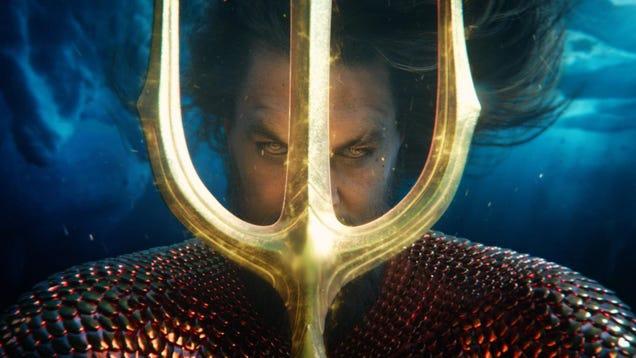
In a little under two months, WB will finally release Aquaman & the Lost Kingdom. Like the original movie, this new film looks like a wild romp that manages to stand out from other blockbuster superhero fare thanks to its visual splendor and weird mishmash of aesthetics. Whatever you may think about these movies, they…
Source: Gizmodo – James Wan Teases Aquaman 2’s Retro Horror, Buddy Comedy Vibes