Android 14 review: There’s always next year

The new Android logo.

Enlarge / The new Android logo. (credit: Google)

Does anybody care about Android 14?

This year’s release of the world’s most popular operating system feels like one of the smallest ever, bringing just a handful of new features. Even during the Android portion of Google’s big I/O keynote, Google spent most of its time showing off a new generative AI feature that creates wallpapers for you, as if there aren’t enough wallpapers in the world.

Last year’s Android 13 release felt small, but that was because it was the second major Android OS release that year. Android 12L—the big tablet and foldable release—came out earlier. What’s Android 14’s excuse? We’re not really sure. We still have a few things to go over, though, like new lock screen customizations, genuinely exciting changes to the way the back button works, and a pile of under-the-hood changes.

Read 42 remaining paragraphs | Comments


Source: Ars Technica – Android 14 review: There’s always next year

How the US is Preparing For a Post-Quantum World

To explore America’s “transition to a post-quantum world,” the Washington Post interviewed U.S. federal official Nick Polk, who is focused on national security issues including quantum computing and is also a senior advisor to a White House federal chief information security officer):

The Washington Post: The U.S. is in the early stages of a major shift focused on bolstering government network defenses, pushing federal agencies to adopt a new encryption standard known as post-quantum cryptography that aims to prevent systems from being vulnerable to advanced decryption techniques enabled by quantum computers in the near future…

Nick Polk: We’ve been using asymmetric encryption for a very long time now, and it’s been ubiquitous since about 2014, when the U.S. government and some of the large tech companies decided that they’re going to make it a default on most web browsers… Interestingly enough, regarding the post-quantum cryptographic standards being developed, the only thing that’s quantum about them is that it has “quantum” in the name. It’s really just a different type of math that’s much more difficult for a quantum computer to be able to reverse-engineer. The National Institute of Standards and Technology is looking at different mathematical models to cover all their bases. The interesting thing is that these post-quantum standards are actually being used to protect classical computers that we have now, like laptops…

Given the breadth of the U.S. government and the amount of computing power we use, we really see ourselves and our role as a steward of the tech ecosystem. One of the things that came out of [this week’s Inside Quantum Technology conference in New York City] was that we are very quickly moving along with the private sector to migrate to post-quantum cryptography. I think you’re gonna see very shortly a lot of very sensitive private sector industries start to migrate or start to advertise that they’re going to migrate. Banks are a perfect example. That means meeting with vendors regularly, and testing their algorithms to ensure that we can accurately and effectively implement them on federal systems…
The administration and national security memorandum set 2035 as our deadline as a government to migrate our [national security] systems to post-quantum cryptography. That’s supposed to time with the development of operational quantum computers. We need to ensure that we start now, so that we don’t end up not meeting the deadline before computers are operational… This is a prioritized migration for the U.S. government. We’re going to start with our most critical systems — that includes what we call high-value assets, and high-impact systems. So for example, we’re gonna prioritize systems that have personal health information.

That’s our biggest emphasis — both when we talk to private industry and when we encourage agencies when they talk to their contractors and vendors — to really think about where your most sensitive data is and then prioritize those systems for migration.

Read more of this story at Slashdot.


Source: Slashdot – How the US is Preparing For a Post-Quantum World

Where the heck did all those structures inside complex cells come from?

Computer illustration of mitochondria, membrane-enclosed cellular organelles that produce energy

Enlarge / Computer illustration of mitochondria, membrane-enclosed cellular organelles that produce energy. (credit: KATERYNA KON/SCIENCE PHOTO LIBRARY/GETTY)

More than 1.5 billion years ago, a momentous thing happened: Two small, primitive cells became one. Perhaps more than any event—barring the origin of life itself—this merger radically changed the course of evolution on our planet.

One cell ended up inside the other and evolved into a structure that schoolkids learn to refer to as the “powerhouse of the cell”: the mitochondrion. This new structure provided a tremendous energetic advantage to its host—a precondition for the later evolution of complex, multicellular life.

But that’s only part of the story. The mitochondrion is not the only important structure within complex, eukaryotic cells. There’s the membrane-bound nucleus, safekeeper of the genome. There’s a whole system of internal membranes: the endoplasmic reticulum, the Golgi apparatus, lysosomes, peroxisomes and vacuoles—essential for making, transporting, and recycling proteins and other cargo in and around the cell.

Read 42 remaining paragraphs | Comments


Source: Ars Technica – Where the heck did all those structures inside complex cells come from?

Tens of Millions Now Work in the $250B 'Creator Economy'

The creator economy is probably bigger than you think. The Washington Post reports it’s “now a global industry valued at $250 billion, with tens of millions of workers, hundreds of millions of customers and its own trade association and work-credentialing programs.”

Millions have ditched traditional career paths to work as online creators and content-makers, using their computers and phones to amass followers and build businesses whose influence now rivals the biggest names in entertainment, news and politics… In the United States, the video giant YouTube estimated that roughly 390,000 full-time jobs last year were supported by its creators’ work — four times the number of people employed by General Motors, America’s biggest automaker…
This spring, analysts at Goldman Sachs said that 50 million people now work as creators around the world. The analysts expect the industry’s “total addressable market,” an estimate of consumer demand, will jump from $250 billion this year to $480 billion by 2027. For comparison, the global revenue from video games, now at about $227 billion, is expected to climb to roughly $312 billion by 2027, analysts at the financial giant PwC estimated in June. YouTube’s report estimated that its creators contributed $35 billion to [U.S.] gross domestic product last year, a figure that would rank the group’s combined output ahead of U.S. furniture manufacturing but behind rail transportation, according to industry data from the U.S. Bureau of Economic Analysis….
Payments from advertisers to creators in the United States have more than doubled since 2019, to $5 billion, estimates from the market research firm Insider Intelligence show… Megan Pollock, a branding executive at Panasonic North America, said that the company now devotes about 10 percent of its marketing budget to creators and that she expects further increases amid a long-term shift away from traditional ad campaigns.
Other interesting details from the article:

Last month people watched 53 million hours of video a day just on Twitch. But 74% of that went to the top 10,000 streamers (according to data from the analytics firm StreamElements).

“Creators’ incomes are determined by giant tech and advertising companies that can change the rules in an instant, and a single mistake can unravel their careers.”

When America’s youth are asked what they want to be when they grow up, “Influencer” is now one of the most popular answers — ranking higher than “astronaut” and “professional athlete”

Read more of this story at Slashdot.


Source: Slashdot – Tens of Millions Now Work in the 0B ‘Creator Economy’

Huawei's Profit Doubles With Made-in-China Chip Breakthrough

Bloomberg thinks they’ve identified the source of the advanced chips in Huawei’s newest smartphone, citing to “people familiar with the matter”.
In a suggestion that export restrictions on Europe’s most valuable tech company may have come too late to stem China’s advances in chipmaking, ASML’s so-called immersion deep ultraviolet machines were used in combination with tools from other companies to make the Huawei Technologies Co. chip, the people said, asking not to be identified discussing information that’s not public. ASML declined to comment.

There is no suggestion that their sales violated export restrictions… ASML has never been able to sell its EUV machines to China because of export restrictions. But less advanced DUV models can be retooled with deposition and etching gear to produce 7-nanometer and possibly even more advanced chips, according to industry analysts. The process is much more expensive than using EUV, making it very difficult to scale production in a competitive market environment. In China, however, the government is willing to shoulder a significant portion of chipmaking costs.

Chinese companies have been legally stockpiling DUV gear for years — especially after the U.S. introduced its initial export controls last year before getting Japan and the Netherlands on board… According to an investor presentation published by the company last week, ASML experienced a jump in business from China this year as chipmakers there boosted orders ahead of the export controls taking full effect in 2024. China accounted for 46% of ASML’s sales in the third quarter, compared with 24% in the previous quarter and 8% in the three months ending in March.

Another article from Bloomberg includes this prediction:
The U.S. won’t be able to stop Huawei and SMIC from making progress in chip technology, Burn J. Lin, a former Taiwan Semiconductor Manufacturing Co. vice president, told Bloomberg News. Semiconductor Manufacturing International Corp should be able to advance to the next generation at 5 nanometers with machines from ASML Holding NV that it already operates, said Lin, who at TSMC championed the lithography technology that transformed chipmaking.

The end result is that Huawei’s profit “more than doubled during the quarter it revealed its biggest achievement in chip technology,” the article reports, “adding to signs the Chinese tech leader is steadying a business rocked by US sanctions.”

The Shenzhen company reported a 118% surge in net profit to 26.4 billion yuan ($3.6 billion) in the September quarter, and a slight rise in sales to 145.7 billion yuan, according to Bloomberg News calculations from nine-month results released Friday. Those numbers included initial sales of the vastly popular Mate 60 Pro, which began shipping in late August… The gadget sold out almost instantly, spurring expectations it could rejuvenate Huawei’s fortunes and potentially cut into Apple Inc.’s lead in China, given signs of a disappointing debut for the iPhone 15…

A resurgent Huawei would pose problems not just for Apple but also local brands from Xiaomi Corp. to Oppo and Vivo, all of which are fighting for sales in a shrinking market.

Read more of this story at Slashdot.


Source: Slashdot – Huawei’s Profit Doubles With Made-in-China Chip Breakthrough

Are Amazon Warehouse Injuries More Widespread Than Thought?

According to Bloomberg the U.S. Labor Department’s “OSHA” regulatory agency has “cited Amazon for exposing workers to ergonomic risks at several facilities.” But how widespread is the problem?

29% of America’s warehouse workers are working for Amazon, a team of researchers estimates. And “More than two-thirds of Amazon warehouse workers surveyed by researchers reported that they took unpaid time off to recover from pain or exhaustion sustained on the job.”

The new national study, published Wednesday by the University of Illinois Chicago’s Center for Urban Economic Development, found that 69% of workers surveyed stayed home without pay to recover, including 34% who did so three or more times. The data suggests “injury and pain at Amazon are far more widespread” than previously known, said Beth Gutelius, research director at the center and a leading expert on logistics and warehouse work.

The report is based on a 98-question online survey that gathered responses from 1,484 warehouse workers in 451 facilities across 42 states, the researchers said. It was conducted between April and August and measured the percentage of workers who took time off during the previous month. Amazon employs hundreds of thousands of warehouse workers in the U.S.

Amazon spokesperson Maureen Lynch Vogel said the report was “not a ‘study’ — it’s a survey done on social media, by groups with an ulterior motive.” She recommended that people read the safety data Amazon submits each year to the Occupational Safety and Health Administration, “which shows that rates in our buildings have improved significantly, and we’re slightly above the average in some areas and slightly below the average in others.”

41% of the workers surveyed reported being injured while working at an Amazon warehouse, according to the article. And “the share rises to 51% for people who have worked at the company for more than three years.”

Read more of this story at Slashdot.


Source: Slashdot – Are Amazon Warehouse Injuries More Widespread Than Thought?

Today’s NYT Connections Hints (and Answer) for Sunday, October 29, 2023

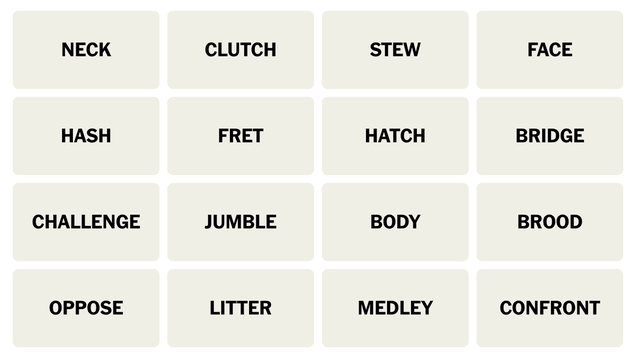
I STEWed over this one for a bit, but ultimately I was up to the CHALLENGE, and I’m sure you will be, too. If you’re looking for the Connections answer for Sunday, October 29, 2023, read on—I’ll share some clues, tips, and strategies, and finally the solutions to all four categories. Along the way, I’ll explain the…

Read more…


Source: LifeHacker – Today’s NYT Connections Hints (and Answer) for Sunday, October 29, 2023

Cruise Suspends All Driverless Operations Nationwide

GM’s autonomous vehicle unit Cruise is now suspending driverless operations all across America.

The move comes just days after California regulators revoked Cruise’s license for driverless vehicles, declaring that Cruise’s AVs posed an “an unreasonable risk to public safety” and “are not safe for the public’s operation,” also arguing that Cruise had misrepresented information related to its safety. And the Associated Press reports that Cruise “is also being investigated by U.S. regulators after receiving reports of potential risks to pedestrians and passengers.”

Human-supervised operations of Cruise’s autonomous vehicles, or AVs, will continue — including under California’s indefinite suspension…

Earlier this month, a Cruise robotaxi notably ran over a pedestrian who had been hit by another vehicle driven by a human. The pedestrian became pinned under a tire of the Cruise vehicle after it came to a stop — and then was pulled for about 20 feet (six meters) as the car attempted to move off the road. The DMV and others have accused Cruise of not initially sharing all video footage of the accident, but the robotaxi operator pushed back — saying it disclosed the full video to state and federal officials. In a Tuesday statement, Cruise said it cooperating with regulators investigating the October 2 accident — and that its engineers are working on way for its robotaxis to improve their response “to this kind of extremely rare event.” Still, some are skeptical of Cruise’s response to the accident and point to lingering questions. Bryant Walker Smith, a University of South Carolina law professor who studies automated vehicles, wants to know “who knew what when?” at Cruise, and maybe GM, following the accident.

Also earlier this month, the National Highway Traffic Safety Administration [or NHTSA] announced that it was investigating Cruise’s autonomous vehicle division after receiving reports of incidents where vehicles may not have used proper caution around pedestrians in roadways, including crosswalks. The NHTSA’s Office of Defects Investigation said it received two reports involving pedestrian injuries from Cruise vehicles. It also identified two additional incidents from videos posted to public websites, noting that the total number is unknown.

In December of last year, the NHSTA opened a separate probe into reports of Cruise’s robotaxis that stopped too quickly or unexpectedly quit moving, potentially stranding passengers. Three rear-end collisions that reportedly took place after Cruise AVs braked hard kicked off the investigation. According to an October 20 letter that was made public Thursday, since beginning this probe the NHSTA has received five other reports of Cruise AVs unexpectedly breaking with no obstacles ahead. Each case involved AVs operating without human supervision and resulted in rear-end collisions.

Cruise emphasized on Twitter/X that their nationwide suspension of driverless testing “isn’t related to any new on-road incidents.” Instead, “We have decided to proactively pause driverless operations across all of our fleets while we take time to examine our processes, systems, and tools and reflect on how we can better operate in a way that will earn public trust.”

Their announcement began by stressing that “The most important thing for us right now is to take steps to rebuild public trust.”

Read more of this story at Slashdot.


Source: Slashdot – Cruise Suspends All Driverless Operations Nationwide

When Supermarket Freezer Doors Have Screens With Ads

Long-time Slashdot reader theodp writes: Over at Computers Are Bad, J.B. Crawford [a senior professional services engineer at GitLab] offers a pretty epic takedown of the startup “Cooler Screens”, which has replaced the formerly transparent cooler doors at Walgreens and other stores with six-foot, heat-generating 4K resolution digital screen doors that block the view of the merchandise that’s behind them to enable IoT “contextual advertising”.

“I find myself looking at a Walgreens cooler that just two years ago was covered in clear glass admitting direct inspection of which tall-boy teas were in stock,” Crawford writes of his experience. “Today, it’s an impenetrable black void. Some Walgreens employee has printed a sheet of paper, ‘TEA’ in 96-point Cambria, and taped it to the wall above the door….”

While Cooler Screens was first tested by Walgreens in 2018 and backed by Microsoft VC money, Cooler Screens is now suing Walgreens, claiming the pharmacy chain obstructed a nationwide rollout of the technology and demanded its removal from stores. Walgreens said in court documents that technical issues plagued the technology, making it difficult for customers to see what was available inside the coolers, the report said. According to Walgreens, the screens froze or went dark, showed incorrect products or prices, and even sparked and caught fire in some instances.

Cooler Screens, on the other hand, blamed what it called Walgreens’ aging and poorly maintained electrical and refrigeration infrastructure for the technical difficulties.

Still, Crawford notes that Kroger has announced it’s adding Cooler Screens to 500 more of their stores, the result of a three-year pilot that apparently went better than Walgreens. But he isn’t buying claims that “90%+ of consumers no longer prefer traditional glass cooler doors,” and closes with a final observation, “I am nodding and appropriately chuckling when a stranger says ‘remember when you could see through these?’ as they fight against retail innovation to purchase one of the products these things were supposed to promote. You cannot say they aren’t engaged, in a sense.”

Earlier on Slashdot: Shoppers React as Grocers Replace Freezer Doors with Screens Playing Ads.

Read more of this story at Slashdot.


Source: Slashdot – When Supermarket Freezer Doors Have Screens With Ads

Powerful Malware Disguised as Crypto Miner Infects 1M+ Windows, Linux PCs

PC Magazine reports:

A powerful piece of malware has been disguising itself as a trivial cryptocurrency miner to help it evade detection for more than five years, according to antivirus provider Kaspersky. This so-called “StripedFly” malware has infected over 1 million Windows and Linux computers around the globe since 2016, Kaspersky says in a report released Thursday…

StripedFly incorporated a version of EternalBlue, the notorious NSA-developed exploit that was later leaked and used in the WannaCry ransomware attack to infect hundreds of thousands of Windows machines back in 2017. According to Kaspersky, StripedFly uses its own custom EternalBlue attack to infiltrate unpatched Windows systems and quietly spread across a victim’s network, including to Linux machines. The malware can then harvest sensitive data from infected computers, such as login credentials and personal data. “Furthermore, the malware can capture screenshots on the victim’s device without detection, gain significant control over the machine, and even record microphone input,” the company’s security researchers added.
To evade detection, the creators behind StripedFly settled on a novel method by adding a cryptocurrency mining module to prevent antivirus systems from discovering the malware’s full capabilities.

Read more of this story at Slashdot.


Source: Slashdot – Powerful Malware Disguised as Crypto Miner Infects 1M+ Windows, Linux PCs

Adult ADHD May Be Associated With an Increased Risk of Dementia, Study Finds

A new study found that adult ADHD “may take a toll on the brain and is linked to a higher likelihood of developing dementia,” reports the Washington Post:

A study published in JAMA Network Open reported that being diagnosed with ADHD as an adult is associated with a 2.77-fold increased risk of dementia.

The study only showed an association and doesn’t tell us whether ADHD is a direct cause of cognitive decline. But the results suggest that “if you do have attention-deficit disorder, you’re going to have more trouble with normal brain aging,” said Sandra Black, a cognitive neurologist at Sunnybrook Research Institute in Toronto who was not involved in the study. “It adds another risk factor….”

Notably, of the 730 participants with adult ADHD, 13.2 percent (96 participants) were diagnosed with dementia. In contrast, of the 108,388 participants without adult ADHD, just 7 percent (7,630 participants) developed dementia. Intriguingly, adults with ADHD who were taking a psychostimulant medication such as Ritalin or Adderall did not have an increased risk of developing dementia compared with those not taking medication. Only 22.3 percent of people with ADHD had taken a psychostimulant medication at any point.

The Post also notes the work of Sara Becker, a postdoctoral research associate at the University of Calgary. “In a 2023 systematic review, Becker and her colleagues identified only seven previous studies investigating the link between ADHD and neurodegenerative diseases such as dementia, most of which found that adult ADHD conferred a higher dementia risk.”

The research highlights the importance of seeking care — and the need for more research. Treatment with psychostimulant medications may attenuate the risk, said Stephen Levine, a professor at the University of Haifa’s School of Public Health in Israel and the lead author of the study. Lifestyle changes, such as better sleep and staying socially engaged, can also lower risk for dementia….
A 2020 landmark study by the Lancet Commission highlighted 12 modifiable factors for dementia that, if addressed, could mitigate the risk of dementia by up to 40 percent. Some of these factors are hearing loss, excessive alcohol intake and smoking.

Other lifestyle changes that lower your risk of demential include keeping up your physical activity, and eating a Mediterranean diet, the Post reports (citing cognitive neurologist Sandra Black).
An estimated 3 percent of adults have ADHD.

Read more of this story at Slashdot.


Source: Slashdot – Adult ADHD May Be Associated With an Increased Risk of Dementia, Study Finds

NASA is launching a rocket on Sunday to study a 20,000-year-old supernova

A sounding rocket toting a special imaging and spectroscopy instrument will take a brief trip to space Sunday night to try and capture as much data as it can on a long-admired supernova remnant in the Cygnus constellation. Its target, a massive cloud of dust and gas known as the Cygnus Loop or the Veil Nebula, was created after the explosive death of a star an estimated 20,000 years ago — and it’s still expanding.

NASA plans to launch the mission at 11:35 PM ET on Sunday October 29 from the White Sands Missile Range in New Mexico. The Integral Field Ultraviolet Spectroscopic Experiment, or INFUSE, will observe the Cygnus Loop for only a few minutes, capturing light in the far-ultraviolet wavelengths to illuminate gasses as hot as 90,000-540,000 degrees Fahrenheit. It’s expected to fly to an altitude of about 150 miles before parachuting back to Earth.

The Cygnus Loop sits about 2,600 light-years away, and was formed by the collapse of a star thought to be 20 times the size of our sun. Since the aftermath of the event is still playing out, with the cloud currently expanding at a rate of 930,000 miles per hour, it’s a good candidate for studying how supernovae affect the formation of new star systems. “Supernovae like the one that created the Cygnus Loop have a huge impact on how galaxies form,” said Brian Fleming, principal investigator for the INFUSE mission.

“INFUSE will observe how the supernova dumps energy into the Milky Way by catching light given off just as the blast wave crashes into pockets of cold gas floating around the galaxy,” Fleming said. Once INFUSE is back on the ground and its data has been collected, the team plans to fix it up and eventually launch it again.

This article originally appeared on Engadget at https://www.engadget.com/nasa-is-launching-a-rocket-on-sunday-to-study-a-20000-year-old-supernova-193009477.html?src=rss

Source: Engadget – NASA is launching a rocket on Sunday to study a 20,000-year-old supernova

2022's Horror Hit Barbarian is Giving Birth To a Video Game

In the same way that video games get turned into movies (or TV shows!) these days, the reverse is true. It doesn’t happen quite as often, but a number of movies have jumped over to games in some capacity, and they’re usually pretty famous or long-running franchises. Star Wars is the most obvious example, but there’s…

Read more…


Source: Gizmodo – 2022’s Horror Hit Barbarian is Giving Birth To a Video Game

Apple Backs US Government's Push for a National Right-to-Repair Bill . (But What About Parts Pairing?)

An anonymous reader shared this report from Ars Technica:
Following the passage of California’s repair bill that Apple supported, requiring seven years of parts, specialty tools, and repair manual availability, Apple announced Tuesday that it would back a similar bill on a federal level. It would also make its parts, tools, and repair documentation available to both non-affiliated repair shops and individual customers, “at fair and reasonable prices.”

“We intend to honor California’s new repair provisions across the United States,” said Brian Naumann, Apple’s vice president for service and operation management, at a White House event Tuesday…

“I think most OEMs [Original Equipment Manufacturers] will realize they can save themselves a lot of trouble by making parts, tools, and other requirements of state laws already in NY, MN, CA, and CO available nationally,” wrote Gay Gordon-Byrne, executive director of The Repair Association, to Ars… Gordon-Byrne noted that firms like HP, Google, Samsung, and Lenovo have pledged to comply with repair rules on a national level. The US Public Interest Research Group (PIRG) communicated a similarly hopeful note in its response to Tuesday’s event, noting that “Apple makes a lot of products, and its conduct definitely influences other manufacturers.” At the same time, numerous obstacles to repair access remain in place through copyright law — “Which we hope will be high on an agenda in the IP subcommittee this session,” Gordon-Byrne wrote.
Besides strong support from President Biden, there’s also strong support from America’s Federal Trade Commission, reports TechCrunch:

FTC chair Lina Khan commented on the pushback many corporations have given such legislation. Device and automotive manufacturers have argued that putting such choice in the hands of consumers opens them up to additional security risks. “We hear some manufacturers defend repair restrictions, claiming that they’re needed for safety or security reasons,” said Khan. “The FTC has found that all too often these claims are backed by limited evidence. Accordingly, the FTC has committed itself to using all of our enforcement and policy tools to fight for people’s right to repair their own products.”

A cautionary note from Ars Technica:
Elizabeth Chamberlain, director of sustainability for iFixit, a parts vendor and repair advocate, suggested that Apple’s pledge to extend California’s law on a national level is “a strategic move.” “Apple likely hopes that they will be able to negotiate out the parts of the Minnesota bill they don’t like,” Chamberlain wrote in an email, pointing specifically to the “fair and reasonable” parts provisioning measure that could preclude Apple’s tendency toward pairing parts to individual devices. “[I]t’s vital to get bulletproof parts pairing prohibitions passed in other states in 2024,” Chamberlain wrote. “Independent repair and refurbishment depend on parts harvesting.”

The Washington Post reports that currently repair shop owners and parts vendors “have had to find ways to reassure their customers they haven’t made a mistake by choosing an independent fix.”

If the digital identifier tied to a replacement part doesn’t match the one the phone expects to see, you’ll start seeing those warnings and issues. “Only Apple pairs parts in an intrusive way where you get these messages pop up,” said Jonathan Strange, owner of two XiRepair gadget repair shops in Montgomery, Alabama. To ward off those unnerving messages and restore full functionality, repair technicians are required to go through a “system configuration” process that authenticates the part after making the fix. Some small operations, like Strange’s XiRepair shops, can do that in-store because they’ve gone through a process to become a certified Apple Independent Repair Providers. But that process can’t happen at all in shops that haven’t gone through that certification, or if more affordable parts like third-party replacements were used.
The Post also shares this reaction from Aaron Perzanowski, a repair researcher and law professor at the University of Michigan.

“The fact that companies want to use technology to essentially undo the notion of interchangeable parts is something we ought to find deeply disturbing.”

Read more of this story at Slashdot.


Source: Slashdot – Apple Backs US Government’s Push for a National Right-to-Repair Bill . (But What About Parts Pairing?)

Will The Future See Interconnected Social Media Platforms?

“For the last two decades, our social networking and social media platforms have been universes unto themselves,” writes the Verge’s editor-at-large:

Each has its own social graph, charting who you follow and who follows you. Each has its own feed, its own algorithms, its own apps, and its own user interfaces (though they’ve all pretty much landed on the same aesthetics over time). Each also has its own publishing tools, its own character limits, its own image filters. Being online means constantly flitting between these places and their ever-shifting sets of rules and norms. Now, though, we may be at the beginning of a new era. Instead of a half-dozen platforms competing to own your entire life, apps like Mastodon, Bluesky, Pixelfed, Lemmy, and others are building a more interconnected social ecosystem.

If this ActivityPub-fueled change takes off, it will break every social network into a thousand pieces. All posts, of all types, will be separated from their platforms. We’ll get new tools for creating those posts, new tools for reading them, new tools for organizing them, and new tools for moderating them and sharing them and remixing them and everything else besides.
He’s talking about a decades-old concept called POSSE: Publish (on your) Own Site, Syndicate Everywhere. (“Sometimes the P is also ‘Post,’ and the E can be ‘Elsewhere.’ The idea is the same either way.”

The idea is that you, the poster, should post on a website that you own. Not an app that can go away and take all your posts with it, not a platform with ever-shifting rules and algorithms. Your website. But people who want to read or watch or listen to or look at your posts can do that almost anywhere because your content is syndicated to all those platforms… [Y]our blog becomes the hub for everything, your main home on the internet.
The article argues that for now, “the best we have are tools like Micro.blog, a six-year-old platform for cross-posters.” But the article ultimately envisions a future with not just new posting tools, but also new reading tools “with different ideas about how to display and organize posts.”

Read more of this story at Slashdot.


Source: Slashdot – Will The Future See Interconnected Social Media Platforms?

Don't Assume a Brand New Car Has No Damage

Part of the process of shopping around for a used car is performing various inspections, including checking for damage. Consequently, part of the allure of buying a brand new car is, at least in theory, that you can skip that part, and don’t have to worry about anything being wrong with the vehicle. No previous owners…

Read more…


Source: LifeHacker – Don’t Assume a Brand New Car Has No Damage

81st World Science Fiction Convention Announces 2023 Hugo Awards

The World Science Fiction Society “administers and presents the Hugo Awards, the oldest and most noteworthy award for science fiction,” according to Wikipedia. Its members vote on each year’s winners, and this year they received 1,847 nominating ballots.

This year the 81st edition of their World Science Fiction Convention was held from October 18 to 22 in Chengdu, China. More details from Gizmodo:

While fan-favorite cozy fantasy novel Legends & Lattes lost Best Novel to T. Kingfisher’s excellent horror-fantasy Nettle & Bone, Legends & Lattes author Travis Baldtree won the Astounding Award for Best New Writer. Everything Everywhere All at Once snagged film’s top honor, and The Expanse’s finale episode did the same for televsion, beating out both nominated Andor episodes among others. Some other great standouts include short fiction editor Neil Clarke, who has kept Clarkesworld magazine running despite getting swamped by AI-generated submissions earlier this year.

And “By winning Best Graphic Story or Comic, [Bartosz] Sztybor-who also served as a producer on the overwhelmingly popular Netflix anime Cyberpunk: Edgerunners-also becomes the first Polish author to win a Hugo,” reports Forbes:

[Cyberpunk 2077: Big City Dreams] is set in Night City-as seen in Cyberpunk 2077-and follows the story of two small-time thieves, Tasha and Mirek, who are trying to survive the harsh metropolis together. “Tasha and Mirek make a living for themselves stealing cyberware and indulging in parties and braindances,” the official teaser explains…

Other highlights from this year’s awards:

Best novella: Where the Drowned Girls Go, by Seanan McGuire (Tordotcom)
Best Novelette: “The Space-Time Painter”, by Hai Ya (Galaxy’s Edge, April 2022)
Best Short Story: “Rabbit Test”, by Samantha Mills (Uncanny Magazine, November-December 2022)
Best Series: Children of Time series, by Adrian Tchaikovsky (Pan Macmillan/Orbit)

Best Related Work: Terry Pratchett: A Life With Footnotes, by Rob Wilkins (Doubleday)

Read more of this story at Slashdot.


Source: Slashdot – 81st World Science Fiction Convention Announces 2023 Hugo Awards