Our favorite smart electric toothbrush is cheaper than ever in an early Amazon Black Friday deal

We’re still a few weeks away from Black Friday, but if you’re looking to get a new electric toothbrush, you can get a deal on one of Oral-B’s models as early as today. The Oral-B iO Series 7 electric toothbrush that comes with two brush heads is currently on sale at Amazon for $150, which is a record low for the device that typically sells for $200. Even better, you can get it for $140 if you apply the website’s $10 coupon, so don’t forget to tick that little box right next to it. 

We named the Oral-B iO Series 7 as our best overall smart electric toothbrush for the year because its price sits right in the middle of the category’s price spectrum. With this discount, it’s become an even more appealing option. The device is equipped with an internal gyroscope and accelerometer, giving it the capability to detect its position inside your mouth while you brush. If you switch on guided brushing in the app, you’ll see a 3D illustration of your teeth turn blue as you brush — the app can even tell you if you’ve missed specific areas by the end of the two-minute session. 

The app tracks unguided brushing sessions, as well, taking note of their time and durations. On the toothbrush itself, you’ll see a built-in LED screen that displays a time and the mode you’ve chosen, so you don’t always need to have the app open nearby. Take note that the device comes with five cleaning modes, including one you can use if you have sensitive teeth. And if you tend to press down on your toothbrush, one useful feature is that the ring of light at the base of the brush flashes red if you push too hard and glows green when you exert just the right amount of pressure. 

As we mentioned in our best electric toothbrush list, the Oral-B iO Series 7 is nearly identical to the higher-tier iO Series 9. The only difference is that the latter comes with extra modes, a full color screen and an even more detailed app-guided brushing. Still, if you want give the Oral-B iO Series 9 a try, it’s also currently on sale at Amazon for $250, which could go as low as $230 with its clippable coupon. 

Follow @EngadgetDeals on Twitter and subscribe to the Engadget Deals newsletter for the latest tech deals and buying advice.

This article originally appeared on Engadget at https://www.engadget.com/our-favorite-smart-electric-toothbrush-is-cheaper-than-ever-in-an-early-amazon-black-friday-deal-074549994.html?src=rss

Source: Engadget – Our favorite smart electric toothbrush is cheaper than ever in an early Amazon Black Friday deal

Asteroid Dust Caused 15-Year Winter That Killed Dinosaurs, Scientists Say

Around 66 million years ago, the Chicxulub asteroid caused a mass extinction event, killing three-quarters of life on Earth, including the dinosaurs. A new study suggests that fine silicate dust from the asteroid, which remained in the atmosphere for up to 15 years, played a more significant role in causing the impact winter and extinction than previously thought. Phys.Org reports: Fine silicate dust from pulverized rock would have stayed in the atmosphere for 15 years, dropping global temperatures by up to 15 degrees Celsius, researchers said in a study in the journal Nature Geoscience. […] For the study, the international team of researchers was able to measure dust particles thought to be from right after the asteroid struck. The particles were found at the Tanis fossil site in the US state of North Dakota.

Though 3,000 kilometers (1,865 miles) away from the crater, the site has preserved a number of remarkable finds believed to be dated from directly after the asteroid impact in sediment layers of an ancient lake. The dust particles were around 0.8 to 8.0 — micrometers — just the right size to stick around in the atmosphere for up to 15 years, the researchers said.

Entering this data into climate models similar to those used for current-day Earth, the researchers determined that dust likely played a far greater role in the mass extinction than had previously been thought. Out of all the material that was shot into the atmosphere by the asteroid, they estimated that it was 75 percent dust, 24 percent sulfur and one percent soot. The dust particles “totally shut down photosynthesis” in plants for at least a year, causing a “catastrophic collapse” of life, [said Ozgur Karatekin, a researcher at the Royal Observatory of Belgium].

Read more of this story at Slashdot.


Source: Slashdot – Asteroid Dust Caused 15-Year Winter That Killed Dinosaurs, Scientists Say

Samsung credits strong smartphone and mobile display sales for income growth

Samsung has been reporting steep profit declines and record-breaking losses over the past quarters, and while it has yet to go back to its previous numbers, it sounds optimistic for the future in its latest earnings report. The company credited the strong sales of its mobile flagship devices and its premium displays for doing better the past three months than the previous quarters. Samsung also said that its Device Solutions (DS) division, which includes its memory and foundry businesses, has narrowed its losses. It even expects demand for memory chips to recover gradually with the rise in popularity of artificial intelligence. 

The company has posted a consolidated revenue of KRW 67.40 trillion ($49.9 billion) for the third quarter of 2023, which shows a respectable 12 percent increase from the previous quarter’s. It reported KRW 2.43 trillion ($1.80 billion) in profit, as well, and while that’s a third of what it earned in the same period of 2022 — KRW 10.85 trillion or $7.6 billion — that figure still much better than the $527 million profit it reported for the second quarter. 

For its mobile and network business, in particular, it reported KRW 30 trillion ($22.17 billion) in consolidated revenue, as well as KRW 3.30 trillion ($2.44 billion) in operating profit. There was a higher demand in the third quarter compared to the second, Samsung said, thanks to the global smartphone market showing signs of recovery. If you’ll recall, the company mostly blamed its drop in revenue for the second quarter to a decline in smartphone shipments. For this period, it says the Galaxy S23 series has maintained “solid sales momentum,” while its foldables, tablets and wearables recorded strong sales. It expects smartphones sales to grow next quarter due to the holiday season and for the market to bounce back next year “as consumer sentiment stabilizes in anticipation of a global economic recovery.”

Another segment that did well in the third quarter is Samsung’s mobile panel business, which “reported a significant increase in earnings on the back of new flagship model releases by major customers.” As Bloomberg notes, those new flagship model releases could include Apple’s iPhone 15. Samsung intends to continue focusing on OLED panels for its mobile display business and plans to establish a supply chain catering to the augmented and virtual reality market. 

Finally, the company’s semiconductor division posted KRW 3.75 trillion ($2.77 billion) in operating losses for the quarter, which is slightly better than its KRW 4.36 trillion ($3.23 billion) losses in the previous one. Samsung expects the demand for PCs and mobile devices to improve next period, and it’s anticipating strong server demand from cloud service providers thanks to generative AI applications. 

This article originally appeared on Engadget at https://www.engadget.com/samsung-credits-strong-smartphone-and-mobile-display-sales-for-income-growth-053947279.html?src=rss

Source: Engadget – Samsung credits strong smartphone and mobile display sales for income growth

Drugmakers Are Set To Pay 23andMe Millions To Access Consumer DNA

An anonymous reader quotes a report from Bloomberg: GSK will pay 23andMe $20 million for access to the genetic-testing company’s vast trove of consumer DNA data, extending a five-year collaboration that’s allowed the drugmaker to mine genetic data as it researches new medications. Under the new agreement, 23andMe will provide GSK with one year of access to anonymized DNA data from the approximately 80% of gene-testing customers who have agreed to share their information for research, 23andMe said in a statement Monday. The genetic-testing company will also provide data-analysis services to GSK.

23andMe is best known for its DNA-testing kits that give customers ancestry and health information. But the DNA it collects is also valuable, including for scientific research. With information from more than 14 million customers, the only data sets that rival the size of the 23andMe library belong to Ancestry.com and the Chinese government. The idea for drugmakers is to comb the data for hints about genetic pathways that might be at the root of disease, which could significantly speed up the long, slow process of drug development. GSK and 23andMe have already taken one potential medication to clinical trials: a cancer drug that works to block CD96, a protein that helps modulate the body’s immune responses. It entered that testing phase in four years, compared to an industry average of about seven years. Overall, the partnership between GSK and 23andMe has produced more than 50 new drug targets, according to the statement.

The new agreement changes some components of the collaboration. Any discoveries GSK makes with the 23andMe data will now be solely owned by the British pharmaceutical giant, while the genetic-testing company will be eligible for royalties on some projects. In the past, the two companies pursued new drug targets jointly. GSK’s new deal with 23andMe is also non-exclusive, leaving the genetic-testing company free to license its database to other drugmakers.

Read more of this story at Slashdot.


Source: Slashdot – Drugmakers Are Set To Pay 23andMe Millions To Access Consumer DNA

The MacBook Pro is Back in Black, Now Powered with M3

It’s Halloween eve, and Apple brought along a few new desktop products to bask in the dark joys of spooky season, most notably a new Space Black color for the company’s leading laptops. Gizmodo had the opportunity to trick or treat through the new M3-powered laptops and desktop PCs as the company is trying to tout…

Read more…


Source: Gizmodo – The MacBook Pro is Back in Black, Now Powered with M3

Scary Fast Apple Announces New M3 Chips With Updated MacBook Pro and iMac In Tow

Scary Fast Apple Announces New M3 Chips With Updated MacBook Pro and iMac In Tow
All Hallows’ Eve might be when the kids go out trick-or-treating, but the night before — this night — is when we all bob for Apples. In a  spooky themed, online-only event, Apple CEO Tim Cook led a cavalcade of corporate VPs announcing a new family of processors named M3 and a series of Macs sporting the latest in Apple Silicon. Let’s dispense

Source: Hot Hardware – Scary Fast Apple Announces New M3 Chips With Updated MacBook Pro and iMac In Tow

Apple Announces New M3 Chips, Cuts Price of Entry-Level MacBook Pro

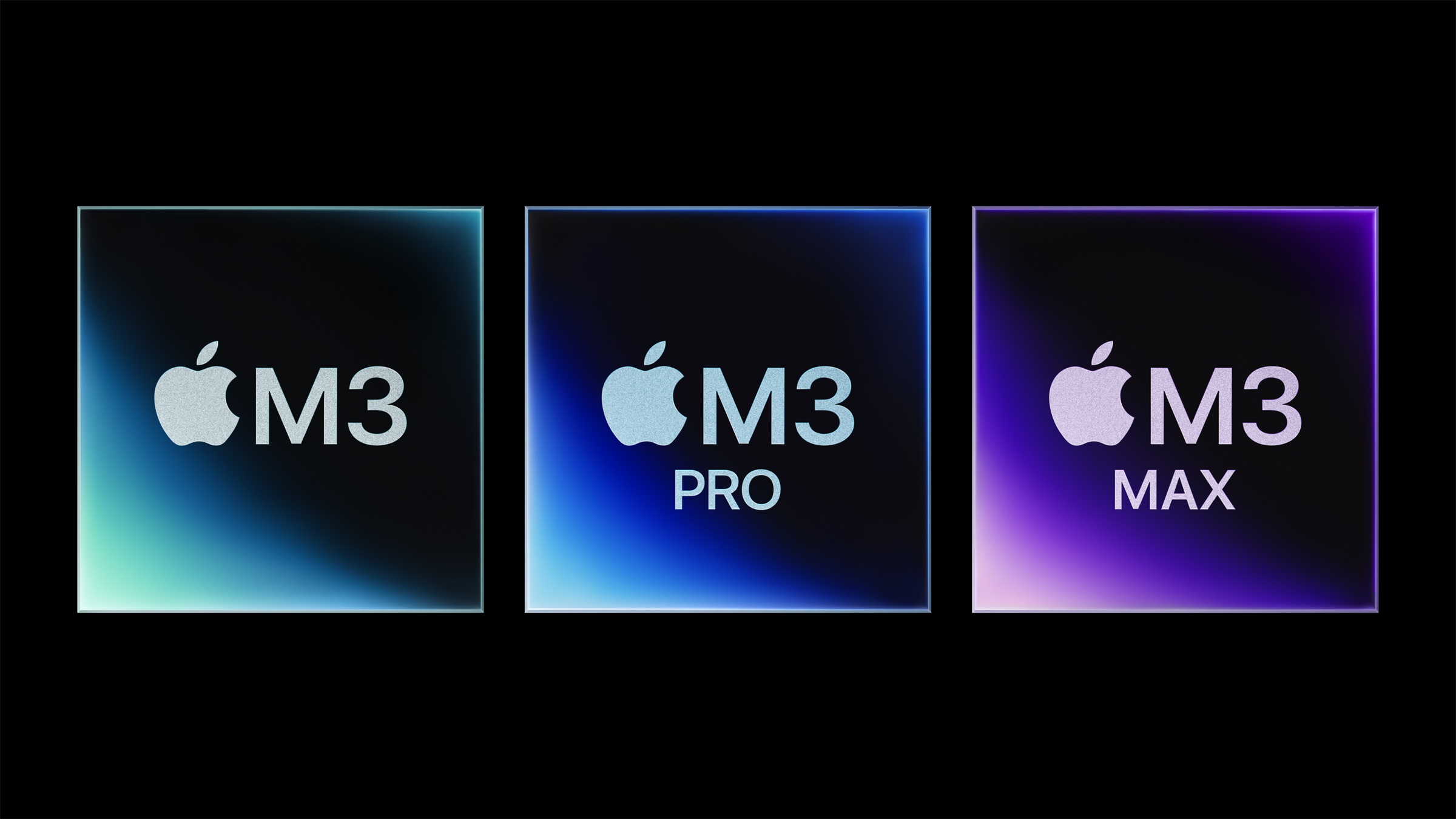
At Apple’s “Scary Fast” event today, the company unveiled a refreshed 24-inch iMac, entry-evel MacBook Pro that ditches the Touch Bar, and its latest “M3” in-house chips. The Verge reports: As expected, Apple’s M3 chips took the spotlight during this month’s event. The new lineup includes the M3, M3 Pro, and M3 Max chips, which Apple says mark the “first personal computer chips” made using the more efficient 3-nanometer process. In addition to offering a “faster and more efficient CPU,” the trio of chips comes with an updated GPU that supports ray tracing, mesh shading, and Dynamic Caching — a feature that optimizes the amount of memory the device uses during tasks. Apple’s M3 chips offer up to 128GB of unified memory, with the most powerful M3 Max chip coming with up to 92 billion transistors, a 40-core GPU, and a 16-core CPU.

The new 24-inch iMac is getting an M3-flavored upgrade that Apple says offers two times faster performance than its M1-equipped predecessor. Along with the new chip, the refreshed iMac features a 4.5K Retina display with more than 1 billion colors, support for Wi-Fi 6E, and a 1080p webcam. The iMac also offers up to 24GB of unified memory and comes in seven colors: green, yellow, orange, pink, purple, blue, and silver. There are also color-matched accessories that come with the iMac, but they still feature Lightning connectors. The 24-inch iMac costs $1,299 with an eight-core CPU or $1,499 with a 10-core chip. You can preorder it starting today, with availability starting on November 7th.

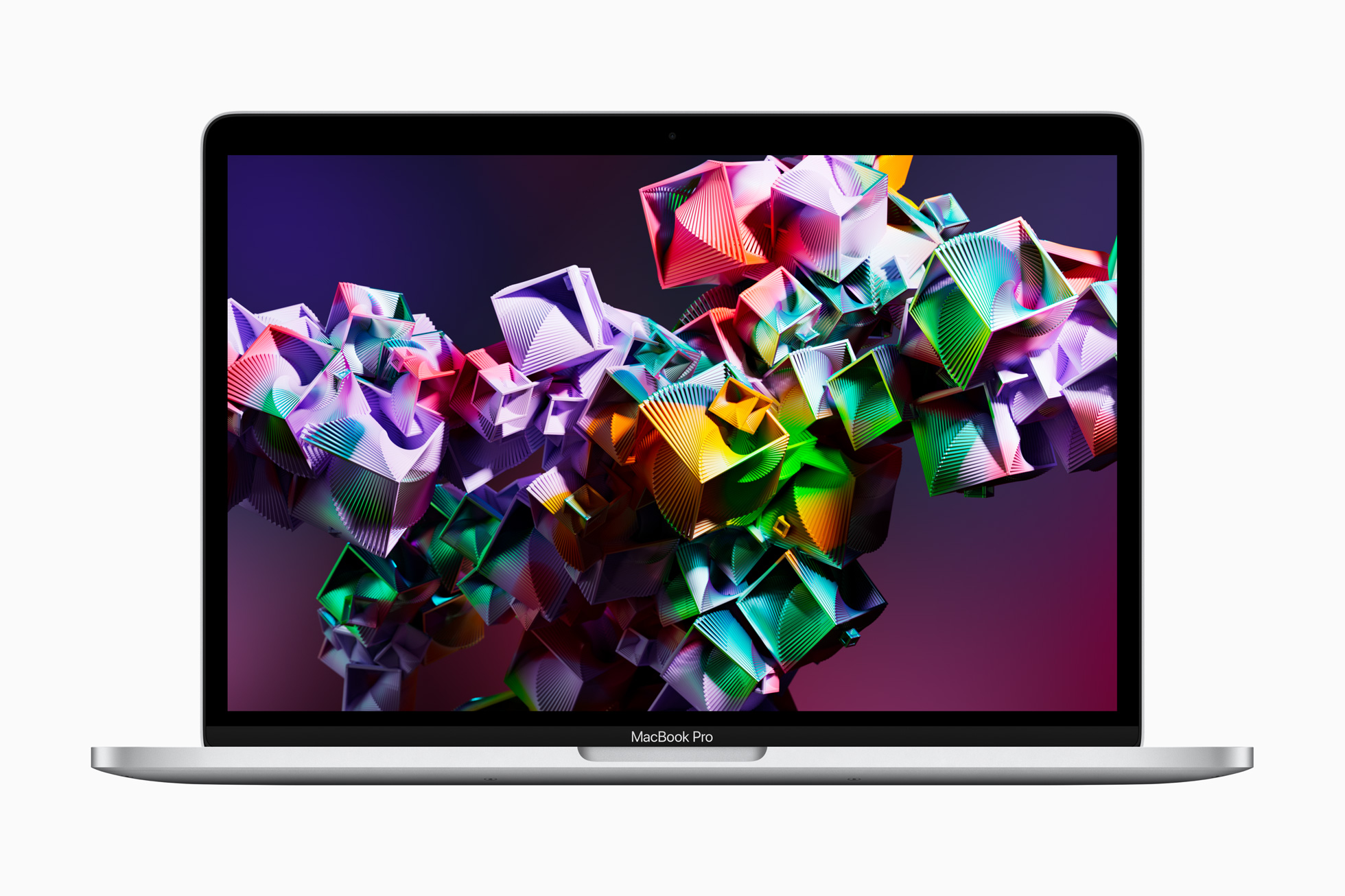
Alongside the M3 Pro and M3 Max-equipped MacBook Pro models, Apple is releasing a cheaper 14-inch MacBook Pro that comes with the base M3 chip and starts at $1,599. The device replaces the 13-inch MacBook Pro with an M2 chip that Apple released last year and offers performance that’s up to 60 percent faster. The Touch Bar model is being discontinued, which means it’s all physical keys from here out. There are some drawbacks to this entry-level model, though: it features a meager 8GB of RAM and comes in just silver and space gray variations — the black color is exclusive to the higher-end MacBook Pros. The device is available to preorder today and officially launches on November 7th.

Read more of this story at Slashdot.


Source: Slashdot – Apple Announces New M3 Chips, Cuts Price of Entry-Level MacBook Pro

How to pre-order the new Apple MacBook Pros and iMac with M3

Apple’s “Scary Fast” event is in the books, and a new set of Macs have arrived in its wake. The company unveiled three new computers on Monday, including refreshed versions of the 14- and 16-inch MacBook Pro and an updated 24-inch iMac. Each device is mostly a spec bump, but all of them run on one of Apple’s new 3nm M3 chips, which the company claims will deliver “dramatically increased” CPU and (especially) GPU performance compared to past Apple silicon. We’ll have to put the new hardware through its paces to verify just how true that is, but if you’re already sold on Apple’s latest, here’s where you can pre-order the M3 MacBook Pros and iMac.  

Apple MacBook Pro (14-inch)

As noted above, the new 14- and 16-inch MacBook Pros‘ biggest upgrades come on the inside. Apple is introducing three new M3 chips alongside the notebooks: the standard M3, the M3 Pro and the M3 Max. The 14-inch Pro will be available with all three, with prices starting at $1,599 for the base M3 configuration and rising all the way up to $6,899 for a fully specced-out M3 Max model. The notebook is available to order now at Apple’s online store. The company says the M3 and M3 Pro models will begin shipping on November 7, while the M3 Max models will start later in November.

Here’s an overview of the configurations available for the new notebook:

  • $1,599: M3 chip with 8-core CPU, 10-core GPU, 8GB unified memory (configurable up to 24GB), 512GB SSD (configurable up to 2TB), 2x Thunderbolt / USB 4 ports, 70W USB-C power adapter

  • $1,999: M3 Pro chip with 11-core CPU, 14-core GPU, 18GB unified memory (configurable up to 36GB), 512GB SSD (configurable up to 4TB), 3x Thunderbolt 4 ports, 70W USB-C power adapter

  • $2,199: M3 Pro chip with 12-core CPU, 18-core GPU, 18GB unified memory (configurable up to 36GB), 512GB SSD (configurable up to 4TB), 3x Thunderbolt 4 ports, 96W USB-C power adapter

  • $3,199: M3 Max chip with 14-core CPU, 30-core GPU, 36GB unified memory (configurable up to 96GB), 1TB SSD (configurable up to 8TB), 3x Thunderbolt 4 ports, 96W USB-C power adapter

  • $3,699: M3 Max chip with 16-core CPU, 40-core GPU, 48GB unified memory (configurable up to 128GB), 1TB SSD (configurable up to 8TB), 3x Thunderbolt 4 ports, 96W USB-C power adapter

The new 14-inch Pro technically starts at a lower price than its predecessor, though that model started with an M2 Pro chip instead of the base M2. Instead, the M3 config replaces the 13-inch MacBook Pro, which we’ve long considered an awkward middle child in the Mac lineup. To that point, Apple claims the M3-powered Pro is up to 60 percent faster than the 13-inch M1 model in terms of render performance in Final Cut Pro, with larger gains compared to older Intel-based models. (More broadly, Apple is heavily pushing all of its new devices as worthy upgrades for those hanging onto Intel-powered Macs ahead of the holidays.)

Higher-end configs powered by the M3 Pro and M3 Max chips promise similar performance leaps. For example, Apple says a M3 Pro model is up to 40 percent faster than an equivalent M1 Pro config when it comes to filter and function performance in Photoshop. M3 Max systems, meanwhile, now support up to 128GB of unified memory, which Apple says can help it deliver more than twice the speeds of an M1 Max model with certain pro-level software like Maxon Redshift. In general, Apple is positioning M3 systems toward the likes of students and aspiring editors, M3 Pro systems toward coders and creative types and M3 Max systems toward 3D artists, video editors and those with more extreme workflows.

Almost everything else about the notebook is virtually identical to before, with the main differences being a new “space black” color option for the M3 Pro and M3 Max models — which Apple says is particularly resistant to fingerprints — and a higher peak brightness of 600 nits with SDR content (up from 500 nits on the last model). Other than that, you’re still looking at a Liquid Retina XDR display, a six-speaker sound system, a 1080p FaceTime camera and a similar port selection. This isn’t necessarily a bad thing, as we liked the previous MacBook Pro’s design, but it means owners of that 10-month-old device shouldn’t feel any pressing need to upgrade.

Apple MacBook Pro (16-inch)

Just about all of the details above apply to the new 16-inch MacBook Pro as well, only this notebook won’t be available with the base M3 chip. Instead, it’ll start at $2,499 for a config with an M3 Pro chip and go up to $7,199 for a fully decked-out M3 Max model. That’s the same starting price as the previous generation. Alongside its larger display, the 16-inch Pro is still rated for up to 22 hours of battery life. That matches the 14-inch M3 Pro’s rating but comes in a few hours higher than the 18-hour estimate of the 14-inch M3 Pro and M3 Max models.

Again, the 16-inch Pro is available to order today directly from Apple. M3 Pro models will start shipping next week, while M3 Max shipments will commence later in November. Below is an overview of the configurations on sale. Note that, unlike the 14-inch model, each 16-inch Pro option includes three Thunderbolt 4 ports and a 140W USB-C adapter.

  • $2,499: M3 Pro chip with 12-core CPU, 18-core GPU, 18GB unified memory (configurable up to 36GB), 512GB SSD (configurable up to 4TB)

  • $3,499: M3 Max chip with 14-core CPU, 30-core GPU, 36GB unified memory (configurable up to 96GB), 1TB SSD (configurable up to 8TB)

  • $3,999: M3 Max chip with 16-core CPU, 40-core GPU, 48GB unified memory (configurable up to 128GB), 1TB SSD (configurable up to 8TB)

Apple iMac (24-inch)

As with previous iterations, the new 24-inch iMac is aimed at a more casual audience than the MacBook Pro. The all-in-one PC is only available with the base M3 chip, but Apple says that still makes it up to twice as fast as the last-gen model, which arrived in 2021 and runs on an M1 chip. The M3 supports up to 24GB of memory as well, up from the previous max of 16GB. 

The rest of the hardware is largely unchanged. There’s still a 4.5K Retina display that can reach up to 500 nits of brightness; four USB-C ports, including two Thunderbolt ports; a 1080p front camera and a similar range of color options (green, yellow, orange, pink, purple, blue and silver). Wireless support has jumped to Wi-Fi 6E and Bluetooth 5.3, though.

The 24-inch iMac starts at $1,299 for a config with an eight-core CPU, eight-core GPU, two Thunderbolt / USB 4 ports and Apple Magic Keyboard. It’s still saddled with a paltry 8GB of memory and 256GB SSD by default, though you can upgrade those up to 24GB and 1TB, respectively.

Starting at $1,499, you can get a model with a 10-core GPU, two extra non-Thunderbolt USB-C ports, a Gigabit Ethernet port and a Magic Keyboard with a Touch ID reader. That one is configurable with up to 2TB of SSD storage as well. Like the new MacBook Pro, the updated iMac is available to order now and will begin shipping on November 7.

Follow all of the news from Apple’s “Scary Fast” October event right here.

This article originally appeared on Engadget at https://www.engadget.com/how-to-pre-order-the-new-apple-macbook-pros-and-imac-with-m3-013325603.html?src=rss

Source: Engadget – How to pre-order the new Apple MacBook Pros and iMac with M3

Windows 11 Adds Native Support For RAR, 7-Zip, Tar Archive File Formats

“Windows 11’s last major update, 22H2 introduced native support for managing RAR archives, eliminating the need for third-party software,” writes Slashdot reader jjslash. “This enhancement is part of the OS’s broader capability improvements for handling various archive file formats.” TechSpot reports: Microsoft finally introduced native support for RAR archives earlier this year, just three decades after the format’s official introduction in 1993. Windows 11 development is now progressing at an accelerated pace, therefore support for a whole lot of new (ancient) archive formats is coming soon.

Microsoft recently released KB5031455, an optional, feature-rich preview cumulative update for Windows 11, refreshing the list of archive formats natively supported in the OS. Windows 11 22H2 and later versions can now manage files compressed in the following archive types: .rar, .7z, .tar, .tar.gz, .tar.bz2, .tar.zst, .tar.xz, .tgz, .tbz2, .tzst, .txz. Support for password-encrypted archives is not available yet.

Redmond programmers added support for the aforementioned archive files thanks to the libarchive library, an open source project designed to develop a portable, efficient C library that can “read and write streaming archives” in a variety of formats. Libarchive supports additional archive types (Lzh, Xar) that could eventually come to Windows 11 as well.

Read more of this story at Slashdot.


Source: Slashdot – Windows 11 Adds Native Support For RAR, 7-Zip, Tar Archive File Formats

Today’s NYT Connections Hints (and Answer) for Tuesday, October 31, 2023

There is a Halloween-appropriate category in today’s puzzle, but it’s hiding in the shadows—good luck finding it! If you’re looking for the Connections answer for October 31, 2023, read on—I’ll share some clues, tips, and strategies, and finally the solutions to all four categories. Along the way, I’ll explain the…

Read more…


Source: LifeHacker – Today’s NYT Connections Hints (and Answer) for Tuesday, October 31, 2023

Judge Pares Down Artists' AI Copyright Lawsuit Against Midjourney, Stability AI

Blake Brittain reports via Reuters: A judge in California federal court on Monday trimmed a lawsuit by visual artists who accuse Stability AI, Midjourney and DeviantArt of misusing their copyrighted work in connection with the companies’ generative artificial intelligence systems. U.S. District Judge William Orrick dismissed some claims from the proposed class action brought by Sarah Andersen, Kelly McKernan and Karla Ortiz, including all of the allegations against Midjourney and DeviantArt. The judge said (PDF) the artists could file an amended complaint against the two companies, whose systems utilize Stability’s Stable Diffusion text-to-image technology.

Orrick also dismissed McKernan and Ortiz’s copyright infringement claims entirely. The judge allowed Andersen to continue pursuing her key claim that Stability’s alleged use of her work to train Stable Diffusion infringed her copyrights. “Even Stability recognizes that determination of the truth of these allegations — whether copying in violation of the Copyright Act occurred in the context of training Stable Diffusion or occurs when Stable Diffusion is run — cannot be resolved at this juncture,” Orrick said.

Orrick agreed with all three companies that the images the systems actually created likely did not infringe the artists’ copyrights. He allowed the claims to be amended but said he was “not convinced” that allegations based on the systems’ output could survive without showing that the images were substantially similar to the artists’ work. The judge also dismissed other claims from the artists, including that the companies violated their publicity rights and competed with them unfairly, with permission to refile. Orrick dismissed McKernan and Ortiz’s copyright claims because they had not registered their images with the U.S. Copyright Office, a requirement for bringing a copyright lawsuit.

Read more of this story at Slashdot.


Source: Slashdot – Judge Pares Down Artists’ AI Copyright Lawsuit Against Midjourney, Stability AI

Apple finally kills off the 13-inch Touch Bar MacBook Pro

Apple’s Scary Fast event was an unexpected but welcome treat for Mac fans this season. And in true Halloween slasher movie fashion, Apple has officially ended the life of one of its most controversial laptops: the 13-inch MacBook Pro. For years, this model was an absolute star with its Pro-level specs and impressive build quality. However, as Apple updated and released newer laptops, the 13-inch MacBook Pro started looking less appealing, especially when Apple’s own chips made their way into the Mac. At this point, Apple’s move to discontinue the 13-inch MacBook Pro doesn’t come as a surprise.

The laptop hit a rough patch in 2016 with the introduction of the Touch Bar, which came as a part of a major redesign. The new look also included a thinner chassis, changes to the keyboard, a larger trackpad, Touch ID and the removal of all ports except the Thunderbolt ports and a headphone jack. As you may remember, the Touch Bar was a total hit or miss among the masses. Some people loved the innovation and the “magical” Touch Bar while others found it clumsy and not very useful. Apple eventually removed the Touch Bar by introducing the latest 14-inch and 16-inch MacBook Pro models, but kept it on the 13-inch MacBook Pro.

Apple CEO Tim Cook speaks under a graphic of the new MacBook Pro during an Apple media event in Cupertino, California, U.S. October 27, 2016.    REUTERS/Beck Diefenbach   TPX IMAGES OF THE DAY
Beck Diefenbach / Reuters

In 2023, the 13-inch MacBook Pro is a good laptop but it’s just not worth the investment anymore. The base model comes with Apple’s M2 chip, which has given a nice little boost. It has an 8-core CPU, a 10-core GPU and comes standard with 8GB of RAM and 256GB storage, both of which can be bumped up for an additional cost. For day-to-day tasks and light work, it still performs well enough but well enough just doesn’t cut it anymore for a “Pro” laptop. Especially when the new MacBook Air offers so much more and the 14-inch MacBook Pro has a better screen and more ports pro users actually need. Even so, Apple claimed for years that the 13-inch MacBook Pro remains one of its best-selling models. This likely has more to do with its lower price point.

Apple probably kept the model around as a budget-friendly Pro option, starting at $1,299, while the cheapest 14-inch model was $1,999. But with tonight’s introduction of the M3 14-inch MacBook Pro for $1,599, the 13-inch simply no longer makes sense — which would explain Apple’s decision to move away from this one.

Follow all of the news from Apple’s “Scary Fast” October event right here.

This article originally appeared on Engadget at https://www.engadget.com/apple-finally-kills-off-the-13-inch-touch-bar-macbook-pro-004008890.html?src=rss

Source: Engadget – Apple finally kills off the 13-inch Touch Bar MacBook Pro

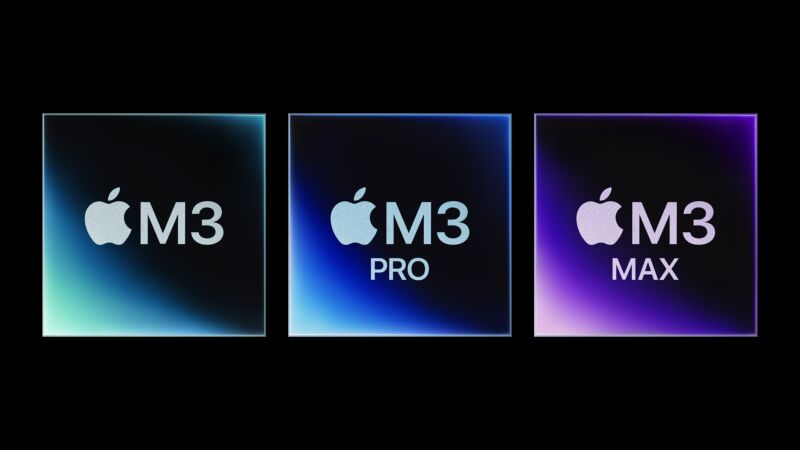
Apple introduces new M3 chip lineup, starting with the M3, M3 Pro, and M3 Max

Apple is introducing three M3 performance tiers at the same time.

Enlarge / Apple is introducing three M3 performance tiers at the same time. (credit: Apple)

NEW YORK—None of the new Macs that Apple is announcing at its “Scary Fast” product event today look very different from the ones they’re replacing on the outside, but the inside is another story. This is the first batch of Macs to include Apple’s next-generation M3-series chips, and unlike past years, Apple is introducing multiple M3 performance tiers all at the same time.

The M3, M3 Pro, and M3 Max all share the same underlying CPU and GPU architectures, the same ones used in the iPhone 15 Pro’s A17 Pro chip. Also like the A17 Pro, all M3 chips are manufactured using a new 3 nm process from Taiwan Semiconductor (TSMC). Let’s dive into everything we know about the M3 family’s capabilities, plus the differences between each performance tier.

Meet the Apple M3 family

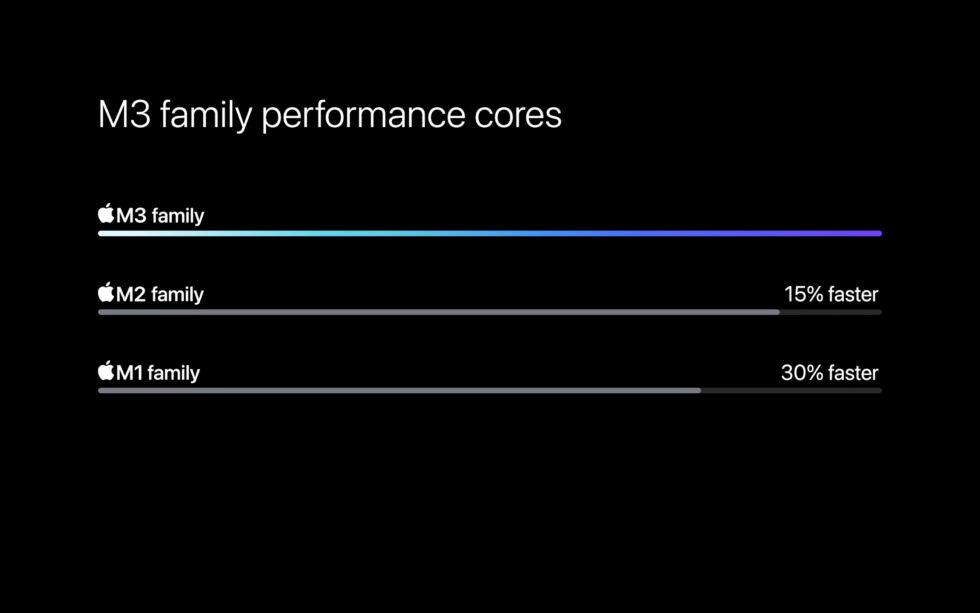
Apple says that the performance cores in any given M3 processor can run up to 30 percent faster than the M1’s performance cores, and that the efficiency cores are up to 50 percent faster. Most of Apple’s direct performance comparisons were to the M1 generation, which is useful insofar as M2 Mac owners aren’t likely to want to spring for M3, but it has the added marketing benefit of making the performance increases sound larger than they are.

Read 12 remaining paragraphs | Comments


Source: Ars Technica – Apple introduces new M3 chip lineup, starting with the M3, M3 Pro, and M3 Max

Apple overhauls MacBook Pro lineup with M3 chips and a new entry-level option

NEW YORK—As expected, Apple has launched a newly refreshed lineup of 14- and 16-inch MacBook Pros at its “Scary Fast” product event this evening, replacing not just the last-generation versions of those laptops but also the old 13-inch MacBook Pro.

The company is accomplishing that last goal by introducing a less-expensive $1,599 version of the 14-inch MacBook Pro that uses a regular M3 chip instead of the M3 Pro or M3 Max.

It isn’t as fast, it starts with a skimpy 8GB of RAM of storage, it has one fewer Thunderbolt port (for a total of two), and it only supports a single external display. But at $1,599, the M3 MacBook Pro is $400 cheaper than the M2 Pro/M3 Pro version of the laptop, and it still uses the larger high-refresh-rate ProMotion display, the contrast-boosting and bloom-reducing mini LED screen technology, the MagSafe connector, the 1080p camera, 512GB of storage in the base model, the speaker system, and a full-sized HDMI port. And while Apple quotes the same “up to 22 hours of battery life” for all of the new MacBook Pro models, in the real world, the M3 should give you a bit more runtime than the M3 Pro or Max.

Read 8 remaining paragraphs | Comments


Source: Ars Technica – Apple overhauls MacBook Pro lineup with M3 chips and a new entry-level option

Apple’s cheaper 14-inch MacBook Pro is killing the old 13-inch version

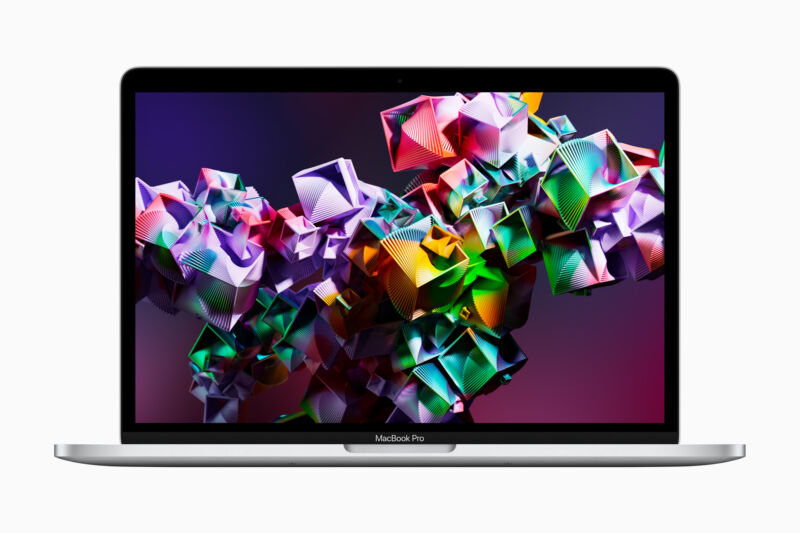
Apple's 13-inch MacBook Pro, gone but not forgotten.

Enlarge / Apple’s 13-inch MacBook Pro, gone but not forgotten. (credit: Apple)

NEW YORK—Apple refreshed its MacBook Pro lineup earlier today, and there was one surprise that the rumor mill hadn’t anticipated: a new base model of the 14-inch MacBook Pro with a plain-old M3 chip in it, starting at $1,599. That new 14-inch MacBook Pro is totally replacing the old 13-inch MacBook Pro in Apple’s lineup.

The 13-inch MacBook Pro still used the same basic design that Apple had been using since 2016, when Apple redesigned the MacBook Pros to make them thinner and lighter and to replace all of their ports with Thunderbolt. The 14- and 16-inch MacBook Pros backtracked on several of those design decisions, but the 13-inch model stayed as it was, complete with the regular notchless display and the Touch Bar.

This effectively means that the MacBook Pro is getting a price increase from $1,299 to $1,599. But the $1,599 Pro includes many features that were never included in the 13-inch Pro, including the larger high-refresh-rate ProMotion display, the contrast-boosting and bloom-reducing mini LED screen technology, the MagSafe connector, the 1080p camera, and the return of the HDMI port. Apple also now sells a 15-inch MacBook Air at that $1,299 starting point, giving people another option in between the mainstream 13-inch Air and the Pro lineup.

Read 4 remaining paragraphs | Comments


Source: Ars Technica – Apple’s cheaper 14-inch MacBook Pro is killing the old 13-inch version

Apple updates its 14-inch and 16-inch MacBook Pros with new M3 chips

On Monday at its “Scary Fast” event, Apple announced an updated line of 14- and 16-inch MacBook Pros featuring a range of new M3 chips and Space Black chassis.

Compared to a similarly specced M2 model, a base M3 14-inch MacBook Pro will now start at $1,599 ($400 less than its predecessor) with prices going up from there for configurations with M3 Pro or M3 Max processors. Meanwhile, a base 16-inch MacBook Pro with an M3 Pro chip will have the same $2,499 starting price as its M2 Pro-equipped predecessor.

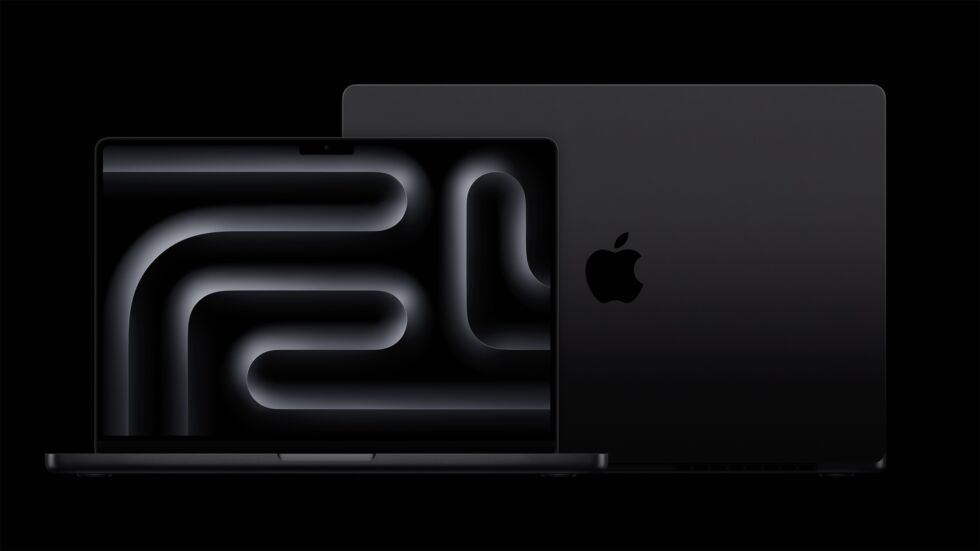
The fresh Space Black color option–which looks more like a matte charcoal gray in person–will be available on both 14- and 16-inch systems with M3 Pro and M3 Max chips and helps hide fingerprints better than the classic silver models. The rest of the laptops’ hardware will remain largely the same including features such as Apple’s 1080p FaceTime cameras and six-speaker sound systems. The one small change is that the Liquid Retina XDR displays on the new M3 MacBook Pros can now display SDR content 20 percent brighter than before with peaks of 600 nits (up from 500 nits on the previous generation).

At its Scary Fast event, Apple announced an updated line of 14- and 16-inch MacBook Pros with new M3, M3 Pro and M3 Max chips.
Apple

That said, thanks to the new M3 chips, these refreshed MBPs should have some very notable boosts in performance. In general use, Apple claims a 14-inch M3 MacBook Pro is 60 percent faster than a 13-inch M1 model while still offering up to 22 hours of battery life. And if you move up to a laptop with an M3 Pro chip, you’re looking at 40 percent faster performance than an equivalent M1 Pro MBP. Finally, 14- and 16-inch M3 Max systems will support up to a massive 128GB of unified memory for improved workflows in apps like MATLAB, DaVinci Resolve and others. However, the most stunning figure is that when compared to the fastest Intel-based MacBook Pros (which date back to 2021), Apple is touting 11x faster performance for systems equipped with M3 Max chips.

Another important upgrade on the M3 chips is that they support hardware acceleration for both ray tracing and mesh shading. This could prove to be a massive improvement for gamers or people like animators and 3D modelers, who will be able to take advantage of the M3’s more efficient on-chip processing power in supported apps.

The new Space Black color on Apple's refreshed MacBook Pros should hide fingerprints better than traditional silver models.
The new Space Black color on Apple’s refreshed MacBook Pros should hide fingerprints better than traditional silver models.
Apple

Pre-orders for all the new M3 MacBook Pro models go live today with M3 and M3 Pro systems shipping as soon as next week on November 7, with M3 Max configs slated to arrive slightly later next month. The 14-inch M3 MacBook Pro will start at $1,599 ($1,499 for education) or $1,999 for one with an M3 Pro ($1,849 for education) while the 16-inch M3 Pro MacBook Pro will start at $2,499 ($2,299 for education).

Follow all of the news from Apple’s “Scary Fast” October event right here.

This article originally appeared on Engadget at https://www.engadget.com/apple-updates-its-14-inch-and-16-inch-macbook-pros-with-new-m3-chips-specs-price-003015893.html?src=rss

Source: Engadget – Apple updates its 14-inch and 16-inch MacBook Pros with new M3 chips

Apple’s M3 iMac still starts at $1,299, still doesn’t replace the 27-inch model

NEW YORK—The new MacBook Pros are the biggest news from Apple’s October Mac event, but one other model got a long-overdue refresh, too—the 24-inch iMac, most recently refreshed with an Apple M1 processor in June 2021.

The new iMac is available for order today, and the first ones will arrive on November 7. The base model, which includes an M3 with an 8-core GPU, 256GB of storage, two Thunderbolt ports, a non-Touch ID keyboard, and 8GB of RAM, starts at $1,299. An upgraded version with a 10-core GPU, a power brick-mounted gigabit Ethernet port, two additional USB-C ports, and a Touch ID keyboard starts at $1,499. Those prices are $1,249 and $1,399, respectively, for education users.

The most important upgrade—and really the only one of note—is an upgrade to the new M3 chip. Because it was the only Mac to totally skip the M2, the new iMac hops forward two generations at once. Apple says that the M3’s four high-performance CPU cores are up to 30 percent faster than those in the M1, and that its four high-efficiency CPU cores are as much as 50 percent faster. Apple says that the 10-core GPU in the M3 is up to 2.5 times faster than the M1, and that its 16-core Neural Engine is up to 60 percent faster.

Read 5 remaining paragraphs | Comments


Source: Ars Technica – Apple’s M3 iMac still starts at ,299, still doesn’t replace the 27-inch model