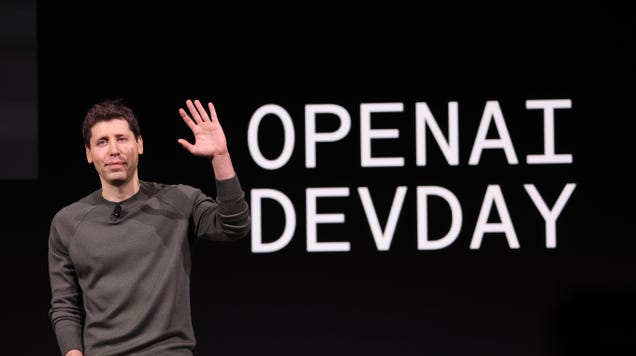
Welcome to AI This Week, Gizmodo’s weekly roundup where we do a deep dive on what’s been happening in artificial intelligence.
Source: Gizmodo – Sam Altman Tried on Steve Jobs’ Turtle Neck This Week

Welcome to AI This Week, Gizmodo’s weekly roundup where we do a deep dive on what’s been happening in artificial intelligence.
Source: Gizmodo – Sam Altman Tried on Steve Jobs’ Turtle Neck This Week
While it was supposed to ship back in H1’2023, FFmpeg 6.1 finally released last night as the newest feature update to this widely-used multimedia library…
Source: Phoronix – FFmpeg 6.1 Released With Vulkan Video Decoding, VA-API AV1 Encode
It’s been an exciting week in the KDE space as along with releasing Plasma 6.0 Alpha, they have also committed to shipping Plasma 6.0 with the Wayland session being enabled by default…
Source: Phoronix – KDE Plasma 6.0 Is Enabling Wayland By Default, Initial Support For HDR-Capable Games
Bavarian Linux PC vendor TUXEDO Computers has introduced their first Ryzen 7040 series “Zen 4” Linux laptop in the form of the Pulse 14 Gen 3…
Source: Phoronix – TUXEDO Computers Launches Zen 4 Linux Laptop With 32GB RAM & 3K Display
NVIDIA really, really doesn’t want to lose access to China’s massive AI chip market. The company is developing three new AI chips especially for China that don’t run afoul of the latest export restrictions in the US, according to The Wall Street Journal and Reuters. Last year, the US government notified the chipmaker that it would restrict the export of computer chips meant for supercomputers and artificial intelligence applications to Russia and China due to concerns that the components could be used for military purposes. That rule prevented NVIDIA from selling certain A100 and H100 chips in the country, so it designed the A800 and H800 chips specifically for the Chinese market.
However, the US government recently issued an updated set of restrictions that puts a limit on how much computing power a chip can have when it’s meant for export to the aforementioned countries. The A800 and the H800 are no longer eligible for export under the new rules, along with NVIDIA’s other products, which include its top-of-the-line RTX 4090 consumer GPU. Some reports even suggest that the company could end up canceling over $5 billion worth of advanced chip orders in China.
The new chips meant for the Chinese market are called the HGX H20, the L20 and the L2, based on the specs sent to distributors. While the H20 is supposed to be the most powerful model out of the three, all of them don’t go beyond the computing power threshold set by the US government’s new export rules. That means customers using them for AI applications may need more chips than they would if they had access to higher-spec models.
Chinese companies, including Baidu, Huawei, Xiaomi and Oppo, have already started designing their own semiconductor to prepare for a possible future wherein they could longer be able to import chips from the US and other countries. Old NVIDIA customers may prefer sticking to the company’s components, however, due to its reputation and its software, which The Journal says is some of the most robust for AI development. NVIDIA, according to the source, may announce the new chips as soon as November 16 and start selling them before the year ends.
This article originally appeared on Engadget at https://www.engadget.com/nvidia-may-soon-announce-new-ai-chips-for-china-to-get-around-us-export-restrictions-100509873.html?src=rss
Source: Engadget – NVIDIA may soon announce new AI chips for China to get around US export restrictions
Alison Snyder reports via Axios: For more than 15 years, scientists have worked to build a complex cell with an entire genome built from scratch. This week they announced a major milestone: They’ve created synthetic versions of the 16 chromosomes in a yeast cell and successfully combined some of them in one cell. The feat is revealing new information about fundamental processes in cells, and it is a key step toward some scientists’ vision of creating programmable cellular factories to produce biofuels, materials, medicines and other products.
The changes researchers made to yeast chromosomes fall into three main categories: increasing stability of the genome, repurposing codons (genetic sequences that carry instructions for reading DNA or RNA) and introducing a system that allows scientists to make millions of cells, each with different genetic properties. “A big problem is a lot of the things you want to make are actually toxic to the cells,” [says Benjamin Blount, a synthetic biologist at the University of Nottingham in the U.K. and co-author of some of the scientific papers in a series published this week in Cell and Cell Genomics detailing the work]. With the system that reshuffles the genome and effectively mimics evolution, scientists can make many variants of yeast and pick the ones “that are really good at growing in the presence of what you’re trying to make.” Then, they’re able to look at what’s happened to their genomes to enable that particular strain to grow and make the desired product, and use that genetic information to develop strains of yeast suited for an industrial process.
The chromosomes still have to be combined in one cell that can survive, which means they have to be “basically indiscernible” from natural chromosomes in terms of the cell’s fitness, Blount says. That required a lot of debugging of the genome, similar to what’s done for computer code. One team was able to combine multiple chromosomes in one cell and it survived and reproduced, demonstrating a mechanism for bringing them together. Building the genomes — and seeing when the cell doesn’t work as expected as the result of one change or another — has revealed fundamental information about genome biology, Blount says. For example, the team identified sequences in genes that interrupted a key process in the cell and led to mitochondria dysfunction, which is involved in some human diseases.


Read more of this story at Slashdot.
Source: Slashdot – Scientists Build Yeast With Artificial DNA
Long-time Slashdot reader HanzoSpam shares a report from Ars Technica: Frank Borman, an Air Force test pilot, astronaut, and accomplished businessman who led the first crew to fly to the Moon in 1968, died Tuesday in Montana, NASA said Thursday. He was 95 years old. Borman, joined by crewmates Jim Lovell and Bill Anders, orbited the Moon 10 times over the course of about 20 hours. They were the first people to see the Earth from another world, a memory of “wonderment” Borman recalled decades later. Apollo 8 produced one of the most famous photos ever taken, the iconic “Earthrise” showing a blue orb — the setting for all of human history until then — suspended in the blackness of space over the charcoal gray of the Moon’s cratered surface.
Borman was born in Gary, Indiana, on March 14, 1928, and raised in Tucson, Arizona. He learned to fly airplanes as a teenager, then attended the US Military Academy at West Point before earning his commission in the Air Force to start training as a fighter pilot. Following a similar career path as other early astronauts, Borman became an experimental test pilot, receiving a master’s degree in aeronautical engineering from Caltech, and served a stint as an assistant professor at West Point. NASA accepted applications for a second class of astronauts in 1962 to follow the original Mercury Seven. Borman was one of the “New Nine” astronauts, and he reported for training in Houston. “Today we remember one of NASA’s best,” NASA Administrator Bill Nelson said in a statement. “Astronaut Frank Borman was a true American hero. Among his many accomplishments, he served as the commander of the Apollo 8 mission, humanity’s first mission around the Moon in 1968.”


Read more of this story at Slashdot.
Source: Slashdot – Frank Borman, Commander of Apollo 8, Dies At 95
Amazon gives Apple’s product pages the special treatment and keeps them relatively clear of unrelated ads, signifying an arrangement between the companies, according to Insider. When the Federal Trade Commission filed an antitrust lawsuit against the e-commerce retailer in September, it accused Amazon of “deliberately increasing junk ads that worsen search quality.” However, Insider found that the pages for Apple products, such as “iPhone” and “iPad,” show a clean page layout with no ads or recommendation. Meanwhile, products from rival brands, including Samsung Galaxy and Microsoft Surface, show multiple banner ads and several sponsored recommendations from other brands.
We tried it out ourselves and did find that Apple’s product pages do look cleaner. Microsoft Surface Pro’s, however, showed a carousel of sponsored listings “4 stars and above,” along with products related to the specific item and multiple banner ads. Insider says Apple asked Amazon to keep its product pages free of ad clutter back in 2018, based on an email shared by the House Judiciary Committee. “We understand that Apple does not want to drive sales to competing brands in search or detail pages,” Jeff Wilke, who was then Amazon’s retail CEO, reportedly wrote.
Apple has admitted to the publication that it has some sort of an agreement with Amazon that prevents other companies from buying ads for “specific Apple-related brand queries” on the latter’s marketplace. They can still buy ads for key phrases with an Apple name, say “iPad keyboard case,” but not for “iPad” itself. “Apple’s goal for the Agreements was to create the best possible customer experience, and others are free to do the same,” Apple’s representative said in a statement. They added that the deal was also meant to address the company’s issues with counterfeit products on the platform, because it used to send Amazon “hundreds of thousands of take-down notices” before then.
While it’s not clear whether money exchanged hands between the two companies, the email shared by the House talked about a potential financial deal. Amazon reportedly turned down Apple’s request at first, but Wilke wrote in the email: “We cannot alter our organic search algorithm to return only Apple products in the search results when an Apple team is searched… Apple would need to purchase these placements or compensate Amazon for the lost ad revenue.”
This article originally appeared on Engadget at https://www.engadget.com/amazon-reportedly-blocks-junk-ads-on-apple-product-pages-045018125.html?src=rss
Source: Engadget – Amazon reportedly blocks ‘junk ads’ on Apple product pages
An anonymous reader quotes a report from Scientific American: This week doctors announced they had completed the first successful transplant of a partial face and an entire eye. In May at NYU Langone Health in New York City, the surgery was performed on a 46-year-old man who had suffered severe electrical burns to his face, left eye and left arm. He does not yet have vision in the transplanted eye and may never regain it there, but early evidence suggests the eye itself is healthy and may be capable of transmitting neurological signals to the brain. The feat opens up the possibility of restoring the appearance — and maybe even sight — of people who have been disfigured or blinded by injuries. Researchers caution there are many technical hurdles before such a procedure can effectively treat vision loss, however.
“I think it’s an important proof of principle,” says Jeffrey Goldberg, a professor and chair of ophthalmology at the Byers Eye Institute at Stanford University, who was not involved in the surgery but has been part of a team working toward whole-eye transplants in humans. “I think it points to the opportunity and importance that we really stand on the verge of being able to [achieve] eye transplants and vision restoration for blind patients more broadly.”But he cautions that the main obstacle is achieving regeneration of the optic nerve, which carries visual signals from the retina to the brain; this step has not yet been successfully demonstrated in humans.
Scientists have been working toward whole-eye transplantation for many years. “This has been, I would say, science fiction for a long time,” says Jose-Alain Sahel, a professor and chair of the department of ophthalmology at the University of Pittsburgh School of Medicine, who has been working toward such transplants with Goldberg and others. Progress in surgical techniques and nerve regeneration have made this goal seem more attainable. […] “The fact that this surgery was successful is wonderful news,” Sahel says. He cautions that surgery is only a small part of the issues that need to be addressed in order to restore eye function, however. These include making sure the immune system doesn’t reject the donor eye, which is a challenge with any type of transplant. Then the corneal nerve — which carries sensory signals from the transparent part of the eye — must be reconnected. Yet the most complex part is regenerating the optic nerve. In order to do so, surgeons have to coax the nerve fibers to grow to the right place, which Sahel says could take months or even years. And complete optic nerve regeneration has not yet been successfully achieved in humans or other mammals.


Read more of this story at Slashdot.
Source: Slashdot – Doctors Complete First Successful Face and Whole-Eye Transplant
According to Nikkei Asia (paywalled), Indonesia has officially launched Southeast Asia’s largest floating solar plant. It covers an area of over 250 hectares (2.5 km^2) and should be able to produce enough renewable energy to power 50,000 homes. Interesting Engineering reports: “Today is a historical day because our big dream of building a large-scale renewable energy plant is finally achieved. We managed to build the largest floating solar plant in Southeast Asia, and the third biggest in the world,” Widodo is reported to have said at the opening ceremony. “The Cirata floating solar panel is the largest floating solar panel in Southeast Asia, and also the third largest in the world,” he added.
China’s PowerChina Huadong Engineering Corporation Limited constructed the power plant with Indonesia’s state electricity corporation PLN and the United Arab Emirates energy company Masdar. The project had an investment of $145 million. More than 340,000 solar panels cover the reservoir surface, generating 192 MW of electricity annually, complementing existing hydropower at the site. The project had experienced significant delays before construction finally commenced in December 2020. […]
PLN and Masdar are discussing plans to expand the facility and increase its power generation capacity to 500 MW. The plant occupies only 4% of the dam’s reservoir surface, and according to the Indonesian government, solar panels can occupy up to 20% of the surface of a lake or dam, making it an efficient use of space.


Read more of this story at Slashdot.
Source: Slashdot – Indonesia Floats Southeast Asia’s Biggest Solar Plant For 50,000 Homes

You’ll have a BALL solving this one! (Sorry.) If you’re looking for the Connections answer for Saturday, November 11, 2023, read on—I’ll share some clues, tips, and strategies, and finally the solutions to all four categories. Along the way, I’ll explain the meanings of the trickier words and we’ll learn how…
Source: LifeHacker – Today’s NYT Connections Hints (and Answer) for Saturday, November 11, 2023
schwit1 shares a report from CNBC: Apple will pay $25 million in back pay and civil penalties to settle a matter over the company’s hiring practices under the Immigration and Nationality Act, the Department of Justice announced Thursday. Apple has agreed to pay $6.75 million in civil penalties and establish an $18.25 million fund for back pay to eligible discrimination victims, the DOJ said in a release.
Apple was accused of not advertising positions that it wanted to fill through a federal program called Permanent Labor Certification Program or PERM, which allows U.S. companies to recruit workers who can become permanent U.S. residents after completing a number of requirements. The DOJ said that it believed that Apple followed procedures that were designed to favor current Apple employees holding temporary visas who wanted to become permanent employees. In particular, Apple was accused of not advertising positions on its external website and erecting hurdles such as requiring mailed paper applications, which the DOJ alleges means that some applicants to Apple jobs were not properly considered under federal law.
“These less effective recruitment procedures deterred U.S. applicants from applying and nearly always resulted in zero or very few mailed applications that Apple considered for PERM-related job positions, which allowed Apple to fill the positions with temporary visa holders,” according to the settlement agreement between Apple and DOJ. Apple contests the accusation, according to the agreement, and says that it believes it was following the appropriate Department of Labor regulations. Apple also contests that any failures were the result of inadvertent errors and not discrimination, according to the agreement.


Read more of this story at Slashdot.
Source: Slashdot – Apple Will Pay Million In DOJ Discrimination Settlement
9to5Mac has found evidence in the iOS 17.2 beta code that hints the company is moving towards enabling sideloading on iOS devices. From the report: iOS 17.2 has a new public framework called “Managed App Distribution.” While our first thought was that this API would be related to MDM solutions for installing enterprise apps (which is already possible on iOS), it seems that Apple has been working on something more significant than that. By analyzing the new API, we’ve learned that it has an extension endpoint declared in the system, which means that other apps can create extensions of this type. Digging even further, we found a new, unused entitlement that will give third-party apps permission to install other apps. In other words, this would allow developers to create their own app stores.
The API has basic controls for downloading, installing, and even updating apps from external sources. It can also check whether an app is compatible with a specific device or iOS version, which the App Store already does. Again, this could easily be used to modernize MDM solutions, but here’s another thing. We also found references to a region lock in this API, which suggests that Apple could restrict it to specific countries. This wouldn’t make sense for MDM solutions, but it does make sense for enabling sideloading in particular countries only when required by authorities — such as in the European Union. Under the European Union’s Digital Markets Act, or DMA, big tech companies will be required to, among other things, allow users to install any apps they want from third-party sources. “In theory, Apple is required to comply with DMA legislation by March 2024,” reports 9to5Mac. “The company has even admitted in a Form 10-K filing that it expects to make changes that will impact the App Store’s business model.”


Read more of this story at Slashdot.
Source: Slashdot – iOS 17.2 Hints At Apple Moving Towards Letting Users Sideload Apps
Netflix’s new prestige sci-fi show is delayed until March 22, 2024. 3 Body Problem was originally scheduled to debut in 2023, before being pushed back to January 2024, and now March. Just as the initial delay was accompanied by a teaser trailer, so too is this one:
3 Body Problem is being adapted by David Benioff and D.B. Weiss (who created HBO’s Game of Thrones) alongside screenwriter Alexander Woo. The new trailer gives us our first look at the series’ key “video game,” Three-Body, which involves a nebulous and extremely shiny VR headset. According to John Bradley’s character Jack Rooney, the headset has “no screen… no headphone jack… not even a charging port.” Donning the headset transports Rooney to a hyper-realistic world, before he’s swiftly ejected and the trailer ends.
The show’s source material is The Three-Body Problem, the first novel in Liu Cixin’s Remembrance of Earth’s Past series. Originally released in the mid ’00s in China, it gained international recognition and a Hugo award when Tor Books published an English-language translation in 2014. Netflix’s ill-grammared take on the book was announced in 2020, and stars Benedict Wong, Eiza González and several Game of Thrones alums including Jonathan Pryce and the aforementioned Bradley.
This article originally appeared on Engadget at https://www.engadget.com/netflixs-new-3-body-problem-trailer-reveals-a-delay-to-march-2024-004430208.html?src=rss
Source: Engadget – Netflix’s new 3 Body Problem trailer reveals a delay to March 2024
An anonymous reader quotes a report from the BBC: The star of long-running videogame review series Zero Punctuation has quit after 16 years. Ben Croshaw, known as Yahtzee, was famous for his very fast, very rude, quickfire opinions on the latest games. His five-minute videos featuring crude cartoon characters were a weekly feature on gaming site The Escapist. But Yahtzee announced he was quitting the site with several colleagues after their editor-in-chief Nick Calandra was fired.
He said he wouldn’t be taking the Zero Punctuation name with him, but fans would hear his voice again ‘soon, in a new place’. Zero Punctuation, launched in 2007, is The Escapist’s most popular feature, with videos from the series comfortably outranking others on its YouTube channel. […] Yahtzee’s departure followed Calandra’s, who said he was fired by The Escapist’s parent company Gamurs for “not achieving goals that were never properly set out for us.” The pair were followed out of the door by a number of colleagues, most of them from the site’s video team.


Read more of this story at Slashdot.
Source: Slashdot – Zero Punctuation Ends After 16 Years
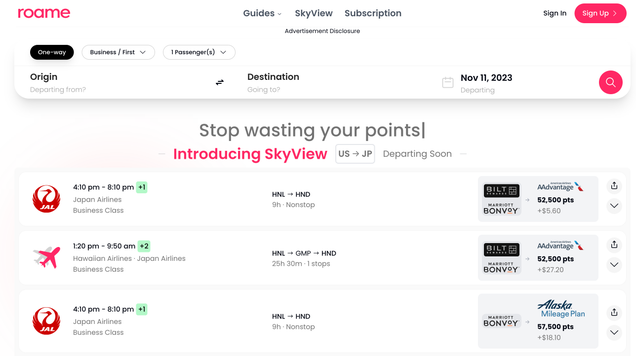
When booking flights with travel rewards, it can be confusing to figure out whether you’re actually getting the best deal, especially if you’re trying to compare itineraries using points and miles across several airline websites or credit card portals.
Source: LifeHacker – Use This Tool to Get the Best Deal on Rewards Travel

Following the news Wednesday night that the SAG-AFTRA strike had come to an end after nearly 120 days, supporters have been waiting to hear more details about the tentative agreement. Today, union president Fran Drescher, national executive director and chief negotiator Duncan Crabtree-Ireland, and others held a press…
Source: Gizmodo – SAG-AFTRA’s Board Approves Tentative Agreement With the AMPTP
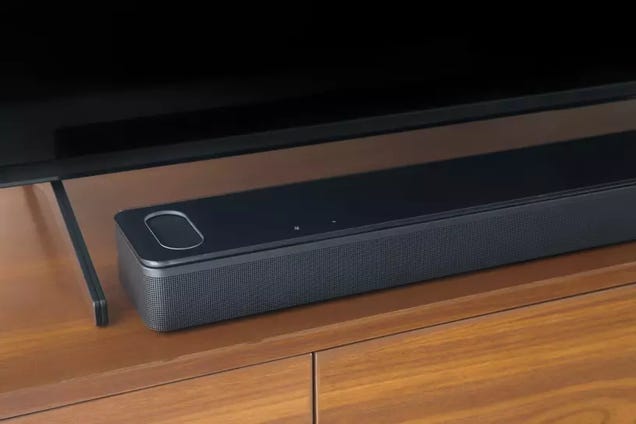
People get 4K TVs because they want to enjoy movies and TV shows the best way possible, but most people forget to improve another equally important component: the sound. Generally speaking, TV audio is terrible. What good is it to have a 4K TV if you can’t understand the dialogue? If you’re in the market for a great…
Source: LifeHacker – Get the Bose Smart Soundbar 900 for Its Lowest Price Yet
Long-time Slashdot reader cusco writes: Forty years ago today Microsoft introduced its new Graphical User Interface for MS-DOS. Inspired by the Xerox PARC project Alto, as was the Apple Mac, it was their first attempt to address the user unfriendliness of the standard computer interface. Named Windows 1.0 after the “windows” it created to view individual running programs, it generated quite a bit of interest at the initial reveal. Unfortunately, difficulty in ironing out bugs (especially in memory management) delayed release for two years, to November 1985.


Read more of this story at Slashdot.
Source: Slashdot – Microsoft Windows Turns 40
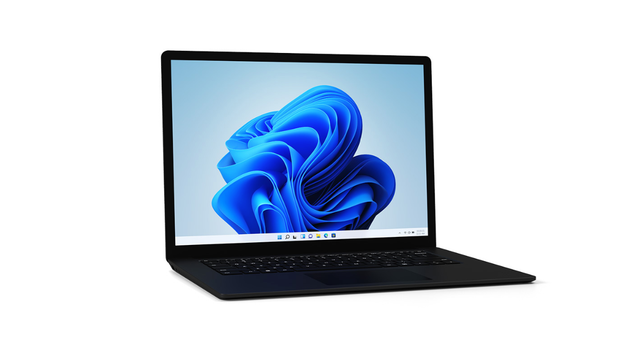
Microsoft Surface laptops are a great alternative for those who don’t like the flappy cover of the tablet hybrid Surface Pro laptops but love everything else about them. Until Nov. 15, you can get a new Microsoft Surface Laptop 4 for $599.99 (normally $1,199) from Woot, which is $200 cheaper than Best Buy’s current…
Source: LifeHacker – The Microsoft Surface Laptop 4 Is at Its Lowest Price Right Now