Airbus Introduces 'Detumbler' Device To Address Satellite Tumbling In Low Earth Orbit

Airbus has launched an innovative “detumbler” device designed to mitigate the risks posed by tumbling satellites in space. Space Daily reports: The Detumbler, a brainchild of Airbus and supported by the French Space Agency CNES under their Tech4SpaceCare initiative, was unveiled on Saturday, November 11. This magnetic damping device, weighing approximately 100 grams, is engineered to be attached to satellites nearing the end of their operational lives. Its purpose is to prevent these satellites from tumbling, a common issue in orbital flight dynamics, especially in LEO. The device features a central rotor wheel and magnets that interact with the Earth’s magnetic field, effectively damping unwanted motion.

Airbus’ development of the Detumbler commenced in 2021. Its operational principle is simple yet innovative. When a satellite functions normally, the rotor behaves akin to a compass, aligning with the Earth’s magnetic field. However, if the satellite begins to tumble, the movement of the rotor induces eddy currents, creating a friction torque that dampens this motion. The design of the Detumbler involves a stator housing, complete with a bottom plate and top cover, along with the rotor comprising the central axle, rotor wheel, and magnets.

Tumbling satellites, particularly those in LEO, pose a significant challenge for future active debris removal missions. Dead satellites naturally tend to tumble due to orbital flight dynamics. The introduction of the Airbus Detumbler could revolutionize this scenario, making satellites easier to capture during debris-clearing missions and enhancing the overall safety and sustainability of space operations. Airbus is expected to perform an in-orbit demonstration of the Detumbler in early 2024.

Read more of this story at Slashdot.


Source: Slashdot – Airbus Introduces ‘Detumbler’ Device To Address Satellite Tumbling In Low Earth Orbit

Google, Meta and other social media companies will be forced to defend teen addiction lawsuits

US District Judge Yvonne Gonzalez Rogers has ruled that the companies that own and run the most popular social networks today will have the face lawsuits blaming them for teenagers’ social media addiction. According to Bloomberg Law, that means Google, which owns YouTube, Meta which runs Facebook and Instagram, ByteDance, which owns TikTok, and Snap can’t get out of hundreds of federal lawsuits filed against them over the past couple of years. 

Rogers, who’ll be overseeing the cases, disagreed with the companies’ argument that they’re not liable for personal injury claims under the First Amendment and Section 230 of the Communications Decency Act. Section 230 protects publishers from what their users post on their platforms, but the judge said the lawsuits cover more than just third-party content. Further, she said the companies had failed to explain why they shouldn’t be held responsible for other complaints against them, including defective parental controls, the failure to implement effective age verification systems and adding barriers to the account deactivation process. At the same time, the just dismissed some of the complaints, such as the ones suing the companies for failing to limit certain kinds of content. 

The lawsuits in questions were filed on behalf of minors across the country. In 2022, a mother from Connecticut sued Meta and Snap, accusing them of causing an addiction in her 11-year-old daughter who took her own life. In October this year, Meta was sued by 41 states as well as the District of Columbia, accusing the company of knowing that its “addictive” features were harmful to children and teens. Companies like Meta have been facing increased scrutiny over the past couple of years after former employee Frances Haugen revealed an internal Facebook research that found Instagram to be “harmful for a sizable percentage of teens.” 

Google spokesperson José Castañeda told Bloomberg Law that protecting children has always been core to the company’s work. “In collaboration with child development specialists, we have built age-appropriate experiences for kids and families on YouTube, and provide parents with robust controls,” he added. “The allegations in these complaints are simply not true.” A TikTok spokesperson gave Reuters a similar statement and said the app has “robust safety policies and parental controls.”

This article originally appeared on Engadget at https://www.engadget.com/google-meta-and-other-social-media-companies-will-be-forced-to-defend-teen-addiction-lawsuits-081727526.html?src=rss

Source: Engadget – Google, Meta and other social media companies will be forced to defend teen addiction lawsuits

Lost NASA Tool Bag Can Be Seen With Binoculars

A tool bag that astronauts accidentally let float away during a routine spacewalk at the International Space Station is now orbiting Earth and can be seen with a pair of binoculars. NBC News reports: The bag drifted away from the space station this month when NASA astronauts Jasmin Moghbeli and Loral O’Hara were performing maintenance on the exterior of the orbiting outpost. “During the activity, one tool bag was inadvertently lost,” NASA officials wrote Nov. 1 in a blog post detailing the outcome of the spacewalk. “Flight controllers spotted the tool bag using external station cameras. The tools were not needed for the remainder of the spacewalk.”

The bag is now circling the planet in low-Earth orbit, but NASA said there’s little danger of the tools hitting the International Space Station. “Mission Control analyzed the bag’s trajectory and determined that risk of recontacting the station is low and that the onboard crew and space station are safe with no action required,” the agency said in the blog post. For now then, the lost tool bag has become a new artificial “star” in the night sky. The tool bag is orbiting about a minute ahead of the space station and may be bright enough to see with a pair of binoculars. “Skywatchers who want to try to spot the tool bag in orbit should head out on a clear night and first determine when the International Space Station is passing overhead,” reports NBC News. “The tool bag will likely remain visible in the night sky for a few months, before its orbit slowly degrades and it eventually falls toward Earth.”

You can track the ISS via NASA’s Spot the Station website.

Read more of this story at Slashdot.


Source: Slashdot – Lost NASA Tool Bag Can Be Seen With Binoculars

WhatsApp chats backed up to Google Drive will soon take up storage space

You may want to check your Google account storage situation if you back up your WhatsApp conversations to Drive on Android. In 2018, WhatsApp and Google announced that you could save your WhatsApp chat history to Drive without it counting towards your storage quota. But starting in December 2023, backing up the messaging app to Drive will count towards your Google account cloud storage space if you’re WhatsApp beta user. If you don’t use the app’s beta version, you won’t be feeling the change in policy until next year when it “gradually” makes its way to all Android devices. 

Personal Google accounts come with 15GB of free cloud storage shared across Gmail, Drive and Photos. In its announcement, Google noted that that’s “three times more than most mobile platforms.” Apple’s iCloud, for instance, only comes with 5GB of free space. Still, it’s very much possible (and maybe even easy at this point) to hit or go beyond 15GB, depending on how many pictures and files you’ve backed up and uploaded.

Google has linked to its storage management tools in its post to make it easier to remove large files or photos you no longer need. You can also delete items from within WhatsApp, so they’ll no longer be included in your next backup. Of course, you also have the option to purchase extra storage with Google One, which will set you back at least $2 a month for 100GB. The company promises to provide eligible users with “limited, one-time Google One promotions” soon, though, so it may be best to wait for those before getting a subscription. Take note that this change will only affect you if you back up your chat history using your personal account. If you have a Workspace account through your job or another organization, you don’t have to worry about WhatsApp taking up a chunk of your cloud storage space. 

This article originally appeared on Engadget at https://www.engadget.com/whatsapp-chats-backed-up-to-google-drive-will-soon-take-up-storage-space-055300237.html?src=rss

Source: Engadget – WhatsApp chats backed up to Google Drive will soon take up storage space

Insecticides Help Drive Down Men's Sperm Counts, New Review Suggests

New research this week suggests that humanity’s war against insectkind has had some unintended consequences: declining sperm counts. The study, a review of the existing data, found a clear association between increased exposure to insecticides and lower sperm concentrations in adult men. The authors say that the…

Read more…


Source: Gizmodo – Insecticides Help Drive Down Men’s Sperm Counts, New Review Suggests

Cruise is also pausing its manned robotaxi rides for 'a full safety review'

Following the pedestrian collision on October 2nd, Cruise had its driverless vehicle permit revoked in California, but the company is now also voluntarily pausing its supervised and manual robotaxi operation in the US “in the coming days.” This will be part of an expanded safety probe conducted by independent engineering consulting firm, Exponent, which originally came on board to focus on “a technical root cause analysis” of the aforementioned accident. The suspended manual operation will apparently affect around 70 vehicles — a fraction of Cruise’s fleet of 950 robotaxis, which were recalled following the freak accident instigated by a separate hit-and-run.

The same announcement shared that Craig Glidden, General Motors’ Executive Vice President of Legal and Policy and Cruise board member, will be joining the subsidiary as Chief Administrative Officer. The exec will oversee Cruise’s legal, communications and finance teams, on top of his current role at GM. The company is also continuing its search for a permanent Chief Safety Officer, while retaining “a third-party safety expert in the coming weeks to perform a full assessment of Cruise’s safety operations and culture.”

It’ll be an uphill battle for Cruise from here on out. Recent reports discovered that these robotaxis struggled to detect children, not to mention the firm’s seeming lack of data around child-specific situations on the streets. Despite this known flaw, Cruise continued to operate its autonomous vehicles on the streets. It is also reported that Cruise employees will face layoffs over the next two weeks, as the company struggles to regain trust from the public and authorities — not just for itself, but also for the entire robotaxi industry.

This article originally appeared on Engadget at https://www.engadget.com/cruise-is-also-pausing-its-manned-robotaxi-rides-for-a-full-safety-review-040140791.html?src=rss

Source: Engadget – Cruise is also pausing its manned robotaxi rides for ‘a full safety review’

A Supernova 'Destroyed' Some of Earth's Ozone For a Few Minutes In 2022

An anonymous reader quotes a report from the New York Times: On Oct. 9, 2022, telescopes in space picked up a jet of high energy photons careening through the cosmos toward Earth, evidence of a supernova exploding 1.9 billion light-years away. Such events are known as gamma ray bursts, and astronomers who have continued studying this one said it was the “brightest of all time.” Now, a team of scientists have discovered that this burst caused a measurable change in the number of ionized particles found in Earth’s upper atmosphere, including ozone molecules, which readily absorb harmful solar radiation.

“The ozone was partially depleted — was destroyed temporarily,” said Pietro Ubertini, an astronomer at the National Institute of Astrophysics in Rome who was involved in discovering the atmospheric event. The effect was detectable for just a few minutes before the ozone repaired itself, so it was “nothing serious,” Dr. Ubertini said. But had the supernova occurred closer to us, he said, “it would be a catastrophe.” The discovery, reported Tuesday in a paper published in the journal Nature Communications, demonstrates how even explosions that occur far from our solar system can influence the atmosphere, which can be used as a giant detector for extreme cosmic phenomena.

To study the effects of last year’s gamma ray burst on Earth, Dr. Ubertini and his colleagues looked for signals at the top of the ionosphere using data from the China Seismo-Electromagnetic Satellite, an orbiter designed to study changes in the atmosphere during earthquakes. They identified a sharp jump in the electric field at the top of the ionosphere, which they correlated to the gamma ray burst signal measured by the European Space Agency’s International Gamma-Ray Astrophysics Laboratory, a mission that launched in 2002 to observe radiation from faraway celestial objects. The researchers found that the electric field rose by a factor of 60 as gamma rays ionized (essentially knocking away electrons from) ozone and nitrogen molecules high in the atmosphere. Once ionized, the molecule is unable to absorb any ultraviolet radiation, temporarily exposing Earth to more of the sun’s damaging rays.

Read more of this story at Slashdot.


Source: Slashdot – A Supernova ‘Destroyed’ Some of Earth’s Ozone For a Few Minutes In 2022

White Faces Generated By AI Are More Convincing Than Photos, Finds Survey

Nicola Davis reports via The Guardian: A new study has found people are more likely to think pictures of white faces generated by AI are human than photographs of real individuals. “Remarkably, white AI faces can convincingly pass as more real than human faces — and people do not realize they are being fooled,” the researchers report. The team, which includes researchers from Australia, the UK and the Netherlands, said their findings had important implications in the real world, including in identity theft, with the possibility that people could end up being duped by digital impostors.

However, the team said the results did not hold for images of people of color, possibly because the algorithm used to generate AI faces was largely trained on images of white people. Dr Zak Witkower, a co-author of the research from the University of Amsterdam, said that could have ramifications for areas ranging from online therapy to robots. “It’s going to produce more realistic situations for white faces than other race faces,” he said. The team caution such a situation could also mean perceptions of race end up being confounded with perceptions of being “human,” adding it could also perpetuate social biases, including in finding missing children, given this can depend on AI-generated faces. The findings have been published in the journal Psychological Science.

Read more of this story at Slashdot.


Source: Slashdot – White Faces Generated By AI Are More Convincing Than Photos, Finds Survey

Social Media Giants Must Face Child Safety Lawsuits, Judge Rules

Emma Roth reports via The Verge: Meta, ByteDance, Alphabet, and Snap must proceed with a lawsuit alleging their social platforms have adverse mental health effects on children, a federal court ruled on Tuesday. US District Judge Yvonne Gonzalez Rogers rejected the social media giants’ motion to dismiss the dozens of lawsuits accusing the companies of running platforms “addictive” to kids. School districts across the US have filed suit against Meta, ByteDance, Alphabet, and Snap, alleging the companies cause physical and emotional harm to children. Meanwhile, 42 states sued Meta last month over claims Facebook and Instagram “profoundly altered the psychological and social realities of a generation of young Americans.” This order addresses the individual suits and “over 140 actions” taken against the companies.

Tuesday’s ruling states that the First Amendment and Section 230, which says online platforms shouldn’t be treated as the publishers of third-party content, don’t shield Facebook, Instagram, YouTube, TikTok, and Snapchat from all liability in this case. Judge Gonzalez Rogers notes many of the claims laid out by the plaintiffs don’t “constitute free speech or expression,” as they have to do with alleged “defects” on the platforms themselves. That includes having insufficient parental controls, no “robust” age verification systems, and a difficult account deletion process.

“Addressing these defects would not require that defendants change how or what speech they disseminate,” Judge Gonzalez Rogers writes. “For example, parental notifications could plausibly empower parents to limit their children’s access to the platform or discuss platform use with them.” However, Judge Gonzalez Rogers still threw out some of the other “defects” identified by the plaintiffs because they’re protected under Section 230, such as offering a beginning and end to a feed, recommending children’s accounts to adults, the use of “addictive” algorithms, and not putting limits on the amount of time spent on the platforms.

Read more of this story at Slashdot.


Source: Slashdot – Social Media Giants Must Face Child Safety Lawsuits, Judge Rules

Canonical Launches MicroCloud To Deploy Your Own "Fully Functional Cloud In Minutes"

The latest software offering announced today by Canonical with an enterprise focus and their hopes of driving new Ubuntu Pro and support subscriptions is MicroCloud. Their MicroCloud software aims to make it easy to deploy a private cloud that is a “fully functional cloud in minutes” atop Ubuntu Linux…

Source: Phoronix – Canonical Launches MicroCloud To Deploy Your Own “Fully Functional Cloud In Minutes”

Roland’s new software instrument Galaxias offers access to 20,000 sounds

Roland just unveiled its latest software plugin instrument. Galaxias, not to be confused with the Galaga-esque arcade game Galaxia, offers access to 20,000 sounds, leading Roland to call it “one big super instrument.” It runs as a standalone application on both macOS and Windows, in addition to operating as a VST3 or AU plugin.

This looks a lot like Arturia’s amazing Analog Lab software, as Galaxias provides access to sounds across Roland’s entire history. There are presets sourced from nearly every Roland instrument you can think of, from the iconic Jupiter 8 synthesizer to the, uh, even more iconic TR 808 drum machine. These sounds aren’t just from retro darlings, as there are plenty of options culled from recent releases like System 8 and Zenology, among others.

As a matter of fact, the company says Galaxias provides access to any instrument available via Roland Cloud. You can also layer up to four instruments together, along with two effects per layer, to create custom soundscapes that Roland calls Scenes. Additionally, there are some beefed up adjustment parameters here, with macro controls that let you change up 128 parameters via internal LFOs or an external MIDI controller.

The Roland Galaxias interface.
Roland

Just like Analog Lab, everything’s designed around a proprietary interface that allows for custom organization options, so you won’t lose your favorite preset in a mad dash to find the beefiest bassline. Roland also says that more sounds and capabilities will be added regularly.

Galaxias is available now and is included with a Roland Cloud Ultimate membership, which costs $200 per year or $20 each month. There’s a 30-day free trial for those curious about what all the fuss is about.

This article originally appeared on Engadget at https://www.engadget.com/rolands-new-software-instrument-galaxias-offers-access-to-20000-sounds-010004849.html?src=rss

Source: Engadget – Roland’s new software instrument Galaxias offers access to 20,000 sounds

Google Stopped Selling Its Fitbit Products In Almost 30 Countries

Fitbit is active in only 23 countries after leaving Mexico, South Africa, and all Latin American countries. “We communicated that we will stop selling Fitbit products in select countries in order to align our hardware portfolio to map closer to Pixel’s regional availability,” a Google spokesperson confirmed to Cord Cutters News via email. From the report: The move marks a phasing out of Fitbit products after the Big Tech company acquired wearable company in 2021. Last month, Fitbit said it would remove itself from Asian markets Hong Kong, Korea, Malaysia, Thailand, and the Philippines, along with European markets Croatia, Czech Republic, Estonia, Hungary, Latvia, Lithuania, Luxembourg, Poland, Portugal, Romania, and Slovakia. It’s possible Google is removing Fitbit and Nest from the European markets because they don’t have a Google Store support. If that changes, Fitbit products and Nest Aware subscriptions could return. New products like the Pixel Watch could also arrive for the first time. “We remain committed to our customers and have not made any changes that impact the existing Fitbit devices they already own. Existing Fitbit customers will continue to have access to the same customer support, warranties will still be honored, and products will continue to receive software and security updates,” the Google spokesperson said.

Read more of this story at Slashdot.


Source: Slashdot – Google Stopped Selling Its Fitbit Products In Almost 30 Countries

10 Shows That Make Apple TV+ a Must-Have for Sci-Fi Fans

Monarch: Legacy of Monsters is bringing Godzilla to Apple TV+ this week, and sci-fi fans who show up for Kurt Russell and giant monsters will want to stick around after. The streamer is one of the very best around for original content, particularly of the genre variety. Here are 10 sci-fi (and horror) shows to check…

Read more…


Source: Gizmodo – 10 Shows That Make Apple TV+ a Must-Have for Sci-Fi Fans

KeeperFX keeps Dungeon Keeper alive by making it actually playable

If it were me, I would simply not burrow my way directly to where all the creatures are gaining levels as fast as my gold allows them. But I'm not full of grog and adventuring spirit.

Enlarge / If it were me, I would simply not burrow my way directly to where all the creatures are gaining levels as fast as my gold allows them. But I’m not full of grog and adventuring spirit. (credit: EA/KeeperFX)

In an interview about The Making of Karateka, a wonderful interactive documentary and game-about-a-game, Chris Kohler of Digital Eclipse notes that, based on the company’s data, people don’t actually play the games inside “classics” collections. Maybe they spend 5 minutes inside a few games they remember, but that’s about it. Presenting classic games, exactly as they were when they arrived, can be historically important but often falls short of real engagement.

That’s why it’s a thrill to see (as first spotted by PC Gamer) a triumphant 1.0 release from KeeperFX, an open source “remake and fan expansion” of Dungeon Keeper, the 1997 Bullfrog strategy game that had players take on the other side of a dungeon crawl. The project had already, over 15 years, carried the game quite far, giving it modern Windows support, hi-res support, and loads of bugfixes and quality-of-life improvements. Now, says the team, all the original code from the original executable has been rewritten, freeing them up to change whatever they want in the future. There can be more than 2,048 “things” on the map, maps can have more than 85 square tiles, and scripting and mods can go much further.

But take note: “Ownership of the original game is still and will always be required for copyright reasons.” You can, like I did earlier today, rectify that with a $6 GOG purchase, at least while it’s on sale today. After downloading KeeperFX, you unpack it, run its launcher, point it to where you’ve installed the original Dungeon Keeper, and launch it. And then you get ready to click.

Read 5 remaining paragraphs | Comments


Source: Ars Technica – KeeperFX keeps Dungeon Keeper alive by making it actually playable

Intel Fixes High-Severity CPU Bug That Causes 'Very Strange Behavior'

An anonymous reader quotes a report from Ars Technica: Intel on Tuesday pushed microcode updates to fix a high-severity CPU bug that has the potential to be maliciously exploited against cloud-based hosts. The flaw, affecting virtually all modern Intel CPUs, causes them to “enter a glitch state where the normal rules don’t apply,” Tavis Ormandy, one of several security researchers inside Google who discovered the bug, reported. Once triggered, the glitch state results in unexpected and potentially serious behavior, most notably system crashes that occur even when untrusted code is executed within a guest account of a virtual machine, which, under most cloud security models, is assumed to be safe from such faults. Escalation of privileges is also a possibility.

The bug, tracked under the common name Reptar and the designation CVE-2023-23583, is related to how affected CPUs manage prefixes, which change the behavior of instructions sent by running software. Intel x64 decoding generally allows redundant prefixes — meaning those that don’t make sense in a given context — to be ignored without consequence. During testing in August, Ormandy noticed that the REX prefix was generating “unexpected results” when running on Intel CPUs that support a newer feature known as fast short repeat move, which was introduced in the Ice Lake architecture to fix microcoding bottlenecks. The unexpected behavior occurred when adding the redundant rex.r prefixes to the FSRM-optimized rep mov operation. […]

Intel’s official bulletin lists two classes of affected products: those that were already fixed and those that are fixed using microcode updates released Tuesday. An exhaustive list of affected CPUs is available here. As usual, the microcode updates will be available from device or motherboard manufacturers. While individuals aren’t likely to face any immediate threat from this vulnerability, they should check with the manufacturer for a fix. People with expertise in x86 instruction and decoding should read Ormandy’s post in its entirety. For everyone else, the most important takeaway is this: “However, we simply don’t know if we can control the corruption precisely enough to achieve privilege escalation.” That means it’s not possible for people outside of Intel to know the true extent of the vulnerability severity. That said, anytime code running inside a virtual machine can crash the hypervisor the VM runs on, cloud providers like Google, Microsoft, Amazon, and others are going to immediately take notice.

Read more of this story at Slashdot.


Source: Slashdot – Intel Fixes High-Severity CPU Bug That Causes ‘Very Strange Behavior’

The Biggest Differences Between the Galaxy S23 FE and Galaxy S23

Despite losing the newer processor and CPU, the Galaxy S23 FE stands up to the raw power of the Galaxy S23 when compared side-by-side.Despite losing the newer processor and CPU, the Galaxy S23 FE stands up to the raw power of the Galaxy S23 when compared side-by-side.

Source: LifeHacker – The Biggest Differences Between the Galaxy S23 FE and Galaxy S23

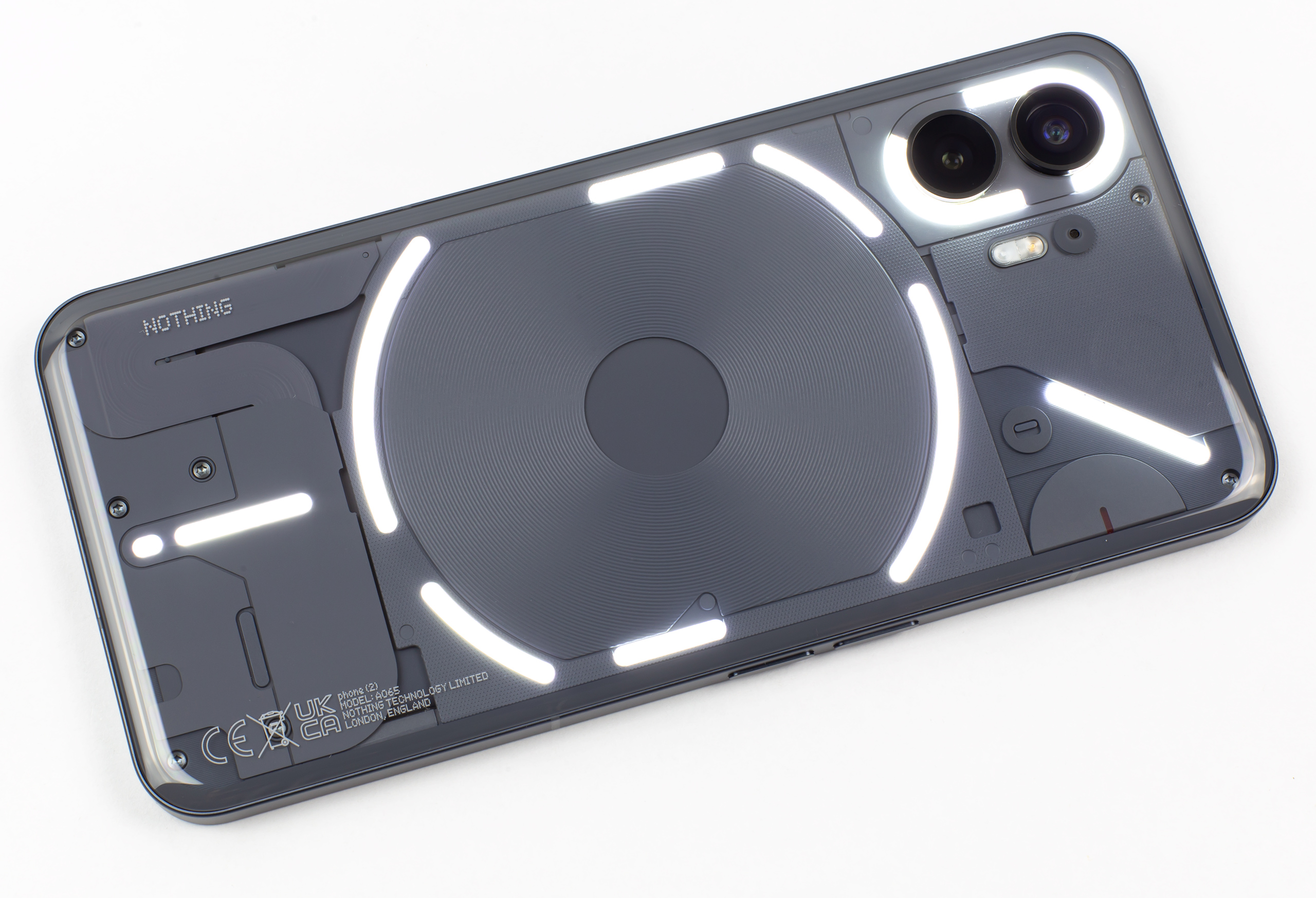
Nothing Phone says it will hack into iMessage, bring blue bubbles to Android

The Nothing Phone 2 all lit up.

Enlarge / The Nothing Phone 2 all lit up. (credit: Ron Amadeo)

Can an Android OEM really just hack its way into Apple’s iMessage? That is the hard-to-believe plan from upstart phone manufacturer “Nothing,” which says the new “Nothing Chats” will allow users to use “iMessage on Android” complete with a blue bubble sent to all their iPhone friends.

Nothing Chat will be powered by Sunbird, an app developer that has claimed to be able to send iMessage chats for about a year now, with no public launch. According to a Washington Post article with quotes from the CEOs of Nothing and Sunbird, Nothing will “start” rolling out “an early version” of Nothing Chats with iMessage compatibility on Friday. The only catch, supposedly, is that you’ll need a Nothing Phone 2.

Is this for real or a publicity stunt? Apple is on record saying that iMessage on Android would only serve to weaken Apple, and it doesn’t want to do that. Surely, any Android OEM offering “iMessage” support would immediately have the project shut down by Apple.

Read 11 remaining paragraphs | Comments


Source: Ars Technica – Nothing Phone says it will hack into iMessage, bring blue bubbles to Android