Cruise's CEO Resigns

An anonymous reader shared this report from TechCrunch:

Kyle Vogt, the serial entrepreneur who co-founded and led Cruise from a startup in a garage through its acquisition and ownership by General Motors, has resigned, according to an email sent to employees Sunday evening…

The executive shakeup comes a less than a month after the California Department of Motor Vehicles suspended Cruise’s permits to operate self-driving vehicles on public roads after an October 2 incident that saw a pedestrian — who had been initially hit by a human-driven car and landed in the path of a Cruise robotaxi — run over and dragged 20 feet by the AV. A video, which TechCrunch also viewed, showed the robotaxi braking aggressively and coming to a stop over the woman. The DMV’s order of suspension stated that Cruise withheld about seven seconds of video footage, which showed the robotaxi then attempting to pull over and subsequently dragging the woman 20 feet…
[M]ore layoffs are expected at the company that employs about 4,000 full-time employees.
TechCrunch notes that Vogt previously co-founded Justin.tv Socialcam, Twitch, and shares this quote from an email that Vogt sent to all employees Sunday evening. “The startup I launched in my garage has given over 250,000 driverless rides across several cities, with each ride inspiring people with a small taste of the future…

“The status quo on our roads sucks, but together we’ve proven there is something far better around the corner.”

Read more of this story at Slashdot.


Source: Slashdot – Cruise’s CEO Resigns

The IMF Launches 'Central Bank Digital Currency' Handbook, Says CBDCs Could Someday Replace Cash

An anonymous reader shared this report from CNBC:

Central bank digital currencies have the potential to replace cash, but adoption could take time, said Kristalina Georgieva, managing director of the International Monetary Fund on Wednesday.

“CBDCs can replace cash which is costly to distribute in island economies,” she said Wednesday at the Singapore FinTech Festival. “They can offer resilience in more advanced economies. And they can improve financial inclusion where few hold bank accounts.” […] “CBDCs would offer a safe and low-cost alternative [to cash]. They would also offer a bridge to go between private monies and a yardstick to measure their value, just like cash today which we can withdraw from our banks,” the IMF chief said.

The IMF has said that more than 100 countries are exploring CBDCs — or approximately 60% of countries in the world. “The level of global interest in CBDCs is unprecedented. Several central banks have already launched pilots or even issued a CBDC,” the IMF said in a September report. According to a 2022 survey conducted by the Bank for International Settlements, of the 86 central banks surveyed, 93% said they were exploring CBDCs, while 58% said they were likely to or may possibly issue a retail CBDC in either the short or medium term. But as of June, only 11 countries have adopted CBDCs, with an additional 53 in advanced planning stages and 46 researching the topic, according to data from the Atlantic Council…

On Wednesday, the fund launched a CBDC handbook as a reference guide for policymakers around the world…

Georgieva also said that artificial intelligence “could amplify some of the benefits of CBDCs” by providing accurate credit scoring and personalized support.

Read more of this story at Slashdot.


Source: Slashdot – The IMF Launches ‘Central Bank Digital Currency’ Handbook, Says CBDCs Could Someday Replace Cash

Text Adventures are Still Thriving in Interactive Fiction Competition – and On Threads

Today saw the end of IFComp.org’s 29th annual text adventure competition (now administered by the charitable non-profit IF Technology Foundation). 74 new and original text adventures
competed for a share of the $7,523 prize pool, with the winners announced in a special online ceremony on Twitch this afternoon.

After all the votes were tabulated, the winning game was Dr Ludwig and the Devil, a 90-minute epic in which an esteemed mad scientist tries to double-cross Beelzebub himself — along with “the world’s least effective torch and pitchfork-wielding mob!” Coming in second was LAKE Adventure. (Its premise? That it’s a 13-year-old’s 1993 game being revisited by its author 28 years later — complete with some gloriously retro artwork.) And finishing third was The Little Match Girl 4 (described as “a touching epic time travel fairy tale by Hans Christian Andersen.)

But also this week, the owner of the web site 80sNostalgia.com has created a text adventure using nothing but inter-linked posts on Threads.
“Think you can get under The Bridge?” its first post challenges. “Test your gaming skills with this Threads exclusive text-based game!
“And then try to get your head around got much work it took to make it…”

Read more of this story at Slashdot.


Source: Slashdot – Text Adventures are Still Thriving in Interactive Fiction Competition – and On Threads

A Viral Post on Social Media Will Clear the Medical Debt of Strangers

“To celebrate my life, I’ve arranged to buy up others’ medical debt and then destroy the debt,” reads a posthumous tweet posted Tuesday after the death of 38-year-old Casey McIntyre.

The Washington Post explains…

McIntyre, who served as publisher at Razorbill, an imprint of Penguin Random House, was diagnosed in 2019 and proceeded through treatment without taking on debt, [husband Andrew Rose] Gregory told The Washington Post. But many fellow cancer patients she met were in more precarious financial positions, Gregory added. “We were both so keenly aware that Casey had great health insurance through Penguin Random House,” said Gregory, 41. “Casey had no medical debt….”

About nine months before McIntyre died, her husband came across a video online about members of a North Carolina church who purchased nearly $3.3 million of local residents’ medical debt for $15,048 in a “debt jubilee,” a historical reference to ancient stories about personal debts being canceled at regular intervals. The couple chose to make monthly donations to RIP Medical Debt, the same organization that partnered with the North Carolina churchgoers. The nonprofit organization aims to abolish medical debt “at pennies on the dollar,” according to its website. For every $100 donated, the company relieves $10,000 of medical debt. As of Saturday, nearly $200,000 had been donated to RIP Medical Debt in McIntyre’s memory, which would wipe out approximately $20 million of unpaid medical bills. [By Sunday afternoon it had risen to over $334,000…]

Allison Sesso, president and chief executive of RIP Medical Debt, said her organization found out about McIntyre’s case after McIntyre’s posthumous social media post went viral. Sesso said the pace of donations was record-setting for her charity. “What an incredible gesture to the world as you’re exiting,” Sesso told The Post. “This final act of generosity is blowing up. The amount that they’re raising and the rate at which this has gone is not something that we’re used to.”

McIntyre’s post on X has now received 65,400 likes — and 3,086 reposts.

Read more of this story at Slashdot.


Source: Slashdot – A Viral Post on Social Media Will Clear the Medical Debt of Strangers

Microsoft Celebrates 20th Anniversary of 'Patch Tuesday'

This week the Microsoft Security Response Center celebrated the 20th anniversary of Patch Tuesday updates.

In a blog post they call the updates “an initiative that has become a cornerstone of the IT world’s approach to cybersecurity.”
Originating from the Trustworthy Computing memo by Bill Gates in 2002, our unwavering commitment to protecting customers continues to this day and is reflected in Microsoft’s Secure Future Initiative announced this month. Each month, we deliver security updates on the second Tuesday, underscoring our pledge to cyber defense. As we commemorate this milestone, it’s worth exploring the inception of Patch Tuesday and its evolution through the years, demonstrating our adaptability to new technology and emerging cyber threats…

Before this unified approach, our security updates were sporadic, posing significant challenges for IT professionals and organizations in deploying critical patches in a timely manner. Senior leaders of the Microsoft Security Response Center (MSRC) at the time spearheaded the idea of a predictable schedule for patch releases, shifting from a “ship when ready” model to a regular weekly, and eventually, monthly cadence…

This led to a shift from a “ship when ready” model to a regular weekly, and eventually, monthly cadence. In addition to consolidating patch releases into a monthly schedule, we also organized the security update release notes into a consolidated location. Prior to this change, customers had to navigate through various Knowledge Base articles, making it difficult to find the information they needed to secure themselves. Recognizing the need for clarity and convenience, we provided a comprehensive overview of monthly releases. This change was pivotal at a time when not all updates were delivered through Windows Update, and customers needed a reliable source to find essential updates for various products.

Patch Tuesday has also influenced other vendors in the software and hardware spaces, leading to a broader industry-wide practice of synchronized security updates. This collaborative approach, especially with hardware vendors such as AMD and Intel, aims to provide a united front against vulnerabilities, enhancing the overall security posture of our ecosystems. While the volume and complexity of updates have increased, so has the collaboration with the security community. Patch Tuesday has fostered better relationships with security researchers, leading to more responsible vulnerability disclosures and quicker responses to emerging threats…

As the landscape of security threats evolves, so does our strategy, but our core mission of safeguarding our customers remains unchanged.

Read more of this story at Slashdot.


Source: Slashdot – Microsoft Celebrates 20th Anniversary of ‘Patch Tuesday’

Sam Altman and Greg Brockman are meeting with OpenAI execs now at HQ in ongoing talks over reinstatement

Newly ousted OpenAI CEO Sam Altman and former president Greg Brockman are meeting with executives at the company’s San Francisco headquarters now as discussions about possibly reinstating their positions continue, The Information reports. Per The Information, interim CEO Mira Murati and others have been leading the push to get Altman reinstated as CEO, and invited the two to HQ on Sunday. Altman and Brockman showed up for talks this afternoon, sources told The Information.

Around the time of the report’s publication, Altman tweeted a photo of himself wearing a guest badge for entry into the building, writing, “first and last time i ever wear one of these (sic)” — which could be interpreted several different ways, at this point. Sources told The Verge that Altman has set a 5PM PT deadline for board members to reach an agreement that could ultimately determine whether he walks away from OpenAI, or they do. 

After Altman was fired without warning on Friday, Brockman stepped down in solidarity, along with a slew of senior researchers. Other staff members have reportedly pledged to resign as well and follow the two to other projects, signaling their support on social media, according to The Verge. The state of Altman’s position — and OpenAI’s future leadership — has remained up in the air this weekend as backlash against the board’s initial decision grows. 

On Saturday evening, The Verge broke news that the board was considering reinstating him as CEO, and had “agreed in principle” to resign if so. But, the board reportedly couldn’t make up its collective mind in time, and missed the deadline that had been set for the decision. 

According to Bloomberg, that’s at least in part because they’ve hit a brick wall in trying to agree on what the board will look and what its role will be if he’s reinstated. Altman reportedly wants the existing board gone if he’s to return, among other “governance changes” — including making former Salesforce CEO Bret Taylor a board member and possibly bringing on a Microsoft executive, Bloomberg reported, though the latter has not yet made a decision.

There has been much speculation over the reason behind Altman’s removal as CEO and from the OpenAI board of directors, which came as a surprise to Altman, staff, and investors. An internal memo sent that morning to staff and seen by Axios said that the decision to unseat Altman came as the result of “a breakdown in communication between Sam and the board.” It “was not made in response to malfeasance or anything related to our financial, business, safety, or security/privacy practices,” the memo from COO Brad Lightcap said.

Altman was reportedly fundraising for a custom AI chip project codenamed “Tigris” prior to his unexpected firing, Bloomberg reported. Per Bloomberg and The New York Times, which previously reported on his plans for other AI ventures, Altman has already pitched the idea of custom Tensor Processing Units (TPUs) that would rival NVIDIA’s to potential investors in the Middle East.

Altman was also reportedly looking for backers to fund his hardware collaboration with former Apple designer, Jony Ive, for which he approached SoftBank founder Masayoshi Son. Sources with knowledge of the discussions told Bloomberg that Altman is trying to raise “tens of billions of dollars” to get these projects off the ground.

This article originally appeared on Engadget at https://www.engadget.com/sam-altman-and-greg-brockman-are-meeting-with-openai-execs-now-in-ongoing-talks-over-reinstatement-212124319.html?src=rss

Source: Engadget – Sam Altman and Greg Brockman are meeting with OpenAI execs now at HQ in ongoing talks over reinstatement

Aardman Animations is Running Out of Its Iconic Clay

Aardman Animations has been defined by its clay animation techniques. Known as Newplast plasticine, it’s been used since the studio’s inception back in 1972, and have been used in all their productions, from the Wallace & Gromit shorts to more recent fare like Star Wars Visions and Shaun the Sheep. You know you’re…

Read more…


Source: Gizmodo – Aardman Animations is Running Out of Its Iconic Clay

Amazon Announces 'Olympus' LLM to Compete With OpenAI and Google

Amazon “is investing millions in training an ambitious large language model,” reports Reuters, “hoping it could rival top models from OpenAI and Alphabet, two people familiar with the matter told Reuters.”

The model, codenamed as “Olympus”, has 2 trillion parameters, the people said, which could make it one of the largest models being trained. OpenAI’s GPT-4 model, one of the best models available, is reported to have one trillion parameters…

The team is spearheaded by Rohit Prasad, former head of Alexa, who now reports directly to CEO Andy Jass… Amazon believes having homegrown models could make its offerings more attractive on AWS, where enterprise clients want to access top-performing models, the people familiar with the matter said, adding there is no specific timeline for releasing the new model.

“While the parameter count doesn’t automatically mean Olympus will outperform GPT-4, it’s probably a good bet that it will, at minimum, be very competitive with its rival from OpenAI,” argues a financial writer at the Motley Fool — as well as Googles nascent AI projects.

Amazon could have a key advantage over its competition, one that CEO Andy Jassy alluded to in the company’s third-quarter earnings call. Jassy said, “Customers want to bring the models to their data, not the other way around. And much of that data resides in AWS [Amazon Web Services] as the clear market segment leader in cloud infrastructure….”

Amazon will likely also leverage Olympus in other ways. For example, the company could make its CodeWhisperer generative AI coding companion more powerful. Jassy noted in the Q3 call that all of Amazon’s “significant businesses are working on generative AI applications to transform their customer experiences.” Olympus could make those initiatives even more transformative.

They point out that Amazon’s profits more than tripled in the third quarter of 2023 from where they were in 2022.

And Amazon’s stock price has already jumped more than 40% in 2023.

Read more of this story at Slashdot.


Source: Slashdot – Amazon Announces ‘Olympus’ LLM to Compete With OpenAI and Google

Jujutsu Kaisen Studio MAPPA is Breaking Under Crunch Allegations

For years, animation studio MAPPA has been noteworthy for the quality of the anime it puts out, which includes widely beloved shonen like Attack on Titan, Vinland Saga, and Jujutsu Kaisen. At the same time, it’s been noted that the 12-year-old studio has a habit of taking on a lot of projects at once, with allegations…

Read more…


Source: Gizmodo – Jujutsu Kaisen Studio MAPPA is Breaking Under Crunch Allegations

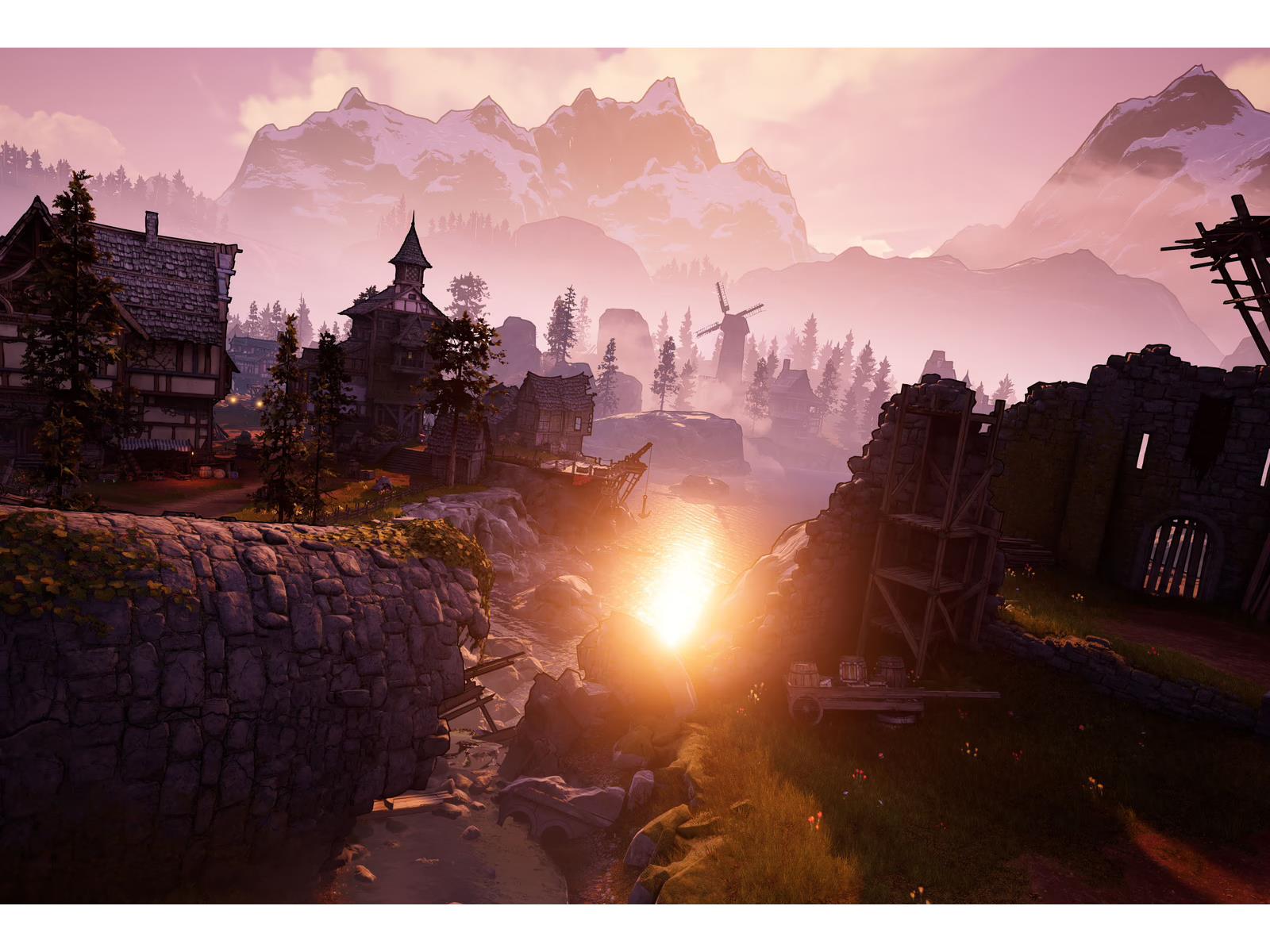
Borderlands 4 And Tiny Tina’s Wonderlands 2 Allegedly Confirmed In Profile Leak

Borderlands 4 And Tiny Tina’s Wonderlands 2 Allegedly Confirmed In Profile Leak
LinkedIn continues to be a gold mine for gaming sleuths looking to unearth unannounced video games. This latest leak comes by way of a profile of a supposed developer at Gearbox Software, that mentions Borderlands 4 and Tiny Tina’s Wonderland 2. While it’s not particularly surprising to hear Gearbox is hard at work in a new installment in

Source: Hot Hardware – Borderlands 4 And Tiny Tina’s Wonderlands 2 Allegedly Confirmed In Profile Leak

Linux Foundation Announces Intent to Form 'High Performance Software Foundation'

This week the Linux Foundation “announced the intention to form the High Performance Software Foundation.

“Through a series of technical projects, the High Performance Software Foundation aims to build, promote, and advance a portable software stack for high performance computing by increasing adoption, lowering barriers to contribution, and supporting development efforts.”

As use of high performance computing becomes ubiquitous in scientific computing and digital engineering, and AI use cases multiply, more and more data centers deploy GPUs and other compute accelerators. The High Performance Software Foundation intends to leverage investments made by the United States Department of Energy’s Exascale Computing Project, the EuroHPC Joint Undertaking, and other international projects in accelerated high performance computing to exploit the performance of this diversifying set of architectures. As an umbrella project under the Linux Foundation, HPSF intends to provide a neutral space for pivotal projects in the high performance software ecosystem, enabling industry, academia, and government entities to collaborate together on the scientific software stack.

The High Performance Software Foundation already benefits from strong support across the high performance computing landscape, including leading companies and organizations like Amazon Web Services, Argonne National Laboratory, CEA, CIQ, Hewlett Packard Enterprise, Intel, Kitware, Lawrence Berkeley National Laboratory, Lawrence Livermore National Laboratory, Los Alamos National Laboratory, NVIDIA, Oak Ridge National Laboratory, Sandia National Laboratory, and the University of Oregon.

Its first open source technical projects include:

Spack: the high performance computing package managerKokkos: a performance-portable programming model for writing modern C++ applications in a hardware-agnostic way.AMReX: a performance-portable software framework designed to accelerate solving partial differential equations on block-structured, adaptively refined meshes.WarpX: a performance-portable Particle-in-Cell code with advanced algorithms that won the 2022 Gordon Bell PrizeTrilinos: a collection of reusable scientific software libraries, known in particular for linear, non-linear, and transient solvers, as well as optimization and uncertainty quantification.Apptainer: a container system and image format specifically designed for secure high-performance computing.VTK-m: a toolkit of scientific visualization algorithms for accelerator architectures.HPCToolkit: performance measurement and analysis tools for computers ranging from laptops to the world’s largest GPU-accelerated supercomputers.E4S: the Extreme-scale Scientific Software StackCharliecloud: high performance computing-tailored, lightweight, fully unprivileged container implementation.

Read more of this story at Slashdot.


Source: Slashdot – Linux Foundation Announces Intent to Form ‘High Performance Software Foundation’

Open Channel: How Do You Like Your Remakes?

Netflix’s big new release for the weekend is Scott Pilgrim Takes Off, an anime revival of the popular graphic novel series by Bryan Lee O’Malley. It’s a bit of a weird bag; pre-release, O’Malley and BenDavid Grabinski repeatedly said the show would offer something similar to the comic while also being a different…

Read more…


Source: Gizmodo – Open Channel: How Do You Like Your Remakes?

This Ninja Foodi DualZone air fryer is cheaper than ever in Amazon's Black Friday sale

If you haven’t yet hopped on the air fryer bandwagon, now is the perfect time to do so thanks to an Amazon Black Friday deal on one of Ninja’s DualZone Foodi air fryers that’s slashed $100 off the normal price. The XL Ninja DZ401 Foodi air fryer, which has two separate cooking compartments, is only $130 right now. The 10-quart beast of an appliance usually costs $230, and this is the best deal on it yet.

The DZ401 Foodi uses Ninja’s DualZone technology, which allows it to cook different types of food simultaneously in its two separate compartments. Each basket has a capacity of 5 quarts. With its Smart Finish setting, it can even coordinate the timing of the different dishes so they’re done at the same time. It’ll take up a fair amount of counter space, but would come in handy for anyone cooking for a large family or guests. In addition to frying, Ninja’s DZ401 Foodi can broil, roast, bake, reheat, and dehydrate food. It’s a versatile appliance, and one of the best air fryers on the market right now.

While it brings the option to cook with both baskets at the same time, you can also just cook using one for smaller or less complex meals. You won’t have to wait for it to preheat thanks to its rapid heaters, or worry about it being overly noisy. The current 43 percent discount on Amazon is far better than even the previous low of $180, so snatch one up now if you’ve been waiting for just the right moment.

Your Black Friday Shopping Guide: See all of Yahoo’s Black Friday coverage, here. Follow Engadget for Black Friday tech deals. Learn about Black Friday trends on In The Know. Hear from Autoblog’s experts on the best Black Friday deals for your car, garage, and home, and find Black Friday sales to shop on AOL, handpicked just for you.

This article originally appeared on Engadget at https://www.engadget.com/this-ninja-foodi-dualzone-air-fryer-is-cheaper-than-ever-in-amazons-black-friday-sale-191803817.html?src=rss

Source: Engadget – This Ninja Foodi DualZone air fryer is cheaper than ever in Amazon’s Black Friday sale

The FSF Condemns Unauthorized Derivatives of GNU Licenses

The Free Sofware Foundation issued a clarifying blog post this week, saying the organization is “pleased when people use GNU licenses to distribute and license software.”

But “we condemn the use of unauthorized, confusing derivatives of the licenses.”
Unfortunately, some authors engage in confusing practices by drafting licenses using existing terms and conditions of GNU free software licenses, without the intention of granting all four freedoms to users. For example, we have long seen attempts to add restrictions to the license text itself, placed in the LICENSE file, or included elsewhere in the program’s release. An example is the so-called “Commons Clause,” which, when applied to a free software license, affirms that the program is covered by the license. But, at the same time, is contradicting in its meaning by asserting that selling copies of the program or implementing a commercial service with the program is prohibited.

The immediate consequence of the practice of inserting a restriction into a GNU license in this way is the confusion it causes for the community. Users still see the name of the original license, with its preamble and terms and conditions intact, transmitting a strong message that the purpose of the license is to enable users — grant users — their essential software freedoms. This message is clear from the license’s text, and is bolstered from the renown accrued by the FSF and GNU trademarks, and their decades of free software advocacy. At the same time, these same users see a contradictory statement of the “Commons Clause,” which is clearly contrary to the sprit of the free software movement and the Free Software Definition…

[T]o make it even clearer that added restrictions are incompatible with our license, we gave users the right to delete such added restrictions [in 2007] and preserve the program’s freedom. But we at the FSF have another legal tool against attempts to release programs under GNU General Public Licenses that have been wrongly altered to become nonfree licenses. The FSF holds copyrights and common law trademarks to the GNU family of General Public Licenses. Moreover, the FSF holds registered trademarks for “FSF,” “Free Software Foundation,” and “GNU.” […] We can’t control the drafting by others of proprietary software licenses, but we can and do forbid doing this in a way that misleadingly associates those licenses with GNU or GNU licenses… [W]e are entitled to legally enforce our copyright and trademark for FSF licenses that have been altered by added restrictions to a verbatim GNU license…

Licenses that confuse users about the freedoms they grant are damaging to the free software movement because they threaten to dilute the value and power of these licenses. When GNU licenses are misused through such confusing practices, it harms the renown accrued by the GNU project and the FSF over decades of free software advocacy. It is our duty to all computer users to stop these practices, and, if necessary, we will use our legal rights to this end.

Read more of this story at Slashdot.


Source: Slashdot – The FSF Condemns Unauthorized Derivatives of GNU Licenses

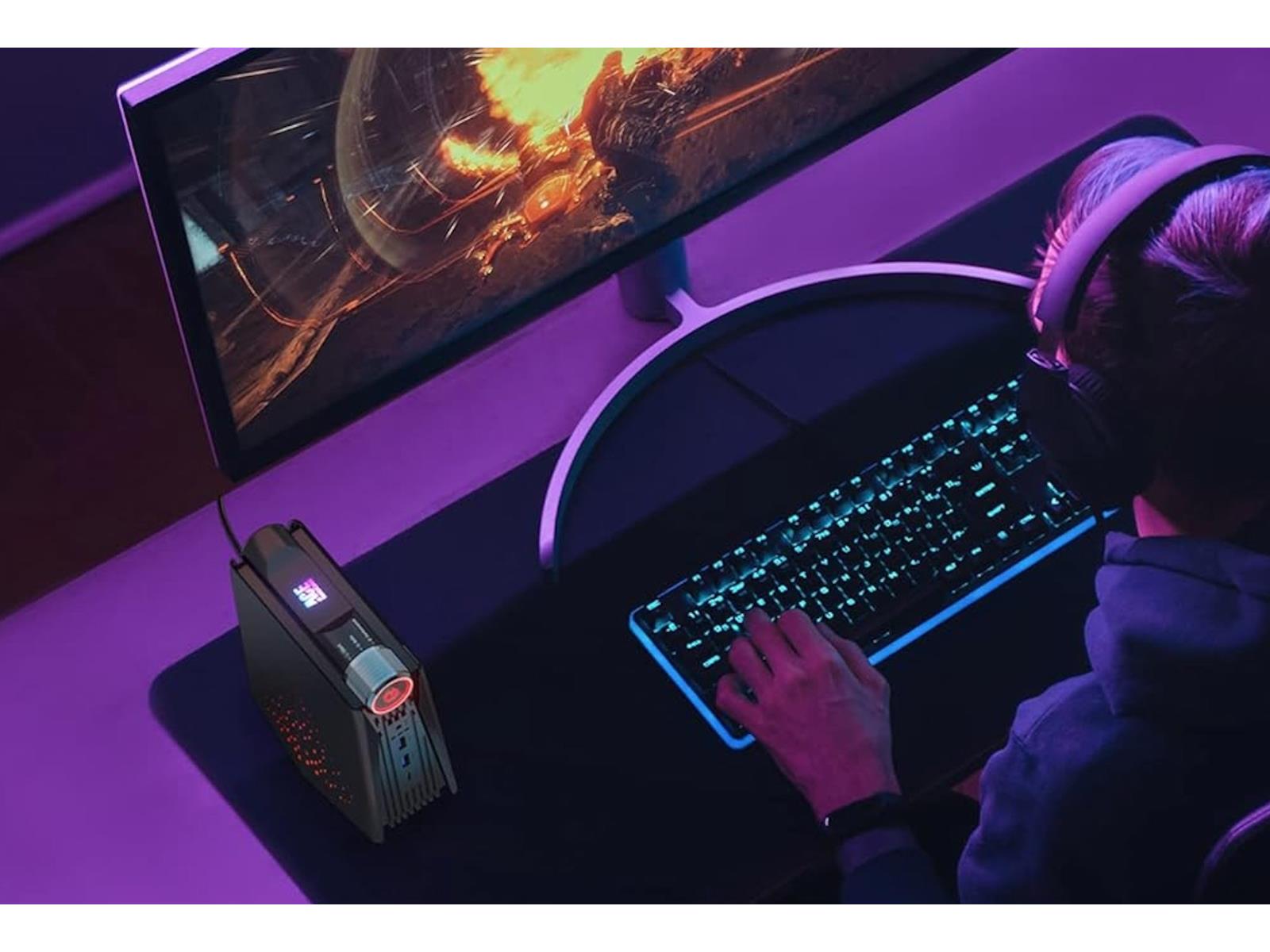
Mini PC Deals Offer Big Savings On Pint-Sized Powerhouses

Mini PC Deals Offer Big Savings On Pint-Sized Powerhouses
We are only five days from Black Friday, and with it comes a plethora of deals on Amazon, which is trying to beat out all the brick-and-mortar stores competing for sales this year. Today, we have a handful of mini PCs that could make for a great home theater addition or home office box that will fit just about anywhere.

Leading off the

Source: Hot Hardware – Mini PC Deals Offer Big Savings On Pint-Sized Powerhouses

1993's 'Second Reality' Demo Recreated for the Apple II

Long-time Slashdot reader deater writes: The Second Reality demoscene demo from 1993 is one of the most well known demos of all time, pushing a 486 running DOS to its limits. There have been remakes for other architectures over the years, including Atari ST, Gameboy color, and Commodore 64. At this past Demosplash 2023 demoparty a version for the Apple II was released (and won 1st place), which was quite a challenge as the Apple II graphics have essentially none of the hardware acceleration available on the other platforms.

Read more of this story at Slashdot.


Source: Slashdot – 1993’s ‘Second Reality’ Demo Recreated for the Apple II

Star Trek's Tawny Newsome Looks Back on Mariner's Reluctant Hero's Journey

Star Trek: Lower Decks has been a riot since its first season, and Tawny Newsome’s Beckett Mariner is a big reason why. Over the course of the show’s four-season run, she’s gone from being a chaotic, self-destructive ensign to…well, still that, but now promoted to a junior grade lieutenant alongside the other Lower…

Read more…


Source: Gizmodo – Star Trek’s Tawny Newsome Looks Back on Mariner’s Reluctant Hero’s Journey