
Released on Tuesday was a new version of wlroots, the Wayland compositor support library that was born out of the i3-inspired Sway compositor project. With this new release are new Wayland protocols, continued work on their Vulkan renderer, and the ability for the Wayland back-end to embed a wlroots compositor inside an existing Wayland client…
Source: Phoronix – wlroots 0.17 Adds New Wayland Protocols, Continued Vulkan Renderer Work
Category Archives: Unfiltered RSS
Endlesss Clubs is like a Discord server for making music
Producing music with friends and colleagues from afar can be tricky but, hopefully, it’s about to get a bit smoother. Endlesss, a remote music creation platform, is rolling out a feature called Clubs that could make it easier to share and blend ideas. The new tool is reminiscent of Discord — something Endlesss (yes, with a triple s) outright states in its promotion.
Endlesss Clubs are live chat channels where members can add riffs, make comments, combine parts and share files. Just like Discord, members can belong to multiple Clubs, and each has different channels, depending on what people want to create.
The company first announced the upcoming release of Endlesss Clubs back in August. “Music-makers all have to compete for attention on the same distribution platforms. This results in bad outcomes for everyone but the very best,” Tim Exile, founder and CEO of Endlesss, said at the time. “We’re excited to provide community-owned places for music-makers of all levels to go deep with their people.”
Endlesss debuted at the start of the COVID-19 pandemic, allowing musicians to connect remotely. It was initially available only as an iOS app before launching Endlesss Studio for desktop at the end of 2020. There were some kinks when we first tested it, many of which seem to have been straightened out in the years since.
Anyone can test out Endlesss for free or get unlimited sample packs, sample presets, VST/AU plugin presets and high quality audio for $10 per month. Endlesss Clubs are now available for members to join and play around in.
This article originally appeared on Engadget at https://www.engadget.com/endlesss-clubs-is-like-a-discord-server-for-making-music-112509781.html?src=rss
Source: Engadget – Endlesss Clubs is like a Discord server for making music
The AI startup behind Stable Diffusion is now testing generative video
Stable Diffusion’s generative art can now be animated, developer Stability AI announced. The company has released a new product called Stable Video Diffusion into a research preview, allowing users to create video from a single image. “This state-of-the-art generative AI video model represents a significant step in our journey toward creating models for everyone of every type,” the company wrote.
The new tool has been released in the form of two image-to-video models, each capable of generating 14 to 25 frames long at speeds between 3 and 30 frames per second at 576 × 1024 resolution. It’s capable of multi-view synthesis from a single frame with fine-tuning on multi-view datasets. “At the time of release in their foundational form, through external evaluation, we have found these models surpass the leading closed models in user preference studies,” the company said, comparing it to text-to-video platforms Runway and Pika Labs.
Stable Video Diffusion is available only for research purposes at this point, not real-world or commercial applications. Potential users can sign up to get on a waitlist for access to an “upcoming web experience featuring a text-to-video interface,” Stability AI wrote. The tool will showcase potential applications in sectors including advertising, education, entertainment and more.
The samples shown in the video above appear to be of relatively high quality, matching rival generative systems. However, it has some limitations, the company wrote: it generates relatively short video (less than 4 seconds), lacks perfect photorealism, can’t do camera motion except slow pans, has no text control, can’t generate legible text and may not generate people and faces properly.
The tool was trained on a dataset of millions of videos and then fine-tuned on a smaller set, with Stability AI only saying that it used video that was publicly available for research purposes. The origin of the data set is important, given that Stability AI was recently sued by Getty Images for scraping its image archives.
Video is a key goal for generative AI, due to its potential to simplify content creation. However, it’s also a tool with the most potential for abuse via deepfakes, copyright violations and more. And unlike OpenAI with its ChatGPT product, Stability has had less success commercializing its Stable Diffusion product and burned through cash at a high rate, TechCrunch noted. And last week, vice president of audio at Stability AI, Ed Newton-Rex, resigned over the use of copyrighted content to train generative AI models.
This article originally appeared on Engadget at https://www.engadget.com/the-ai-startup-behind-stable-diffusion-is-now-testing-generative-video-105519658.html?src=rss
Source: Engadget – The AI startup behind Stable Diffusion is now testing generative video
OpenAI and Microsoft hit with copyright lawsuit from non-fiction authors
OpenAI has been hit with another lawsuit, accusing it of using other people’s intellectual property without permission to train its generative AI technology. Only this time, the lawsuit also names Microsoft as a defendant. The complaint was filed by Julian Sancton on behalf of a group of non-fiction authors who said they were not compensated for the use of their books and academic journals in training the company’s large language model.
In their lawsuit, the authors state how they spend years “conceiving, researching, and writing their creations.” They accuse OpenAI and Microsoft of refusing to pay authors while building a business “valued into the tens of billions of dollars by taking the combined works of humanity without permission.” The companies pretend copyright laws do not exist, the complaint reads, and have “enjoyed enormous financial gain from their exploitation of copyrighted material.”
Sancton is the author behind Madhouse at the End of the Earth: The Belgica’s Journey Into the Dark Antarctic, which tells the true survival story of an 1897 polar expedition that got stuck in the ocean in the middle of a sunless Antarctic winter. Sancton spent five years and tens of thousands of dollars to research and write the book. “Such an investment of time and money is feasible for Plaintiff Sancton and other writers because, in exchange for their creative efforts, the Copyright Act grants them ‘a bundle of exclusive rights’ in their works, including ‘the rights to reproduce the copyrighted work[s],'” according to the lawsuit.
As Forbes notes, OpenAI previously said that content generated by ChatGPT doesn’t constitute “derivative work” and, hence, doesn’t infringe on any copyright. Sancton’s lawsuit is merely the latest complaint against the company over its use of copyrighted work to train its technology. Earlier this year, screenwriter and author also Michael Chabon sued OpenAI for the same thing, as did George R.R. Martin, John Grisham and Jodi Picoult. Comedian Sarah Silverman filed a lawsuit against OpenAI and Meta, as well. Sancton is now seeking damages and injunctive relief for all the proposed class action’s defendants.
This article originally appeared on Engadget at https://www.engadget.com/openai-and-microsoft-hit-with-copyright-lawsuit-from-non-fiction-authors-101505740.html?src=rss
Source: Engadget – OpenAI and Microsoft hit with copyright lawsuit from non-fiction authors
Earth Receives Laser-Beamed Message From 10 Million Miles Away
Rahul Rao reports via Space.com: On Nov. 14, NASA picked up a laser signal fired from an instrument that launched with the Psyche spacecraft, which is currently more than 10 million miles (16 million kilometers) from Earth and heading toward a mysterious metal asteroid. (The spacecraft is at more than 40 times the average distance of Earth’s moon, and still voyaging afar.) The moment marked the first successful test of NASA’s Deep Space Optical Communications (DSOC) system, a next-generation comms link that sends information not by radio waves but instead by laser light. It’s part of a series of tests NASA is doing to speed up communications in deep space, on different missions. “Achieving first light is a tremendous achievement. The ground systems successfully detected the deep space laser photons from DSOC,” Abi Biswas, the system’s project technologist at NASA’s Jet Propulsion Laboratory (JPL) in Southern California, said in an agency statement.
“And we were also able to send some data, meaning we were able to exchange ‘bits of light’ from and to deep space,” Biswas added.


Read more of this story at Slashdot.
Source: Slashdot – Earth Receives Laser-Beamed Message From 10 Million Miles Away
Revolutionizing IT: Navigating the Transformative Impact of Edge Computing
Edge computing is emerging as complementary to centralized cloud models by distributing processing and data storage closer to endpoints. This helps drive faster response times for latency-sensitive devices and reduces back-end workloads. As IoT adoption grows across industries, edge infrastructure plays an increasingly vital role.
Processing Moves to the Network Edge
With edge deployments of micro data centers, virtual private servers instances, and fog nodes located near IoT sensors and user devices, organizations can now execute data processing, analytics and action responses locally at the edge rather than needing to transport all raw sensor data and computing back to centralized core data centers. By pushing compute and storage resources out to the network edge using technologies like micro data centers, organizations have the capability to carry out initial processing, filtering and analysis of data closer to where it is generated and where responsive actions are required.
This localized edge computing provides several key benefits to applications. Firstly, by processing data locally rather than transporting it long distances over the network to core data centers, applications avoid bandwidth constraints and experience reduced latency. This localized compute power allows data to be transformed into insights much closer to where, and when, it is captured without straining network capacity. Additionally, as the data no longer needs to travel to a distant core for processing, applications see significantly improved response times for any actions that may need to occur.
Edge computing therefore greatly enhances the performance of latency-sensitive applications, particularly in real-time domains like industrial IoT systems requiring fast diagnosis/control, mobile augmented reality needing immediate computation, and telemedicine relying on instant analysis. With edge resources and fog deployments, these time-critical applications that demand single-digit millisecond responses can now be efficiently supported by leveraging distributed processing at the network edge instead of transporting all data to a centralized core.
New Network Architectures Emerge
The edge computing model necessitates architectural changes, with some centralized systems connecting many distributed edge sites. This gives rise to hybrid connectivity architectures that incorporate:
- Backhaul links between edge locations and core data centers using high-bandwidth networks to upload aggregated insights and push updates.
- Low-power wide-area radios deployable anywhere for long-range connectivity between geographically dispersed edge nodes and fog servers.
- Cellular technologies like 5G acting as “foggy clouds” that can seamlessly integrate edge infrastructure at the network level, whether in industrial machines, buildings or telecom towers.
- Local area networks within factories, offices and cell towers facilitating fast communication between co-located edge devices, gateways and controllers.
- Edge servers, fog nodes and micro data centers distributed across wide footprints yet integrated centrally for management and oversight.
With such diverse infrastructures, edge traffic originating from IoT, mobile and other latency-sensitive systems can often be processed, routed and managed locally without needing to return to centralized core networks. This distributed architecture improves resiliency by preventing single points of failure and helps scale overall throughput by balancing load locally across edge resources. Application response times and network bandwidth utilization benefit as core infrastructure remains unburdened by real-time data transmissions and processing.
Management Challenges at the Edge
As the number of edge nodes proliferates, it introduces new operational challenges for IT teams. Edge sites are often in small remote locations with unreliable or intermittent connectivity. This can make tasks like patching, security updates, and remote hands management of edge hardware more difficult compared to centralized data centers.
However, VPS provides a scalable and cost-effective way to deploy edge computing resources. Their virtualization allows optimizing available hardware to host multiple edge workloads. Organizations can leverage VPS at the network edge to execute latency-sensitive functions closer to endpoints, improving performance for real-time applications. This localized compute using VPS addresses bandwidth constraints. You can try a virtual private server today: choose a location, for example, Bulgaria, and place an order, after which you will be able to fully experience the possibilities of this type of hosting.
To help address these issues, standardized hardware deployment across edge tiers assists in simplified life-cycle management. Tools for integrated monitoring of decentralized infrastructure also improve visibility. Additionally, edge demands simplified orchestration software compared to data centers since automating tasks like patching, backups and scaling must function reliably even in low-bandwidth environments.
In summary, edge computing is revolutionizing IT infrastructure design by pushing data processing closer to endpoints. This improves performance for latency-sensitive applications and reduces back-end load, though standardized edge management must still evolve to scale decentralized systems.
Written by Scott Weathers
Source: TG Daily – Revolutionizing IT: Navigating the Transformative Impact of Edge Computing
ChatGPT's voice chat feature is rolling out to free users
OpenAI introduced voice chats with ChatGPT on Android and iOS back in September, giving users the option to have actual back-and-forth conversations with the chatbot if they want to. The company only made the feature available to Plus and Enterprise subscribers back then, though, with the promise that it will eventually release it to other groups of users. Now, OpenAI co-founder Greg Brockman has announced on X that voice conversations on ChatGPT have started rolling out to all free users on mobile.
ChatGPT Voice rolled out for all free users. Give it a try — totally changes the ChatGPT experience: https://t.co/DgzqLlDNYF
— Greg Brockman (@gdb) November 21, 2023
When the company first introduced voice chats, it admitted that the capability to create “realistic synthetic voices from just a few seconds of real speech” presents new risks. It could, for instance, allow bad actors to impersonate public figures or anybody they want. As a result, it decided that ChatGPT’s voice feature will focus on conversations. It’s powered by a text-to-speech model that can generate “human-like audio from just text and a few seconds of sample speech.” OpenAI worked with voice actors to create the capability and offers five different voices to choose from.
We checked our ChatGPT app on Android and have yet to gain access to voice conversations, which indicates that the feature could take sometime before reaching everybody’s accounts. It’s not quite clear if users have to opt in to be able to access it, but paid subscribers had to enable it by going to Settings and then to New Features when voice chats rolled out.
Brockman announced the capability’s wide release after he had already left his seat as President of OpenAI. He quit of his own accord after the company’s board fired Sam Altman as CEO, causing mayhem with senior staff members resigning in protest and the rest of the employees threatening to quit unless he’s reinstated. Shortly after he made the announcement, OpenAI announced that Altman and Brockman had been reinstated and will be returning to their posts.
This article originally appeared on Engadget at https://www.engadget.com/chatgpts-voice-chat-feature-is-rolling-out-to-free-users-085549323.html?src=rss
Source: Engadget – ChatGPT’s voice chat feature is rolling out to free users
Ubisoft has suspended advertising on Elon Musk's X
Ubisoft is the latest company to join what seems to be a growing list of advertisers pulling their campaigns from Elon Musk’s X, formerly known as Twitter. The company has confirmed to PCGamer and Axios that it has indeed paused its advertising on the website, possibly making it the first video game publisher to do so. While Ubisoft didn’t elaborate on its reasoning behind the decision, X’s advertisers have been suspending their advertising activities on the social network after Musk supported an antisemitic tweet and Media Matters published a research showing brands’ advertisements next to Nazi content.
IBM, Apple, Disney, Paramount, Warner Bros, Sony and Comcast have all paused their advertising on X. Lionsgate pulled its ads, as well, specifically citing Musk’s tweet as the cause. Axios says Ubisoft’s Assassin’s Creed Nexus VR ad campaign was still showing up for X users as recently as Monday morning, and it’s unclear if it stopped advertising on the social network before or after Linda Yaccarino published a statement calling Media Matters’ report “misleading and manipulated.”
X’s CEO issued a call for users and advertisers to “stand with X,” claiming that “not a single authentic user on [the website] saw IBM’s, Comcast’s, or Oracle’s ads next to the content in Media Matters’’ article.” Shortly after that, X officially filed a lawsuit against the media watchdog, accusing it of “knowingly and maliciously manufactur[ing] side-by-side images depicting advertisers’ posts on X Corp.’s social media platform beside Neo-Nazi and white national fringe content.” In its complaint, X explained that Media Matters had to create the right conditions, which included following accounts that post fringe Neo-Nazi and white nationalist content, in order to see ads right next to antisemitic posts.
Media Matters called the lawsuit “frivolous” and an attempt to “bully X’s critics into silence” in a statement sent to Engadget. The organization also told us that it “stands behind its reporting and looks forward to winning in court.”
This article originally appeared on Engadget at https://www.engadget.com/ubisoft-has-suspended-advertising-on-elon-musks-x-074507139.html?src=rss
Source: Engadget – Ubisoft has suspended advertising on Elon Musk’s X
Sam Altman is reinstated as OpenAI CEO five days after being fired
Sam Altman is returning to OpenAI as CEO after his firing five days ago launched the company onto one of the wildest rollercoaster rides in tech history, the company announced in post on X. Former president Greg Brockman, who resigned on Friday in protest, will also return, The Verge‘s sources say. The original board has been disbanded and replaced by a new, temporary three-man board with Bret Taylor (chair), Larry Summers and original board member Adam D’Angelo.
The agreement has been struck “in principal,” and must still be approved by all parties. The only job of the initial board will be to vet and appoint a permanent board with up to 9 members that will resent OpenAI’s governance. One of those seats will likely to go Microsoft and Altman himself, The Verge reported.
We have reached an agreement in principle for Sam Altman to return to OpenAI as CEO with a new initial board of Bret Taylor (Chair), Larry Summers, and Adam D’Angelo.
We are collaborating to figure out the details. Thank you so much for your patience through this.
— OpenAI (@OpenAI) November 22, 2023
Altman confirmed the news in a separate post. “With the new board and with Satya’s support, I’m looking forward to returning to OpenAI and building on our strong partnership with [Microsoft],” he said. That means Altman wouldn’t join Microsoft after all, though he added that he felt his decision at the time “was the best path for me and the team.”
“We are encouraged by the changes to the OpenAI board,” Microsoft CEO Satya Nadella added in another post. “We believe this is a first essential step on a path to more stable, well-informed, and effective governance.”
Another major OpenAI investor, Thrive Capital, issued a statement calling Altman’s return “the best outcome for the company, its employees, those who build on their technologies and the world at large.” Helen Toner, who reportedly had a hand in ousting Altman in the first place, posted “and now, we all get some sleep.”
i love openai, and everything i’ve done over the past few days has been in service of keeping this team and its mission together. when i decided to join msft on sun evening, it was clear that was the best path for me and the team. with the new board and w satya’s support, i’m…
— Sam Altman (@sama) November 22, 2023
The timeline over the last week reads like “a legit telenovela,” as one of my colleagues put it. It commenced with the shocking termination of CEO Altman late in the day on Friday, November 17th, followed by Brockman announcing that we would quit in protest. OpenAI then appointed CTO Mira Murati as interim CEO. The board stated that Altman was terminated for not being “consistently candid” in communications, a confusing comment that only generated more speculation.
The drama continued on the weekend, as Nadella was reportedly “furious” over the decision, particularly because Microsoft was only given a few minutes of notice before the decision was publicly revealed. On Saturday he announced that Microsoft “remained committed” to its OpenAI partnership, but simultaneously revealed that he was hiring Altman to head a new AI division. By the end of the weekend, Murati was replaced as CEO by Twitch co-founder Emmett Shear.
On Monday, nearly the entire OpenAI staff told the board in an open letter that it would resign and join the new Microsoft subsidiary if Altman didn’t return to the company as CEO. Things weren’t looking great when the board failed to respond to the letter by the stated deadline, despite a post from co-founder Ilya Sutskever taking some blame for the situation. Compounding things, Shear threatened to step down as CEO, saying Altman’s termination was “handled very badly.”
Yesterday, it was reported that Altman was again negotiating with the board to return as CEO. However, as recently as a few hours ago, it still looked like Altman would be heading to Microsoft and perhaps taking many of OpenAI’s employees with him. Shear’s threat to quit lit reportedly a fire under OpenAI’s board, which restarted negotiations with Altman in earnest, leading to today’s announcement that he’d be coming back after all.
This article originally appeared on Engadget at https://www.engadget.com/sam-altman-is-reinstated-as-openai-ceo-five-days-after-being-fired-070037749.html?src=rss
Source: Engadget – Sam Altman is reinstated as OpenAI CEO five days after being fired
Giant Batteries Drain Economics of Gas Power Plants
Batteries used to store power produced by renewables are becoming cheap enough to make developers abandon scores of projects for gas-fired generation worldwide. Reuters reports: The long-term economics of gas-fired plants, used in Europe and some parts of the United States primarily to compensate for the intermittent nature of wind and solar power, are changing quickly, according to Reuters’ interviews with more than a dozen power plant developers, project finance bankers, analysts and consultants. They said some battery operators are already supplying back-up power to grids at a price competitive with gas power plants, meaning gas will be used less. The shift challenges assumptions about long-term gas demand and could mean natural gas has a smaller role in the energy transition than posited by the biggest, listed energy majors.
In the first half of the year, 68 gas power plant projects were put on hold or cancelled globally, according to data provided exclusively to Reuters by U.S.-based non-profit Global Energy Monitor. […] “In the early 1990s, we were running gas plants baseload, now they are shifting to probably 40% of the time and that’s going to drop off to 11%-15% in the next eight to 10 years,” Keith Clarke, chief executive at Carlton Power, told Reuters. Developers can no longer use financial modelling that assumes gas power plants are used constantly throughout their 20-year-plus lifetime, analysts said. Instead, modellers need to predict how much gas generation is needed during times of peak demand and to compensate for the intermittency of renewable sources that are hard to anticipate.
The cost of lithium-ion batteries has more than halved from 2016 to 2022 to $151 per kilowatt hour of battery storage, according to BloombergNEF. At the same time, renewable generation has reached record levels. Wind and solar powered 22% of the EU’s electricity last year, almost doubling their share from 2016, and surpassing the share of gas generation for the first time, according to think tank Ember’s European Electricity Review. “In the early years, capacity markets were dominated by fossil fuel power stations providing the flexible electricity supply,” said Simon Virley, head of energy at KPMG. Now batteries, interconnectors and consumers shifting their electricity use are also providing that flexibility, Virley added.


Read more of this story at Slashdot.
Source: Slashdot – Giant Batteries Drain Economics of Gas Power Plants
Sam Altman To Return as OpenAI CEO
OpenAI said today it reached an agreement for Sam Altman to return as CEO days after his ouster, capping a marathon discussion about the future of the startup at the center of the artificial intelligence boom. From a report: In addition to Altman’s return, the company agreed in principle to partly reconstitute the board of directors that had dismissed him. Former Salesforce co-CEO Bret Taylor and former U.S. Treasury Secretary Larry Summers will join Quora CEO and current director Adam D’Angelo, OpenAI said. Under an “agreement in principle,” Altman will serve under the supervision of a new board of directors.
“I love OpenAI, and everything I’ve done over the past few days has been in service of keeping this team and its mission together,” Altman wrote on the social media site X in response to the announcement. “When I decided to join Microsoft on Sunday evening, it was clear that was the best path for me and the team.” Microsoft chief Satya Nadella hired Altman after he was sacked.
With the “support” of the new OpenAI board and Nadella, Altman said, he looked forward to “returning to OpenAI, and building on our strong partnership with Microsoft.” Nadella said he was “encouraged by the changes to the OpenAI board” and believed that the decision was the “first essential step on a path to more stable, well-informed, and effective governance.”


Read more of this story at Slashdot.
Source: Slashdot – Sam Altman To Return as OpenAI CEO
World's Richest 1% Emit As Much Carbon As Bottom Two-Thirds, Report Finds
An anonymous reader quotes a report from Phys.Org: The richest one percent of the global population are responsible for the same amount of carbon emissions as the world’s poorest two-thirds, or five billion people, according to an analysis published Sunday by the nonprofit Oxfam International. […] Among the key findings of this study are that the richest one percent globally — 77 million people — were responsible for 16 percent of global emissions related to their consumption. That is the same share as the bottom 66 percent of the global population by income, or 5.11 billion people. The income threshold for being among the global top one percent was adjusted by country using purchasing power parity — for example in the United States the threshold would be $140,000, whereas the Kenyan equivalent would be about $40,000. Within country analyses also painted very stark pictures.
For example, in France, the richest one percent emit as much carbon in one year as the poorest 50 percent in 10 years. Excluding the carbon associated with his investments, Bernard Arnault, the billionaire founder of Louis Vuitton and richest man in France, has a footprint 1,270 times greater than that of the average Frenchman. The key message, according to Lawson, was that policy actions must be progressive. These measures could include, for example, a tax on flying more than ten times a year, or a tax on non-green investments that is much higher than the tax on green investments.
While the current report focused on carbon linked only to individual consumption, “the personal consumption of the super-rich is dwarfed by emissions resulting from their investments in companies,” the report found. Nor are the wealthy invested in polluting industries at a similar ratio to any given investor — billionaires are twice as likely to be invested in polluting industries than the average for the Standard & Poor 500, previous Oxfam research has shown.


Read more of this story at Slashdot.
Source: Slashdot – World’s Richest 1% Emit As Much Carbon As Bottom Two-Thirds, Report Finds
Daisy Ridley Teases Her Unexpected Star Wars Movie

David Tennant teases a wild climax to the Doctor Who anniversary specials. Get a new look at Colin Farrell’s return as the Penguin. Muppets Mayhem is no more, but Black Mirror will returns for more. Plus, Cobra Kai prepares to return to filming. Spoilers away!
Source: Gizmodo – Daisy Ridley Teases Her Unexpected Star Wars Movie
Today's NYT Connections Hints (and Answer) for Wednesday, November 22, 2023
There are two devilishly tricky categories today, so buckle up, it’ll be a fun ride! If you’re looking for the Connections answer for Wednesday, November 22, 2023, read on—I’ll share some clues, tips, and strategies, and finally the solutions to all four categories. Along the way, I’ll explain the meanings of the trickier words and we’ll learn how everything fits together. Beware, there are spoilers below for November 22, NYT Connections #164! Read on if you want some hints (and then the answer) to today’s Connections game.
If you want an easy way to come back to our Connections hints every day, bookmark this page. You can also find our past hints there as well, in case you want to know what you missed in a previous puzzle.
Below, I’ll give you some oblique hints at today’s Connections answers. And farther down the page, I’ll reveal the themes and the answers. Scroll slowly and take just the hints you need!

Credit: Connections/NYT
Does today’s Connections game require any special knowledge?
There are some references to an old but well-known movie, and some geographical terms. It will help to know that a GULCH is a narrow, steep-sided ravine.
Hints for the themes in today’s Connections puzzle
Here are some spoiler-free hints for the groupings in today’s Connections:
-
Yellow category – Valleys.
-
Green category – Shovel it in.
-
Blue category – Who’s the fairest of them all?
-
Purple category – See birds? Sea birds?
Does today’s Connections game involve any wordplay?
Yes. There’s a category that looks like the theme must relate to names, but it’s actually something far trickier that relates to the spelling of those words. (There’s also a category that’s tricky because the words all refer to a certain movie; that’s not wordplay but I have to mention that because it’s going to trip a lot of folks up.)
Ready to hear the answers? Keep scrolling if you want a little more help.
BEWARE: Spoilers follow for today’s Connections puzzle!
We’re about to give away some of the answers. Scroll slowly if you don’t want the whole thing spoiled. (The full solution is a bit further down.)
What are the ambiguous words in today’s Connections?
-
A SCARF can be something you wear, like a COWL, but it is also a verb meaning to WOLF down your food.
-
A GORGE can be a geographical feature, like a RAVINE, or a shortening of GORGEOUS. But today, you’ll want to think about how one can GORGE on the food one SCARFs down.
-
To be BASHFUL is to be shy. BASHFUL is also one of the characters in Disney’s Snow White.
What are the categories in today’s Connections?
-
Yellow: AREAS BETWEEN MOUNTAINS AND HILLS
-
Green: EAT VORACIOUSLY
-
Blue: FEATURED IN “SNOW WHITE”
-
Purple: “C” + BIRD
DOUBLE BEWARE: THE SOLUTION IS BELOW
Ready to learn the answers to today’s Connections puzzle? I give them all away below.
What are the yellow words in today’s Connections?
The yellow grouping is considered to be the most straightforward. The theme for today’s yellow group is AREAS BETWEEN MOUNTAINS AND HILLS and the words are: CANYON, GULCH, PASS, RAVINE.
What are the green words in today’s Connections?
The green grouping is supposed to be the second-easiest. The theme for today’s green category is EAT VORACIOUSLY and the words are: GORGE, GULP, SCARF, WOLF.
What are the blue words in today’s Connections?
The blue grouping is the second-hardest. The theme for today’s blue category is FEATURED IN “SNOW WHITE” and the words are: APPLE, BASHFUL, MIRROR, QUEEN.
What are the purple words in today’s Connections?
The purple grouping is considered to be the hardest. The theme for today’s purple category is “C” + BIRD and the words are: CHEN, CLARK, COWL, CRAVEN.
How I solved today’s Connections
RAVINE, CANYON, GORGE, and GULCH are all sharp valleys formed by rivers, but I’m one away. I don’t think PASS fits as well into the theme, but it’s probably what I’m missing.
So I look at other meanings of my four words. GORGE can match with GULP, SCARF, and WOLF to mean greedily eating. 🟩 RAVINE, CANYON, GULCH, and PASS are indeed my missing group of valleys. 🟨
MIRROR, QUEEN, and APPLE strike me instantly as iconic elements of Snow White (Disney’s 1937 film, specifically); the title character’s dress also features a distinctive COWL. But just before I hit submit, I look at what’s left and realize that BASHFUL is also a character in that movie. So what do I remove from my movie set? Possibly George COWL, who Google tells me is a director of classic movies.
That was the right move. 🟦 I remember Wes CRAVEN from our group of horror movie directors on Halloween, which is why I wondered if COWL could be a director as well. I now google whether there is a director named CHEN (there are several) or CLARK (ditto). I submit the group, but I would have never guessed the theme–C words with a bird in them. 🟪
Connections
Puzzle #164
🟨🟨🟩🟨
🟩🟩🟩🟩
🟨🟨🟨🟨
🟦🟦🟦🟦
🟪🟪🟪🟪
How to play Connections
I have a full guide to playing Connections, but here’s a refresher on the rules:
First, find the Connections game either on the New York Times website or in their Crossword app. You’ll see a game board with 16 tiles, each with one word or phrase. Your job is to select a group of four tiles that have something in common. Often they are all the same type of thing (for example: RAIN, SLEET, HAIL, and SNOW are all types of wet weather) but sometimes there is wordplay involved (for example, BUCKET, GUEST, TOP TEN, and WISH are all types of lists: bucket list, guest list, and so on).
Select four items and hit the Submit button. If you guessed correctly, the category and color will be revealed. (Yellow is easiest, followed by green, then blue, then purple.) If your guess was incorrect, you’ll get a chance to try again.
You win when you’ve correctly identified all four groups. But if you make four mistakes before you finish, the game ends and the answers are revealed.
How to win Connections
The most important thing to know to win Connections is that the groupings are designed to be tricky. Expect to see overlapping groups. For example, one puzzle seemed to include six breakfast foods: BACON, EGG, PANCAKE, OMELET, WAFFLE, and CEREAL. But BACON turned out to be part of a group of painters along with CLOSE, MUNCH, and WHISTLER, and EGG was in a group of things that come by the dozen (along with JUROR, ROSE, and MONTH). So don’t hit “submit” until you’ve confirmed that your group of four contains only those four things.
If you’re stuck, another strategy is to look at the words that seem to have no connection to the others. If all that comes to mind when you see WHISTLER is the painting nicknamed “Whistler’s Mother,” you might be on to something. When I solved that one, I ended up googling whether there was a painter named Close, because Close didn’t fit any of the obvious themes, either.
Another way to win when you’re stuck is, obviously, to read a few helpful hints–which is why we share these pointers every day. Check back tomorrow for the next puzzle!
Source: LifeHacker – Today’s NYT Connections Hints (and Answer) for Wednesday, November 22, 2023
FCC Proposes Ban On Cable and Satellite Early Termination Fees
FCC Chairwoman Jessica Rosenworcel today outlined a new proposal that would ban cable and satellite companies from charging subscribers early termination fees. Deadline reports: Some subscribers who sign contracts with cable and satellite operators face paying early termination fees if they want out of the agreement before the expiration date. The companies put such fees in place to reduce churn. The FCC proposal also would target requirements that subscribers pay for the entire billing cycle when they end their service before that date. The proposal would require that the video providers grant a pro-rated credit for the remaining days in a billing cycle. The proposal applies only to cable and satellite providers, not streaming services. The FCC will vote at its Dec. 13 meeting whether to issue a notice of proposed rulemaking for public comment. Rosenworcel said in a statement: “No one wants to pay junk fees for something they don’t want or can’t use. When companies charge customers early termination fees, it limits their freedom to choose the service they want. In an increasingly competitive media market, we should make it easier for Americans to use their purchasing power to promote innovation and expand competition within the industry.”


Read more of this story at Slashdot.
Source: Slashdot – FCC Proposes Ban On Cable and Satellite Early Termination Fees
Spotify To Phase Out Service In Uruguay Following New Copyright Bill
Laura Snapes reports via The Guardian: Spotify is to phase out its service in Uruguay after the passing of a new music copyright bill requiring “fair and equitable remuneration” for authors, composers, performers, directors and screenwriters. In October, the country’s parliament voted on a budget bill that included two new articles: per article 284, social networks and the internet are to be added “as formats for which, if a song is reproduced, the performer is entitled to financial remuneration” — namely if a link to a song is shared online. Article 285 will put into copyright law the “right to a fair and equitable remuneration” for all “agreements entered into by authors, composers, performers, directors and screenwriters with respect to their faculty of public communication and making available to the public of phonograms and audiovisual recordings.”
In response, Spotify said in a statement on November 20 that without changes to the 2023 Rendicion de Cuentas law, the streaming platform “will, unfortunately, begin to phase out its service in Uruguay effective January 1, 2024” and cease trading in the market in February 2024. The Swedish company seeks confirmation on whether additional costs to be paid to musicians are the responsibility of rights holders or the streaming platforms, arguing that the latter means that it would be required “to pay twice for the same music,” Music Business Worldwide reports. The statement continued: “Spotify already pays nearly 70% of every dollar it generates from music to the record labels and publishers that own the rights for music, and represent and pay artists and songwriters. Any additional payments would make our business untenable.” The platform claimed that it had contributed to a 20% growth in Uruguay’s music industry in 2022. That year, the South American nation was the 53rd largest market for music.


Read more of this story at Slashdot.
Source: Slashdot – Spotify To Phase Out Service In Uruguay Following New Copyright Bill
Teenage Engineering Just Released a $250 Toy Car

Teenage Engineering, the Swedish electronics firm, is known for its beautiful but pricey products—the bulk of which amount to functionalist art. Need a $1600 aluminum desk? TE’s got you covered. How about a $2,000 set of singing, wooden dolls? Again, the company is there to serve. We also wouldn’t have the Nothing…
Source: Gizmodo – Teenage Engineering Just Released a 0 Toy Car
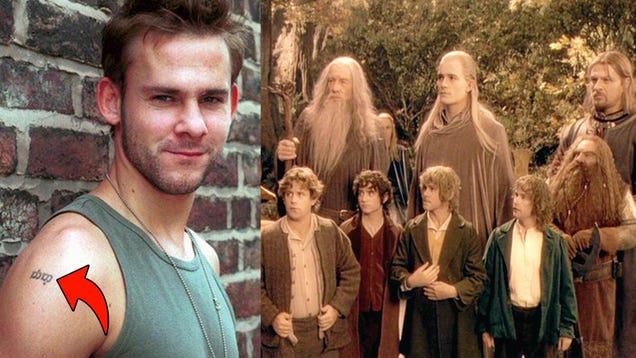
Dominic Monaghan on The Lord of the Rings Cast’s Matching Tattoos
Third-Party Data Breach Affecting Canadian Government Could Involve Data From 1999
Connor Jones reports via The Register: The government of Canada has confirmed its data was accessed after two of its third-party service providers were attacked. The third parties both provided relocation services for public sector workers and the government is currently analyzing a “significant volume of data” which could date back to 1999. No formal conclusions have yet been made about the number of workers impacted due to the large-scale task of analyzing the relevant data. However, the servers impacted by the breach held data related to current and former Canadian government staff, members of the Canadian armed forces, and Royal Canadian Mounted Police workers — aka Mounties.
“At this time, given the significant volume of data being assessed, we cannot yet identify specific individuals impacted; however, preliminary information indicates that breached information could belong to anyone who has used relocation services as early as 1999 and may include any personal and financial information that employees provided to the companies,” a government statement read. Those who think they may be affected are advised to update any login details that may be similar to those used to access BGRS or Sirva’s systems. Enabling MFA across all accounts that are used for online transactions is also advised, as is the manual monitoring of personal accounts for any potential malicious activity. Work is currently being carried out to identify and address any vulnerabilities that may have led to the incident, according to the statement.


Read more of this story at Slashdot.
Source: Slashdot – Third-Party Data Breach Affecting Canadian Government Could Involve Data From 1999
USB worm unleashed by Russian state hackers spreads worldwide

Enlarge (credit: Getty Images)

A group of Russian-state hackers known for almost exclusively targeting Ukranian entities has branched out in recent months either accidentally or purposely by allowing USB-based espionage malware to infect a variety of organizations in other countries.
The group—known by many names, including Gamaredon, Primitive Bear, ACTINIUM, Armageddon, and Shuckworm—has been active since at least 2014 and has been attributed to Russia’s Federal Security Service by the Security Service of Ukraine. Most Kremlin-backed groups take pains to fly under the radar; Gamaredon doesn’t care to. Its espionage-motivated campaigns targeting large numbers of Ukrainian organizations are easy to detect and tie back to the Russian government. The campaigns typically revolve around malware that aims to obtain as much information from targets as possible.
One of those tools is a computer worm designed to spread from computer to computer through USB drives. Tracked by researchers from Check Point Research as LitterDrifter, the malware is written in the Visual Basic Scripting language. LitterDrifter serves two purposes: to promiscuously spread from USB drive to USB drive and to permanently infect the devices that connect to such drives with malware that permanently communicates with Gamaredon-operated command and control servers.
Read 6 remaining paragraphs | Comments
Source: Ars Technica – USB worm unleashed by Russian state hackers spreads worldwide