European Union Lawmakers Agree To New Rules That Bolster Gig Worker Rights

An anonymous reader quotes a report from TechCrunch: Some two years of talking about gig worker rights later and European Union lawmakers have finally reached a deal on the final shape of the Platform Worker Directive. […] The Commission presented its original plan to reform labor laws to boost protections for platform workers back in December 2021, setting out a presumption of employment for workers in a bid to flip the odds on gig economy exploitation. But the proposal proved contentious, with heavy industry lobbying from tech platforms such as Uber pushing for gig workers to be carved out of Europe’s employment protections. There were also divisions between Member States over how much worker protection vs platform shielding they were prepared to commit to. But after a final trilogue, lasting more than 12 hours, a provisional agreement has been clinched.

The deal that’s been provisionally agreed means a presumption of an employment relationship between a gig worker and a platform will be triggered when two out of a list of five “indicators of control or direction are present,” as the parliament’s press release puts it. “This list can be expanded by Member States. The presumption can be triggered by the worker, by their representatives, and by the competent authorities on their own initiative. This presumption can be rebutted if the platform proves that the contractual relationship is not an employment relationship,” it adds. The agreement also contains transparency provisions that will require platforms to provide information to individuals performing platform work (and to their representatives) about how the algorithms that manage them work; and how their behavior affects decisions taken by automated systems. […] The provisionally agreed new rules will also ban platforms from taking “certain important decisions,” such as dismissals or decisions to suspend an account, without human oversight.

Per the parliament, the agreed text also ensures “more human oversight on the decisions of systems that directly affect the persons performing platform work”; and obliges platforms to “assess the impact of decisions taken or supported by automated monitoring and decision-making systems on working conditions, health and safety and fundamental rights”. So conducting data protection impact assessments looks set to be a hard requirement for complying with the new law. Another prohibition that’s been agreed is a ban on platforms from processing certain types of personal data of workers, including personal beliefs, private exchanges with colleagues, or when a worker is not at work — with the Directive billed as beefing up data protection rights for platform workers.

Other provisions in the provisional deal include a requirement for platforms to share information on self-employed workers in their employ with competent national authorities and representatives of those performing platform work, such as trade unions. Measures to prevent platforms from circumventing the rules by using intermediaries has also been agreement — a practice that’s stepped up considerably in Spain since the country introduced its own labor reform, back in 2021, with the aim of forcing platforms to hire delivery workers. Some key details of exactly what’s been agreed remain under wraps — and full visibility and analysis of the ramifications will likely have to wait for a consolidated text to emerge in the coming weeks/months. […] The final text still needs to be voted on by the Council and Parliament before it can be adopted as pan-EU law. What implementation period has been agreed also isn’t yet clear. But today’s political deal signals the train has now left the station.

Read more of this story at Slashdot.


Source: Slashdot – European Union Lawmakers Agree To New Rules That Bolster Gig Worker Rights

Effects of Falcon Heavy launch delay could ripple to downstream missions

A SpaceX Falcon Heavy rocket is seen outside the company's hangar at Kennedy Space Center, Florida.

A SpaceX Falcon Heavy rocket is seen outside the company’s hangar at Kennedy Space Center, Florida. (credit: SpaceX)

SpaceX and the US Space Force thought they were ready to launch the military’s mysterious X-37B spaceplane this week, but ground teams in Florida need to roll the Falcon Heavy rocket back into its hangar for servicing.

This is expected to push back the launch until at least late December, perhaps longer. SpaceX and Space Force officials have not divulged details about the problems causing the delay.

SpaceX called off a launch attempt Monday night at NASA’s Kennedy Space Center in Florida to resolve a problem with a ground system. A senior Space Force official told Ars on Wednesday that additional issues will cause an additional delay in the launch.

Read 16 remaining paragraphs | Comments


Source: Ars Technica – Effects of Falcon Heavy launch delay could ripple to downstream missions

Hasbro's New X-Men '97 Figures Hail the Goblin Queen

As we get closer and closer to the arrival of X-Men ‘97, the rallying cry of “To me, my X-Men merchandise!” just gets louder and louder. Earlier this week we saw Lego get in on the X-mania with a new set, but now it’s Hasbro’s turn with its latest wave inspired by the cartoon series.

Read more…


Source: Gizmodo – Hasbro’s New X-Men ’97 Figures Hail the Goblin Queen

You're Going to Want to Use Apple's New Stolen Device Protection Feature

Privacy and security are a huge element of Apple’s business model. When you buy an iPhone, Apple wants you to know that your iMessages are encrypted, Face ID is secure, and you have features to block trackers while browsing the web.

While it’s true that Apple has plenty of excellent features to keep your data safe and secure, they’re far from perfect. Back in February, a Wall Street Journal investigation found that iPhone thieves were able to reset their victims’ iCloud passwords from the stolen device, which allows them both take over the iPhone they stole and the Apple ID attached to it. This is possible if the thief knows your iPhone passcode, something that might be easy to learn if they spy over your shoulder as you type it in. While there are many iCloud features that require your Apple ID password to gain access to, resetting your iCloud password only takes your iPhone’s passcode to get started. As long as the thief spies your digits before the theft, they can break into your phone and take over your digital life.

Back when this report broke, we recommended certain workarounds to protect yourself, such as using an alphanumeric password on your iPhone, not punching in your password when anyone was around, and avoiding keeping financial information available on your unlocked device. However, workarounds are imperfect. Luckily, the first step towards a solution just arrived in the iOS 17.3 developer beta.

Stolen Device Protection can prevent thieves from taking over your iPhone

In the new iOS 17.3 developer beta, aside from bringing back collaborative playlists in Apple Music (thank god), iOS 17.3 introduces a new “Stolen Device Protection” feature. When enabled, Face ID or Touch ID (if your iPhone has a Home button) will be required when accessing passwords and passkeys, making purchases with saved cards in Safari, applying for an Apple Card, viewing your digital Apple Card, erasing all content and settings, taking some Apple Cash and Savings actions in Wallet, disabling Lost Mode, and using your iPhone to set up a new device.

In addition, certain features will require Face ID or Touch ID and come with a one-hour delay when you try to enable them. That includes changing your Apple ID password, updating certain Apple ID account security settings, changing your iPhone passcode, adjusting Face ID or Touch ID settings, turning off Find My, and turning off Stolen Device Protection itself.

In all cases, you won’t have the option to punch in your passcode if Face ID or Touch ID fails. You will, presumably, have the option to try again if your scan doesn’t work (say you forgot to take off your sunglasses) but bad actors will find their efforts to be in vain.

How to enable Stolen Device Protection on iPhone

To get started, you’ll need to be running iOS 17.3 or newer. Once updated, open Settings > Face ID & Passcode > Stolen Device Protection. If you’re on the beta, you may see a pop-up inviting you to test the feature, but if you are running the public version of iOS 17.3 Apple will release in the future, you won’t see this.

If you don’t want the feature on going forward, you can return to this page to disable it. However, remember there’s a one-hour delay that kicks in when you try to turn the feature off.


Source: LifeHacker – You’re Going to Want to Use Apple’s New Stolen Device Protection Feature

GM Says It's Ditching Apple CarPlay, Android Auto For Your Safety

Earlier this year, General Motors announced plans to phase out Apple CarPlay and Android Auto, shifting instead to built-in infotainment systems developed with Google. Now, the company has explained why it made that decision to MotorTrend: Tim Babbitt, GM’s head of product for infotainment, gave MT a better explanation at a press event for the new Chevrolet Blazer EV, the flagship vehicle in the no CarPlay or Android Auto strategy. According to him, there’s an important factor that didn’t make it into the fact sheet: safety. Specifically, he cited driver distraction caused by cell phone usage behind the wheel. According to Babbitt, CarPlay and Android Auto have stability issues that manifest themselves as bad connections, poor rendering, slow responses, and dropped connections. And when CarPlay and Android Auto have issues, drivers pick up their phones again, taking their eyes off the road and totally defeating the purpose of these phone-mirroring programs. Solving those issues can sometimes be beyond the control of the automaker. You can start to see GM’s frustration. Babbitt’s thesis is that if drivers were to do everything through the vehicle’s built-in systems, they’d be less likely to pick up their phones and therefore less distracted and safer behind the wheel. He admits, though, GM hasn’t tested this thesis in the lab or real world yet but believes it has potential, if customers go for it.

The issues Babbitt cited with CarPlay and Android Auto seem like they’d be mostly linked to using those programs wirelessly, and while he says that’s true, just plugging the phone into a USB data port doesn’t solve all the problems. Babbitt says even when using a physical connection, Android phones are prone to compatibility issues between the vehicle and all the various phone manufacturers running Android. iPhones, meanwhile, suffer from backwards compatibility issues that cause older iPhone models to have trouble running CarPlay consistently. He points to J.D. Power data that shows issues with CarPlay and Android Auto are common owner complaints, and that customers tend to blame the automaker rather than the phone manufacturer or phone software. In that way, eliminating CarPlay and Android Auto potentially relieves GM of a key customer complaint dragging down their perceived quality scores. After MotorTrend’s story was published, GM issued the following statement: “We wanted to reach out to clarify that comments about GM’s position on phone projection were misrepresented and to reinforce our valued partnerships with Apple and Google and each company’s commitment to driver safety. GM’s embedded infotainment strategy is driven by the benefits of having a system that allows for greater integration with the larger GM ecosystem and vehicles.”

Read more of this story at Slashdot.


Source: Slashdot – GM Says It’s Ditching Apple CarPlay, Android Auto For Your Safety

Finally, You Can Buy an Apple AirPods Pro USB-C Case Separately

The rumors are true. If you need to replace or switch to a USB-C charging case for your Apple AirPods Pro, you will no longer have to spend $250 on a new pair. Apple is finally selling its new USB-C AirPods Pro USB-C charging cases separately for $99 (first spotted by The Verge).

Read more…


Source: Gizmodo – Finally, You Can Buy an Apple AirPods Pro USB-C Case Separately

Trains were designed to break down after third-party repairs, hackers find

Dragon Sector uploaded a video to social media after discovering an "undocumented ‘unlock code’ which you could enter from the train driver’s panel" fixed "mysterious issues" impacting trains in Poland.

Enlarge / Dragon Sector uploaded a video to social media after discovering an “undocumented ‘unlock code’ which you could enter from the train driver’s panel” fixed “mysterious issues” impacting trains in Poland. (credit: Adam Haertle on YouTube)

An unusual right-to-repair drama is disrupting railroad travel in Poland despite efforts by hackers who helped repair trains that allegedly were designed to stop functioning when serviced by anyone but Newag, the train manufacturer.

Members of an ethical hacking group called Dragon Sector, including Sergiusz Bazański and Michał Kowalczyk, were called upon by a train repair shop, Serwis Pojazdów Szynowych (SPS), to analyze train software in June 2022. SPS was desperate to figure out what was causing “mysterious failures” that shut down several vehicles owned by Polish train operator the Lower Silesian Railway, Polish infrastructure trade publication Rynek Kolejowy reported. At that point, the shortage of trains had already become “a serious problem” for carriers and passengers, as fewer available cars meant shorter trains and reduced rider capacity, Rynek Kolejowy reported.

Dragon Sector spent two months analyzing the software, finding that “the manufacturer’s interference” led to “forced failures and to the fact that the trains did not start,” and concluding that bricking the trains “was a deliberate action on Newag’s part.”

Read 19 remaining paragraphs | Comments


Source: Ars Technica – Trains were designed to break down after third-party repairs, hackers find

Elon Musk Is Reportedly Launching a New University in Texas

The legions of Elon Musk stans who have long dreamed of following in the unhinged billionaire’s footsteps will soon have an opportunity to learn directly from the master. Or, rather, they’ll have an opportunity to attend a university set up by Musk. And learn science. Or something. Maybe.

Read more…


Source: Gizmodo – Elon Musk Is Reportedly Launching a New University in Texas

How Long an AirTag’s Battery Lasts (and How to Change It)

Apple’s AirTags are a useful device if you have a tendency to misplace things; the tool lets you track important things, such as luggage, keys, backpack, or even pets. Of course, any tracker is only as good as its battery: Once it loses power, it’s useless.

Can you check an AirTag’s battery level?

While an AirTags’ battery life is pretty long, there’s no clear way to check on its battery; you can’t check an AirTags’ battery life in percentages the way you can with smartphone or tablet. An AirTag’s battery life is, instead, a bit of a mystery.

How long do AirTags last?

According to Apple, you won’t run out of charge on your AirTags for about a year. When the battery is running low, you’ll receive a notification from the Find My app on your iPhone. You can also view this information in the Find My app by tapping the AirTag from the Items tab. The message simply reads: “Low Battery”—it offers no additional information. If the AirTag doesn’t have low battery, you won’t see any battery information at all.

How to change an AirTag’s battery

Apple uses a standard 3V CR2032 lithium coin battery that’s available at hardware stores and plenty of online retailers, so you won’t have to spend much time or money to find a replacement. Once you have the battery in hand, push the stainless steel side of the AirTag and rotate it counter-clockwise. This will open the cover. You can remove it, take out the old battery and replace it with the new one. The AirTag will play a sound to indicate the new battery is connected. You can then replace the cover and rotate it clockwise to close it.


You can pick up AirTags and replacement batteries from Amazon:


Source: LifeHacker – How Long an AirTag’s Battery Lasts (and How to Change It)

Hackers Hit With Legal Threats After They Fixed a 'Bricked' Polish Train

Three hackers in Poland were hired to fix the software of a broken train, and they were successful, but now the train company, Newag, is threatening to sue them, according to Polish outlet Rynek Kolejowy. The hackers allege that the trains were deliberately outfitted with software that would ensure they couldn’t…

Read more…


Source: io9 – Hackers Hit With Legal Threats After They Fixed a ‘Bricked’ Polish Train

Fan-made Zelda: Link’s Awakening remake lets you zoom out to see the entire island

An anonymous and inventive Nintendo fan has recreated the Game Boy classic The Legend of Zelda: Link’s Awakening with a twist that separates it from the official 2019 remaster. The widescreen Windows remake adds high frame rate support and lets you zoom out to view a larger portion — or even all — of Koholint Island. But the game may not last long as Nintendo has a habit of crushing copyright-infringing fan games, even when crafted lovingly and offered for free like this one.

Spotted on X (alongside a writeup by Polygon), Link’s Awakening DX HD is a love letter to the 1993 original and its 1998 color re-release. The unofficial port recreates the quirky Zelda installment with 120 frames per second (FPS) support, which the developer describes as adding “unparalleled fluidity.”

The homebrew port also gets rid of the original’s transitions, which loaded a new screen every time you walked to the next one (old-school Zelda style). In this version, the camera pans fluidly as Links strolls around the island, something we imagine was no small task for the unnamed creator.

Fan-made remake of The Legend of Zelda: Link's Awakening, showing most of the southwest portion of Koholint Island as Link walks around. Colorful 1990 Game Boy graphics zoomed out far past what that hardware supported.
linksawakeningdxhd / itch.io / Nintendo

Zoom level, available in the in-game settings menu, lets you pan out to a 1:1, half or one-third pixel scale, allowing you to view as much as the entire island simultaneously. This isn’t a static perspective, either. Each visible section is fully activated (as if Link were on it in the original) and swarming with enemies. You can move around in the panned-out views, swinging your sword at Moblins and searching for the next task without pausing to consult a static game map.

The game’s developer posted the 90s love letter anonymously, likely to shield them (for a time, anyway) from Nintendo’s litigation-happy legal team. The 24 MB Link’s Awakening DX HD is a free download on itch.io, but we wouldn’t count on it staying there for much longer. Either way, you can watch a snippet of gameplay in the video below.

This article originally appeared on Engadget at https://www.engadget.com/fan-made-zelda-links-awakening-remake-lets-you-zoom-out-to-see-the-entire-island-214345008.html?src=rss

Source: Engadget – Fan-made Zelda: Link’s Awakening remake lets you zoom out to see the entire island

Humana also using AI tool with 90% error rate to deny care, lawsuit claims

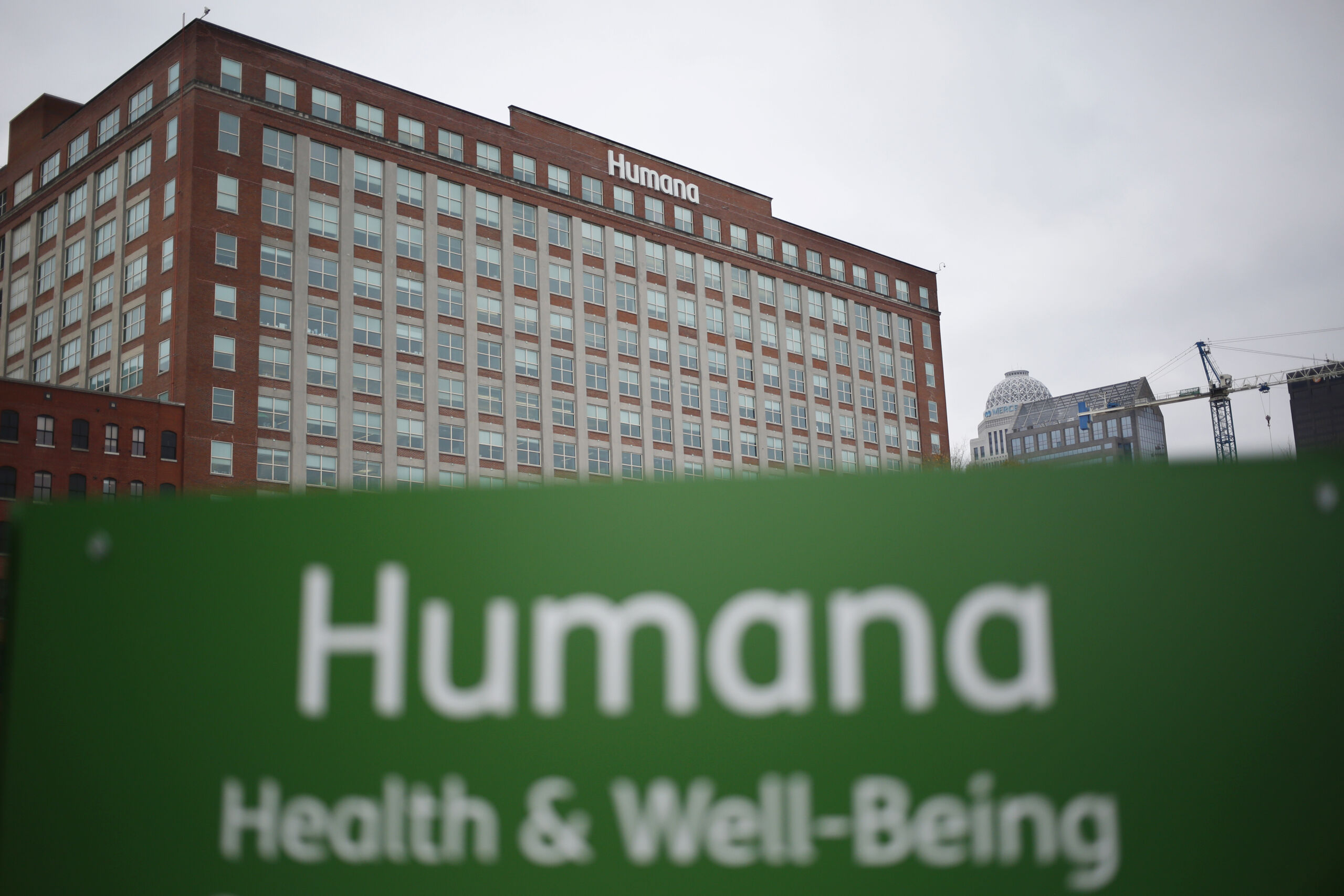
Signage is displayed outside the Humana Inc. office building in Louisville, Kentucky, US, in 2016.

Enlarge / Signage is displayed outside the Humana Inc. office building in Louisville, Kentucky, US, in 2016. (credit: Getty | Luke Sharrett)

Humana, one the nation’s largest health insurance providers, is allegedly using an artificial intelligence model with a 90 percent error rate to override doctors’ medical judgment and wrongfully deny care to elderly people on the company’s Medicare Advantage plans.

According to a lawsuit filed Tuesday, Humana’s use of the AI model constitutes a “fraudulent scheme” that leaves elderly beneficiaries with either overwhelming medical debt or without needed care that is covered by their plans. Meanwhile, the insurance behemoth reaps a “financial windfall.”

The lawsuit, filed in the US District Court in western Kentucky, is led by two people who had a Humana Medicare Advantage Plan policy and said they were wrongfully denied needed and covered care, harming their health and finances. The suit seeks class-action status for an unknown number of other beneficiaries nationwide who may be in similar situations. Humana provides Medicare Advantage plans for 5.1 million people in the US.

Read 13 remaining paragraphs | Comments


Source: Ars Technica – Humana also using AI tool with 90% error rate to deny care, lawsuit claims

OpenAI, Axel Springer Strike Unprecedented Deal To Offer News In ChatGPT

OpenAI has struck a deal with Politico parent company Axel Springer, allowing ChatGPT to summarize news stories from Politico and Business Insider. CNBC reports: Once the OpenAI-Axel Springer deal goes into effect, when a user asks ChatGPT a question, it will respond with summaries of news articles from media outlets such as Politico, Business Insider, Bild and Welt. The chatbot will also include articles that would otherwise be limited to subscribers of those outlets, according to a release, and the answers will include “attribution and links to the full articles for transparency.” The partnership follows a deal that OpenAI struck with the Associated Press in July, allowing it to license the AP’s news archive for training data.

As part of the agreement, Axel Springer will provide content from its media brands as training data for OpenAI’s large language models, such as GPT-4, the AI model that helps power ChatGPT. The News Media Alliance, a trade group representing more than 2,200 publishers, released research in October suggesting that data sets used to train popular AI models rely “significantly” more on publisher content, outweighing it by a factor ranging from over five to almost 100, compared to generic web content.

Read more of this story at Slashdot.


Source: Slashdot – OpenAI, Axel Springer Strike Unprecedented Deal To Offer News In ChatGPT

Never Use Homeopathic Eye Drops, FDA Warns

With all the eye drop recalls lately, it’s a good time to think about eye drop safety. The FDA recently issued some “consumer tips” that include never using certain types of eye drops–including anything labeled as homeopathic. We have a full breakdown of what not to use, and why, below. 

Why so many eye drops are problematic

Our immune system does a great job of protecting our bodies from infection–but it doesn’t always show up to fight infection in our eyes. In science terms, the eyes are “immune privileged.” Our immune system mostly trusts that our eyes will take care of themselves, so you rarely get much inflammation (part of the infection-fighting process) in the eyes. In addition to the eyes, other immune privileged body parts include the brain, testes, placenta, and fetus.

It’s thought that immune privilege is good for our eyes, because it reduces the chances of swelling. But the flip side is that if our eyes do get infected, that infection is harder to fight off. People have died or lost their vision from infections that resulted from contaminated eye drops. 

Since our eyes are so vulnerable to infection, it’s important not to squirt anything into them that we don’t truly need to. And that’s why the FDA is warning people away from eye drops that don’t have a known therapeutic benefit. All eye drops carry some risk, so you should make sure the potential benefits outweigh the potential risks. Here are the types of eye drops to avoid. 

Homeopathic eye drops

While you may think of “homeopathy” as a synonym for home remedies or natural medicine, it’s not. Homeopathy is a specific, long-debunked medical theory from the days before we knew that germs cause disease; it was seen as a gentler alternative to bloodletting and other harsh treatments of the time. 

FDA regulations were written with a carve-out that allowed homeopathic “drugs” to exist alongside real drugs, even though they are not FDA-approved and have never been proven to be safe or effective. The FDA and FTC have been delicately trying to crack down on products that they can argue are unsafe or misleadingly marketed. For now, homeopathic products are allowed to exist, but are supposed to be clearly labeled with language like: “Claims based on traditional homeopathic practice, not accepted medical evidence.”

The FDA’s advice here is simple: “Do not use ophthalmic [eye] products that are labeled as homeopathic, as these products should not be marketed.” 

You can recognize homeopathic products by the word “homeopathic” (usually on the front of the package) and by the ingredients being listed as a dilution (a number followed by X, C, or CK) rather than in a measurable amount like milligrams. “Cineraria maritima HPUS 6X” would be an example of a homeopathic ingredient dilution. The FDA has more here on how to recognize and avoid homeopathic products. 

Eye drops that claim to treat serious conditions

If your doctor prescribes eye drops for a serious condition like cataracts or glaucoma, you can trust those. But if you’re attempting to treat or deal with something on your own, don’t trust over-the-counter eye drops that say they can treat these issues. 

The FDA, again, puts it simply: there are no approved over-the-counter eye drops for “serious eye conditions such as glaucoma, cataracts, retinopathy or macular degeneration.” 

Eye drops with MSM (methylsulfonylmethane)

A chemical called methylsulfonylmethane, or MSM, has been studied for its potential health benefits. It may be anti-inflammatory; it’s legal to use as an ingredient in food or supplements. 

But if you see it in eye drops, steer clear. The FDA says of MSM drops: “These products are unapproved drugs and illegally marketed in the U.S. There are no legally marketed ophthalmic drugs that contain MSM as an active ingredient.”

Eye drops containing silver

Silver sulfate and argentum are two names for medication ingredients that may contain silver (the metal). Over time, silver can cause the whites of your eyes to turn gray. 

Something similar happens in the skin in people who take large doses of silver (such as colloidal silver) for many years. In that case, there’s a name for the condition: argyria. 

Similar to the eye drops mentioned above, there is no known clinical benefit of silver-containing eye drops, and they pose the risk of dyeing your eyes gray as well as the risk of introducing contaminants if the eye drops are not properly manufactured and packaged.

The FDA suggests that everyone check their eye drops for the ingredients above–silver, MSM, or anything homeopathic–and also check whether the drops are on one of the recent recall or warning lists. You can read more from the FDA here.


Source: LifeHacker – Never Use Homeopathic Eye Drops, FDA Warns

Netflix Co-CEO Ted Sarandos Explains Why It Has Been Hiding All That Streaming Data

Talking on the Town podcast, Netflix co-CEO Ted Sarandos—who, host Matt Belloni pointed out, has been reluctant to divulge ratings and audience numbers in the past—explained the timing of yesterday’s “What We Watched” engagement report, including why it’s taken Netflix so long to offer this level of data transparency.

Read more…


Source: Gizmodo – Netflix Co-CEO Ted Sarandos Explains Why It Has Been Hiding All That Streaming Data

Which AI Model Provides the 'Best' Answers?

An anonymous reader quotes a report from Ars Technica: For those looking for a more rigorous way of comparing various models, the folks over at the Large Model Systems Organization (LMSys) have set up Chatbot Arena, a platform for generating Elo-style rankings for LLMs based on a crowdsourced blind-testing website. Chatbot Arena users can enter any prompt they can think of into the site’s form to see side-by-side responses from two randomly selected models. The identity of each model is initially hidden, and results are voided if the model reveals its identity in the response itself. The user then gets to pick which model provided what they judge to be the “better” result, with additional options for a “tie” or “both are bad.” Only after providing a pairwise ranking does the user get to see which models they were judging, though a separate “side-by-side” section of the site lets users pick two specific models to compare (without the ability to contribute a vote on the result).

Since its public launch back in May, LMSys says it has gathered over 130,000 blind pairwise ratings across 45 different models (as of early December). Those numbers seem poised to increase quickly after a recent positive review from OpenAI’s Andrej Karpathy that has already led to what LMSys describes as “a super stress test” for its servers. Chatbot Arena’s thousands of pairwise ratings are crunched through a Bradley-Terry model, which uses random sampling to generate an Elo-style rating estimating which model is most likely to win in direct competition against any other. Interested parties can also dig into the raw data of tens of thousands of human prompt/response ratings for themselves or examine more detailed statistics, such as direct pairwise win rates between models and confidence interval ranges for those Elo estimates.

Chatbot Arena’s latest public leaderboard update shows a few proprietary models easily beating out a wide range of open-source alternatives. OpenAI’s ChatGPT-4 Turbo leads the pack by a wide margin, with only an older GPT-4 model (“0314,” which was discontinued in June) coming anywhere close on the ratings scale. But even months-old, defunct versions of GPT-3.5 Turbo outrank the highest-rated open-source models available in Chatbot Arena’s testbed. Anthropic’s proprietary Claude models also feature highly in Chatbot Arena’s top rankings. Oddly enough, though, the site’s blind human testing tends to rank the older Claude-1 slightly higher than the subsequent releases of Claude-2.0 and Claude-2.1. Among the tested non-proprietary models, the Llama-based Tulu 2 and 01.ai’s Yi get rankings that are comparable to some older GPT-3.5 implementations. Past that, there’s a slow but steady decline until you get to models like Dolly and StableLM at the bottom of the pack (amid older versions of many models that have more recent, higher-ranking updates on Chatbot Arena’s charts).

Read more of this story at Slashdot.


Source: Slashdot – Which AI Model Provides the ‘Best’ Answers?

Why You Should Always Attend Your Home Inspection

Whether you’ve just made an offer on a home or you’re about to put yours on the market, a home inspection can provide you with invaluable information on the present condition of a home, as well as the potential problems that might arise in the future.

And while the resulting report will likely include most, if not all, of the home’s major issues and the repairs needed to fix them, reading through it on your own isn’t nearly as useful as attending the inspection in person—especially if you’re the buyer. But what, exactly, do you gain from taking time out of your busy schedule to be present at your home inspection? I spoke with Mike Powell, P.E., CPI, a home inspector at Red Flag Home Inspection in Tampa, Florida, to find out.

Why you should attend your home inspection

While some people view home inspections as a formality, a safeguard against unknowingly purchasing a home with serious and costly problems, or a way of obtaining written proof that an issue exists, they’re so much more than that. Think of home inspections as an investment, and skipping yours as not taking full advantage of the service, and essentially, leaving money on the table.

Still not convinced? Here are a few of the benefits of attending your home inspection, courtesy of Powell:

Real-time recommendations

You can learn a lot about a home by reading the inspection report, but you can learn even more if your inspector offers real-time advice on minor improvements or modifications that can make the home safer and more efficient—including those typically left out of the reports. When else will you receive this kind of personalized guidance?

Asking questions

Now’s your chance to have a professional answer the questions you have about your home. “I welcome questions from homebuyers during the inspection, as it’s a valuable opportunity for them to gain insights and clarity about the property,” says Powell. “However, to ensure the inspection process is smooth and nothing is overlooked, it’s recommended to save questions for breaks in the action or after the inspection.”

Learning how systems operate

When buyers attend their inspection, it gives them the opportunity to learn how to operate various systems and components in the home, like the HVAC system, thermostat, water heater, and security features. “Sprinkler systems tend to be particularly tough for most home buyers, while easy to navigate for most home inspectors,” Powell says. “This firsthand knowledge can contribute to smoother homeownership.”

Locate shut-off valves and breakers

Inspections are the perfect time for buyers to ask about and learn the locations of important shut-off valves, circuit breakers, and emergency controls. “Knowing these key points is crucial for quick responses in case of emergencies or needed repairs,” Powell explains.

Hands-on demonstrations

Being present at your home inspection is also a chance for some visual learning; for instance, instead of simply describing how your HVAC system works, your inspector can walk you through the processes involved with operating and maintaining it. Also, being there in person allows the inspector to show you exactly where any problems are located, and the extent of the damage, if any.

“Have you ever emailed someone with paragraphs of explanation, only to show them the same instruction in seconds?” Powell says. “This can be similar when applied to a building defect. Seeing it in person will always deliver more effectively than photographs.”

Prioritize repairs

Getting a long list of the repairs and improvements you home needs can be overwhelming, and can leave buyers unsure of where to start. “By witnessing the inspector’s assessment, buyers can better understand the severity of identified issues,” says Powell. “This understanding helps in prioritizing repairs based on urgency and budget constraints.”

Building a relationship with the inspector

Establishing a good rapport with your inspector will not only make it easier to ask questions and communicate more openly with them during the inspection, it might be useful in the future, as well. “This relationship may extend beyond the inspection, allowing buyers to seek advice or clarification post-purchase,” says Powell.

Clarify inspection terminology

Like other professions, home inspection has its own jargon, and the inspector may use it in the report. “Attending the inspection gives buyers the opportunity to ask for explanations, ensuring they fully comprehend the terminology used and the implications of various findings,” Powell explains.


Source: LifeHacker – Why You Should Always Attend Your Home Inspection

Man Holds in Sneeze, Rips Open His Windpipe

Here’s a scary lesson about why you shouldn’t hold in your sneezes. In a case report this month, doctors in the UK describe a man in his 30s who tore open his windpipe by holding his nose and mouth closed while sneezing—apparently the first documented instance of such an injury. Though the man did have to spend some…

Read more…


Source: Gizmodo – Man Holds in Sneeze, Rips Open His Windpipe

SpaceX blasts FCC as it refuses to reinstate Starlink’s $886 million grant

A Starlink broadband satellite dish placed outside on the ground.

Enlarge / Starlink satellite dish. (credit: Getty Images | olegda88)

SpaceX is furious at the Federal Communications Commission after the agency refused to reinstate an $886 million broadband grant that was tentatively awarded to Starlink during the previous administration.

The FCC announced yesterday that it rejected SpaceX’s appeal. “The FCC followed a careful legal, technical and policy review to determine that this applicant had failed to meet its burden to be entitled to nearly $900 million in universal service funds for almost a decade,” FCC Chairwoman Jessica Rosenworcel said.

In December 2020, shortly before the departure of then-FCC Chairman Ajit Pai, Starlink was tentatively awarded $885.51 million in broadband funding from the Rural Digital Opportunity Fund (RDOF). But the satellite provider still needed FCC approval of a long-form application to receive the money, which is meant to subsidize deployment in areas with little or no high-speed broadband access.

Read 17 remaining paragraphs | Comments


Source: Ars Technica – SpaceX blasts FCC as it refuses to reinstate Starlink’s 6 million grant