The TikTok deal is done, and Donald Trump is claiming a win, although it remains unclear if the joint venture he arranged with ByteDance and the Chinese government actually resolves Congress’ national security concerns.
In a press release Thursday, TikTok announced the “TikTok USDS Joint Venture LLC,” an entity established to keep TikTok operating in the US.
Giving Americans majority ownership, ByteDance retains 19.9 percent of the joint venture, the release said, which has been valued at $14 billion. Three managing investors—Silver Lake, Oracle, and MGX—each hold 15 percent, while other investors, including Dell Technologies CEO Michael Dell’s investment firm, Dell Family Office, hold smaller, undisclosed stakes.
As Big Red’s governance of the popular database comes into question, contributors to MySQL consider wresting controlDevelopers in the MySQL community are working together to challenge Oracle to improve transparency and commitment in its handling of the popular open source database, while considering other options, including forking the code.…
An anonymous reader shares a report: The Apple supplier subject to a major cyberattack last month was China’s Luxshare, it has now emerged. More than 1TB of confidential Apple information was reportedly stolen.
It was reported in December that one of Apple’s assemblers suffered a significant cyberattack that may have compromised sensitive production-line information and manufacturing data linked to Apple. The specific company targeted, the scope of the breach, and its operational impact were unclear until now. The attack was first revealed on RansomHub’s dark web leak site on December 15, 2025, where the group claimed it had encrypted internal Luxshare systems and exfiltrated large volumes of confidential data belonging to the company and its customers.
The attackers warned that the information would be publicly released unless Luxshare contacted them to negotiate, and accused the company of attempting to conceal the incident. According to the attackers’ claims, the exfiltrated material includes vital files such as detailed 3D CAD product models and high-precision geometric files, 2D manufacturing drawings, mechanical component designs, circuit board layouts, and internal engineering PDFs. The group added that the large archives include Apple product data as well as information belonging to Nvidia, LG, Tesla, Geely, and other major clients.
Queued into tip/tip.git’s “sched/urgent” Git branch today is a patch to disable the kernel scheduler’s NEXT_BUDDY functionality that was re-implemented back during the Linux 6.19 merge window. It turns out to cause some performance regressions that have yet to be otherwise addressed…
In a series of interviews at Davos, Meta’s CTO explained why the company is reducing its investment in VR.
If you somehow missed it: last week Meta shut down three of its acquired VR game studios, conducted significant layoffs at a fourth, canceled the Batman: Arkham Shadow sequel, and announced the shutdown of Horizon Workrooms and its Quest headsets for business offering. These actions came a month after the company officially confirmed “shifting some of our investment from Metaverse toward AI glasses and Wearables”.
At the World Economic Forum in Davos, Meta CTO Andrew Bosworth has finally made public statements about the VR layoffs and shutdowns, via a series of interviews.
One of the interviews was with veteran tech reporter Alex Heath. While Heath hasn’t yet shared the interview (this is set to happen in the coming days), he has published an article with key quotes wherein Bosworth declares that “VR is growing less quickly than we hoped”.
“We’re still continuing to invest heavily in this space, but obviously, VR is growing less quickly than we hoped,” Bosworth apparently told Heath. “And so you want to make sure that your investment is right-sized.”
According to Heath, Bosworth claimed that Meta has seen “really, really positive pickup” in Horizon Worlds on smartphones, and plans to double down on this with continued investment in Horizon on mobile.
“You’ve got a team that actually has product market fit in a huge market on mobile phones, and they’re having to build everything twice. They’re building it once for mobile phones, and building again for VR. There’s a pretty easy way to increase their velocity: just let them build for mobile. So Horizon is very focused now on mobile — not exclusively, but almost exclusively,” Bosworth is quoted as saying.
Another interview, available in full on YouTube, was conducted by Axios’ chief technology correspondent Ina Fried.
In it, Bosworth gave a very similar explanation for Meta’s shift in strategy.
“It’s like any investment, you’re gonna look at how you do over the course of years and you’re gonna reinvest in some areas and trim your losses in others.
For us, we’re seeing tremendous growth of our metaverse on mobile. You know, Horizon is this thing that started on VR headsets. But obviously there’s much more users today on mobile phones. We’ve been pivoting over the last year to focus on the mobile market and it’s going really well, and so you kinda wanna double down on that.”
Bosworth also seemed to suggest that Meta’s significant investment in the VR side of Horizon Worlds, and repeated pushes to convince Quest headset wearers to use it, came at “an expense of user experience”.
“We’re gonna let VR be what it is, what it does”, Bosworth said. “We’re gonna have focus a lot more on the third party content library, the ecosystem that’s developed there.”
That seems to suggest that Meta will pull back on pushing Horizon Worlds for VR users and on making its own content, leaving the content ecosystem to third-party developers and letting headset owners choose the content they want.
Love it or hate it, Tesla has been responsible for helping to shape the tastes of automotive consumers over the past decade-plus. Over-the-air updates that add more features, an all-touchscreen human-machine interface, large castings, and hands-free driver assists were all introduced or popularized by Tesla’s electric vehicles, prompting other automakers to copy them, mostly in the hopes of seeing the same stratospheric gains in their stock prices. But starting on Valentine’s Day, if you want your Tesla to steer itself, you’ll have to pay a $99 monthly subscription fee.
Tesla currently offers a pair of so-called “level 2” partially automated driver assist systems. Autopilot is the older of these, combining Tesla’s adaptive cruise control (Tesla calls this TACC) and lane-keeping assist (Tesla calls this Autosteer). FSD is the newer system, meant to be more capable and for use on surface streets and divided-lane highways. Although the company and Tesla CEO Elon Musk regularly tout these systems’ capabilities, both still require the human driver to provide situational awareness.
But Autopilot has been under fire from regulators and the courts. Multiple wrongful death lawsuits are in the works, and after a high-profile loss resulting in a $329 million judgment against Tesla, expect many of these suits to be settled. Both the federal government and California have investigated whether Tesla misled customers, and in December, an administrative law judge ruled that Tesla indeed engaged in deceptive marketing by implying that its cars could drive themselves. The judge suspended Tesla’s license to sell cars in California, a decision that the California Department of Motor Vehicles stayed for 60 days.
Marcel Bucher, a professor of plant sciences at the University of Cologne in Germany, lost two years of carefully structured academic work in an instant when he temporarily disabled ChatGPT’s “data consent” option in August to test whether the AI tool’s functions would still work without providing OpenAI his data. All his chats were permanently deleted and his project folders emptied without any warning or undo option, he wrote in a post on Nature.
Bucher, a ChatGPT Plus subscriber paying $20 per month, had used the platform daily to draft grant applications, prepare teaching materials, revise publication drafts and create exams. He contacted OpenAI support, first receiving responses from an AI agent before a human employee confirmed the data was permanently lost and unrecoverable. OpenAI cited “privacy by design” as the reason, telling Nature it does provide a confirmation prompt before users permanently delete a chat but maintains no backups.
Bucher said he had saved partial copies of some materials, but the underlying prompts, iterations, and project folders — what he describes as the intellectual scaffolding behind his finished work — are gone forever.
Microsoft CEO Satya Nadella recently went on record saying that AI still needs to prove its worth if society is to adopt it long-term, but he presumably thinks his company has cracked it with its latest innovation: AI coloring books.
A new Microsoft Paint feature currently rolling out to Windows Insiders allows you to generate coloring book pages based on the text prompt you enter. The example Microsoft uses is “a cute fluffy cat on a donut,” to which the AI tool will spit out a set of slightly different options based on your prompt.
You can then choose which image you want, add it to your current workspace, copy or save it. Presumably you can also print it out for the purpose of entertaining your kids. No doubt the kind of real-world impact the Microsoft chief was alluding to.
The coloring book feature is exclusive to Copilot+ PCs, and Microsoft is also adding a fill tolerance slider that lets you adjust the precision with which the Fill tool adds color to your canvas.
As well as Paint’s new Coloring book feature, Microsoft has also improved its Write, Rewrite and Summarize AI functionality in Notepad, which integrates with GPT to fine-tune your writing and summarize complex notes. You’ll need to sign into your Microsoft account to use cloud features, but results will now appear more quickly and let you interact with the preview without having to wait for its full response. Again, you’ll need to be Windows Insider in the Canary and Dev channels on Windows 11 to take advantage of the updates initially.
This article originally appeared on Engadget at https://www.engadget.com/ai/you-can-now-create-ai-generated-coloring-books-in-microsoft-paint-163512527.html?src=rss
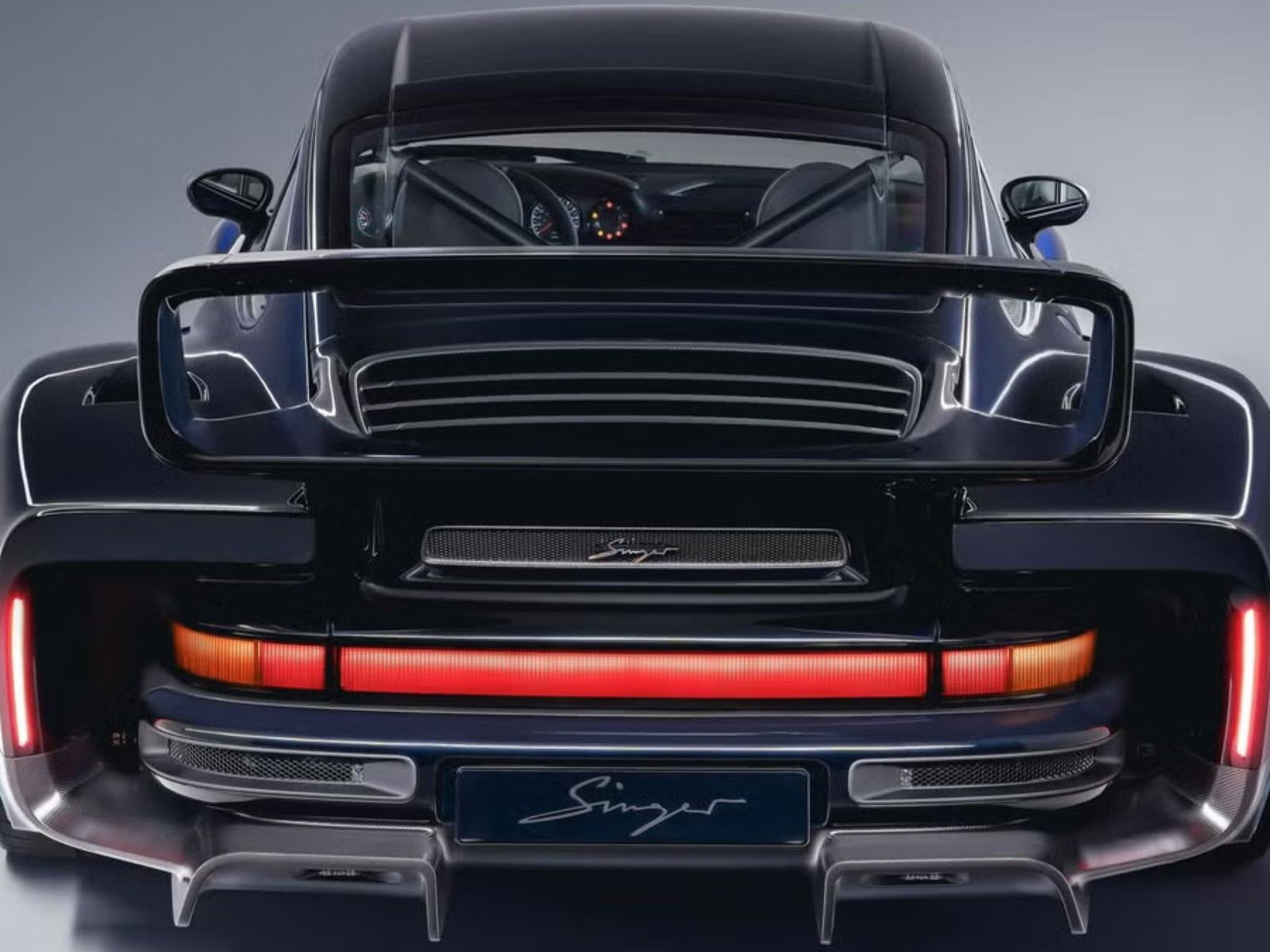
California-based Singer has unleashed the Sorcerer, the first customer commission (of 99) for its DLS Turbo program, effectively turning the clock back to the golden era of endurance racing while catapulting the Porsche 911 into a 700-horsepower future. TL;DR, we want one.
The Singer Sorcerer is far more than a restored classic; it’s a
Fraunhofer HHI this week released a new version of VVenC, their open-source H.266 video encoder. Among the changes this release are more performance optimizations for ARM and I have run some comparison benchmarks using a NVIDIA GB10 SoC with the Dell Pro Max GB10…
I’ve said this a million times by now (rough estimate) but it bears repeating – never pay full price for an audio product. NEVER! Yes, that’s a blanket recommendation and we’re sure it can nitpicked to find exceptions, but for the most part, paying full price for headphones or earbuds or speakers and so forth is a fool’s game. That’s because
Anthropic has a problem that most companies would envy: its AI model keeps getting so good, the company wrote in a blog post, that it passes the company’s own hiring test for performance engineers. The test, designed in late 2023 by optimization lead Tristan Hume, asks candidates to speed up code running on a simulated computer chip. Over 1,000 people have taken it, and dozens now work at Anthropic. But Claude Opus 4 outperformed most human applicants.
Hume redesigned the test, making it harder. Then Claude Opus 4.5 matched even the best human scores within the two-hour time limit. For his third attempt, Hume abandoned realistic problems entirely and switched to abstract puzzles using a strange, minimal programming language — something weird enough that Claude struggles with it. Anthropic is now releasing the original test as an open challenge. Beat Claude’s best score and … they want to hear from you.
We may earn a commission from links on this page. Deal pricing and availability subject to change after time of publication.
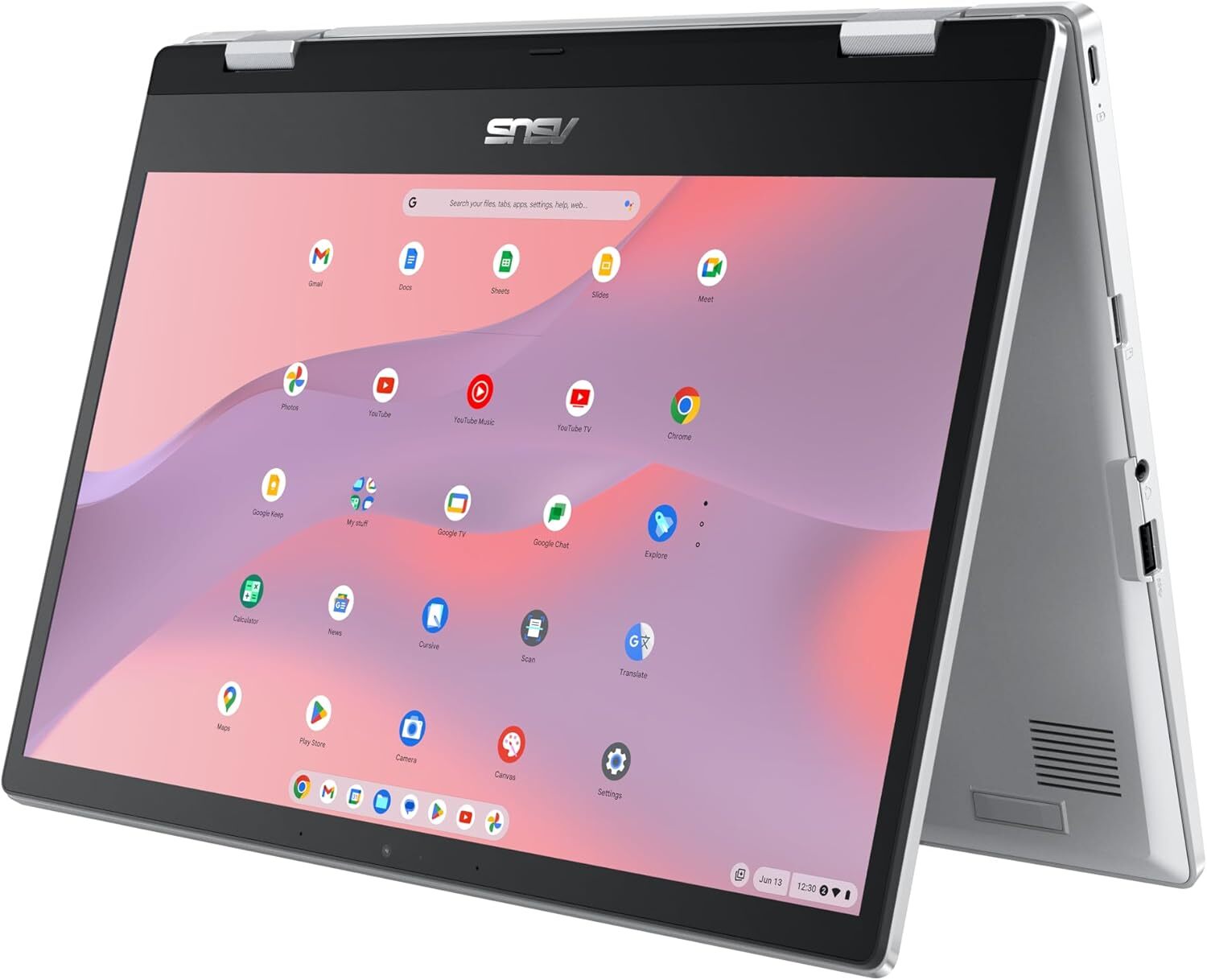
Two-in-one laptops are an adaptable tech essential for anyone who’s waffling between a laptop and a tablet—they’ve changed how people tackle workflows and consume entertainment, and are a more portable option for commuters or anyone who wants the perks of a touchscreen with their laptop. The 14-inch Asus Chromebook Flip CX1 is a sturdy, entry-level 2-in-1 for those on a budget, and according to price trackers, it’s at its lowest price ever—$279, down from $369.99.
This convertible laptop runs ChromeOS (which does security auto-updates) and features a touchscreen hinge that flips all the way back and an Intel Celeron N4500 processor with 8 GB RAM and 128 GB eMMC storage. It’s designed for casual, everyday use, like work, video streaming, and multitasking, rather than heavy multitasking or more demanding tasks like video editing, serious gaming, or 3D rendering. The CX1 has a 13-inch full HD touchscreen with sharp vision and lasts up to 11 hours on a single charge, based on usage.
Users get USB-C fast charging, fingerprint login, and a backlit keyboard. The laptop also features a 1080p webcam for calls and dual speakers, as it integrates well with Google services like Google Assistant voice control. It’s a no-frills, lightweight option (just over 3.5 lbs) that easily flips, and while it doesn’t have the fancy high-end specs and heavy performance capabilities of some Chromebooks, it’s a decent option that performs well and covers basics, which is more than generous for an under-$300 price tag.
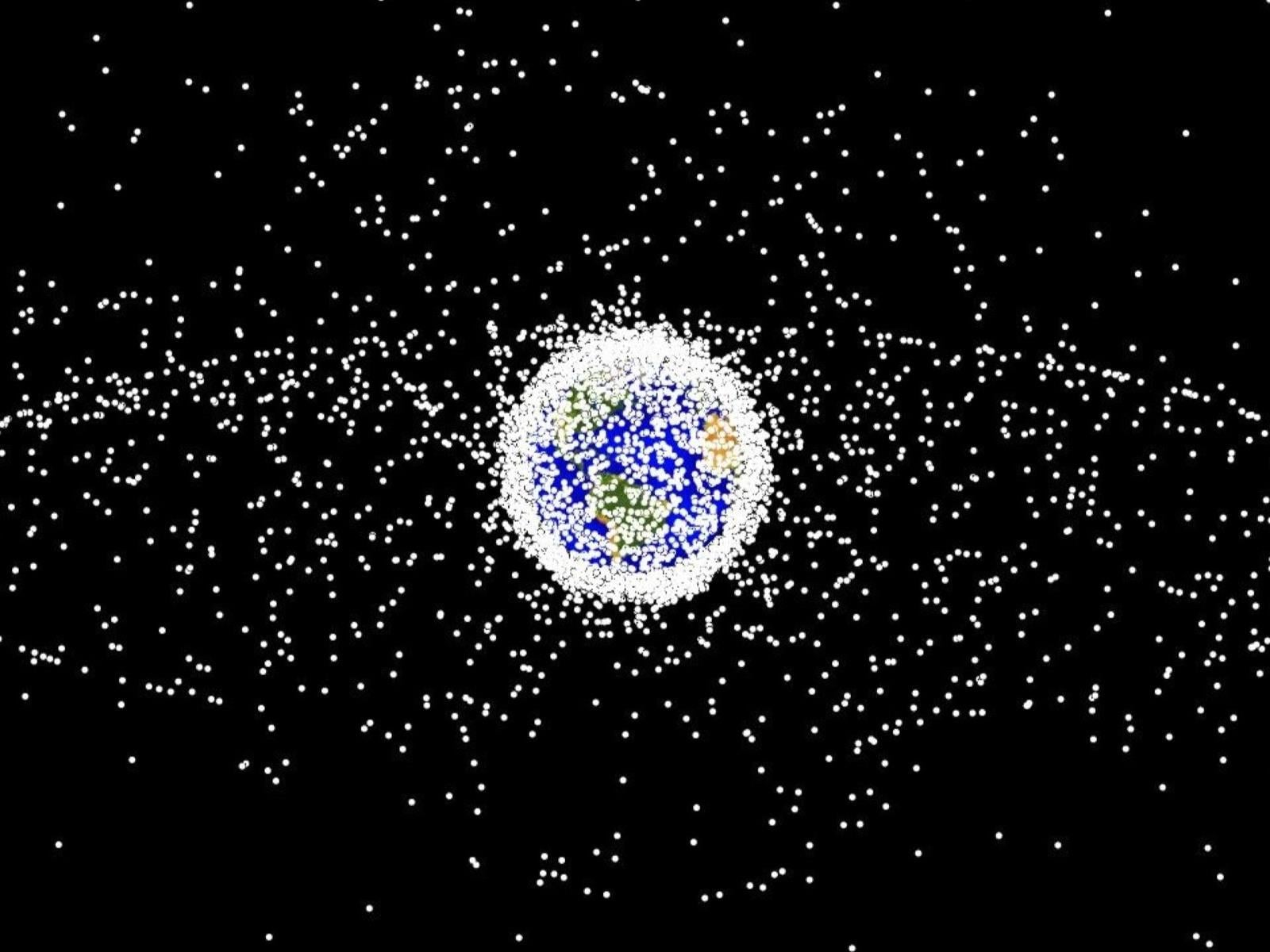
Researchers have discovered that the same sensors used to detect earthquakes are the key to tracking the growing swarm of space junk plummeting toward Earth.
As the orbital highway becomes increasingly congested, the European Space Agency’s (ESA) 2025 Space Environment Report paints a sobering picture: intact satellites and rocket bodies