Ayaneo’s massive Next 2 handheld has a similarly massive price tag

There appears to be no limit to how chonky and eye-wateringly expensive PC gaming handhelds can get, with the latest behemoth being the Ayaneo Next 2. First announced back in November, the latest Windows handheld in Ayaneo’s Next lineup is now up for pre-order, with a spec sheet that makes some of its rivals look modest.

If you missed the announcement at the end of last year, the Next 2 is packing a 9-inch OLED display with a 2,400 x 1,504 resolution and a maximum refresh rate of 165Hz (adjustable down to 60Hz). The Next 2 is powered by an AMD Ryzen AI Max+ 395 chip and has a massive 115Mh battery under the hood.

To put all of that into perspective, the Next 2’s display is more than 1.5 inches larger than the Steam Deck OLED’s, and goes bigger than even the Lenovo Legion Go 2’s 8.8-inch panel. Its battery is the largest of the three by some margin too, and according to Ars Technica it weighs in at around 3.14 pounds (around 1424g), making it more than twice as heavy as the very heavy Xbox ROG Ally X. Get those wrists to the gym if you’re considering picking one of these up.

Ayaneo is ticking all the boxes where inputs are concerned too. Its latest handheld has dual touchpads (a feature ASUS left out on the ROG Xbox Ally X), Hall Effect sticks, an 8-way D-Pad and four customizable rear buttons.

All of this tech inevitably comes at a high price, with the entry-level model that ships with 32GB of RAM and 1TB of storage coming in at $1,999, or $1,799 if you take advantage of early bird pricing. This model is equipped with the slightly less capable Ryzen AI Max 385 CPU.

If you want the more powerful AI+ 395 chip you have a few options. A variant of the Next II with 64GB of RAM and 1TB of storage costs $2,699, but you can order now at the early bird price of $2,299. For 128GB of RAM and 2TB of storage you’ll be handing over a slightly hilarious $4,299 at full price. Early birds can order now for $3,499.

This article originally appeared on Engadget at https://www.engadget.com/gaming/pc/the-ayaneo-next-2-is-a-massive-pc-handheld-with-a-price-tag-to-match-165326534.html?src=rss

US judicial body removes climate research paper after complaints from Republicans

A US judicial body has revised an internal document to remove climate research. The Reference Manual on Scientific Evidence is a document used by judges when they have to oversee cases involving complex scientific matters. The climate science chapter has now been deleted, so they’ll be on their own with climate-related cases.

This move came after a group of Republican state attorneys wrote a letter to complain about the chapter on climate change. The language in the document, which was authored by researchers from Columbia University, suggests that climate change is driven by the actions of humans. This was a no-go to those state attorneys, despite being an established fact.

“Nothing is ‘independent’ or ‘impartial’ in issuing a document on behalf of America’s judges declaring that only one preferred view is ‘within the boundaries of scientifically sound knowledge,'” the letter states. It’s worth noting that the document is nearly 2,000 pages long and declares preferred views on numerous subjects, though the state attorneys only have an issue with the one.

The Republicans also complained that the report called the Intergovernmental Panel on Climate Change an “authoritative science body.” The grounds for this complaint seem to derive from a short paper from a Canadian conservative think tank.

US court agency pulls climate change from science advisory document https://t.co/2ornJlJN1X

— Ars Technica (@arstechnica) February 10, 2026

The letter’s authors would not settle for any revisions, according to a report by Ars Technica. Rather, they demanded the entire chapter be removed. So it was removed and now judges can rule on climate cases using the tried and true method known as “vibes.”

Interestingly, the introduction of the document by Supreme Court Justice Elena Kagan still mentions the climate chapter. They had better break out some correction tape. The full text of the now-deleted chapter has been posted by RealClimate, if you want to give it a gander.

More than 99.9 percent of peer-reviewed scientific papers agree that climate change is real and caused by humans. It looks like some segments of society want a judicial system ruled by that remaining 0.01 percent.

This article originally appeared on Engadget at https://www.engadget.com/big-tech/us-judicial-body-removes-climate-research-paper-after-complaints-from-republicans-164829295.html?src=rss

Soul Retreat Offers Photorealistic Nature Meditation On Quest

Soul Retreat is a new Quest 3 & 3S app that uses real-world location captures to take users on a relaxing virtual getaway.

The new VR meditation app from Soul Retreat Labs takes users to photorealistic landscapes inspired by real locations like Scotland’s Glen Coe and Spain’s La Besurta.

These soothing locales have been recreated through a system the developer calls GroundedPresence, an advanced photogrammetry stack. The result is a realistic experience that replicates the feeling of relaxing on a sunny beach or hiking through breezy hills.

0:00

/1:16

A voiceover guides you through their meditation, talking you through breathing exercises or telling short stories to distract you from whatever stress you have in the day, and you can shift the time from day to night with a simple gesture or voice command. This narrator adapts with each session, with the studio promising a personalized experience.

Soul Retreat is currently available to download for free on Meta Quest 3 and 3S, with an optional Soul Retreat Plus subscription service costing either $6.99 a month, $34.99 a year, or a $69.99 lifetime payment.

The free option gives you access to two environments with a third being rotated weekly, while the paid option lets you explore all 10 current retreats. More will be added as Soul Retreat continues its development, the studio promises.

Dave Farber RIP

From the NANOG list comes the sad news of the
passing of Dave Farber.

His professional accomplishments and impact are almost endless, but
often captured by one moniker: “grandfather of the Internet,”
acknowledging the foundational contributions made by his many
students at the University of California, Irvine; the University of
Delaware; the University of Pennsylvania; and Carnegie Mellon
University.

Directive 8020 brings sci-fi survival horror to PS5, Xbox Series X/S and PC on May 12

Supermassive Games has announced a new release date for the next entry in the Dark Pictures Anthology series. Directive 8020 is coming to PS5, Xbox Series X/S and Steam on May 12. The studio behind Until Dawn and The Quarry revealed the news with the help of a fresh trailer for the sci-fi survival horror game.

The story focuses on the crew of a spaceship that has crash landed onto another world. The survivors have to contend with an alien lifeform that’s hunting them and can mimic its prey (no prizes for guessing that Supermassive took inspiration from The Thing here). If these astronauts want to stay alive, though, they’ll put the lives of everyone on a dying Earth at risk.

As with Supermassive’s previous games, Directive 8020 is largely driven by the narrative choices players make at key moments, such as whether to save a crewmate and put the character you’re currently controlling at risk, or to abandon them. You might also have to pick between two seemingly identical versions of the same person and let one of them back into the crew. The game has segments in which you’ll have to fight or stealthily avoid enemies as well.

This time around, Supermassive is introducing a feature called Turning Points, through which you can go back to previous decisions and opt for another path (perhaps to see different endings more easily, keep certain characters alive or make sure you get all the achievements or trophies). A permadeath mode does away with that option for a more traditional survival horror experience. 

You can go it alone or get some friends to join you for five-player local co-op action — the studio’s games have long been good fodder for pass-the-controller couch co-op. Supermassive will add online multiplayer support down the line.

The developer originally planned to release Directive 8020 in October 2025. However, Supermassive announced last July that it was delaying the game amid its latest round of layoffs.

This article originally appeared on Engadget at https://www.engadget.com/gaming/directive-8020-brings-sci-fi-survival-horror-to-ps5-xbox-series-xs-and-pc-on-may-12-163358560.html?src=rss

What People Are Getting Wrong This Week: Is Snow Fake?

We may earn a commission from links on this page.

Memphis city council members Pearl Eva Walker and Yolanda Cooper Sutton (and many other people online) say that snow is fake.

Sutton recently posted a video on her Facebook page to demonstrate the artificiality of snow. Over footage of her husband holding a snowball and a lighter, Sutton says, “So we decided to see what was really hitting the ground.” Her husband holds a flame to the snowball, and it does not melt.

“It’s not melting [it stinks] when you set fire to it OMG, Jesus Christ, what is happening!!!” Sutton asks.

In the video’s comment section, fellow council member Walker reportedly replied, “man made,” and included another video showing the same phenomenon. It looks like that specific video was taken down, but these kinds of posts are pretty common after snowstorms like the ones that just blanketed the US. Here are a couple of examples:

So: What’s happening? Has plastic snow replaced the real stuff? Is this a flurry of misinformation? Are all these people just flakes?

All available evidence suggest snow is real

First, snow is real, but I understand why the Memphis council members would be suspicious. These videos are convincing, and they’re not AI nor the result of people deliberately hoaxing with prop snow. They are documents of what happens when you hold a flame up to real, actual, fell-from-the-sky snow. You’d expect that holding fire to a snowball would make it melt into water in your hand but it just doesn’t. No shade to people running their own experiments, but they’re missing that snow can be counterintuitive.

Why it seems like snow doesn’t melt from flames

Snow is 90–95% air, so there’s a lot less water than people might expect no matter how it melts. But the main thing going on is sublimation—a solid changing directly to a gas without first becoming liquid. When you hold a flame to snow, especially packed snow, much of it will become water vapor without becoming liquid water first. Sublimation is also why snow can seem to disappear without the temperature going above freezing. You can see sublimation in action in the video below.

Snow is also porous. When a snowball melts, water is sucked to the center of the mass through capillary action, and it fills up the spaces that were once air. The video below shows unpacked snow on the ground being hit with a torch. Some of the snow is sublimating in response to the heat, while some of the surface snow is melting into water and being sucked into the empty spaces in the snow below it. You can see how it goes from “powdery” snow to more wet snow by the end of the video. (Also, these yahoos are going to burn down the trailer soon):

But what about the snow turning black?

The scorch marks on the “burning snow” have an explanation as well: The flame from a match or a lighter is result of fuel burning—butane from a lighter; wood or paper from matches. As the fuel burns, it produces carbon soot, which reacts to the cold snow by condensing onto its surface. The soot isn’t scorch marks from the snow burning. It’s scorch marks from the butane or wood/paper burning. You can tell the snow itself isn’t burning, because it never catches fire.

That leaves only the burning plastic smell that some report. That’s actually the smell of the butane from the lighter not fully burning and/or the smell of the mercaptans sometimes added to butane so we can smell it. The result is a chemical odor that is easy to mistake for burning plastic, especially when you hold a flame up to soot you’ve already deposited on a cold surface. In this video, the conspiracy theorist used a candle instead of a lighter, and notes that it doesn’t smell like burning plastic. That’s because butane was absent.

How to do the “burning snow” illusion yourself

You can try all this yourself to amaze your friends with the wonders of sublimation and/or trick a bunch of people on social media. It’s easy:

  • Grab some snow and pack it into a tight snowball. A more solid surface will help soot stick to it.

  • Apply flame from a standard butane lighter for a few seconds. If you use matches, you won’t get the same burning plastic smell.

  • Cool scorch mark, right? Note how little water is dripping and how the snow is “disappearing.”

  • Note the edges of the scorch mark. Here’s where water that did melt was pulled toward the center of the snowball.

  • If you want to debunk the snow-burn conspiracy, simply hold the snow in your hand instead, and you will find that it melts into water.

Is it possible to make fake snow?

What if the government wanted to create a fake snow storm for some reason? It’s possible—you can see fake snow at ski resorts during bad winters; you can buy your own snow-maker on Amazon for less than $100. The problem would be the scale. All “they control the weather” conspiracies fall apart when you consider the scale.

Artificial snow is produced by spraying a mist of pressurized water into air that’s below freezing. You could cover some trails at a ski resort without a problem, but a whole city or state would require a lot of snow. Industrial snow-making-machines use about 160,000 gallons of water to create one-acre-foot of snow. To cover a town that’s 25 square miles with six inches of snow, you’d need about 1.28 billion gallons of water pumping through thousands of snow-guns. It would cost a lot, use a ton a fuel, and it wouldn’t fool anyone anyway—those machines are loud as hell, and the snow wouldn’t fall from the sky; it would shoot out of snow guns. You’d end up like, “What am I even doing with my life?”

You could also try seeding existing clouds with silver iodide to try to make it snow, but that’s expensive too, and no one really one knows if it works at all.

Bottom line: We can’t control the weather

Humankind can collectively alter weather patterns—global climate change and all that—but we can’t control weather. We can’t make it snow on command in Memphis without anyone noticing thousands of roaring machines shooting artificial snow into the air any more than we can control hurricanes. The snow falling from the sky is real and it’s made of frozen water crystals, just like it always has been.

Zwift Update Version 1.107 (158475) Released

Zwift version 1.107 begins its phased rollout today. This is a minor update containing mostly bug fixes. See details below…

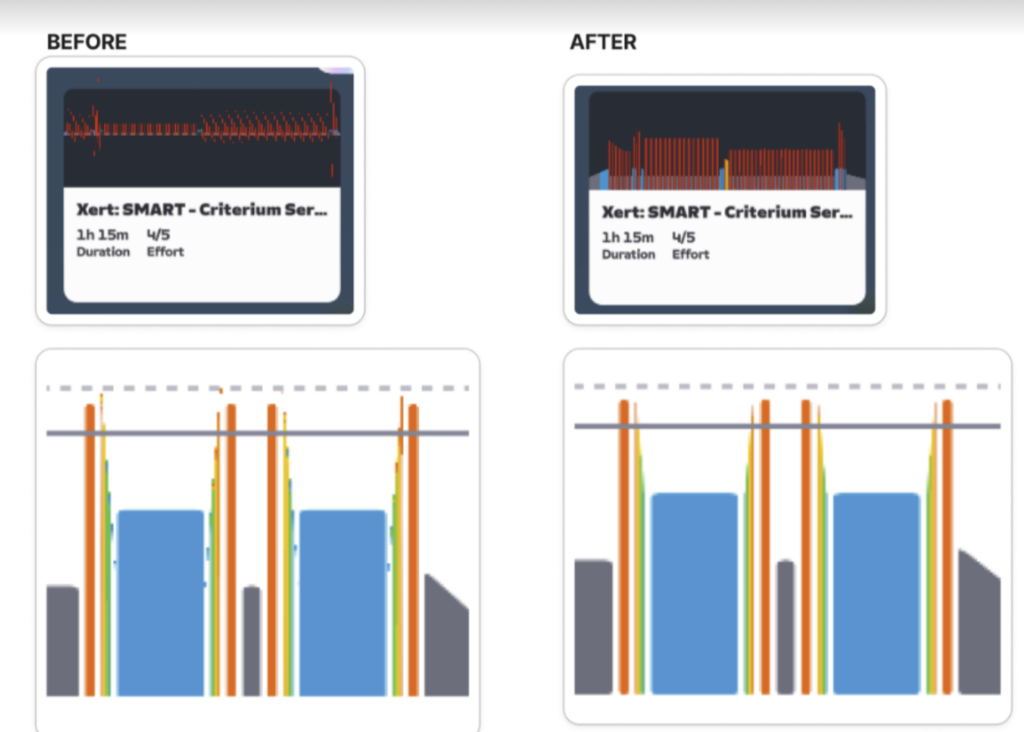
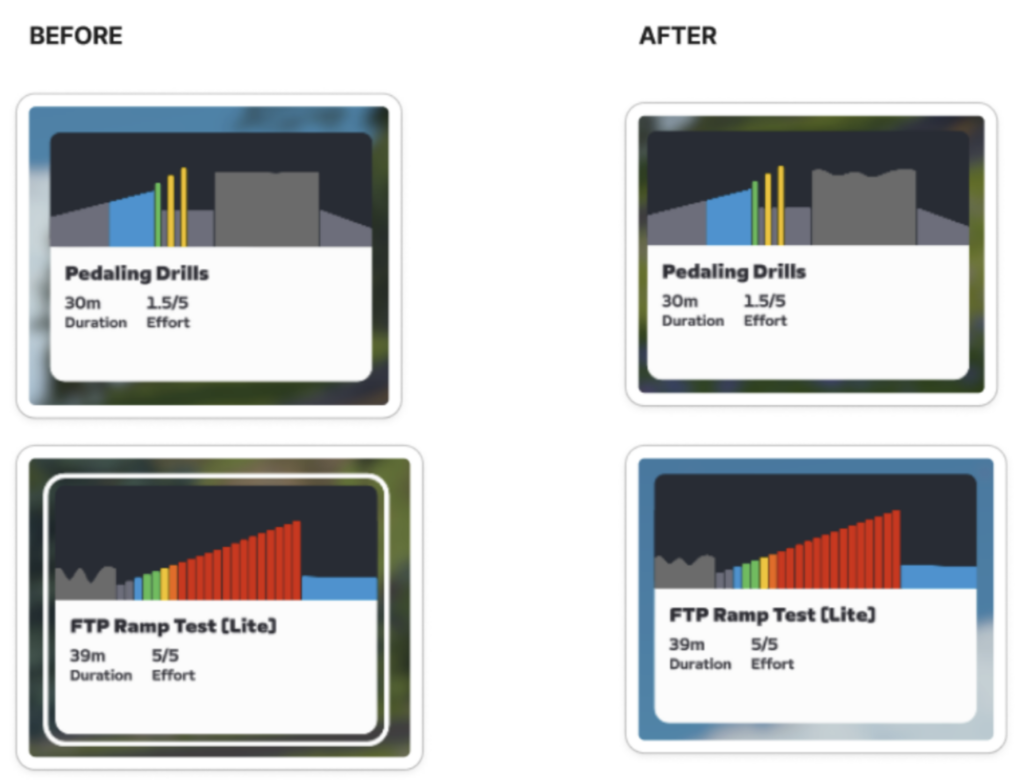
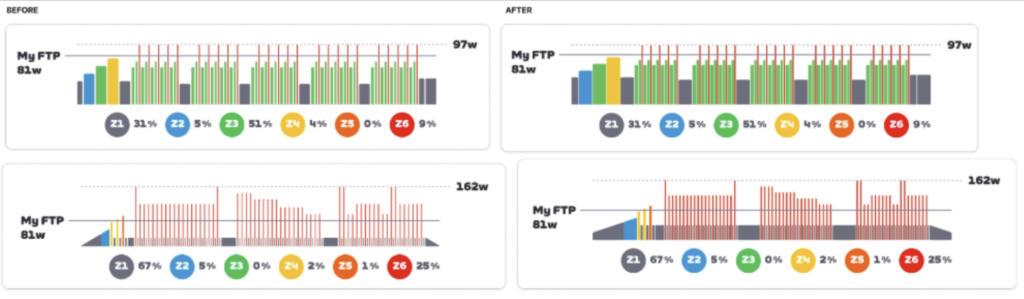
Workout Card Improvements

Zwift says this release includes “Various visual improvements to how workout blocks are displayed in workout cards on the Home Screen. These changes include fixes to how small workout blocks, free ride segments, and workouts with many blocks are displayed.”

The more detailed display of the workout that you see when clicking the card has also been modified. Examples below:

Neon Shore Loop is Open

Makuri Islands’ Neon Shore Loop route was originally launched as event-only to host TTT races for the ZRL Round 3, which wraps up this week. This update makes the route free rideable, and it can also be scheduled for meetups once it’s added to the list in Companion app.

Note: this isn’t a new badge, it’s just a change from the route being event-only to being open for free rides, meetups, etc. If you already raced the route in ZRL, you’ve already got the route badge.

Release Notes

Zwift supplied the following additional release notes:

  • Fixed an issue that could cause chat emojis to not be visible after game updates or fresh installations.
  • Fixed an issue that could cause Coffee Stop to not work when joining an event from a workout.
  • Fixed an issue that could cause Power Segment leaderboard results to be delayed.
  • Windows: Fixed an issue that could cause heart rate values from CORE sensors to be missing.
  • iOS/Android: Fixed an issue that could cause bodies of water to be missing in some locations in Makuri.

Discuss this update in Zwift’s forum > (link coming soon)

Questions or Comments?

If you spotted any other changes or bugs in the update, please comment below!

Meta, TikTok and Snap are participating in an online safety ratings system

Numerous major social platforms including Meta, YouTube, TikTok and Snap say they will submit to a new external grading process that scores social platforms on how well they protect adolescent mental health. The program comes from the Mental Health Coalition’s Safe Online Standards (SOS) initiative, which comprises about two dozen standards covering areas like platform policy, functionality, governance and transparency, content oversight and more. The SOS initiative is led by Dr. Dan Reidenberg, Managing Director of the National Council for Suicide Prevention.

In announcing these companies’ participation, the Mental Health Coalition writes “SOS establishes clear, user-informed data for how social media, gaming, and digital platforms design products, protect users ages 13–19, and address exposure to suicide and self-harm content. Participating companies will voluntarily submit documentation on their policies, tools, and product features, which will be evaluated by an independent panel of global experts.”

After evaluation, the platforms will be given one of three ratings. The highest achievable safety rating is “use carefully,” which comes with a blue badge that compliant platforms can display. Despite being the highest rating, the requirements seem fairly run-of-the-mill. The description includes things like “reporting tools are accessible and easy to use,” and “privacy, default and safety functions are clear and easy to set for parents.” As for what actions the standards ask of the companies being rated, the “use carefully” rating says “platforms and filters help reduce exposure to harmful or inappropriate content.”

The other ratings include “partial protection” which is described in part as “some safety tools exist on the platforms, but can be hard to find or use,” and “does not meet standards” which would be given if “filters and content moderation do not reliably block harmful or unsafe content.”

The Mental Health Coalition, founded in 2020, has mentioned Facebook and Meta as partners since the early days of the organization. In 2021 the organization said it would bring together “leading mental health experts partner with Facebook and Instagram to destigmatize mental health and connect people to resources” during the COVID-19 pandemic.

In 2022 the nonprofit published a case study with “support from Meta” that found “mental health content on social media can reduce stigma while increasing individuals’ likelihood to seek resources, therefore positively impacting mental health.”

In 2024, the MHC “in partnership with Meta” launched a campaign called the Time Well Spent Challenge. In it, the group urged parents to have “meaningful conversations” with teens about “healthy” social media use, focusing less on whether teens should be on these apps at all and more on keeping them on-platform in a “time well spent” way, from reduced screen time to “using social media for good” and reviewing their feeds together.

That same year it partnered with Meta again to establish “Thrive,” a program that allows tech companies to share data regarding materials that violate self-harm or suicide content guidelines. The Mental Health Coalition lists Meta as a “creative partner” on its website.

Last year it was alleged that Meta buried internal data showing the ill effects of its products on users’ mental health. The internal research, dubbed “Project Mercury,” began in 2020. Since then the company has introduced some bare-minimum attempts at addressing mental health concerns, such as Instagram teen accounts. Meta is now on trial in California facing allegations over child harm from addictive products, the first in a series of upcoming lawsuits against the social media giant.

Other companies participating in the rating program include Roblox, which has recently faced stiff accusations over the wellbeing of children on the platform, and Discord which has beefed up its age-verification processes in response to its own serious child endangerment concerns.

This article originally appeared on Engadget at https://www.engadget.com/social-media/meta-tiktok-and-snap-are-participating-in-an-online-safety-ratings-system-162921333.html?src=rss

GTK hackfest, 2026 edition (GTK Development Blog)

Matthias Clasen has published a short summary of the GTK hackfest held prior to FOSDEM 2026. Topics include
discussions on unstable APIs, a decision to bump the C runtime
requirement to C11 in the next development cycle, limiting changes in
GTK3 to crash and build fixes, as well as the state of
accessibility:

On the accessibility side, we are somewhat worried about the state
of AccessKit. The
code upstream is maintained, but we haven’t seen movement in the GTK
implementation. We still default to the AT-SPI backend on Linux, but
AccessKit is used on Windows and macOS (and possibly Android in the
future); it would be nice to have consumers of the accessibility stack
looking at the code and issues.

On the AT-SPI side we are still missing proper feature negotiation
in the protocol; interfaces are now versioned on D-Bus, but there’s no
mechanism to negotiate the supported set of roles or events between
toolkits, compositors, and assistive technologies, which makes running
newer applications on older OS versions harder.

Apple AirPods Pro 4 May Get IR Cameras To See And Track Gestures Like VR

Apple AirPods Pro 4 May Get IR Cameras To See And Track Gestures Like VR
Apple is once again (reportedly) preparing to equip the upcoming AirPods Pro 4 with infrared cameras designed to let the earbuds “see” the world around you. Most likely, and assuming if this rumor holds out, this could enable hand gestures and enhanced spatial audio capabilities with VR integration being a possibility.

Next AirPods Pro

The Kia PV5 electric van combines futuristic looks and thoughtful design

Vans are something most of us don’t think about much, since we rarely interact with them directly in our day-to-day lives. But the van is an unseen hero that keeps the world moving, delivering packages all over the country and transporting food from farm to stores. They haven’t changed much in decades, though. A van is generally a big box with a gas or diesel engine (depending on where you are in the world), and that’s… kinda it, bar a dent or two in the bodywork. Kia’s engineers, riding high on the success of their recent electric vehicles, took notice and did some new things with the PV5, the company’s first electric van.

You can spec your PV5 in a number of configurations, and the company already has conversion partners lined up to turn them into just about anything. Of course, camper converters are eyeing them as well, eager to create electric “vanlife” setups. Off the shelf, you can choose between a PV5 Passenger for moving people, a PV5 Cargo for moving things, a PV5 Crew for moving things and people, and a PV5 Chassis Cab to do with as you please.

Beneath its modular cabin is the Electric Global Modular For Service, which is part of Kia’s rather fancy-sounding “PBV” strategy. “PBV” means “Platform Beyond Vehicle,” a potential hint at where the brand sees itself going. In this case, it can house a range of battery sizes.

Read full article

Comments

This New iOS 26 Feature Helps Eliminate Text Spam

With iOS 26, Apple made it easier for users to reduce spam and overall clutter in their Messages inbox. Your iPhone will detect and hide spam messages, and with the Screen Unknown Senders feature, you can filter out texts from anyone you don’t know. You can also disable push notifications for these conversations to reduce how often you’re alerted for messages you don’t need to see.

Note that this feature works only on iOS, so if you have Messages synced on your Mac, you’ll see everything and receive notifications for all messages unless you mute specific conversations.

How to reduce clutter in Messages on iOS

To send messages from numbers you don’t know to a separate folder, go to Settings > Apps > Messages and toggle on Screen Unknown Senders. You can also get here through the Messages app on your iPhone by tapping the three horizontal menu lines in the top-right corner and selecting Manage Filtering. Enabling Screen Unknown Senders will hide notifications and move messages to your Unknown Senders list. If you want to allow (or disallow) certain types of notifications, tap Allow Notifications and toggle categories on or off:

  • Time Sensitive includes alerts, verification codes, and urgent requests.

  • Personal includes messages identified as not sent by a business or organization.

  • Transactions include order updates, receipts, and confirmations.

  • Promotions include general offers and updates sent to multiple recipients.

Most users will want to enable time-sensitive notifications to receive messages that include time-based one-time passwords (TOTPs) and other urgent alerts. You may also want to allow personal notifications so you don’t miss messages directed to you individually from real people who aren’t saved in your contacts.

When you allow notifications, texts identified in those categories will appear in your Messages list for only 12 hours before being moved to Unknown Senders—a behavior that keeps your primary inbox streamlined. If you want to make an unknown sender a known sender to prevent future messages from being filtered out, open the conversation and tap Mark as Known at the bottom or add the number to your contacts. A known sender is anyone you’ve added to your Contacts, sent a message to, or marked as known in the conversation.

Finally, if you enable Filter Spam under the same menu in your device settings, Apple will send messages identified as spam to a separate Spam list and hide notifications. You can view these and conversations from unknown senders at any time via Messages > Menu.

Apple and Google Agree To Change App Stores After ‘Effective Duopoly’ Claim

Apple and Google have agreed to a set of commitments to the UK’s Competition and Markets Authority that will prevent them from giving preferential treatment to their own apps and require greater transparency around how third-party apps are approved for sale.

The CMA announced the measures on Tuesday, seven months after it declared that the two companies held an “effective duopoly” over the UK’s mobile app ecosystem. Both companies also committed to not using data gathered from third-party developers in ways the regulator deems unfair. The CMA granted both app stores “strategic market status” in October 2025, a designation that gave it the authority to demand changes.

CMA head Sarah Cardell called the commitments “important first steps” and said the regulator would “closely monitor” implementation. Technology analyst Paolo Pescatore described the announcement as a “pragmatic first step” but noted some may see it as “addressing the low-hanging fruit.” The UK’s app economy is the largest in Europe by revenue and number of developers, generating an estimated 1.5% of the country’s GDP.


Read more of this story at Slashdot.

Ray-Ban Smart Glasses Get Massive Utility Boost with Cool (but risky) ClawdBot Hack

If you’re comfortable mucking around with a new open source project, you could be shopping on Amazon just by looking at an object with your Ray-Ban Meta smart glasses.

Ray-Ban Meta smart glasses are pretty useful out of the box, offering photo & video capture, calls, music playback, and your standard assortment of AI chatbot stuff. They don’t have an app store though, which means you’re basically stuck with a handful of curated services.

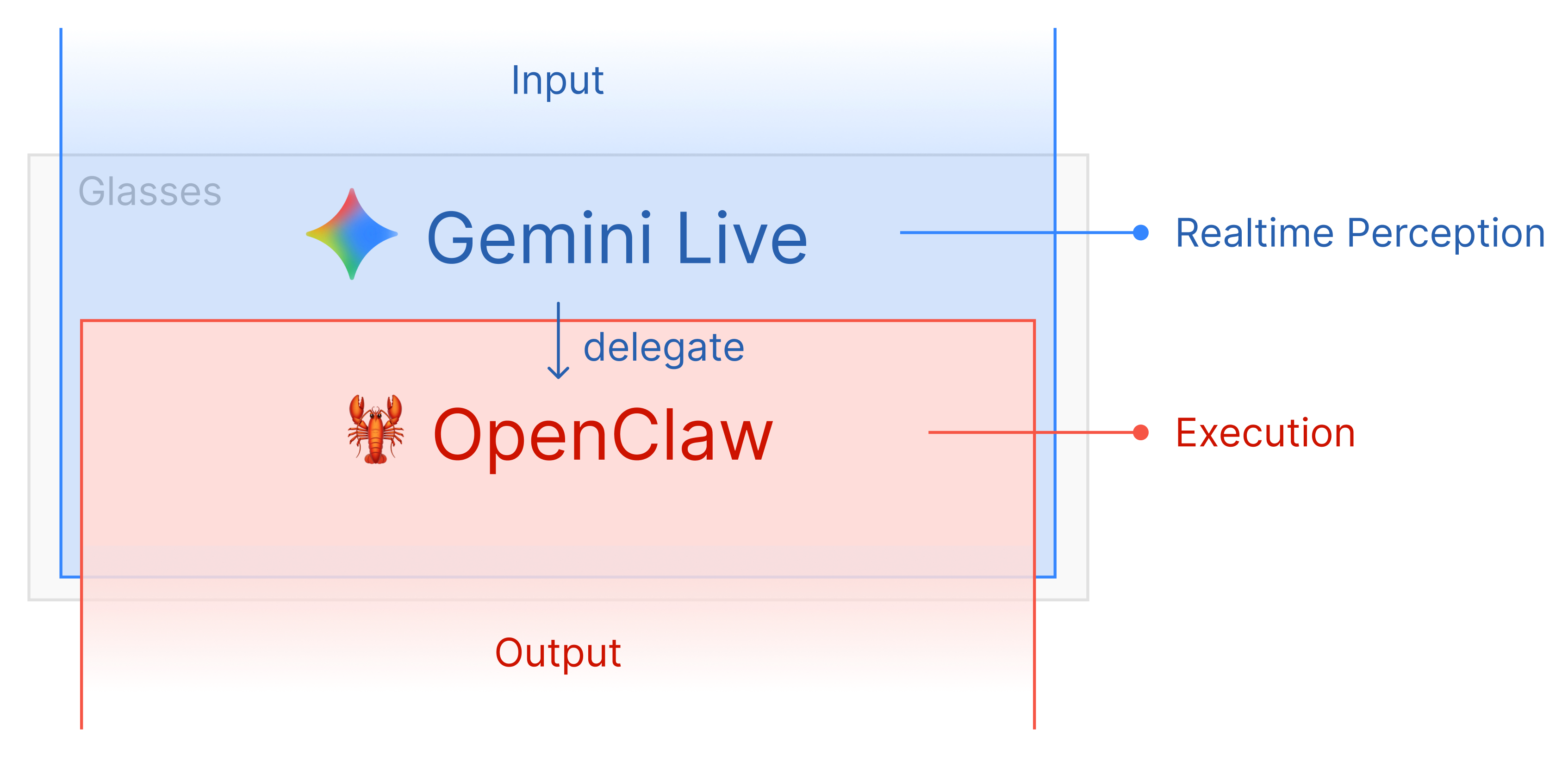
Now, indie developer Sean Liu released an open-source project called VisionClaw that links Ray-Ban Meta smart glasses with OpenClaw (aka ClawdBot), essentially giving the autonomous AI agent eyes and ears.

Check out VisionClaw in action below, courtesy Liu:

now my clawdbot lives in my ray-ban meta glasses so i can just buy whatever i’m looking at pic.twitter.com/gWrijyTRhE

— xiaoan (@_seanliu) February 6, 2026

OpenClaw isn’t an AI model like ChatGPT or Google Gemini though. It’s an agentic layer—essentially a complex messaging layer built on top of an AI model that interacts with services on your behalf, like sending emails, managing shopping lists, or controlling smart home devices—just three of the 56+ tools OpenClaw can integrate with right now.

Basically, it works like this: VisionClaw uses Gemini Live for real-time voice and computer vision, which can do things like describe what you’re seeing and answer questions—basically the same sort of tasks you can do with the glasses’ native Meta AI.

Image courtesy Sean Liu

But once you want to actually interact with an app or service—like when you want to send a message over email or your favorite non-Meta messaging app like Signal or Telegram—Gemini Live hands off the request to OpenClaw, which takes action.

Users looking to run VisionClaw will need an iPhone, as Liu’s codebase is written as an Xcode/Swift app that specifically uses Meta’s Wearables Device Access Toolkit (DAT) for iOS to connect the phone to Ray-Ban Meta glasses.

Beyond that, you’ll also need a fair understanding of the risks involved with running OpenClaw on your personal hardware.

While it can do some pretty amazing things, it’s a third-party bit of software that could require you to input passwords, API keys, and personal information, which can open the user up to malicious actors. Notably, OpenClaw’s skill integrations could be written by anyone, so users need to be especially vigilant.

The post Ray-Ban Smart Glasses Get Massive Utility Boost with Cool (but risky) ClawdBot Hack appeared first on Road to VR.

Google’s new tool helps you remove non-consensual explicit images from Search

The internet is ripe with horrible violations of people’s privacy, including non-consensual explicit images. A new tool from Google won’t do much in the way of prevention, but can help you remove this media from Search. 

Now, you can choose an image and quickly request its deletion. Just click on the three dots that appear on the image. From there, choose “remove result” and then “It shows a sexual image of me.” Other choices include the picture shows a person under 18 and that it has your personal information. If you choose the initial option then you will also be asked whether it contains a real image or deepfake. There’s also an option to submit multiple photos at once. 

Google claims that, upon submitting your request, you will “immediately” see links to emotional and legal support organizations. Plus, you can opt-in to safeguards that filter out similar results in Search — though it seems these unreported images will still be available for other users to see. This feature should be available in most countries over the coming days. 

You can go on Google’s “Results about you” hub to track your request. To use the tool, you will have to add in your personal contact information and government ID numbers. Google already had the hub to track if any of that information appears on Search, but now it will also look for your social security number, drivers license and passport information. The company should notify you if any of that information comes up in Search results and allow you to take removal steps. 

Results about you’s updates should roll out to US users in the coming days. Notably, it arrives as Google shutters its dark web reports. They would alert you if your name, number, or email address appeared on the internet — typically because of a data breach. However, Google found it didn’t help users take next steps to fix the problem, something these new features will hopefully do. 

This article originally appeared on Engadget at https://www.engadget.com/cybersecurity/googles-new-tool-helps-you-remove-non-consensual-explicit-images-from-search-155352248.html?src=rss

Venus Is Hiding A Massive Underground Tunnel Carved By Ancient Volcanoes

Venus Is Hiding A Massive Underground Tunnel Carved By Ancient Volcanoes
Scientists at the University of Trento have uncovered the first direct evidence of a subsurface feature beneath Venus: a massive underground lava tube on the most volcanically active planet in the Solar System.

Published this week in the Nature journal, the finding was actually made by re-analyzing archival radar data from NASA’s Magellan