A series of leaks from retail listings and physical dummy units suggest that the upcoming Samsung Galaxy Buds 4 is taking a slightly different turn design-wise by merging industrial chic with user-friendly practicality. While last year’s transition to a stemmed design drew immediate comparisons to Apple AirPods, the new earphone could likely
Birdseed is a cozy, free-to-play game about photographing silly birds. And trying the Early Access release, I simply love it.
Games are so often obsessed with spectacle, which is paradoxically one of the reasons I so dearly appreciate Birdseed. This gentle game about watching and photographing comically cute birds doesn’t shout or overstimulate you. Instead, it invites you to relax, slow down, and simply enjoy a peaceful slice of nature filled with charming, delightfully curious birds.
After my first hands-on session with the Early Access release, I found myself returning over and over, not just to satisfy daily objectives and collect more in-game currency, but to simply exist, to listen to music or the sounds of nature, to hang out and shoot some photos of my hilarious birdbrained pals.
0:00
/0:28
Serious Photography?
As someone who’s been a photographer for over 20 years, and a writer covering the camera industry for more than a decade, I was especially interested in how Birdseed, a game about photographing birds, handles the art and craft of photography.
While I personally love mechanical cameras and the extreme nuance of making a picture with a dedicated camera, adjusting aperture and shutter speed, ISO, and reading all about the finer points of depth-of-field and circle of confusion and other photography nonsense that most of the humans on Earth have never heard about, I understand that highly technical simulations of making pictures don’t always make for a good gaming experience. For most people, serious photography is obtuse and opaque and boring.
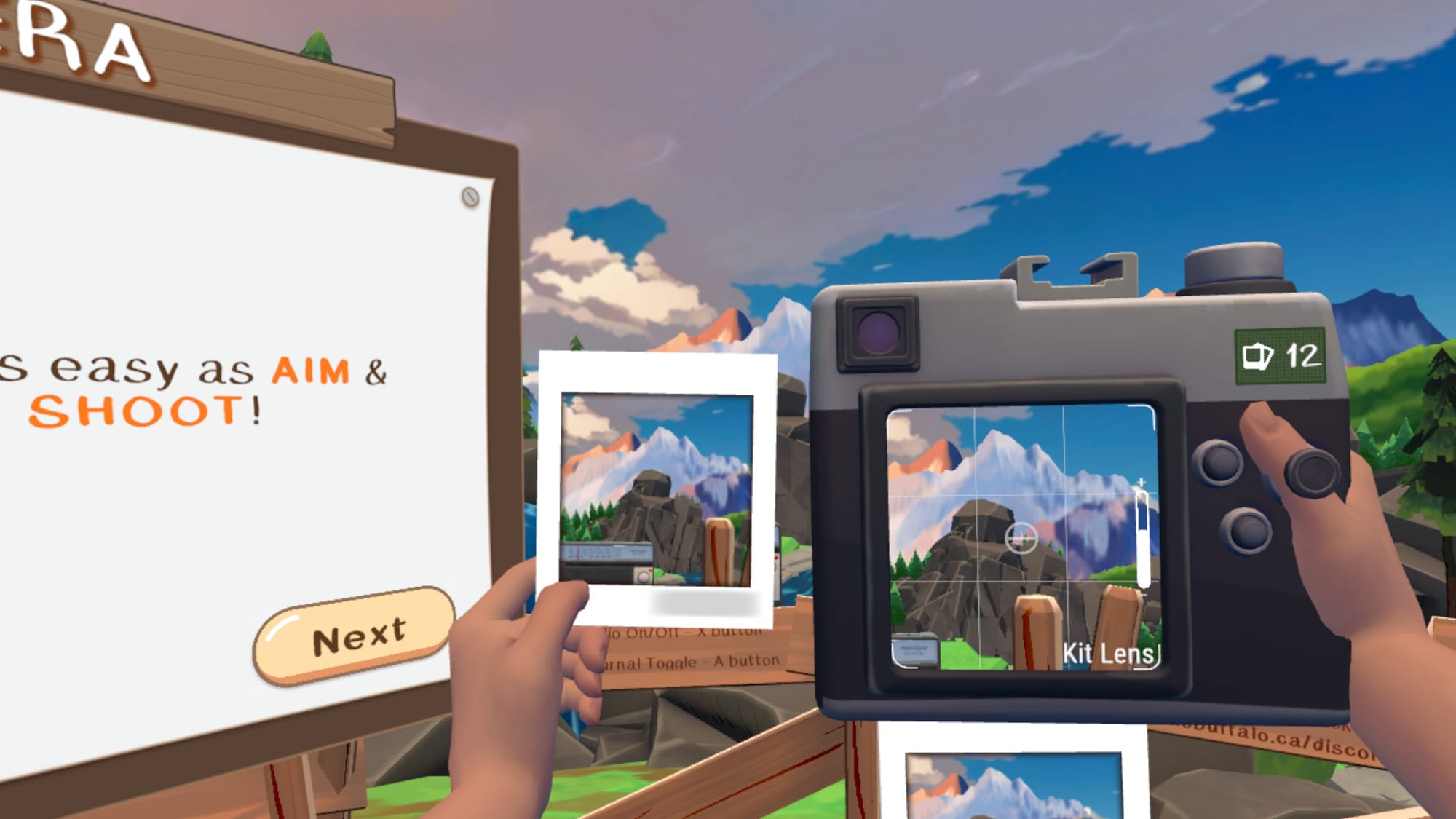
Birdseed sidesteps that by being incredibly simple. You can’t move very far. In fact, you stand (or sit) in just a small central viewpoint from where the whole of your observation and photographing occur. You hold a camera, and that camera has just two controls: It can zoom in and out, and it can take a picture. That’s it (for now). There are unlockable lenses of different focal lengths that can be interchanged, and future updates will likely bring art lenses and special effect filters and all of that good stuff. But for now, we’re basically using a point-and-shoot, a type of camera that works as its name suggests. Point it at something, shoot, and a picture comes out.
The simplicity of gameplay is beautiful, and perfect for a game that’s trying to do what Birdseed is trying to do. That is, put a camera in your hand, and give you something to point it at.
The environment is far from photorealistic, but it still manages to be lush and pretty, presented with artfully-crafted cartoonish simplicity. A pastel sun creeps low across a distant mountain range. Marshmallow clouds drift across the azure sky. Sparkling water dances down a falls while towering evergreens sway in the breeze. And within this beautiful nature scape flit birds of all sorts.
They dance among the branches, preen on the rocks, and soar high in the sky. And they look absolutely stupid (complimentary). They’re goofy and silly, delightfully plump and bouncy. Their enormous eyes blink dumbly as they flutter and squawk and bounce. Even when diving on the wind, they look more like bowling pins than sleek products of a million years’ evolution. I love these dumb birds.
The Decisive Moment
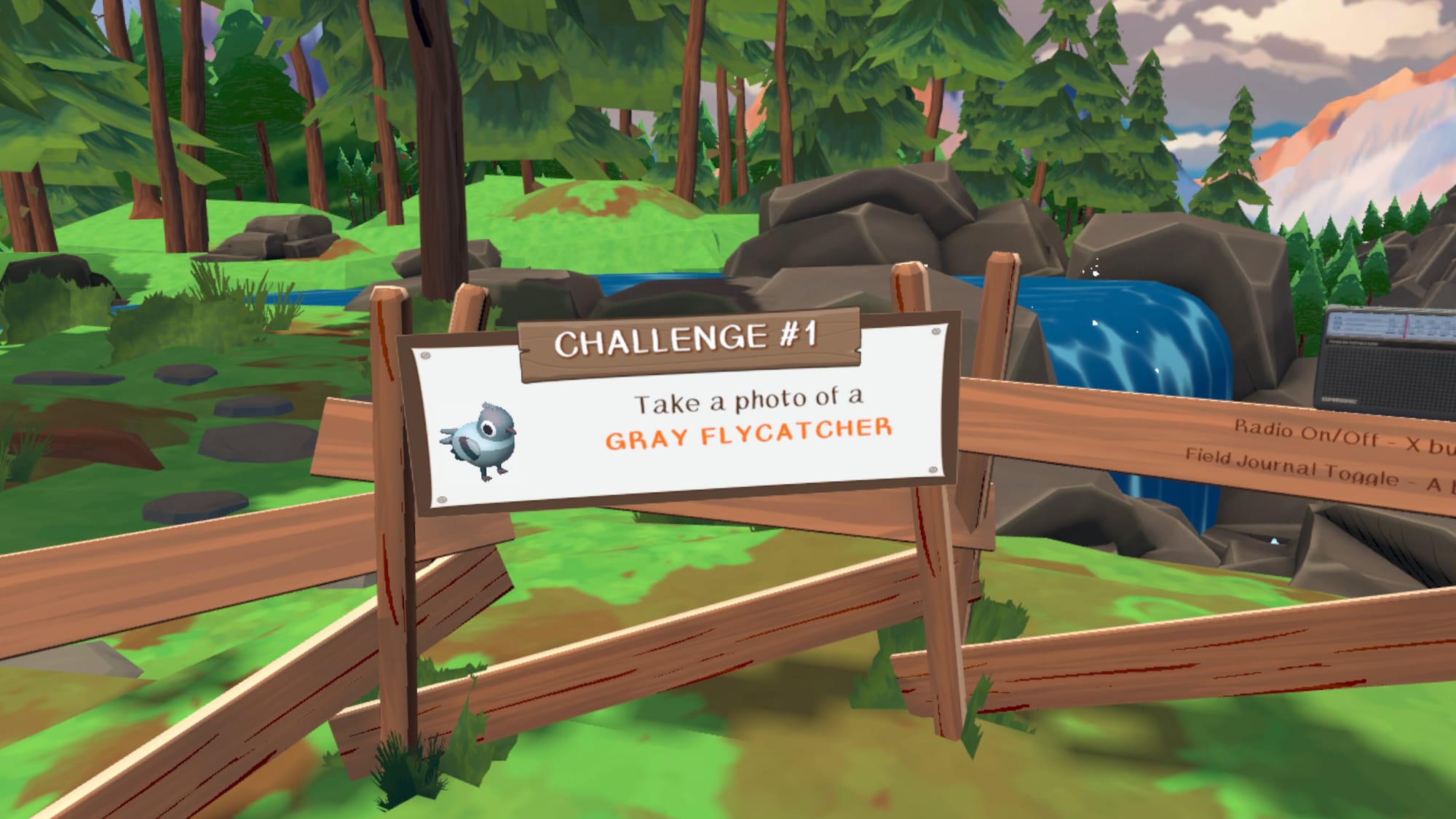
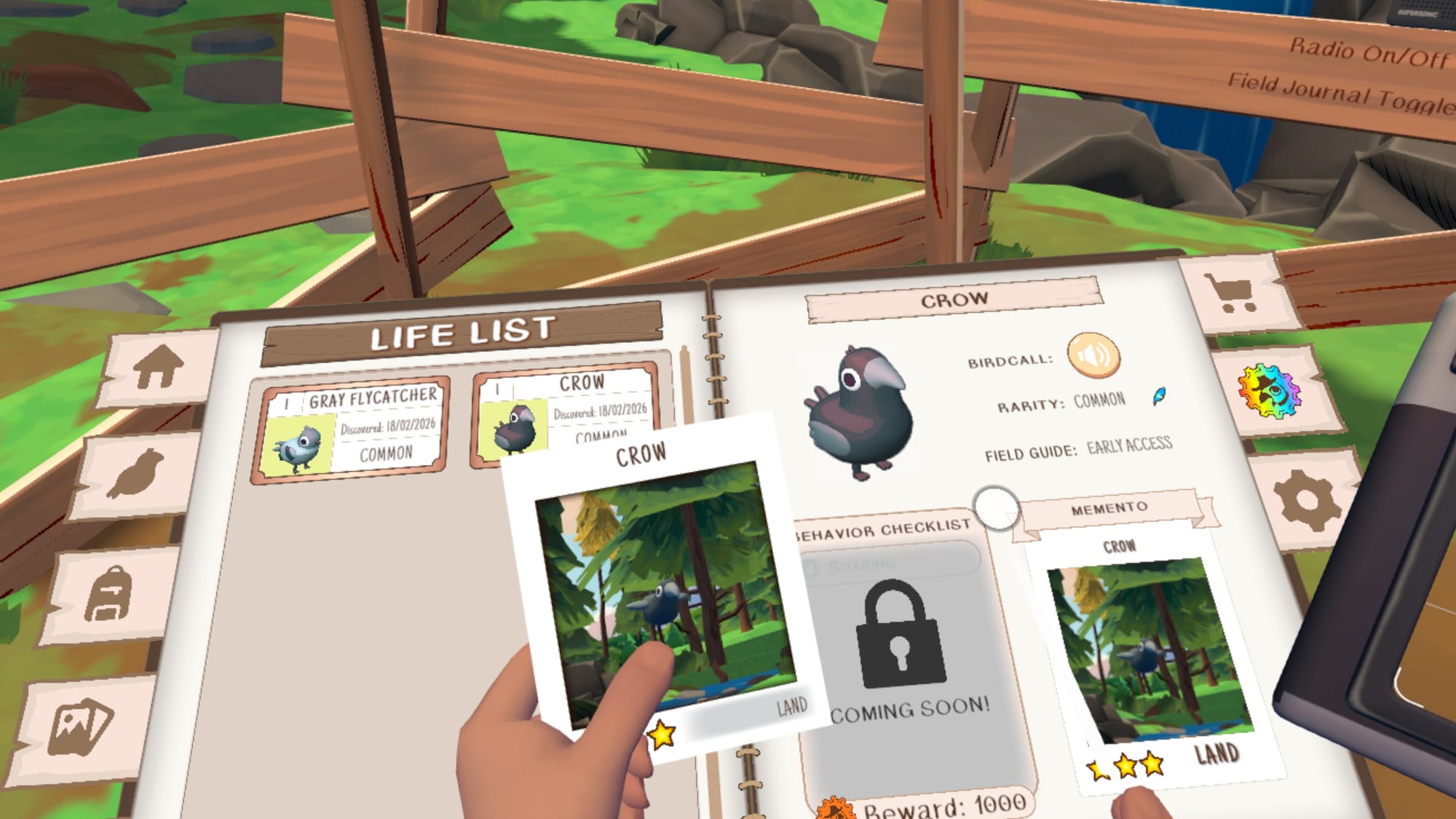
You have twelve pictures per day, as you’re using a film camera, and these images are instantly ejected to be held, looked at, and then stored automatically in your photo album. Photos are rated for their content, as well as for the rarity of the bird, and the bird’s poses or actions are marked as well. Capturing a rare bird or a bird in a rare action or pose will rate higher, and higher ratings or achieving certain challenges (for example, photographing a specific type of bird or making a three-star photo) will earn in-game currency which can be spent to buy new lenses and cosmetic items, such as new skins for your camera.
The scarcity of available photos per day is an interesting mechanic, and one that I appreciate. As happens in real life when we’re shooting a film camera, the knowledge that we only have a limited number of shots tends to change the way we photograph. It forces me to pause for a moment, or to think deeper during the act of making an image. Do I really want to use a frame to make this photo? The result is that I either make better pictures, or sometimes I miss out. I found the same thing happening in Birdseed.
Exhausting your daily supply of film doesn’t necessarily mean the play session is over. You can still hang out in the environment, watch birds, and enjoy the scenery. There’s even a radio with which you can listen to some chill tunes.
If there’s one major strike against Birdseed, it’s that the game is not technically solid. During my play sessions, there were several instances of the game crashing. Restarting my Quest 3S smoothed things out temporarily, but a few more crashes led me to uninstall and reinstall Birdseed, which seemed to mostly solve the problem.
For now, and when it works without crashing, I’m enjoying every minute that I spend in Birdseed. Though those minutes amount to just about 30 per day, it’s a nice half hour in VR. Birdseed has been a lovely experience that will surely only become more endearing, fully-fledged, and enjoyable when the game officially releases in March.
Birdseed VR is out now in Early Access on Quest 3 and 3S, with the full release coming in March on Quest and Steam.
schwit1 writes: An IT blunder has revealed an apparent smuggling ring that has moved at least $90bn of Russian oil and is playing a central role in funding the Kremlin’s war in Ukraine. Financial Times has identified 48 seemingly independent companies working from different physical addresses that appear to be operating together to disguise the origin of Russian oil, particularly from Kremlin-controlled Rosneft. The network was discovered because they all share a single private email server. The report adds: The FT was able to identify 442 web domains whose public registrations show they all use a single private server for their email, “mx.phoenixtrading.ltd,” showing that they share back-office functions. The FT was then able to identify companies by comparing the names in the domain to those of entities that appear in Russian and Indian customs records as involved in carrying Russian oil.
From coordinating pickups for road trips to helping organize yard sales, WhatsApp groups are at the center of all kinds of events in people’s daily lives. As someone who’s a member of far too many WhatsApp groups, I’ve always been very annoyed by the app’s inability to show group chat history to new group chat members. In the lead up to my most recent meditation retreat, the admins ended up sending the same document seven (!) times, just because new members kept joining the group and they had no way to access attachments that were previously sent to the group chat. Thankfully, WhatsApp is finally changing that.
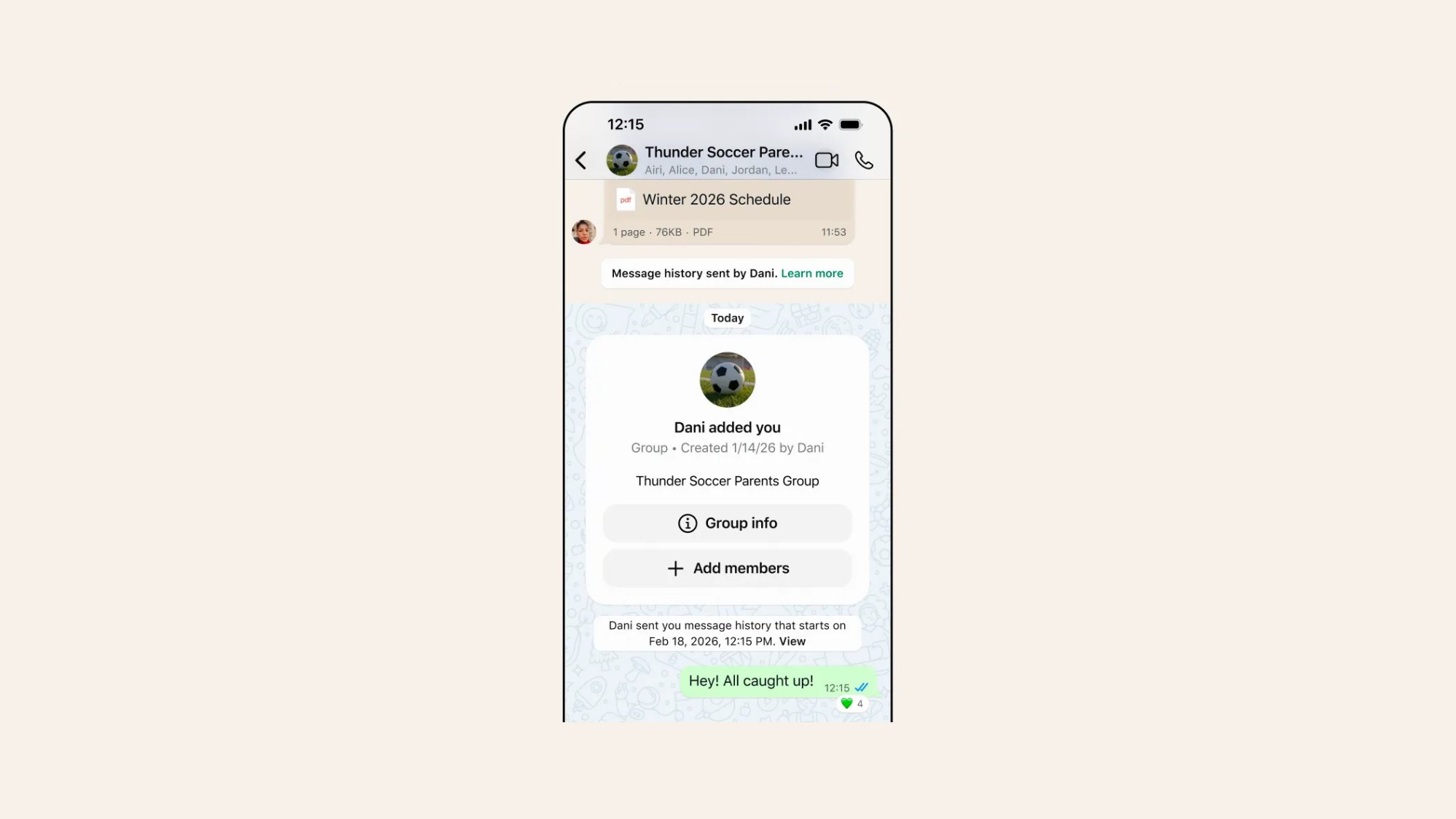
WhatsApp is finally adding a feature called Group Message History, which means that group admins and members can now choose to share recent messages with new members. Now, when adding new members to a WhatsApp group, you’ll be able to let them access up to 100 recent messages already sent to the rest of the group chat, which should good enough to stop people from spamming the group with the same messages as new people are added.
Speaking personally, this will be a great quality of life upgrade. In order to help new group chat members feel less lost, I’ve previously done everything from forwarding all relevant messages to them via DMs to sending screenshots of all our previous messages. All of this is incredibly tedious, and thankfully, I won’t have to do it for much longer.
Credit: WhatsApp
I also like the idea of limiting new group members to 100 recent messages or less. Quite often, my WhatsApp groups start off with a small number of people who know each other extremely well, and then the group expands to add acquaintances. The dynamics of the group chat change significantly when newer members are added, and not everyone feels comfortable with the idea of an unknown person seeing messages that were sent with a more intimate group in mind. Limiting chat history is a great move that allows people to maintain some privacy, as opposed to sharing the group’s entire chat history with every new member.
Still, if 100 messages seems like too much of an invasion of privacy to you, WhatsApp also says that admins will have the option to disable this feature for regular members. This way, only the admin will be able to share chat history with new members.
The company says that everyone in the group chat will be notified when a new member is granted access to chat history, so you won’t be blindsided if your new group member starts referring to in-jokes from a few days ago.
WhatsApp says it is gradually rolling out this feature across the world, so you can expect it to be available on your device in the coming weeks.
This is a great week to be in the market for a smartphone, and it doesn’t even matter if your preference leans to Android or iPhone. If it’s the latter, check out our recent coverage of a big sale on ‘Grade-A’ refurbished iPhone models spanning the iPhone 16 Pro Max all the way down to the iPhone XR starting at $119.99, complete with a full
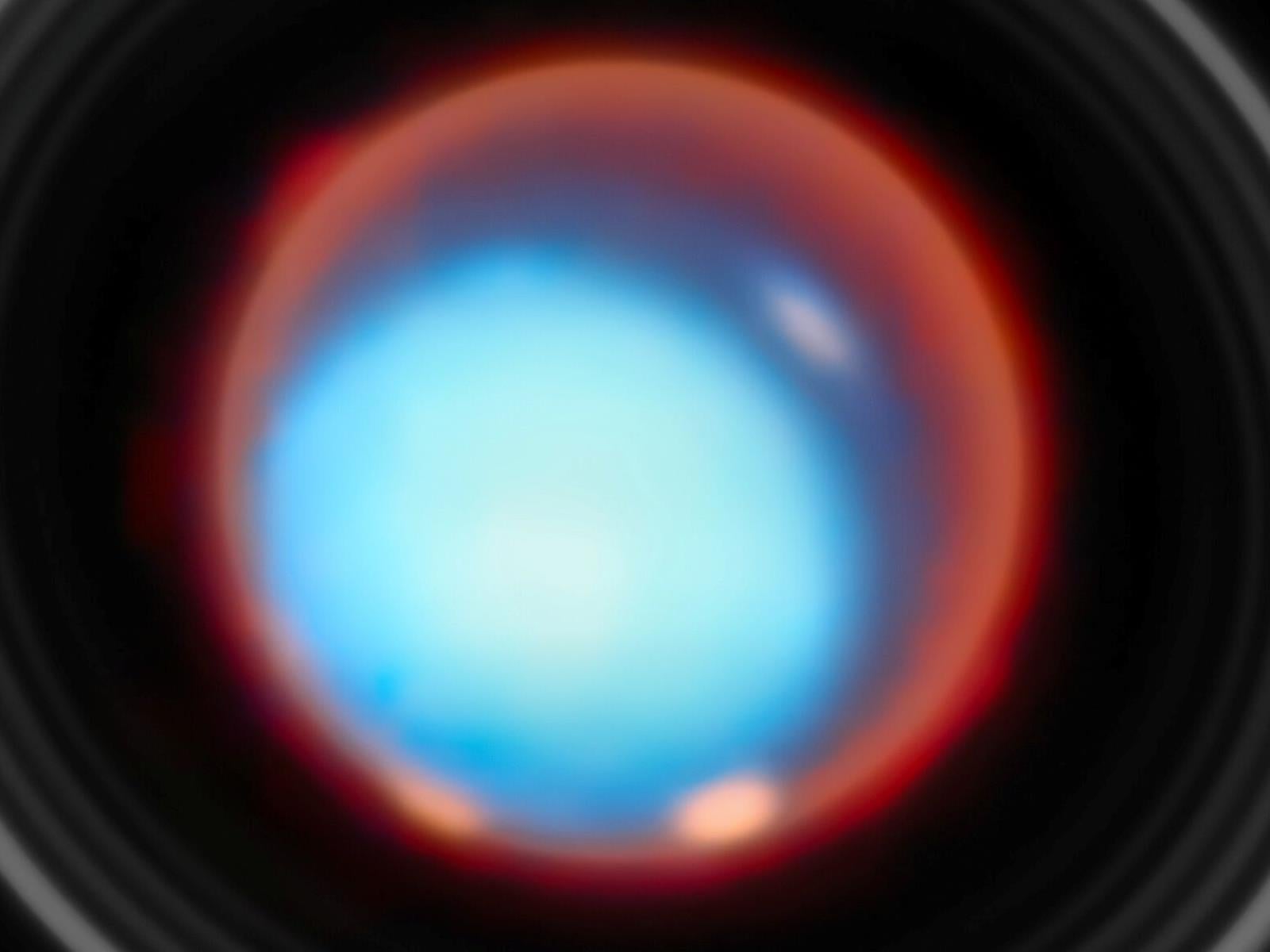
When it’s not busy dissecting distant galaxies or creating dark matter maps, the James Webb Space Telescope is also making a name for itself closer to home. To wit, it has produced the first-ever three-dimensional images of upper atmosphere on Uranus, revealing a chaotic and shimmering world of infrared auroras.
The Supreme Court ruled Friday that Donald Trump was not authorized to implement emergency tariffs to ostensibly block illegal drug flows and offset trade deficits.
It’s not immediately clear what the ruling may mean for businesses that paid various “reciprocal” tariffs that Trump changed frequently, raising and lowering rates at will during tense negotiations with the United States’ biggest trade partners.
Divided 6-3, Supreme Court justices remanded the cases to lower courts, concluding that the International Emergency Economic Powers Act (IEEPA) does not give Trump power to impose tariffs.
When beginning some early Linux 7.0 kernel benchmarking this week for looking at its performance in its early development state, I started off testing on Core Ultra X7 “Panther Lake” in being hopeful for better performance with the maturing Arc B390 Xe3 graphics and the like. But I ended up finding Intel Panther Lake seeing some performance regressions on Linux 7.0. So next up I turned to an AMD EPYC Turin server since if regressions existed there at least it’s much faster to carry out bisecting of the kernel performance regressions. But with that initial testing wrapped up, I didn’t find any regressions like with Panther Lake and standing out were some rather enticing PostgreSQL database server performance benefits when running atop Linux 7.0.
The U.S. Supreme Court struck down on Friday President Donald Trump’s sweeping tariffs that he pursued under a law meant for use in national emergencies, rejecting one of his most contentious assertions of his authority in a ruling with major implications for the global economy. From a report: The justices, in a 6-3 ruling authored by conservative Chief Justice John Roberts, upheld a lower court’s decision that the Republican president’s use of this 1977 law exceeded his authority.
The court ruled that the Trump administration’s interpretation that the law at issue – the International Emergency Economic Powers Act, or IEEPA – grants Trump the power he claims to impose tariffs would intrude on the powers of Congress and violate a legal principle called the “major questions” doctrine. The doctrine, embraced by the conservative justices, requires actions by the government’s executive branch of “vast economic and political significance” to be clearly authorized by Congress. The court used the doctrine to stymie some of Democratic former President Joe Biden’s key executive actions.
It has already been a depressingly busy year for layoffs at Ubisoft, and the French publisher’s Toronto studio is the latest workforce to be hit. Around 40 jobs have been cut at the studio, which is one of Ubisoft’s largest and has previously worked on games including Watch Dogs: Legion and Far Cry 6.
“This decision was not taken lightly and does not in any way reflect the talent, dedication, or contributions of the individuals affected,” Ubisoft said in a statement to Mobile Syrup, which first reported the new layoffs. “Our priority now is to support them through this transition with comprehensive severance packages and robust career placement assistance.”
Ubisoft Toronto is currently working on the long-awaited Splinter Cell remake, which was first announced in 2021. The publisher says the game remains in development, and the Canadian studio will continue to assist with development on other games.
The Toronto layoffs come after similar staff cuts at its Swedish studios, while up to 200 people could reportedly be let go at its Paris headquarters. The affected roles are casualties of a wider organizational restructuring at the troubled company, which recently canceled another high-profile remake in The Prince of Persia: The Sands of Time. Last week, 1,200 Ubisoft employees went on strike in reaction to the recent layoffs and sweeping cost-cutting measures.
This article originally appeared on Engadget at https://www.engadget.com/gaming/ubisoft-lays-off-40-staff-working-on-splinter-cell-remake-says-game-remains-in-development-151139753.html?src=rss
Razer is back with another limited edition run of a popular peripheral for those of you who missed out on the Boomslang 20th Anniversary Edition that sold out on the first day. This time, it’s focusing on keyboards with its upcoming Huntsman Signature Edition that is “precision-engineered” and “master-crafted” from CNC aluminum, and once again
California is moving to implement some of the nation’s strictest regulations on 3D printers through Assembly Bill 2047, a legislative effort designed to curb the production of untraceable ghost guns by requiring 3D printers sold in the state to feature Department of Justice-approved restrictive software. California isn’t the only state petitioning
Google acquired the excellent photo editor Snapseed back in 2012—not long after Apple had crowned it one of its apps of the year—and despite having plenty to offer and being completely free to use, it remains one of Google’s lesser-known apps. That might be about to change. Snapseed’s latest update for iOS, version 3.15.0, comes with a full camera app inside—and there’s a case to be made that it’s better than Apple’s default Camera app. It certainly offers more in the way of manual shooting controls, with the added benefit of an entire integrated suite of editing features.
Using Snapseed’s built-in camera on iPhone
Once you’ve installed or updated Snapseed to the latest version, you’ll see the new camera icon up in the top right corner. While you can start your session by opening up an existing image as always, you can also opt to capture a new one by tapping here:
Look out for the new camera button in Snapseed. Credit: Lifehacker
If you want an easier way to launch the camera, you can add it to the Lock Screen: Press and hold on your iPhone’s display when it’s locked, tap “Customize,” then pick a shortcut spot and choose “Camera” under “Snapseed.” There’s also a Control Center shortcut you can make use of, if you prefer.
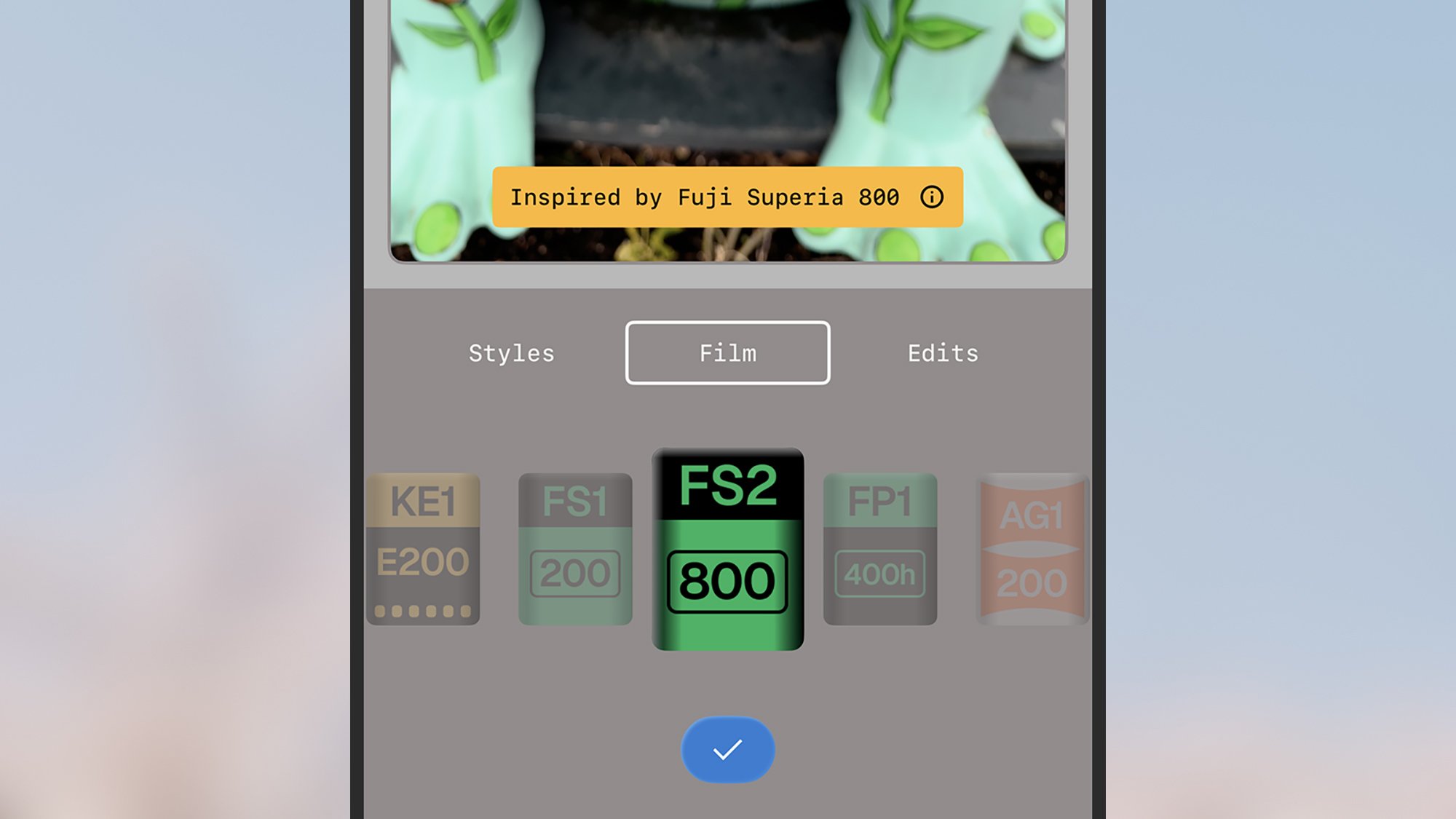
Once you’ve swiped through the introductory spiel and given Snapseed access to your iPhone’s camera, you’ll need to pick one of the classic camera film presets to get started, though you can adjust the look of your shots afterwards. There are 11 different film simulations available—emulating film from Kodak, Fuji, Agfa, Polaroid, and Technicolor—and each one gives you slightly different variations in terms of color, contrast, texture, and tone. You can tap the film selector at the bottom of the camera interface (designed to look like a rewind button) to change at any time.
You’ve got some classic film styles to choose from. Credit: Lifehacker
Your saved looks and edits are also included in the film selector, and can be used as preset filters for the images you’re capturing. In the main image editor, after you’ve applied whatever adjustments you want to a photo, you can tap Looks > Add look to save it and access it through the camera.
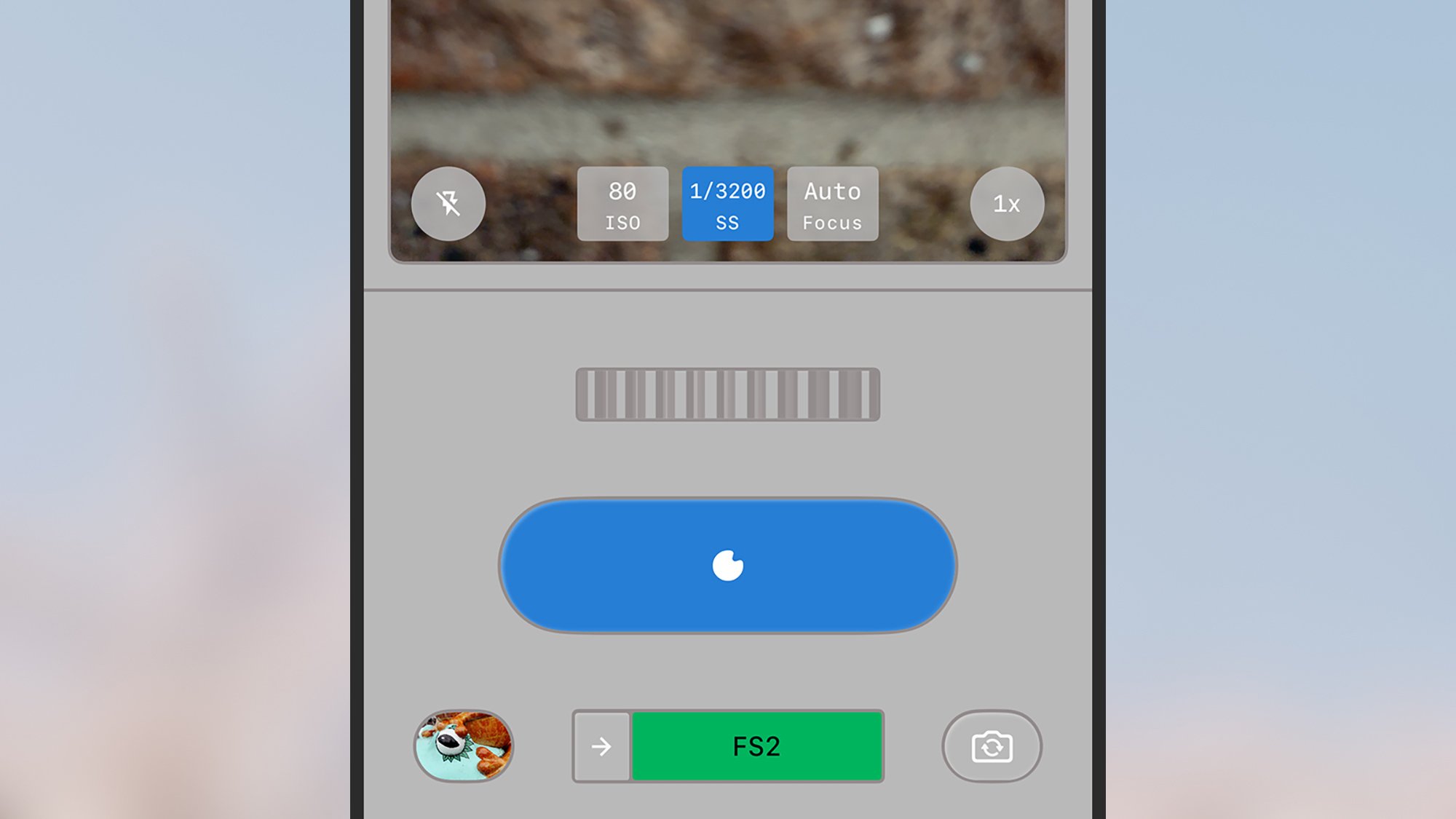
Up in the top left corner of the camera interface, you’ll find a Pro toggle switch, which gives you some controls the default iPhone camera does not. You get three new settings on screen, for ISO, shutter speed, and focus, and you can change any of them by selecting a setting and using the dial underneath. You’ve also got controls for flash (left) and zoom (right). Besides the big shutter button, you have a camera swap button (lower right), a button for going back to your photo library (lower left), and a camera capture screen theme button (upper right). Tap on this to pick a different color scheme for the screen.
Pro controls can be called up in a couple of taps. Credit: Lifehacker
You’re not stuck with the look of any of the photos you shoot through Snapseed: All of the changes applied by your film preset, from exposure to curves, can be changed later on. Select your picture from the main library screen, then use the Faves and Tools tabs to make changes.
Most filters and effects are applied by adjusting a slider underneath your image. The layers button (two squares) at the top gives you access to the current editing stack, and there’s also an undo button to the left. When you’re happy with what you’ve made, you’re able to save over your existing image or make a copy.
It’s an interesting new addition to the selection of superb third-party camera apps available for the iPhone, and yet another alternative to the Apple default. Meanwhile, Android users are within their rights to feel left out by all this: Snapseed for Android hasn’t been updated since May 2024, and lacks both the camera feature and the most recent editing interface revamp that are now available on iPhones.
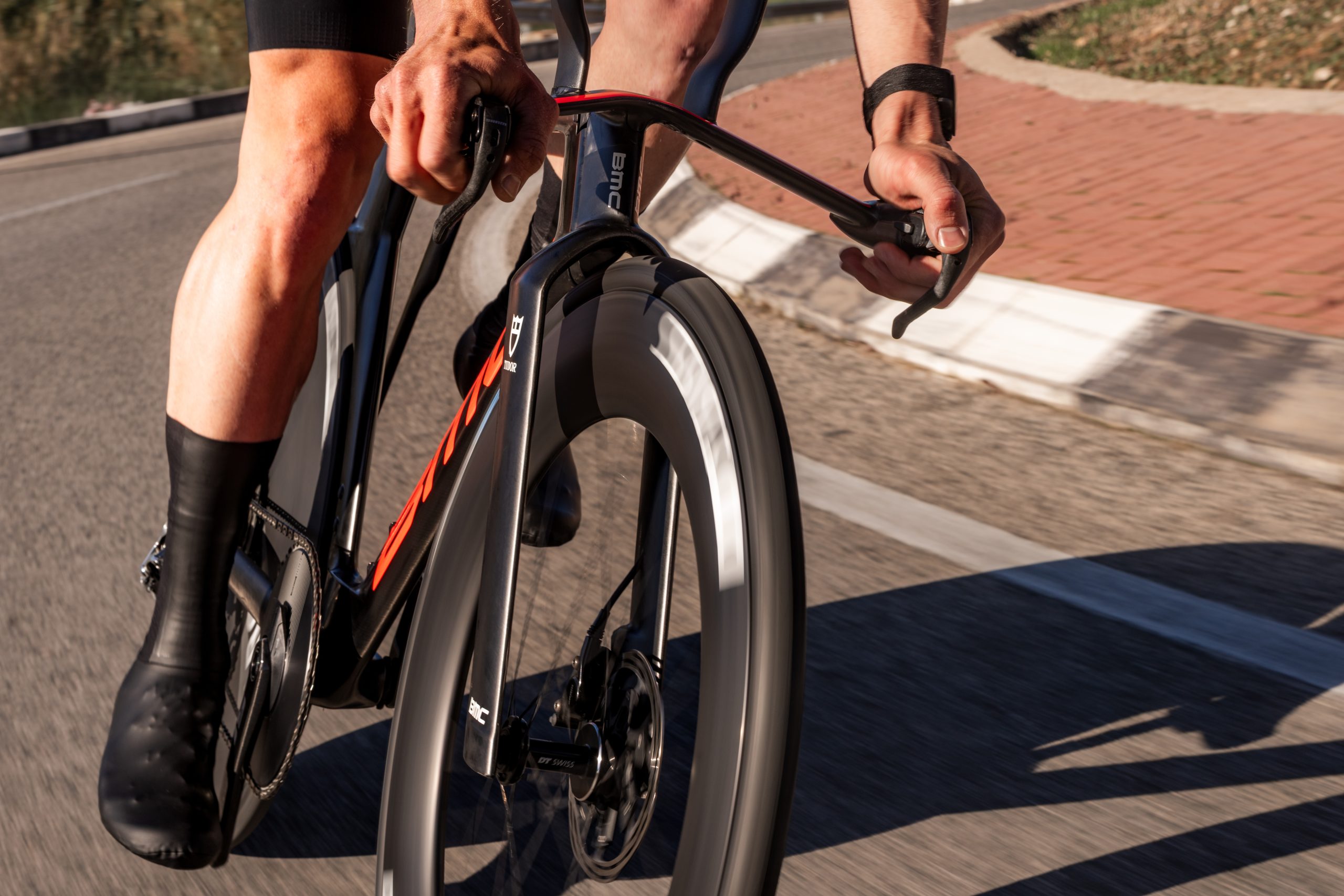
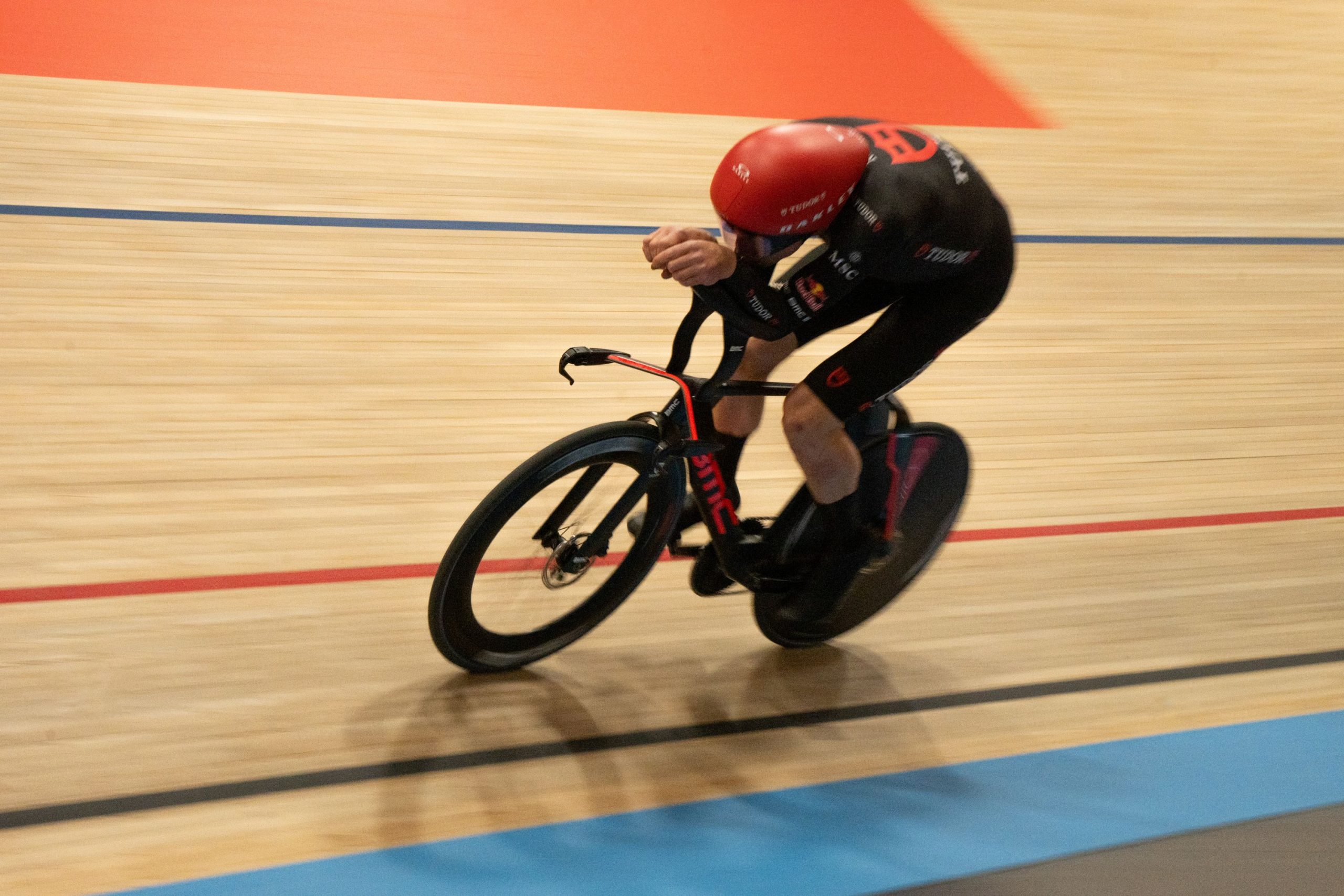
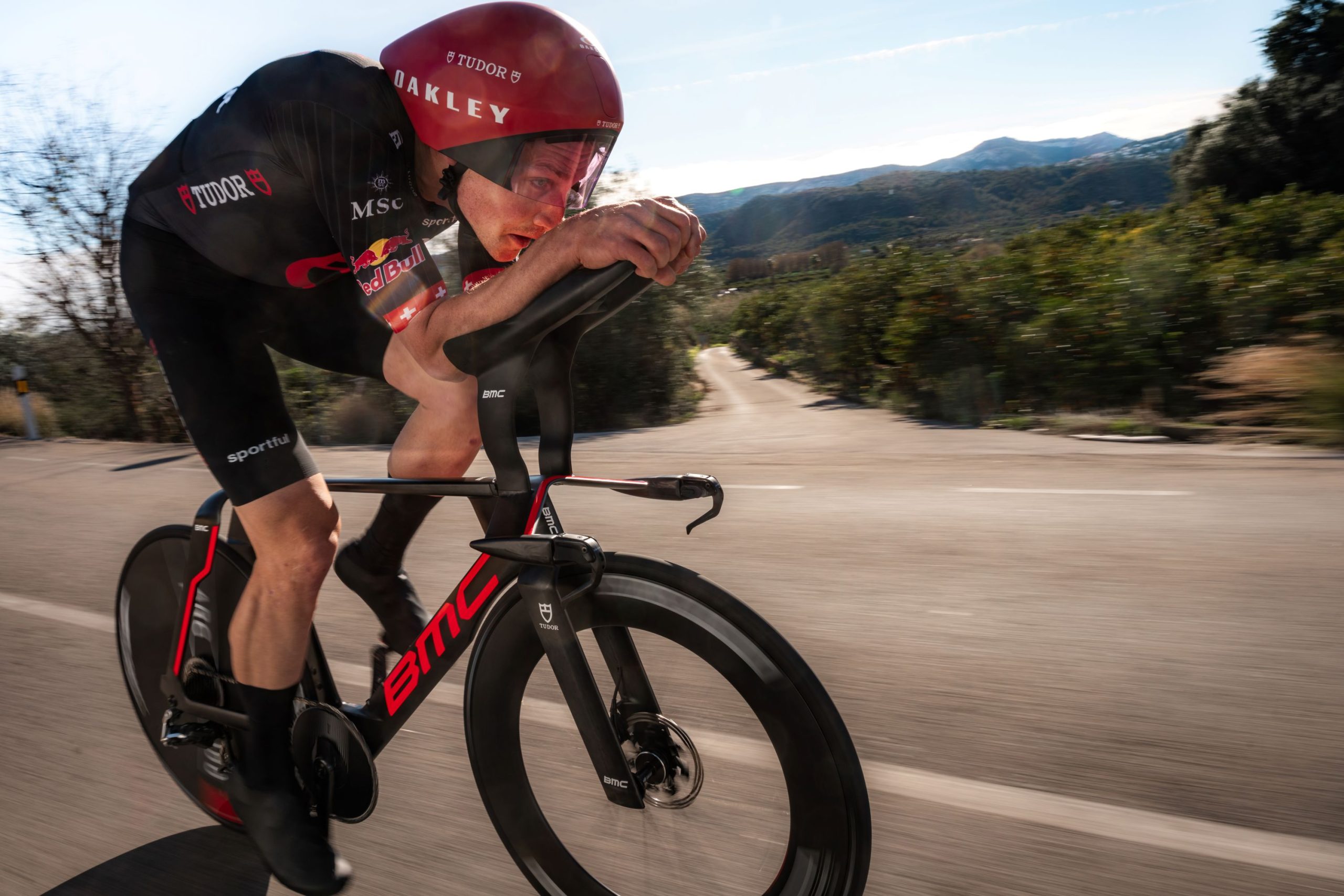
BMC has launched the fourth generation of its Timemachine time trial bike, which takes a radical approach to the stance of the fork legs and seatstays.
The new Timemachine gets BMC’s Mpc suffix, short for Masterpiece, and signifying that the frameset is built to its highest standards. The main frame is made in one piece and unpainted to keep the weight low.
BMC says the redesign was in response to a request from its sponsored Tudor Pro Cycling team for 3% overall drag reduction, including the bike and rider. It claims to have bettered this with a 3.7% improvement. For a rider delivering 450 watts, it says this would equate to riding at 55.7km/h rather than 55km/h.
Tuned for faster ride speeds and lower wind yaw angles
BMC says it has outdone Tudor Pro Cycling’s request for a 3% reduction in drag. BMC
BMC has worked closely with Tudor’s innovation team to develop and test the bike in the wind tunnel and with real-world riding.
“Our Innovation team was able to complement the extensive expertise of BMC by bringing specific knowledge in aerodynamics, computational fluid dynamics, parametric design, testing methodologies, and real-world validation,” says Kurt Bergin-Taylor, head of innovation at Tudor Pro Cycling.
BMC says average speeds in pro-level time trials are now approaching 60km/h, while its 2023 Speedmachine was aero optimised for speeds closer to 45km/h, so there was a need for a radical rethink to achieve Tudor’s goal.
BMC worked closely with Tudor Pro Cycling’s pros and its innovation team to develop the new bike.
On the other hand, at such high speeds, the yaw component of drag is less significant than at lower speeds, so BMC has tuned its drag calculation to weight drag at lower yaw angles that are closer to those experienced by a track bike.
It points out that a time trial frameset accounts for only 6% of the total system drag, so to achieve Tudor’s target via the bike alone, the frameset’s drag would need to be reduced by around 50% to 3.8% of the total.
Of the total drag figure, 78% is claimed to result from the rider and the final 16% from the components.
Stymied by the UCI
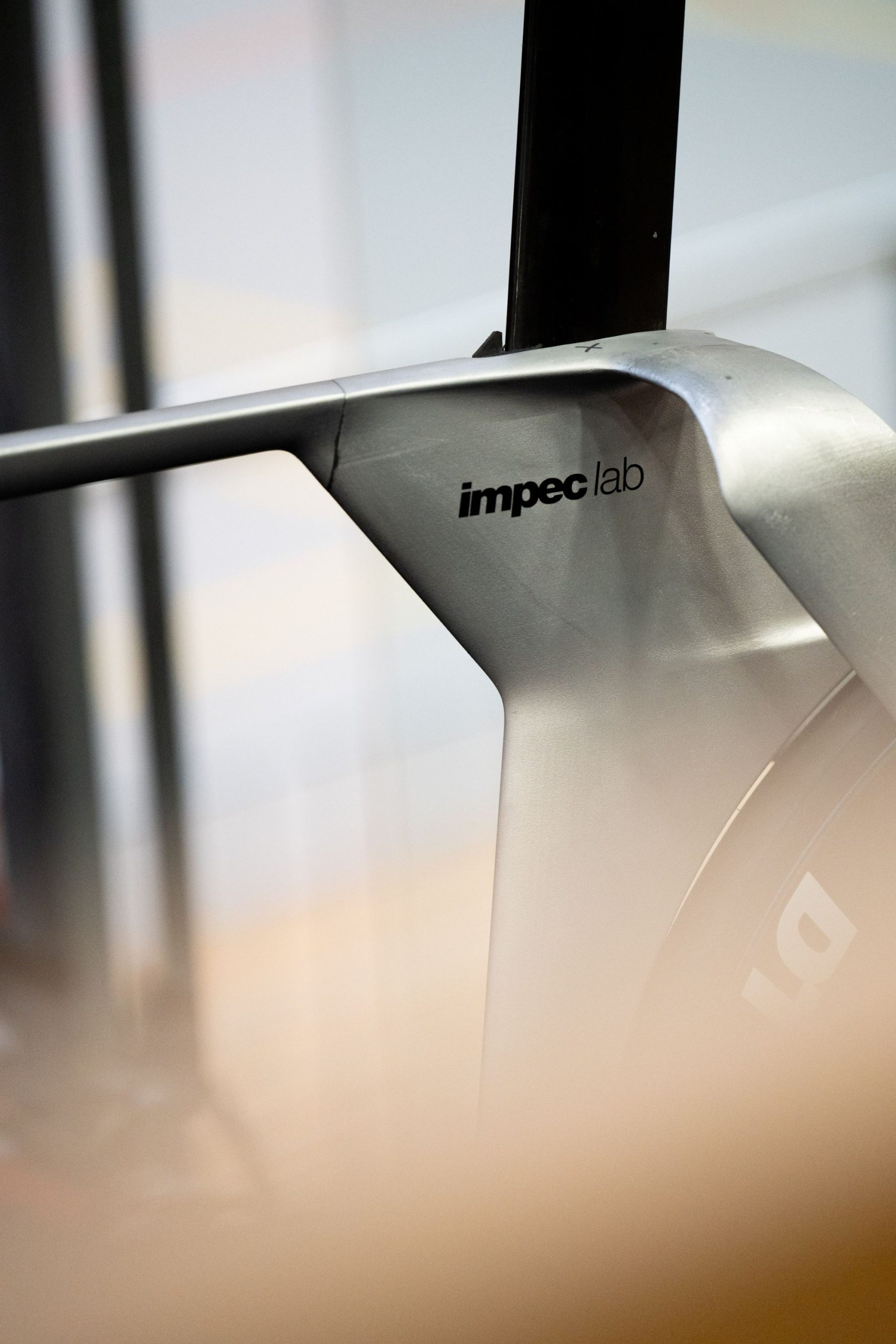
BMC made a rideable alloy prototype to fine-tune the bike’s design.
BMC’s Impec lab used rapid prototyping to help it design and test the various components of the new frame. Rather than the usual 3D-printed plastic mock-up, it developed an alloy prototype rig, itself 3D-printed, that could be adjusted but was still strong enough to ride, enabling it to meet the target launch for the start of the 2026 racing season.
The prototype was taken to the wind tunnel three times between December 2024 and August 2025 to prove the design. This was followed by testing in the velodrome across multiple frame sizes with four Tudor Pro Cycling riders, including Stefan Küng.
The initial design delivered a 4.1% improvement, but new rules imposed by the UCI for the 2026 season meant it needed to be remodelled to make it UCI-compliant, by meeting the 120mm fork-leg stance regulation, which almost caught out the Factor One.
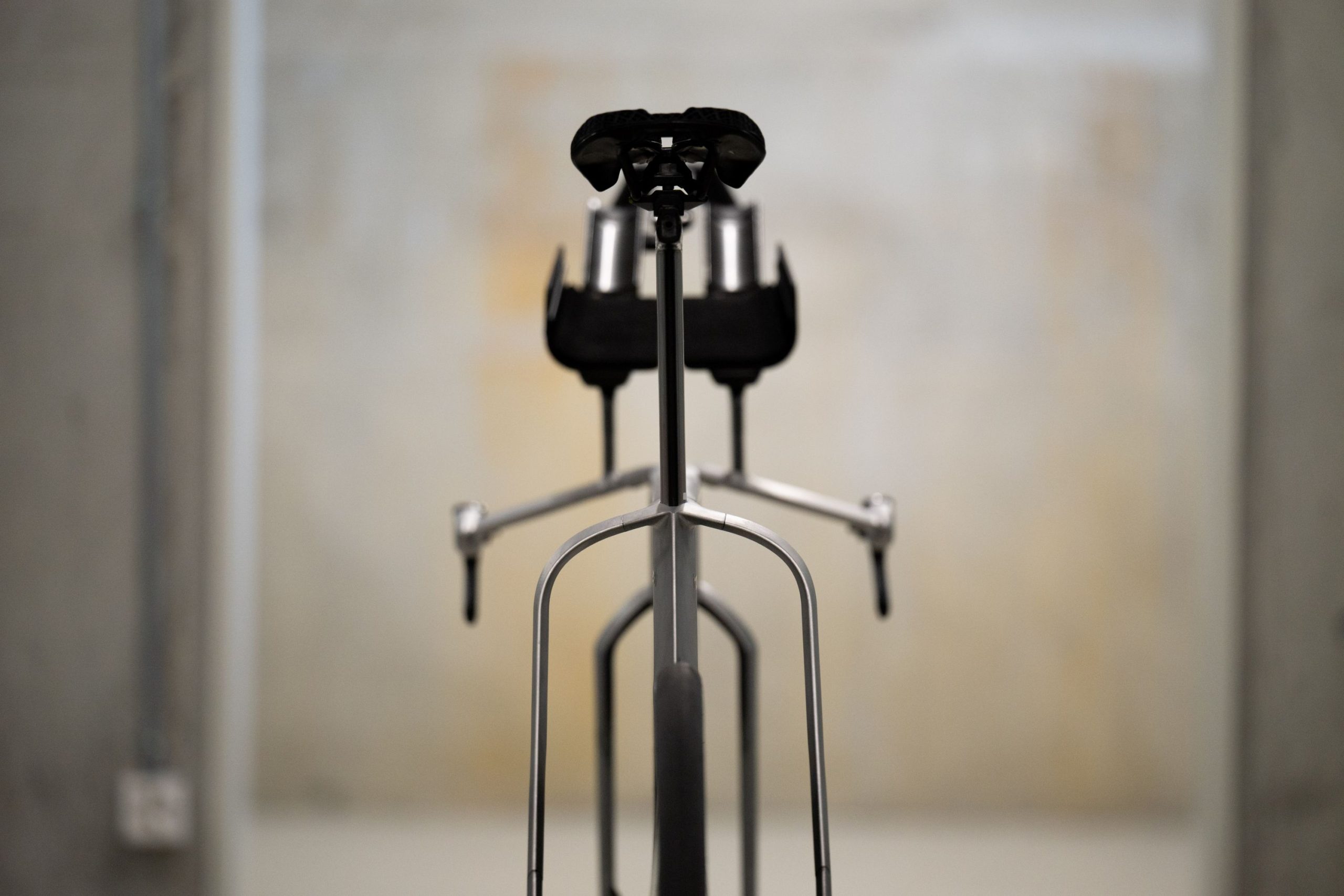
The wide fork legs and seatstays are reminiscent of Team GB’s Hope track bike.
The UCI hasn’t (yet) stipulated a maximum seatstay width, so on the new Timemachine these are wider still, mirroring the design of British Cycling’s Hope track bike. BMC says this reduces turbulence generated in the wake from the rider’s legs.
Other aero features include a tilted front brake caliper mount and even SpeedFin tails to the rear dropouts to reduce drag around the cassette and brakes.
The new Timemachine is claimed to “deliver exceptional stability and handling”, and make bike fit easier, which is a necessity because there are only two frame sizes available. There’s compatibility with Profile Design’s Aeria dual riser extensions, too.
The frame is designed to future-proof it for developments in time-trial tech. BMC
At the same time, BMC has looked to future-proof the frameset with the flexibility to use 1x or 2x groupsets, oversize chainrings (something else the UCI has its eye on regulating), chain catchers and tyres up to 30mm wide.
The new Timemachine Mpc will sit alongside the Speedmachine 01 and Trackmachine 01 in BMC’s catalogue. BMC says it’s designed purely for the needs of Tudor Pro Cycling.
Despite its pro-only billing, UCI rules stipulate that equipment used in competition must be available to purchase, so the Timemachine Mpc frameset is duly available for public sale in sizes S and ML only, albeit in limited volumes, priced at €18,999 / $21,299.
An anonymous reader shares a report: Amazon’s cloud unit has suffered at least two outages due to errors involving its own AI tools [non-paywalled source], leading some employees to raise doubts about the US tech giant’s push to roll out these coding assistants.
Amazon Web Services experienced a 13-hour interruption to one system used by its customers in mid-December after engineers allowed its Kiro AI coding tool to make certain changes, according to four people familiar with the matter.
The people said the agentic tool, which can take autonomous actions on behalf of users, determined that the best course of action was to “delete and recreate the environment.” Amazon posted an internal postmortem about the “outage” of the AWS system, which lets customers explore the costs of its services. Multiple Amazon employees told the FT that this was the second occasion in recent months in which one of the group’s AI tools had been at the centre of a service disruption.
The closed-source chat platform Discord
announced on February 9 that it would soon require some users to verify their
ages in order to access some content — although the company quickly
added that
the “vast majority” of users would not have to. That reassurance has to
contend with the fact that the UK and other countries are implementing
increasingly strict age requirements for social media. Discord’s age
verification would be done with an AI age-judging
model or with a government photo ID. A surprising number of open-source
projects use Discord for support or project communications, and some of those
projects are now looking for open-source alternatives. Mastodon, for example,
has moved discussion to Zulip. There are some alternatives out there, all
with their own pros and cons, that communities may want to consider if they want
to switch away from Discord.
Last night, Tesla made some hefty cuts to Cybertruck pricing in an effort to stimulate some sales. The bombastic tri-motor “Cyberbeast” is $15,000 cheaper at $99,990, albeit by dropping some previously free features like supercharging and FSD. And there’s now a new $59,990 entry-level model, a dual-motor configuration with a range of 325 miles (523 km) and the same 4.1-second 0–60 mph (0-97 km/h) time as the $79,990 premium all-wheel drive version.
That actually makes the new entry-level model a good deal, at least in terms of Cybertrucks. Last year, the company introduced and then eliminated a single-motor rear-wheel drive variant, which found few takers when priced at $69,990; an extra motor for $10,000 less is quite a savings, and actually slightly cheaper than the price originally advertised for the RWD truck.
As you might expect, Tesla has made some changes to get down to the new price. The range and 0–60 mph time might be the same as the more expensive dual-motor Cybertruck, but towing capacity is reduced from 11,000 lbs (4,990 kg) to 7,000 lbs (3,175kg), and cargo capacity drops from 2,500 lbs (1,134 kg) to 2,006 lbs (910 kg).