Space Control Coming to Meta Quest & PC VR Soon, Demo Out Now

Inspired by animated series like Rick & Morty and Futurama, Space Control is an absurd and comic VR game with a Steam Next Fest demo available now.

MoonMonster Studios has just announced a playable demo of Space Control, a ridiculous and hilarious VR adventure inspired by animated comedies like Futurama and Rick & Morty.

In Space Control, you’ve been abducted by an intergalactic megacorporation, which has unceremoniously thrust upon you a massive debt. Over three unique episodes, you must take on a variety of unpleasant jobs set in the corporate space station.

0:00

/1:02

Work off your debt with your alien crew, abduct new recruits, take care of alien babies, and cook up some highly questionable snacks. The game’s key features include physics-based VR gameplay, an episodic narrative, a cast of outrageous companions, and a delightfully dystopian universe in which to toil away.

MoonMonster Studios plans to bring Space Control to Meta Quest and Steam VR this April. You can wishlist the game at those storefronts, and sample the demo now as part of Steam Next Fest.

Stay tuned for our full impressions piece on Space Control in the coming days.

Billions of Dollars Later and Still Nobody Knows What an Xbox Is

Microsoft has spent more than $76 billion acquiring game studios and publishers over the past few years in an attempt to turn Xbox into a Netflix-like subscription platform, and the result is that nobody — possibly not even Microsoft — can clearly articulate what Xbox actually is anymore, The Verge writes.

The brand started as a powerful video game console, but Game Pass and cloud gaming pushed it toward a hazier identity: the “This is an Xbox” ad campaign tried to redefine it as any device that could play Xbox games, whether a PC, a smart TV, a phone, or a Windows handheld. Microsoft then went further and started publishing its biggest franchises on PlayStation, making it one of the largest third-party publishers on a rival’s platform.

Phil Spencer, who led the division for over a decade and drove the subscription pivot, announced his retirement last week, and incoming CEO Asha Sharma has pledged “the return of Xbox” — though her memo also talks about expanding across PC, mobile, and cloud, which sounds a lot like the status quo.


Read more of this story at Slashdot.

Netflix, Disney+ and other major streaming services face stricter UK oversight

Netflix, Disney+, Amazon’s Prime Video and other major video on-demand (VOD) streaming services are set to face stricter regulation in the UK. Platforms with a monthly average of more than 500,000 UK viewers will be deemed “Tier 1″ services that are subject to similar oversight as broadcasters like the BBC and ITV under the eye of media watchdog Ofcom. 

Streaming services run by public broadcasters like ITVX and Channel 4 will have to abide by the new rules as well. BBC services such as iPlayer are exempt for now as they’re regulated under the Broadcasting Code, which broadcasters have to adhere to. That said, the UK government plans to update the BBC Framework Agreement so that iPlayer is regulated in the same way as Netflix et al. 

The government said the new rules will reflect changes in how people are watching TV. It claimed that 85 percent of people use an on-demand service every month while 67 percent watch live TV. It added that two-thirds of UK households subscribe to at least one of Netflix, Prime Video and Disney.

According to Variety, the rules will not apply to video-sharing platforms such as YouTube, since those are regulated under the Online Safety Act. However, individual channels on such platforms could be subject to the VOD standards code. 

Tier 1 platforms will have to adhere to regulations regarding accuracy and impartiality, while ensuring they shield audiences from “harmful or offensive” material. Ofcom will be able to accept viewer complaints over apparent breaches of such rules and carry out investigations. The watchdog will then be able to take action if it determines that there’s been a breach of the VOD standards code. That includes fines of up to £250,000 ($337,000) or five percent of “qualifying revenue” per breach.

A public consultation will help shape the VOD standards code. The public and streaming services will have the chance to weigh in on what the rules should be. The standards code will then come into force a year after Ofcom publishes it. The government says “more than 20” platforms will be subject to the code as things stand.

Separately, a VOD accessibility code will be established to bring streaming services further into line with broadcasters. Tier 1 streaming platforms will have to ensure that at least 80 percent of their total catalogues are subtitled, 10 percent have audio descriptions and five percent is signed. They’ll have four years to meet the requirements of the accessibility code. 

“With UK audiences increasingly favoring on-demand platforms over live TV, we want to ensure that no one is left behind, and that everyone can enjoy the huge range of content available on video-on-demand services,” Media Minister Ian Murray said in a statement. “Implementing a new Ofcom-regulated accessibility code for our largest video-on-demand services will give people with disabilities impacting their sight or hearing peace of mind that they’ll be able to stream all their favorite films and TV shows long into the future.”

The UK government is implementing these rules for streaming services under the Media Act 2024. Currently, platforms including Prime Video, Disney+, Paramount+, Discovery+, Hayu and ITVX are subject to statutory rules that Ofcom enforces. However, the watchdog has no oversight of Netflix as things stand. That platform’s European base is in the Netherlands. As such, the Dutch media regulator oversees Netflix instead.

This article originally appeared on Engadget at https://www.engadget.com/entertainment/streaming/netflix-disney-and-other-major-streaming-services-face-stricter-uk-oversight-160121268.html?src=rss

Dell Gaming PC With RTX 5060 and Core Ultra 7 Is $630 Off Right Now

 Dell Gaming PC With RTX 5060 and Core Ultra 7 Is $630 Off Right Now
Building a PC from scratch in the current climate is a tough proposition thanks to skyrocketing memory and storage prices, as well as inflated GPU costs. If you’re in need of a modest new gaming PC, however, you may want to consider going the prebuilt route, even if you’ve traditionally stuck with DIY builds. System builders are better equipped

Firefox 148.0 released

Version
148
of Firefox has been released. The most notable change in this
release is the addition of a “Block AI enhancements” option that
allows turning off “new or current AI enhancements in Firefox, or
pop-ups about them
” with a single toggle.

With this release, Firefox now supports the Trusted
Types API
to help prevent cross-site scripting attacks as well as
the Sanitizer
API
that provides new methods for HTML manipulation. See the release
notes for developers
for changes that may affect web developers or
those who create Firefox add-ons.

Nothing Phone 4a Photo Reveals Transparent Design And New Glyph Bar

Nothing Phone 4a Photo Reveals Transparent Design And New Glyph Bar
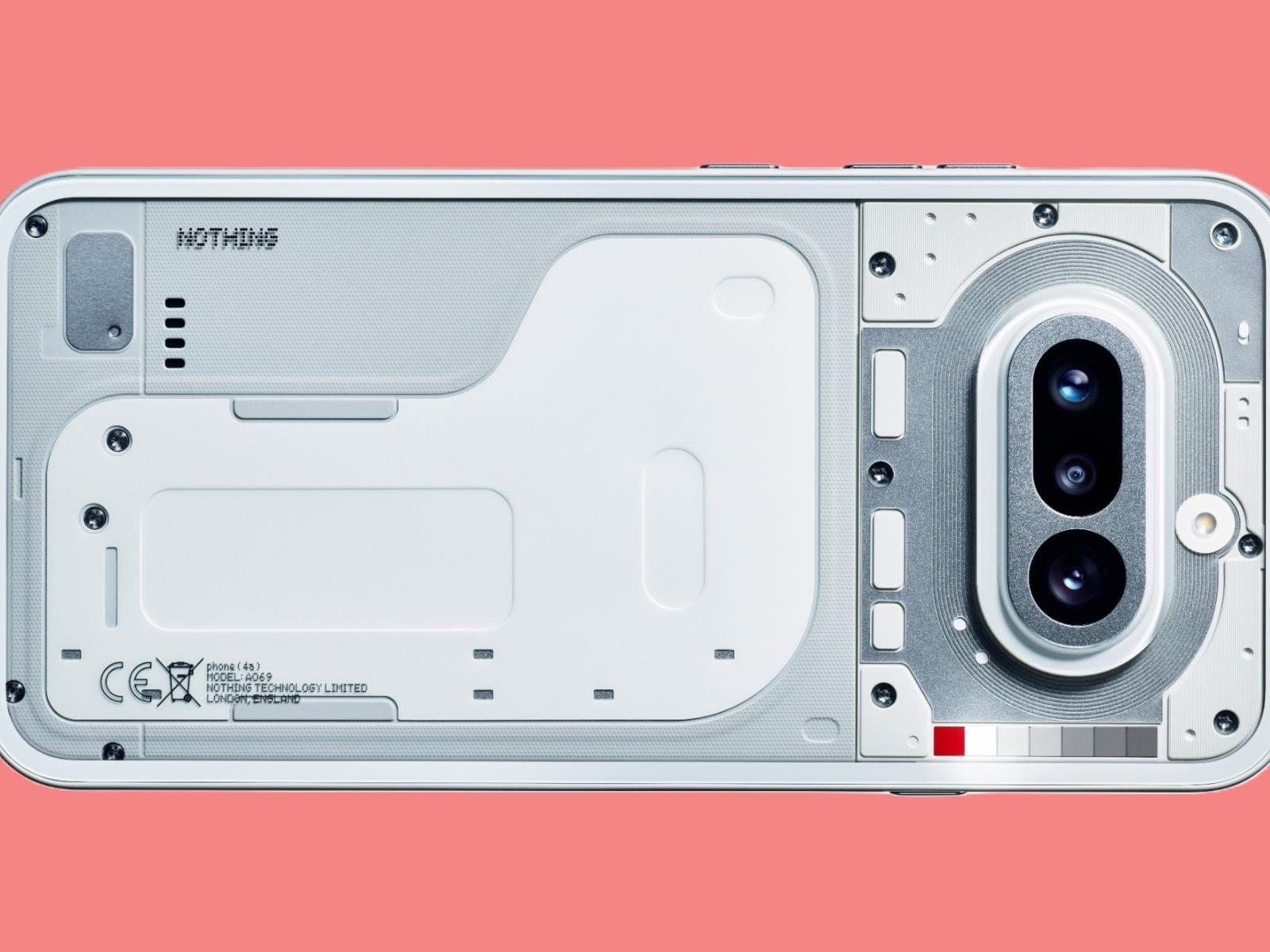
Nothing has seemingly abandoned the traditional slow-burn reveal in favor of a blunt, early look at its next mid-range contender, the Phone 4a. After a couple of weeks of cryptic hints involving pink graffiti and vintage telephone cords, the company has pulled the curtain back on the device’s rear design a week ahead of its scheduled March

What People Are Getting Wrong This Week: Is Selena Gomez a Clone?

I’ve spend more time than I care to admit researching Selena Gomez today. The 33-year-old pop singer and star of Only Murders in The Building is at the center of an elaborate online conspiracy theory that been building steam all week. Why? In brief, many people online seem to believe Selena Gomez is a clone.

Why people think Selena Gomez is a clone

It started with the Epstein files. Last week, videos started showing up on TikTok claiming Selena Gomez was mentioned in the Epstein files. She was, but Gomez wasn’t corresponding with Epstein; her name is mentioned in a July 21, 2017 message between Jeffery Epstein and Lana (NAME REDACTED) in which Epstein writes, “sorry , you would have had fun. he has diecided [sic] on selena gomez.”

Conspiracy theorists have been using the Epstein files as evidence to confirm basically anything since they were released in January, and that Gomez reference from Epstein is, in their minds, a smoking gun that proves she’s a clone. The theory says the real Selena Gomez passed away during a kidney transplant operation in 2017, and the person we think is Selena Gomez is a genetically engineered replica. Interestingly, I can’t find anyone talking about why someone would go to the trouble, but maybe it was to keep the Gomez-money-machine printing cash.

To back up the cloning assertion, believers in the theory are comparing pictures and videos of a pre-2017 Gomez with her current appearance and pointing out all the ways she doesn’t look and sound like she did almost a decade ago. She has a rounded face now where here face used to be angular! Her voice is different too; she used to sound bubbly and high-pitched, now she sounds like Madeline Kahn. This has led some to believe she somehow is Madelein Kahn. (Or maybe Geena Davis.)

Evidence that Selena Gomez is not a clone

It’s impossible to prove a negative, but I’m still comfortable saying that Selena Gomez is definitely not a clone. Scientists have cloned all kinds of animals, from sheep to primates, so there’s theoretically no reason a human couldn’t be cloned. But it hasn’t been done (that anyone knows about), because it’s so unethical. But even if you put ethics aside, animal cloning has an extremely high failure rate: It took 79 embryos and 42 surrogate mothers to clone two macaque monkeys, for instance, and that was using fetal cells. Attempts to make cloned monkeys from adult cells went worse: 181 embryos were implanted into 42 surrogate mothers, and two baby monkeys were born, but both died within hours. The idea that a small army of doctors and scientists and 40+ surrogate mothers are keeping quiet about that one time they were supposed to give birth to Selena Gomez’s clone isn’t credible.

Like a lot of conspiracy theories, this one doesn’t even hold up to its own logic: if Selena Gomez had been cloned, wouldn’t the new version be identical to the old one? Why the changes in voice and appearance? If the clone can be spotted on sight (or upon listening to her sing), why make a clone at all?

More importantly, you can’t clone a full-grown person. You can (theoretically) clone a human embryo, but it would have to be implanted in someone’s womb, gestate, and be born. You’d have to raise it too. A Selena Gomez clone wouldn’t just pop out of a giant test tube and report to the set of a late-career Woody Allen movie.

Speaking of Woody Allen, the most reasonable explanation for that email is Jeffery Epstein telling “Lana” who Woody Allen had cast in A Rainy Day in New York—a movie shot in 2017 that stars Selena Gomez. The timeline fits perfectly with that movie’s pre-production schedule—they announced the casting publicly two weeks later—and Epstein and Allen were longtime acquaintances.

Here’s why Selena Gomez looks and sounds different than she did in 2017

Selena Gomez has lupus, a debilitating disease serious enough to have required her to receive a kidney transplant in 2017. No matter how rich and famous you are, you don’t come out of that unmarked. The change in the shape of the face (“Moon face” as it’s called) and body are well known side effects of the corticosteroids/steroids given to treat Lupus, as well as the immunosuppressants given for organ transplants. Same with her voice: Lupus causes vocal changes in about 80% of sufferers. Inflammation of the cricoarytenoid joint commonly leads to a lower pitched or raspy voice. Gomez even addressed the changes herself, noting that her “throat kinda swells inside sometimes” due to her health issues.

In short, Selena Gomez looks and sounds exactly like someone who has lupus and had a kidney transplant in 2017. Ironically, if she looked the same as she did 10 years ago, it would be much stronger evidence for a conspiracy. It would be totally reasonable to ask, “did she really have a kidney replaced? Does she really have lupus?” But she clearly did and does, and you can see it on her face and hear it in her voice.

Other celebrities rumored to have been cloned and/or died and been replaced

When it comes to cloning conspiracies, we’ve been her before. In 1969, hippies were convinced that Paul McCartney of the Beatles had died, and been replaced by Billy Shears, the (fictional) winner of a Paul McCartney look-a-like contest. In 2003, Avril Lavigne was said to have been replaced by a body double Melissa Vandella. Gucci Mane came out of prison in 2016 looking slimmer, and fans thought he was a clone. Britney Spears is AI. Eminem is an android. It never ends. I’m not sure why people in parasocial relationships with entertainers love pretending they’re fake, but they really do.

Is pretending celebrities are secretly dead bad?

I don’t think many Selena Gomez fans really believe she’s a clone, even if they post about it online. At least, they don’t believe it in the same way they believe the sun is going to rise tomorrow. I doubt I could get anyone to put money on it. It feels more like it’s half fan-fiction, an exciting (if ghoulish) game of what if?

Believing in a world where a cabal of Hollywood mad scientists secretly cloned an actress so Hulu could produce more Only Murders in the Building is more exciting than accepting the dull, randomness of actual life. It’s hard to accept that anyone, even a celebrity, can be stricken with a debilitating diseases that changes their faces and gives them unfamiliar voice, just because that’s how shit goes sometimes. Because that means it could happen to you. In conspiracy-land, at least there’s someone in charge of the bad things that happen. We’d rather have someone steering the bus, even with terrible intentions, than accept that there is no driver, and the exit doors are sealed shut.

[$] As ye clone(), so shall ye AUTOREAP

The facilities provided by the kernel for the management of processes have
evolved considerably in the last few years, driven mostly by the advent of
the pidfd API. A pidfd is a file
descriptor that refers to a process; unlike a process ID, a pidfd is an
unambiguous handle for a process; that makes it a safer, more deterministic
way of operating on processes. Christian Brauner, who has driven much of
the pidfd-related work, is proposing
two new flags
for the clone3()
system call, one of which changes the kernel’s security model in a
somewhat controversial way.

Lamborghini cancels electric Lanzador as supercar buyers reject EVs

For the last few years, Lamborghini has been in a quandary: What to do about an electric vehicle? Among the supercar brands, Lamborghini has always stood out as favoring drama over lap times. And while electric motors and their instant torque can make a car accelerate very quickly indeed, other than the G-forces, it happens with such little fuss. Working out how to imbue an EV with enough “wow” factor to wear the famous bull badge has proved so difficult that the company has thrown in the towel in favor of developing more plug-in hybrids.

As part of Volkswagen Group, Lamborghini has access to the EV platforms used by fellow VW Group brands Audi and Porsche, so it’s not a question of access to technology. Rather, the company just doesn’t think it can sell the cars. As Tim Stevens found out for Ars last year, in this rarefied end of the car market, the customers just aren’t interested in EVs. People paying six or even seven figures for a supercar, especially a Lamborghini, are not exercising restraint, and they don’t want the car to do that, either.

Speaking to the Sunday Times this weekend, Lamborghini CEO Stephan Winkelmann revealed that the Lanzador, an electric SUV under development for the past few years, was canceled in late 2025. “Investing heavily in full-EV development when the market and customer base are not ready would be an expensive hobby, and financially irresponsible towards shareholders, customers [and] to our employees and their families,” he told the paper.

Read full article

Comments

OnePlus 16 Could Be The First Phone To Break The Sub-1mm Display Bezel Barrier

OnePlus 16 Could Be The First Phone To Break The Sub-1mm Display Bezel Barrier
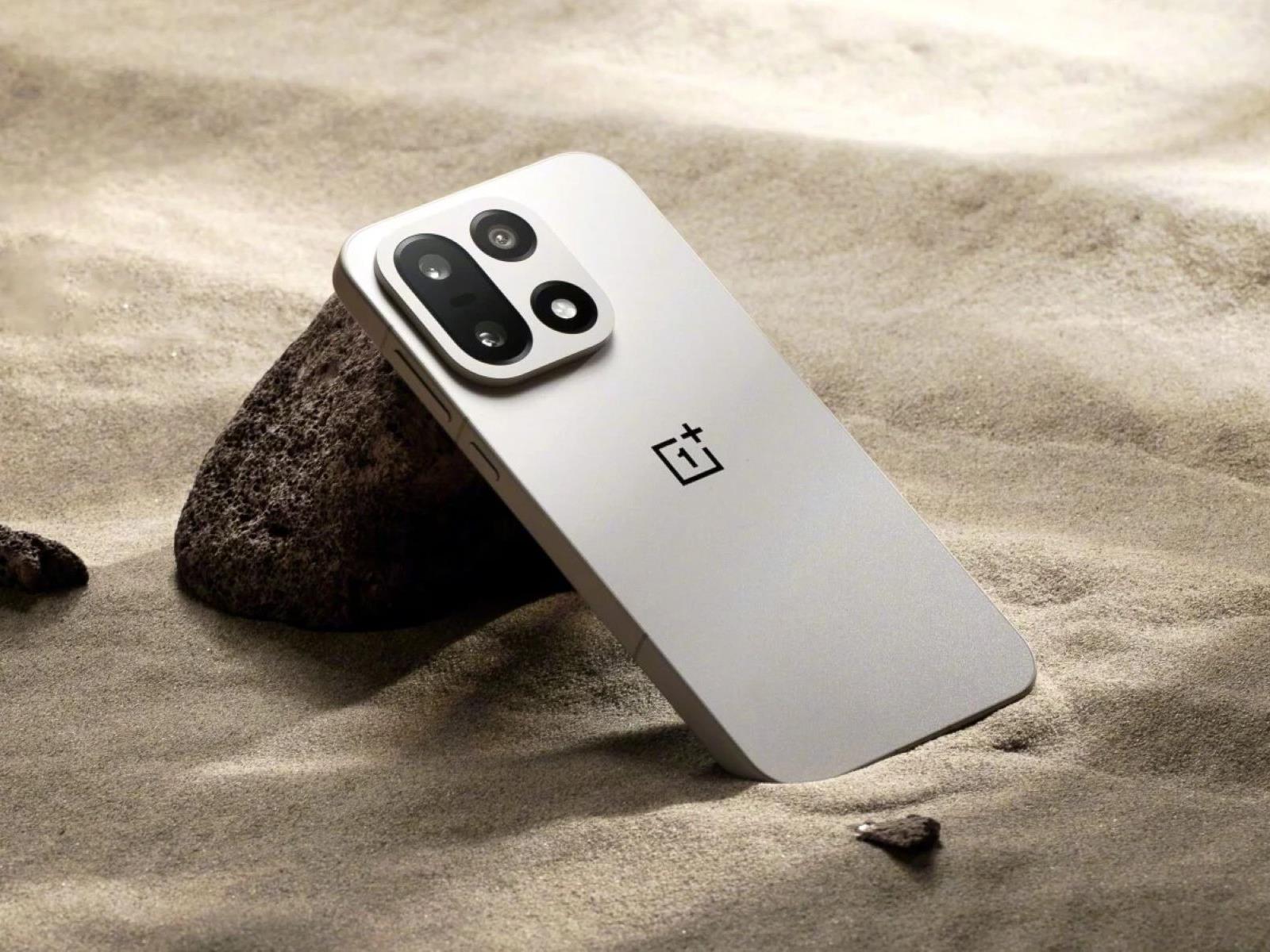
Rumors are a-swirling over the next OnePlus flagship, with some saying that the OnePlus 16 is set to shatter the 1mm display bezel barrier, inching (or should that be millimetering) us closer to the bezel-less smartphone dream some enthusiasts have sleepless nights over. 

If this claim (as noted by tech insider Old Chen Air over at Weibo)

What Is a Strength Training ‘Deload,’ and When Do You Need One?

Even among professional athletes, nobody works out at 100% effort every single week. There are times to rest and recover, often for a week or more, and you and I can apply this principle to our routines, as well. Scaling back your strength training for a short period is called a deload. Here’s how to do one, and how to know when you need it.

What is a deload?

Generally speaking, a deload is a short period of time—maybe a week, but this can vary—in which you do less strength training than usual. That said, people use the word in a few different ways.

For some people, a deload is a complete break from training, like a vacation. You take the whole week off, and that’s all there is to it. For others, a deload is just a little bit lower in intensity than your usual work. You may be doing just as many sets and reps, but the weights aren’t as heavy. Another way to do this type of deload is to reduce volume, so that you do fewer reps and sets, but the weights may be just as heavy as usual.

Which type of deload to use will depend on the type of work you’ve been doing up to this point, the reason for the deload, and your (or your coach’s) training philosophy.

What are the benefits of a deload?

A deload allows your body more recovery than you get in your usual training. Every workout incurs a bit of fatigue, and if you’re training hard for weeks (or months) at a time, you might be so tired that you can no longer perform as well or do as much work. A little bit of fatigue is normal, but in extreme cases, your health may begin to suffer.

You don’t need to wait until everything falls apart to think about taking a deload. There are several ways strength athletes (and recreational lifters like you and me) plan ahead to include deloads in their training. Here are the main ones:

  • To prepare for a competition. To do your best, you’ll need to reduce fatigue without getting rusty. Peaking usually involves a reduction in volume (fewer reps and sets) while keeping the weights heavy.

  • To introduce new lifts or goals. You’re more likely to get sore if you’re doing something new and intense, so introducing new exercises or new types of training often makes sense during a week of lighter training (in this context, that’s sometimes called a “pivot week.”)

  • To recover after a tough training block. Some programs will have a deload week built in; others times, you may choose to take an extra week after a program finishes and before you start the next one.

  • As part of a long-term plan to manage fatigue. Even if your training wasn’t particularly tough, you may want to sprinkle in occasional deload weeks just to be sure you’re not getting unnecessarily fatigued.

  • In response to perceived stress. Some programs don’t include planned deload weeks, and it’s up to the lifter to decide when they need a break.

When should I take a deload?

There are two schools of thought on deloads. One is to use them as-needed: you train hard for as long as you can, and then take a deload when you start to feel beat-up. The other is that deloads should be planned, so that you never find yourself in the position of wondering if it’s time to take a deload yet.

I wouldn’t say there’s a single right answer; both styles of training have succeeded for the right people. But I will say that it’s hard to know when is the right time to take a deload if you’re doing them as-needed. Some people will want to take a deload as soon as they start to struggle even the tiniest bit, even if their problem isn’t something a deload can fix. Meanwhile, a lot of dedicated athletes will keep training long after they should have taken a break. It may be smarter to plan ahead and take those deloads whenever the calendar says it’s time.

How do I know if I’m doing it right?

If you’re working with a coach, ask them about their big-picture plans for you. The deloads (or lack thereof) should be part of the puzzle, and have a reason for being programmed the way they are.

If you’re running a program that you’ve found on the Internet or in books, take a moment to think about how your program approaches deloads. Some may include deloads, and some may not. If you’re programming for yourself, you can take inspiration from other programs that are out there, but you should also use some common sense and ask yourself how you are feeling.

Deloads are a common tool for fatigue management, but they aren’t the only tool. Your program may adjust volume from week to week, for example, in a way that keeps you feeling fresh. If that’s the case, you may not need a deload at all. Even if you’re preparing for a competition, a deload is a very common way to reduce fatigue and ensure a good performance, but that doesn’t mean you always need to deload before a competition. (It’s common to “train through” a competition that is low priority, for example.)

A deload is really just a training tool, so make sure you’re matching your choices about deloads to what your body needs.

Discord Distances Itself From Persona Age Verification After User Backlash

Discord is attempting to distance itself from the age verification provider Persona following a steady stream of user backlash. From a report: In an emailed statement to The Verge, Discord’s head of product policy, Savannah Badalich, confirms the company “ran a limited test of Persona in the UK where age assurance had previously launched and that test has since concluded.”

After Discord announced plans to implement age verification globally starting next month, users across social media accused Discord of “lying” about how it plans on handling face scans and ID uploads. Much of the criticism was directed toward Discord’s partnership with Persona, an age verification provider also used by Reddit and Roblox.


Read more of this story at Slashdot.