The Out-of-Touch Adults’ Guide to Kid Culture: What Is an ‘Alpine Divorce’?

In this week’s Out-of-Touch guide, we’re talking about Alpine divorce, diagnosing exactly how messed up the younger generations are through their viral videos, and looking at some dumb food trends popular among young people.

What is an “Alpine Divorce”?

If you’ve been seeing the phrase “Alpine Divorce” showing up in your feeds lately, here’s the 411 (as they used to say): An Alpine Divorce is when a man takes his wife on a hike, usually in the mountains, and then just leaves her there to fend for herself.

The phrase dates back to a short story written in 1893 by Robert Barr called “An Alpine Divorce,” but the renewed interest in the subject stems partly from the case of a Austrian mountain climber who was recently found guilty of gross negligent manslaughter after leaving his girlfriend behind on the hike, but mostly from a video posted by tiktoker @everafteriya, which purports to document a mild case of Alpine Divorce.

Her man didn’t leave her to die, but @everafteriya’s sad tale was has been played over 19 million times and has over 18,000 comments. It spread from TikTok to X to Threads and everywhere else, and women all over are sharing their own stories of being left behind on hikes and climbs.

Viral video of the week: Act on Demand

Younger generations fear more than just being left behind, as you can see in this week’s viral videos. On the surface, the footage posted by Pennsylvania improv troupe Act on Demand seems boring, but if you know what you’re looking at, it’s like a portal into the damaged collective soul of Generations Z and A.

Check this out:

and this:

For older people, it’s hard to understand why these videos have millions of views—they look like footage of any beginner-level improv class to me; neither particularly good nor particularly bad—but young people are seeing something different.

Here are some of the top comments on the videos above:

  • is this a humiliation ritual

  • Some of these are so egregiously bad that I have to know what went on in their mind prior

  • World’s worst improv class

  • Do they pay for this or is this a support group?

It goes on like that. Tens of thousands of commenters dragging strangers who have the temerity to be learning to do something. And there’s another level of commentary, too. A semi-ironic fandom is developing, with people posting compilation videos and edits of Act on Demand:

Videos of people caught doing embarrassing things have always been popular, but the members of Act on Demand aren’t doing anything more embarrassing than publicly being beginners at Improv.

Younger people don’t go to parties anymore. The don’t socialize. They don’t have friends, have sex, or get drunk. They don’t take risks. They don’t live their lives. All these things involve being in new situations where you might not be in control, where you’re vulnerable, an vulnerability means you might be “cringe.” The fear of being cringe overrides all other concerns, even the need to socialize.

At the same time, younger people so crave social interaction that they’ll settle for a simulation of it. They’ll watch a beginner improv class to obsess over the inner lives and relationships of totally average strangers in Pennsylvania, they’ll enter into parasocial relationships with people they’ll never meet, and they’ll turn to machines to be their friends.

Four dumb food trends among young people

But enough about our dystopian future; here’s a palette cleanser (pun intended) of four dumb food trends popular among young people.

  • Sour plates: TikTok user Haskell has kicked off a trend for “sour plates,” that is, preparing traditional food with ingredients from sour candies to create sour meals. It’s as gross as it sounds. While some people are trying them, it’s more of a joke than a widespread trend.

  • Loaded water: Loaded water is water enhanced with something: a flavor boost, fruit juice, electrolytes, carbonation, and even vitamins or prebiotics. The idea is to increase hydration by making water more palatable, but the problem is, when you add fruit juice to water, you’re not drinking water; you’re drinking juice. Water is defined by the absence of other ingredients, so “loaded water” can’t even exist.

  • Boy kibble: Boy kibble is like girl dinner, but so much worse. There are variations, but boy kibble usually consists of rice and ground beef, often served without spices or vegetables.

  • Eating like a lurking alligator: OK, I actually approve of this one. A new trend on TikTok sees young men eating like lurking alligators in their bathtubs. Check it out:

Big Spin Mystery Spinners in Watopia: Locations and Prizes

As mentioned in our Big Spin 2026 post, Zwift has rolled out a sort of treasure hunt to add a bit of fun to this year’s Big Spin! They’ve placed “Mystery Spinners” at the end of key Watopia segments, and those spinners unlock 26 different prizes from past Big Spin events.

These spinners went live on Friday, February 27, and will be in Watopia until the end of Big Spin 2026.

Where are these spinners located, what are the prizes, and how do they work? Read on for details, including a Rebel Route that takes you to every Mystery Spinner in Watopia!

Mystery Spinner Locations

Eight Mystery Spinners have been placed at the end of particular segments in Watopia, with roadside “?” markers nearby. Here they are on a map:

And are the precise segments linked to each spinner:

Mystery Spinner Prizes

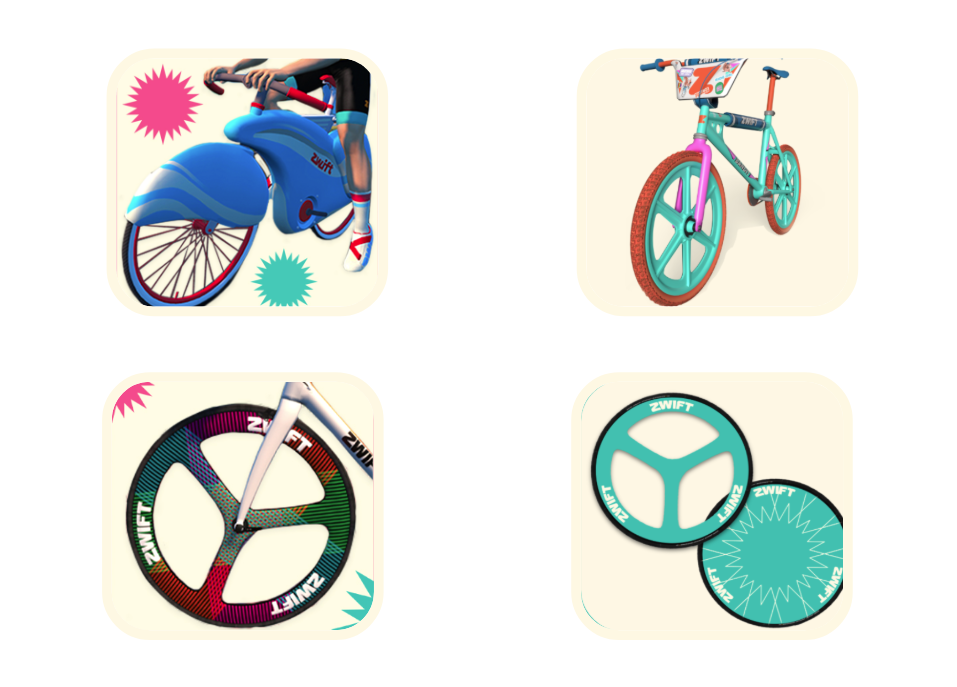
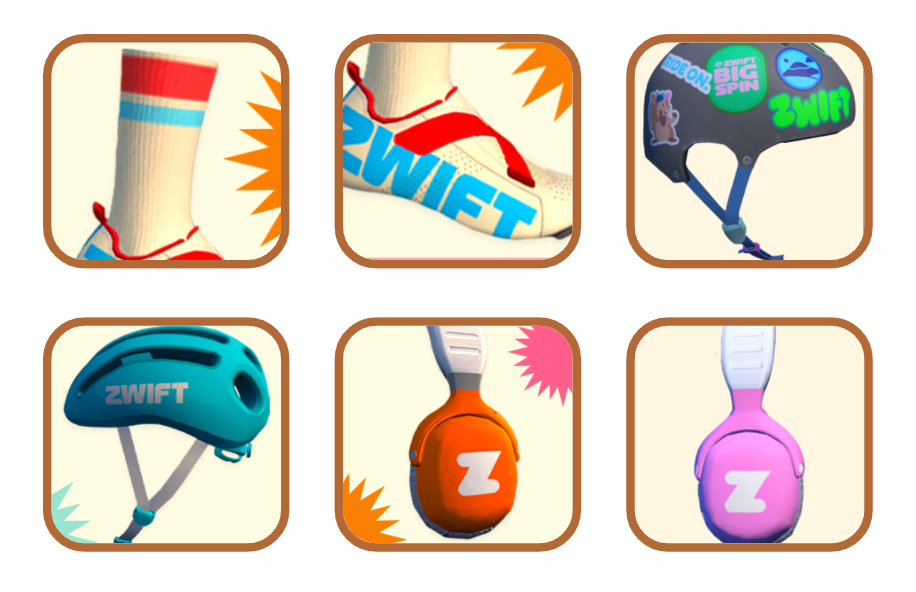
Mystery Spinners unlock Big Spin “vault” prizes from The Big Spin 2024 and 2025. The more difficult the segment, the cooler the prizes. Zwift has organized the Mystery Spinners into four tiers based on segment difficulty, and each tier has its own set of prizes.

Tier 1 (Bikes and Wheels)

(Not pictured: the Lightweight Meilenstein wheels are also in the tier 1 prize spinners.)

Tier 2 (Footwear, Helmets, and Headphones)

Tier 3 (Stage-Specific Kits)

Tier 4 (Funky Headwear)

Farming Drops

If you land on a prize you already own, you’ll get a healthy Drops bonus instead. The bigger the prize, the bigger the bonus! Examples: the bikes and wheels for tier 1 give you a 25k Drops bonus, while the glasses and hats in tier 4 give you a 10k bonus. Here’s our test bot activating the Volcano Circuit Mystery Spinner and landing on a prize we’ve already got:

Stoneway Sprint is clearly the shortest segment with a spinner. I was able to do a full “rep” in 1 minute, 40 seconds, without a lot of effort. 10k Drops every 100 seconds=360k per hour (and 72 U-turns)! Grab another 18k+ hourly by using an upgraded basic road bike, which gives you a 5% bonus on all Drops earned.

Triggering a Mystery Spin

To trigger a Mystery Spinner, you have to complete one of the designated segments listed above. This can be done in any sort of ride: free rides, workouts, and events.

If you’re trying to unlock a particular prize, your best bet is to ride repeats of a segment that features said prize. This is easy to do for lower-tier items (repeats of Tier 4’s Volcano Circuit or Stoneway Sprint Reverse don’t take much effort), but much more difficult for higher tiers. Epic KOM or Alpe du Zwift repeats, anyone?

Mystery Spinner Rebel Route

Want to hit every Mystery Spinner in one ride? We’ve put together a Rebel Route which does just that. It’s 76.1km long, with just over 2000 meters of elevation gain. (It ends atop Alpe du Zwift, though, so you get another ~12.5km of “free” downhill once you’ve finished the ride.)

Route details:
Distance: 76.1km (47.3 miles)
Elevation Gain: 2,006m (6,583′)
Strava Segment
See on ZwiftMap.com

We’ll publish a post with turn-by-turn directions soon, but you’ll have to follow along via ZwiftMaps or Strava until then!

Questions or comments?

Share below!

Stack Overflow Adds New Features (Including AI Assist), Rethinks ‘Look and Feel’

“At its peak in early 2014, Stack Overflow received more than 200,000 questions per month,” notes the site DevClass.com. But in December they’d just 3,862 questions were asked — a 78 percent drop from the previous year.

But Stack Overflow’s blog announced a beta of “a redesigned Stack Overflow” this week, noting that at July’s WeAreDevelopers conference they’d “committed to pushing ourselves to experiment and evolve…”

Over the past year, on the public platform, we introduced new features, including AI Assist, support for open-ended questions, enhancements to Chat, launched Coding Challenges, created an MCP server [granted limited access to AI agents and tools], expanded access to voting and comments, and more.

However, these launches are not standalone features. We have also been rethinking our look and feel, how people engage with Stack Overflow, and how content is created and shared. These new features, along with the redesign, represent how we are bringing Stack Overflow’s new vision to life and delivering value that developers cannot find elsewhere.

Our goal is to build the space for every technical conversation, centered on real human-to-human connection and powered by AI when it helps most. To support this, we are introducing a redesigned Stack Overflow to best reflect this direction… During the beta period, users can visit the beta site at beta.stackoverflow.com and share feedback as we build towards a new experience on Stack Overflow.
They’ve updated their library of reusable UI components (buttons, forms, etc.), and are promising “More ways to share knowledge and ask any technical question.” (“Alongside looking for the single right answer to your question, you can now find and share experience-based insights and peer recommendations…”)

They’re launching all the planned features and functionality in April, when “More users will automatically redirect to the new site.” (Starting in April users “can continue to toggle back to the classic site for a limited time.”)


Read more of this story at Slashdot.

At MWC, Tecno’s super-thin modular concept phone doesn’t even have a wired charging port

On its own, at 4.9mm thin, Tecno’s modular phone concept barely feels like a smartphone. It has a screen, a basic camera module, four low-profile pogo-pin connectors and that’s about it. From there, you can seemingly build your conceptual phone however you want.

At its booth at MWC 2026, Tecno had two families of modular components in two different colorways, which is surprising at this concept stage. The chunky telephoto lens and housing must weigh over three times as much as the base phone, adding up to 20x zoom capabilities, even if it was a little glitchy during my hands-on. The barrel also offers manual focus, which is always a nice touch. The lens itself is huge, though, making even Vivo’s latest 400mm telephoto lens peripheral look reasonable by comparison.

Tecno's modular concept phone at MWC 2026
Image by Mat Smith for Engadget

There are more subtle camera modules, including ultrawide options and a more streamlined periscope telephoto. There’s even an action cam that can attach through Wi-Fi and be used on its own. Depending on the module, transmission is also done through Bluetooth and even mmWave. One module has an antenna that folds out, turning the phone into a walkie-talkie messenger… thing that can communicate without cell service or Wi-Fi. There were also lanyard connectors, grip clips, and several that I may have forgotten. Sadly, the game controller mod wasn’t on the stand, though I’m not sure how you’d use it blindly on the back. 

It’s a lot of fun to swap out and even stack the modules, most of which were functionally working. There are plenty of questions left to answer, and I’m concerned about how rigid the magnetic connection would be when pulling this kind of phone out of your pocket repeatedly. Also, who’s going to carry around an attaché case filled with all these things? 

Tecno's modular concept phone at MWC 2026
Who doesn’t love an aerial?
Image by Mat Smith for Engadget

Naturally, due to its thickness, the phone has a tiny battery cell (I don’t know the capacity), but you can add 3,000mAh battery packs to the back. And another. And even another, topping out at around 10,000mAh, beating the capacity of most mainstream smartphones. It was only then that I realized it lacked any traditional USB-C charging port. Instead, a charging module can be attached to either of the two pairs of connectors. (And you can add further modules on top of that.)

Tecno often has thrilling concepts and one-off devices at trade shows, so we can’t vouch that this will eventually make its way to consumers. Modular phones are a tricky sell, as they can often lose the efficiencies that come from unified components. Google ended its Project Ara modular concept over 10 years ago, while Motorola’s Moto Mods just weren’t very good and even I struggle to remember LG’s G5 modules.

Adding to that, the company also rarely sells its phones in Western Europe and the US. Judging by the moves being made by other Chinese phone manufacturers in the last year, that could change.

This article originally appeared on Engadget at https://www.engadget.com/mobile/smartphones/at-mwc-tecnos-super-thin-modular-concept-phone-doesnt-even-have-a-wired-charging-port-123129135.html?src=rss

Trump FCC’s equal-time crackdown doesn’t apply equally—or at all—to talk radio

In the Trump FCC’s latest series of attacks on TV broadcasters, Federal Communications Commission Chairman Brendan Carr has been threatening to enforce the equal-time rule on daytime and late-night talk shows. The interview portions of talk shows have historically been exempt from equal-time regulations, but Carr has a habit of interpreting FCC rules in novel ways to target networks disfavored by President Trump.

Critics of Carr point out that his threats of equal-time enforcement apply unequally since he hasn’t directed them at talk radio, which is predominantly conservative. Given the similarities between interviews on TV and radio shows, Carr has been asked to explain why he issued an equal-time enforcement warning to TV but not radio broadcasters.

Carr’s responses to the talk radio questions have been vague, even as he tangled with Late Show host Stephen Colbert and launched an investigation into ABC’s The View over its interview with Texas Democratic Senate candidate James Talarico. In a press conference after the FCC’s February 18 meeting, Deadline reporter Ted Johnson asked Carr why he has not expressed “the same concern about broadcast talk radio as broadcast TV talk shows.”

Read full article

Comments

Sony faces a $2.7 billion antitrust lawsuit in the UK

Another major antitrust lawsuit has launched in the UK. This time its against Sony, which could be on the hook for almost £2 billion ($2.7 billion) for overcharging PlayStation users. 

A class action case for about 12.2 million users argues that Sony “occupies a dominant position in relation to the digital distribution of PlayStation games and in-game content and that it has been unfairly charging its UK customers too much for digital games and in-game content purchased through the PlayStation Store.”

It argues that Sony “has a near monopoly” on add-on content and digital games through the PlayStation store, allowing it to set the prices and take a 30 percent commission.

The class action encompasses anyone in the UK who owned a PlayStation console and purchased digital games or made in-game purchases through the PlayStation store between August 19, 2016 and February 12, 2026. It’s being run as an opt-out lawsuit, so anyone meeting the criteria can qualify without taking any action. If the lawsuit is successful then each person could receive about £162 ($217). 

Sony has argued that allowing downloads from third-party stores could bring security and privacy risks, according to the Financial Times. It further states that the digital sales commission makes up profits lost for selling their consoles with minimal profit. 

This lawsuit follows the success of a similar class action decided in October. The UK’s Competition Appeal Tribunal found that Apple had been abusing its dominant market position and overcharging App Store users. In December, Apple filed an appeal against the £1.5 billion ($2 billion) fine. 

This article originally appeared on Engadget at https://www.engadget.com/big-tech/sony-faces-a-27-billion-antitrust-lawsuit-in-the-uk-114113889.html?src=rss

More ASUS Desktop Motherboards Will Support Sensor Monitoring With Linux 7.1

ASUS desktop motherboards have been seeing broader sensor monitoring support on Linux in recent years. ASUS motherboards for Intel and AMD processors have been seeing more support added thanks to the open-source community with new additions to the likes of the ASUS-EC-Sensors driver and other hardware monitoring (HWMON) driver code. This is continuing for Linux 7.1…

Vivo’s X300 Ultra goes global and gets a huge 400mm Zeiss telephoto lens

Vivo barely has a presence outside of China but that seems to be changing with the company’s next flagship phone. At Mobile World Conference 2026, the company unveiled the X300 Ultra smartphone that comes with a 200MP sensor along with two accessories designed for pro photographers and content creators: a SmallRig video cage and 400mm Zeiss telephoto extender lens.

Vivo didn’t go into detail about the phone’s specs, but you can likely expect a high-end processor, screen, battery and other internal components when it’s fully unveiled later on. Vivo did say that like the X300 Pro, the X300 Ultra will have an impressive 200MP main camera sensor, and is likely to offer features like 4K 120fps Dolby Vision HDR recording. 

Vivo's X300 Ultra will launch globally with pro camera accessories
Mat Smith for Engadget

Another thing Vivo revealed is that you’ll be able to get the Vivo X300 Ultra with a 400mm equivalent lens accessory called the Vivo Zeiss Telephoto Extender Gen 2 Ultra. That will allow about an eight times zoom compared to the native field of view, plus a lot more when combined with the high-quality digital zoom. It will also offer “gimbal-grade” optical image stabilization and motion-tracking focus technology, Vivo says. 

Along with the lens, Vivo is introducing a “pro-grade camera cage” designed by the well-known accessory company SmallRig. It’s expandable and offers multiple cold shoe mounts and quick-release ports so you can easily add things like handles, lights and microphones. It also comes with dedicated physical buttons for tactile shutter and zoom adjustment, plus a multi-level cooling fan to keep the phone running cool. You also get an “External Lens Expansion Frame” to accommodate the X300 Ultra Telephoto Extender.

Vivo's X300 Ultra will launch globally with pro camera accessories
Mat Smith for Engadget

Vivo showed off the phone at MWC 2026 in Barcelona to a fair amount of enthusiasm. The company emphasized that the X300 Ultra will come to international markets, but it didn’t say which for now or at what price (the X300 Pro costs about €1,400 in Europe). That decision, it said, “signals Vivo’s more proactive and confident approach to expanding its presence in the global premium smartphone segment.” Given the likely price, though, it’s debatable if pro creators will want to buy this instead of, say, a pretty nice mirrorless camera and lens. 

This article originally appeared on Engadget at https://www.engadget.com/mobile/smartphones/vivos-x300-ultra-goes-global-and-gets-a-huge-400mm-zeiss-telephoto-lens-105058478.html?src=rss

Motorola’s Edge 70 Fusion phone has a huge curved 144Hz display

Motorola has unveiled the Edge 70 Fusion, its latest mid-range model with an impressive display and OIS-enabled camera with a Sony sensor. Though other specs are modest, the cameras, display and Pantone-inspired, fabric-like colors make it a good choice for fashion-forward and budget conscious buyers in Europe and other (non-US) territories. 

The Edge 70 Fusion is a more modestly specced version of last year’s Edge 70 that’s thicker at 7.2mm compared to 5.9mm but has a better screen. Motorola says it has the world’s first “quad-curved” display that folds into the sides for smoother lines and a more elegant look. The AMOLED screen is also huge at 6.78 inches and has a 144Hz refresh rate with Pantone-validated color accuracy, while hitting a peak 5,200 nit brightness, easily enough for sunny outdoor use. 

Motorola's Edge 70 Fusion phone has a huge curved 144Hz display
Motorola

The 50MP main camera is also impressive, using Sony’s Lytia 710 sensor with optical image stabilization and an f/1.8 aperture. That’s accompanied by a 13MP ultra-wide macro camera and a 32MP from selfie camera with 4K recording. 

The Edge 70 fusion is powered by Qualcomm’s Snapdragon 7s Gen 3 with Cortex-A720 and A520 cores, along with an Adreno 810 GPU, promising about a 15 percent bump in performance over the last model. It supports 68W wired (no wireless) fast charging and carries a 5,200mAh battery. It will be relatively tough as well, with IP68 and IP69 dust and water resistance ratings and MIL-STD-810H durability. 

It’s a solid value with prices starting at $430 in Europe (about $503) when it goes on sale later this month in colors like Patone Orient Blue, Pantone Country Air and Pantone Sporting Green. There’s no indication that it will be available in the US, though. 

This article originally appeared on Engadget at https://www.engadget.com/mobile/smartphones/motorolas-edge-70-fusion-phone-has-a-huge-curved-144hz-display-093035809.html?src=rss

ESP32-P4-PC board from Olimex offers HDMI and MIPI support

The ESP32-P4-PC is an embedded development board based on Espressif’s ESP32-P4 RISC-V processor. Developed by Olimex and measuring 90 x 60 mm, the board provides HDMI output, MIPI CSI and DSI interfaces, Ethernet, USB host ports, audio, storage, and expansion headers in a compact form factor. The design is built around the ESP32-P4NRW32 system-on-chip, which […]

TCL is upgrading its easy-on-the-eyes glare-free NXTPAPER display tech with AMOLED

TCL has been making smartphones and tablets at an impressive clip for years. While most companies have focused on foldable display tech — and TCL has dabbled — the focus has been on its NXTPAPER screens. Aimed at being friendlier on the eyes, and pitched as a device somewhere between e-ink slates and traditional tablets, NXTPAPER has gradually been upgraded and refined, reaching an apex at CES 2026 earlier this year with the Kindle Scribe-alike, the Note A1 NXTPAPER and its latest smartphone, the NXTPAPER 70 Pro.

At MWC, just a couple of months later, it’s preparing for a major leap forward on future phones and tablets. It’s been announced (and backed up with tech demos) that it’s developing AMOLED NXTPAPER displays, aiming to combine the eye comfort benefits of TCL’s current displays with flagship visual performance. This involved fundamentally redesigning and re-engineering the display architecture. Still, it should address the biggest problems with current LCD-based NXTPAPER, such as mediocre brightness, poor outdoor performance, and dull colors.

This NXTPAPER AMOLED screen, well, it looks like AMOLED:

TCL NXTPAPER AMOLED at MWC 2026
Image by Mat Smith for Engadget

On the showfloor at CES, the company had several demo devices showcasing the new screen technology’s brightness. While still photos don’t really do it justice, it’s impressive, and the anti-glare effect seems premium compared to third-party anti-glare protective films. 

TCL says its incoming AMOLED display — it hasn’t announced a device yet — will reach 3,200 nits of brightness. For reference, TCL’s 70 Pro topped out at a mere 900 nits. TCL says it will also feature 120Hz refresh rates, 100 percent color gamut coverage, and blue light reduction that can go as low as 2.9 percent, which is 15 percent less than existing NXTPAPER displays.

The company plans to launch an AMOLED NXTPAPER smartphone before the end of the year.

This article originally appeared on Engadget at https://www.engadget.com/mobile/smartphones/tcl-is-upgrading-its-easy-on-the-eyes-glare-free-nxtpaper-display-tech-with-amoled-085736065.html?src=rss

Does a New Theory Finally Explain the Mysteries of the Planet Saturn?

“Saturn and some of its 274 moons are pretty weird,” writes Smithsonian magazine:

[Saturn moon] Titan has strangely few impact craters, Hyperion is tiny and misshapen, and Iapetus has a tilted orbit. What’s more, planets tend to wobble along their rotational axes as they spin, like an off-kilter spinning top in the moments before it topples over. Formally called precession, scientists have long thought that Saturn’s wobble rate should match Neptune’s because they’re probably gravitationally linked. However, data from NASA’s Cassini spacecraft, which studied the ringed planet from 2004 to 2017, revealed that Saturn’s precession rate is slightly speedier than Neptune’s.

In 2022, some researchers suggested that the destruction of a hypothetical moon, called Chrysalis, around 160 million years ago may have knocked Saturn out of sync and formed the pieces that became the planet’s rings. But this work implied that Chrysalis probably would’ve crashed into Titan, posing a major problem, study co-author Matija Äuk, an astronomer at the SETI Institute, tells New Scientist’s Leah Crane. In that case, Chrysalis’ debris couldn’t have become the rings, he says.
So, Äuk and his colleagues used computer simulations to investigate what would happen if Chrysalis did smack into Titan. If that happened around 400 million years ago, they found, the crash would’ve wiped away Titan’s craters and made its orbit more elliptical. The altered path may have slowly pushed the trajectories of other moons, which then scraped against one another and left chunks of ice and rock that now make up Saturn’s rings. The timing seems to align with the rings’ estimated age of roughly 100 million years. Additionally, one piece of kicked-up debris may have formed the weird moon Hyperion, which may have subsequently tilted the orbit of the moon Iapetus, according to the analysis. The scenario could also resolve Saturn’s unexpected wobble, which is currently “a little bit too fast,” Äuk tells Jacopo Prisco at CNN.

The study has been accepted for publication in the Planetary Science Journal, and is already available on the preprint server arXiv.


Read more of this story at Slashdot.