
Crowd Supply has launched a campaign for LocalDot, an open-hardware board developed by AAElectronics that converts third-generation Amazon Echo Dots into Home Assistant voice devices. The 83 × 37mm PCB uses an ESP32-S3 and ESP32-P4 for connectivity and audio processing while retaining the original microphones, speaker, buttons, and LEDs. The ESP32-S3 handles Wi-Fi connectivity and…
Monthly Archives: November 2026
A Third Major US Offshore Wind Farm Is Now Fully Operational
Despite the Trump administration’s efforts to halt development on a $6.2 billion wind farm, it’s now “completely up and running,” reports the nonprofit energy news site Canary Media, delivering enough electricity to power the equivalent over 350,000 homes:


On Thursday, the Danish energy giant Ørsted said its 704-megawatt wind farm near Connecticut and Rhode Island began “generating up to its full capacity” in October. Revolution Wind began producing smaller amounts of power in the spring, and the company installed the last of 65 turbines in September. The project is the third U.S. utility-scale offshore wind farm to reach full commercial operations, after South Fork Wind near New York and Vineyard Wind near Massachusetts.
Before the start of Trump’s second term, BloombergNEF projected America would build 39 gigawatts of offshore wind by 2035 the article points out, but “Now, it expects just 5.9 GW to come online — an amount that reflects the handful of projects that were already completed or under construction at the start of last year.”
Despite the diminished pipeline, the carbon-free energy source is still expected to help keep household utility bills in check across the U.S. Northeast, experts say. Revolution Wind and the country’s other completed projects have already played a key role in reducing grid stress during extreme weather events this year…
Ørsted hit its power milestone despite being forced to halt construction twice last year. In August 2025, the Interior Department issued a stop-work order for Revolution Wind, due to unspecified national security threats. That order was tossed out by a federal judge one month later. But in late December, the administration issued new stop-work orders to all five offshore wind projects then under construction. Judges struck those orders down one by one — but not before developers had lost huge sums of money and nearly missed key project deadlines…
Meanwhile, Ørsted said it’s making progress on another offshore wind development, Sunrise Wind. The developer on Thursday said it has finished installing all of the wind-turbine foundations for the 924-MW project off the coast of Long Island, New York. That installation is expected to be fully operational in the second half of next year.
Read more of this story at Slashdot.
5 iPhone security settings you should change to protect your data
Your iPhone has great security features, but some of them need configuration to work their best.

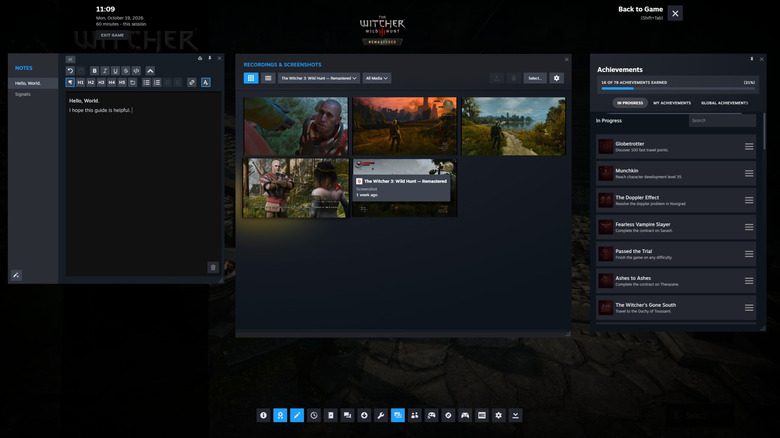
5 things you didn’t know Steam’s overlay could do
Steam’s overlay hides several useful tools beyond its familiar chat window, including features that can help you play, stay organized, and connect with friends.
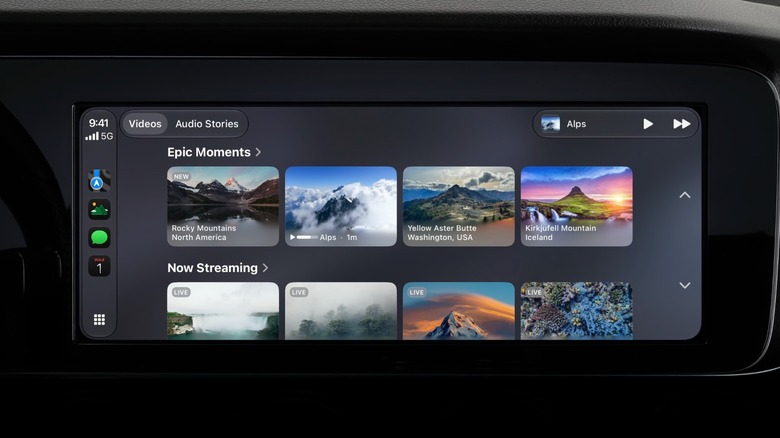
How to watch videos on Apple CarPlay while parked
iOS 27 introduced support for native video playback on CarPlay, with certain restrictions and requirements. Here’s how to use the new feature.
People are modding the Tamagotchi Paradise to run Game Boy games
Someone figured out how to run Pokémon Gold and Silver on a Tamagotchi.

The reason your phone keeps dimming even with auto-brightness off
If your iPhone or Android phone’s screen keeps darkening when you don’t want it to, there are several possible explanations.

How does the digital ink in ereaders work?
Unlike regular LCD and OLED displays, ereaders rely on e-ink tech that lets them gently sip power and last for months. Here’s the science behind how it works.

AlmaLinux Shows Advantages of ABI Compatibility After RHEL Restricted Source Code Access
“AlmaLinux OS charted a new path in 2023 when Red Hat restricted source code access to Red Hat Enterprise Linux,” remembers Linux Magazine.


“Rather than pursue 1:1 compatibility with RHEL like other Enterprise Linux alternatives, the AlmaLinux OS Foundation chose application binary interface (ABI) compatibility, which guarantees that applications and kernel modules that work on RHEL will work on AlmaLinux OS.”
No longer constrained by the 1:1 promise, AlmaLinux can offer new features, or add back deprecated ones, while still remaining a stable, drop-in replacement for RHEL… The release of AlmaLinux OS 10.2 in May 2026 reveals just how far AlmaLinux has come….
When RHEL 10 increased the x86-64-v2 architecture baseline to x86-64-v3, many older server platforms (and some new ones) were left in the lurch. These older servers couldn’t support the modern CPU feature sets in x86-64-v3, including AVX2 CPU instructions. AlmaLinux recognized that many community members employed older hardware that relied on x86-64-v2. While x86-64-v3 is enabled by default in AlmaLinux OS 10 and AlmaLinux OS Kitten 10, an additional x86-64-v2 build is also available. The x86-64-v2 build works best for environments that rely on standard OS packages or that can rebuild any additional packages required by x86-64-v2. For users with older hardware, the additional x86-64-v2 build allows continued use of current hardware, saving money and keeping servers from the landfill. AlmaLinux OS 10 is actively supported through 2030 with security support through 2035, significantly extending the life of older hardware….
Many legacy applications and containerized workloads still run on i686, a 32-bit computer processor architecture belonging to the Intel x86 family, including software that only ships as i686, CI pipelines that require a specific 32-bit glibc, and seemingly normal looking containers that require a 32-bit environment. RHEL 10 completely removed 32-bit application support and multilib libraries after deprecating support in earlier releases… AlmaLinux OS 10.2 has added package repos and official container images for 32-bit x86 (but not a 32-bit kernel or installer)…
NVIDIA GPUs, ubiquitous in modern computing, have been a pain point for Linux users. Getting the closed-source NVIDIA drivers has required extra steps and manual installation. When NVIDIA released an open source version of their graphics driver, AlmaLinux integrated the drivers, along with the associated CUDA components, into the AlmaLinux repository starting with AlmaLinux OS 9 and 10. AlmaLinux also signs the open source drivers, allowing secure boot with the NVIDIA drivers they ship. Unlike RHEL users, AlmaLinux users now have native support, allowing them to skip manual installation. AlmaLinux users can now enjoy a fully integrated NVIDIA experience.
In addition, “Thanks to ABI compatibility, AlmaLinux can sometimes deliver patches more quickly than RHEL,” the article points out. And it lists other points where AlmaLinux OS 10.2 diverges from RHEL 10:
Re-enabling frame pointers disabled by default in RHEL and CentOS Stream to provide system-wide, real-time tracing and profiling to diagnose and optimize code.
Enabling both kernel and userspace components that allow installation of AlmaLinux on a Btrfs filesystem
Adding SPICE support dropped in RHEL 9, allowing users to interact with a virtual machine’s desktop remotely instead of just from the host server.
Restoring support for older storage and network drivers disabled upstream, including Adaptec, Dell PERC, HP, Mellanox, QLogic, Emulex, LSI, and Broadcom.
Read more of this story at Slashdot.
What is System Data on an iPhone’s storage, and how much is normal?
Your iPhone’s storage breaks down into many categories; System Data is often large but doesn’t have a clear explanation.

Snapchat’s Find Friends feature will be off by default for UK users under 18
The platform is rolling out this change in the country starting this month.

5 Google Messages settings you might want to disable
Google Messages is easily one of the best messaging apps available on Android, but that doesn’t mean it’s configured perfectly out of the box.

How to legally download free movies to your computer
There are services that will allow you to download movies from the public domain, and several streaming services let you download shows for offline viewing.

Apple also made its classical music app’s logo black and white
Apple Music Classical now has a black-and-white logo, as well.

China’s Top Spy Agency Recruited Woman Who Targeted Jensen Huang
An anonymous reader quotes a report from The New York Times: A Chinese businesswoman who had a close relationship with the chief executive of one of the most important artificial intelligence companies in the United States was a spy for China’s Ministry of State Security, Beijing’s top intelligence agency, according to people briefed on U.S. surveillance. The businesswoman, Alice Huang, was recruited by the ministry to collect intelligence on Jensen Huang, the chief executive of Nvidia, as part of a drive to learn more about American A.I. chips and potentially influence the company to push for its most advanced chips to be made available to China, the people said.


[…] The New York Times reported last week that Mr. Huang was a target of a Chinese intelligence operation, and that U.S. intelligence agencies were conducting electronic surveillance of Ms. Huang, a Chinese citizen, for at least a year. The Times reported that Mr. Trump had been briefed last year about Mr. Huang’s relationship with her, but chose not to do anything about it. Ms. Huang speaks English well and has relationships with executives at the highest levels of the A.I. chip industry, including Mr. Huang and the leaders of Gigabyte, one of the top assemblers of Nvidia supercomputers, said people who have met her. She has attended industry conferences and private executive dinners. It is unclear when Ms. Huang first met Nvidia’s leader. In 2024, around the time the two of them were photographed together at a bar in Taipei, her company, Megaspeed, began a multibillion-dollar purchase of advanced A.I. microchips.
To many in the industry, the well-funded push by Megaspeed into A.I. appeared to come out of nowhere. Ms. Huang was connected to a network of companies and investors clustered around Shanghai and Zhejiang province that had used their ties to local officials in Shanghai to push aggressively from mobile video games into data centers, which provide the computing power behind artificial intelligence. Megaspeed has been building data centers in Southeast Asia and then renting their computing power to Alibaba, the giant Chinese internet firm, giving China a backdoor way of getting access to advanced Nvidia chips. Nvidia is restricted by the United States from selling those chips directly to China. Beyond its local connections, the network also has a financial link to the Chinese military establishment, through an investment in a cybersecurity subsidiary of China Electronics Technology Group, one of the country’s largest makers of military technology. Following the report, top Republican lawmakers have asked Jensen Huang to appear before Congress to answer questions. “Recent reports raise significant national security concerns regarding the People’s Republic of China’s access to sensitive US technology and information,” representatives John Moolenaar, Brian Mast, and Rick Crawford said. “The issue of PRC infiltration and access to cutting-edge US technology is core to the investigative work of our three committees this Congress. It is vital that Congress determines the extent to which US national security has been placed at risk,” the lawmakers added.
Read more of this story at Slashdot.
The right way to fix your MacBook keyboard if it isn’t responding
Don’t count out your MacBook’s keyboard just yet – a quick hardware cleaning or software toggle could get it working again.

How Modders Spent Three Years Remastering Mass Effect 3’s Fantastic Multiplayer For Legendary Edition: ‘Let’s Do Something Stupid’
The ME3Tweaks Legendary Edition mod is out today for N7 Day
Solar panel breakthrough could almost double the efficiency of today’s panels
Solar panels have become much more efficient since their infancy, but research breakthroughs show there’s still plenty of room for improvement.

This GPS navigation app should be the go-to for older drivers
Nervous about driving somewhere new? One familiar navigation app has simple turn-by-turn directions that help older drivers feel more confident.

What gamers should know when bringing their consoles through TSA
You’re allowed to bring your game consoles through the TSA line, but what exactly you need to do depends on the airport and console size.