
While previous years brought hope of updates on BioWare’s beloved Mass Effect saga, this November had incensed fans pushing EA towards a course correction
Monthly Archives: November 2026
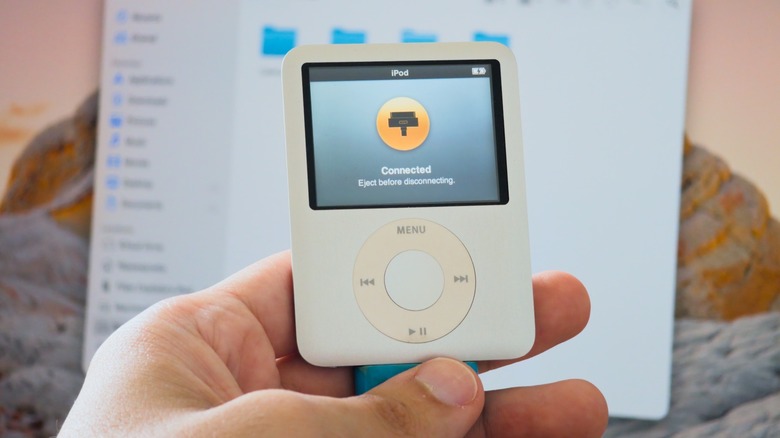
Your old iPod could be a sleeper flash drive
Old iPods still work fine as digital audio players, but you can reuse them in other ways if you’re not interested in listening to music on the go.
Is Mandating AI Use in the Workplace Backfiring?
Some workplaces are holding mandatory AI training sessions, while others “are requiring employees to use a specific number of tokens,” reports the Washington Post, “or log a certain amount of time on AI platforms.”
The article’s headline? “Why mandating AI use in the workplace can backfire.”


The article’s headline? “Why mandating AI use in the workplace can backfire.”
[A] lot of employers are going about it the wrong way, said Arvind Karunakaran, an assistant professor of management science and engineering at Stanford University. “You can consume a lot of tokens without creating a lot of value,” Karunakaran said….
The adoption of AI is happening faster than the adoption of the internet did, according to a new report from Stanford’s Institute for Human-Centered Artificial Intelligence. And many users report that AI tools have really helped — whether saving time and costs or increasing innovation. The same report, though, found that one-third of organizations surveyed expected AI-related staff reductions in the coming year. Especially in that context, simply mandating usage won’t spark excitement about the technology, Karunakaran said, and neither will insisting that employees use AI to cut turnaround times and ramp up productivity. “People start asking questions like ‘What am I as an employee getting out of it?'” he said.
The report he co-authored found that in the short-term, mandating AI tools may ramp up productivity. But in the long-to-medium term, employees tend to feel devalued and disengaged. From there, people find ways to mindlessly check the box.
When employers present these tools and their use as an opportunity for employees to expand their skills and grow their careers, people are much likelier to use them, Karunakaran said. He suggests that rather than requiring employees use a specific number of tokens, companies should encourage workers to experiment and share their own use cases and success stories. Most workplaces are still shutting employees out of the conversation. More than half of employees said they have less of a say than they’d want on adopting new tech at work, according to a report from Gallup and Jobs for the Future, a work and education nonprofit.
Any Slashdot readers want to share your own stories on how AI was introduced at your workplace?
Read more of this story at Slashdot.
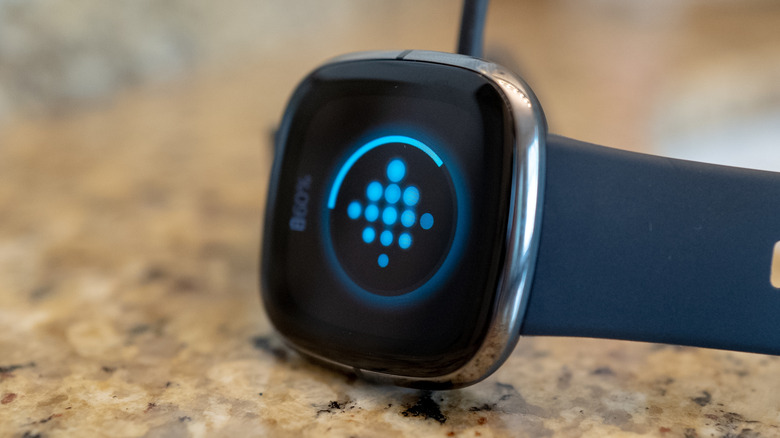
How often should you restart your Fitbit watch?
The old “turn it off and turn it on again” trick can come in handy for certain situations.
GTA 6 PS5 Physical Boxes Have Hit The Wild, A Harbinger Of Our Disc-Less Future
Prepare to shuffle off these plastic coils
The built-in iPhone app for creativity you may be ignoring (but shouldn’t)
Your iPhone has a built-in app for brainstorming and visual planning that can turn scattered screenshots, sketches and notes into something you can share.

Your EV’s battery is big enough to run your house — here’s what stops most people
Today’s EV batteries could let you power specific appliances or your entire house. But a few factors line up to make that idea a non-starter for most folks.

New Stellar Blade Ad Gives Fans Plenty To Talk About With Therapist
A live action, throwback ad campaign features Eve tucking people in, reading bed time stories, and YouTube commenters wishing it were them
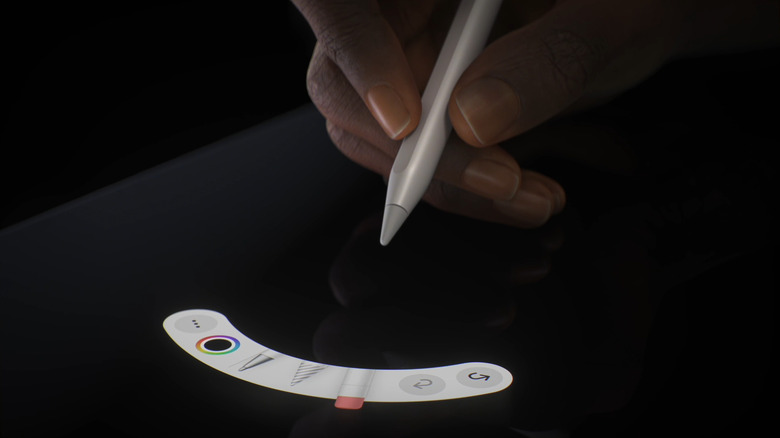
How to connect an Apple Pencil to your iPad
An Apple Pencil adds great functionality to your iPad, but compatibility and pairing methods differ across models.
There is no end in sight for the GPU supply problem
GPU prices have soared as the supply of memory has tightened, and it doesn’t look like this is going to change any time soon (though a few optimists disagree).
Gorgeous New GTA 6 Shots Tease Massive Graphics Quality And Realism Leap

The launch of Grand Theft Auto VI is just twelve days away, and I wouldn’t fault you for being tired of hearing about the game if you’re not interested in playing it. Still, as hardware and tech site, we have to admit finding the game fascinating
How long should a PC processor actually last?
Your computer’s CPU is its most important part, and its most expensive one, too. So how long can you expect it to last if cared for properly?
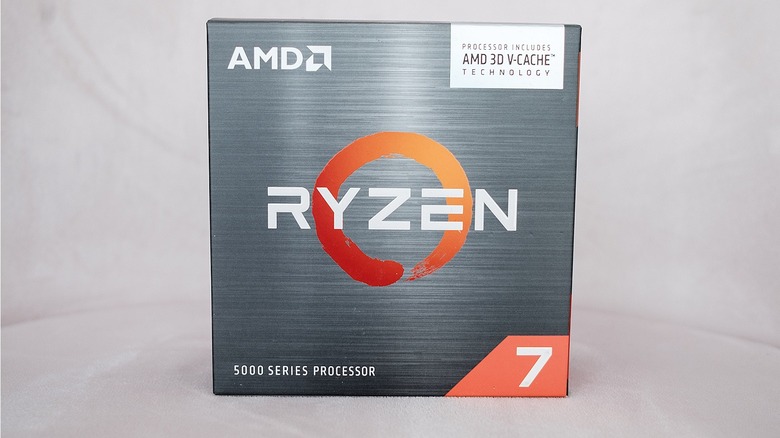
Is AMD’s Ryzen 7 5800X3D CPU still worth buying in 2026?
I’ve never regretted owning the 5800X3D, but before you spend $349 on a previous generation CPU, there are a few questions worth asking yourself.
Scientists Find Rare Meteorite From Mars With Signs of Ancient Water
“I didn’t think a rock like this existed on Earth,” a geologist at the Lunar and Planetary Institute in Texas told the Washington Post. It looks like a polished rock, dark brown with a clay-colored stripe — but it’s actually one of the oldest Mars meteorites ever found, blasted by an impact from the surface of Mars billions of years ago:


Technically speaking it’s a collection of eight rock fragments, the largest of which is about the size of a fist. Nearly two pounds of the meteorite was discovered in the Sahara in Mali in 2022, and most is now held by a museum in Maine. Within two years, an initial examination determined the meteorite hailed from Mars; scientists are now finally digging deeper, with stunning results.
It offers records of “interactions of water and rock and maybe even an imprint of the Martian atmosphere as it was losing water,” says Lee Saper, co-author of a new paper recently published in Science. “It was only after we started looking closely that we realized this meteorite is really unique,” said Yang Liu of NASA’s Jet Propulsion Laboratory in Southern California, the lead author of a new paper published in Science. “One of the paper’s reviewers called it a Rosetta Stone for Mars.”
Its mix of minerals “tells a story about how the planet’s crust formed from cooling magma before it was eventually altered by subsurface water,” NASA’s JPL says in an announcement.
The Washington Post reports:
The story begins 4.1 billion years ago, when crystals of a mineral called zircon probably solidified out of molten magma on Mars. “That was a game changer,” [said Yang Liu, a planetary scientist at NASA’s Jet Propulsion Laboratory in California], since scientists can date zircon very precisely, and it has been rare in other Mars meteorites. The date immediately put the Teghaza meteorite on special footing, alongside only two other Mars rocks known to have formed by 4 billion years ago…
Perhaps most intriguingly, the researchers also saw signs that the rock had been exposed to water during its evolution, a find detailed in work published this summer in Science Advances.
Read more of this story at Slashdot.
How a bottleneck calculator for your GPU and CPU works
They’re a quick way to help you check component compatibility before you build or upgrade a system.
Scary Android GhostMap Exploit Traps Devices In Permanent Boot Loop

The folks at Bitdefender have discovered a new type of malicious Android app that can force a phone into a nigh-unfixable boot loop without the app even being launched.
If the app is installation is kicked off and either Android 17 or a
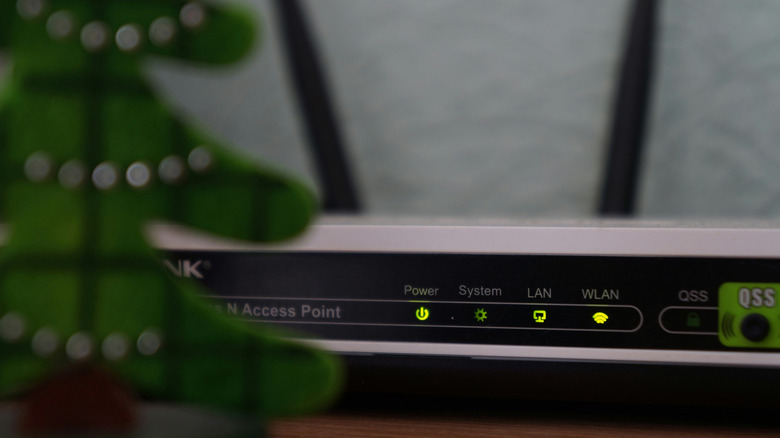
You can easily keep your home network running during a power outage — here’s how
Few things top the inconvenience of being in the middle of something online when the power goes out. Luckily, there are a few options to keep you connected.
Former Rockstar Developer Says They Should Hurry Up On GTA 6’s PC Version Before AI Gets There First
Grand Theft Auto III technical director Obbe Vermeij says the studio prefers a console-first approach than having to compromise a PC build, but overnight AI copycats could change all that
How to set up SpaceXAI’s Grok in Google Workspace (and what it can do)
Inserting Grok into your Google Workspace is easy, but you’ll want to consider a few things before rolling out the welcome mat.
Home Assistant-compatible board pairs ESP32-S3 and ESP32-P4
Crowd Supply has launched a campaign for LocalDot, an open-hardware board developed by AAElectronics that converts third-generation Amazon Echo Dots into Home Assistant voice devices. The 83 × 37mm PCB uses an ESP32-S3 and ESP32-P4 for connectivity and audio processing while retaining the original microphones, speaker, buttons, and LEDs. The ESP32-S3 handles Wi-Fi connectivity and…