Scifi Magazine ‘Starlog’ Relaunches, and Back Issues Return to Internet Archive

Slashdot reader sandbagger brings news about the classic science ficdtion magazine Starlog. It’s 33-year run from 1976 to 2009 is now available on the Internet Archive.

And 17 years after publishing its final issue, Starlog is relaunching, publishing one issue a year starting November 13, according to The Hollywood Reporter:

The magazine launched in 1976 and gained a fanbase for being one of the few places to get reliable news and interviews about geek culture. It launched with a cover focusing on Star Trek, one of its key areas of expertise, but the magazine’s editors and writers also pioneered coverage of Star Wars. (The new issue chronicles some of the rumors it put out a year before the movie opened). In all, Starlog published 374 issues and more than 25,000 pages… In addition to the film and TV-focused features Starlog was known for, the new Starlog will also delve into futurism, as the cover from Gabriel Yeganyan highlights. The opening story of issue No. 1 looks at the viability of humans farming crops on planets outside of Earth, for example… The revival was announced earlier this year, and includes a podcast hosted by Jordan Hoffman, a veteran journalist who has contributed to The Hollywood Reporter.


Read more of this story at Slashdot.


AlpineBSD Announced – an AI-free FOSS OS

Lproven (Slashdot reader #6,030) shares his article about a new OS in the BSD family “combining NetBSD’s kernel and libc with a port of the Alpine Linux userland” — and promising it won’t use AI-generated code:

AlpineBSD is so new that it barely exists yet. There are no installation media available, though it’s possible to manually bootstrap an installation. What AlpineBSD does already have is an AI policy, and the plan is to avoid “the output of generative AI models (e.g. LLMs)” as far as possible:

“Any software whose code, documentation, binaries, or other assets include, in any part, the output of a generative AI tool such as an LLM, is considered ‘tainted’ for our purposes….”
Back in 2024, the NetBSD project made its position on AI plain. Its commit guidelines say that “code generated by a Large Language Model […] is presumed to be tainted code….”

AlpineBSD’s ports repository and source code are hosted on Sourcehut, under the account of sircmpwn, better known as Drew DeVault… We will follow AlpineBSD with interest. There’s strong appeal in the plan of combining perhaps the best-known, longest-established AI-free Unix-like kernel with the user-facing parts of pretty much the smallest and cleanest Linux distro there is. The AI advocates often warn LLM skeptics that they risk being left behind. Well, here’s an OS for those who don’t want to surf the AI wave.

The article does acknowledge difficulty installing software using the pkgin package manager (an optional extra), explaining that since 1993 the NetBSD community has had “its own ideas about what is normal… Some folks on the mailing list told us that they never use binary packages anyway — they compile what they need from source code.”


Read more of this story at Slashdot.

Microsoft Removes PC-to-PC Migration from Windows 11, Points Users to OneDrive-Based Backup

Windows 11 offered a PC-to-PC Migration feature that “moved files and settings directly between two PCs over Wi-Fi or Ethernet,” reports Ghacks. But according to an updated Microsoft support page, the tool is no longer available.

“Microsoft’s support documentation now redirects users to Windows Backup, a tool that relies on OneDrive cloud storage instead of a direct connection between two computers…”

Windows Backup works differently. It requires a personal Microsoft account and backs up supported folders (Desktop, Documents, Pictures, Videos and Music) to OneDrive. Free OneDrive accounts include only 5GB of storage, and Microsoft’s own promotional screenshot for Windows Backup shows 4.5GB of that allowance already in use. Years of photos, documents and downloads can exceed the free tier quickly.

Windows Backup does carry some extras. It can remember installed apps, Wi-Fi networks, passwords and some settings to speed up setup on a new device. Apps still have to be reinstalled, and supported files are restored from the cloud.

Thanks to Slashdot reader joshuark for sharing the article.


Read more of this story at Slashdot.

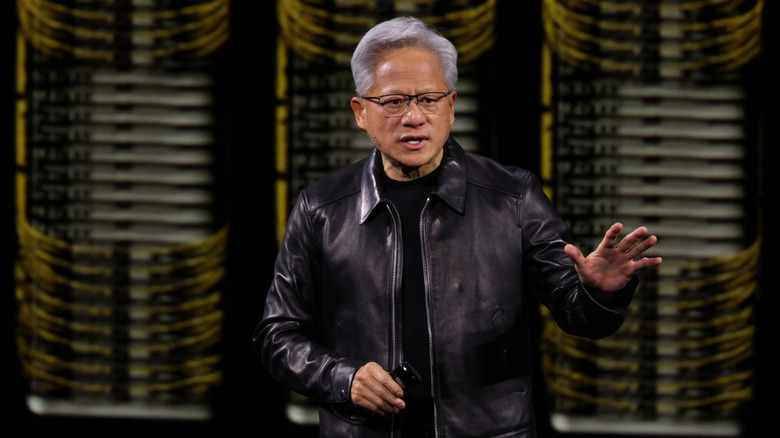
Nvidia CEO Admits Affair With Alleged Chinese Spy. Investigation Opened

CNBC reports new details about the relationship of alleged Chinese spy with Nvidia CEO Jensen Huang:

Huang told Nvidia staff in a email on Sunday that he had an affair with the woman and that Nvidia’s board of directors had opened an independent investigation into the spying allegations. “I was unfaithful to my wife. My actions hurt her and our children. There is no excuse for what I did,” Huang wrote in the message. “I am deeply sorry.”

Nvidia’s board “said an independent committee, assisted by outside counsel, will investigate the matter,” reports Axios:

The board said it has no reason to believe national security or company secrets were compromised and expressed confidence in Huang’s leadership… Huang has been a key voice in Washington pushing to loosen restrictions on AI chip sales to China. He argued that keeping American technology in the Chinese market strengthens U.S. competitiveness and prevented China from developing their own potentially more advanced chips.

The board’s statement added that their inquiry “will examine all available information,” CNBC reports. But “An Nvidia spokesperson said that Huang was committed to continuing as CEO of Nvidia without interruption.”

“I love our country and our company,” Jensen Huang wrote in his letter to Nvidia’s staff (as reported by Axios), “and I am committed to protecting NVIDIA and supporting America’s national security. I am proud and grateful to be an American.”

But while U.S. lawmakers have requested Huang appear for closed-door committee briefing, Jensen has not confirmed he’ll appear, notes CNBC:

When asked by the New York Times whether Huang would appear before lawmakers to discuss the matter, Nvidia spokesman John Rizzo declined to comment. “Our chief executive has an outstanding security team that accompanies him where needed,” Mr. Rizzo said in a statement to the Times…

Rizzo said [Thursday] the Nvidia CEO’s interactions with [alleged Chinese spy Alice] Huang were consistent with meetings he has had with any of Nvidia’s customers.


Read more of this story at Slashdot.