The Apple Watch’s New ‘Siri Recap’ Feature Is Even Creepier Than I Expected

We may earn a commission from links on this page.

The “Siri Recap” feature that Apple announced in September is finally available in a developer beta, and I’ve spent the last 24 hours with the feature turned on. It’s even more unsettling than the “Live Rewind” feature that launched at the same time. It listens to all my conversations, and produces summaries that are both helpful and deeply creepy. 
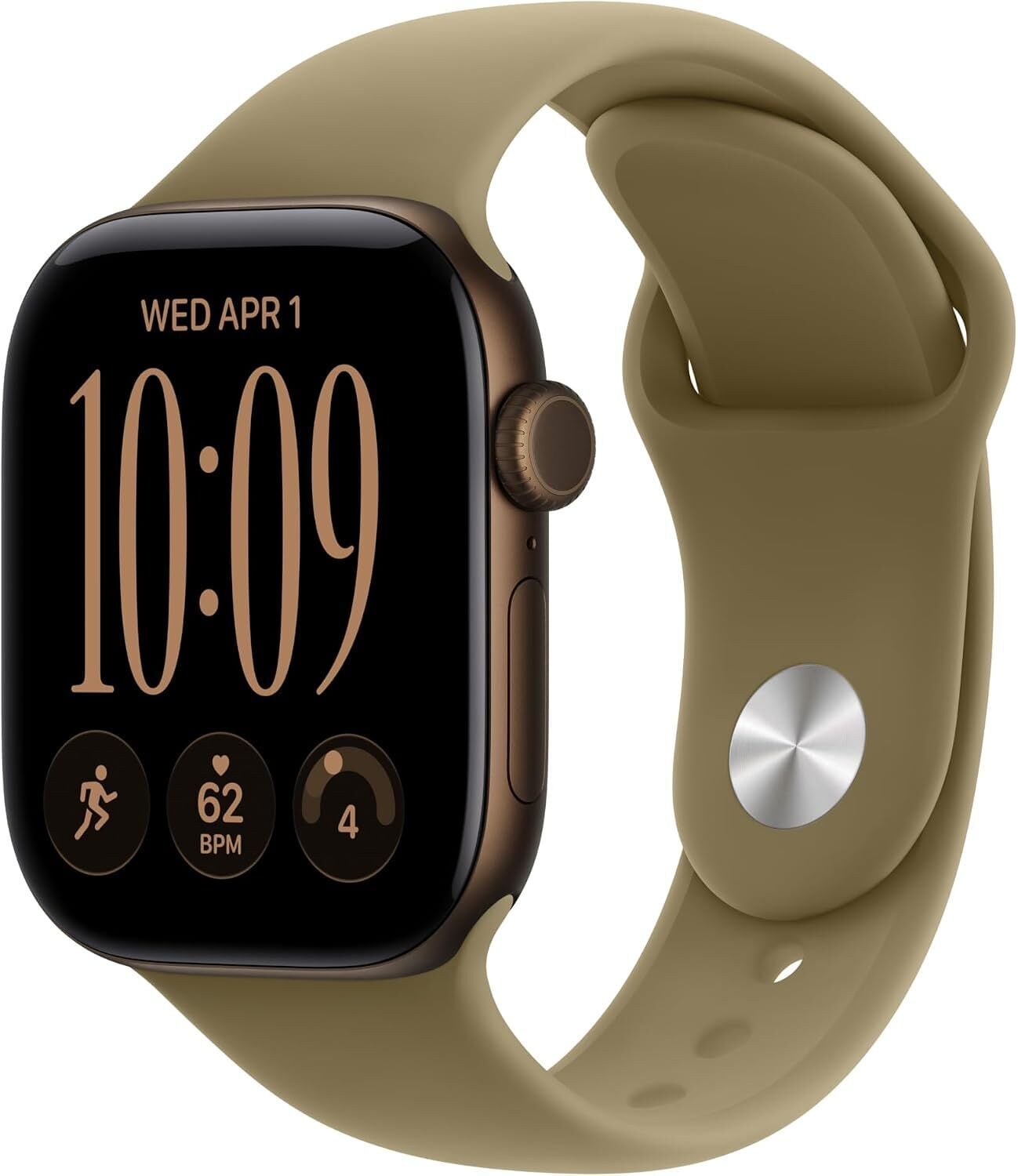
I have a button in the watch’s Control Center that can turn the recapping abilities off, but if I forget to do so, Siri listens to everything. I’ll get a recap of my entire evening, presented in roughly hour-long chunks, including things I would have completely forgotten I had even heard about.

The recaps somberly mention silly memes my kids were laughing about, and make major bullet points out of offhand remarks from brief conversations. If a conversation sticks to a single topic, I’ll often get a reasonably good summary of it, with specific facts and numbers highlighted; but just as often, Siri will get confused and mix up several topics or completely mishear a name or phrase. 

What are Siri Recaps, and where do they fit among the other Audio Intelligence features? 

Apple has four features that it considers part of “audio intelligence”:

  • Music recognition, better known as Shazam. We’ve had a version of this on the Apple Watch for a long time now, although it has some improvements and now identifies music automatically.

  • Sound recognition, which can notify you about doorbells and babies crying. A version of this launched in 2020 as an accessibility feature. 

  • Live Rewind, which gives you an on-wrist transcript of the last 15 seconds of detected speech.

  • Siri Recaps, which summarizes entire conversations for you to read on your phone.

Live Rewind had the flashiest demo from the Apple event: A server rattled off the day’s specials at a restaurant, and then the Apple Watch-wearing diner checked his watch to see a readout of exactly which dishes had just been mentioned. The utility is both obvious and kind of unnecessary: Why wouldn’t you just ask the server to repeat the list while they’re standing right there? 

I haven’t found myself using Live Rewind, except out of curiosity about how the feature works. I discovered that it doesn’t pick up song lyrics very well, and also that by the time I think to check what was just said in a conversation, more than 15 seconds has passed since the part I was unsure about. I haven’t yet found a reason to use it for real.

But Siri Recaps? Those are both useful and unsettling. I enabled the feature, and decided to test it out later. But since it was on, it dutifully listened in as I picked up my son from school and gave him an update on an ailing family member’s health. We stopped by the library, and along the way we chatted about a variety of things: holiday travel plans, library policies, and the possibility of humans living in space in the future. Siri was listening to it all. 

How to turn on Siri recaps

At least for now, the feature is only available in a developer beta, so sign up for that now if you want to try it. You’ll need an Apple Watch Series 12 (or Ultra 4) and an iPhone 16 or better, excluding the 16e. (I have a 16 Pro, so I’m good.)

After you’re updated to 27.3, go into the Watch app, tap Siri, and turn on Siri Recap. You can set a schedule for when it should listen (for example, 9 a.m. to 5 p.m., if you want it on for the work day but off for the evening). You’ll need to set a passcode on your watch, and you’ll be guided through a step to upgrade your audio connection. The control center on the watch will have a button you can use to turn Siri recaps on and off at will. To read your recaps, go to the Siri app on your phone.

What I found in my Siri recaps

As promised, the recaps do not identify speakers. They do not contain an exact transcript, and there is no way to listen to a recording to check what exactly was said. This is probably good for privacy and for relationships; there’s no way to prove that your spouse said such-and-such exact thing. I can also tell people I am not recording them, and technically be correct. 

But still: I feel weird publishing the contents of these recaps, because they do contain things that people said to me in what they assumed was a private setting. I had the feature on when I attended a choir practice, and Siri recapped the brief chats I had with other choir members before and after practice. (Interestingly, it did not recap any of the quiet conversations I had with fellow sopranos while the tenors were rehearsing their part. I’m not sure if the watch was unable to hear us over the music, or if Siri is programmed not to listen when music is being played.)

Because speakers aren’t identified, it seems Siri doesn’t know what to do when there is a disagreement. A human note-taker would jot down that Person A made a point in favor of something, and person B made a point against. But when my son and I disagreed about how likely space colonization might be in the future, the recap didn’t reflect the separate positions that were put forth. It summarized the conversation as including “debating the feasibility and timeline of human space colonization and asteroid mining,” which isn’t exactly accurate, but close enough. 

When it comes to the content of the discussion, the recap notes a bullet point of “skepticism regarding permanent space colonies within the next 100 years.” It didn’t include my reasons for being skeptical, and didn’t mention my son’s opposing viewpoint at all. If I were using this recap to jog my memory of the conversation, it wouldn’t be all that helpful. 

Details are sometimes egregiously incorrect. After a discussion about a family member’s health, the recap had notes on the prognosis of “father.” The family member we discussed is not anybody’s father. Names in general seem to be a problem; I recommended a book to my son, and the recap includes notes about the content of the book, but not its title. The book’s author appears in the introduction to the recap (sort of a summary of a summary), but not in the content of the recap itself where the book is mentioned.

Siri recaps may be useful, but at what cost? 

I should probably turn Siri recaps off. It seems wrong to let people chat with me without letting them know that their conversation is being … well, not technically recorded, but basically recorded. 

But it’s so tempting to leave it on so that I can review my day. Some of the details in the recaps are useful, like the dates that were discussed as options for a holiday party. The recaps will be deleted in about a week (unless I save them to the notes app), so if I want to remind myself of a conversation a few days ago, I should be able to scroll back through my recaps and find it. 

I would be a fool to rely on the recaps, though. The most important points of a conversation are often left out; Siri doesn’t know what’s actually important, and there’s no way to guide it as to what to pay attention to. Specific details can be wrong, as I mentioned. There’s also no way to control when a “conversation” starts or stops, unless you are turning the recap feature on and off from the watch. 

And there’s more: Not only are names usually omitted (wait, who did she say I should ask about that project?), the few identifiers that make it into the recap, like names of events, are often wrong. Subjects of discussion are often conflated in really unhelpful ways: My husband mentioned paying for certain course registrations for one of our children, and later I talked to that child about an unrelated exam. The recap got all of these things mixed up with each other and was wrong about pretty much every detail. About all the recap could usefully do is to remind me that something about AP U.S. History was discussed. Reading the recaps can be like reliving your day entirely in the passive voice. 

T-Mobile illegally imposed 50 GB cap on low-income home Internet plan, NY says

T-Mobile violated a New York state law by imposing a 50 GB-per-month data cap and reducing speeds to less than a megabit per second on home Internet plans it is required to offer people with low incomes, New York government officials alleged.

T-Mobile agreed to a settlement requiring it to scrap the data and speed limits, to offer the required low-income plans to more parts of the state, and to make it easier for customers to find information about the plans. The settlement requires T-Mobile to eliminate the speed limits and expand availability of the plans within 120 days.

The alleged legal violation and the settlement are related to T-Mobile’s wireless home Internet service, not the company’s mobile plans. Governor Kathy Hochul and New York Attorney General Letitia James announced the settlement on Monday, saying that a state investigation found T-Mobile violated the New York Affordable Broadband Act (ABA).

Read full article

Comments

Anduril says its first satellite can see adversaries maneuver in orbital night

Anduril Industries has announced the successful demonstration of a new satellite-based sensor designed to track other spacecraft that may be hiding their maneuvers in Earth’s shadow.

Funded with Anduril’s internal capital, the company’s oven-sized satellite launched on a SpaceX rideshare mission in July with a package of tech demo payloads: an edge-compute processor, a power-management system adaptable to different types of missions, and a long-wave ,infrared space sensor capable of seeing other objects in orbit.

Anduril reported on the success of the tech demo mission Tuesday. The company’s satellite, named Anduril-216, flies about 590 km (366 mi) above Earth, spending about one-third of each orbit in darkness. Anduril-216’s night passes allow its infrared imager to shine.

Read full article

Comments

NASA’s secret weapon in the lunar space race may be … procurement reform?

Senior NASA officials held a lengthy news conference last weekend, laying out a series of lunar contract awards, new contract opportunities, and mission decisions. They followed one after the other: landers, nuclear-powered rovers, scouting drones, power generation, storage, and communication satellites.

It never seemed to end.

“Hopefully, we’re keeping industry on their toes trying to catch up to all the solicitations we’re doing,” said Carlos García-Galán, manager of the Moon Base Program, more than 90 minutes into the news conference. “This is what it takes to do the Moon Base in the timeline we have set forth.”

Read full article

Comments

Taiwan’s chipmaking giant TSMC to invest $1B in Anthropic, OpenAI

Top chip manufacturer TSMC is ready to invest $1 billion in Anthropic and OpenAI. That would give the Taiwanese chipmaker direct stakes in leading AI developers, even as its own contract chipmaking business has profited enormously from the AI data center buildout.

The chipmaker’s board approved plans to invest up to $500 million in OpenAI preferred stock reserved for large investors and another $500 million to purchase Anthropic common shares at the latter’s expected IPO price, according to Reuters. Such an investment may give markets “a shot of confidence as the artificial-intelligence trade shows signs of strain,” The Wall Street Journal reported.

But analysts also warned that such circular financing among investors, suppliers, and customers has made it difficult to evaluate real market demand for AI-related hardware and services, according to the Journal.

Read full article

Comments

Trump admin loses fight to spy on random journalists’ LinkedIn DMs

The Trump administration’s fight to stop suspected leaks of top-secret military information on LinkedIn can’t sweep in “a vast number of confidential sources” of random journalists “who have no conceivable relationship” to the Department of Justice’s investigation, an appeals court ruled Tuesday.

The order came after the DOJ asked LinkedIn to turn over 18 months of communications from targeted journalists who collectively published more than 1,000 articles on many different topics over that time period. The request was not limited to journalists involved in a controversial report from a news outlet that Trump said exposed confidential military information in a foreign country. (The outlet is not being named to protect national security secrets.) Instead, the DOJ cast a wide net, requesting extensive LinkedIn data on journalists who had any possible link to the journalists around the time the report was drafted.

The majority of journalists have LinkedIn accounts and publish their contact information to encourage sources to connect on the platform, LinkedIn argued. So allowing that government overreach went beyond harming targeted journalists and threatened to undermine a critical platform where journalists frequently connect with confidential sources, judges ruled. Even more concerning, the Trump administration secured a secrecy order barring LinkedIn from telling anyone about the sweeping request for a year. That left journalists unaware for far too long that their First Amendment rights had been compromised, judges ruled.

Read full article

Comments

Court Says Trump Can’t Use Leaks To Justify Spying On Journalists’ LinkedIn DMs

An anonymous reader quotes a report from Ars Technica: The Trump administration’s fight to stop suspected leaks of top-secret military information on LinkedIn can’t sweep in “a vast number of confidential sources” of random journalists “who have no conceivable relationship” to the Department of Justice’s investigation, an appeals court ruled (PDF) Tuesday. The order came after the DOJ asked LinkedIn to turn over 18 months of communications from targeted journalists who collectively published more than 1,000 articles on many different topics over that time period. The request was not limited to journalists involved in a controversial report from a news outlet that Trump said exposed confidential military information in a foreign country. (The outlet is not being named to protect national security secrets.) Instead, the DOJ cast a wide net, requesting extensive LinkedIn data on journalists who had any possible link to the journalists around the time the report was drafted.

The majority of journalists have LinkedIn accounts and publish their contact information to encourage sources to connect on the platform, LinkedIn argued. So allowing that government overreach went beyond harming targeted journalists and threatened to undermine a critical platform where journalists frequently connect with confidential sources, judges ruled. Even more concerning, the Trump administration secured a secrecy order barring LinkedIn from telling anyone about the sweeping request for a year. That left journalists unaware for far too long that their First Amendment rights had been compromised, judges ruled. “A request by the government to scoop up reporters’ records wholesale and ascertain the identity of their sources would tip the balance against informed discourse in a manner inimical to democratic health,” Wilkinson wrote. He criticized the lower court for approving the request simply because the records were technically feasible to collect, emphasizing that “serious security and speech claims are in tension in this case. There is space under law for both.”

While declining to quash the order entirely, Wilkinson also directed the lower court to reconsider a limited exception to the government’s secrecy order that would allow LinkedIn to notify an attorney representing the news outlet under investigation.

Bruce D. Brown, President of The Reporters Committee for Freedom of the Press (RCFP), celebrated the ruling, saying: “This ruling is a big deal and will quickly become one of the leading opinions in the area — one we will be quoting from it for a long time. The court recognized that confidential sources are the ‘lifeblood’ of investigative reporting and that dragnet demands from technology companies to reveal those sources violate the law.”


Read more of this story at Slashdot.

Ukraine Strikes Cause Permanent Data Loss at Russia’s Yandex Cloud

Russia’s Yandex says 2.84% of customer data has been permanently lost following Ukrainian strikes on data centers in the country. “According to the company, recovery is impossible because of critical damage to equipment and the lack of backup copies on the platform,” reports UNITED24 Media. From the report: Yandex clarified that customers who had previously enabled the platform’s backup tools did not experience any data loss, as their information remained fully preserved. The incident has prompted the company to revise its approach to data protection and disaster recovery, particularly the default settings for cloud infrastructure. Under the updated policy, automatic backups will be enabled by default whenever customers create new virtual machines on Yandex Cloud. Users will retain the option to disable the feature manually through the management console. In addition to changing its backup policy, Yandex Cloud announced the launch of a new availability zone, designated ru-central1-f. The new availability zone operates from a separate location, improving the resilience and reliability of the services. The report says Ukrainian drones targeted three Yandex data centers in Russia over four days, beginning October 8 with a strike on a facility in the Ryazan region that houses two of the company’s three supercomputers. A second attack hit Yandex’s largest data center in the Kaluga region on October 9, followed by a third strike on October 11 targeting a facility in the Vladimir region that houses the company’s remaining supercomputer.


Read more of this story at Slashdot.