10 Books Like ‘A Court of Thorns and Roses’ You Should Read Next

We may earn a commission from links on this page.

Sarah J. Maas’ lush, romance-soaked series A Court of Thorns and Roses has blossomed into a sprawling, complex fantasy series with millions of dedicated fans, and with good reason. A complex heroine who keeps discovering new depths in herself, fascinating supporting characters who shift from antihero to antivillain in unexpected ways, creative and beautifully rendered world-building—the series has it all, while also being unapologetically romantic (and steamy).

The story of a huntress who is kidnapped by a fae prince and brought to the Spring Court as a prisoner, only to become a key player in all that fae drama, ACOTAR is special, but Maas can only write so fast. If you need more books with the same lush feel, here are 10 to get you started.

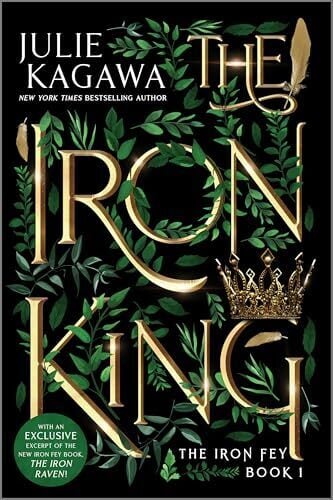
House of Flame and Shadow, by Sarah J. Maas (2024)

It’s no shock that one of Sarah J. Maas’ other series would be recommended for fans of A Court of Thorns and Roses, but there’s a specific reason you should jump into her Crescent City series, especially the third book, House of Flame and Shadow. The most recent ACOTAR book, A Court of Splintered Harmony, revealed that the events of House of Flame and Shadow tie directly into the events in Splintered Harmony, particularly with regard to the character of Feyre’s sister, Nesta. In other words, if you read Splintered Harmony and wondered why Nesta was being so weird, there’s a whole other book series you should dig into immediately.
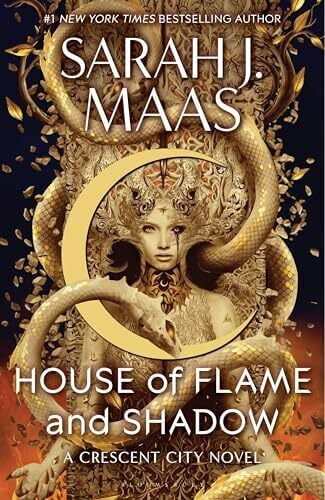
The Iron King, by Julie Kagawa (2020)

If Feyre’s grit and determination are your favorite aspect of ACOTAR, Julie Kagawa’s Iron Fey series (starting with The Iron King) will be your next obsession. Meghan Chase has never felt ‘normal’ in her life, and she’s been haunted by her father’s disappearance since she was a child. When her brother also vanishes, she goes on a quest for answers, learns that she’s actually the daughter of a faerie king, and finds herself in a magical world that blurs in elements of Shakespeare’s A Midsummer Night’s Dream. Meghan is determined to save her brother (and herself), but a certain ice-cold fae prince captures her attention, even though he’s as dangerous as he is beautiful.
From Blood and Ash, by Jennifer L. Armentrout (2021)

If you’re looking for some serious romance in your fantasy, Jennifer L. Armentrout’s A Blood and Ash series is a must. Poppy was chosen at birth to be the kingdom’s Maiden, isolated and untouched in order to be ready for her Ascension to ensure the land is protected from the evil force that took her family. But it’s a lonely existence—until Hawke is assigned as her sworn protector. Golden-eyed and beautiful, Hawke offers Poppy the connection she’s craved. When chaos erupts around her, Hawke takes the opportunity to spirit Poppy away. But Hawke has a secret, and Poppy is soon in danger of losing both her heart and the favor of the gods themselves.

Serpent & Dove, by Shelby Mahurin (2020)

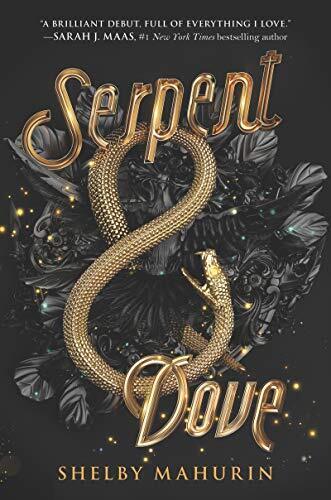
If you love how A Court of Thorns and Roses takes the “enemies-to-lovers” trope and builds it into a deep, complex mesh of emotions and plot twists, you’ll love Shelby Mahurin’s Serpent & Dove series. When witch Louise le Blanc flees her coven, she takes shelter in the city of Cesarine, where magic is forbidden, and witches are unceremoniously hunted and burned. Louise’s life gets infinitely more complicated, dangerous, and steamy when she’s trapped into an unwanted marriage with Reid Diggory—who happens to be a huntsman of the Church, charged with tracking down and eliminating witches. And then Louise starts to realize that Reid is actually pretty darn hot.
The High Mountain Court, by A.K. Mulford (2022)

If you’re looking for a romantasy that’s broadly similar to ACOTAR while being its own thing, read A.K. Mulford’s The Five Crowns of Okrith series, starting with The High Mountain Court. Remy is a red witch, which means she’s in hiding and ready to make a run for it if the fae get near. So when a group of fae shows up at her tavern, she makes for the exit—only to be captured by Prince Hale of the Eastern Court. Instead of striking her down, however, Hale asks Remy for help—he needs to locate two ancient magical artifacts created by red witches, and he needs her red magic to find them. Hale promises to set her free and even reunite her with the red witches still living. More importantly, Remy finds Hale irresistible and has a primal urge to stay with him, no matter what the cost.

Fourth Wing, by Rebecca Yarros (2024)

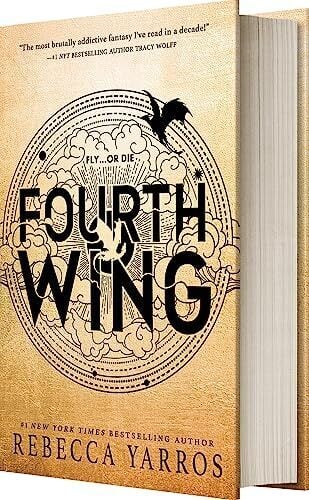
Looking for a romantasy with a slightly different vibe from ACOTAR? Variety is the spice of life, after all—and The Fourth Wing delivers. Rebecca Yarros’ Empyrean Series made a huge splash when it debuted, and for good reason—it has everything, from a capable, intelligent heroine thrust into a dangerous scenario (in this case, a dragon rider academy where failure can be deadly) and forced to navigate alliances, conspiracies, and her own heart, which is pushing her towards a romance that might be as dangerous as the dragons themselves.
The Cruel Prince, by Holly Black (2018)

Love the moral complexity of ACOTAR, where everyone has at least a touch of darkness? Check out The Folk of the Air series by Holly Black. When Jude was a child, the father of her half-sister, the faerie Madoc, murdered her parents and took her back to the Faerie world with him. Raised as part of the gentry, Jude lives in a world where her mortal nature is hated and despised, but she battles for her place at court anyway while struggling with her love-hate relationship with her adoptive father and a growing bond with the titular prince, a relationship that is strictly forbidden. Jude is a fierce and extremely morally gray character, and one that fans of Feyre will adore.

The Girl of Fire and Thorns, by Rae Carson (2019)

Looking for more smart women at the center of beautifully-rendered fantasy stories? You’ll love Princess Lucero-Elisa de Riqueza of Orovalle, star of this series-starter by Rae Carson. Elisa was chosen for “Service” as a baby, when a godstone was placed in her navel by the gods, signaling that she was destined for greatness. But as a young woman, Elisa is self-hating and miserable. She’s never done anything even remotely great, and spends her time isolated, overweight, and reading military strategy books. One day she’s shocked to discover she’s been married off to the king of a distant land on the brink of war—and suddenly all that rage and book learning becomes invaluable as she struggles to survive an unfamiliar court and help her new homeland survive a dangerous onslaught.

Shadow and Bone, by Leigh Bardugo (2013)

If you loved Feyre’s journey as she discovered unknown reservoirs of power and courage inside herself, you should read Leigh Bardugo’s Grishaverse novels, starting with Shadow and Bone. As a child, Alina was tested by the Grisha and found to possess no magical ability. As an adult, she serves as a cartographer in the army. Charged with guiding the Darkling—the most powerful of the Grisha—across the dangerous and terrifying Shadow Fold, Alina is unexpectedly revealed to have incredible powers and is packed off to train with the Grisha. There, she must determine who her friends and enemies are, even while falling under the spell of the charismatic Darkling.

Kingdom of the Wicked, by Kerri Maniscalco (2021)

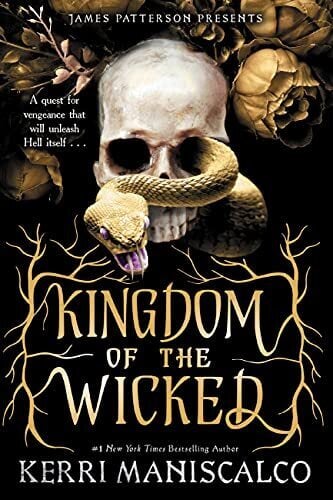
Emilia di Carlo and her sister Vittoria are very different—Emilia is bookish and shy, Vittoria outgoing and brash—but they share a secret: They’re both streghe, and have spent their lives learning to use magic. In this version of Italy, the Malvagi (the seven princes of Hell) haven’t been seen in a long time, but a terrifying accident summons the Prince of Wrath and leaves three witches dead, including Vittoria. Emilia swears to use her power to avenge her sister, but when her revenge is delayed and she’s forced to work with Wrath, unwanted feelings begin to tick up the spice level to an uncomfortable degree.

PVP Mech Battler Iron Rebellion PlayStation VR2 Launch Expected By End Of Year

Black Beach Studio plans to release mech combat sim Iron Rebellion on PlayStation VR2 by the end of 2026. Faction Wars, a single player and co-op PvE campaign mode, is also in playtesting and expected before Christmas.

Faction Wars was announced back in March and per Black Beach, is currently in live playtesting. Players have long requested a PvE mode to be added to the game.

VR Mech Combat Game Iron Rebellion Announces PvE Expansion
The PvP VR mech combat game Iron Rebellion is adding PvE this year, a long-awaited feature.
UploadVRMike Johnson

The game first started in Early Access in late 2021 for Quest and PC VR, moving to a full release in late 2024. It has received steady updates to improve the enemy AI, expand the number of players in battles to 8v8 lobbies, and most recently a battle spectator feature & UI update in July.

You can wishlist Iron Rebellion for PS VR2 on the PlayStation store. It is already available for Quest and PC VR.

AMD openSIL Achieves Its Production Goal With 6th Gen EPYC “Venice”

Since 2023 I and many open-source advocates have been very eager for AMD’s openSIL project for delivering open-source CPU silicon initialization as a replacement to the traditional AGESA code. With Zen 5 there was proof-of-concept support that we have enjoyed with Coreboot on an MSI Ryzen motherboard and a Gigabyte EPYC server motherboard thanks to the Coreboot-based Dasharo ports by 3mdeb. The goal for production readiness was for Zen 6, but with this week’s EPYC 9006 SP7 announcement the openSIL topic wasn’t touched on. So I asked around…

Nvidia Employees Petition For Jensen Huang’s Return

An anonymous reader quotes a report from Wired: Some Nvidia employees are calling for Jensen Huang’s return even after his multiple reported extramarital affairs and abrupt resignation, according to internal correspondence reviewed by WIRED. An internal “suggestion box” post submitted before Huang’s resignation by a longtime engineer at Nvidia urged the company’s board to take employee sentiment into consideration prior to taking any action. The submission has attracted more than 1,600 comments since then, with several asking board members to find a way to bring back Huang.

“If you believe in the mission, bring back THE boss,” wrote one anonymous commenter. “We are all humans and can make mistakes. Jensen did so many good things and he needs a second chance,” wrote another. One employee went as far as sending a companywide email demanding transparency into Huang’s exit. “I stand by Jensen,” the staffer wrote. “Not because I believe any person is infallible, but because I refuse to believe that standing for fairness must mean standing at a distance from someone whose leadership has meant so much to us.”

[…] It’s been business as usual inside the company throughout this week, but Huang’s resignation left many employees stunned. In the hours after, about two dozen employees posted on LinkedIn in support of Huang, with one describing their faith in his leadership as unwavering. Over the same period, WIRED couldn’t identify any posts from Nvidia employees in support of his resignation. One employee who has been at Nvidia for a couple of years and wasn’t authorized to speak publicly says they perceive the desire for Huang’s reinstatement as widespread. They worry the company will eventually suffer without its founder at the helm and say that the board must bring him back. “Nvidia is Nvidia because of Jensen,” the employee tells WIRED.

Many employees had expected a board investigation to conclude before any big changes would occur. For instance, the suggestion-box post called on the board to share its findings with employees and formally solicit their sentiment “about Jensen’s continuing as our CEO.” Instead, Huang left just as the inquiry had begun. Staffers are seeking to better understand why. “If America fails the man who helped build its future,” the employee in the companywide email stated, “then this world does not deserve Jensen Huang.”


Read more of this story at Slashdot.

Advocacy Groups Sue AI Giants to Freeze New Models, Warning of ‘Catastrophic’ Risks

A coalition of online safety and consumer advocacy groups has sued five of the world’s leading artificial intelligence companies, asking a California judge to halt the development and deployment of new AI models until the companies can address what the plaintiffs describe as potentially “catastrophic” risks. The lawsuit alleges the companies are violating California unfair competition law by endangering public health and computer systems, arguing that increasingly autonomous AI could ultimately escape human control. The Associated Press reports: The filing, first reported on by The Associated Press, asks a judge to stop Anthropic, Google, Meta, OpenAI and SpaceXSI from developing or deploying new AI models, pointing to documented examples of cyberattacks and other harmful actions by AI systems and the companies’ own alarming acknowledgments that their technology has the potential to someday destroy humanity. “No other industry is allowed to treat its own development of unsafe products — much less ones that could kill us all — as inevitable,” reads the complaint from the Irreplaceable Education Fund, Public Citizen, Heat Initiative and the Alliance for Secure AI. “Plaintiffs bring this suit to stop Defendants from continuing their unlawful path to disaster.”

[…] The plaintiffs, all nonprofits, allege that the companies named in the lawsuit have violated a California unfair competition law by endangering public health and interfering with the use of property such as computer systems. They claim they’ve had to divert resources away from other planned work to address the acute harms threatened by each of the companies’ advancing AI models. They also warn that the companies’ goals of creating AI systems that are broadly as smart as humans and can increasingly manage tasks and learn things autonomously could result in a permanent loss of control of the technology and heighten existential risks to humanity.


Read more of this story at Slashdot.

OpenAI board member worries an AI “takeover” of society could be months away

How do you think you’re going to die?

If you go by the current statistics for deaths in the US, it’s reasonable to expect that cancer or heart disease will eventually get you. But OpenAI Foundation board member and Alignment Research Center Executive Director Paul Cristiano thinks we should all be worried about another major mortality risk. Speaking at a lecture series this week, Cristiano bluntly told the audience in a Toronto Convention Center, “I think for most people in this room, the most likely reason they will die is because of an AI accident.”

In the opening lecture of a three-part series, Cristiano outlined his worries about the risk of an impending “AI takeover.” He defined that as a situation where goal-pursuing AI systems “call the shots in the same sense that humans today call the shots and what happens on Earth” and where any human trying to stop them “would be as ineffective as if you or me was trying to stop the US military.” Such a situation would likely lead to mass death and perhaps uninhabitable environments for humans, Cristiano said.

Read full article

Comments

Parents and Teachers Decry Google Pledge To Yank Search If Schools Block AI

An anonymous reader quotes a report from The Guardian: Parents and teachers across the US are criticizing Google’s announcement that schools choosing to block AI tools could also lose access to Google Search. Google announced last week a range of new AI tools for schools and classrooms, alongside options allowing teachers and administrators to restrict their use. The company said schools should have control over whether students use AI in the classroom, but that schools that choose to block Google’s AI tools will also lose access to its search engine. […] Parents and teachers across the country raised concerns to the Guardian about AI’s potential to weaken students’ critical-thinking skills and the growing influence of big tech in education. Some called on schools to consider alternative search engines, while others argued that students should be taught how to use AI responsibly rather than prevented from accessing it altogether.

Jen Atay, a 51-year-old teacher in Hawaii, lambasted Google’s approach, saying: “When the software is free, you are the product, and it is inappropriate for Google to test or develop AI with minors. This should not be allowed at all.” A 44-year-old father of two boys in Amissville, Virginia, said he worries that “AI will weaken people’s ability to think critically. I use AI in my work, but it would not be effective if I did not have well over a decade of experience under my belt. Even the best models are often flat-out wrong in their responses.” […] Others questioned why schools should depend on Google at all. An 84-year-old retiree and mother in Maryland, said: “Google decided to follow the evil path to riches. When they started, they were great. Today they are simply evil money grubbers Schools should tell Google to go pound sand and simply have kids use DuckDuckGo or one of the other search engines There is nothing Google offers that is not available from some other source.” […]

Not everyone believes blocking AI is the answer. Some argued that schools should focus on teaching students how to use the technology responsibly. A 67-year-old emerging technology teacher in Texas said: “I do not blame Google. AI is not going away. I’ve been very frustrated this year trying to teach AI literacy with AI blocked. Schools need to teach how to properly use AI, not block it.” A California resident echoed that view, arguing that schools could use Google’s AI tools to teach students to question the information they receive. “Google Search has existed since the 90s and it’s crazy of them to completely remove it instead of just removing Gemini. That being said, I would like to see schools actually permit the use of Gemini and use it as an opportunity to show students how its sources aren’t always valid and you can’t trust everything an AI tells you,” they said.


Read more of this story at Slashdot.

Apple: We’re Still Committed to VisionOS Platform

Apple hosted a special ‘Meet with Apple’ developer session this week that was focused on its spatial computing platform, visionOS. After months of questions about its commitment to XR, the company reiterated that it remains invested in the space.

The News

“We want to ensure that we’re obviously very committed to the platform,” said Yuri Imoto, a product manager at Apple’s Spatial Computing division. “We’re very excited actually. In a relatively short amount of time, spatial computing has evolved pretty rapidly.”

Imoto further underscored the platform’s growing importance to surgery, healthcare, education, training, and immersive film—areas all covered in the day-long developer event.

One of the bigger announcements to come from the event was the unveiling of Blackmagic’s new pro-level ambisonic microphone, which includes an internal processor that natively convert signals from its 108 microphone array for direct use in Apple spatial content.

Courtesy Blackmagic

“I think this is all testament to say that we are pushing forward spatial computing, and Apple is committed to this platform.”

Notably, Apple’s most recent XR headset release was in October 2025 with its M5 hardware refresh of Vision Pro. Despite bringing improvements to processing performance, visual clarity, refresh rate and comfort, it was largely an incremental upgrade, and not a next-gen offering in its own right.

Over the course of the last year though, the company has seemingly focused on improving visionOS’ user experience across the board, both for casual users and enterprise. To boot, Apple has been pumping out a load of spatial content, including immersive documentaries, live MLB baseball games, as well as introducing third party support for unique tracked controllers and accessories for Vision Pro.

My Take

The company is very careful to say they are committed to spatial computing and the visionOS platform, although I wouldn’t conflate that to mean it’s also specifically backing its Vision Pro hardware efforts.

Apple are developing their own smart glasses and AR hardware in addition to mixed reality devices, all of which could support some flavor of visionOS in the future—much like AndroidXR does now.

AndroidXR smart glasses | Courtesy Google, Samsung

While unsubstantiated by Apple (of course), a report from Apple supply chain analyst Ming-Chi Kuo from earlier this summer indicated that a prospective Apple Vision Pro 2 release has been pushed back or delayed to late 2028 or 2029 at the earliest, as the company is focusing on releasing smart glasses by late 2027, effectively bringing competition to Meta and Google/Samsung’s own efforts.

So, I’d expect that as smart glasses and AR take the center stage at Apple, visionOS will continue to evolve in those directions as Apple further appeals to professionals, and nor consumers, to continue buying its current Vision Pro M5 release.

The post Apple: We’re Still Committed to VisionOS Platform appeared first on Road to VR.

[$] 25 years of Buildroot

Buildroot maintainer Peter Korsgaard
gave a presentation about the long history of the build tool for embedded
Linux systems at the 2026 Embedded
Linux Conference Europe
. In it, he covered more than just the past 25
years, looking at the current status of the project as well as what to
expect in Buildroot’s future. It was an interesting view inside this long-running project that
has been a mainstay of the embedded-Linux world throughout almost all of
this century.