The box was already for decoration, and now maybe more so.

Procedurally generated co-op space roguelike Sol Protocol has launched for PC VR in Early Access after a Quest 3 release in September.
Sol Protocol is the latest from Singular Perception (Epyka). Here’s the new PC VR trailer:
0:00
The trailer says it all. You and two crewmates operate three distinct roles on your spaceship, engaging in space battles, exploring different interstellar systems, and salvaging resources from planetary depots and space wrecks to repair/upgrade your ship. You start in a relatively safe system and as you improve your ship’s capabilities, you can opt to brave more dangerous systems for increasingly better resources.
I played Sol Protocol with James Galizio shortly after the Quest Early Access release and we agreed the bones were there for a solid space explorer with a lot of room to grow, precisely what the Early Access process is supposed to be best for. The game is best played with a full crew of three while Singular Perception is working on a bot system called Automa to better support solo and two-player crews in a future update.
 UploadVRJames Galizio

The Steam version has every update that shipped after the Quest 3 release, including one earlier this week adding LIV camera support. If you want to help influence future updates in the game’s roadmap, you can vote on features you would like to see in-game in the main menu’s interactive lobby.
Sol Protocol is available in Early Access for PC VR and Quest 3.
Impact Inked and Flat2VR Studios have surprise-launched Mothergunship: Forge for PlayStation VR2, the latest title in their ongoing initiative to bring established VR games to PlayStation’s headset.
Revealed by popular PlayStation-centric YouTuber Ryan Biniecki (aka MysticRyan) during today’s Let’s Talk PlayStation on YouTube, Mothergunship: Forge is the second game so far revealed in Flat2VR Studios’ and Impact Inked’s “Unlock the Vault” publishing initiative, which aims to bring a series of new titles to PlayStation’s VR headset.
0:00
Flat2VR Studios’ and Impact Inked’s Unlock The Vault was initially revealed in August via a video in which Flat2VR Studios’ Myles Dyer introduced several PlayStation personalities who will “unlock the vault” and announce the games.
The first vault was unlocked by Jamie Feltham, who revealed Drop Dead: The Cabin. Now that we’ve seen Ryan Biniecki’s reveal, we’ll have to wait to see what games are announced by former PlayStation executive Shuhei Yoshida, and the PlayStation-focused YouTubers Rob Pearson (PlayStation Access) and Bryan Paul (WithoutParole).
The game recently received its first major update in over three years on Quest. The update upgraded the game’s engine from Unreal 4 to Unreal 5.7, added two new modes including daily runs, added optional hand tracking controls, and what the developers call “a ton of polishing, balancing fixes, bug fixes, and connecting issue fixes that we’ve been wanting to tackle over the last couple of years.”
The PlayStation VR2 version includes the full game, “years of additional content,” plus the game’s latest Daily Run update. The port to PS VR2 takes advantage of the platform’s hardware, too, running at a native 120 FPS without reprojection, utilizing eye-tracked dynamic foveated rendering, and including headset haptics and adaptive trigger feedback.
 UploadVRJamie Feltham

Mothergunship: Forge is available today on PlayStation VR2. It’s also available on Quest, where it’s rated 4.7 out of 5 stars, and on Steam, where it has earned a Very Positive rating.
We may earn a commission from links on this page.
The latest Apple Watches have a lot of new features that older watches don’t, so I figured it was time for a new list of hacks. While our general Apple Watch and fitness tracking hacks are still golden, Series 12 devices offer new features like native step counting, a Readiness app, an upgraded heart rate sensor, an AI-based version of Siri, and “audio intelligence” that can replay and summarize real-life conversations, within limits. Here’s how to get the most out of them.
The Series 12 can finally count steps natively, a task that for some reason is only arriving now, and is restricted to just the newest Apple Watch models. Enjoy it! To add a step counter to your watch face, long-press on the clock screen to edit it, tap on a complication (that’s what Apple calls those little icons and numbers that appear on some watch faces), choose Activity, and then tap Steps.
You don’t need this creepy feature listening in to everything, but it can be nice to have it as a backup on occasion. A button in your Apple Watch’s Control Center can turn the feature on and off. Keep it off except when you have a structured conversation that you’ll want to refer to later. This feature is currently in beta (which you can try now if you want to), but is expected to be available to everyone later this year.
It’s worth turning off the default setting not just because of the creepiness factor, but also because the recaps work best when there is a single subject of conversation, with a clear start and end, and just one context. If you leave recaps running all the time, your doctor’s appointment will get mixed in with your grocery shopping, YouTube watching, and everyday chatter.
To finish off a recap and make it useful, take a look at the recap shortly after the conversation, tap the three-dots menu, and hit Edit. You’ll be able to adjust the notes and add your own important details. Siri won’t identify speakers and seems to shy away from including certain details, like people’s names. You can add in what it missed and also create your own bullet points so that everything gets noted down while it’s still fresh in your mind.
This one isn’t specific to the Series 12, but if you haven’t gotten on board with the pinch and wrist flick gestures yet, now is a great time.
First, the wrist flick: If a notification is on your screen, or you’re otherwise looking at something you’d rather be done with, just flick your wrist away from you and then back toward you, as if there were a crumb on the watch face and you wanted to knock it off. This will bring you back to the watch face and close whatever you were looking at.
The double pinch is another useful one, although Apple calls it double tap. This is confusing because you aren’t double tapping the watch, you’re tapping your thumb and forefinger together while wearing the watch. You don’t need to touch the watch face at all. So, when you get a notification or a call, look at it on your watch, and pinch your thumb and forefinger (of the watch hand) together twice. The watch detects the pinch from subtle movements in your wrist, and it will open the notification. You can then use the wrist flick to close the notification. Performing a double pinch when no notification is on screen will bring up your smart stack. You can then double-pinch to move to the next card in the smart stack, or single-pinch to open that card and see its details.
If you want to learn even more gestures, go into the Watch app, and select Accessibility and then Hand gestures. You can remap a whole-fist “clench” to do the same thing as pressing the digital crown, for example, or to open the control center or Siri.
A little rude, perhaps, but helpful: With the new AI-based Siri, sometimes answers to questions can be long-winded. If Siri launches into a novel-length response and you’re not interested in hearing all that, just put your palm over the screen. You’ll instantly be transported back to your watch face, and the Siri response will stop.
If you still want to see those longer responses without having Siri read the whole thing to you, you can set this up on your phone, and the settings will carry over to your watch. On your iPhone, go to Settings and tap Siri, then Responses. Select Silent responses instead of Spoken responses. You can then read through her answers, or skim them, as you prefer.


Read more of this story at Slashdot.
Elephants live in some of the most complex and resilient societies in the animal kingdom. Individuals die or move away, calves grow up, and newcomers join, but the local communities as a whole usually hold together. Long-term studies of African savanna elephants have shown that, even after poaching or other spikes in deaths, survivors tend to rebuild their lost connections over time. But a new study suggests that resilience may not keep the community intact when steady losses accumulate over time.
Anastasia Madsen, a behavioral ecologist at the University of California, San Diego, and her colleagues analyzed 12 years of observations of wild Asian elephants in Sri Lanka. They found that, once losses began to outpace newcomers, the elephants’ society didn’t just get smaller. It fractured.
Udawalawe National Park in southern Sri Lanka was created in the 1970s around a reservoir on one of the country’s four major rivers. “Before that, it was basically a tropical deciduous forest,” said Shermin de Silva, an ecologist at UC San Diego and senior author of the study (de Silva started the Udawalawe Elephant Research Project in 2006).
You probably already know that your email isn’t actually all that private, especially if you have a free account with a major service provider like Gmail (Google) or Outlook (Microsoft). But if you are sending sensitive information via email, you can minimize what can be snooped on and by whom using end-to-end encryption, which generally ensures that only the recipient can read your message. Here’s what you need to know about email encryption and how to set up an extra layer of privacy.
As this in-depth explainer from Adaptive Security describes, most emails are encrypted in transit via Transport Layer Security (TLS), which prevents anyone from reading your message as it travels from server to server. However, encryption is temporarily stripped at each server: content is received and processed in plaintext and then re-encrypted when it leaves, meaning it could be read, logged, and distributed by the server provider.
Emails are also typically encrypted at rest—for example, while sitting on Google’s servers and in a Gmail recipient’s inbox. But this only prevents someone with physical access to the server hardware from reading messages, as Google still holds the encryption key and can access stored data. And, as PCMag points out, Google is scanning your messages to a degree, and it (along with other email providers) can and will hand emails over to law enforcement and government agencies in some cases.
By contrast, with end-to-end encryption (E2EE), emails are readable only on the sender’s and recipient’s devices, and can be decrypted only with the recipient’s private key. They’re never translated into plaintext as they pass between and through servers to their destination, meaning that no one—including server providers, hackers, or law enforcement—can view the content. It’s worth noting, though, that E2EE is not impenetrable nor a total guarantee of privacy. For example, metadata like subject lines and email addresses may remain in plaintext, and encrypted messages are still susceptible to phishing. Plus, forwarding an encrypted message breaks the encryption.
Still, end-to-end encryption is especially useful when sending sensitive information that may be valuable to bad actors, though if security and privacy are a high priority, you may want to consider it for all of your emails. How you deploy encryption depends on whether you are adding it to your current email or switching to a dedicated provider.
If you have an account with a major email provider like Gmail, Outlook, or Apple Mail, you can add a third-party tool that layers an encryption protocol like OpenPGP on top of your existing account. PCMag recommends PreVeil, SecureMyEmail, and Virtru (which is limited to Gmail users in Chrome) for those who want to keep their current emails. Mailvelope is a browser add-on (and therefore a desktop-only tool) available in Chrome, Firefox, and Edge, though it can also be installed on other browsers, like Brave, that are built on the same architecture. FlowCrypt integrates with Gmail and Google Workspace on desktop and mobile.
Note that enterprise users of Google Workspace and Microsoft 365 have access to true end-to-end encryption without third-party add-ons. Gmail’s Confidential mode and Outlook’s Encrypt feature, available to all users, are not E2EE equivalents, as Google and Microsoft, respectively, still manage the keys.
For those who are willing to start fresh with a new email address (or who have a custom domain), providers like Proton Mail or Tuta offer native end-to-end encryption. The caveat: by default, this is only between users on the same service, so from one Proton user to another. If you want to send an end-to-end encrypted email from Proton to a Gmail user, for example, you have to set up password protection (and share the password via another secure channel) or use a PGP-compatible tool like those listed above. You can also Proton’s Gmail integration does allow for end-to-end encryption, but only if both Gmail parties are using the Proton integration.
The bottom line here is that email wasn’t designed to be a highly secure form of communication. End-to-end encryption does add a layer of privacy and security if you jump through hoops to set it up, but it’s still susceptible to human error and social engineering.




We may earn a commission from links on this page.
Sarah J. Maas’ lush, romance-soaked series A Court of Thorns and Roses has blossomed into a sprawling, complex fantasy series with millions of dedicated fans, and with good reason. A complex heroine who keeps discovering new depths in herself, fascinating supporting characters who shift from antihero to antivillain in unexpected ways, creative and beautifully rendered world-building—the series has it all, while also being unapologetically romantic (and steamy).
The story of a huntress who is kidnapped by a fae prince and brought to the Spring Court as a prisoner, only to become a key player in all that fae drama, ACOTAR is special, but Maas can only write so fast. If you need more books with the same lush feel, here are 10 to get you started.
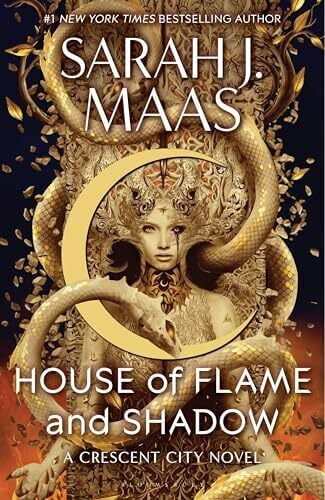
It’s no shock that one of Sarah J. Maas’ other series would be recommended for fans of A Court of Thorns and Roses, but there’s a specific reason you should jump into her Crescent City series, especially the third book, House of Flame and Shadow. The most recent ACOTAR book, A Court of Splintered Harmony, revealed that the events of House of Flame and Shadow tie directly into the events in Splintered Harmony, particularly with regard to the character of Feyre’s sister, Nesta. In other words, if you read Splintered Harmony and wondered why Nesta was being so weird, there’s a whole other book series you should dig into immediately.
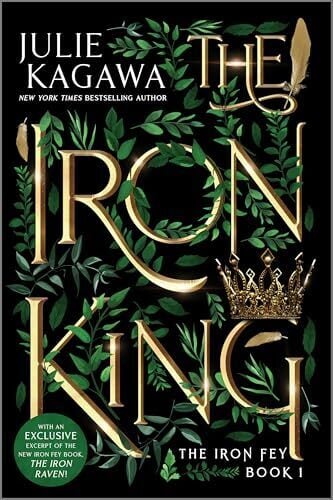
If Feyre’s grit and determination are your favorite aspect of ACOTAR, Julie Kagawa’s Iron Fey series (starting with The Iron King) will be your next obsession. Meghan Chase has never felt ‘normal’ in her life, and she’s been haunted by her father’s disappearance since she was a child. When her brother also vanishes, she goes on a quest for answers, learns that she’s actually the daughter of a faerie king, and finds herself in a magical world that blurs in elements of Shakespeare’s A Midsummer Night’s Dream. Meghan is determined to save her brother (and herself), but a certain ice-cold fae prince captures her attention, even though he’s as dangerous as he is beautiful.
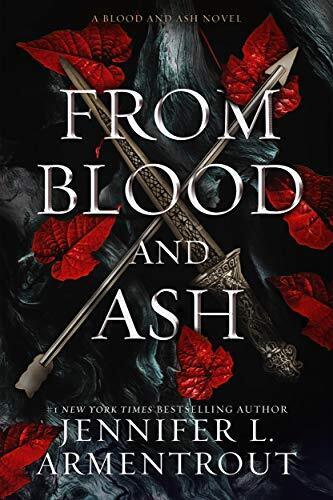
If you’re looking for some serious romance in your fantasy, Jennifer L. Armentrout’s A Blood and Ash series is a must. Poppy was chosen at birth to be the kingdom’s Maiden, isolated and untouched in order to be ready for her Ascension to ensure the land is protected from the evil force that took her family. But it’s a lonely existence—until Hawke is assigned as her sworn protector. Golden-eyed and beautiful, Hawke offers Poppy the connection she’s craved. When chaos erupts around her, Hawke takes the opportunity to spirit Poppy away. But Hawke has a secret, and Poppy is soon in danger of losing both her heart and the favor of the gods themselves.
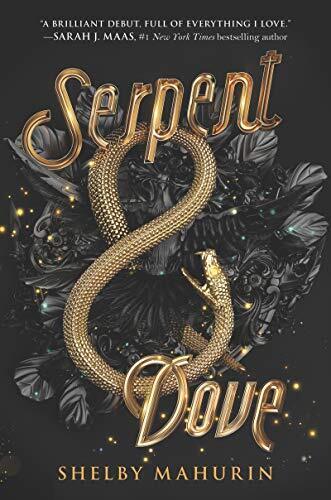
If you love how A Court of Thorns and Roses takes the “enemies-to-lovers” trope and builds it into a deep, complex mesh of emotions and plot twists, you’ll love Shelby Mahurin’s Serpent & Dove series. When witch Louise le Blanc flees her coven, she takes shelter in the city of Cesarine, where magic is forbidden, and witches are unceremoniously hunted and burned. Louise’s life gets infinitely more complicated, dangerous, and steamy when she’s trapped into an unwanted marriage with Reid Diggory—who happens to be a huntsman of the Church, charged with tracking down and eliminating witches. And then Louise starts to realize that Reid is actually pretty darn hot.
If you’re looking for a romantasy that’s broadly similar to ACOTAR while being its own thing, read A.K. Mulford’s The Five Crowns of Okrith series, starting with The High Mountain Court. Remy is a red witch, which means she’s in hiding and ready to make a run for it if the fae get near. So when a group of fae shows up at her tavern, she makes for the exit—only to be captured by Prince Hale of the Eastern Court. Instead of striking her down, however, Hale asks Remy for help—he needs to locate two ancient magical artifacts created by red witches, and he needs her red magic to find them. Hale promises to set her free and even reunite her with the red witches still living. More importantly, Remy finds Hale irresistible and has a primal urge to stay with him, no matter what the cost.
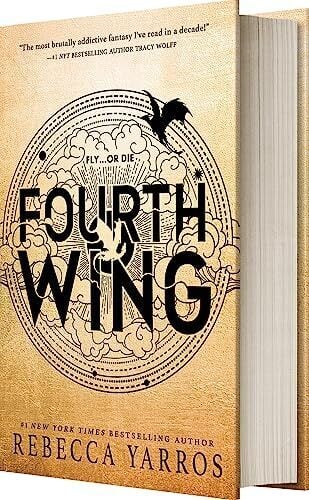
Looking for a romantasy with a slightly different vibe from ACOTAR? Variety is the spice of life, after all—and The Fourth Wing delivers. Rebecca Yarros’ Empyrean Series made a huge splash when it debuted, and for good reason—it has everything, from a capable, intelligent heroine thrust into a dangerous scenario (in this case, a dragon rider academy where failure can be deadly) and forced to navigate alliances, conspiracies, and her own heart, which is pushing her towards a romance that might be as dangerous as the dragons themselves.
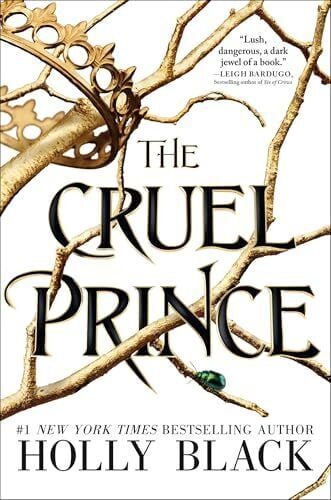
Love the moral complexity of ACOTAR, where everyone has at least a touch of darkness? Check out The Folk of the Air series by Holly Black. When Jude was a child, the father of her half-sister, the faerie Madoc, murdered her parents and took her back to the Faerie world with him. Raised as part of the gentry, Jude lives in a world where her mortal nature is hated and despised, but she battles for her place at court anyway while struggling with her love-hate relationship with her adoptive father and a growing bond with the titular prince, a relationship that is strictly forbidden. Jude is a fierce and extremely morally gray character, and one that fans of Feyre will adore.
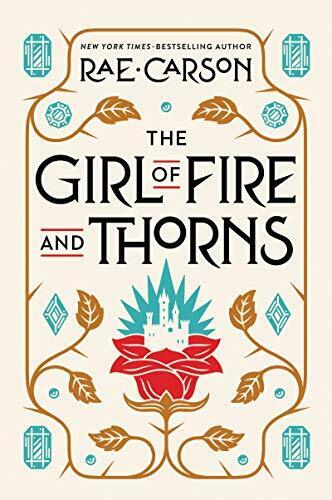
Looking for more smart women at the center of beautifully-rendered fantasy stories? You’ll love Princess Lucero-Elisa de Riqueza of Orovalle, star of this series-starter by Rae Carson. Elisa was chosen for “Service” as a baby, when a godstone was placed in her navel by the gods, signaling that she was destined for greatness. But as a young woman, Elisa is self-hating and miserable. She’s never done anything even remotely great, and spends her time isolated, overweight, and reading military strategy books. One day she’s shocked to discover she’s been married off to the king of a distant land on the brink of war—and suddenly all that rage and book learning becomes invaluable as she struggles to survive an unfamiliar court and help her new homeland survive a dangerous onslaught.
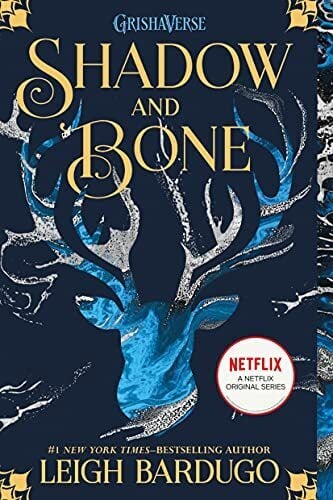
If you loved Feyre’s journey as she discovered unknown reservoirs of power and courage inside herself, you should read Leigh Bardugo’s Grishaverse novels, starting with Shadow and Bone. As a child, Alina was tested by the Grisha and found to possess no magical ability. As an adult, she serves as a cartographer in the army. Charged with guiding the Darkling—the most powerful of the Grisha—across the dangerous and terrifying Shadow Fold, Alina is unexpectedly revealed to have incredible powers and is packed off to train with the Grisha. There, she must determine who her friends and enemies are, even while falling under the spell of the charismatic Darkling.
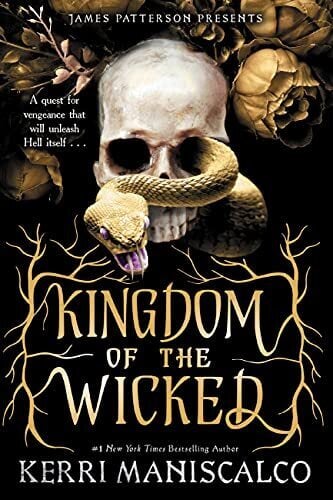
Emilia di Carlo and her sister Vittoria are very different—Emilia is bookish and shy, Vittoria outgoing and brash—but they share a secret: They’re both streghe, and have spent their lives learning to use magic. In this version of Italy, the Malvagi (the seven princes of Hell) haven’t been seen in a long time, but a terrifying accident summons the Prince of Wrath and leaves three witches dead, including Vittoria. Emilia swears to use her power to avenge her sister, but when her revenge is delayed and she’s forced to work with Wrath, unwanted feelings begin to tick up the spice level to an uncomfortable degree.