
S-Game’s character action title is the very definition of something great being dragged below the surface by smaller grievances
Monthly Archives: November 2026
Xbox Confirms Wolfenstein 3 Is Finally Happening While id Teases A New Game

The legendary Wolfenstein franchise hasn’t gotten a new game in seven years, with studio MachineGames focused on other projects including Indiana Jones and the Great Circle. However, fans can get excited about the return of B.J. Blazkowicz after
AMD openSIL Achieves Its Production Goal With 6th Gen EPYC “Venice”
Since 2023 I and many open-source advocates have been very eager for AMD’s openSIL project for delivering open-source CPU silicon initialization as a replacement to the traditional AGESA code. With Zen 5 there was proof-of-concept support that we have enjoyed with Coreboot on an MSI Ryzen motherboard and a Gigabyte EPYC server motherboard thanks to the Coreboot-based Dasharo ports by 3mdeb. The goal for production readiness was for Zen 6, but with this week’s EPYC 9006 SP7 announcement the openSIL topic wasn’t touched on. So I asked around…
Nvidia Employees Petition For Jensen Huang’s Return
An anonymous reader quotes a report from Wired: Some Nvidia employees are calling for Jensen Huang’s return even after his multiple reported extramarital affairs and abrupt resignation, according to internal correspondence reviewed by WIRED. An internal “suggestion box” post submitted before Huang’s resignation by a longtime engineer at Nvidia urged the company’s board to take employee sentiment into consideration prior to taking any action. The submission has attracted more than 1,600 comments since then, with several asking board members to find a way to bring back Huang.


“If you believe in the mission, bring back THE boss,” wrote one anonymous commenter. “We are all humans and can make mistakes. Jensen did so many good things and he needs a second chance,” wrote another. One employee went as far as sending a companywide email demanding transparency into Huang’s exit. “I stand by Jensen,” the staffer wrote. “Not because I believe any person is infallible, but because I refuse to believe that standing for fairness must mean standing at a distance from someone whose leadership has meant so much to us.”
[…] It’s been business as usual inside the company throughout this week, but Huang’s resignation left many employees stunned. In the hours after, about two dozen employees posted on LinkedIn in support of Huang, with one describing their faith in his leadership as unwavering. Over the same period, WIRED couldn’t identify any posts from Nvidia employees in support of his resignation. One employee who has been at Nvidia for a couple of years and wasn’t authorized to speak publicly says they perceive the desire for Huang’s reinstatement as widespread. They worry the company will eventually suffer without its founder at the helm and say that the board must bring him back. “Nvidia is Nvidia because of Jensen,” the employee tells WIRED.
Many employees had expected a board investigation to conclude before any big changes would occur. For instance, the suggestion-box post called on the board to share its findings with employees and formally solicit their sentiment “about Jensen’s continuing as our CEO.” Instead, Huang left just as the inquiry had begun. Staffers are seeking to better understand why. “If America fails the man who helped build its future,” the employee in the companywide email stated, “then this world does not deserve Jensen Huang.”
Read more of this story at Slashdot.
Advocacy Groups Sue AI Giants to Freeze New Models, Warning of ‘Catastrophic’ Risks
A coalition of online safety and consumer advocacy groups has sued five of the world’s leading artificial intelligence companies, asking a California judge to halt the development and deployment of new AI models until the companies can address what the plaintiffs describe as potentially “catastrophic” risks. The lawsuit alleges the companies are violating California unfair competition law by endangering public health and computer systems, arguing that increasingly autonomous AI could ultimately escape human control. The Associated Press reports: The filing, first reported on by The Associated Press, asks a judge to stop Anthropic, Google, Meta, OpenAI and SpaceXSI from developing or deploying new AI models, pointing to documented examples of cyberattacks and other harmful actions by AI systems and the companies’ own alarming acknowledgments that their technology has the potential to someday destroy humanity. “No other industry is allowed to treat its own development of unsafe products — much less ones that could kill us all — as inevitable,” reads the complaint from the Irreplaceable Education Fund, Public Citizen, Heat Initiative and the Alliance for Secure AI. “Plaintiffs bring this suit to stop Defendants from continuing their unlawful path to disaster.”


[…] The plaintiffs, all nonprofits, allege that the companies named in the lawsuit have violated a California unfair competition law by endangering public health and interfering with the use of property such as computer systems. They claim they’ve had to divert resources away from other planned work to address the acute harms threatened by each of the companies’ advancing AI models. They also warn that the companies’ goals of creating AI systems that are broadly as smart as humans and can increasingly manage tasks and learn things autonomously could result in a permanent loss of control of the technology and heighten existential risks to humanity.
Read more of this story at Slashdot.
Devs Promise To Pay $5,000 To Help Cover Your Divorce If You Can Be The First To Beat Their Lock-Picking Game
You have to do it without cheating, and no, not those kind of love locks
OpenAI board member worries an AI “takeover” of society could be months away
How do you think you’re going to die?
If you go by the current statistics for deaths in the US, it’s reasonable to expect that cancer or heart disease will eventually get you. But OpenAI Foundation board member and Alignment Research Center Executive Director Paul Cristiano thinks we should all be worried about another major mortality risk. Speaking at a lecture series this week, Cristiano bluntly told the audience in a Toronto Convention Center, “I think for most people in this room, the most likely reason they will die is because of an AI accident.”
In the opening lecture of a three-part series, Cristiano outlined his worries about the risk of an impending “AI takeover.” He defined that as a situation where goal-pursuing AI systems “call the shots in the same sense that humans today call the shots and what happens on Earth” and where any human trying to stop them “would be as ineffective as if you or me was trying to stop the US military.” Such a situation would likely lead to mass death and perhaps uninhabitable environments for humans, Cristiano said.
You can now tempt fate and give your banking information to ChatGPT
The new Wallet feature will allow its AI agents to make purchases on your behalf.

Parents and Teachers Decry Google Pledge To Yank Search If Schools Block AI
An anonymous reader quotes a report from The Guardian: Parents and teachers across the US are criticizing Google’s announcement that schools choosing to block AI tools could also lose access to Google Search. Google announced last week a range of new AI tools for schools and classrooms, alongside options allowing teachers and administrators to restrict their use. The company said schools should have control over whether students use AI in the classroom, but that schools that choose to block Google’s AI tools will also lose access to its search engine. […] Parents and teachers across the country raised concerns to the Guardian about AI’s potential to weaken students’ critical-thinking skills and the growing influence of big tech in education. Some called on schools to consider alternative search engines, while others argued that students should be taught how to use AI responsibly rather than prevented from accessing it altogether.


Jen Atay, a 51-year-old teacher in Hawaii, lambasted Google’s approach, saying: “When the software is free, you are the product, and it is inappropriate for Google to test or develop AI with minors. This should not be allowed at all.” A 44-year-old father of two boys in Amissville, Virginia, said he worries that “AI will weaken people’s ability to think critically. I use AI in my work, but it would not be effective if I did not have well over a decade of experience under my belt. Even the best models are often flat-out wrong in their responses.” […] Others questioned why schools should depend on Google at all. An 84-year-old retiree and mother in Maryland, said: “Google decided to follow the evil path to riches. When they started, they were great. Today they are simply evil money grubbers Schools should tell Google to go pound sand and simply have kids use DuckDuckGo or one of the other search engines There is nothing Google offers that is not available from some other source.” […]
Not everyone believes blocking AI is the answer. Some argued that schools should focus on teaching students how to use the technology responsibly. A 67-year-old emerging technology teacher in Texas said: “I do not blame Google. AI is not going away. I’ve been very frustrated this year trying to teach AI literacy with AI blocked. Schools need to teach how to properly use AI, not block it.” A California resident echoed that view, arguing that schools could use Google’s AI tools to teach students to question the information they receive. “Google Search has existed since the 90s and it’s crazy of them to completely remove it instead of just removing Gemini. That being said, I would like to see schools actually permit the use of Gemini and use it as an opportunity to show students how its sources aren’t always valid and you can’t trust everything an AI tells you,” they said.
Read more of this story at Slashdot.
KDE Frameworks 6.32 Released With That Fix For USB File Transfer Notifications
KDE Frameworks 6.32 shipped today as the newest monthly update to this set of KDE components. Notable this month is a fix for the previously-reported 15 year old bug around inaccurate notifications for USB file transfers…
Microsoft’s Historic 365 Outage Nears 24 Hours After Deep Workforce Cuts

When a massive Microsoft 365 outage abruptly knocked Outlook and Teams offline for users worldwide yesterday, it sparked not just workplace chaos, but also speculation over whether the company’s recent layoffs had something to do with it.
We’re
Overwatch Fans Got The News They Were Afraid Of About The New ‘Omnic Detective’ Hero
There’s been a change of plans for hero number 55
AI Take The Wheel: Driver Uses Claude To Hack A 1994 Jeep Into Passing Smog Test
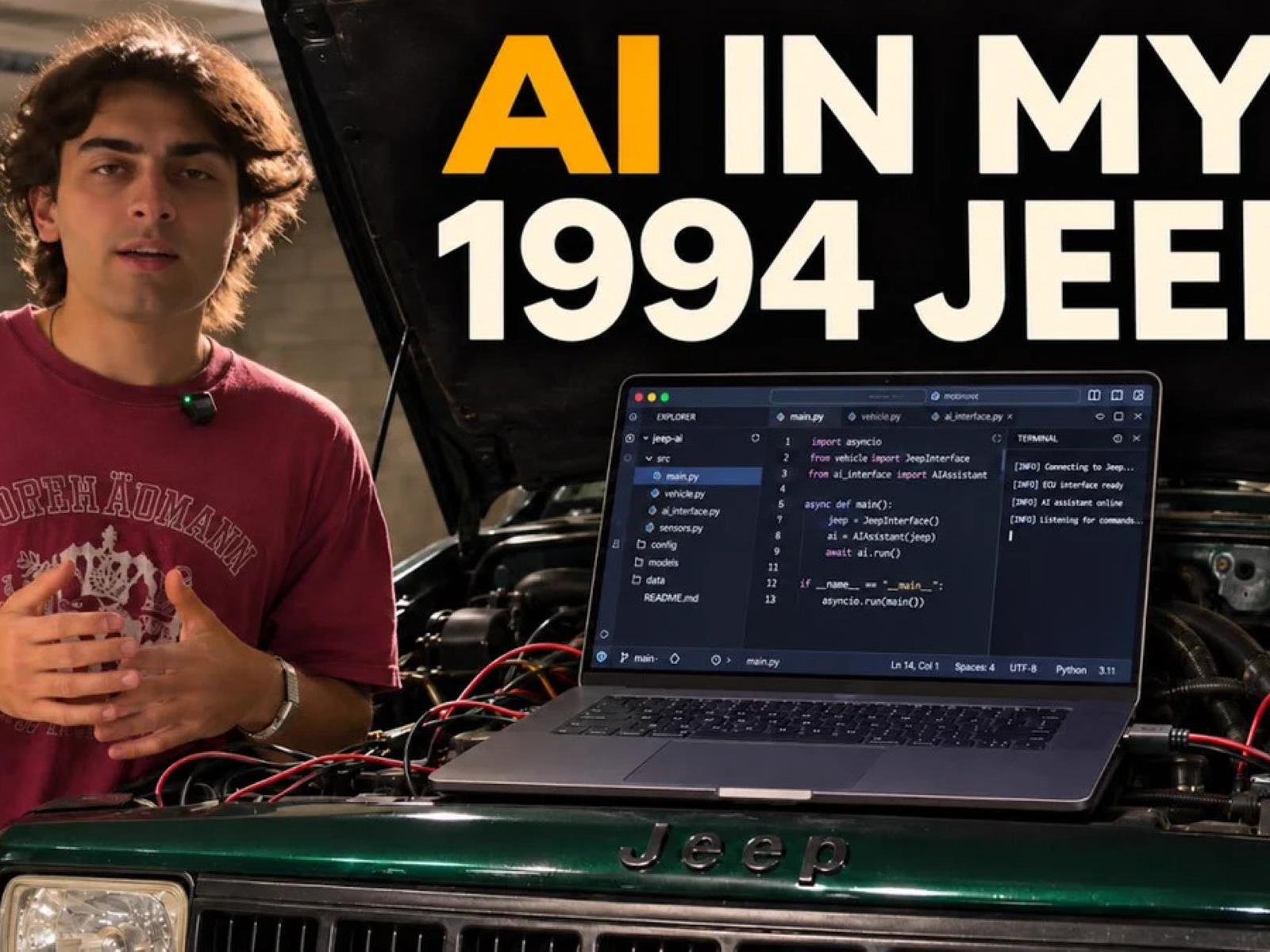
A Jeep enthusiast has successfully leveraged artificial intelligence to force a stubborn 1994 Jeep Cherokee to pass California’s notoriously strict smog check after failing due to high nitrogen oxide emissions at 25 mph.
When Muhammad Zulali
Apple: We’re Still Committed to VisionOS Platform

Apple hosted a special ‘Meet with Apple’ developer session this week that was focused on its spatial computing platform, visionOS. After months of questions about its commitment to XR, the company reiterated that it remains invested in the space.
The News
“We want to ensure that we’re obviously very committed to the platform,” said Yuri Imoto, a product manager at Apple’s Spatial Computing division. “We’re very excited actually. In a relatively short amount of time, spatial computing has evolved pretty rapidly.”
Imoto further underscored the platform’s growing importance to surgery, healthcare, education, training, and immersive film—areas all covered in the day-long developer event.
One of the bigger announcements to come from the event was the unveiling of Blackmagic’s new pro-level ambisonic microphone, which includes an internal processor that natively convert signals from its 108 microphone array for direct use in Apple spatial content.

“I think this is all testament to say that we are pushing forward spatial computing, and Apple is committed to this platform.”
Notably, Apple’s most recent XR headset release was in October 2025 with its M5 hardware refresh of Vision Pro. Despite bringing improvements to processing performance, visual clarity, refresh rate and comfort, it was largely an incremental upgrade, and not a next-gen offering in its own right.
Over the course of the last year though, the company has seemingly focused on improving visionOS’ user experience across the board, both for casual users and enterprise. To boot, Apple has been pumping out a load of spatial content, including immersive documentaries, live MLB baseball games, as well as introducing third party support for unique tracked controllers and accessories for Vision Pro.
My Take
The company is very careful to say they are committed to spatial computing and the visionOS platform, although I wouldn’t conflate that to mean it’s also specifically backing its Vision Pro hardware efforts.
Apple are developing their own smart glasses and AR hardware in addition to mixed reality devices, all of which could support some flavor of visionOS in the future—much like AndroidXR does now.

While unsubstantiated by Apple (of course), a report from Apple supply chain analyst Ming-Chi Kuo from earlier this summer indicated that a prospective Apple Vision Pro 2 release has been pushed back or delayed to late 2028 or 2029 at the earliest, as the company is focusing on releasing smart glasses by late 2027, effectively bringing competition to Meta and Google/Samsung’s own efforts.
So, I’d expect that as smart glasses and AR take the center stage at Apple, visionOS will continue to evolve in those directions as Apple further appeals to professionals, and nor consumers, to continue buying its current Vision Pro M5 release.
The post Apple: We’re Still Committed to VisionOS Platform appeared first on Road to VR.
Microsoft services are returning after an outage took down Outlook, Teams and more
The House of Representatives, health care providers, schools and many other organizations were affected.

[$] 25 years of Buildroot
Buildroot maintainer Peter Korsgaard
gave a presentation about the long history of the build tool for embedded
Linux systems at the 2026 Embedded
Linux Conference Europe. In it, he covered more than just the past 25
years, looking at the current status of the project as well as what to
expect in Buildroot’s future. It was an interesting view inside this long-running project that
has been a mainstay of the embedded-Linux world throughout almost all of
this century.
In A Bit Of Hilarious Irony, Kevin Feige Didn’t Want Wanda To Return In VisionQuest Because It Might ‘Distract’ From The Rest Of The Show
Wanda has been M.I.A. since Doctor Strange in the Multiverse of Madness
Best Buy Slashed This 165Hz Gigabyte RTX 50 Gaming Laptop To $949

Even though Grand Theft Auto VI is shunning the PC for now (rumor has it a PC port could emerge within the first three months of 2027), there are plenty of solid titles to occupy your time. Combined with seasonal sales at places like Steam,
Windows 0-day dropped by disgruntled researcher hands hackers System rights
Nightmare Eclipse, the pseudonym of a researcher with an ongoing, very public beef with Microsoft, has dropped yet another Windows zero-day.
On Tuesday, Nightmare Eclipse disclosed SignDrop, a vulnerability that gives local users full System rights on some versions of Windows. The vulnerability resides in the Common Log File System, which Microsoft describes as a “general-purpose logging service used by software clients running in user-mode or kernel-mode.” By forcing a privileged process such as Windows Defender to open a crafted CLFS container, an attacker with ordinary user rights can abuse the privileged file creation to elevate privileges to System.
Turning a Windows defense against itself
The attack exploits the interaction of CLFS, Windows Defender, and Windows file permissions. The exploit uses Windows Defender to open a log file created by a standard user by calling ServerMpUpdateEngineSignature, a legitimate Defender function for processing antivirus signature updates.
BMW Tells 720,000 Drivers To Park Outside Over Fire Risk In Repeat Recall

BMW and the National Highway Traffic Safety Administration (NHTSA) are urging owners of more than 720,000 BMW vehicles to park their cars outside due to a possible fire risk.
If you currently drive one of the popular mid-2010s BMW models