Five Hacks Every Apple Watch Series 12 User Should Know

We may earn a commission from links on this page.

The latest Apple Watches have a lot of new features that older watches don’t, so I figured it was time for a new list of hacks. While our general Apple Watch and fitness tracking hacks are still golden, Series 12 devices offer new features like native step counting, a Readiness app, an upgraded heart rate sensor, an AI-based version of Siri, and “audio intelligence” that can replay and summarize real-life conversations, within limits. Here’s how to get the most out of them.

Put the steps complication on your watch face to turn it into a simple pedometer

The Series 12 can finally count steps natively, a task that for some reason is only arriving now, and is restricted to just the newest Apple Watch models. Enjoy it! To add a step counter to your watch face, long-press on the clock screen to edit it, tap on a complication (that’s what Apple calls those little icons and numbers that appear on some watch faces), choose Activity, and then tap Steps. 

Get better Siri Recaps by turning them off by default

You don’t need this creepy feature listening in to everything, but it can be nice to have it as a backup on occasion. A button in your Apple Watch’s Control Center can turn the feature on and off. Keep it off except when you have a structured conversation that you’ll want to refer to later. This feature is currently in beta (which you can try now if you want to), but is expected to be available to everyone later this year.

It’s worth turning off the default setting not just because of the creepiness factor, but also because the recaps work best when there is a single subject of conversation, with a clear start and end, and just one context. If you leave recaps running all the time, your doctor’s appointment will get mixed in with your grocery shopping, YouTube watching, and everyday chatter. 

To finish off a recap and make it useful, take a look at the recap shortly after the conversation, tap the three-dots menu, and hit Edit. You’ll be able to adjust the notes and add your own important details. Siri won’t identify speakers and seems to shy away from including certain details, like people’s names. You can add in what it missed and also create your own bullet points so that everything gets noted down while it’s still fresh in your mind. 

Learn these gestures to access features more easily

This one isn’t specific to the Series 12, but if you haven’t gotten on board with the pinch and wrist flick gestures yet, now is a great time. 

First, the wrist flick: If a notification is on your screen, or you’re otherwise looking at something you’d rather be done with, just flick your wrist away from you and then back toward you, as if there were a crumb on the watch face and you wanted to knock it off. This will bring you back to the watch face and close whatever you were looking at. 

The double pinch is another useful one, although Apple calls it double tap. This is confusing because you aren’t double tapping the watch, you’re tapping your thumb and forefinger together while wearing the watch. You don’t need to touch the watch face at all. So, when you get a notification or a call, look at it on your watch, and pinch your thumb and forefinger (of the watch hand) together twice. The watch detects the pinch from subtle movements in your wrist, and it will open the notification. You can then use the wrist flick to close the notification. Performing a double pinch when no notification is on screen will bring up your smart stack. You can then double-pinch to move to the next card in the smart stack, or single-pinch to open that card and see its details. 

If you want to learn even more gestures, go into the Watch app, and select Accessibility and then Hand gestures. You can remap a whole-fist “clench” to do the same thing as pressing the digital crown, for example, or to open the control center or Siri. 

Slap your watch to make Siri shut up

A little rude, perhaps, but helpful: With the new AI-based Siri, sometimes answers to questions can be long-winded. If Siri launches into a novel-length response and you’re not interested in hearing all that, just put your palm over the screen. You’ll instantly be transported back to your watch face, and the Siri response will stop. 

Turn on Silent responses so you can read what Siri says instead of listening to it

If you still want to see those longer responses without having Siri read the whole thing to you, you can set this up on your phone, and the settings will carry over to your watch. On your iPhone, go to Settings and tap Siri, then Responses. Select Silent responses instead of Spoken responses. You can then read through her answers, or skim them, as you prefer.

Mozilla to Shut Down Solo, Deleting Users’ Websites and Data

Mozilla is shutting down Solo, its AI-powered website builder and hosting service, on November 30. A notice on the Soloist.ai homepage reads: “We’ve made the difficult decision to close Solo. We have appreciated all of your support building and growing this product, and the feedback we’ve received from all of you. Solo will cease operations on Nov 30, 2026.” The Register reports: Mozilla launched Solo in December 2023 as a “Mozilla Innovation Project,” aimed at helping sole traders to build themselves a webpage for their services. Some 54,000 people used its LLM to build pages, and relied on Mozilla to host them — complete with custom domain names. Users now have just over two weeks left to find a new home for their pages, although Mozilla says it first notified them on October 1. According to the support FAQ, users can download a ZIP containing an HTML export, contact form and newsletter submissions, and a CSV linking to their images. The images themselves must be downloaded separately. Domains purchased through Solo Domains must also be moved to Name.com, with Mozilla handling the transfer after users create an account and supply its code.


Read more of this story at Slashdot.

In elephants, the resilience of communities has its limits

Elephants live in some of the most complex and resilient societies in the animal kingdom. Individuals die or move away, calves grow up, and newcomers join, but the local communities as a whole usually hold together. Long-term studies of African savanna elephants have shown that, even after poaching or other spikes in deaths, survivors tend to rebuild their lost connections over time. But a new study suggests that resilience may not keep the community intact when steady losses accumulate over time.

Anastasia Madsen, a behavioral ecologist at the University of California, San Diego, and her colleagues analyzed 12 years of observations of wild Asian elephants in Sri Lanka. They found that, once losses began to outpace newcomers, the elephants’ society didn’t just get smaller. It fractured.

Accidental savanna

Udawalawe National Park in southern Sri Lanka was created in the 1970s around a reservoir on one of the country’s four major rivers. “Before that, it was basically a tropical deciduous forest,” said Shermin de Silva, an ecologist at UC San Diego and senior author of the study (de Silva started the Udawalawe Elephant Research Project in 2006).

Read full article

Comments

These Are the Best Ways to Encrypt Your Email

You probably already know that your email isn’t actually all that private, especially if you have a free account with a major service provider like Gmail (Google) or Outlook (Microsoft). But if you are sending sensitive information via email, you can minimize what can be snooped on and by whom using end-to-end encryption, which generally ensures that only the recipient can read your message. Here’s what you need to know about email encryption and how to set up an extra layer of privacy.

How email encryption works

As this in-depth explainer from Adaptive Security describes, most emails are encrypted in transit via Transport Layer Security (TLS), which prevents anyone from reading your message as it travels from server to server. However, encryption is temporarily stripped at each server: content is received and processed in plaintext and then re-encrypted when it leaves, meaning it could be read, logged, and distributed by the server provider.

Emails are also typically encrypted at rest—for example, while sitting on Google’s servers and in a Gmail recipient’s inbox. But this only prevents someone with physical access to the server hardware from reading messages, as Google still holds the encryption key and can access stored data. And, as PCMag points out, Google is scanning your messages to a degree, and it (along with other email providers) can and will hand emails over to law enforcement and government agencies in some cases.

By contrast, with end-to-end encryption (E2EE), emails are readable only on the sender’s and recipient’s devices, and can be decrypted only with the recipient’s private key. They’re never translated into plaintext as they pass between and through servers to their destination, meaning that no one—including server providers, hackers, or law enforcement—can view the content. It’s worth noting, though, that E2EE is not impenetrable nor a total guarantee of privacy. For example, metadata like subject lines and email addresses may remain in plaintext, and encrypted messages are still susceptible to phishing. Plus, forwarding an encrypted message breaks the encryption.

Still, end-to-end encryption is especially useful when sending sensitive information that may be valuable to bad actors, though if security and privacy are a high priority, you may want to consider it for all of your emails. How you deploy encryption depends on whether you are adding it to your current email or switching to a dedicated provider.

Add third-party encryption to your existing email

If you have an account with a major email provider like Gmail, Outlook, or Apple Mail, you can add a third-party tool that layers an encryption protocol like OpenPGP on top of your existing account. PCMag recommends PreVeil, SecureMyEmail, and Virtru (which is limited to Gmail users in Chrome) for those who want to keep their current emails. Mailvelope is a browser add-on (and therefore a desktop-only tool) available in Chrome, Firefox, and Edge, though it can also be installed on other browsers, like Brave, that are built on the same architecture. FlowCrypt integrates with Gmail and Google Workspace on desktop and mobile.

Note that enterprise users of Google Workspace and Microsoft 365 have access to true end-to-end encryption without third-party add-ons. Gmail’s Confidential mode and Outlook’s Encrypt feature, available to all users, are not E2EE equivalents, as Google and Microsoft, respectively, still manage the keys.

Switch to a dedicated encrypted email provider

For those who are willing to start fresh with a new email address (or who have a custom domain), providers like Proton Mail or Tuta offer native end-to-end encryption. The caveat: by default, this is only between users on the same service, so from one Proton user to another. If you want to send an end-to-end encrypted email from Proton to a Gmail user, for example, you have to set up password protection (and share the password via another secure channel) or use a PGP-compatible tool like those listed above. You can also Proton’s Gmail integration does allow for end-to-end encryption, but only if both Gmail parties are using the Proton integration.

The bottom line here is that email wasn’t designed to be a highly secure form of communication. End-to-end encryption does add a layer of privacy and security if you jump through hoops to set it up, but it’s still susceptible to human error and social engineering.

10 Books Like ‘A Court of Thorns and Roses’ You Should Read Next

We may earn a commission from links on this page.

Sarah J. Maas’ lush, romance-soaked series A Court of Thorns and Roses has blossomed into a sprawling, complex fantasy series with millions of dedicated fans, and with good reason. A complex heroine who keeps discovering new depths in herself, fascinating supporting characters who shift from antihero to antivillain in unexpected ways, creative and beautifully rendered world-building—the series has it all, while also being unapologetically romantic (and steamy).

The story of a huntress who is kidnapped by a fae prince and brought to the Spring Court as a prisoner, only to become a key player in all that fae drama, ACOTAR is special, but Maas can only write so fast. If you need more books with the same lush feel, here are 10 to get you started.

House of Flame and Shadow, by Sarah J. Maas (2024)

It’s no shock that one of Sarah J. Maas’ other series would be recommended for fans of A Court of Thorns and Roses, but there’s a specific reason you should jump into her Crescent City series, especially the third book, House of Flame and Shadow. The most recent ACOTAR book, A Court of Splintered Harmony, revealed that the events of House of Flame and Shadow tie directly into the events in Splintered Harmony, particularly with regard to the character of Feyre’s sister, Nesta. In other words, if you read Splintered Harmony and wondered why Nesta was being so weird, there’s a whole other book series you should dig into immediately.

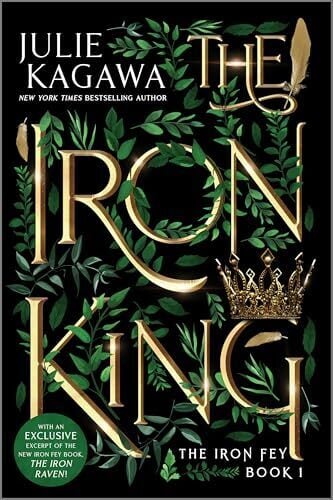
The Iron King, by Julie Kagawa (2020)

If Feyre’s grit and determination are your favorite aspect of ACOTAR, Julie Kagawa’s Iron Fey series (starting with The Iron King) will be your next obsession. Meghan Chase has never felt ‘normal’ in her life, and she’s been haunted by her father’s disappearance since she was a child. When her brother also vanishes, she goes on a quest for answers, learns that she’s actually the daughter of a faerie king, and finds herself in a magical world that blurs in elements of Shakespeare’s A Midsummer Night’s Dream. Meghan is determined to save her brother (and herself), but a certain ice-cold fae prince captures her attention, even though he’s as dangerous as he is beautiful.

From Blood and Ash, by Jennifer L. Armentrout (2021)

If you’re looking for some serious romance in your fantasy, Jennifer L. Armentrout’s A Blood and Ash series is a must. Poppy was chosen at birth to be the kingdom’s Maiden, isolated and untouched in order to be ready for her Ascension to ensure the land is protected from the evil force that took her family. But it’s a lonely existence—until Hawke is assigned as her sworn protector. Golden-eyed and beautiful, Hawke offers Poppy the connection she’s craved. When chaos erupts around her, Hawke takes the opportunity to spirit Poppy away. But Hawke has a secret, and Poppy is soon in danger of losing both her heart and the favor of the gods themselves.

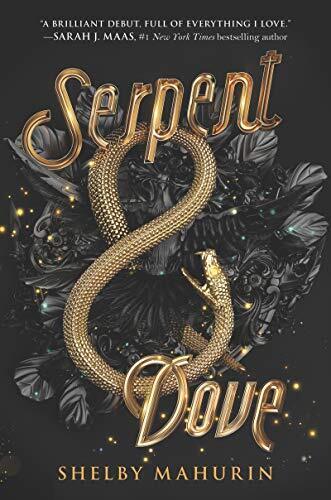
Serpent & Dove, by Shelby Mahurin (2020)

If you love how A Court of Thorns and Roses takes the “enemies-to-lovers” trope and builds it into a deep, complex mesh of emotions and plot twists, you’ll love Shelby Mahurin’s Serpent & Dove series. When witch Louise le Blanc flees her coven, she takes shelter in the city of Cesarine, where magic is forbidden, and witches are unceremoniously hunted and burned. Louise’s life gets infinitely more complicated, dangerous, and steamy when she’s trapped into an unwanted marriage with Reid Diggory—who happens to be a huntsman of the Church, charged with tracking down and eliminating witches. And then Louise starts to realize that Reid is actually pretty darn hot.

The High Mountain Court, by A.K. Mulford (2022)

If you’re looking for a romantasy that’s broadly similar to ACOTAR while being its own thing, read A.K. Mulford’s The Five Crowns of Okrith series, starting with The High Mountain Court. Remy is a red witch, which means she’s in hiding and ready to make a run for it if the fae get near. So when a group of fae shows up at her tavern, she makes for the exit—only to be captured by Prince Hale of the Eastern Court. Instead of striking her down, however, Hale asks Remy for help—he needs to locate two ancient magical artifacts created by red witches, and he needs her red magic to find them. Hale promises to set her free and even reunite her with the red witches still living. More importantly, Remy finds Hale irresistible and has a primal urge to stay with him, no matter what the cost.

Fourth Wing, by Rebecca Yarros (2024)

Looking for a romantasy with a slightly different vibe from ACOTAR? Variety is the spice of life, after all—and The Fourth Wing delivers. Rebecca Yarros’ Empyrean Series made a huge splash when it debuted, and for good reason—it has everything, from a capable, intelligent heroine thrust into a dangerous scenario (in this case, a dragon rider academy where failure can be deadly) and forced to navigate alliances, conspiracies, and her own heart, which is pushing her towards a romance that might be as dangerous as the dragons themselves.

The Cruel Prince, by Holly Black (2018)

Love the moral complexity of ACOTAR, where everyone has at least a touch of darkness? Check out The Folk of the Air series by Holly Black. When Jude was a child, the father of her half-sister, the faerie Madoc, murdered her parents and took her back to the Faerie world with him. Raised as part of the gentry, Jude lives in a world where her mortal nature is hated and despised, but she battles for her place at court anyway while struggling with her love-hate relationship with her adoptive father and a growing bond with the titular prince, a relationship that is strictly forbidden. Jude is a fierce and extremely morally gray character, and one that fans of Feyre will adore.

The Girl of Fire and Thorns, by Rae Carson (2019)

Looking for more smart women at the center of beautifully-rendered fantasy stories? You’ll love Princess Lucero-Elisa de Riqueza of Orovalle, star of this series-starter by Rae Carson. Elisa was chosen for “Service” as a baby, when a godstone was placed in her navel by the gods, signaling that she was destined for greatness. But as a young woman, Elisa is self-hating and miserable. She’s never done anything even remotely great, and spends her time isolated, overweight, and reading military strategy books. One day she’s shocked to discover she’s been married off to the king of a distant land on the brink of war—and suddenly all that rage and book learning becomes invaluable as she struggles to survive an unfamiliar court and help her new homeland survive a dangerous onslaught.

Shadow and Bone, by Leigh Bardugo (2013)

If you loved Feyre’s journey as she discovered unknown reservoirs of power and courage inside herself, you should read Leigh Bardugo’s Grishaverse novels, starting with Shadow and Bone. As a child, Alina was tested by the Grisha and found to possess no magical ability. As an adult, she serves as a cartographer in the army. Charged with guiding the Darkling—the most powerful of the Grisha—across the dangerous and terrifying Shadow Fold, Alina is unexpectedly revealed to have incredible powers and is packed off to train with the Grisha. There, she must determine who her friends and enemies are, even while falling under the spell of the charismatic Darkling.

Kingdom of the Wicked, by Kerri Maniscalco (2021)

Emilia di Carlo and her sister Vittoria are very different—Emilia is bookish and shy, Vittoria outgoing and brash—but they share a secret: They’re both streghe, and have spent their lives learning to use magic. In this version of Italy, the Malvagi (the seven princes of Hell) haven’t been seen in a long time, but a terrifying accident summons the Prince of Wrath and leaves three witches dead, including Vittoria. Emilia swears to use her power to avenge her sister, but when her revenge is delayed and she’s forced to work with Wrath, unwanted feelings begin to tick up the spice level to an uncomfortable degree.

PVP Mech Battler Iron Rebellion PlayStation VR2 Launch Expected By End Of Year

Black Beach Studio plans to release mech combat sim Iron Rebellion on PlayStation VR2 by the end of 2026. Faction Wars, a single player and co-op PvE campaign mode, is also in playtesting and expected before Christmas.

Faction Wars was announced back in March and per Black Beach, is currently in live playtesting. Players have long requested a PvE mode to be added to the game.

VR Mech Combat Game Iron Rebellion Announces PvE Expansion
The PvP VR mech combat game Iron Rebellion is adding PvE this year, a long-awaited feature.
UploadVRMike Johnson

The game first started in Early Access in late 2021 for Quest and PC VR, moving to a full release in late 2024. It has received steady updates to improve the enemy AI, expand the number of players in battles to 8v8 lobbies, and most recently a battle spectator feature & UI update in July.

You can wishlist Iron Rebellion for PS VR2 on the PlayStation store. It is already available for Quest and PC VR.

AMD openSIL Achieves Its Production Goal With 6th Gen EPYC “Venice”

Since 2023 I and many open-source advocates have been very eager for AMD’s openSIL project for delivering open-source CPU silicon initialization as a replacement to the traditional AGESA code. With Zen 5 there was proof-of-concept support that we have enjoyed with Coreboot on an MSI Ryzen motherboard and a Gigabyte EPYC server motherboard thanks to the Coreboot-based Dasharo ports by 3mdeb. The goal for production readiness was for Zen 6, but with this week’s EPYC 9006 SP7 announcement the openSIL topic wasn’t touched on. So I asked around…