The FAA grounded flights for hours on November 13, and the transportation secretary blamed it on old and malfunctioning air traffic control system.


Homeland Security Secretary Markwayne Mullin said in a press conference Friday, when asked if the AI system might be related to the outage: “That’s what we’re looking at.” Microsoft, which faced massive issues across its services this week, also said that it had “no indication” the ground stop was related to any Microsoft services. Meanwhile, the FAA said that the ground stop was due to “extraordinary circumstances and for reasons of safety.” UPDATE 1:33 UTC: Secretary Mullin and Secretary Duffy are currently briefing members of the press on the issue.
UPDATE 1:46 UTC: The FAA has lifted the nationwide ground stop after more than four hours. Officials said the disruption appears to have stemmed from a network router issue that cascaded nationwide, with no evidence of a cyberattack or connection to Microsoft’s recent outage. Airlines warned that disruptions could continue in Saturday.


Read more of this story at Slashdot.
Homeland Security Secretary Markwayne Mullin said in a press conference Friday, when asked if the AI system might be related to the outage: “That’s what we’re looking at.” Microsoft, which faced massive issues across its services this week, also said that it had “no indication” the ground stop was related to any Microsoft services. Meanwhile, the FAA said that the ground stop was due to “extraordinary circumstances and for reasons of safety.” UPDATE 1:33 UTC: Secretary Mullin and Secretary Duffy are currently briefing members of the press on the issue.


Read more of this story at Slashdot.
SpaceX had already made three booster grabs at the company’s sprawling Starbase near the U.S.-Mexico border. That made Friday’s miss all the more surprising. “Well, that certainly isn’t the news that we had hoped to hear for today,” observed SpaceX launch commentator Kate Tice, adding that it was in line with the many rigorous safety checks to protect the pad. No explanation was provided for what went wrong. This was the first attempt to capture the upgraded version of the booster that stretches 236 feet (72 meters) — the production model for moon and Mars expeditions. It will also be the first time the company attempts to catch the spacecraft, which spans 171 feet (52 meters). Together, they form the world’s biggest and most powerful rocket — an astounding 407 feet (124 meters) in height.
The spacecraft portion of the 14 previous Starships ended up in the ocean, either by design at flight’s end or by accident in a stream of flaming wreckage. During the first full-scale test flight in 2023, multiple engines failed to ignite and the tumbling rocket’s self-destruct system was activated. The last test, in September, was the first to reach orbit, but SpaceX did not try to recover any of the rocket stages. You can watch a recorded livestream of the launch on YouTube.


Read more of this story at Slashdot.
STARBASE, Texas—Starship lifted off right on schedule Friday from South Texas, making its 15th test flight in more than three years.
The largely successful launch took place in the early evening; as the massive rocket rose into the atmosphere, the Sun sank toward the western horizon. Conditions were ideal for the launch, with the atmospheric winds so calm the rocket’s white plume did not dissipate for many minutes. The weather in South Texas is not always comfortable; summers are long and hot. Friday evening was perfect at Starbase.
The first stage ascended toward space flawlessly, releasing the upper stage above the Gulf of Mexico. From there, the Starship upper stage ignited its Raptor engines and powered its way into a nominal orbit. This was the second time SpaceX has flown Starship into low-Earth orbit.
AI safety for both adults and children is under greater scrutiny than ever before, with a growing number of questions and concerns appearing around how beneficial or otherwise these conversational bots actually are for our mental well-being—even without considering their energy use, ethics, or economic implications. At the same time, an increasing number of apps and services are becoming age-gated in a growing number of countries around the world, as governments realize that letting kids loose on AI apps, social media platforms, and the web at large might not be the best idea for their ongoing development and prosperity.
The big AI apps, such as ChatGPT and Gemini, are right in the center of these trends, and the companies behind them are taking steps that they promise will keep children safe. If you want to know what youngsters in your family may be getting exposed to, and what you can do about it, here’s the rundown.
OpenAI’s ChatGPT has one of the more comprehensive setups in terms of parental controls. The minimum age for users is 13, and if you’re under 18, you need to have parental consent to open an account—age is predicted via several signals, including what times of day you use ChatGPT and what you talk about.
Accounts for under-18s automatically become ChatGPT for Teens accounts. There’s more of a focus on learning and study (with a dedicated study mode), as well as “age-appropriate safeguards to help reduce exposure to sensitive or potentially harmful content.” There are built-in protections for “harmful topics,” including sexual, romantic, or violent roleplay, graphic violence, and self-harm. These work on top of the safeguards for all users that limit chats about physical harm and illegal activity.
These ChatGPT for Teens accounts can also be linked to a parental account—but while parental consent is required for under-18s to use the service, ChatGPT clearly says that teens do have the option to break the link if they want. If you do persuade your kid to keep your accounts connected, you can set time limits on when the AI bot can be used, and tweak some of the sensitivity settings. However, you can’t view any conversations.
To set up parental controls from ChatGPT on the web, click your profile icon (bottom left), then Settings > Parental controls > Add family member and follow the instructions. It’s also worth bearing in mind that ChatGPT app can also be used for free, anonymously, in any web browser, though OpenAI says users accessing the AI this way are subject to the default under-18s limits (and can’t save chats or access an archive).
Gemini is tied into everything else Google does, and follows the broader rules for Google accounts: No under-13s, unless you’re part of a family group and using an account managed by an adult. You can manage your family through the Family Link portal on the web, though as far as parental controls specific to Gemini go, you can only enable or disable access to the AI (settings like screen time apply across all enabled apps).
For all under-18s (partly identified through age estimation), whether or not they’re part of a managed family group, Google applies some additional protections. They include preventing the AI from taking on a persona, guarding against emotional dependence on the AI, and discouraging bullying and other forms of harassment. There are also safeguards to limit chats about age-restricted substances like alcohol or vapes, and mental health issues like eating disorders.
These protections for minors are applied in addition to the usual guardrails in Gemini for everyone. The guardrails should lead you away from conversations about self-harm, suicide, violence, and illegal activities, and offer quick links to support in times of crisis. However, Google itself admits that these filters aren’t perfect.
As with ChatGPT, there’s a loophole of sorts in that anyone can start chatting with Gemini, for free inside a web browser, with no checks at all. These conversations can’t be saved and come up against usage limits fairly quickly, but they’re only protected by the general restrictions for all accounts, not the ones specific to minors.
Meta AI will show up in several apps that young people and children are likely to use, including WhatsApp and Instagram, as well as having its own separate app on the web and on phones. The standard restrictions for Meta’s social media accounts apply to its AI too: A minimum age of 13, and restrictions for all under-18s. Like many other platforms, it uses some AI magic to flag up accounts being used by minors.
If you’re under 18 and on a Meta Teen account, you’ll come up against blocks if you try to get Meta AI to engage in sexual or romantic roleplay, or discuss alcohol or substance misuse. Chats on topics such as eating disorders and self-harm will prompt the AI to offer guidance towards relevant support services.
Meta offers a comprehensive parental control setup for its apps, including Meta AI, but connecting a parent account isn’t compulsory for teens. This is handled through the Meta Family Center portal, and parents can get reports on the general topics that kids are chatting about with AI—though they don’t get the exact transcripts or prompts. Any self-harm or suicide discussion can trigger an alert to the connected parent account.
All users, under 18 or over 18, get support and crisis intervention responses when chatting about suicide and self-harm, and there are strict limits on discussing illegal and harmful acts, including drug use and cyberbullying, as well as sexual and adult content.
Apple users have to be 13 or over to have an account, which is required to access Siri AI—anyone younger needs to have an account created for them by an adult, and these accounts can only get at the basic, older Siri. Date of birth must be declared when opening an Apple account, with tighter checks rolling out in many parts of the world.
Anyone over the age of 13 can have an Apple account and use the Siri AI app, with or without a connected parent account, as it stands in most U.S. states. This means the well-being safeguards are essentially the same for teens as they are for adults: There are safeguards around self-harm, suicide, sexual and violent content, and illegal commands. It’s one of the more conservative AIs when it comes to what it will talk about.
The new and improved Siri AI can be managed to some extent by the new parental controls available in iOS 27 and Apple’s other software updates for 2026—Apple has clearly seen the way the wind is blowing—but this is optional for teens. It depends on whether or not you can corral your kids into a Family Sharing group.
If your teens are in your family group of users, then the standard Screen Time rules apply for controlling app usage limits and device access (in iOS Settings, tap your name, then Family to get at them). There are also options for disabling certain Siri AI features, such as the writing tools or the image creation capabilities.
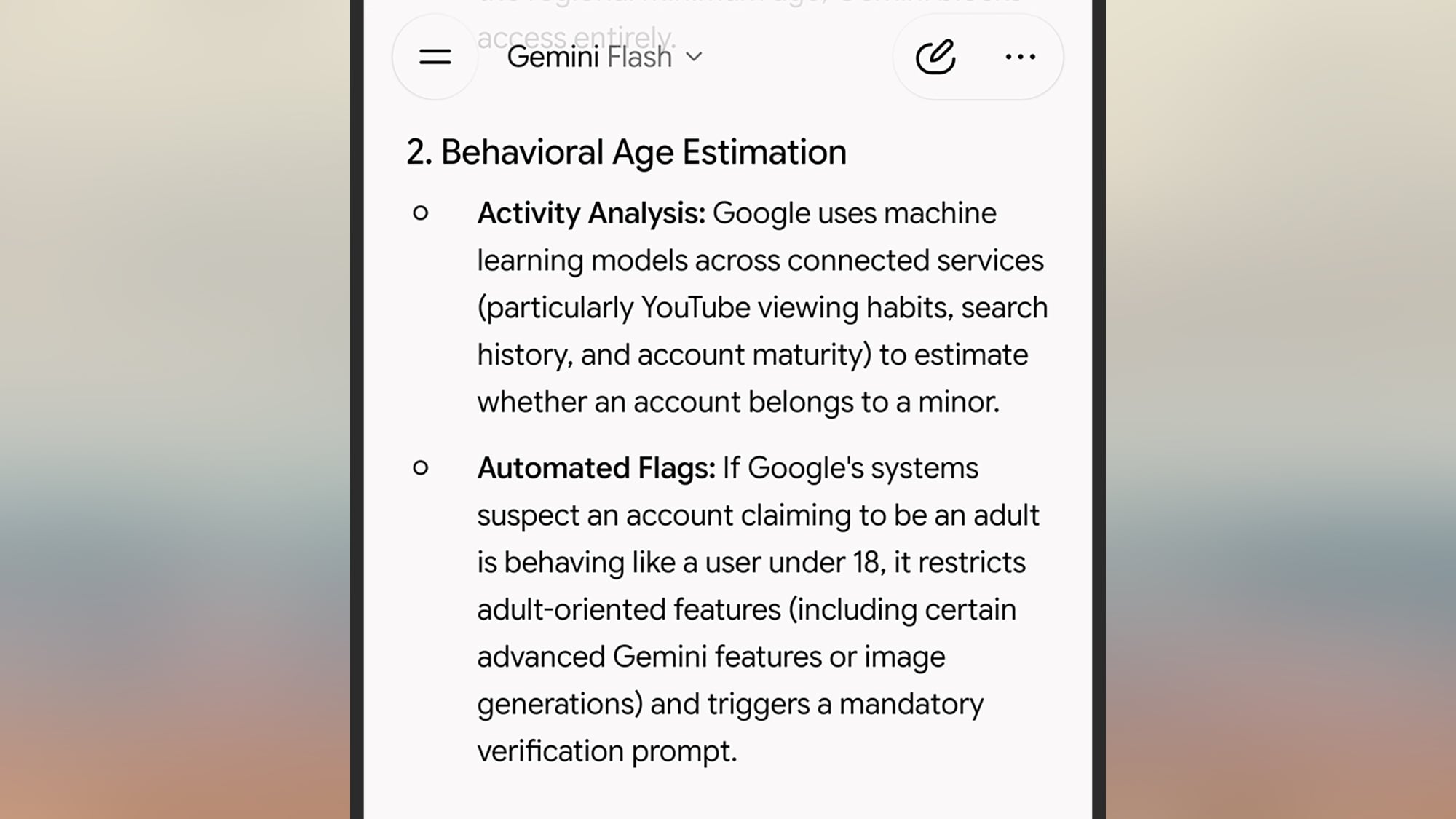
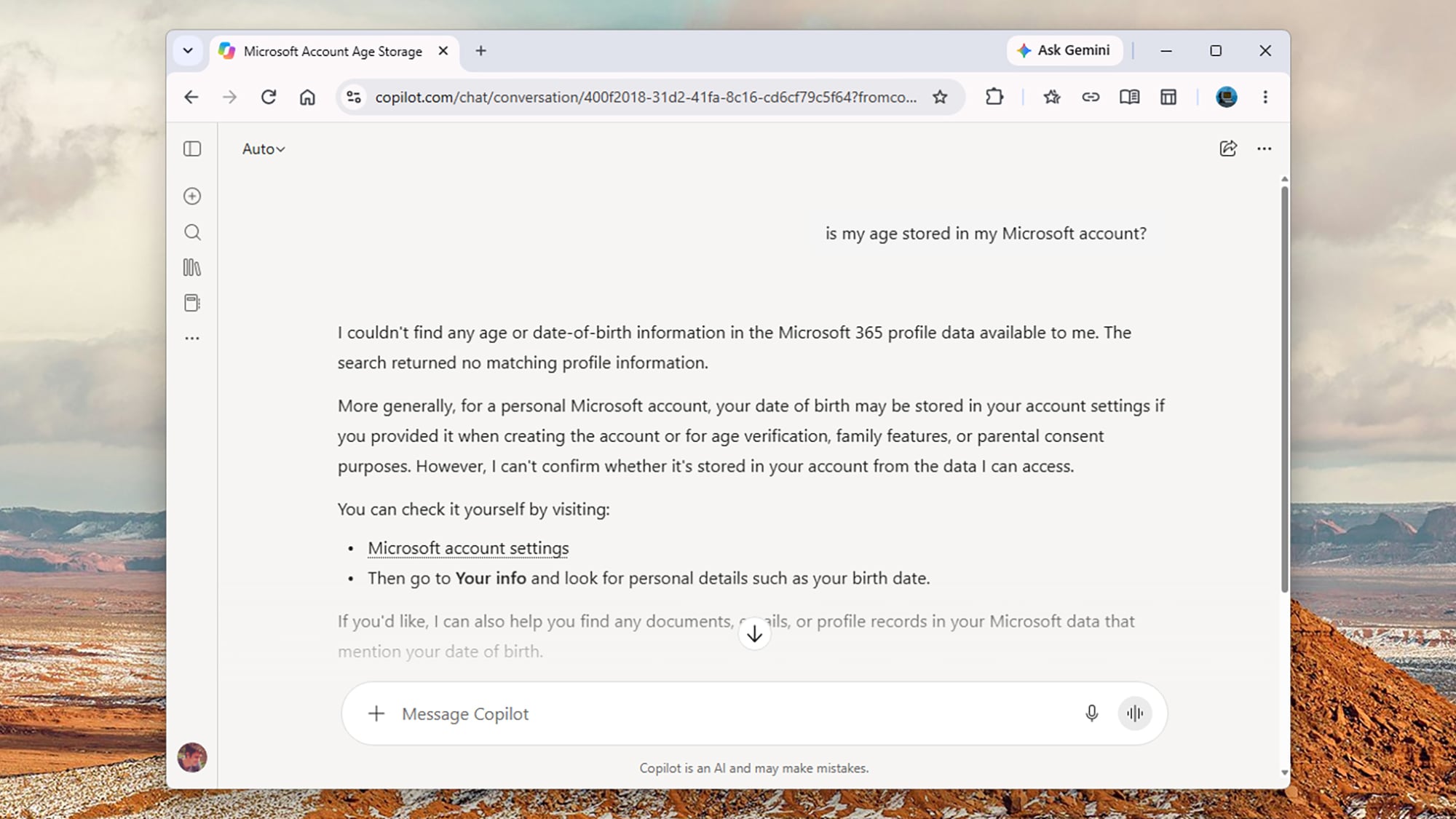
Like Gemini/Google and Apple/Siri, Copilot is tied into the wider Microsoft ecosystem, and access for under-18s can be managed through it. Users must be 13 or older to hold a Microsoft or a Copilot account—and again, there’s some underlying tech in place to detect anyone who might be deliberately lying about their age.
If you’ve got a teen using Copilot, you can manage their access through the standard Microsoft Family Safety portal. You’re able to enable or disable Copilot access, set times during which Copilot can and can’t be used, and disable certain features like image generation or voice mode. Parents can’t read the Copilot chats of their kids, though.
Parental supervision is optional—a teen aged 13–17 can use Copilot without linking their account to an adult one. Microsoft says users identified as under 18 won’t see personalized results or ads, and will get age-appropriate responses regarding risky or harmful content, though there’s not much detail on what that entails.
More generally, content around self-harm, violence, adult content, harassment, and harmful or illegal activity is banned on the AI platform. Any prompts about suicide or drugs will bring up support options rather than answers, whether you’re an adult or a young person using the service.
Out of the bigger AI chatbots out there, Grok is very much the worst at protecting minors. It can be accessed through X or as its own standalone app, and while its terms of use indicate there’s a minimum age requirement of 13, a recent report by Common Sense Media says the platform’s age checks aren’t effective.
Ultimately that means that minors have the same access to Grok as adults, if they want it—an AI platform that combines “weak safety guardrails” and “a range of extremely harmful content” that includes “explicit sexual content, mental health risks, violent content, and inappropriate responses to… offensive content” (that’s the Common Sense Media Report again).
Yes, this is the AI chatbot that has previously had a problem with deepfake porn imagery, and which has traditionally taken a rather casual attitude towards safety concerns, led by SpaceXAI CEO Elon Musk. While illegal and harmful content is supposedly banned from Grok, its own FAQs admit that certain chats can result in “dialogue that may involve coarse language, crude humor, sexual situations, or violence.”
There is actually a Grok Kids Mode that limits the kind of content that can be shown and the conversation topics that can be added, but it requires users to self-declare themselves as minors and is easy to bypass. The advice from Common Sense Media seems to be the way to go with Grok: Do not let your teens access it.
Claude’s approach to child safety is straightforward: You can only register for an account if you’re over 18. It is possible to lie about your age when signing up, but like the other platforms, Anthropic looks at various “signals” in behavior to spot minors—if your account gets flagged, you have to verify your age using an option like face age estimation or Yoti.
There’s no free web access to the chatbot, like there is with ChatGPT and Gemini, so if you’re under 18, you’re locked out from the service unless you know the behavioral tricks to get past Claude’s detection systems.
In terms of more general well-being protections on Claude, any chat around self-harm or suicide will guide users towards helplines and other resources for support. Conversations about illegal activities, disallowed speech, and explicit sexual content are banned from the platform. In recent months, Anthropic says it’s also reduced AI sycophancy.
That’s something of a whistle-stop tour of the big seven AI chatbots, but if you’re a parent, it should give you some idea of what’s out there and how easy it is to access. Besides the parental controls built into these AIs (or not), you also have the settings available at the platform level—Android, iOS, Windows, macOS—to restrict the use of any potentially harmful apps.
In an email to users, LEGO acknowledged that “some of the information associated with your account was accessed and disclosed by an unauthorized party,” including potentially usernames and IP addresses. However, the company insisted that “your password, postal address, and financial information were not disclosed.” Those assurances have since come under scrutiny following reports of convincing phishing emails containing detailed personal and purchase information.
The outage also dealt a significant blow to independent sellers who rely on BrickLink for income. Simon Webster, who operates stores on both BrickLink and rival marketplace Brick Owl, reported that his overall sales revenue fell 52% over a four-day period, even as sales through Brick Owl rose 79%. “Their comms are amateur at the best of times, but surely they should be able to send an email to let sellers and buyers alike know what is happening and what they’re doing to rectify it,” Webster said. “But no, we’re all left in the dark.”
The incident has renewed concerns about BrickLink’s aging infrastructure. Founded in 2000 and acquired by LEGO in 2019, the marketplace reportedly runs on a complex collection of interconnected systems that makes modernization difficult. The Brick Fanatics report questions whether the 25-year-old platform remains fit for purpose and whether prolonged outages and security concerns could push sellers toward competing marketplaces like Brick Owl.


Read more of this story at Slashdot.
On Friday afternoon, days after expanding use of an AI tool, the Federal Aviation Administration issued a nationwide ground stop, halting departures from all US airports. Secretary of Transportation Sean Duffy announced the ground stop on X, citing a “communication issue impacting all Air Route Traffic Control Centers.” Duffy promised updates as more information is known and said FAA staff were troubleshooting the problem.
Department of Homeland Security Secretary Markwayne Mullin said that the ground stop was not prompted by a security threat. “This is a telecommunications outage out of the FAA. Out of an abundance of caution, we have grounded all of the flights,” Mullin said. “There’s no indication as of yet that this is a nefarious attack against us.”
Mullin said the FAA would handle incoming international flights on a case-by-case basis.

Procedurally generated co-op space roguelike Sol Protocol has launched for PC VR in Early Access after a Quest 3 release in September.
Sol Protocol is the latest from Singular Perception (Epyka). Here’s the new PC VR trailer:
0:00
The trailer says it all. You and two crewmates operate three distinct roles on your spaceship, engaging in space battles, exploring different interstellar systems, and salvaging resources from planetary depots and space wrecks to repair/upgrade your ship. You start in a relatively safe system and as you improve your ship’s capabilities, you can opt to brave more dangerous systems for increasingly better resources.
I played Sol Protocol with James Galizio shortly after the Quest Early Access release and we agreed the bones were there for a solid space explorer with a lot of room to grow, precisely what the Early Access process is supposed to be best for. The game is best played with a full crew of three while Singular Perception is working on a bot system called Automa to better support solo and two-player crews in a future update.
 UploadVRJames Galizio
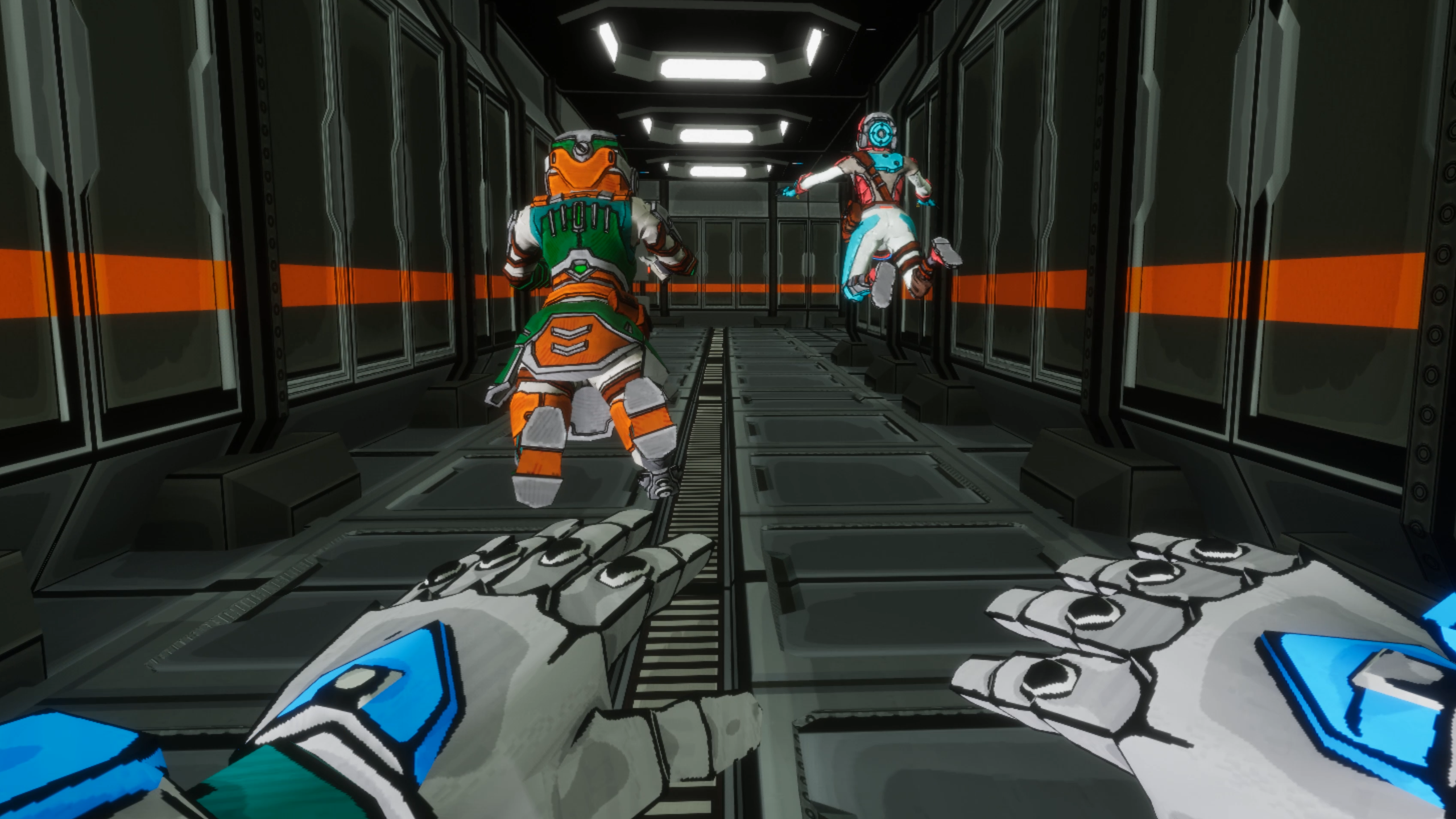
The Steam version has every update that shipped after the Quest 3 release, including one earlier this week adding LIV camera support. If you want to help influence future updates in the game’s roadmap, you can vote on features you would like to see in-game in the main menu’s interactive lobby.
Sol Protocol is available in Early Access for PC VR and Quest 3.
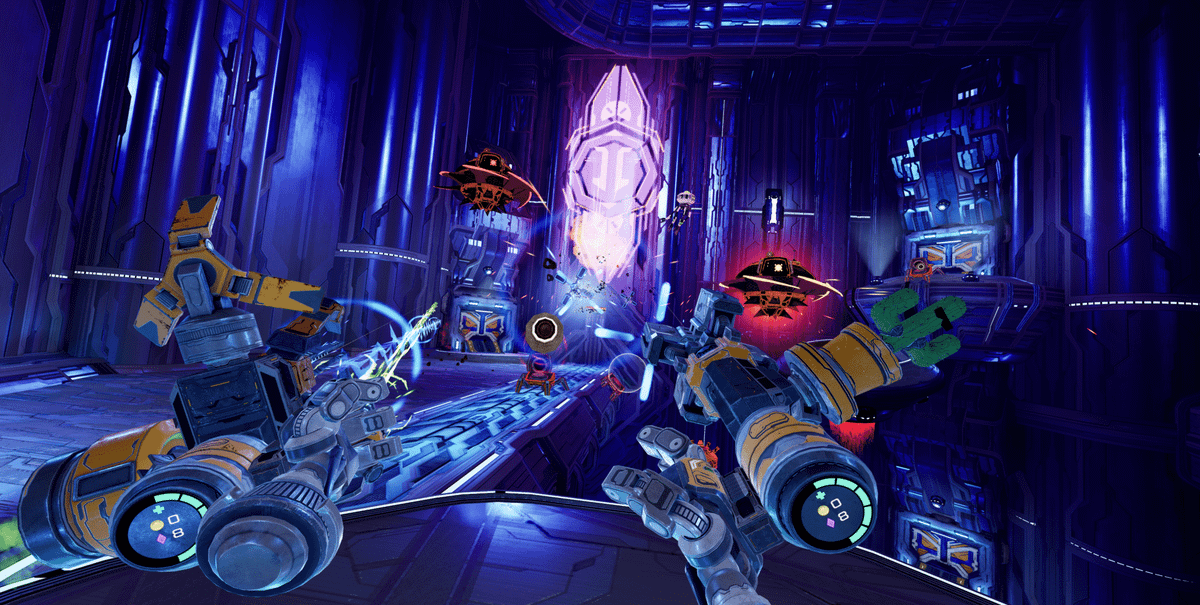
Impact Inked and Flat2VR Studios have surprise-launched Mothergunship: Forge for PlayStation VR2, the latest title in their ongoing initiative to bring established VR games to PlayStation’s headset.
Revealed by popular PlayStation-centric YouTuber Ryan Biniecki (aka MysticRyan) during today’s Let’s Talk PlayStation on YouTube, Mothergunship: Forge is the second game so far revealed in Flat2VR Studios’ and Impact Inked’s “Unlock the Vault” publishing initiative, which aims to bring a series of new titles to PlayStation’s VR headset.
0:00
Flat2VR Studios’ and Impact Inked’s Unlock The Vault was initially revealed in August via a video in which Flat2VR Studios’ Myles Dyer introduced several PlayStation personalities who will “unlock the vault” and announce the games.
The first vault was unlocked by Jamie Feltham, who revealed Drop Dead: The Cabin. Now that we’ve seen Ryan Biniecki’s reveal, we’ll have to wait to see what games are announced by former PlayStation executive Shuhei Yoshida, and the PlayStation-focused YouTubers Rob Pearson (PlayStation Access) and Bryan Paul (WithoutParole).
The game recently received its first major update in over three years on Quest. The update upgraded the game’s engine from Unreal 4 to Unreal 5.7, added two new modes including daily runs, added optional hand tracking controls, and what the developers call “a ton of polishing, balancing fixes, bug fixes, and connecting issue fixes that we’ve been wanting to tackle over the last couple of years.”
The PlayStation VR2 version includes the full game, “years of additional content,” plus the game’s latest Daily Run update. The port to PS VR2 takes advantage of the platform’s hardware, too, running at a native 120 FPS without reprojection, utilizing eye-tracked dynamic foveated rendering, and including headset haptics and adaptive trigger feedback.
 UploadVRJamie Feltham
Mothergunship: Forge is available today on PlayStation VR2. It’s also available on Quest, where it’s rated 4.7 out of 5 stars, and on Steam, where it has earned a Very Positive rating.