Everyone’s favorite block-slashing rhythm game just got seven new free songs with the official release of Beat Saber’s ninth OST.
Like many of Beat Saber’s previous OST drops over the years, OST 9 covers a pretty wide genre of music, including alternative rock, indie pop, symphonic metal, hip-hop, house, and hardcore.
Check out the full track list for OST 9:
Confetti — “LFG”
Star Slinger — “Nostalgia is a Curse”
Camellia — “Flameblade”
pineappleCITI — “One of Us”
EEWK — “Signal Jammer”
Azazal — “Purr”
e_ku — “Memory Marker”
Beat Saber players on Quest and SteamVR headsets will find OST 9 in the ‘Extras’ section of the menu. Additionally, Meta has released every OST 9 track as a Content ID free release so using music won’t be flagged across social media for streaming and recording. Notably, music updates for PSVR 2 were discontinued last year.
Released in 2018, Beat Saber’s music selection has snowballed to include now more than 300 tracks, 60+ of which are free and 239+ are paid across various Shock Drops and paid DLC packs.
This year alone, Meta’s Beat Games released Bad Bunny’s ‘Me Porto Bonito’, Twenty One Pilots’ ‘Stressed Out’, The Prodigy Music Pack, a free three-track anniversary release, YUNGBLUD’s ‘Zombie’, Haywyre’s ‘Gone For Good’, Hip Hop Mixtape 2, ROSÉ and Bruno Mars’ ‘APT.’, and Ray Parker Jr.’s ‘Ghostbusters’.
After being in development since the GCC 10 days (2020) and already patched in the GCC compiler builds for Homebrew and MacPorts, the upstream GCC 17 compiler might finally land native AArch64 Darwin support for benefiting macOS with Apple Silicon…
Purism is crowdfunding a new version of its Librem 5 Linux smartphone, this one powered by RISC-V rather than Arm. Librem 5 v2 will use an octa-core SpacemiT K1 RISC-V SoC, replacing the quad-core ARM64 NXP CPU This platform shift will provide much better performance and longer battery life than the existing Librem 5 – and not run as hot in use. Memory is increased to 8 GB RAM, up from 3 GB in…
The 7.4-rc3 kernel prepatch is out for
testing. Linus declared: “It looks fairly normal, with drivers
(networking and gpu) leading the charge. There’s lots and lots of changes,
but most of the actual patches are tiny.“
Purism is crowdfunding a new version of its Librem 5 Linux smartphone, this one powered by RISC-V rather than Arm.
Librem 5 v2 will use an octa-core SpacemiT K1 RISC-V SoC, replacing the quad-core Arm64 NXP CPU. This processor shift will provide better performance and longer battery life than the original Librem 5 and not run as hot in use. Memory is bumped to 8 GB RAM, up from 3 GB, and storage leaps to 128 GB from 32 GB. Librem 5 v2 will run PureOS, Purism’s Debian-based operating system using Phosh as its UI. SD card read speeds are faster, which is handy since the device can boot a second OS from a memory card. On-board hardware encoding means the Librem 5 will be able to take 13 megapixel photos and shoot high-definition video for the first time….
“RISC-V is the future, and Librem 5 v2 is the perfect product to bring it to a mainstream audience”, Jonathon Hall, CTO at Purism, says of the launch.
“Freeing us from the control of Big Tech starts with the foundation, and RISC-V’s foundation frees us from the oligarchy. The Librem 5 v2 puts you in control of your data, combining that with the ease of use we expect in the modern era”.
Its specifications include a 5.7-inch 720 x 1440 display, hardware kill switches, and a removable 4500mAh battery, writes Slashdot reader BrianFagioli:
The asking price is $1,599, with production delivery targeted for roughly May 2028.. Purism acknowledges remaining work on graphics, peripheral drivers, ARM64 app emulation, and power management. NERDS.xyz argues that the concept is appealing, but the price and wait are difficult to justify for an everyday phone. Android already uses the Linux kernel, so the appeal here is an alternative built around PureOS and the broader desktop Linux ecosystem. Is this a reasonable cost to help fund that alternative, or too much money for hardware and software that buyers cannot yet evaluate as a finished product?
Purism says they’ve already received 53 of their goal of 2,500 orders (2%) with 91 days still remaining. (The campaign runs through February 15 of 2027)
Catch up on the latest Linux news: RHEL 10.3, Wine 11.22, Blender 5.3, KDE Plasma 6.8.3, Firefox 160, Manjaro moves toward independent community governance, and more.
Romance novelist Coral Hart publishes her own romance novels for the Kindle, and found a kind of superpowere when she realized “the algorithm favours those who can produce a new book at least once a month,” reports The Guardian:
Hart says she knows of authors who hire more than a dozen ghostwriters to keep pace. By herself, Hart can write 10,000 words a day, but AI could help her produce many more. Since 2025 she has written 370 novels under 21 pen names using AI, earning herself “high six figures”. Like any Kindle Unlimited author, she is only paid per pages read: it would make no business sense for her to churn out books that readers quickly abandon… “So, it’s not taking the human out of the equation. It’s taking the friction and the time and the business blocks out of the way.”
One study (awaiting peer review), led by Tuhin Chakrabarty of Stony Brook University, estimates that around one fifth of recently self-published books contain at least 25% AI-generated text. Hart now teaches courses on how to use AI to produce books. Unless disclosing the use of AI becomes a legal requirement, she advises other authors not to do so because of the public response. “The minute someone discloses [AI use] they get death threats, they get called names, they’re ousted,” she says…. In the literary world, many people fear the tech will undercut and replace them. “I think people are very afraid of AI, and people in publishing are delusional in thinking that it’s not going to overtake our industry, that their screaming on social media is going to stop it.”
But the anger comes from another place, too. If large language models can spit out books that people want to read, or produce a convincing pastiche of your favourite writer, that’s almost certainly because they were trained on established writers’ stolen work…. Many writers oppose AI for both moral and aesthetic reasons. One group of 70 prominent authors wrote an open letter calling on the big five publishers — Penguin Random House, Hachette, HarperCollins, Simon & Schuster and Macmillan — to promise that they will “never release books that were created by a machine”. The publishers did not promise. [Tess Callero, a literary agent with Europa Content, says] “…you have to wonder the reason they aren’t. Is it because they see a future in which potentially these books could be monetised?”]
So where do we go from here? Will big name writers win the argument for keeping AI out of literature, or will our bookshelves and e-readers soon be crammed full of AI-generated stories? And if a reader can’t distinguish human from machine writing, does it still matter?
The Guardian’s author notes this new technology brings new challenges to the book publishing world:
Publishers have concerns about US copyright law, “which specifies that a book must be ‘human authored’ and considers AI-generated text public domain. ”
The article notes high-profile books being canceled after accusations their writers used AI. But even in those cases, “Another unresolved question is if and when publishers should withdraw books,” since if publishers liked it enough to make the deal, shouldn’t they stand behind that judgment?
And should there be a way for authors who want to experiment with AI to work with top book publishers? (One theory is publishing houses are afraid of alienating a handful of top writers who almost universally oppose AI.)
“Right now, to write without the aid of a machine is to swim against a strong cultural tide,” concludes the article’s author, noting a recurring reaction from friends who “have looked at me with something close to pity when I tell them I would never use AI to write.”
“Jensen Huang is considering a comeback as Nvidia’s chief executive,” reports Reuters, “and has discussed with confidants the possibility of returning, the Financial Times reported on Sunday, citing people familiar with the matter.”
One Huang ally told the FT they were putting together a “war room” of Silicon Valley executives to lobby for the former Nvidia chief’s return and would try to garner support from the White House…
The report comes days after the FT reported that Nvidia’s board had approached British chipmaker Arm Holdings CEO Rene Haas in its search for a potential successor to Jensen Huang.
The Guardian adds that Friday two major Nvidia shareholders “urged the board to keep ‘all options’ open.”
In Washington, however, US treasury secretary Scott Bessent argued on Sunday that Nvidia should look “outside” the company for its next chief. “They need a dramatic shake-up,” Bessent said on Fox News. Bessent also called on Nvidia to explain whether it knowingly allowed its most advanced AI chips to reach China, saying this was more important than Huang’s affair with the alleged spy for Beijing… Bessent said he wanted answers from Nvidia and its internal investigation of Jensen Huang’s behaviour within the next 10 days.
The Guardian also notes Elon Musk “and a host of other tech executives are among more than 158,000 signatories of an open letter calling for Jensen Huang’s reinstatement as Nvidia chief, days after he resigned from the multi-trillion dollar chip company… ”
The letter demands that the company’s board members “bring Jensen back while an independent investigation establishes the facts”… Alongside Musk, the tech heavyweight signatories on the letter calling for Huang’s return include Tim Sweeney, founder and CEO of video game publisher Epic Games, and Garry Tan, president of Y Combinator, San Francisco’s most renowned business incubator. Another signatory, Uber co-founder Travis Kalanick, wrote that Huang had “erred, yes — to err is to be human — but I do not believe anything he has done rises to the bar of separating him from his company”. More than 7,500 signatories identified themselves as Nvidia employees, equivalent to 18% of the company’s workforce.
But it’s difficult to verify the authenticity of signatories, notes The Verge:
Business Insider reports that signatures include “Tim Cruise, Hollywood actor” and “Xi Jingping,” likely a misspelling of Chinese president Xi Jinping.
Not all believe Jensen Huang should be allowed to return to his seat. According to the Financial Times, one ally acknowledged that, “Having an affair with a subordinate is a fireable offense.” 23andMe founder Anne Wojcicki told Bloomberg that “Power corrupts, and people start to think they are invincible … We are all complicit in making these people think they are gods. And people do stupid things when they think they are untouchable.” Wojcicki endured a messy public divorce from Google co-founder Sergey Brin, after it was revealed he was having an affair with an employee.
Desktop-class Intel Core Ultra processors with up to 24 cores are available in the Cirrus7 Incus B860, a fanless mini PC built around the ASRock DeskMini B860 platform. Its passive aluminum enclosure is available in three cooling configurations, with Thunderbolt 4, 2.5GbE networking, and room for up to four SSDs. Introduced in February 2026, the…
Though the nationwide flight-grounding ended Friday, “Nearly 2,300 flights in the U.S. have been cancelled Sunday in the aftermath…” reports ABC News. “Additionally, some 18,689 flights were delayed, per FlightAware.”
But “a single malfunctioning FAA router in rural Arkansas appears to have caused the air travel chaos,”
reports the New York Post:
The problem originated at an FAA radio site in El Dorado, Arkansas, where a newly installed router flooded the network with excessive data traffic, disrupting communications between pilots and air traffic controllers, the Wall Street Journal reported. “We saw two places that were actually pinging our network at a very high rate, a thousand connections over every four to five seconds,” Rebecca Guy, the FAA’s technology chief, said on Saturday. .. [U.S. Transportation Secretary Sean] Duffy said the failure occurred during routine maintenance to replace aging copper telecommunications with fiber-optic cables — part of a broader effort to modernize the FAA’s outdated infrastructure. The router began flooding other devices across the air traffic control network with connection attempts, disrupting both communications with aircraft and radar feeds. A radar station in Amarillo, in the Texas panhandle, is also being eyed as contributing to the outage.
And new flight cancellations reported for Monday already stood at 144 as of Sunday afternoon, with 641 delayed, reports ABC News (citing data from Flight Aware):
A spokesperson for Hewlett Packard Enterprise, which owns Juniper, the company that manufactured the routers believed to be central to the ground stop, said in a statement to ABC News that the devices were working properly Friday, when the ground stop occurred. “Based on what we know today, the device functioned as it was configured to by the installer. It did not fail or act improperly,” the statement said…
L3 Harris is a government contractor that provides technology and IT support for the Federal Aviation Administration (FAA) and that worked with Hewlett Packard Enterprise and Juniper to install the routers. “We have that router in the L3 Harris lab down in Florida,” Transportation Secretary Sean Duffy told co-anchor Martha Raddatz on ABC’s “This Week” Sunday, referring to the specific router in Arkansas that officials believe caused instability in the air traffic communication system Friday afternoon.
“L3Harris takes the nationwide ground stop and its impact on travelers, airlines and air traffic operations seriously,” L3Harris said in a statement Saturday.
Tired of watching your phone’s battery jump from green to red? It’s time to start troubleshooting what’s causing your battery percentage to suddenly drop.
A new beta of Blanc, the AI-built web browser, is available for testing – and this one is built directly on top of Chromium. Current versions of Blanc use castLabs’ Electron fork, which bundles the Widevine decryption module so sites like Netflix work. But Electron only includes enough Chromium to display web pages, and not so many of the pieces that make a browser a browser. Blanc 2.0 rebases on…
VR fitness has many benefits and serves as meaningful movement for people, many of whom have not been able to stick to other fitness regimens in the past. Its effectiveness has been studied and well documented.
However, one limitation of VR fitness is the lack of social interaction. By not traveling to a physical gym, users miss out on casual conversation and potential motivation that working out with other people can bring.
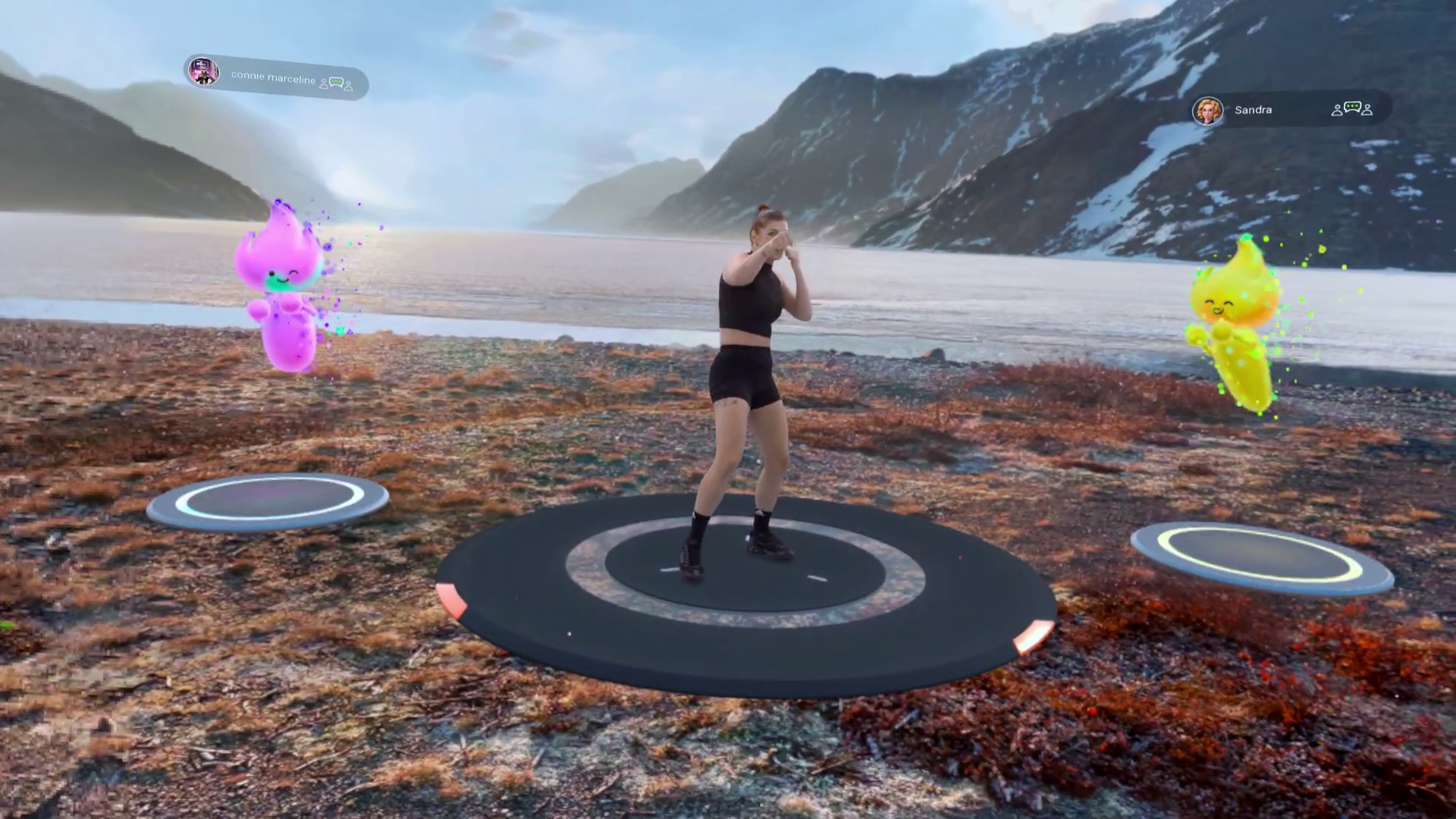
FunFitLand is the latest VR fitness app to introduce a multiplayer mode on the Meta Quest platform. While it follows a familiar formula, it implements it in a way that feels authentic to FunFitLand’s unique personality.
0:00
/0:23
FunFitLand Multiplayer Trailer. Video: FunFitLand
Your Workout, Your Choice
All of FunFitLand’s workouts can be played in multiplayer mode, which include CombatFit (boxing), GrooveFit (dance), SwingFit (flow with bats), FlowFit (zen, tai-chi inspired movement), and even Space (meditative virtual environments with no workout).
This gives users a wide variety of experiences that can be tailored to their specific mood. Want to hit something hard? Dial up some CombatFit (which I consider to be the best-executed VR rhythm boxing workout). Want to just chill and chat, maybe for a cool-down? Choose a Space and hang out together.
This gives FunFitLand a social component that is missing in other VR fitness apps. The space to make social connections and chill together adds a depth to an app that is seeking to become a wellness destination as well as a fitness program.
FunFitLand multiplayer mode. Photo: FunFitLand
Late To The Party? No Problem.
Another problem that FunFitLand has solved is the lobby issue: when you want to play multiplayer, but no other users are online for multiplayer at that time. In other VR fitness apps the multiplayer workouts are only available once a group has assembled. In FunFitLand’s implementation, a user can start an open room by themselves, begin a workout, and others can join along while the session is in progress. Up to three users can join a session.
When I spoke with FunFitLand founder Dr. Meng Zhang, he explained that his team worked hard to solve the technical challenge of allowing new users to join a workout already in progress. “So the team spent like three weeks doing only one thing. The thing is, can I join you exactly at where you are? Even you are at the very last five seconds on cooldown, I’m there.”
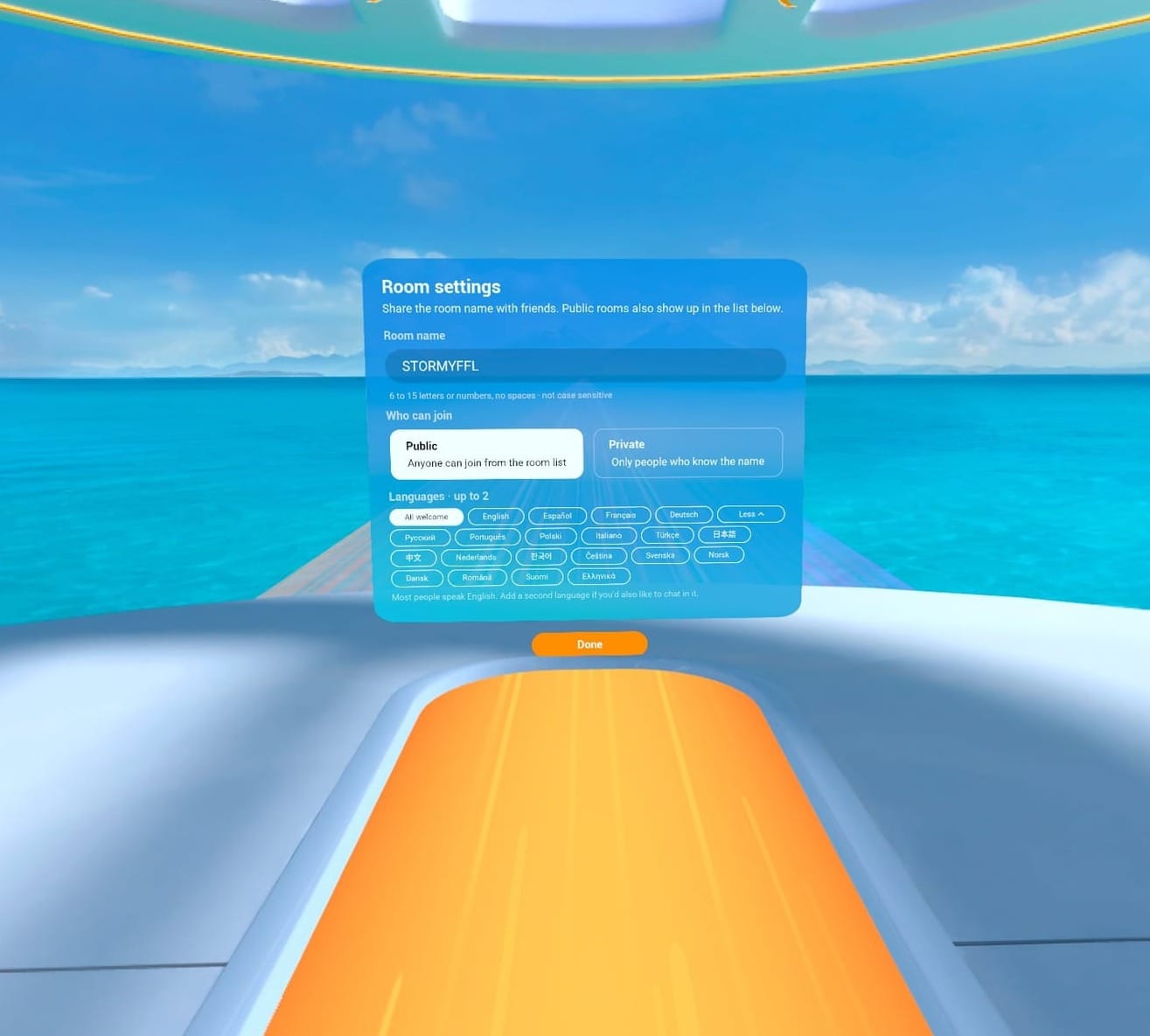
Multiplayer menu. Photo captured by the author.
His team has also taken steps to accommodate their global user base. Language tags can be attached to rooms, letting users know if others can speak their language.
“It’s a place that you can meet different people. And not just people from Europe or the States. It’s like everywhere, every single corner of this world. It’s beautiful to connect with people in different cultures, speaking different languages.”, Zhang said.
Language selector. Photo captured by the author.
Avatars That Can Reflect Your Mood
FunFitLand leans into its quirky, inviting personality with its unique take on multiplayer avatars. They offer a range of head shapes and “faces” for the cute cartoon avatars, as well as customizable color accents.
Zhang explained that they designed the avatars to reflect how users are feeling, and give the ability to change it up with their mood. “We encourage you to have more than one avatar that fits you best on that day, for your mood”, Zhang told me.
The privacy afforded by avatars, a major advantage of VR workouts for some users, allows users to work out with abandon without feeling self-conscious. Other fitness apps have implemented various avatar solutions; FitXR uses Meta avatars, while the legacy version of Supernatural used “fuzzy” body models to represent the users. The new version of Supernatural has not revealed their multiplayer mode yet.
Avatar customizations in FunFitLand multiplayer mode. Photo: FunFitLand
Zhang said that the avatar design was the result of many rounds of feedback from both FunFitLand’s internal team and external beta testers from the app’s Facebook community.
In practice it works exceedingly well. The ability to change my avatar shape, colors, and “face” to reflect my mood that particular day is a fun bit of whimsy.
Multiplayer In The Round
Another unique feature of FunFitLand’s multiplayer implementation is the inclusion of multiple target lanes, with up to 360º of movement. The details matter here: when the side lanes open and send targets, your workout partner’s avatar turns translucent, allowing a clearer view of incoming targets. That translucency was also a result of user testing and feedback, according to fitness coach Mike Pistilli.
It’s subtle, works well, and if Pistilli didn’t call it out during our multiplayer workout beta test session, I might not have noticed right away.
Another great convenience feature is the inclusion of a “skip cooldown” option, great for stacking group workouts back to back.
0:00
/0:31
Shifting lanes in multiplayer mode. Video: FunFitLand
A Place You Come Back To
FunFitLand’s multiplayer represents a big step toward its founder’s vision to build something meaningful that connects people through exercise, mindful movement, and supportive community.
Zhang says there is more to come in the future. Describing his vision for the multiplayer mode, Zhang said, “It’s like serving as the thread, connecting the dots. It’s just a very critical piece that enables a lot of magic to happen.”
FunFitLand is available on Meta Quest with a free download, with subscriptions to the service available for $9.99 monthly or $99.99 annually.
Before AI ran rampant through the technology market, cloud storage was the new, big thing, as it seems like every major company has its own cloud service.