
After Microsoft’s global email outage, open source rivals say the real problem is putting everything in one basket.
Monthly Archives: November 2026
Shotcut 26.11 Open-Source Video Editor Adds Camcorder Viewfinder Animation
The Shotcut 26.11 release introduces support for rectangle parameters to the experimental add-on filter UI generator, including a player overlay control (VUI), a camcorder viewfinder (recording) animation, and a search field to Elements.
Just 400 US Data Centers Use More Electricity Than Michigan
An anonymous reader quotes a report from Wired: Just 400 hyperscale data centers connected in the US used as much electricity as the state of Michigan in a single year, new Harvard research has found. The study, published Monday in Nature Sustainability, also finds that the majority of that electricity was generated using fossil fuels, and data center emissions are three times higher than they were before the AI boom. Federal and state governments do not track data center use separate from the rest of the power sector, despite mounting projections that data centers are putting serious strain on the American power grid. Individual data centers’ power use is often considered proprietary business information, and data center operators and utilities do not have to disclose specific numbers to the public.


The Harvard study specifically focuses on hyperscale data centers — the largest types of facilities, which have become flashpoints in community opposition across the country. While often used for AI inference or training, not all of the hyperscalers surveyed in this study are being used for AI. […] To assemble their dataset, the Harvard researchers put together a list of 403 hyperscale data centers around the country that were operational between May 2024 and April 2025 using a mix of industry research and satellite data. The team then modeled these facilities’ energy use in a variety of scenarios and calculated the energy mix of the regional grids to estimate individual facilities’ carbon emissions. Not all regions were created equal: Data centers in Virginia, Oregon, Ohio, and Iowa — the first of which is home to Data Center Alley — were responsible for more than 50 percent of the energy use in the study. The report notes that these findings may already be outdated. “Some of the massive campuses being proposed today are substantially larger than the typical facility in our dataset,” says Gianluca Guidi, a postdoctoral research fellow at Harvard’s T. H. Chan School of Public Health and the lead author of the study.
The study also excludes onsite power generation, a rapidly growing trend that BloombergNEF estimates could increase overall U.S. emissions by 10% if all proposed projects are built.
Read more of this story at Slashdot.
Rocky Linux 10.3 Released with Kernel 6.12, GCC 16, and Security Updates
Rocky Linux 10.3 is out with Linux kernel 6.12, GCC 16, updated development tools, and security improvements.
Meta is testing Direct, a standalone messaging app for Instagram
Meta’s new DM app for Instagram is only available in Turkey and Thailand, for now.

AMD ROCm HRX’s Loom 0.2 Expands C++ Support, Improved Targeting
AMD ROCm’s HRX Loom as the compiler, runtime, and serving infrastructure for supporting AI agent workflows is out today with a new version…
Buying a used phone? Make sure to check the IMEI first
One of the most important parts of buying a used phone involves the device’s IMEI number – which can reveal whether it has sketchy history and more.

Whether it’s Black Friday or a CEO scandal, NVIDIA GPUs just don’t get deep discounts
Hoping the Jensen Huang fallout means cheap RTX cards this Black Friday? Here’s what’s really driving GPU prices and why deals may be hard to find.

JPMorgan Chase Glitch Disrupts Online Banking Across Major US Banks
A software bug at JPMorgan Chase has disrupted online banking services Monday, triggering transaction delays for thousands of customers at Chase and other major U.S. banks. “JPMorgan Chase has experienced a temporary issue related to a software bug in an on-premise hardware system — it is not cyber-related,” said Joe Evangelisti, spokesman for the bank. “This is not a systemic issue — other banks may have been impacted by slowness in transactions only to the extent that they were a party to a transaction with us,” he added. The Associated Press reports: Monday’s technical issues seem to be centered at Chase customers and customers at other banks trying to transact with Chase. Those banks, including Bank of America and Citigroup, were not having issues with their banking services. A spokesman for U.S. Bank said its systems are not directly impacted but that “clients attempting to send or receive Zelle payments with another financial institution may experience transaction delays.” Developing…


Read more of this story at Slashdot.
The important Gmail security settings you should be using
If you haven’t taken steps to secure your Gmail account recently, it’s time to log in and make sure these settings are squared away.

The charging mistakes that could ruin your Nintendo Switch’s battery
To avoid turning your Nintendo Switch into just another stationary console, there are a few common and easy-to-overlook charging mistakes you’ll want to avoid

Turn your Raspberry Pi into a classic games machine
Make use of Raspberry Pi’s ability to run emulation software to replicate a wide range of classic consoles and computers.
How to put your iPad in recovery mode (with and without a home button)
A failed update or too many wrong passcodes can leave your iPad unusable. Find out how recovery mode works and when it’s worth trying as a last resort.

FBI Says Artex AI Open-Source Hacking Tool Used to Breach Networks In ‘Under Three Hours’
The FBI is warning (PDF) that hackers are using the AI-powered penetration-testing tool Artex to compromise networks in “under three hours” in some cases. The tool has been linked to attacks against South Korean financial institutions, at least 2,250 ConnectWise customers and Barracuda. TechCrunch reports: Artex is one of several open-source AI-powered penetration testing platforms, a category of software built to probe a network’s defenses. Hackers can connect Artex to hosted frontier large language models (LLMs) like those from Anthropic and OpenAI, as well as to open-source models and non-U.S. models. The FBI says Artex intrusions can be “noisy,” meaning they generate reams of traffic and data that may trigger a targeted company’s defensive alerts. But the tools allow hackers to move at speeds that makes it far more harder for human defenders to keep up.


In some cases, Artex-linked attacks can move from targeting a system to active compromise “in under three hours.” Oftentimes, Artex will rely on rapidly scanning a victim’s network to look for signs of weakness, and then exploit simple security bugs, such as weak protections and exposed or stolen passwords to gain a foothold. From there, Artex allows the hacker to spread across the network for databases, mailboxes, and other sensitive information. […] After Artex was used in cyberattacks, the tool’s developer made the software closed-source to prevent further attacks. But the FBI says the previous open-source version continues to circulate and remains “widely accessible” for use in cyberattacks.
It’s not only companies and targeted victims that have been compromised as a result of weakened security exploited by AI tools; the tools themselves have been exposed as well, potentially allowing outsiders to access powerful hacking capabilities. Last week, researchers found hundreds of publicly exposed Artex systems online, which had been placed on the internet without a password, likely by mistake or misconfiguration — including the Artex system that was used to target South Korea.
Read more of this story at Slashdot.
United Airlines is experiencing a ‘widespread system outage’
United is apparently experiencing a major outage just days after a nationwide ground stop halted thousands of flights.

A Ton Of Big Blockbuster Games Are Already On Sale For Black Friday 2026
Marvel’s Wolverine is already $20 off
10 Books Like ‘Dungeon Crawler Carl’ You Should Read Next
We may earn a commission from links on this page.
There’s nothing quite like Dungeon Crawler Carl, Matt Dinniman’s hilarious, inventive, and surprisingly emotional book series about a man in his underwear forced to fight his way through a livestreamed game show based on dungeon-crawling video games that takes place after an alien takeover of Earth. (Did I mention he’s accompanied by his ex-girlfriend’s suddenly talkative cat?)
The premise should not work, but it sure does—and it makes more sense if you know it fits into a popular genre known as “LitRPG,” a blend of “literature” and “role-playing game.” If you’ve torn through all eight books released so far and you’re looking for more reads that blend surprisingly deep hilarity with tabletop and video game rules (or just similar feels), here are 10 books you should check out.
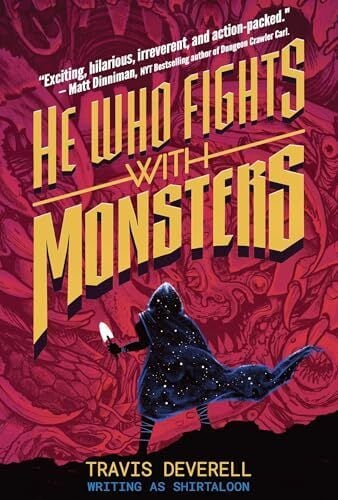
He Who Fights with Monsters, by Travis “Shirtaloon” Deverell (2021)
An isekai story that lands in the sweet spot for DCC fans, He Who Fights with Monsters kicks off with Jason—a completely normal, kind of boring middle manager—waking up in a strange hedge maze, completely nude (even his hair is gone). He has magic that works like a video game, and has to deal with quests that slowly give him clothes (it’s a relief when he finally acquires some pants), force him to survive cannibals, and hunt down various monsters that definitely need killing. It’s got the same “gaming rules” structure as DCC and a similarly absurdist tone, with just the right spice of darkness.
Unsouled, by Will Wight (2016)
The Cradle series by Will Wight isn’t a LitRPG, and it doesn’t have Carl’s focus on humor, but it’s another progression fantasy with enough game-like elements to be a great match. Lindon is an “unsouled,” incapable of gaining any of the sacred arts and doomed to a life without a future. His lack of power makes Lindon ferociously determined to find an alternative path to power and success, and that’s what drives this story. He has to find creative ways to move forward, and slowly this leads him to a path that just might make him the most powerful person in his world. DCC fans will love the progression and the tone.

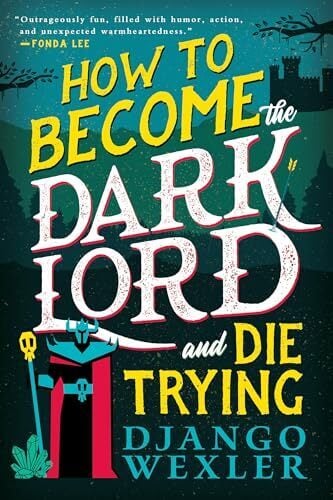
How to Become the Dark Lord and Die Trying, by Django Wexler (2024)
One of the key elements of any video game is the respawn—you get killed, but you pop back up to try again, sometimes at the beginning, sometimes at a save point. Django Wexler leverages that mechanic to great effect in How to Become the Dark Lord and Die Trying. Davi has been summoned to a fantasy world to be the hero, the person who defeats the Dark Lord and saves the day—but she’s failed (and died) so many times, she’s fed up, and decides that on this run through, she’s going to switch sides and become the Dark Lord, using all her knowledge gained from endless replays to her advantage. The humor is pitch-black the way DCC fans like it, and the progressive structure is a perfect fit.
Threadbare, Vol. 1: Stuff and Nonsense, by Andrew Seiple (2018)
Is Princess Donut your favorite part of Dungeon Crawler Carl? Of course she is. In that case, check out Andrew Seiple’s Threadbare series. Threadbare is a stuffed bear brought to magical life in a failed experiment. He’s a foot tall, full of stuffing, and extremely dumb when the story begins. But when he’s rescued by a little girl and plunged into a horrible series of dangers, Threadbare has to find a way to level up. Like DCC, Threadbare starts off leaning into the absurdity and humor, then slowly gains emotional gravitas as the story progresses.

Something: Full Murderhobo, by Dakota Krout (2020)
If you play tabletop RPGs, you’ve encountered a Murderhobo or two: A character who solves all their problems by killing—even members of their own party. Luke doesn’t aspire to be a Murderhobo—he just wants to take over the family business and hang with his buddies. But when an invasion threatens the kingdom, everyone over the age of 17 is ordered to be tested for Potential. Luke’s friends all test high and join the Ascender Corps, traveling to different planes for training. Luke tests … very low, and when he steps through a portal to engage in his training, he finds himself without any guidance or training in a strange, deadly world where his only chance of survival is to murder his way through it. It’s dark, darkly funny, and a progression fantasy like no other.

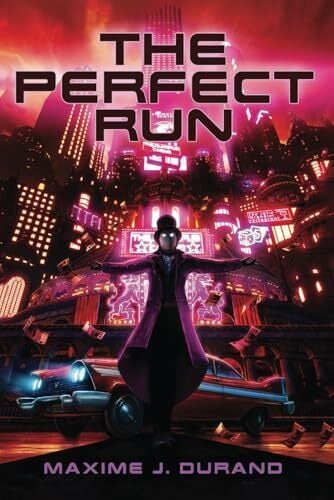
The Perfect Run, by Maxime J. Durand (2021)
If you’re looking for a book series that combines the dark, chaotic humor, absurd game mechanics, and surprising emotional depth of Carl, here’s Ryan “Quicksave” Romano, a man who has the unique ability to literally create a save point in his existence that allows him to go back and redo things whenever he dies. Searching for a childhood friend, he becomes embroiled in a violent gang war that lets him make good use of his power—but underneath the snark and the insanity of Ryan’s existence is a surprisingly affecting story of a man who has suffered, and suffered countless tragedies that are definitely taking their toll.
We Are Legion (We Are Bob), by Dennis E. Taylor (2016)
If your fave bit of DCC is Carl himself—a mediocre dude in an extraordinary situation—you should read Dennis E. Taylor’s fantastic Bobiverse books. Bob is a software engineer who hits it big and promptly dies, waking up to discover a century has passed and he’s been repurposed as an AI controlling a space probe searching for new planets for humanity to inhabit. If he fails in his mission (and he’s not the only probe out there), he’ll be turned off for good. Luckily, he can make copies of himself, and he’s pretty smart. The humor here is smart and soaked in pop culture, making it a perfect match for DCC fans.

Mayor of Noobtown, by Ryan Rimmel (2026)
Want more of Carl’s absurdist humor? Mayor of Noobtown is the LitRPG you’re looking for. Jim dies and wakes up in a video game-esque universe and finds himself stuck in the zone designated for newbies—players with no experience, skill, or hope. The area fell out of the mainline progression mechanic a long time ago, so there doesn’t seem to be a way to gain power, and the monsters are not at all concerned about the unfairness of it all, so Jim has to figure out how to advance in a universe that seems designed to kill him (again).

Scathing Reviewer, by BananaDragon (2025)
If you want to lean into the meta side of things, check out Scathing Reviewer, written by an author who goes by the unusual pen name “BananaDragon.” Liu Peijin is the author of a sprawling LitRPG web novel, and she’s used to the bad reviews and complaints from readers—and quite combative about it. When her books’ universe blossoms into a very dangerous new reality, she should be perfectly positioned to survive, having written the story in the first place. But her story becoming real also means her insufferable protagonist is real, and all those nasty critics are now passing judgment on her entire existence. It’s a dark, funny takedown of the entire genre itself, and DCC fans will love it.

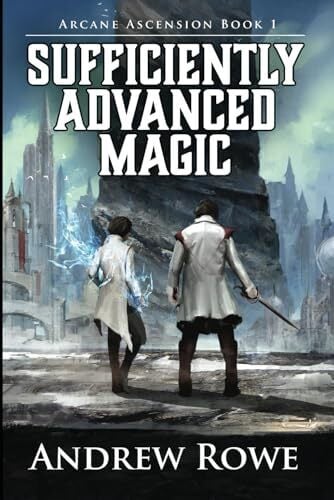
Sufficiently Advanced Magic, by Andrew Rowe (2017)
If you want a story that parallels the dungeon crawling aspect of DCC, Andrew Rowe’s Arcane Ascension series is the ticket. The Serpent Spire is a tower of constantly changing traps, puzzles, and dangerous creatures. If you enter and survive, you emerge with magical powers. Corin Cadence’s brother entered the Serpent Spire years ago and never returned—and now Corin is determined not only to survive, but to make it to the top, where legend says a goddess will grant you whatever you wish. And what Corin wants is his brother back. It’s a literal progression combined with LitRPG rules, game-inspired puzzle-solving, and a complex magic system that fans of Carl will definitely enjoy.
Microsoft Outage Leads To Chlorine Gas Poisoning At German Theme Park
Slashdot readers djgl and Mirnotoriety shared a story about how a Microsoft Outlook outage contributed to a chlorine leak at Germany’s Phantasialand theme park, injuring 15 guests, four of whom were hospitalized. German broadcasting institution WDR reports (translated to English): We were all affected by this problem: On Friday, there was a disruption that crippled the US software company Microsoft, including its email program Outlook. Phantasialand was also affected. Due to the disruption, no emails were received, as the company informed WDR on Saturday. As a result, no one was aware that the sauna area’s maintenance safety system had already issued an email alert. This was because the automatic dosing system had pumped too much chlorine into the pool.


Guests at the Hotel Ling Bao in Phantasialand, Bruhl, were injured as a result. They complained of health problems after visiting the pool. The pool was temporarily closed but has since been reopened, as the fire department informed WDR on Saturday. Due to complaints from hotel guests, emergency services and the fire department were called. Thirteen guests complained of respiratory irritation; ultimately, the number of affected individuals rose to a total of 15. Cybersecurity architect and computer scientist Stephan Skrobisch said Microsoft is not responsible for the incident. “It’s clearly the system’s design that’s the problem. They failed to implement an additional notification mechanism.”
Slashdot reader davidwr agrees, writing in a comment: “Proper alarms would be a hardwired alarm that would be visible or audiable to someone who was on-site who could’ve gotten everyone out of the water. The blame for the injuries goes to the water park and/or whatever consultant told them it was okay not to have an on-site, hardwired alarm.”
Read more of this story at Slashdot.
Every Xbox console generation sorted by release date
Microsoft debuted the Xbox in 2001, and there’s quite a lot to look back on from the quarter-century since the company got into gaming.

Hyperscale data centers use 2% of US electricity
One flashpoint for the tech industry’s all-in push on Large Language Models has been the sudden rush to turn investment money into hyperscale data centers. The rush hasn’t allowed anyone to plan how to supply the required electricity cleanly or with minimal impact on ratepayers. Instead, it has been difficult to even collect information on what’s being built.
A new study has tallied up energy use and estimated emissions for hyperscalers operating between May 2024 and April 2025 in the United States. They weren’t able to differentiate between AI compute and more traditional data services, but it provides a clear point of reference that could be tracked moving forward.
Finding the centers
The team started with a list of 675 facilities from a commercial database based on news reports, company statements, and satellite imagery. They dropped any that didn’t have a reported electrical capacity or that they couldn’t verify was a suitably large building with the expected cooling and electrical connection equipment. That reduced the list to 403 data centers with an average electrical capacity of about 40 megawatts.