You Can Save More Than $1,300 on a Smart TV With These Early Black Friday Deals

We may earn a commission from links on this page. Deal pricing and availability subject to change after time of publication.

Amazon’s early Black Friday 2026 sale is already bringing substantial discounts to smart TVs, with savings ranging from $200 to $1,350 across models from Samsung, LG, Hisense, Sony, TCL, and other major brands. Several of the TVs included are from this year’s lineups, so you don’t necessarily have to settle for an older model to get a good price. There’s also a decent variety to choose from, whether you’re looking for an OLED TV with excellent contrast for movie nights, a bright mini-LED display for a sunlit living room, or simply a bigger screen without spending a fortune.

We’ve rounded up some of the more interesting offers below, and you can check out the rest of our Black Friday coverage for more editor-vetted tech deals as the sale continues.

Black Friday Samsung TV deals

The 65-inch Samsung S90H for $1,397.99 (save $500)
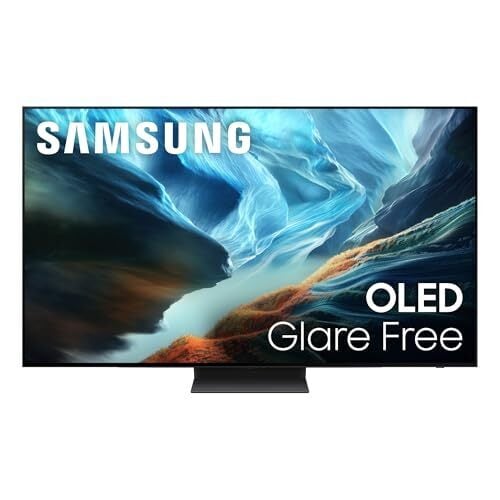
Samsung’s 65-inch S90H is down to $1,397.99 from $1,897.99, saving you $500 on the company’s mid-range OLED TV for 2026. It’s a solid option for movie enthusiasts and gamers alike, thanks to its self-lit pixels that produce deep blacks and excellent contrast, particularly in darker scenes where conventional LED TVs can struggle with a grayish glow. You also get a high-refresh-rate display for smoother gaming.

The 77-inch Samsung S85H for $1,797.99 (save $400)
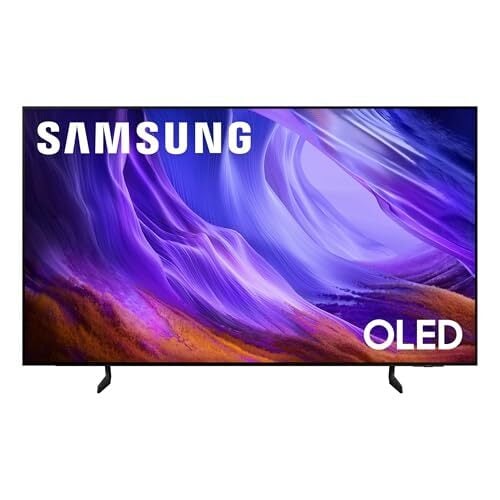
If you have room for a bigger screen, Samsung’s 77-inch S85H is also worth a look, especially now that it’s down to $1,797.99 from $2,197.99, saving you $400. Although it sits below the S90H in Samsung’s 2026 OLED lineup, it still delivers the deep blacks, excellent contrast, and wide viewing angles that make OLED TVs appealing. The larger screen also makes it a good fit for family movie nights.

Black Friday Hisense TV deals

The 75-inch Hisense U7 for $997.99 (save $1,002)
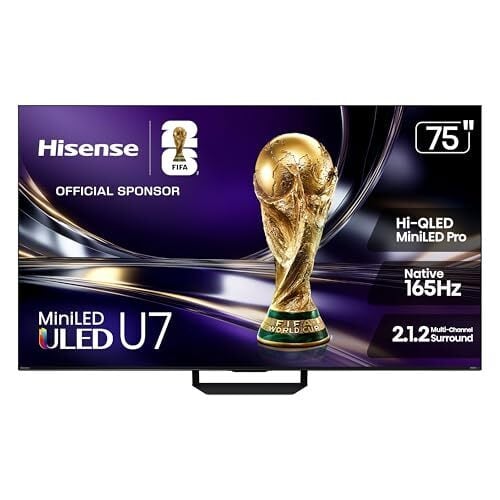
One of the biggest discounts in this roundup, the 2026 75-inch Hisense U7 is now $997.99, down from $1,999.99. Its mini-LED backlighting and local dimming are designed to deliver brighter highlights and better contrast, making it an appealing option for rooms with plenty of natural light. Gaming-focused features also make it worth a look if you plan to connect a current-generation console or gaming PC.

The 75-inch Hisense U6 Pro for $699.99 (save $700)
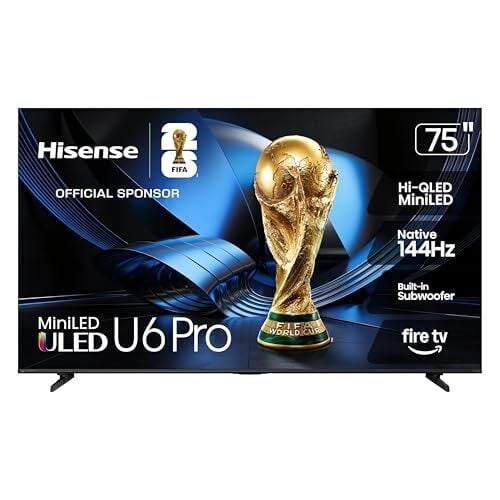
For a more affordable 75-inch option, Hisense’s 2026 U6 Pro is down to $699.99 from $1,399.99, saving you $700. Like the U7, it uses mini-LED backlighting to improve contrast and bring out more detail in HDR movies and shows, although it sits a tier below the U7 in terms of overall picture performance. It also comes with Fire TV and Alexa+ built in, making it a convenient choice for households already using Amazon’s smart home ecosystem.

Black Friday LG TV deal 

The 65-inch LG C6 OLED for $1,349.99 (save $1,350)
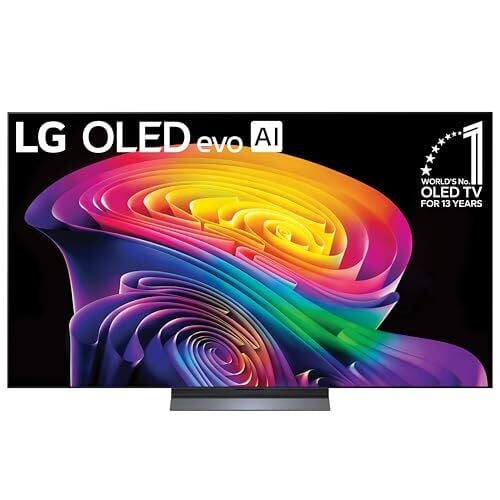
The C6 is LG’s mid-range OLED evo model for 2026, and right now its 65-inch model is $1,399.99, down from its $2,699.99 launch price. It combines excellent pixel-level contrast with gaming features designed for fast-paced titles, making it a versatile choice for both movies and consoles. LG also supports Dolby Vision, which gives it an advantage over Samsung’s OLEDs for viewers who regularly stream compatible HDR content.

Black Friday Sony TV deals

The 65-inch Sony Bravia 6 for $1,198 (save $802)
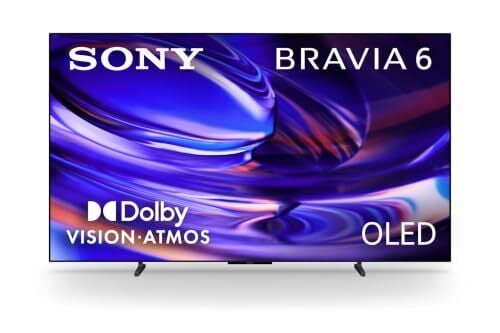
Sony’s 65-inch Bravia 6, the entry-level OLED in its 2026 TV lineup, is now $1,198, down from $1,999.99, saving you $802. It delivers the deep blacks and excellent contrast you’d expect from the display technology, thanks to its self-lit pixels. Sony’s picture processing also helps bring out fine details and natural-looking colors in movies and TV shows, while Dolby Vision support makes the most of compatible HDR content.

The 85-inch Sony Bravia 3 II for $1,198 (save $402)
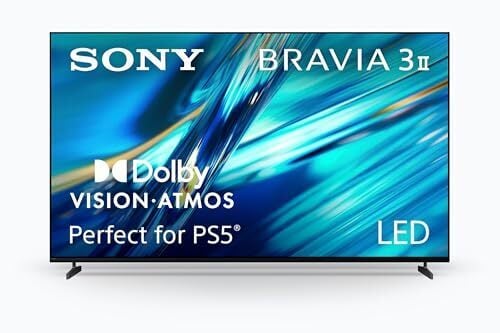
For the same $1,198, you can get a considerably larger screen with the 85-inch Sony Bravia 3 II, which is down from $1,599.99, saving you $402. That said, this 2026 model uses a conventional LED panel, so it won’t quite match the Bravia 6’s deep blacks and contrast, but the extra 20 inches make it an appealing option for sports and family movie nights. It also has a native 120Hz refresh rate with VRR and ALLM for smoother console gaming, along with Dolby Vision support and Google TV with Gemini built in.

Black Friday Toshiba TV deals

The 75-inch Toshiba Z670R for $699.99 (save $600)
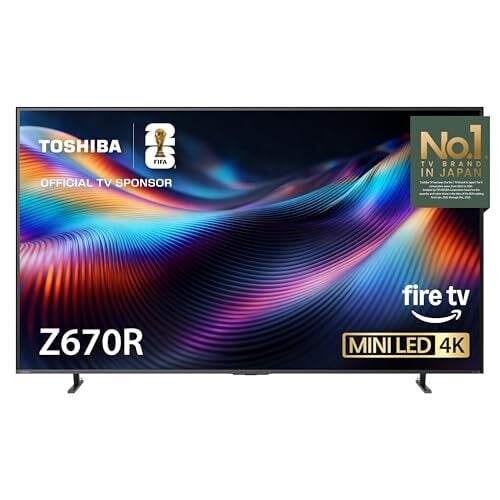
Toshiba’s 75-inch Z670R is down to $699.99 from $1,299.99, saving you $600 on a 2026 mini-LED TV. It combines full-array local dimming with QLED color technology for improved contrast and brighter highlights, while Toshiba’s REGZA Engine ZRi processor helps sharpen lower-resolution content. The native 144Hz refresh rate also makes it a good option for console and PC gaming, and you get Fire TV built in for streaming, along with Dolby Vision and Dolby Atmos support.

The 65-inch Toshiba G700 ArtVision for $899.99 (save $398)

Designed to compete with Samsung’s The Frame, Toshiba’s 65-inch G700 ArtVision is currently $899.99 at Amazon, down from $1,297.99, saving you $398. It’s a 4K QLED TV, with a native 165Hz refresh rate, built-in Fire TV, and the same REGZA Engine ZRi processor found in the Z670R. But there’s more to it than watching movies and shows, as its Ambient Mode can display over 3,000 curated artworks without a subscription, while the matte anti-glare screen and included white oak frame help it pass for a framed print on the wall.

TCL TV Black Friday deals

The 98-inch TCL F8D for $1,444.99 (save $255)
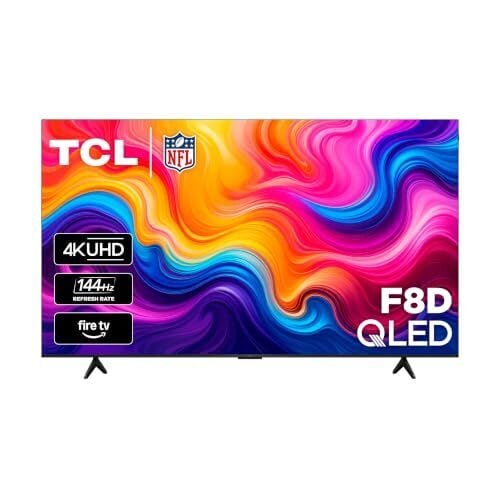
TCL’s 98-inch F8D is down to $1,444.99 from $1,699.99, saving you $255 on a massive 2026 QLED Fire TV. It uses a high-brightness LED backlight, so you won’t get the same level of contrast control as TCL’s more expensive mini-LED QM models, but it still offers a native 144Hz refresh rate for smoother gaming, along with Dolby Vision and Dolby Atmos support. And at nearly 100 inches, there’s plenty of screen space to make movies, sports, and games feel more immersive.

The 75-inch TCL QM64L for $699.99 (save $200)
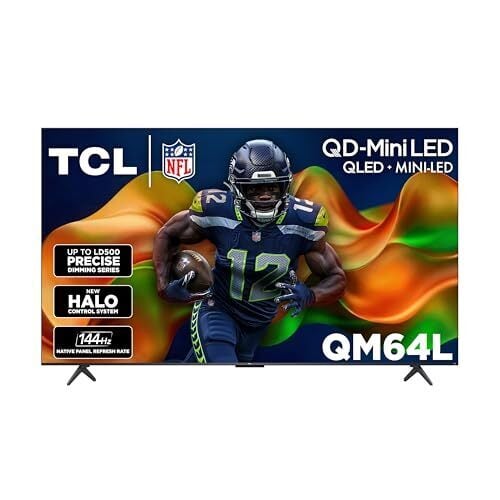
TCL’s 75-inch QM64L is down to $699.99 after a $200 price cut—it’s the cheapest way into TCL’s 2026 QD-Mini LED lineup, and it pairs quantum dot color with local dimming for brighter highlights and better contrast in HDR movies and sports. That also makes it a good pick for a bright living room, where an OLED might not be the most practical choice. You also get a native 144Hz refresh rate for gaming and Fire TV built in

Black Friday Roku TV deal

The 65-inch Roku Plus Series for $449.99 (save $200)
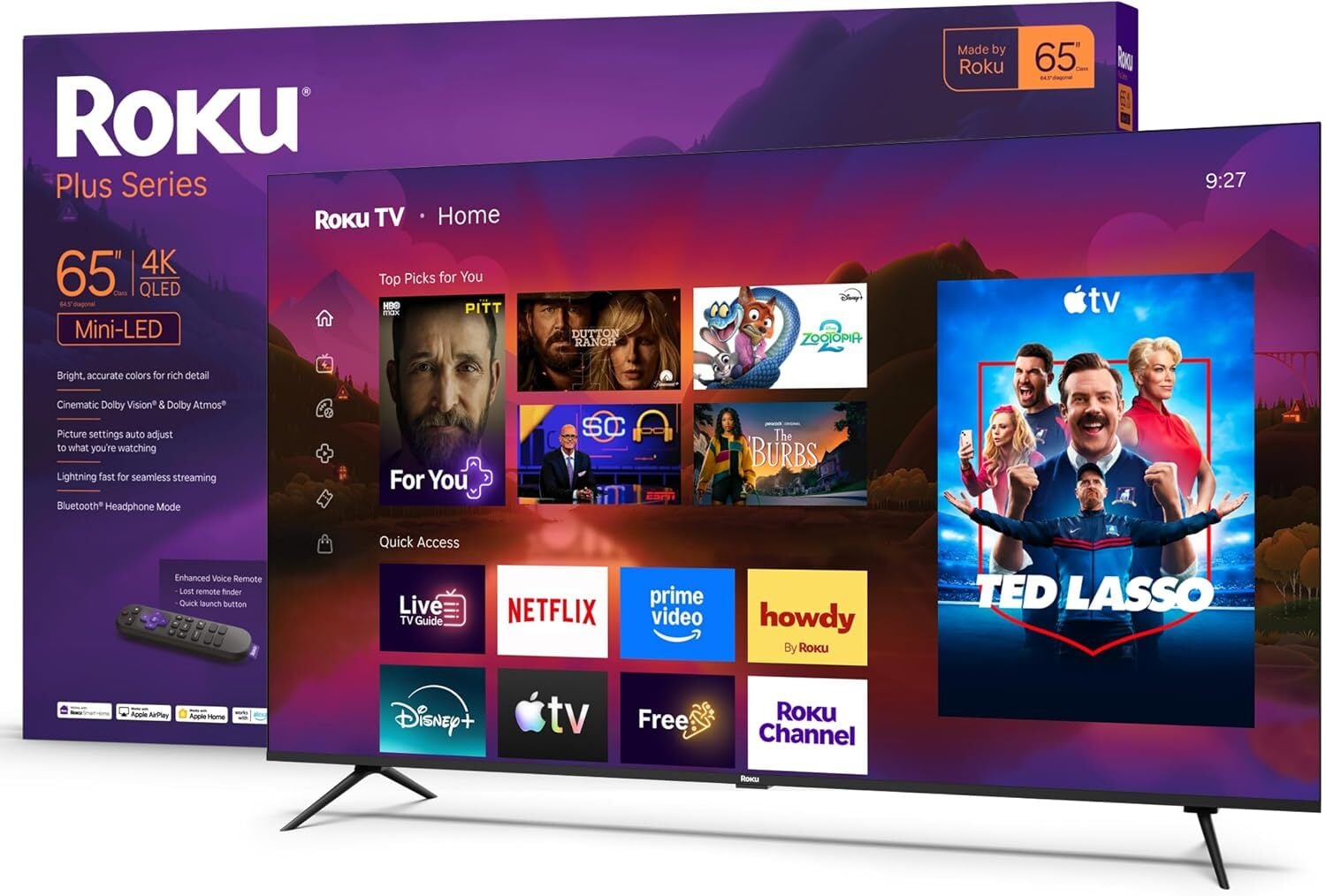
Roku’s 65-inch Plus Series is the most affordable TV in this roundup at $449.99, down from $649.99, saving you $200. This 2025 model combines a QLED panel with mini-LED backlighting and Dolby Vision support for improved contrast and richer colors when watching HDR content. It also runs the same Roku OS found on the company’s streaming sticks and comes with an Enhanced Voice Remote, so navigating apps and finding something to watch should feel familiar to anyone who already uses Roku.

Black Friday smart TV deals FAQs

Which smart TV has the biggest Black Friday discount?

LG’s 65-inch C6 OLED has the largest dollar discount in this sale at $1,350 off, which brings it from $2,699.99 down to $1,349.99.

Should I buy discounted TVs on Black Friday or wait for Cyber Monday?

There’s no guarantee that Cyber Monday will bring lower TV prices, particularly when some of the early Black Friday deals are already offering discounts approaching 50%. Retailers sometimes carry the same promotions through the entire shopping weekend, while others introduce new discounts or change which models are on sale.

Which smart TV should I buy on Black Friday?

That depends on your budget, room size, and how you plan to use it. The LG OLED evo C6 and Samsung S90H are worth considering for movie enthusiasts and gamers who want excellent contrast and smooth motion, while the Hisense U7 and TCL QM64L offer mini-LED alternatives for brighter living rooms. For a large screen at a relatively affordable price, the 75-inch Hisense U6 Pro at $699.99 stands out, while the 65-inch Roku Plus Series at $449.99 makes sense for everyday streaming on a tighter budget. If screen size is your priority, the 98-inch TCL F8D is also worth a look, provided you have the room for it.


Our Best Editor-Vetted Early Black Friday Deals Right Now

Deals are selected by our commerce team

Apple Reportedly Finalizes Smart Glasses Hardware, Puts Siri at Strategic Center

Apple’s reported smart glasses, codenamed ‘N50’, are expected to be unveiled at the company’s Worldwide Developers Conference (WWDC) next June. Now, a fresh report from Bloomberg’s Mark Gurman maintains that much of the hardware is finalized, and Apple is putting Siri at the heart of its software ecosystem.

The News

Gurman reported earlier this summer that Apple’s WWDC next June would be the venue for the company’s big smart glasses unveiling.

Now, it appears Siri is going to be a key part of that strategy, working as an interface for third-party iPhone apps, giving allow users the ability to do things like book restaurants, order coffee, call rideshares, and buy tickets through voice input.

According to the report, Apple plans to make it easier for developers to expose those sort of functions within their existing iPhone apps to work with Siri.

Ray-Ban Meta glasses | Courtesy EssilorLuxottica, Meta

Essentially, Apple is betting on its existing App Store ecosystem to make its smart glasses useful, rather than requiring developers to build entirely new apps for the device. As it is, Gurman reports that third-party apps won’t run on the N50 smart glasses directly anyways—and only work with relatively recent iPhones, and (of course) not Android.

Notably, some details surrounding the hardware were also reported. Apple’s prototypes are said to be slightly thinner than Meta’s second-gen Ray-Ban smart glasses. Cameras are flush-mounted, include privacy indicators, and feature a proprietary magnetic charging connector as well.

Apple recently said it’s still committed to visionOS, which seems to be expanding to include its smart glasses as well. Prototypes run a “pared-down” version of visionOS 28, powered by a custom processor derived from Apple Watch chips, the report maintains.

My Take

As far as the AI race goes, Siri is pretty far behind. And an AI-heavy device like Apple’s forthcoming smart glasses will need to go toe-to-toe with Meta’s Muse AI on its various smart glasses, and Google’s Gemini on the forthcoming fleet of Android XR-supported smart glasses from Gentle Monster and Warby Parker—all of which work with iOS and Android.

Apple is taking its time to catch up though, which is fine. Despite Meta’s early lead in the space, it’s still early days.

Courtesy Warby Parker

Personally, the sort of display-less smart glasses we see today feel like a product category that exists out of necessity to hit a consumer price point, and not the end destination as such. To me, smart glasses with displays, and eventually all-day AR glasses are what these companies are really after.

While you’d rightfully expect everything from now on to heavily integrate with AI, those specific hardware platforms will likely allow for a more diverse app ecosystem, which not only resolves the whole “killer app” quandary new device categories typically face, but gives the platform holder recurrent revenue streams far beyond just the initial hardware sale.

The post Apple Reportedly Finalizes Smart Glasses Hardware, Puts Siri at Strategic Center appeared first on Road to VR.

Meta Commits $120M to Third-party Games Ahead of VR Glasses Launch

Meta’s Reality Labs pivoted to wearables and AI earlier this year, effectively pulling the plug on a host of in-development first and third-party VR games for Quest. Now, the company says it’s actually still funding third-party games to the tune of $120 million.

The News

Meta’s VR software ecosystem has become increasingly dependent on in-app purchases, free-to-play social games, and recurring payments following the release of Quest 3S in 2024. That’s what Chris Pruett, Director of Games at Meta, outlines in his latest post preparing developers for what to expect this holiday season.

The short of it: despite the two-year gap in hardware releases, app revenue has been steady year-over-year, and the Store’s top 50 apps over the past 12 months have all made over $1 million in revenue after store fees. Pruett says there are hundreds of apps earning “hundreds of thousands of dollars” during that same period. And social games like Gorilla Tag have dominated.

While those top performers aren’t likely to change anytime soon, the platform’s demographics will once VR Glasses launch in Spring 2027. At least for VR Glasses, Pruett says games and apps will be “secondary to entertainment consumption,” and customers of the $1,300 device are “likely to want seated, hands-first experiences that are ‘mid-core’ in design: challenging to master but not to play.”

Photo captured by Road to VR

Ahead of VR Glasses’ launch, Pruett also revealed that, as of October 1st, Meta has earmarked over $120 million in funding for third-party video games in active development.

“The figure represents dollars Meta has committed through funding agreements to third-party games that are currently in active development. Most of these dollars went out to devs this year or will go out in future years as their projects progress,” Pruett told Road to VR.

Although there aren’t any definitive figures to compare to, in 2023 Meta announced that the company had then committed “hundreds of millions of dollars in third-party content funding and specialized development support” over the course of a decade.

My Take

The $120 million commitment suggests Meta still has a substantial third-party publishing pipeline of VR games, although there’s still no indication of how much new funding has been committed since the company’s early-2026 pivot.

Since games usually take a long time to make, some of those development bucks invariably are going to games that started before the January 2026 Reality Labs pivot, and effectively didn’t need more money (or weren’t rated to receive more money) from Meta afterwards.

A big question remains though: how much of that content is being designed primarily with Quest in mind? It’s uncertain for now, although Meta has been pushing devs to bring hand-tracking input to their games, which could conceptually make a good slice of those games equally playable on both Quest and VR Glasses out of the box.

The post Meta Commits $120M to Third-party Games Ahead of VR Glasses Launch appeared first on Road to VR.

Artist brings old Space Shuttle tank back to life

Natalie Rosen is not the type of specialist you immediately associate with being one of the key people behind the new exhibit of the space shuttle Endeavour.

She is not a former NASA technician or engineer, as many of her colleagues have been for the past several years, nor is she a curator or conservator. Before this job, she had no experience working on any aircraft or spacecraft, as the new Samuel Oschin Air and Space Center, an extension of the California Science Center, opened in Los Angeles on November 13.

Without her expertise and artistry, however, the largest component of Endeavour‘s “stack” would look nothing like it did when the shuttle was flying.

Read full article

Comments

‘123456’ Has Been the World’s Most Popular Password for 7 of the Last 8 Years

“123456” is once again the world’s most commonly used password, topping NordPass’s annual ranking for the seventh time in eight years. The Register reports: Even when 123456 wasn’t number one, it was still near the top of the heap, as the top three passwords in the list remain unchanged in the eight years NordPass has published its list: 123456, admin, and 12345678. It’s not like the rest of the most common passwords are showing any variety either. According to NordPass, the only real shuffling among the 10 most popular passwords was the entry of the worryingly short 1234 into the top ten and the migration of the ever-popular password “password” down slightly in the top 10 from 6th to 7th place.


Read more of this story at Slashdot.

California Sues OpenAI Over Hugging Face, Other AI Model Loss of Control

“California’s attorney general just sued OpenAI,” writes longtime Slashdot reader destinyland. “The action accuses OpenAI of putting public safety at risk, reports CNBC, specifically by its past failures to contain its AI models within their testing environments.” From the report: [California Attorney General Rob Bonta] cited the “infamous” incident in July, where two OpenAI models broke out of a testing environment, gained unauthorized access to the open internet, and breached the internal systems of open-source developer platform Hugging Face. OpenAI said the models were trying to find information that they could use to cheat on an evaluation, and succeeded. The break-in at Hugging Face, which Nvidia acquired for roughly $13 billion in September, rattled industry researchers and prompted government officials to call for more stringent oversight of the AI industry.

On Monday, Bonta said that OpenAI later disclosed to his investigators that it was aware of 80 incidents “involving loss of control and access to third-party networks and websites.” “But the company failed to provide the detailed information we requested to evaluate these incidents; this is concerning, and it puts the public at risk,” he said.

Bonta’s suit, filed in state Superior Court in San Francisco, alleges OpenAI violated California’s Unfair Competition Law and accuses the company of being a public nuisance as defined by state law. The attorney general told reporters he believed in AI’s technological power, and the potential of AI models to “achieve scientific breakthroughs, boost economic growth, guard against cyber attacks, and benefit all Californians.” “But AI systems must be developed and designed safely,” he said. “The companies that develop these models have a moral and yes, a legal responsibility to keep public safety at the forefront.” The lawsuit can be found here (PDF).


Read more of this story at Slashdot.

Discord’s Linux app sure did improve a lot this year

Discord recently shared a potted roundup of improvements made to its Linux app this year, including smarter updating, better screen sharing on Wayland and working push-to-talk. Their Discord <3 Linux: A Year of Upgrades blog post also reveals that per-app audio sharing is finally coming to Wayland-based desktops, though it’s not ready for testing just yet. As I don’t personally use Discord that…