
If you were curious how accurate the utility towers in Grand Theft Auto 6 the answer appears to be: Very
Monthly Archives: November 2026
Can My PC Run GTA 6? Minimum And Recommended Specs To Expect

If you’re wondering whether your PC can run GTA VI, at this moment, the answer to that question is unequivocally “no.” There is no PC release, and there’s no date for one, so until Rockstar launches the game—or the title gets a FitGirl repack
Street Fighter EX, Endless Ocean And Tetris 99’s Akira Kurabayashi Has Died At 56
Head of software development at ARIKA, the prolific Kurabayashi would help create some of the most cult-adored entries in gaming’s biggest series
New Report Claims Jensen Huang Regularly Threatened Nvidia Staff With Over-The-Top Violence
As the investigation into the exiting Nvidia CEO deepens, employees say Huang maintained a habit of outlandish threats, from dismembering limbs to brain urination
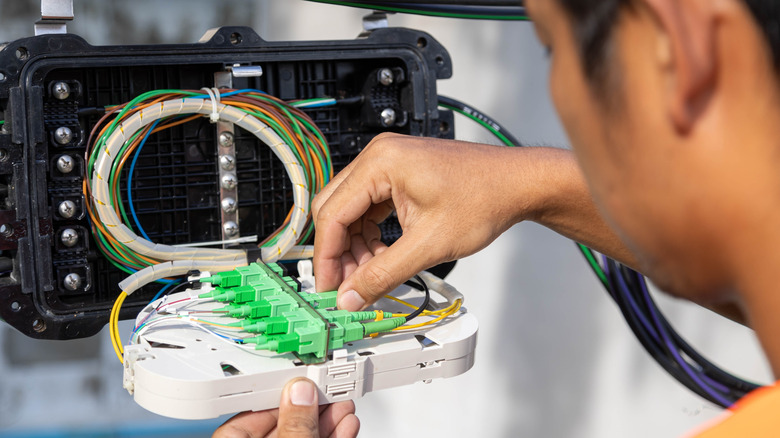
How long can fiber optic cables be before they lose signal?
Fiber optic cables can span your neighborhood or multiple continents, but there are limitations to this technology’s communication capabilities.
Two FIDO2 Security Keys on Fedora Linux 45
A follow-up on PIN and touch for encrypted storage and everyday authentication On my first day working with Fedora Linux 45, I wanted to see how far I could get without typing my account password during normal use. The goal was straightforward: use a physical FIDO2 security key, its PIN, and a touch to unlock…
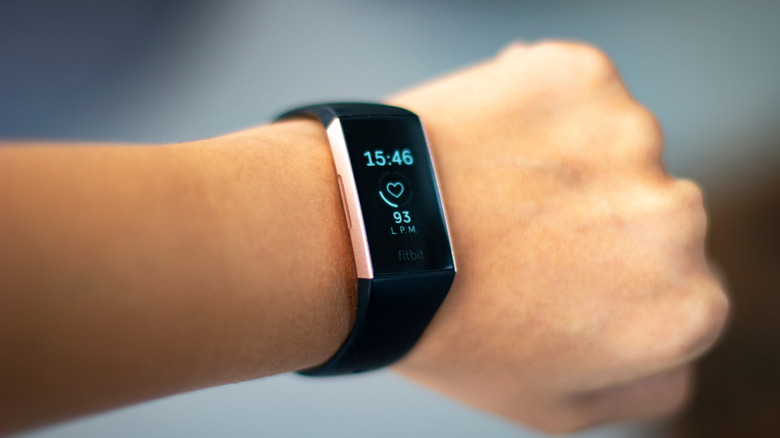
How to easily factory reset your Fitbit
There’s a difference between restarting and factory resetting your Fitbit.
How to block a device from your home network
Did a strange device just connect to your home Wi-Fi? Don’t panic. Here is how to identify exactly what it is and securely block it from your network.

Americans Enters Post-Penny World, Businesses Now Allowed to Round Cash Transactions to Nearest Nickel
Friday U.S. President Trump “signed the Common Cents Act, which now lets businesses round cash transactions to the nearest nickel, into law,” reports CBS News:


It sets standards for cash transactions that businesses and consumers can use when exact change isn’t available, as the penny is phased out. The legislation calls for cash transactions to be rounded up or down to the nearest 5 cents… Before its passage, businesses could be sued if they failed to give customers exact change, even when rounding up in a patron’s favor.
CBS includes this quote from an official NACS, an advocacy group for the convenience/fuel retailing industry. “Retailers have been looking for federal guidance on processing cash transactions since penny production ended.
NBC News points out that the U.S. Mint said it would still produce collector’s versions of pennies in “limited quantities,” reporting on what has and hasn’t changed now:
The penny can still be used as legal tender “for all debts, public charges, taxes, and dues,” according to the new law. The Treasury Department said last year that the Federal Reserve will continue to recirculate the approximately 114 billion pennies that are in existence “for as long as possible….” And, as the nickel replaces the penny at the bottom of the U.S. Mint’s currency list, that coin can now be manufactured with an inner layer of zinc and an outer layer of nickel [according to the newly-signed law]. It is currently produced with nickel and copper, which costs more than zinc.
Read more of this story at Slashdot.
Anthropic employee claims to have proven the most famous math problem using Claude
Levent Alpöge says he worked with Claude to discover a proof of the Riemann Hypothesis.

Here’s how much a Sony Walkman cost in 1980 vs. 2026
What would the original Sony Walkman cost today? Here’s the inflation-adjusted price of the TPS-L2 and how it paved the way for modern hi-res audio players.

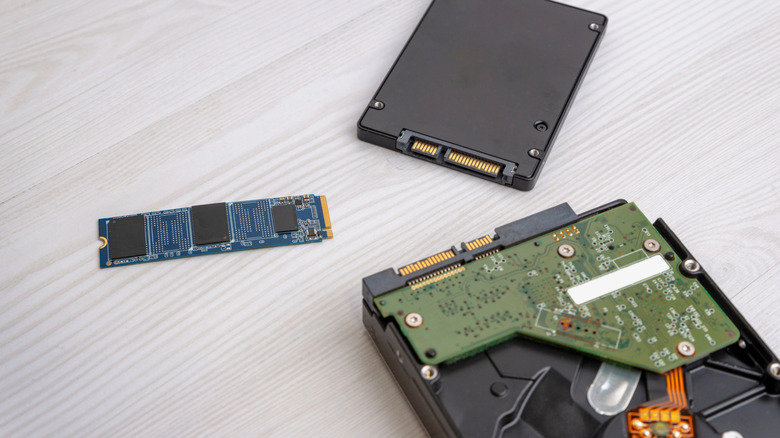
Discs vs. disks: What’s the difference?
They’re pronounced the same and only deviate by a single letter, but their mechanics and usage are quite different.
Why Apple Vision Pro never took off like Meta’s VR headsets
The Apple Vision Pro debuted to massive hype in 2024, but the years since then have not been kind to Apple’s megabucks mixed-reality headset.

Will AI-Fueled Cyberattacks Lead to Better Funding for Critical Open Source Projects?
Remember that famous XKCD comic joking that all modern digital infrastructure rests on “a project some random person in Nebraska has been thanklessly maintaining since 2003.”


Politico Europe’s cybersecurity reporter wonders if this recent spate of outages suggests that supporting block is coming loose? (Especially after Politico reported Thursday that internal services at EU institutions went offline after a major AI-fueled cyberattack.)
Authorities blame the sudden wave of instability on the capacity of new AI tools to detect vulnerabilities in existing code and for bad actors to exploit them… Interviews with more than a dozen cybersecurity leaders and those working on maintaining the internet show the scale of the challenge to keep the web up and running, in a world where the pace of finding vulnerabilities has rapidly and permanently accelerated. Since the web’s early days, an unruly cast of idealist engineers and non-profit foundations have been essential for looking after decades-old critical code that’s been used to build our digital world. This small army of largely volunteer coders now say they can’t keep up with the power and pace of AI. “We’re running on fumes,” said Robin Bender Ginn, executive director of the OpenJS Foundation, which looks after JavaScript, among the most widely used programming languages. “It keeps me up at night.”
Cybersecurity agencies around the world rang the alarm last month about major flaws detected in PHP, another critical coding language that underpins 70% of the web. This week, similar scares have spread over Java and NGINX, which also fuel large swathes of technology. Helmut Reisinger, the European chief executive of cybersecurity giant Palo Alto Networks, said in an interview that the company is seeing “more or less” ten times as many incidents compared to about four months ago. He predicts the constant drumbeat of attacks and scares in the last month is going to become the “new norm….”
The rise of AI models and their capabilities of finding software flaws is putting more pressure on open-source software engineers, who are inundated with reports of vulnerabilities — some of which are false or exaggerated. Reports of flaws discovered by AI are “quite verbose,” Ginn said. Juhan Lepassaar, the head of EU cyber agency ENISA, said in an interview that the agency has observed a similar pattern of false positives.
While some hope the AI-fueled attacks “will put the needs of open source software on the map and prompt an intervention,” according to the article, “many of those steeped in the ecosystem… have their doubts.”
“I’m a bit pessimistic,” says Nils Adermann, a PHP Foundation board member. “I worry that people will just not care enough to actually do anything about it.”
Read more of this story at Slashdot.
Which car has the largest infotainment touchscreen?
Most modern cars will have some kind of infotainment touchscreen, though not all are created equal. One car, in particular, rules the roost for sheer size.

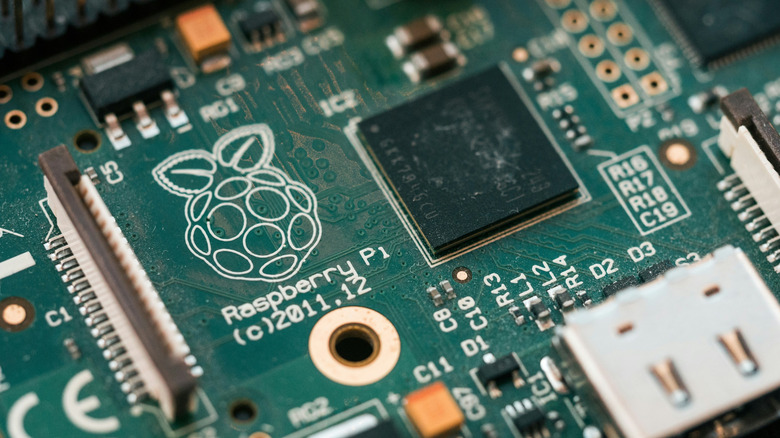
Six simple Raspberry Pi projects for beginners
Stop leaving your Pi projects unfinished with these six accessible ideas.
Original Director Behind Marvel’s Failed Mahershala Ali Blade Movie Says ‘Life’s Too Short To Make Sh*t Films’
Bassam Tariq dished on the experience in a recent interview
Agama Unattended installation remote Tumbleweed KVM Guests via multi-threaded Agama-ProxyV2.service on top of Tumbleweed Server
Optimal Thread Performance via Tumbleweed’s Upstream Kernel When your Python-based web server spawns a native OS thread to handle each incoming GET ./profile.json request Efficient Futex & GIL Release: Tumbleweed delivers the latest vanilla Linux kernels.These upstream kernels feature highly optimized scheduler implementations and fast user-space locking. Because your threads are primarily handling I/O operations (fetching profile.json and sending it over network sockets), the Python Global Interpreter Lock (GIL) is immediately released during network waits. The latest kernel maximizes the scheduling efficiency of these released threads across your raw CPU cores.
Signs it’s time to replace your phone’s screen protector
Should you stick with a smashed screen protector or not bother? Here’s how to tell when it’s time for a new one and unsuspecting signs you need to look for.

Rockstar Dev Tells GTA 6 Players To ‘Stop Thinking In Tasks, Completion Percentages, Online Guides’
The best way to play is just to experience the game, even if most of us are too internet-pilled to do that