Google will disable AI tools by default for K-12 students early next year unless school administrators explicitly enable them, but schools that choose to block AI entirely will also lose student access to Google Search. The New York Times reports: Executives at the tech giant said they wanted to be responsive to educators and parents who have asked for more control in how children interact with A.I. But there is a catch: Schools that choose to restrict A.I. entirely will also lose access to Google search. A.I. features are now a standard part of Google’s commercially available search engine.
“Search and A.I. are deeply integrated,” said Chris Phillips, vice president for education at Google. If a school has banned A.I., he added, students “will not have access to search, and they’ll see a message from their school that indicates it’s not available.” […] The company’s new strategy underscores Google’s powerful role in American education. If school leaders want continued student access to search within the company’s ecosystem, they will be forced to embrace Google’s A.I.
Google’s Threat Intelligence Group says it has shut down a massive botnet called x.cpe. At its height, x.cpe ran on more than 1.3 million Android TV devices, and unusually, these were Google-certified boxes. Google says its screening process missed the malware due to “obfuscation techniques” employed by Shenzhen-based Videostrong Technology.
In a detailed blog post, the Threat Intelligence Group explains how the x.cpe botnet evolved quickly from a single-stage dropper into a modular three-stage malware platform that sold access to third parties. Manufacturers must have their devices certified if they want access to Google apps and branding, a process that is supposed to catch threats like this. However, Videostrong’s compromised boxes, mostly sold under the MECOOL brand, evaded detection by using a backdoor to remotely install the malware after the devices were set up and online.
After devices appeared online, a stub application called x.cpe or com.oemservice would phone home. This package did not have any malicious capabilities of its own, but it had the system-level permissions necessary to install malware modules at the operator’s behest. It also disabled Play Protect, which would have otherwise flagged the silently installed packages as malicious.
Robert, Ryan, and Kirby Carlisle are three engineers who worked at SpaceX during the Falcon 9 era, seeing the revolution in the global launch industry from the inside.
The brothers launched rockets, refurbished rockets, and sold rockets. But when it came time for them to leave SpaceX and start their own space company—a lifetime dream for the Carlisle brothers—they chose not to build rockets. Rather, they focused on spacecraft.
In late 2022, the three Carlisles founded Argo Space to build infrastructure in space. Their vision was not just in-space transportation but also removing the need to use propellants from Earth to move around the heavens. They chose water, which is potentially harvestable on the Moon and found all over the Solar System, as a means of propulsion.
Two legacy NetworkManager VPN plugins—NetworkManager-vpnc and NetworkManager-fortisslvpn—are retiring and will be obsolete, starting in Fedora Linux 45. This is part of ongoing system maintenance and security cleanup. If you use Virtual Private Networks (VPNs) to connect to remote workplace or enterprise networks, take note of this upcoming change in NetworkManager package availability. This…
A basic Python script is portable: it can be copied between machines with little concern about compatibility.
A script that depends on third-party packages requires quite a bit more
care and consideration, however.
In 2023, PEP
723 (“Inline script metadata”) introduced a standard for declaring a Python script’s
dependencies inside the script itself.
Several third-party tools can now automatically install and manage those dependencies, but there is still little official support for this standard within Python itself.
We may earn a commission from links on this page. Deal pricing and availability subject to change after time of publication.
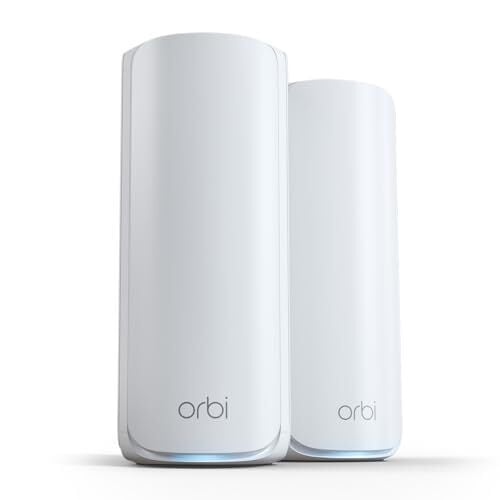
Amazon has dropped the price of the two-pack Netgear Orbi 770 Series Wi-Fi 7 Mesh System to $449.99 from $549.99, saving you $100 on a setup that includes a router and a satellite node, with a combined coverage area of up to 5,500 square feet. If you don’t need quite as much coverage, smaller configurations, including a single satellite node, is also discounted as part of Amazon’s early Black Friday sale. It now costs $239.99, down from $349.99, and covers up to 2,750 square feet.
The system uses tri-band Wi-Fi 7 technology to spread your connection across three bands, with combined speeds of up to 11,000Mbps. It also supports wider 320MHz channels, though you’ll need compatible Wi-Fi 7 devices to take advantage of those faster connections. If you prefer wired connections for devices that need a more stable link, the main router has three 2.5GbE LAN ports and a 2.5GbE WAN port, while the satellite offers two 2.5GbE LAN ports. This gives you plenty of room to connect a gaming console, desktop PC, or smart TV, and you can also use wired backhaul if your home has Ethernet cabling.
Once everything is connected, you can handle setup and day-to-day management through Netgear’s Orbi app, while a web dashboard offers additional settings (for anyone who wants more control over their network), including VPN access and port forwarding, notes this PCMag review. There’s no USB connectivity or 10GbE support, and some of its more advanced security and parental control features require a separate subscription after a free 30-day trial. Its Smart Parental Controls, for instance, cost $7.99 per month or $69.99 annually.
Out today is the first NVIDIA Linux driver release in the R620 release branch. This NVIDIA 620.70.06 Linux driver release isn’t too feature heavy but comes with some bug fixes, improved performance of explicit sync on Wayland, and some other refinements…
Valve has released a SteamVR beta update that brings improvements to streamed image quality to all supported standalone headsets.
Steam Link is SteamVR’s dedicated streaming app, letting you play your Steam library games on your Meta Quest, HTC Vive Focus, or PICO consumer headset by wirelessly streaming over Wi-Fi.
Now, in a SteamVR blog post, Valve announced the new 2.19.1 beta update brings sharper text, clearer colors, and better detail to VR streaming to those headsets—undoubtedly thanks to the company’s effort to improve Steam Frame’s wireless PC streaming function.
Notably, improvements are said to benefit all streaming VR applications, the SteamVR interface, desktop streaming, third-party overlays, and the theater screen.
Additionally, Valve says Steam Link now defaults to a higher recommended render resolution for streamed PC VR, targeting 1.4 × the headset’s panel resolution.
Color clarity was also improved, using higher-quality filter to downsample color before encoding, preserving fine colored details, Valve says. You can find the full changelog here.
To get the update, users need to opt into the SteamVR beta. To do that, simply follow the instructions below:
With Steam running, navigate to your library.
Right click on “SteamVR” in your library list, then click “Properties” in the context menu.
Select the “Game Versions & Betas” tab on the left.
Select “Beta – SteamVR Beta Update”
If you’re familiar with Steam Link, you likely already have a VR-ready PC. To find out if your PC can handle SteamVR streaming, click here to follow our handy guide.
While the Linux 7.4 kernel will be released in the 2026 calendar year in the last week or two of December if the schedule holds, it turns out Linux 7.3 is likely to be this year’s Long Term Support kernel version…