Despite market conditions making PS5 consoles expensive and hard to get, Sony’s gaming division had a solid quarter.


Earlier this year, we announced that we’re expanding Experience AI, our AI literacy programme, across Latin America to bring AI education to nine more countries through support from Google.org. Working with local partner organisations, we offer Experience AI training and resources that teachers can use to enable young people to learn a foundational understanding of AI technologies, their social and ethical implications, and the role that AI can play in their lives.

Over the past few months, Experience AI launch events have already taken place in Brazil, Chile, Argentina, and Mexico. At every event, we met educators, policymakers, universities, non-profit organisations, and technology leaders and explored how AI literacy can become part of classrooms across their country. Experience AI brought us all together around a shared goal: giving teachers the confidence and resources they need to help young people understand and engage with AI critically and responsibly.
Across Latin America, the local organisations we are partnering with to implement Experience AI bring deep expertise in teacher professional development and education. Partners include Fundación Sadosky in Argentina, Fundación Kodea in Chile, Sincroniza Educação in Brazil, and Educación para Compartir in Mexico.
Each partner is implementing the programme in a way that reflects its local education system and context. We work with them individually and also facilitate their collaboration around shared challenges.
In Argentina, Experience AI was officially launched in June during a Google event in Buenos Aires.

Our Argentinian partner Fundación Sadosky is taking a distinctive approach to Experience AI teacher professional development by working through a network of public universities across the country, rather than relying on a central training team. Through this approach, Experience AI training will reach educators in diverse regions across the country as Fundación Sadosky builds on local expertise and existing educational networks.
Growing local capacity and developing regional trainers means Experience AI will make a lasting impact for teachers and learners, enabling high-quality AI education long after the programme’s first rollout.
The first cohort of participating universities is now working with teachers across several Argentinian provinces, before the programme expands nationwide. When fully established, Experience AI aims to support around 1,700 secondary school teachers and reach an estimated 153,000 students across Argentina.
It’s been very rewarding coming together with local partners, Google.org, universities, and education communities across Latin America around our shared vision of high-quality AI education for all young people.
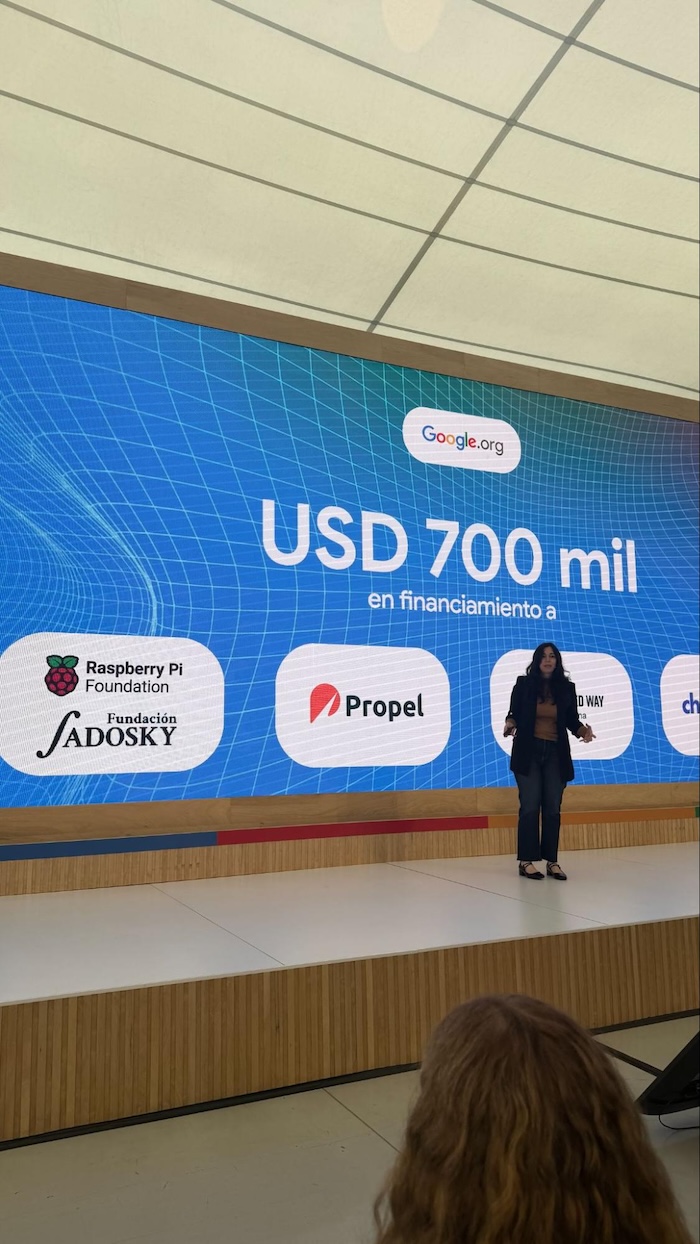
After the launch events, the focus now turns to practical action: supporting teachers and bringing Experience AI into classrooms across the region.
As the programme grows, we also look forward to working with new partners across Latin America to bring AI literacy to even more educators and young people. By 2028, we and our Latin American partners aim to support 24,000 more educators and reach more than 1.25 million young people through Experience AI.
The post Experience AI begins reaching classrooms across Latin America appeared first on Raspberry Pi Foundation.
Combat Waffle Studios has announced the end of PVPVE open-world action survival game Silent North.
Silent North launched in Early Access for Quest and PC VR in April 2025. Set in a post-apocalyptic Swiss Alps, you scavenged, crafted and fought for survival against zombies, other players and the elements while trying to build out a base and potentially form alliances.
0:00
It launched to a cold reception from players, currently sitting at a Mostly Negative rating from 101 reviews on Steam and a 3.1 score from 494 ratings on Meta Quest.
Combat Waffle acknowledged the reception in its announcement:
Today, we are announcing that we are retiring Silent North from all platforms.
This means Silent North will no longer be available for purchase on any storefront. The servers will remain online for now, as we want to give our players the chance to continue making memories before we fully sunset the game down the road.
At Combat Waffle Studios, we have big ambitions and tackle big projects, but sometimes we miss the mark. Silent North was our attempt at creating a large-scale survival game set in a persistent world infested with zombies. Sadly, we were pushed to launch earlier than we would have liked. That led to a high refund rate early on and quickly gave the game a poor reputation. Ultimately, we haven’t been able to overcome that initial setback and rebuild momentum.
Leaving this project behind is painful, but it is necessary for us to keep moving forward.
Thank you to everyone who supported this project, it truly means the world to us. We are grateful for all the great moments shared in the game, and we hope you enjoyed your time surviving with us.
As the saying goes, ‘first impressions are lasting’ and games are rarely able to recover from a poor launch. For every No Man’s Sky or Cyberpunk 2077, there are scores of titles that, for one reason or another, miss the mark at release and never earn back the trust of consumers. Oftentimes, developers do the work to address player feedback, fix the raised issues, and make the product more viable, but with the speed the news cycle and consumer attention moves, any follow up coverage, if it happens at all, does not capture the same audience.
Combat Waffle did not specify the date servers will be shut down. We will update this article when that information is available.
Under the terms of the settlement, the payouts will begin with $50 million this year, followed by yearly payments of more than $1 billion each year from 2028 to 2033. 3M could make additional payments if enough plaintiffs participate. If too few sign on, 3M has the option to cancel the settlement and continue fighting the lawsuit.


Read more of this story at Slashdot.
The verdict reports don’t mention a total. Instead, they list illegal gains per person or team. The leader of the content team allegedly gained more than 430 million dong, while commentators made from more than 31 million to more than 480 million dong each. The verdict was picked up by Rouse, the law firm that represents the Motion Picture Association in Vietnam. In an article headlined “Strong Vietnam criminal penalties,” published on Lexology on November 3, the firm calls the ruling another victory for Vietnam’s IP landscape.
“The defendants were all sentenced to terms of 8-12 months in prison,” Rouse writes. While Rouse is correct on the length of the terms, it doesn’t mention that three of the sentences were suspended. Instead, Rouse stresses that the ruling is part of a tougher enforcement trend. “This ruling reflects a shift in enforcement strategy by Vietnamese authorities, who are increasingly moving past preliminary domain blocking to deliver criminal convictions against the operators of commercial-scale piracy rings,” the firm notes. “This perhaps reflects the strength of the national crackdown following the USTR pressure in May,” the firm adds. According to the indictment, Bui Ba Hien, who runs a company called S24, allegedly directed employees and collaborators to build and operate Bun Cha TV. However, Hien is not among the 14 defendants named in reports, which also do not identify the affected rightsholders.
“Interestingly, in September, Bac Ninh police issued a wanted notice for a man of the same name, Bui Ba Hien, CEO of esports company Box Vietnam,” reports TorrentFreak. “This person is also charged under the same copyright statute.”


Read more of this story at Slashdot.


Read more of this story at Slashdot.
For years, the AI industry’s insatiable demand for memory and storage has had plenty of knock-on effects on the price and availability of PC components like RAM, SSDs, and GPUs. Now those shortages are also squeezing the supply of ROM chips that power physical Nintendo Switch and Switch 2 game cartridges.
Chip manufacturer Macronix announced in its third-quarter earnings report that the company’s production of ROM chips “has reached its end” and that it will begin “gradually decoupling from the game industry,” as reported by Taiwanese news site BigGo Finance. That could be an issue for Nintendo, which analyst David Gibson notes uses Macronix as its “main memory chip maker” for physical game cartridges.
That ROM production—which has shrunk 39 percent in the last year and now represents just 5 percent of Macronix’s business—is being crowded out by production of more lucrative, in-demand chips like NOR- and NAND-based memory and eMMCs, the company said. With Macronix’s production capacity stuck at 25,000 12-inch wafers a month—and $1.2 billion in planned new capacity taking a year or more to spin up—less profitable ROM chips are taking up wafer space that can earn more through other types of chips.
Hackers possibly linked to the Kremlin exploited previously patched iOS and Android flaws in an attempt to hack visitors of multiple websites, including one celebrating the 250th anniversary of the signing of the US Constitution, researchers said Wednesday.
The attackers, which the researchers assessed with “moderate to high confidence” were part of Russia’s Foreign Intelligence Service, targeted other sites, many with links to that country’s ongoing war against Ukraine. The attacks began when iPhone or Android users visited one of potentially hundreds of different sites. JavaScript injected into the traffic then profiled the device. The final payloads, tailored to the type of platform visiting, attempted to steal browser cookies and, in some cases, Wi-Fi passwords and full mobile device data.
One of the impersonated sites was america250.org, belonging to a non-partisan group of lawmakers, business executives, and at least one former member of the Trump administration. The attackers registered america250[.]holiday and used it as a reverse proxy to america250.org. The imposter website delivered content from the real one that added malicious JavaScript into it.
During World War II, physicists on the Manhattan Project worried that the Nazi German nuclear program might achieve the first nuclear bomb before the US and its allies. That’s not what transpired, but historians have debated just how close the Germans came to achieving criticality in their last attempt at building a reactor: the B8 pile. Werner Heisenberg, who led that effort, claimed that they were close and had only needed a little more uranium. But according to a paper published in the Proceedings of the National Academy of Sciences Nexus, that was not the case: the project simply didn’t have sufficient uranium and heavy water to build a working bomb, given the design they were using.
This particular research started in 2013, when University of Maryland physicist Timothy Koeth—a co-author on the new paper—received the gift of a mysterious heavy metal cube from a friend. He instantly recognized it as one of the uranium cubes used by German scientists in their unsuccessful attempt to build a working nuclear reactor. Only 14 such cubes are known to exist today.
In 2019, we reported on Koeth’s quest to track down the cube’s origins, as well as several other similar cubes that had somehow found their way across the Atlantic. At the time, Koeth and his partner in the quest, then-graduate student Miriam “Mimi” Hiebert, had tracked down ten such cubes around the US. For instance, the Smithsonian Institute had a German uranium cube in storage. They tracked a third cube to Harvard University, where it was regularly passed around to students in introductory physics classes as a curiosity.

Last month, OpenAI announced plans to introduce images of sponsored products and services in ChatGPT.


Read more of this story at Slashdot.