
What Jeff Bezos giveth, he taketh away
Monthly Archives: November 2026
Marvel’s Wolverine’s Sales Numbers Are Looking Pretty Dreadful
Sony’s Q2 2026 earnings report just released, and Logan is currently being outsold by Rhythm Heaven Groove
These Bose QuietComfort Headphones Are $160 Off Ahead of Black Friday
We may earn a commission from links on this page. Deal pricing and availability subject to change after time of publication.
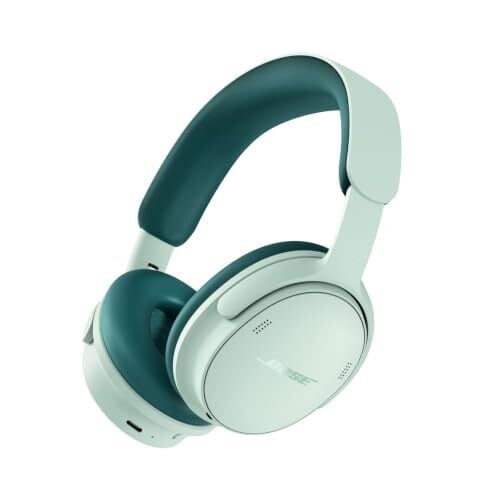
Bose’s second-generation QuietComfort Headphones in Dewdrop Mint, Eucalyptus Green, and Hazelnut Taupe are down to $199 from $359 ahead of Black Friday, saving you $160 and bringing them to their lowest price yet, according to price trackers. Weighing around 8.1 ounces, they’re among the lightest premium noise-canceling headphones, with generously padded earcups and a cushioned headband that spreads pressure without gripping too tightly, making them comfortable to wear for extended periods. They’re also easy to pack for travel, as the earcups fold and swivel for storage in the included hard-shell carrying case. The removable earpads are another welcome touch, since you can replace them as they wear down without having to retire the entire pair.
Bose QuietComfort Headphones (2nd Gen)
$199.00
at Amazon
$359.00
Save $160.00
Save $160.00
$199.00
at Amazon
$359.00
Save $160.00
Save $160.00
Bose QuietComfort Ultra Bluetooth Headphones (2nd Gen)
$359.89
at Amazon
$449.00
Save $89.11
Save $89.11
$359.89
at Amazon
$449.00
Save $89.11
Save $89.11
Comfort aside, noise cancellation is another area where these headphones deliver, doing a particularly good job of reducing lower-frequency rumble and background chatter, though some higher-pitched voices can still come through, notes this PCMag review. As for their sound profile, it leans warm and bass-forward, with deep lows that suit bass-heavy genres, while the companion app adds Bose Immersive Audio for spatial sound and lets you create customized listening profiles—the three-band EQ is fairly basic, though, so anyone who likes fine-tuning their sound may find the adjustment options limiting.
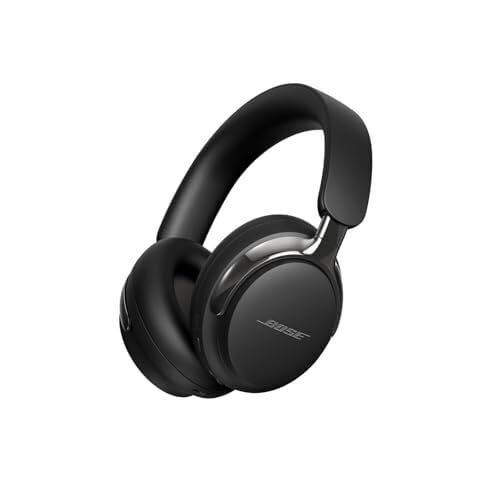
Connectivity, too, brings some useful upgrades over the previous generation, including Bluetooth 5.4, multipoint pairing for two devices, Google Fast Pair, and lossless audio over USB-C. That same USB-C port lets you charge the headphones while you listen, and the included USB-C-to-3.5mm cable covers standard headphone jacks, including the ones on in-flight entertainment systems. That said, battery life is less impressive, topping out at 24 hours with ANC enabled, although a 15-minute charge adds around 2.5 hours of playback. Wireless audio is also limited to the standard AAC and SBC codecs, with no support for the higher-quality aptX Adaptive—a feature available on Bose’s QuietComfort Ultra Headphones.
Our Best Editor-Vetted Early Black Friday Deals Right Now
Deals are selected by our commerce team
Nintendo’s Switch 2 Sales Fell 37 Percent This Year, But Game Sales Are Growing Fast
Nintendo’s FY2027 earnings report is a mixed bag, mostly saved by strong software sales from titles such as Tomodachi Life: Living the Dream and Rhythm Heaven Groove
Hugely Popular RPG NIKKE Was Compromised, Installing Malicious Code On Players’ PCs
Though the issue is now patched, Level Infinite recommends users scan their PC for the malware
PS1 Throwback Queen’s Domain Might Be The Best Way To Play The Classic Fantasy Games It’s Based On
King’s Field but with real camera controls and a normal method of equipping a weapon? I’m in
Mir 2.31 Released With Expanded Wayland Protocol Support
Mir 2.31 is now available as the latest feature release for this Canonical/Ubuntu solution for providing C++ libraries to build Wayland-based shells…
OpenAI says it will protect local resources and report on the impact of its data centers
OpenAI claims its new pledges were in the works before Americans voted strongly against the data center boom.

Amazon teams with Uber Eats for new Prime perks
Order on Amazon’s platforms and (sometimes) skip the delivery fees.

NASA Announces X-70 Experimental Aircraft to Advance Flight Research
NASA has unveiled the X-70 Fractal, a new crewed experimental aircraft “designed to accelerate the development and testing of advanced aviation technologies.” From a press release: The crewed X-70 features advanced, rapidly reconfigurable flight-control technology that will allow NASA to explore aircraft maneuverability in ways never before demonstrated in crewed flight. The aircraft can also accommodate up to 2,000 pounds of experimental payloads in internal and external locations, enabling a wide range of research and flight-testing opportunities.


The X-70 Fractal has a takeoff weight of 10,000 pounds and is designed to cruise at Mach .75, reach altitudes of up to 45,000 feet, and provide an operational range exceeding about 1,726 miles (1,500 nautical miles). These capabilities will enable NASA to conduct demanding flight research across a broad range of operating conditions.
The X-70 joins a storied legacy of experimental aircraft that have helped establish America’s leadership in aviation. From the Bell X-1, which first broke the sound barrier in 1947, to the X-15 hypersonic research aircraft and today’s X-59 quiet supersonic demonstrator, NASA has spent decades pushing the boundaries of flight. With the X-70, NASA will expand its capacity to conduct experimental flight research, accelerate the testing of emerging technologies, and advance the next generation of American aviation.
Read more of this story at Slashdot.
YouTube Could Be Getting A Major Redesign On Quest & VR Glasses
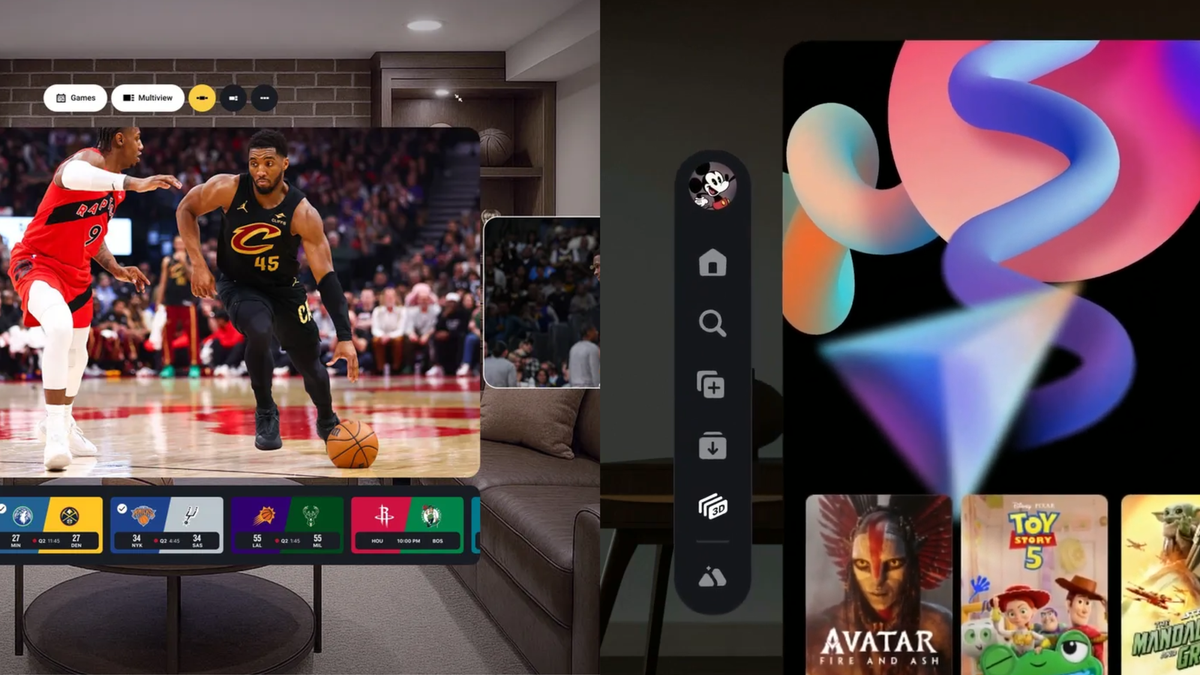
Entry points hidden within recent updates to the YouTube app on Quest reveal that Google is working on a major overhaul of the app’s immersive view, bringing it closer to the experience on the company’s own Android XR platform.
YouTube has received modest updates on Meta’s standalone VR devices over the years. However, the app’s core design is still very similar to the Oculus Go version of the app that launched back in 2018.
Some of the most significant additions include support for higher video resolutions, Mixed Reality wall anchoring on Quest 3 and 3S, and a ‘Panel Mode’ that lets you open the app in a 2D window to use alongside other system-level apps. Google and Meta also experimented with co-watching at one point, but that was removed from Horizon OS as part of the move to the Loft VR Home Environment, which began with the rollout of Horizon OS v81 PTC.
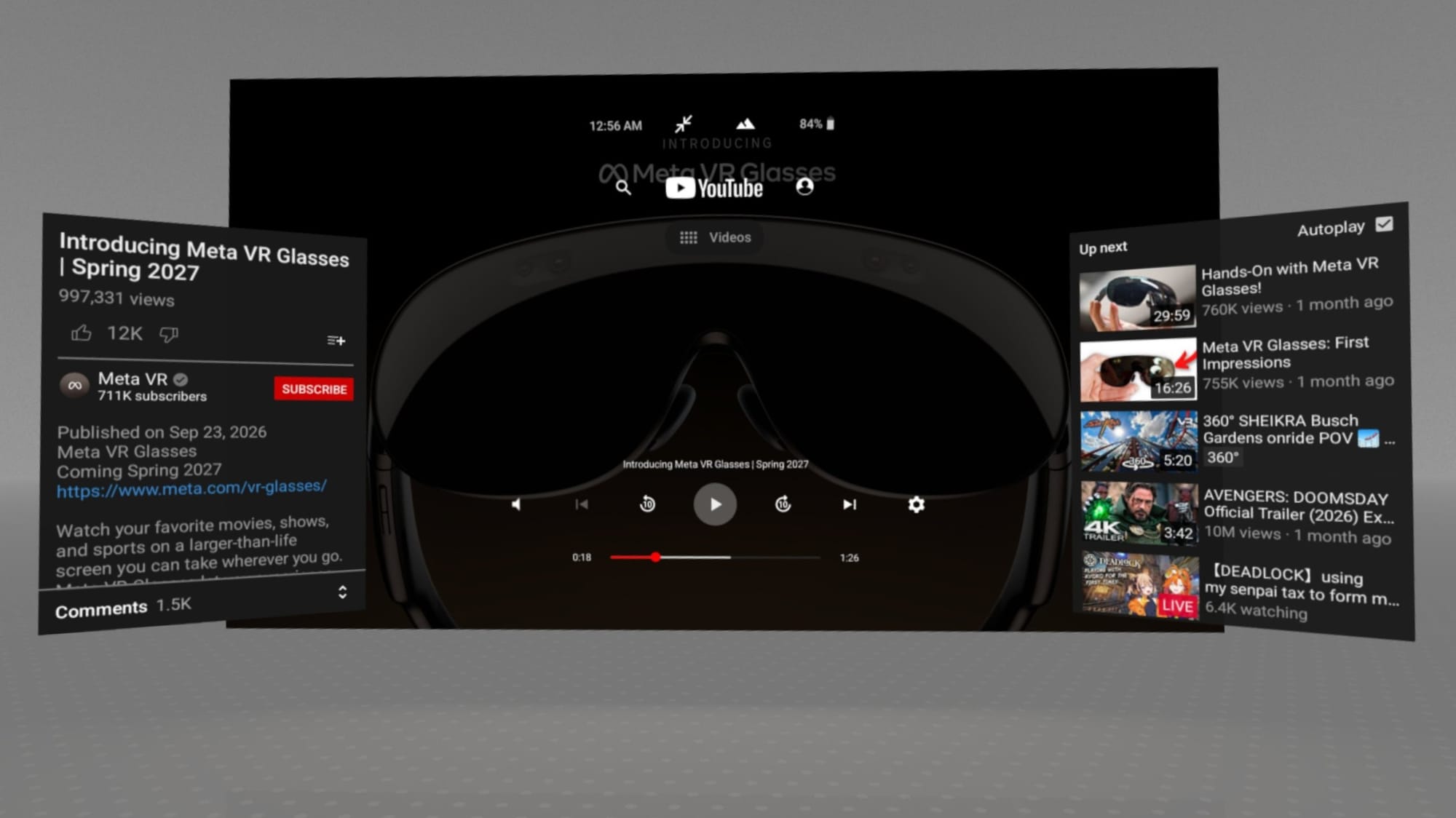
While the interface within Panel Mode was updated to offer an experience broadly similar to YouTube on various Smart TVs, the app’s immersive view was left largely unchanged.
Now, Google appears to be working on a major overhaul of the app’s full-space immersive view, bringing it more in line with other modern spatial experiences.
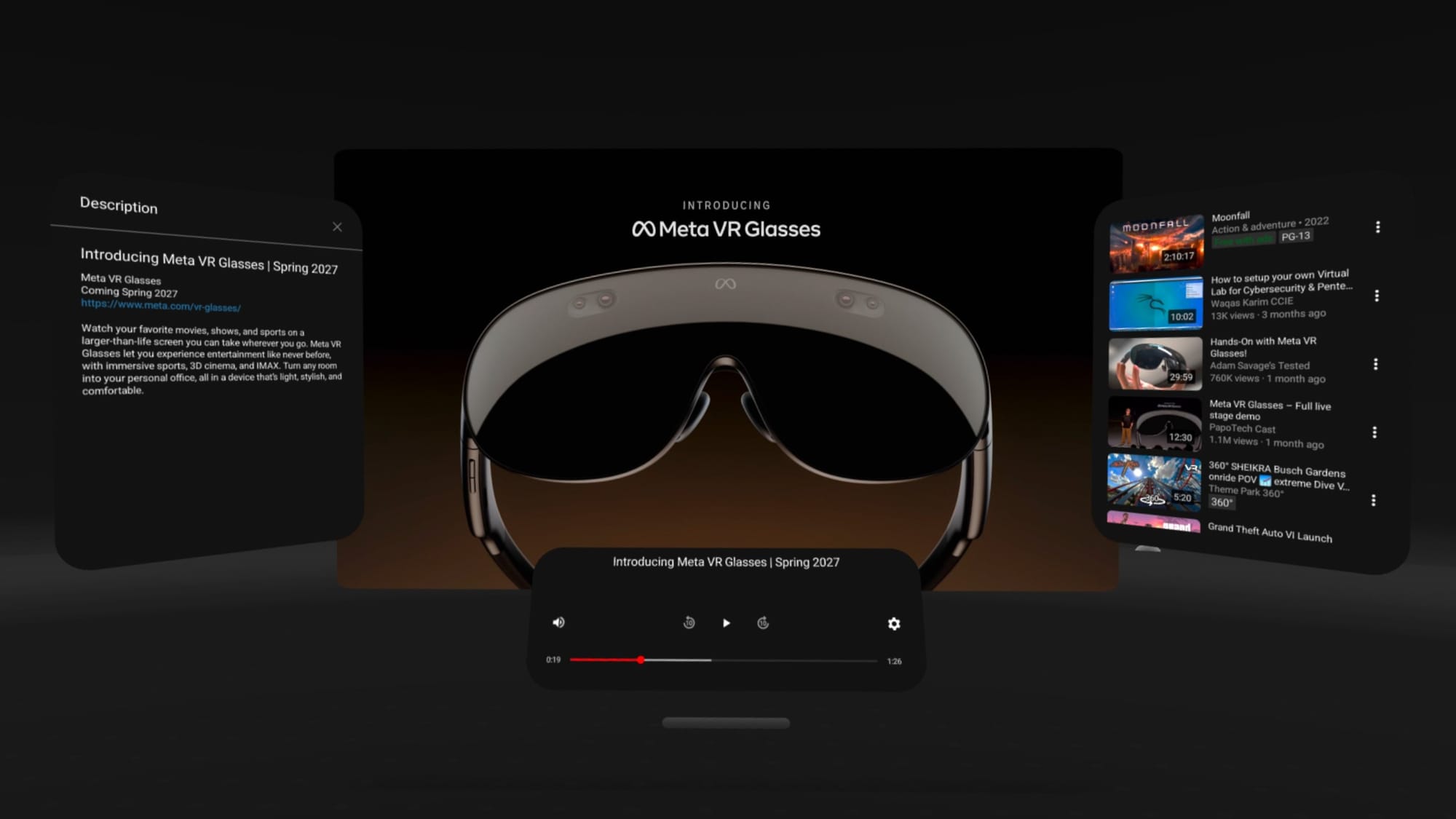
The new immersive view features a redesigned UI, with a main window that is consistent with the existing Panel Mode experience. It introduces a Horizon OS-style Control Bar, with options for changing the environment and switching to Panel Mode.
Notably, the new interface also allows users to open an additional window for browsing while a video is playing. Videos selected in this window will then play in the main window.
0:00
/0:23
The app now uses additional Meta-specific integrations, including the OS-level Virtual Keyboard overlay. The main window has grab handles and dedicated corner handles for resizing, similar to other windows across Horizon OS, and also automatically adjusts its size to match the aspect ratio of the content being watched.
0:00
/0:32
These changes closely resemble the Android XR version of YouTube, which is designed for Google’s own XR operating system, as well as the visionOS version of the app that debuted earlier this year.
On those platforms, YouTube features a Smart TV-like interface for standard browsing, then switches to a spatialized UI during video playback. This playback UI includes additional controls for adjusting the viewing area when watching 360° and 180° 3D content. The in-development Quest version does not currently include those controls.
0:00
/0:05
YouTube on Android XR.
References to this overhaul were first added to the YouTube app for Quest back in late August, and it surfaces as Meta has been working to improve its spatial app tooling and encouraging developers and partners to optimize their apps for spatial operating systems ahead of the launch of Meta VR Glasses.
Meta Expands SDKs To Boost Spatial Apps On Quest & VR Glasses, Including NBA, Disney+
Meta announced several new SDKs and features to enhance spatial apps on Quest and Meta VR Glasses, alongside major spatial updates for the NBA and Disney+ apps.
 UploadVRLuna
Critical security vulnerability affects OpenSSH on Alpine Linux systems
Version 10.6p2 of
OpenSSH has been released with a workaround for a critical vulnerability that
affects Linux systems that use musl libc
with PAM disabled, such as Alpine
Linux. OpenSSH developer Damien Miller said:
If you operate a Linux system that uses musl libc without PAM (Alpine Linux
is one example) then stop reading and set PasswordAuthentication=no or disable
SSH for these systems IMMEDIATELY.This vulnerability does not exist on non-Linux systems, Linux/glibc systems
and Linux systems that use PAM for password authentication.We consider the root cause of this bug to be outside OpenSSH itself, but
we’re in a good position to deliver a mitigation quickly.
The Alpine Linux project has announced that
it will be backporting the OpenSSH fix “all the way back to Alpine 3.16
“,
which was released in May
2022.
Mercedes-AMG GT 4-Door Coupe first drive: Where tech and fun collide
The night before I drove the AMG GT 4-Door Coupe, I complained to a group of journalists that automakers don’t want to take chances and just build fun, weird cars anymore. About 12 hours later, Mercedes made me eat my words. Outside of all the bombastic extravaganza of the Los Angeles launch, the first true AMG powered exclusively by batteries is a technological triumph that’s as comfortable on the track as it is on the street. And it’s really very good on the track.
Triforce
One of the fundamental problems with EVs is weight. Batteries are heavy, and the old rule about an object in motion tending to stay in motion makes the notion of nimble cornering a difficult engineering problem. Mercedes loves an engineering problem, and after two days behind the wheel of the AMG GT EV, the company has mostly reduced the battery-weight tax that mires EV performance.
On the road and on the track, the vehicle is firmly planted to the roadway. Mercedes says various technologies make this possible. In addition to decades of producing high-performance vehicles, the automaker’s AMG.EA sports-car architecture does a lot of heavy lifting here, constantly adjusting power delivery from the three motors while guiding the Active Ride Control suspension, steering—including up to six degrees at the rear axle—and active aerodynamics to deliver the performance AMG customers have come to expect from a vehicle with the Affalterbach badge on the hood.
Mesa Merges A Common Vulkan Layer For Working Around Cross-Driver Game Bugs
Merged to Mesa 27.0-devel is a new common Vulkan layer within Mesa’s Vulkan Runtime for being able to carry common game/engine/app workarounds that affect multiple drivers…
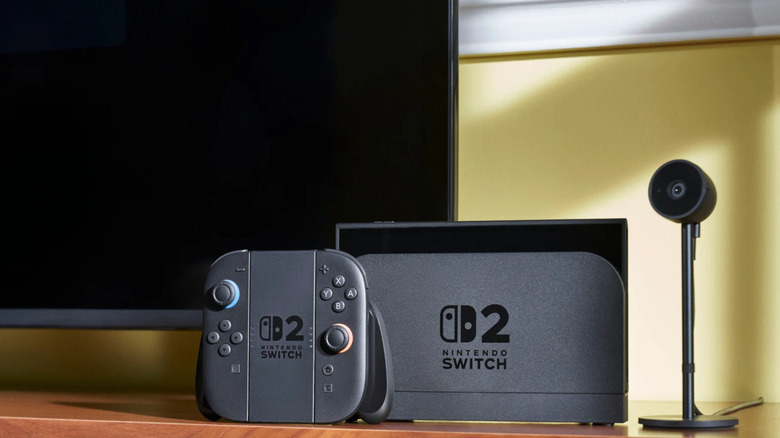
Switch 2 sales fell by almost 40 percent after Nintendo increased prices
Nintendo reports higher profit but substantially lower Switch 2 sales after it increased console prices.
AMD-Backed Lemonade Local AI Server Ships Redesigned Desktop App & Web UI
The AMD-backed Lemonade local AI server shipped its version 2026.45.3 update on Wednesday that introduces a completely redesigned desktop app and web UI…
Omarchy 4.5 Released With Apple Silicon Support, More Desktop Customizations
Omarchy 4.5 is out today as a big feature update to this Arch Linux based operating system…
OpenAI Finds 948 Local Privilege Escalation Bugs In The Linux Kernel
OpenAI published a blog post outlining their work on autonomous vulnerability discovery. To showcase their AI potential, they found 948 valid local privilege escalation vulnerabilities within the Linux kernel…
Ubuntu users say Canonical “asleep at the wheel” over critical Linux kernel bug
Canonical is fixing a critical Linux kernel flaw in Ubuntu, weeks after Debian and other distros did – and users aren’t happy about the wait. As of 3 November, patched kernels for CVE-2026-98432 are in testing for Ubuntu 22.04, 24.04 and 26.04 LTS, but are yet to hit the stable updates pocket. Canonical hasn’t given a date for when it expects them to. 9.8 CVE on Linux servers since 2016 The CVE…
Sony is selling more PS5 games but still struggling to meet console demand
Despite market conditions making PS5 consoles expensive and hard to get, Sony’s gaming division had a solid quarter.