Massive Effect: The BioWare Story started filming two years before EA shut down the studio.

The release date for Project Hail Mary: Journey Among the Stars has been revealed, and it’s very soon.
Project Hail Mary: Journey Among the Stars, a mixed reality experience that expands the story of author Andy Weir’s sci-fi novel and film, is coming to Pico, Android XR, and Meta Quest 3 and 3S on November 12.
0:00
Preorders are open now, and early adopters will receive three exclusive digital sculptures featuring Rocky, Grace and the Hail Mary ship, which can be displayed in mixed reality.
A previously released gameplay trailer shows what to expect from this experience:
0:00
In Project Hail Mary: Journey Among the Stars you play as Ryland Grace, the main protagonist of Weir’s novel and the character played by Ryan Gosling in the novel’s film adaptation, as you experience a critical moment in the Hail Mary mission. The ship’s systems are failing, and it’s up to you to diagnose and solve the problem with the help of your friend Rocky, the alien intelligence whose partnership with Grace defines the story’s emotional core.
You’ll build a relationship with Rocky, bond over the course of the experience, and use your science and engineering skills to keep the Hail Mary spaceship intact so that it may deliver you and your world-saving cargo to Rocky’s home planet.
Project Hail Mary: Journey Among the Stars will launch on Meta Quest, Pico, and Android XR on November 12.
80s Mixtape: Vice Wave is Synth Riders’ latest DLC pack with eight tracks from multiple artists including Duran Duran, Cutting Crew, & Bryan Adams.
The new pack is available now for $13.99. Alternatively, you can buy select tracks for $1.99 each.
Here’s the trailer:
0:00
The full tracklist is as follows:
Synth Riders has been active with new content in 2026 with its new progression system introduced in March and new music packs featuring Dua Lipa, Linkin Park, and the soundtrack from Crypt of the NecroDancer.
Synth Riders is available on Quest, PlayStation VR2, Apple Vision Pro, and Steam.


Read more of this story at Slashdot.
While the upcoming Grand Theft Auto VI won’t be available on PC this month, some gamers are making ridiculous preparations to use their PC graphics cards to apply Nvidia’s DLSS 5 technology to the console exclusive.
On an explicitly unmoderated GTAVI subreddit, user RevolutionaryBus8208 lays out a proposed setup, which runs a PlayStation 5 through a 4K capture card to a PC. From there, the video signal is run through Veyra, an open source tool that can apply DLSS 5’s AI-powered “neural rendering” to video content. The result—which also uses DLSS frame generation to increase the 30 fps source to a 90 fps output—is then piped back to a 4K TV, theoretically adding some of the benefits of a beefy PC graphics card to a console-exclusive game.
To demonstrate the potential of this setup, RevolutionaryBus8208 used Veyra to upscale the Grand Theft Auto VI Extended Look trailer posted in August. The resulting DLSS-ified version looks a bit better in places, with sharper background elements, subtler shadows, and more believable light scattering on some surfaces. But it also seems a bit washed out compared to the original video’s deeper blacks and arguably suffers from an unnaturally smooth “soap opera effect” in some scenes.
Before Tuesday’s election, Republicans held more governorships and state legislative seats than Democrats, along with an advantage in state trifectas—unified control of the governor’s office and both chambers of the legislature.
That advantage has disappeared, clearing the path for more climate and clean energy legislation, according to analysts and advocates.
Democrats swept the vast majority of competitive races at the state level, flipping control of governors’ offices from Republicans in Georgia, Iowa, Ohio, Nevada, and Texas.
We may earn a commission from links on this page.
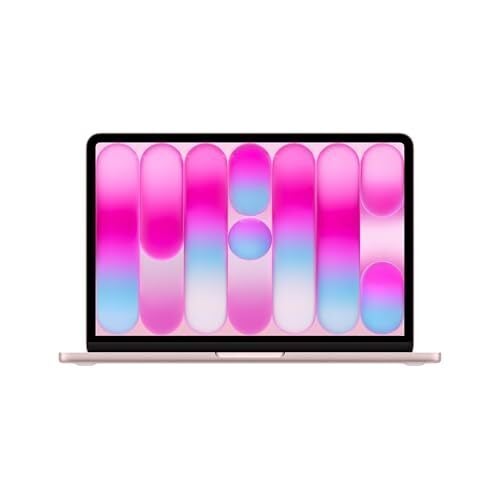
To say the MacBook Neo disrupted the laptop market would be an understatement. When the Neo dropped, former Apple CEO Tim Cook said Apple had its best-ever launch week for first-time Mac customers, and the company is reportedly planning on doubling the MacBook’s sales for 2027. It’s not hard to see why the MacBook Neo is such a hit: Apple is offering the essential Mac experience at a fantastic price point. You no longer need to spend $1,000 or more for a MacBook, so long as you’re okay making some sacrifices to get there—which, it seems, many customers are.
While the MacBook Neo has been a boon for Apple and Apple fans alike, I can only imagine the stress it brought to PC manufacturers—especially those with budget or midrange machines. Windows PCs have long won the price war against Apple. While MacBooks have their passionate customers, buyers looking for the best value have had to weigh expensive Apple laptops against many far cheaper options from companies like Dell, HP, ASUS, and Lenovo. But with the Neo, suddenly a MacBook was competing in this space, and well.
Part of the issue for PC manufacturers was Apple’s control over its own ecosystem. Unlike most PC makers, which only produce the hardware for each machine, Apple makes both the hardware and the software for its MacBook lineup. As such, the company has the advantage of optimizing that hardware. It can design macOS to run more efficiently on weaker hardware, in a way that companies like Dell or ASUS can’t. You might be comparing the MacBook Neo against a Windows laptop with similar specs, or even better specs, but because Microsoft makes Windows, not the laptop manufacturer, it’s possible the Neo ends up with the better overall experience. While that might still be the case, Microsoft may have just closed that gap in a meaningful way.
This week, Microsoft announced key upgrades to memory-management efficiency, particularly for machines with 8GB of RAM. This is the amount of memory the MacBook Neo has, as well as many budget and midrange Windows laptops. That’s not much memory for 2026, regardless of platform, but Apple seems to have squeezed a lot out of it for the Neo. Now, Microsoft may have just done the same for PCs, as Windows is reportedly 20% more responsive, with 40% faster multitasking.
In its blog post, Microsoft highlighted improvements that users with 8 GB of RAM can expect from Windows going forward. First, Microsoft says it focused on better utilizing the RAM your machine already has. The company compares its memory management to a desk: Anything on the “desk” is stored in RAM; anything in your “drawer” is stored in your drive. As you use your PC, Windows used to move more of your apps and tabs to your drawer to free up more RAM for other things, meaning you’d need to reload those items whenever you returned to them. Going forward, the company says that Windows can keep up to 2GB more of your active data in RAM instead of moving it to slower storage elsewhere. That means apps and tabs should refresh less frequently when you leave and return to them.
Microsoft also says that small actions should be faster across the board. When you open the Start menu, search across your PC, right-click, open Settings, launch the Snipping Tool, and open File Explorer, those actions may be up to 20% faster than they were in January. Microsoft Edge may open up to 33% faster, while Teams can enable Efficiency Mode by default on 8 GB machines, which means it can launch up to 20% faster too. Microsoft put together an interesting stress test to compare multitasking performance between today and January. It opened 20 tabs in Edge, a 4K video, large Word, PowerPoint, and Excel files, then Outlook and File Explorer, all without closing any windows. That experience was 40% faster following this latest update.
Microsoft says it also improved the memory efficiency in its apps: The company claims it reduced committed-memory growth by up to 900 MB, and saved up to 360 MB in RAM across Word, PowerPoint, Excel, and Outlook. That extends to third-party apps as well: Microsoft says that WhatsApp has double-digit memory improvement now. Widgets also only load when you open the app, which saves 200 MB of RAM when the app is closed, while Edge tabs go inactive after 15 minutes instead of two hours.
Microsoft isn’t making these upgrades in a vacuum. Hardware costs, particularly for RAM, have skyrocketed in the age of AI. Microsoft knows that people are likely going to hold onto existing hardware for longer than they usually do, or that they’ll opt for less-expensive configurations, including, perhaps, machines with 8 GB of RAM.
PCMag’s Chris Hoffman was adamant before this latest Windows update that buyers should steer clear of PCs with 8 GB of RAM. Now, he’s pulling back a bit. In his testing, Hoffman noticed improvements when multitasking on an 8 GB PC when compared to similar tests from months ago. He could run multiple Chrome tabs, a Microsoft Word window, and Spotify without bogging down the computer much. Hoffman isn’t a lightweight user, so he still wouldn’t personally choose an 8 GB machine, but he admits, “If I were an average PC buyer looking for a reasonable desktop experience and could save hundreds of dollars by opting for 8GB of RAM, I might be happy with the performance.”
To that point, I think this new Windows update makes 8 GB PCs competitive, especially against the MacBook Neo. We’ll still need direct comparisons to know how well this new Windows experience holds up across the board, but these updates are promising. Users with 8 GB machines just got a free, valuable update overnight; new customers can opt for a more affordable PC without feeling like performance will take a nosedive just because they opened one too many Edge tabs.
As Hoffman says, 8 GB of RAM is not ideal for any user looking for serious multitasking or professional workflows, regardless of whether they choose a Mac or PC. But for the average computer customer looking for a solid machine without breaking the bank, I no longer see the Neo as necessarily the default choice. After all, Apple has slowly raised its price, too, from $599 to $699. If you’re platform-agnostic, or even prefer Windows to macOS, these updates from Microsoft are quite promising. If you’re in the market, check out PCMag’s excellent list of budget laptop recommendations.


Read more of this story at Slashdot.
As Democrats blew away their Republican rivals in an unprecedented midterm sweep Tuesday, the Make America Health Again movement also got bowled over, raising questions about the fate of the motley movement.
MAHA—which has centered around anti-vaccine activist and current Health Secretary Robert F. Kennedy Jr.—saw many of its favored candidates and allies lose, while vocal adversaries of Kennedy won. And the coalition was splintering under stress even before the voting started; in recent months, supporters have accused Kennedy and the Trump administration of inaction and betrayals in their two years in power.
Now hobbled in Washington, shedding supporters, and showing little to no influence in voting booths, is MAHA on its deathbed? Or will it be reborn—possibly into a new group? Could it be assimilated into a blue platform—after sloughing off the more repulsive, conspiratorial aspects of Kennedy’s ideology? These are the questions circling in the aftermath of Tuesday’s bloodbath.