
This time of the year, clocks spring forward and fall back across the globe, but some places are making permanent changes – and Ubuntu needs to keep pace. Over recent weeks, Canonical has refresh Ubuntu’s system time zone database package tzdata on all supported releases to ensure the system reflects the local time in parts of Canada, where: The system needs to show the right time for obvious…
Monthly Archives: November 2026
The Great Pacific Garbage Patch Is Changing the Color of the Ocean
An anonymous reader quotes a report from Scientific American: The Great Pacific Garbage Patch, an area in the Pacific Ocean where debris naturally accumulates, is full of tiny bits of plastic — so full, in fact, that it seems to be changing the color of the ocean. […] To better understand how microplastics may have influenced the ocean’s color, [Daniel Koestner, a postdoctoral fellow at the University of Bergen in Norway] and his colleagues looked at 20 years of satellite data from the spot in the ocean with perhaps the most of plastic — the Great Pacific Garbage Patch, a zone between Hawaii and California where trash trapped by ocean currents accumulates.


Between 2002 and 2022, the researchers found, waters near the garbage patch have gotten brighter in both blue and green wavelengths compared with surrounding areas. The results, published in the journal Communications Earth & Environment on Thursday, don’t yet prove that microplastics have directly brightened the ocean, the researchers emphasize, though their findings are backed up by lab experiments with microplastics. But without taking direct ocean samples, it’s hard to know for sure what’s causing the ocean’s color to change.
“We’re still one step away from proving definitively that microplastics are causing the shift in color that that we’re seeing,” adds study co-author Shea Cheatham, a Ph.D. student also at the University of Bergen. “We just have to get in there [to the garbage patch] to verify.”
The hope is that detecting these color shifts could help identify other areas around the world where microplastics have accumulated.
Read more of this story at Slashdot.
Linux’s RAID6 Check Tool Sees 3x Performance Via Batching
For those that use Linux’s raid6check command for checking/repairing an MD RAID6 software RAID array’s device for errors, newly-merged code is showing up to a 3x performance improvement…
Blue Origin says it is building a higher-performing rocket engine at 1/4 the cost
KENNEDY SPACE CENTER, Fla.—Blue Origin announced two significant upgrades to its New Glenn rocket on Thursday, reducing the cost of manufacturing the vehicle and expanding its capacity for payload delivery to geostationary orbit and the Moon.
With these upgrades, the company aims to eventually position New Glenn to launch more than 1,000 times a year.
“There has never been higher demand for launch, ever,” Dave Limp, chief executive officer of Blue Origin, said during the UP.Summit conference at the Shuttle Landing Facility in Florida.
OpenVPN 2.7.9 Released with Linux and GUI Improvements, Bug Fixes
The OpenVPN project released OpenVPN 2.7.9 today as the ninth maintenance update to the latest OpenVPN 2.7 series of this open-source software for connecting to virtual private networks (VPN).
Applebee’s Exposed Customers’ Personal Data After Leaving Database Password In App
Joe_Dragon shares a report from TechCrunch: Applebee’s has fixed a security flaw that allowed anyone to access the personal information of its registered customers, after a researcher found a password for an internal database inside Applebee’s mobile app, TechCrunch has learned. The popular restaurant chain confirmed [last Thursday] that it had taken action to address the security issue to prevent any unauthorized access to its customer database. […] The exposed database contained customer names, email addresses (including whether or not the customer verified their email), dates of birth, phone numbers, and ZIP codes. The data also included veteran status, the number of times customers had logged in, when their accounts were created, and the IP addresses of their most recent log-ins, which can be used to reveal the person’s approximate location.


[…] When asked by TechCrunch, the spokesperson would not say if the company has server logs that it can review to determine whether anyone accessed the database, or if it has any logs at all. “Our investigation is ongoing, and we will take appropriate steps based on our findings,” the company added. It’s unclear how many customers were affected by the data exposure. […] Applebee’s had at least 8.5 million customers enrolled in its rewards program as of last year, though the company would not provide a number of how many customers had their personal information exposed by this security flaw.
Read more of this story at Slashdot.
Meet *sshole, the vulnerability that lets hackers SSH into Linux devices
Devices running some configurations of Alpine Linux, and possibly other distributions, are affected by a decade-old vulnerability that allows attackers to log into devices with no password.
The vulnerability exists in the interaction between OpenSSH, the code library implementing SSH connections, and musl, a lightweight alternative to the libc library that, unlike most other Linux distributions, is used in Alpine. Further, OpenSSH using musl (pronounced muscle) must not use PAM (pluggable authentication modules), a framework that handles user authentication and account-access checks. Alpine is a lightweight, widely used Linux distribution. Other platforms may be affected if they use the same configurations.
One connection, works every time, needs no retries
There are two other conditions necessary for successful exploitation. First, a system must have at least one user account that’s accessible using a password that is hashed using the SHA256 or SHA512 functions. Second, the target system account must be configured to be passwordless, by way of specifying a “*” in the password field in /etc/shadow, the Linux file where password hashes are stored. Passwordless accounts are commonly used for accounts that use certificate-based authentication. This setting is common for certain types of accounts.
NASA unveils mysterious X-70 experimental aircraft using AI-generated image
NASA has announced a new experimental aircraft, the X-70 Fractal, that will supposedly feature reconfigurable flight-control technology and a modular design for swapping in different payloads. But much remains unknown about the aircraft’s design and development timeline, even as NASA administrator Jared Isaacman said the X-plane could take flight within two years.
The mystery surrounding NASA’s newest X-plane was exemplified by the agency’s press release, including an apparently AI-generated image of the X-70, showing a dark silhouette vaguely resembling a military fighter jet obscured by smoke. The news was announced by Isaacman during the UP.Summit held at the agency’s Kennedy Space Center in Florida on November 4.
“The X-70 Fractal gives NASA a crewed, high-performance platform to test advanced flight-control, maneuverability, and other cutting-edge technologies in real flight,” Isaacman said. “Its modular design and ability to rapidly swap internal and external payloads will keep our teams flying, learning, and moving quickly from one experiment to the next.”
OpenSSH 10.6p2 Released to Fix Critical Password Authentication Bypass
OpenSSH 10.6p2 fixes a critical password authentication bypass affecting certain Linux systems and includes several additional bug fixes.
OpenAI Responds to US Midterm Elections With New Commitment to Communities
“OpenAI has published a new National Community Compact and Compute Campus Policy Blueprint, apparently in response to the Blue Wave Midterm Elections,” writes ancient Slashdot reader Gilmoure. “Instead of moving into communities like a juggernaut, they say they will be dangling friendly carrots going forward.” Here’s an excerpt from OpenAI’s article: Every future compute campus OpenAI owns and operates will have its own local compact. We’ll engage residents early enough to ensure their input shapes project plans, give them a local point of contact throughout the life of the campus, and report publicly each year on how we’re doing. Each compact will reflect local priorities and include a common set of commitments:


– Pay our own way on energy and infrastructure. We’ll pay the full cost of the electricity we use and the infrastructure needed to serve us. Before major spending begins, we’ll provide financial assurances so other customers are protected if a project is delayed, reduced, or canceled.
– Protect local resources and report on our impact. We’ll develop a water plan for each campus, prioritize closed-loop or low-water cooling, and publish site-level water and electricity use. We’ll publish construction plans and independent noise studies before operations begin and annually afterward. And we will not use non-disclosure agreements (NDAs) with public officials, allowing only narrow protections covering legitimate security information, trade secrets, or proprietary or competitively sensitive information.
– Create opportunities for local workers and businesses. We’ll publish the jobs we expect to create, work with unions and training providers to help residents prepare for them, and report annually on hiring and apprenticeships. We’ll also make sustained investments in priorities residents help select.
[…] The investments that help America compete globally can also help communities prosper locally. That starts with giving residents a say while plans can still change and a way to hold developers accountable for delivering on their commitments. That’s what we’re committing to at the campuses we own and operate, and what we believe people should be able to count on wherever AI infrastructure is built across the country.
Read more of this story at Slashdot.
One Of The Coolest New Features In The Ocarina Of Time Remake Is Equal Parts Impressive And Hysterical
The titular instrument accepts all kinds of inputs, including just straight up yelling
October’s Critical CVEs, Two Weeks On
Which of PHP2Shell, Node2Shell, Plex2Shell, the CVSS 10 GitLab bug and eMudhra’s CA keys are exploited in the wild, what’s fixed, and what’s still open.
Sony revives the original Walkman headphones, adds USB-C
Color us nostalgic.
Sony has brought back the MDR-3-series headphones that debuted in 1979 alongside the Walkman TPS-L2 cassette player.

In this marketing image Sony shared, you can see the Walkman TPS-L2.
Credit:
Sony
Originally called the “MDR-3L2,” the first Walkman headphones were known for their sleek, adjustable gray plastic headband, which extended via metal sliders and ended in signature orange, circular ear cushions. The lightweight, on-ear headphones are a contrast to the bulky headsets that are popular these days, which use wide, cushioned headbands for long-term comfort and large earcups that can support big drivers and are often heavily padded for noise isolation.
Google: Schools can keep search while skipping Gemini, but AI search is non-negotiable
Google faced the ire of educators and parents earlier this week when it announced a new AI policy for K–12 schools. Google said that it developed its new approach to give schools more control, but early reporting also suggested Google would block search access for schools that didn’t want to use AI. Google didn’t see the backlash coming, but now that it’s here, the search giant is clarifying what exactly its new policy means and what’s changing.
The gist of the new policy, according to Google’s blog post, is that schools using Google apps will have to opt into its AI products going forward. Since the company considers search part of its AI portfolio (Gemini, Gemini Notebook, Gemini in Classroom, and Search), schools have to specifically turn that on for logged-in student accounts.
When Google revealed its new policy, the company’s VP for education spoke exclusively to The New York Times, which interpreted the situation as Google will “turn off search” if schools reject AI. This has a nefarious vibe, but it’s probably not the most accurate way to describe how Google’s educational AI system will operate. Google’s approach may not be entirely altruistic, but it technically offers schools more choice and control than they have now. Instead of Google turning off search, it will let schools make that decision based on their internal AI policies.
Lawsuit: Man introduced his wife to ChatGPT. She used it to plan his murder.
ChatGPT allegedly helped a North Carolina woman, Cheryl Gates, craft a “personalized plan” to poison her husband, James, after fueling her delusions that he planned to divorce her and leave her with nothing.
A grand jury indicted Cheryl Gates on charges of attempted first-degree murder and food contamination in October. About a week prior, the accusations that ChatGPT was a co-conspirator in the attempted murder came in a lawsuit filed in San Francisco County Superior Court that was made public this week. In it, James Gates alleged that OpenAI and Sam Altman failed to employ technical safeguards to shut down Cheryl’s chats even after her queries became “obviously suspicious” and sought advice on how to execute and conceal a homicide.
At first, Cheryl told ChatGPT that she was researching poisoning out of fear that her husband might possibly try to kill her—framing her queries as “self-protection.” Coming to the rescue, ChatGPT did not terminate the conversation. Instead, it helped her “with specific instructions for the preparation, dosage, and administration of Oleander, including whether anti-nausea medicine would accelerate or inhibit death, whether it would show on an autopsy report, and whether it could be injected into a vein or muscle instead of being ingested in tea and have the same lethal effect,” the lawsuit said.
BMW bumps battery for the better: The 2027 i7 60 xDrive, driven
When BMW debuted the new 7 Series in 2022, it set a new standard for large luxury sedans, increasingly irrelevant though that class is. Rather than siloing off an electric alternative like Mercedes, with its EQS alongside the normal S-Class, BMW simply made the powertrain an option. Stick with a V8 if you want, or consider the rather good electric version instead—only subtle differences like the badging and lack of exhaust pipes give the game away.
Since then, BMW has brought out a string of even newer electric vehicles for the 5 and 3 Series (plus their SUV counterparts). It has switched from battery packs made of prismatic cells to more energy-dense arrangements of cylindrical cells. The motors are still electrically excited synchronous ones, but now the drive units feature silicon carbide inverters and more compact packaging.
This sixth-generation electric powertrain was designed for the clean-sheet Neue Klasse family, which also threw out the legacy cruft of dozens and dozens of discrete single-function electronic control units for a handful of powerful domain controllers. These computers take over those functions but with much faster processing power—and therefore more capabilities in terms of chassis control or powertrain efficiency—as well as the ability to be more easily updated.
Five Race-Day Smartwatch Hacks Every Marathon Runner Should Know
We may earn a commission from links on this page.
I love my Garmin Forerunner 970, but the fact is, most runners don’t need all the features it has to offer. In fact, for most road races, you can get by with whatever smartwatch you already own—as long as you know how to use it. If you’ve got a marathon or half-marathon coming up, these five tricks will only take a few minutes to set up, and they can save you from one of many of the small-but-avoidable disasters that can derail a good race.
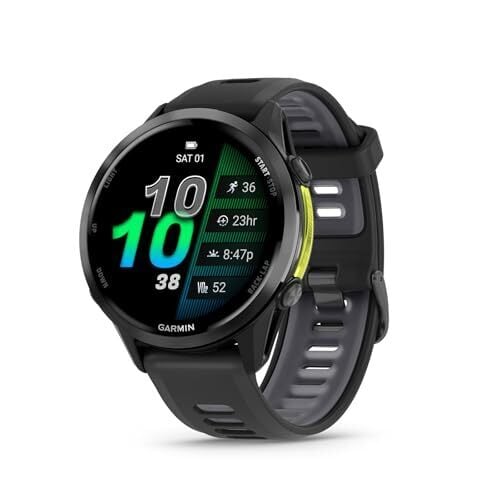
Get a GPS lock early for more accurate tracking
Nothing spikes pre-race anxiety like standing in a corral of hundreds of people watching your watch fail to latch onto a signal. Tall buildings, crowded starts, and a sea of other devices make the first minute of GPS unreliable, which can leave your opening mileage pace wildly off.
The fix is simple: start the GPS search early. Step outside, into the open, as soon as you’ve dropped your bag, and select your run activity at least 10 to 15 minutes before the starting gun. If your watch supports multi-band or dual-frequency GPS, turn it on in the activity settings, since it’s noticeably better in dense downtown starts. Then, don’t press start until the gun goes off (or you cross the line, if you want chip-accurate pacing).
Bonus tip: If you’re in a start corral with a long wait, you can lock the signal and then pause the activity screen. Just remember to hit start when you actually take off.
Build a race-day data screen that tells you only what you need
Multiple data screens are great for training, but overwhelming during a race. Too many numbers invite overthinking, and seeing the “wrong” number at mile two can lead you into a very stressful mile ten.
My recommendation is to build a dedicated race screen with three to four fields at most:
-
Lap pace or average lap pace (not instant pace, which jumps around constantly with GPS)
-
Distance or lap distance, so you know where you are relative to the mile markers
-
Heart rate, especially in the early miles when adrenaline tempts you to go out too fast
-
Elapsed time, for splits against your goal
Keep it clean and stripped down, and avoid the temptation to add cadence, power, vertical oscillation, and everything else. You can always review those stats during your cool-down.
Silence your notifications and create race-specific alerts instead
A text from your boss at mile 14 is nobody’s idea of a good time. Before race day, switch your watch to Do Not Disturb or Airplane mode, or turn on a dedicated activity mode that blocks notifications. This also saves battery, which matters if your marathon is going to take you four-plus hours.
After blocking the outside world, you can set race-specific alerts, like a high heart-rate alert to keep you honest in the first half. I also know runners who set a recurring time or distance alert for fueling—say, every 30 to 40 minutes, or every 5 miles—so remembering to down a gel or a sports drink doesn’t depend on your fading brain.
Use the lap button to fix GPS drift at the mile markers
Here’s one thing I learn the hard way, every time: Your watch will almost always say you’ve run farther than the race course says you have. Race courses are measured along the shortest possible route, but along the way, you’ll weave around people, take wide turns, and generally add extra distance. I’ve run marathons where my watch reads closer to 26.6 miles (nearly an extra half mile), so my “on pace” watch is actually behind my chip time.
The hack: Ignore the watch’s auto-lap and press the lap button manually at each mile marker (or at every kilometer marker, if that’s what the course uses). This gives you pace data aligned to the official course, not the satellite’s best guess. It also gives you a quick mental check against your plan. If you’ve set up your watch for it, display average lap pace, then glance at it a few hundred meters after each marker to see how you’re tracking. And don’t panic if your watch beeps for a mile before you pass the marker—trust the course and your lap presses, and do your best to ignore the mismatched distance adding up.
Lock your touchscreen ahead of race day chaos
Rain, sweat, high-fives, and a hasty cup grab at an aid station can all trigger accidental taps on a touchscreen watch. Few things are worse than discovering at mile 18 that you accidentally paused, ended, or switched screens on your activity. So before the race, turn on your watch’s screen lock, so a stray touch doesn’t do anything.
If your watch has a configurable wake gesture, consider turning it off to save battery, and set the backlight to a short timeout. While we’re talking watch-wearing protocol, remember to wear it snugly, one finger-width above your wrist bone, for a better heart-rate reading as you sweat. Finally, if your watch has one, use the post-race auto-save reminder. (Otherwise, do your best to hit stop after you cross the finish line.)
Again, you don’t need the most premium running-specific watch ahead of race day. If you have time, test these hacks on a long run, so that you’re not wasting any precious mental energy during the big day.
OpenSSH Flaw Lets Attackers Log Into Password-Disabled Linux Accounts
A newly disclosed OpenSSH flaw dubbed “*sshole” can allow attackers to log in to password-disabled accounts on certain musl-based Linux systems simply by submitting a password longer than 256 bytes. “Apparently certain varieties of musl Linux (Alpine, OpenWrt, Buildroot, Yocto, etc.) have had this OpenSSH vulnerability for about a decade,” writes longtime Slashdot reader AlteredEgg. “Upgrade now!” BleepingComputer reports: Security researcher Ozgun Kultekin, who discovered and released details on the vulnerability today, says the flaw has existed since 2016 and stems from how OpenSSH handles password verification errors on systems using the musl C library. Linux accounts can be configured to prevent password logins by replacing their password hash with an asterisk (*) in the /etc/shadow file. Because this is not a valid password hash, no password should allow access to those accounts. However, a patch introduced in OpenSSH in 2016 to fix a username enumeration vulnerability tracked as CVE-2016-6210 changed how OpenSSH handled accounts without usable password hashes.


To prevent attackers from identifying valid usernames through different response times, OpenSSH was modified to perform password hashing even when an account had no usable password hash, including accounts configured with * to block password logins. The problem is that the musl C library’s crypt() function also returns * when password hashing fails, including when a submitted password exceeds its 256-byte limit. This means an attacker can submit an oversized password and cause OpenSSH to compare the returned * against the account’s stored *, resulting in a successful login.
To be clear, the flaw does not allow attackers to bypass passwords on accounts with valid password hashes. […] Admins who can’t immediately install the update can mitigate the issue by turning off SSH password authentication with PasswordAuthentication no in their SSH server configuration and restarting SSH. Kultekin says admins can also check for signs of exploitation by examining SSH authentication logs for password-based logins for accounts that should not allow them.
Read more of this story at Slashdot.
What to Expect From Best Buy’s Black Friday and Cyber Monday Sales This Year
We may earn a commission from links on this page. Deal pricing and availability subject to change after time of publication.
For all intents and purposes, Black Friday sales are already here. There are plenty of deals out already, even though we’re weeks away from the actual event. One of the reasons for that is the competition retailers have with each other to be the first to get your money. One of the retailers that is making the biggest early splash is Best Buy, confirming their entire plan for the rest of the year. Here’s what you need to know.
What is Best Buy doing for Black Friday and Cyber Monday 2026?
Best Buy has announced the following events:
-
DoorBoosters: A Halloween sale from Oct. 30 to Nov. 1.
-
Early Black Friday Deals and Doorbusters: The official start of early Black Friday deals on Nov. 6. New deals will drop every Friday.
-
Black Friday Doorbusters and Deals: Best Buy says this will be its main sale, starting on Thursday, Nov. 19 and running until Nov. 28 with deals on “computing, gaming, home theater, wearables, and more.”
-
Cyber Sunday and Monday: Best Buy is extending Cyber Monday to five days and says you can find deals going up to 50% off select tech.
-
Last-minute savings: The Christmas sale will run from Dec. 18 until Dec. 24.
Do you need to be a member to shop Best Buy’s sale?
You don’t need to be any kind of member to shop Best Buy’s Black Friday in July sale; however, it is free to sign up for a My Best Buy membership, which will get you free shipping. If you join one of their paid subscriptions (My Best Buy Plus for $49.99 per year or My Best Buy Total for $179.99 per year), you’ll get faster free shipping, exclusive prices and deals, an extended 60-day return window on most products, and access to select sales, like the Member Deals Days sale that is going on right now. Paid members will also earn extra rewards from both the current sale and the upcoming Black Friday in July sale.
What deals can I expect during Best Buy’s Black Friday and Cyber Monday sale?
You can find deals on TVs, laptops, headphones, video games, electric bikes, and more. There will be new deals every week in stores, on its website, and in the Best Buy mobile app. They’ll offer price matching, meaning if the price drops further during the sale (Dec. 24), they will match it and offer a refund.
The best deals during Best Buy’s Black Friday (so far)
Here are the best deals I’ve found so far. I’ll be updating these deals throughout the sale, so make sure to come back and see what’s new. Remember that new deals drop every day.
Apple – AirTag 4 pack (2nd generation) – 2026
$79.99
at Best Buy
$99.00
Save $19.01
Save $19.01

$79.99
at Best Buy
$99.00
Save $19.01
Save $19.01
LG – 30-in Wide 6.3 Cu. Ft. Freestanding Electric Convection Smart Range
$599.99
at Best Buy
$999.99
Save $400.00
Save $400.00

$599.99
at Best Buy
$999.99
Save $400.00
Save $400.00
TCL – 50″ Class QM6K Series 4K UHD HDR QD Mini LED Smart TV with Google TV with Gemini (2025)
$429.99
at Best Buy
$749.99
Save $320.00
Save $320.00

$429.99
at Best Buy
$749.99
Save $320.00
Save $320.00
LG – 65″ Class C6 OLED evo AI 4K Smart webOS TV with Perfect Black, Perfect Color and Brightness Booster (2026)
$1,399.99
at Best Buy
$2,699.99
Save $1,300.00
Save $1,300.00

$1,399.99
at Best Buy
$2,699.99
Save $1,300.00
Save $1,300.00
Pioneer – 50″ Class LED 4K UHD Smart Roku TV
$199.99
at Best Buy
$249.99
Save $50.00
Save $50.00

$199.99
at Best Buy
$249.99
Save $50.00
Save $50.00
Samsung – 75″ Class M70H Series Mini LED 4K UHD SamsungVision AI Smart Tizen TV (2026)
$499.99
at Best Buy
$729.99
Save $230.00
Save $230.00

$499.99
at Best Buy
$729.99
Save $230.00
Save $230.00
Lenovo – IdeaPad Slim 3 Chromebook Laptop – 14″ Full HD Touchscreen Laptop – MediaTek Kompanio 520 2022 – 4GB Memory – 64GB eMMC – Abyss Blue
$254.99
at Best Buy
$299.99
Save $45.00
Save $45.00

$254.99
at Best Buy
$299.99
Save $45.00
Save $45.00
HP – OmniBook 3 16″ 2K Touchscreen Laptop – AMD Ryzen 5 40 (2025) – 8GB Memory – 256GB SSD – Glacier Silver
$429.99
at Best Buy
$779.99
Save $350.00
Save $350.00

$429.99
at Best Buy
$779.99
Save $350.00
Save $350.00
Sony – WH-1000XM5 Wireless Noise Cancelling Over-the-Ear Headphones – Black
$199.99
at Best Buy
$398.00
Save $198.01
Save $198.01

$199.99
at Best Buy
$398.00
Save $198.01
Save $198.01
Shokz – OpenDots ONE Open-Ear Clip On True Wireless Bluetooth Earbuds – Black
$169.99
at Best Buy
$199.99
Save $30.00
Save $30.00

$169.99
at Best Buy
$199.99
Save $30.00
Save $30.00
Systemd Wants Rust in, But its Core Will Have to Wait
The rustification is ongoing, with Rust-written programs now allowed and existing C code not being ported.