Razer is adding to its extensive lineup of keyboards with a new model aimed at combining ergonomics, productivity, and performance in a split design, and this time it’s not a limited edition drop. Called the Pro Type Ergo, Razer’s first ever split keyboard is available now for $189.99, and it comes with some notable features like a center
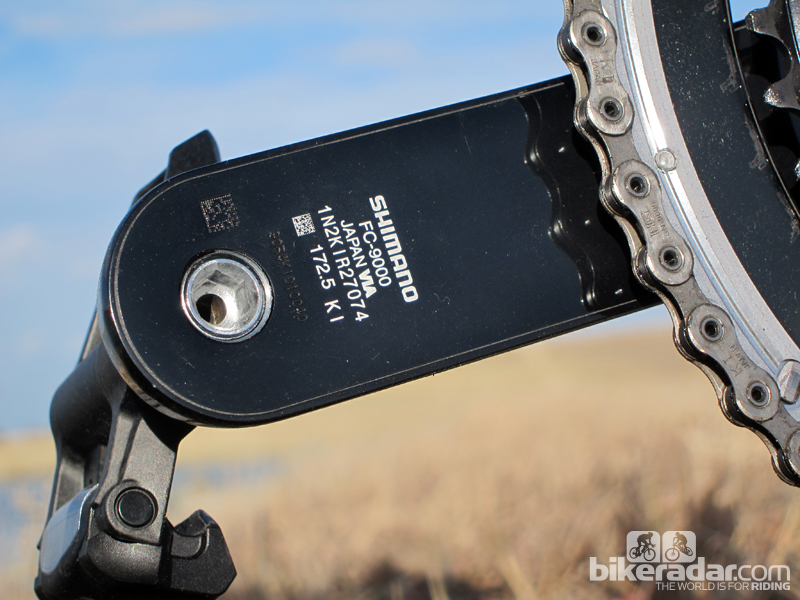
When Shimano launched its Dura-Ace 9000 groupset back in 2012, it introduced a new weight-saving technique, where the outward and inside faces of the cranks were bonded together, with a cavity between them. An advance on the previously hollow-forged design of Dura-Ace 7900, Shimano claimed its new Hollowtech design saved weight with no loss in rigidity.
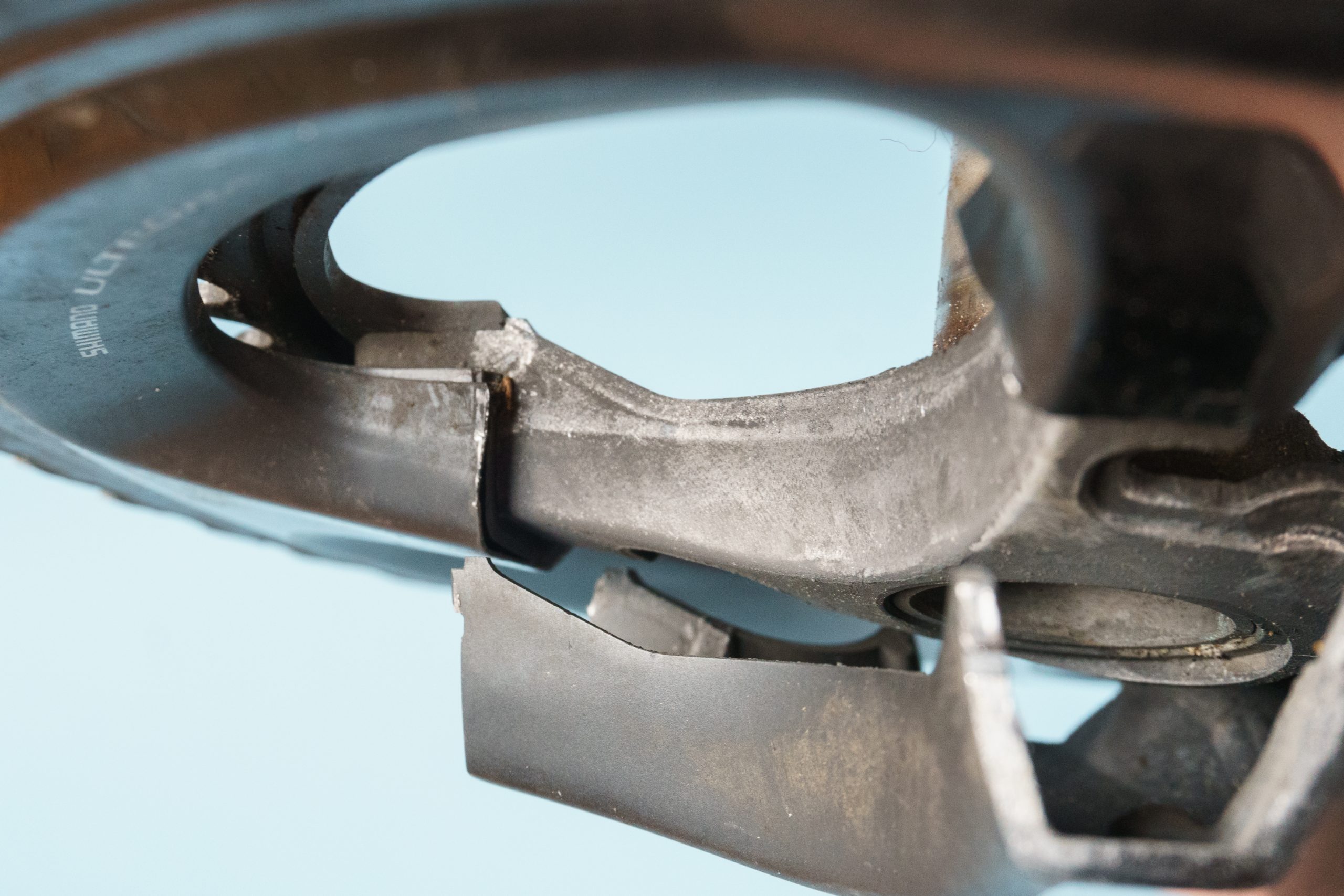
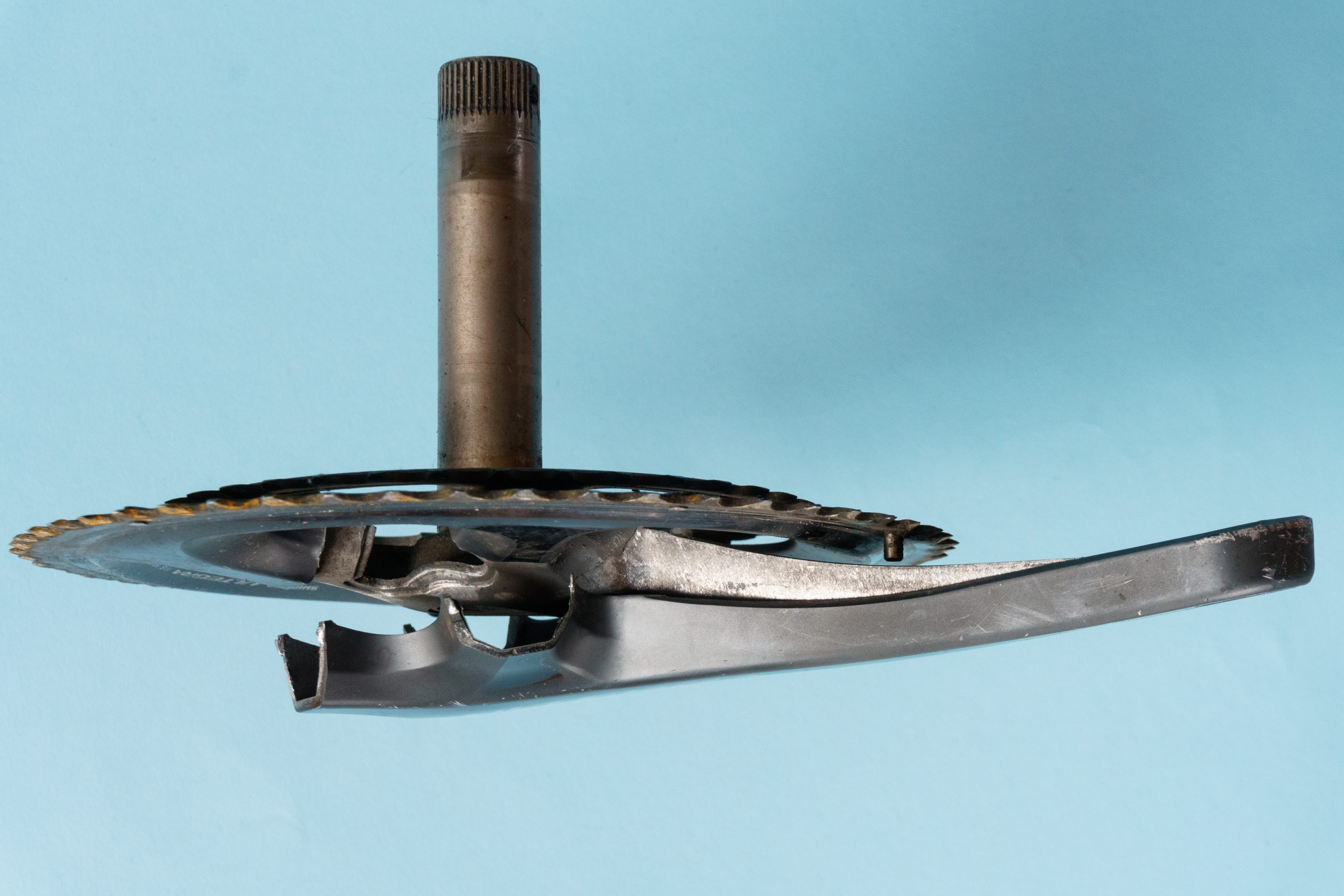
A few years later, reports began to emerge of crankset delamination and failure, reaching their thousands before Shimano acknowledged there was a potential issue with the bonding process.
This led to the recall for inspection of around 2.8 million 11-speed Dura-Ace and Ultegra cranksets worldwide and Shimano agreeing an $11.5m penalty in the US for failing to report the problem promptly.
With the deadline to submit a claim approaching in August 2026, we look back over the timeline of Shimano’s costly product failure.
2012: Dura-Ace 9000 launched with new bonded crank arms
Dura-Ace 9000 was Shimano’s first crankset to employ Hollowtech with bonded two-piece crank arms. James Huang/Future Publishing
Shimano launched its first crankset with bonded arms as part of the Dura-Ace 9000 groupset. It was its first with four arms, in place of five, which were arranged asymmetrically on the spider rather than being evenly spaced.
The outgoing Dura-Ace 7900 groupset – launched in 2008 – also used a two-piece hollow design, but the parts were forged together, rather than bonded.
When we reviewed the groupset, we commented on the larger section to the alloy crank arms over the predecessor Dura-Ace 7900 groupset and on the visible bond line between the two faces.
It was followed in 2013 by Ultegra 6800, which, in Shimano fashion, replicated at a lower price and slightly increased weight much of the functionality of the flagship groupset.
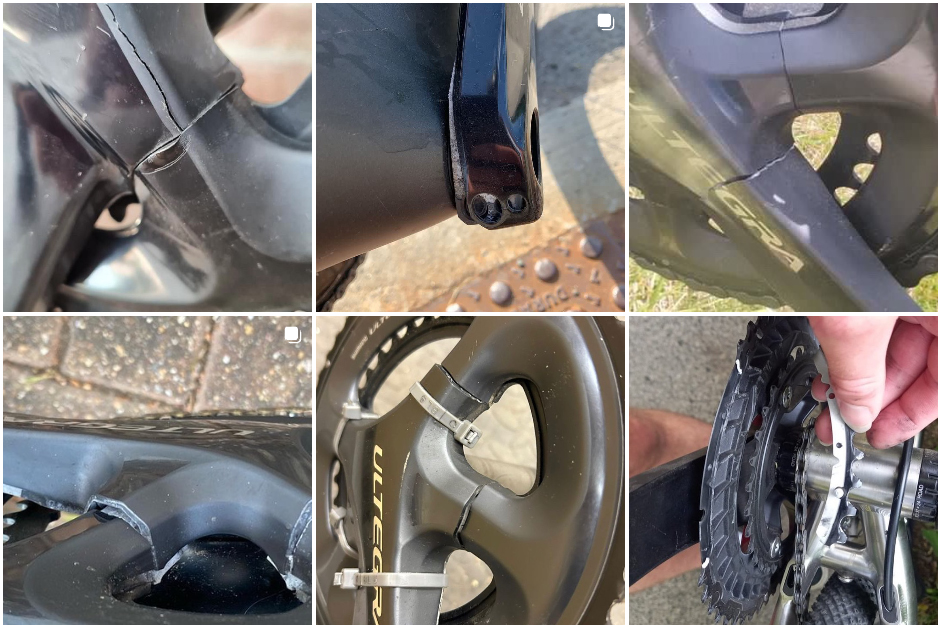
@thanksshimano has been posting about Shimano crank failures since 2018. Thanksshimano / Instagram
The first reports of failed Shimano cranks emerged online. Starting in late 2017, the @thanksshimano Instagram account began to fill up with shots of failed Shimano Ultegra and Dura-Ace cranks, spindles and more, with the most recent dating from March 2024.
2020: BikeRadar first reported on crankset failure
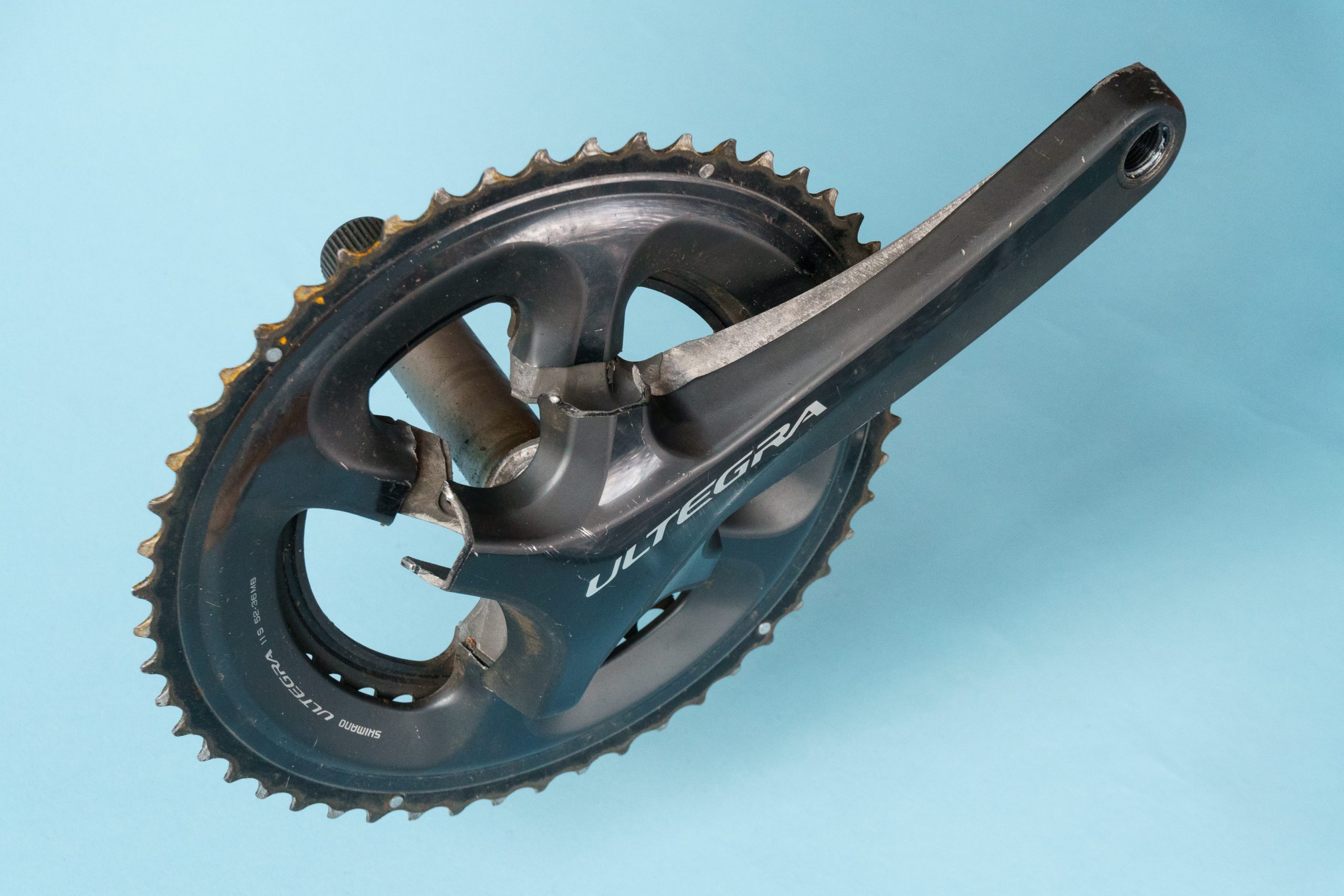
A managing director at BikeRadar’s then owner alerted us to the crankset problem. Jack Luke / Immediate Media
BikeRadar has been following the Shimano crankset story since April 2020, when we reported on a crankset failure in the team.
Riding to work in January of that year, Stuart Forrest experienced a complete failure of the crankset, with the outer part of the crankarm separating from the rest of the crank.
He’d covered around 15,000km on the groupset in six years and had noticed a couple of weeks earlier that the cranks had started to creak.
Responding to our report, Shimano’s spokesman pointed to the huge global user base of its cranksets and advised riders experiencing problems to consult a dealer.
2021: Shimano said there wasn’t a design problem with its cranks
In 2021, Shimano denied there was a design problem with its Hollowtech cranks. Jack Luke / Our Media
In late 2021, Road.cc reported on a crank failure experienced by one of its readers, which spurred other riders to report similar incidents.
Shimano told Road.cc at the time that its engineers hadn’t found a design problem with its cranks, although it was investigating to see if there was a specific cause.
21 September 2023: official recall announced in the US
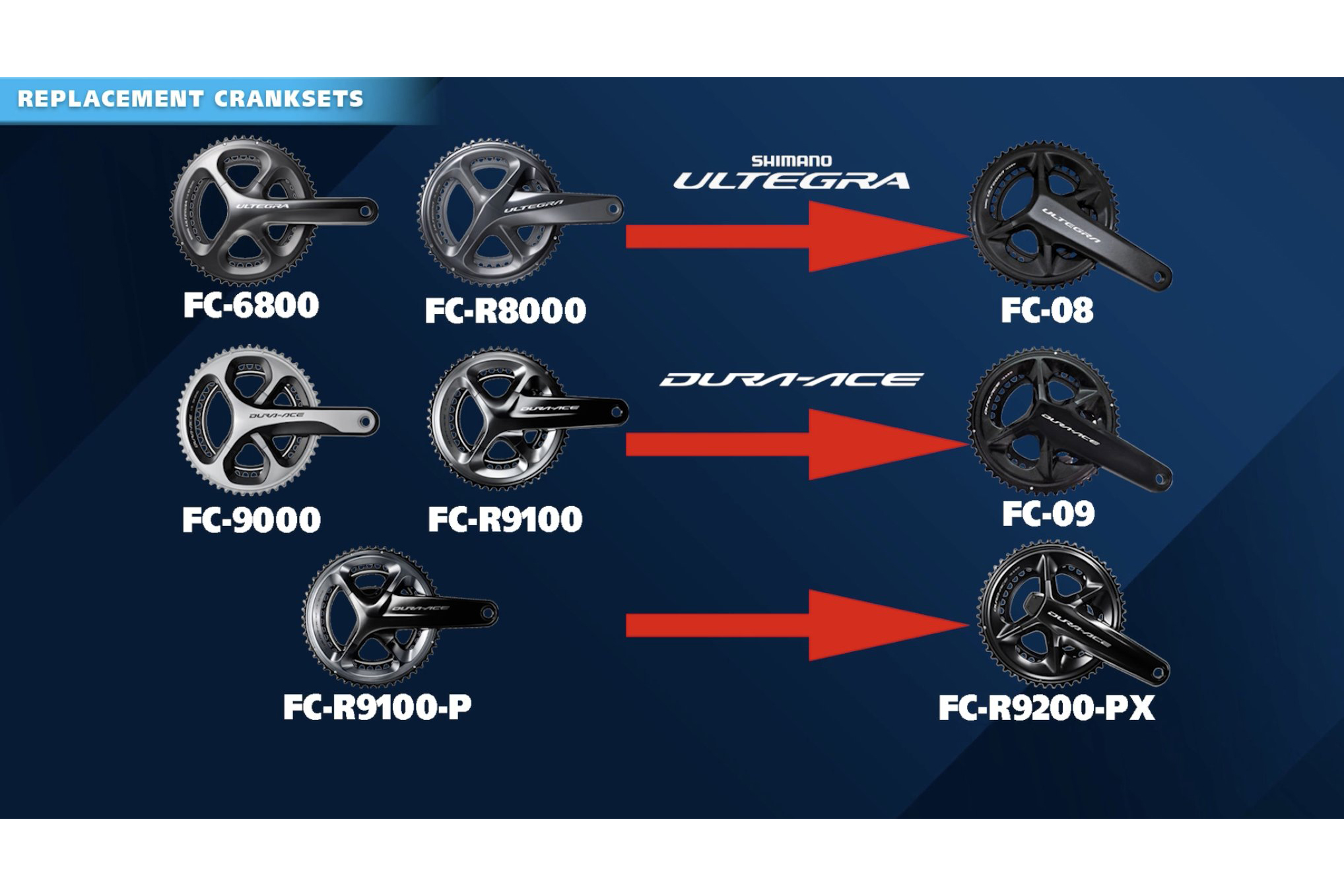
Shimano’s recall replaced defective 11-speed cranksets with a modified version of its 12-speed models. Shimano
In September 2023, 11 years after it had introduced the design, Shimano announced a US recall of its 11-speed Hollowtech cranks in the US, and a global inspection and replacement programme.
This affected a total of 760,000 cranksets in the US and 2.8 million globally, after 4,519 reported instances of cranksets separating.
Affecting the original Dura-Ace 9000 and Ultegra 6800 cranksets, as well as the more recent Dura-Ace R9100 with and without a power meter and Ultegra R8000, this was the first time Shimano had acknowledged a problem with its Hollowtech cranksets.
Shimano confirmed owners of cranksets showing signs of bonding problems and delamination would be provided with a free replacement.
22 September 2023: Shimano clarified recall programme
Only specific crank models and production codes were affected by the recall. Ben Delaney / Immediate Media
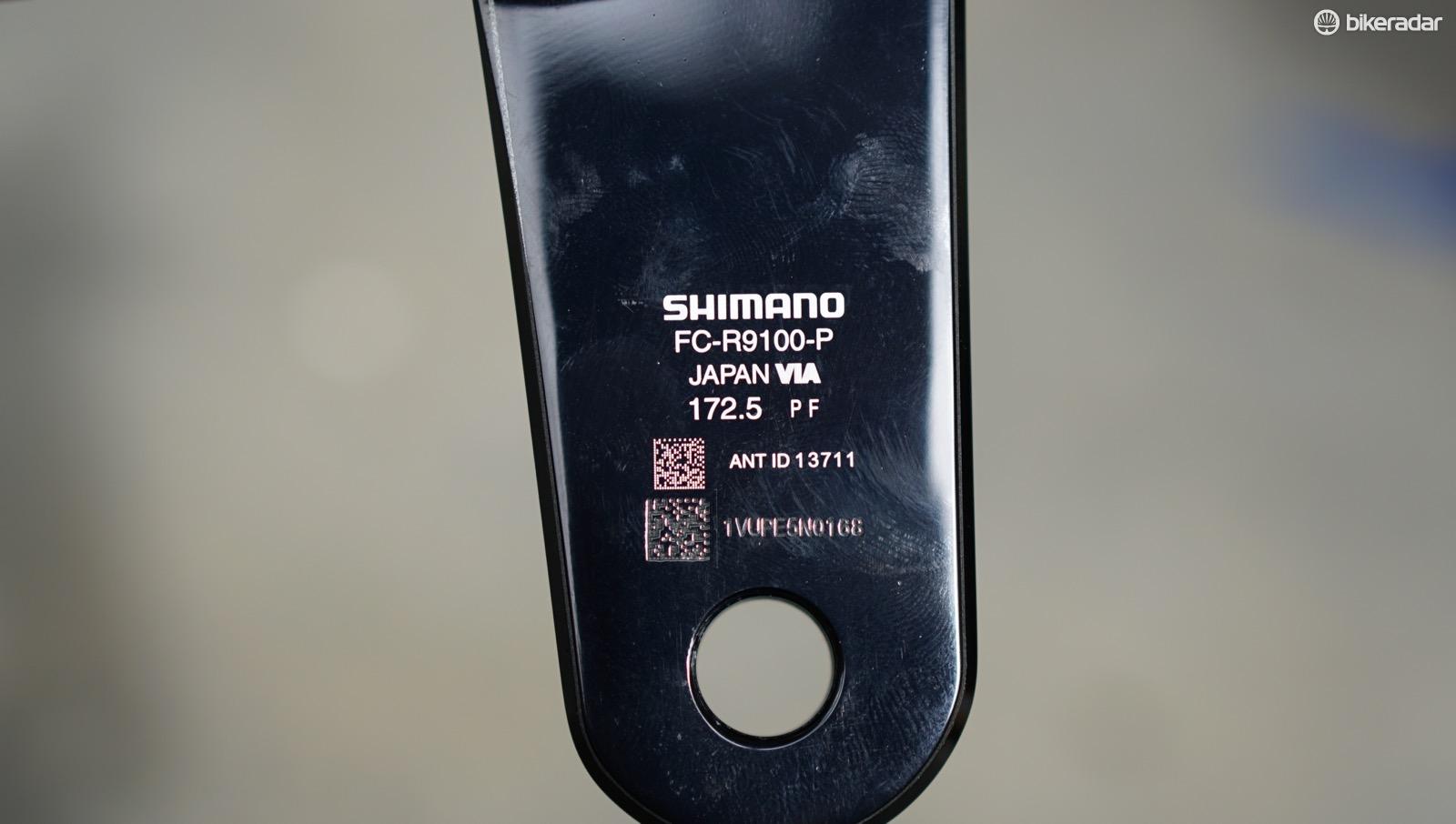
The next day, Shimano clarified which cranksets were affected by the recall, specifying that only certain model numbers, for cranksets made before 2019, and with a specific range of production codes, needed inspection by a dealer and potential replacement.
Shimano excluded from its warranty cranks modified by third parties, such as 4iiii and Stages power meters, but included them in its inspection process.
October 2023: class-action lawsuit filed in the US relating to crank failures
In October 2023, a class-action lawsuit was filed in the US against Shimano, Specialized and Trek, claiming the announced recall was inadequate.
Because it did not cover all Hollowtech cranksets, the suit claimed cyclists could be riding a dangerous bicycle for an extended period without being sure their cranks wouldn’t fail. It also sought redress for riders who had already disposed of a failed crankset.
In addition, it pointed out that mechanics could be liable if a crankset failed subsequent to an inspection and caused injury.
Trek and Specialized were included in the suit because they were accused of “knowingly and intentionally misrepresenting, omitting, concealing, and/or failing to disclose material facts regarding the quality, reliability, and safety of the cranksets”.
October 2024: some bike shops claimed they were ‘banned’ from the programme over high failure rates
A year later, Road.cc reported some bike shops claimed they had been put on a ‘banned list’ for the crankset inspection programme, because they had failed too many cranks. Shimano’s UK distributor, Madison, said Shimano would no longer pay the £35 per inspection fee to shops on the list.
Meanwhile, some shops claimed they were returning a large proportion of cranks to Shimano because they were not in a position to definitively pass a crankset based only on visual inspection.
August 2025: class-action lawsuit neared conclusion
Roll forward another year and the US judge issued preliminary approval for the settlement of the 2023 US class-action lawsuit.
The settlement was granted final approval by the court in February 2026 and involved Shimano issuing a magnifying device and a manual for retailers, to assist them in inspection. Shimano also opened a website through which affected riders could submit reimbursement claims. It stated the impact on its future business was expected to be immaterial.
March 2026: Shimano agreed to pay an $11.5m penalty
Shimano has paid an $11.5m civil penalty in the US for not promptly reporting the crankarm defect. Jack Luke / Our Media
The US Consumer Product Safety Commission announced an $11.5 million civil penalty settlement with Shimano, which it concluded had failed to report promptly to the commission the defect in its 11-speed cranks.
The settlement also required Shimano to ensure compliance with the Consumer Product Safety Act and submit annual reports on its compliance programme and internal controls.
August 2026: deadline to submit claim form for class-action lawsuit closes
14 years after it launched Dura-Ace 7000, Shimano is finally looking to draw a line under the saga, with a deadline of 4 August 2026 to submit a claim, with documented costs, if you purchased and installed a replacement crankset on your bike outwith the replacement programme.
Pandoc is a document-conversion program
that can translate among a myriad of formats, including LaTeX, HTML, Office Open XML
(docx), plain text, and Markdown. It is also
extensible by writing Lua
filters that can manipulate the document structure and perform arbitrary
computations.
Pandoc has appeared in various LWN articles over the years, such as my look at Typst and at the importance of free software to science in
2025, but we have missed providing an overview of the tool. The February release of Pandoc
3.9, which comes with the ability to compile the program to WebAssembly (Wasm), allowing Pandoc
to run in web browsers, will likely also be of interest.
Bang & Olufsen is marking its 100th year in existence by unveiling the final two pieces of the Beolab 90 Atelier series: the Monarch and Zenith editions. These super-exclusive (read: not for us common folk) speakers will be limited to just 10 pairs per edition with an an expected ultra-high MSRP hovering above half a million dollars.
Bang & Olufsen is marking its 100th year in existence by unveiling the final two pieces of the Beolab 90 Atelier series: the Monarch and Zenith editions. These super-exclusive (read: not for us common folk) speakers will be limited to just 10 pairs per edition with an an expected ultra-high MSRP hovering above half a million dollars.
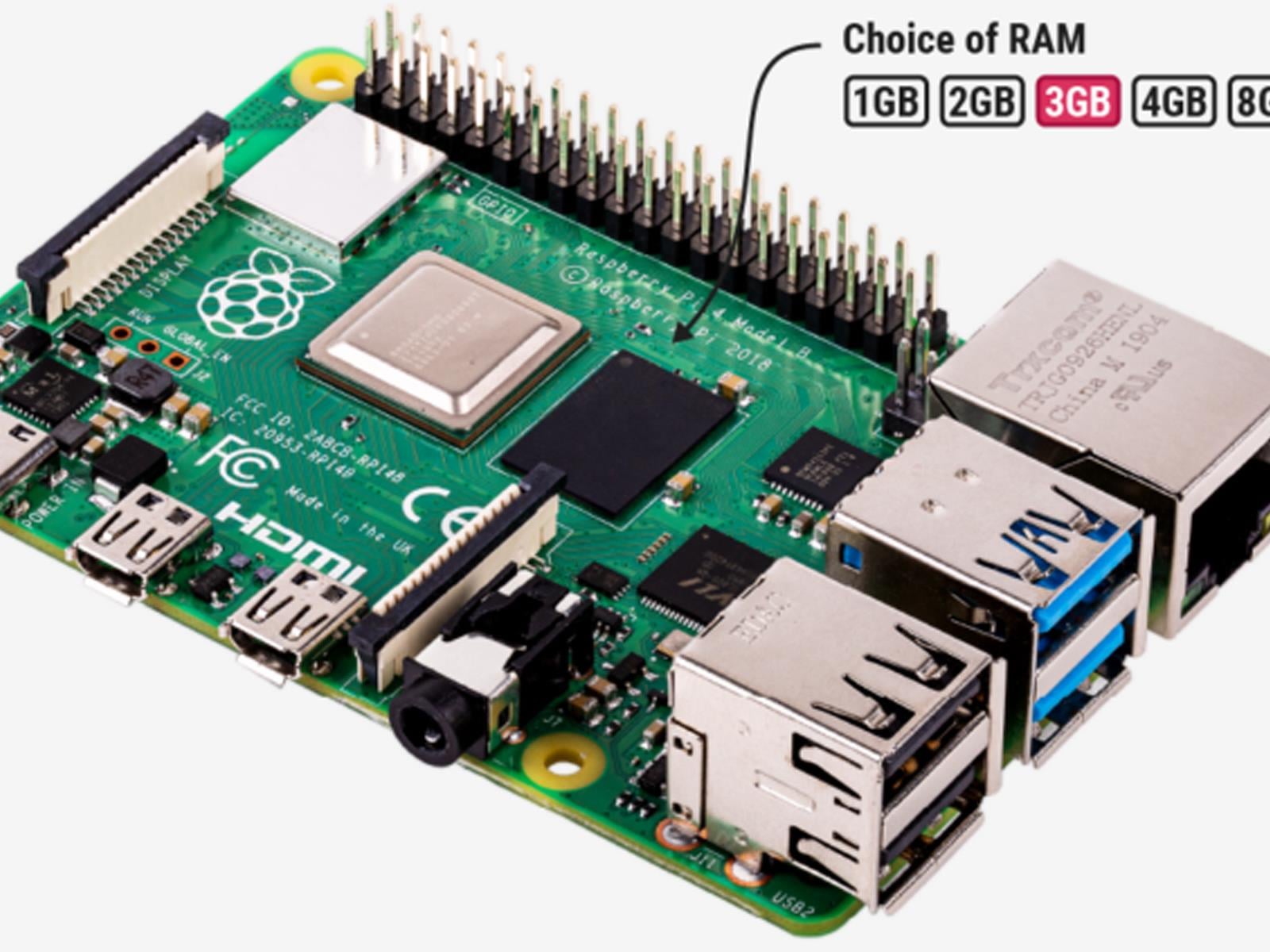
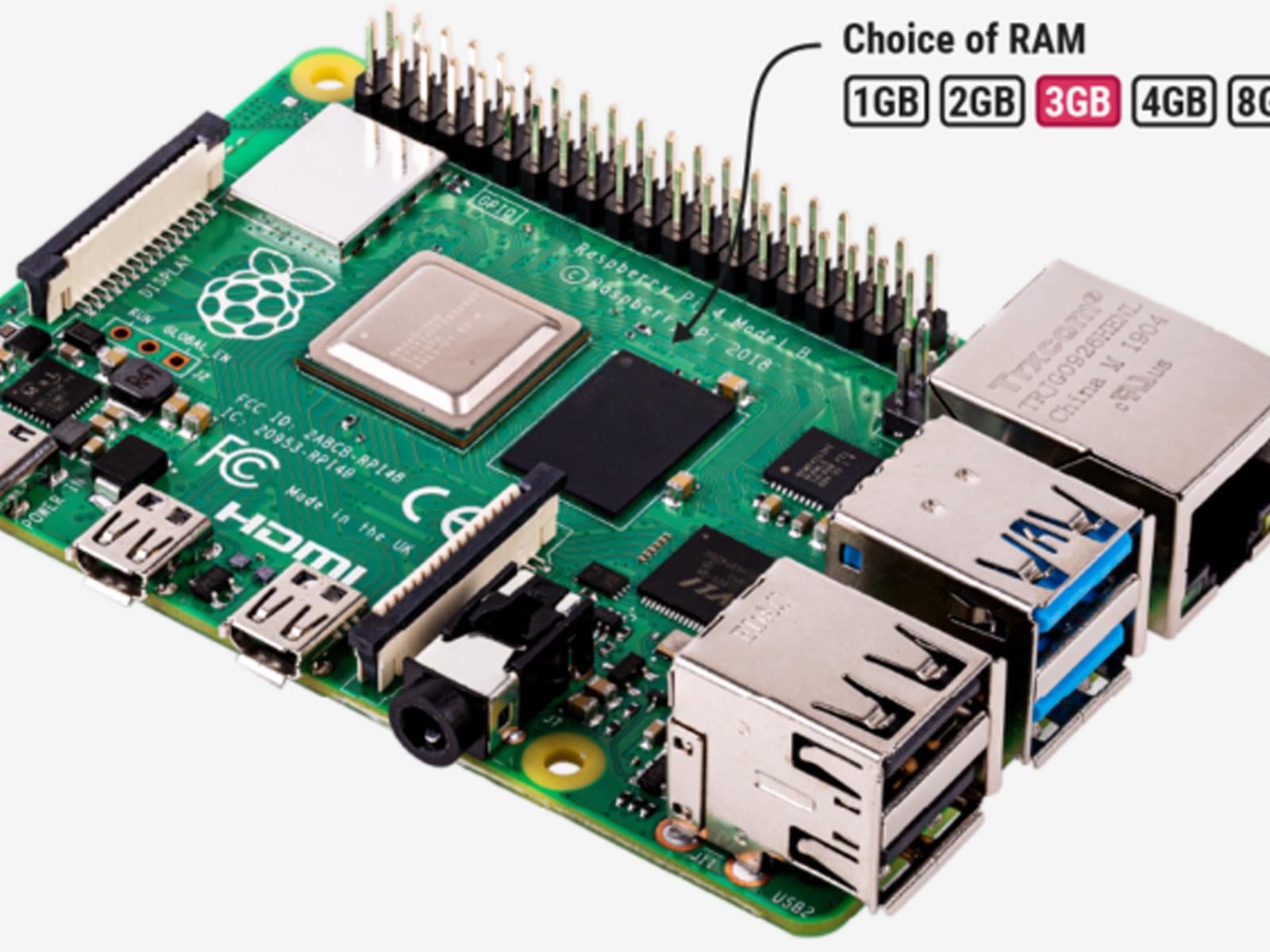
Raspberry Pi Foundation is once again raising prices of its single board computer (SBC) lineup, with price hikes ranging from $11.25 on the low end to all the way up to $150. Sadly, this is not an April Fools’ Day prank despite the April 1st timing of the announcement. However, as a salve to what Raspberry Pi Foundation is calling a “challenging
Raspberry Pi Foundation is once again raising prices of its single board computer (SBC) lineup, with price hikes ranging from $11.25 on the low end to all the way up to $150. Sadly, this is not an April Fools’ Day prank despite the April 1st timing of the announcement. However, as a salve to what Raspberry Pi Foundation is calling a “challenging
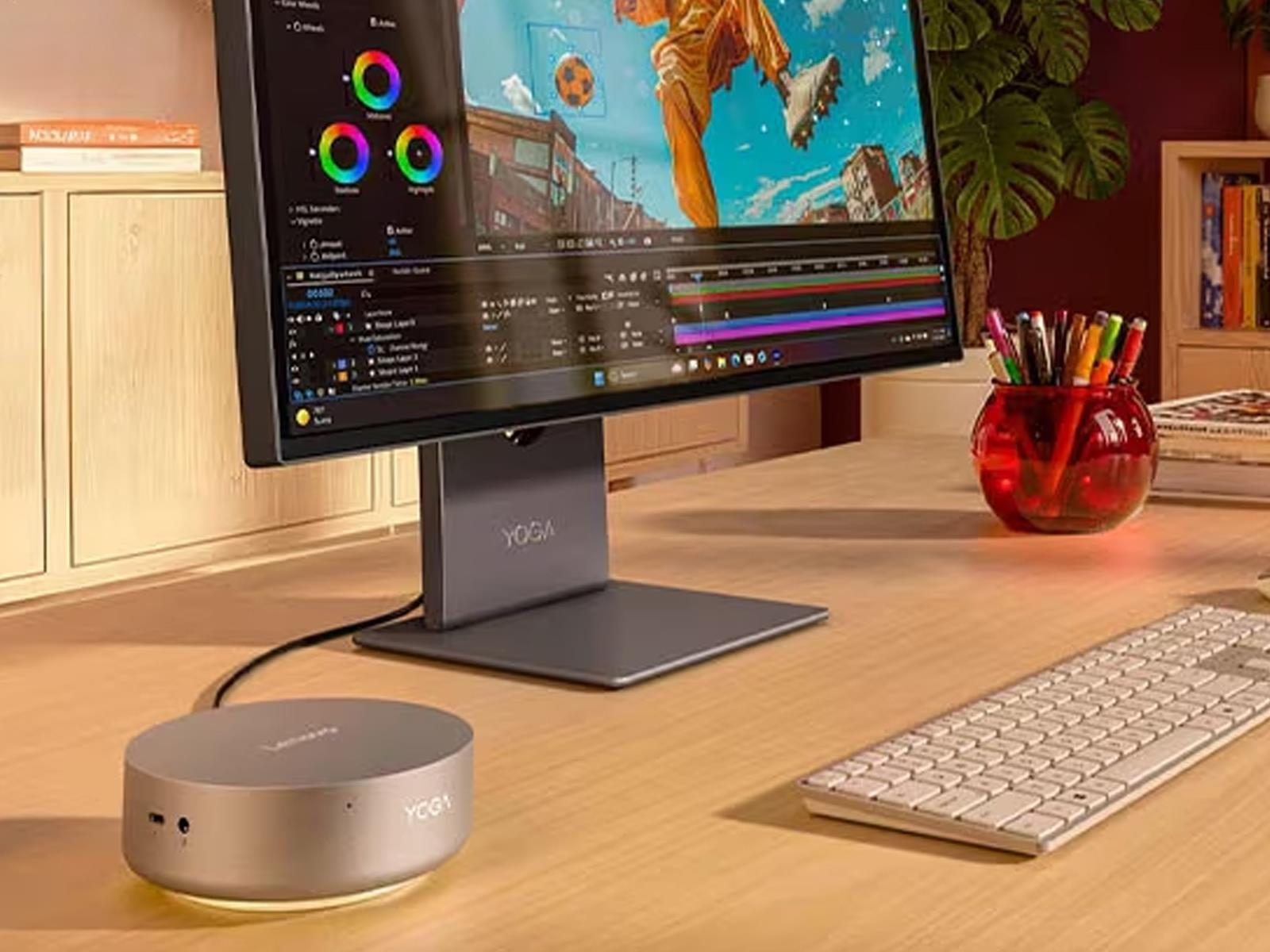
Channeling its inner Tony Montana from Scarface, Lenovo has a message for potential Mac mini buyers who prefer to stay within the Windows ecosystem, and that message is ‘Say hello to my little friend!’. Or more precisely, say hello to the Yoga Mini i Gen 11, a puck-shaped mini PC with sleek and compact design that looks like a circular M4
The first race of Zwift Racing League 2025/26’s final round happens Tuesday, April 7, and it’s a team time trial with a spicy finish!
Hell of the North was named in a nod to Paris-Roubaix, my favorite one-day race on the cycling calendar. The name is perhaps a bit dramatic, given that this is a flat route with a “petit” climb at the end. Be that as it may, it’s one of France’s newer routes, hasn’t been raced yet in ZRL, and should make for an interesting opening TTT.
Let’s dig into the course, look at bike selection, and more!
Looking at the Route: Hell of the North
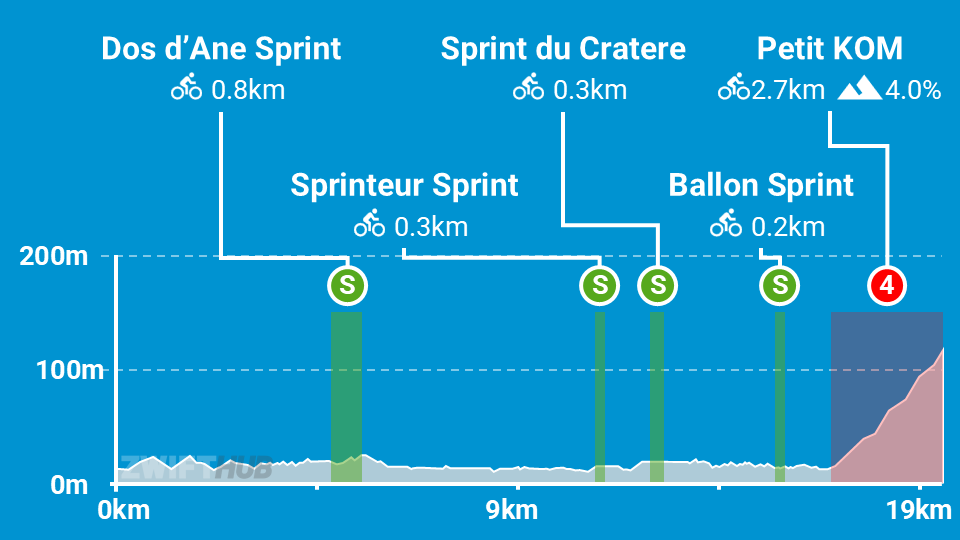
All riders will race 1 lap of France’s Hell of the North, for a total race length of 20.1km with 241m of elevation gain.
Broadly speaking, this is a simple route: 17km of flattish roads, finishing with the Petit KOM, a 2.7km climb averaging 4%:
But let’s drill down a bit into key sections and waypoints:
First Draft Powerup given in the start pens
Flat Start + Les Intestins (first 3.6 km): Get up to speed quickly on the flat lead-in, then rotate pulls in a way that keeps you fast over the three peaks of Les Intestins. This may be the most technical portion of the route.
Ramps Up Dos d’Âne Sprint @5.6 km (600 meters long, 2-3%): Two short, cobbled ramps up to the sprint arch will reward teams who raise their power to keep speeds high.
Dos d’Âne Sprint Arch and 2nd Draft Boost Powerup @6.1km
Sprinteur Sprint Arch and 3rd Draft Boost Powerup @11.9km
Ramp after Sprinteur Sprint@12.6 km (300 meters, 2.5%): Another slack climb you’ll want to power through.
Sprint du Cratère Reverse and 4th Draft Boost Powerup @13.4km
Ballon Sprint and 5th Draft Boost Powerup @16.2km
The Petit KOM is, of course, the standout feature on this route. In a scratch race, it’s where the pack breaks up as riders with high w/kg drop the sprinters whose wheels they’ve been borrowing thus far.
In a TTT, though, the Petit KOM requires a different kind of strategy. While it’s a sub 5-minute climb for A riders, and sub 6 minutes for B, it’s not just about the best effort you can put in. Because at only 3.9%, this is a very draftable climb, particularly in the flatter bits. (This climb zig-zags its way to the top, and the “zig” portions, when you’re traveling roughly toward the start pens, are much flatter than the “zags”.)
You may also want to sacrifice a rider or two, particularly on the flatter portions of the climb, since your time is taken based on the fourth rider to finish.
A few years ago, powerups were announced for a ZRL TTT… but as I recall, it never actually happened.
I always thought that would be a fun addition, though. And it sounds like it’s going to happen for this stage! WTRL says we’ll get a draft boost (van) powerup in the start pens, and at every arch. See notes above under “Looking at the Route” for arch locations.
Reminder: the draft boost increases the draft effect you are experiencing for 40 seconds. It’s best used at high speeds (flats and descents), and only helpful when you’re drafting!
Teams would be wise to discuss how to best use these powerups, as you will receive a total of 5 during the race. I see “offensive” and “defensive” approaches to powerup use in this race:
One smart “offensive” approach would be to trigger the powerup ~45 seconds before you’re slated to take a pull on the front, making it easier to sit on the wheel(s) near the front so your legs are as fresh as possible when it’s time to take your pull. This may allow you to take a slightly harder pull than usual, and if everyone on the team does this, it could trim valuable seconds off your time.
Alternatively, if a rider is struggling to stay in the wheels, they could use the powerup to ease their effort wherever they’re at in the pull order. This is the “defensive” approach. It’s also sort of the default/bailout approach, because some sprint arches come within a minute or two of each other, so you’ll want to trigger the powerup regardless of where you’re at in the pull order, just so it’s not wasted.
Bike Frame + Wheel Choice
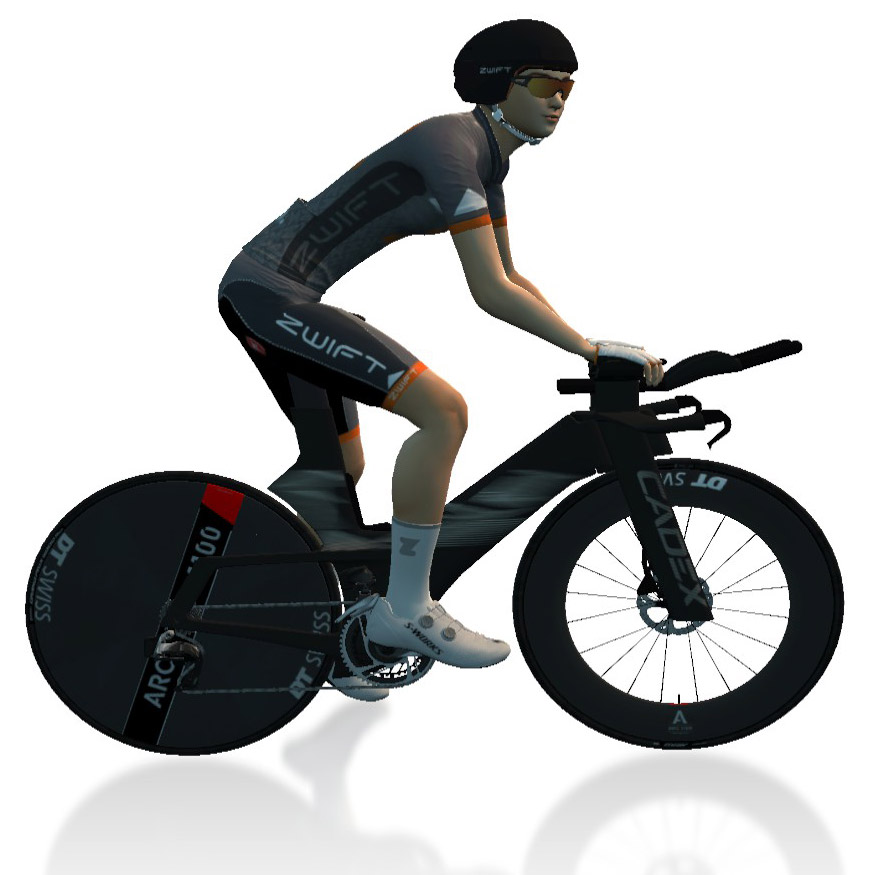
Bike choice here is simple, assuming you have access to everything: go aero.
The math is straightforward: a lighter frame like the Scott Plasma RC Ultimate only saves half a second on the Petit KOM at 5 W/kg. And the fastest lightweight wheels (ENVE SES 4.5) don’t save any time over the DT Swiss ARC 1100 DICUT 85/Disc on the climb, given how aero the disc is.
That scant savings from a lighter frame will be wiped out on the flats, where the disc wheel drastically outperforms climbing wheels. So full aero it is.
Many recon rides are planned each week on the upcoming ZRL route. If you’re unfamiliar with this course, jump into an event and familiarize yourself with the route! Find a list of upcoming ZRL recon rides at zwift.com/events/tag/zrlrecon.
Additionally, riders in the Zwift community do a great job every week creating recon videos that preview the courses and offer tips to help you perform your best on the day. I’ll add recons below as I find them, but please comment if you find a useful one that isn’t yet listed!
Mixed courses like this week give valuable seconds to “balanced” teams with two strengths:
Big pure-power riders who can keep their watts high on the front while staying in single-file formation to conserve in the draft behind
A set of four riders who have a high W/kg in that 4-6 minute VO2max window, to deliver the final punch up the Petit KOM.
On a course like this week’s, I recommend all team members set their Trainer Difficulty to the same value, and make sure that value is at least 75%, so you feel slight gradient changes and increase power to compensate. This will help you automatically punch on the uphills, keeping your overall speed high.
Your goal in a ZRL TTT is to get four riders across the line in the shortest time possible. That means every team’s pace plan will differ based on each rider’s abilities. I highly recommend having an experienced DS on Discord directing your team, especially if your team contains some inexperienced TTT riders.
Lastly, if you want to go further down the TTT rabbit hole, I highly recommend Dave Edmond’s Zwift TTT Calculator tool.
Today, the AerynOS project released AerynOS 2026.03 as the ISO snapshot for March 2026 of this independent Linux distro previously known as Serpent OS.
Last month Dell upstreamed the firmware needed for their XPS 13 935 Snapdragon X1 Elite laptop. This makes the Linux outlook for this ARM-based Dell XPS laptop much better than before in not having to worry about extracting necessary firmware blobs from Windows 11. Now another step forward for the Dell XPS 13 9345 is being made with a new EC driver being posted to enhance the hardware support…
Longtime Linux developer David Woodhouse sent out a patch series today to “deprecate legacy IP” support within the Linux kernel. While some of his commentary his April 1st-esque, he does acknowledge much of this work has merit. Ultimately it can allow for building a Linux kernel with IPv6-only support and working on allowing “legacy” IPv4 support to be disabled as part of the kernel build…
From ricing to hyprctl, this window manager rewards tinkerers with a sleek, efficient desktop while reminding casual users that convenience isn’t always part of the deal.
MB Wear is the brainchild of former pro riders Tiziano Dall’Antonia and Marco Bandiera, and it has the largest range of cycling-specific socks I’ve seen in many years.
The newly launched brand’s range includes a mix of fabrics, designs, weights and shapes to cover everything from aero-optimised time trialling to all-weather off-roading.
The socks are made using materials including graphene-infused cotton, polyamide with silver ions and ceramic-infused yarns. Each sock is designed for its specific purpose, and MB still finds space to include some funky designs.
The Pro Specialis is MB Wear’s go-to all-rounder. Warren Rossiter / Ourmedia
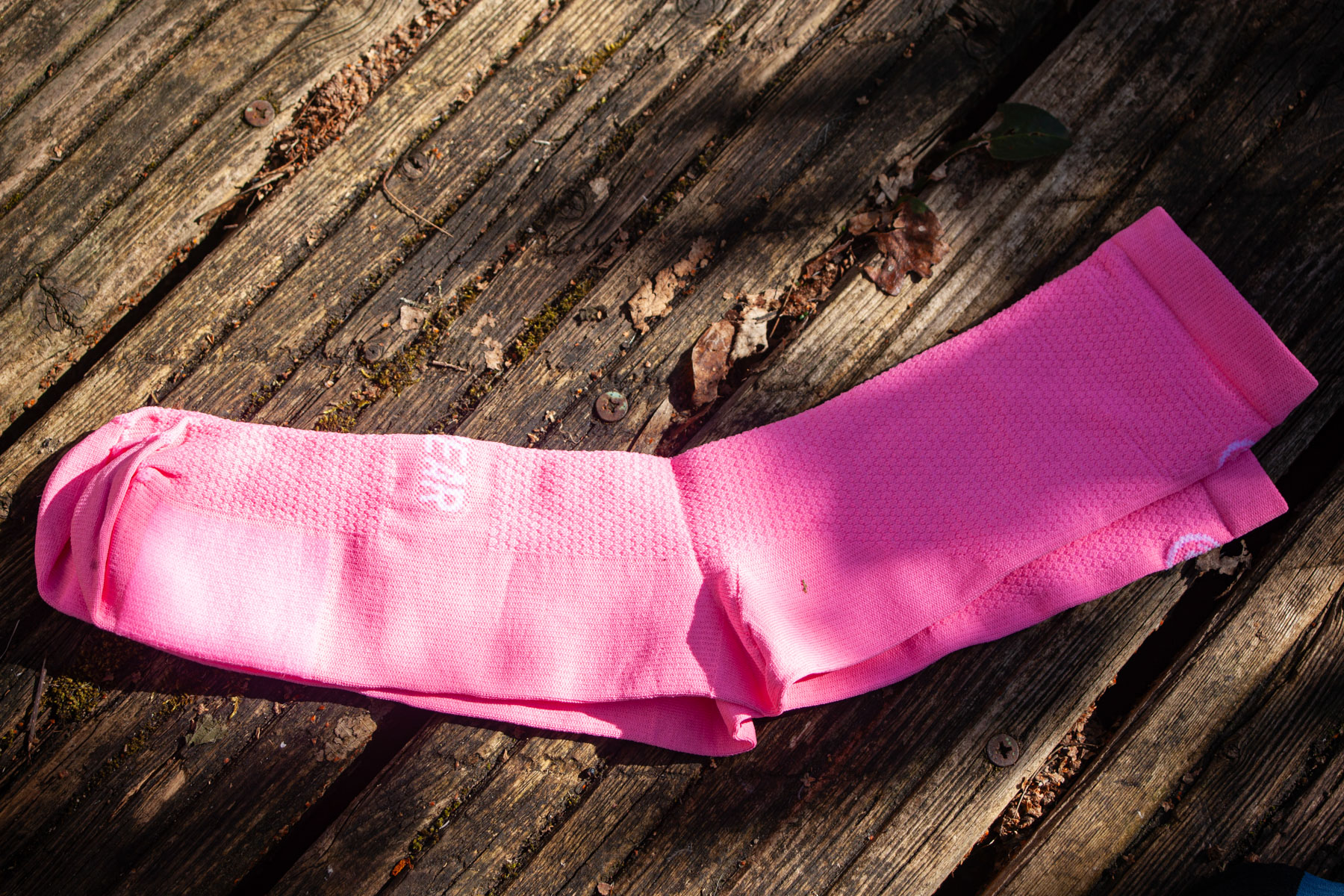
The Pro Specialis sock is priced at £16.99 / €19.50 and designed as MB’s all-year round option.
The Q-Skin Polyamide fabric is claimed to offer UV-A and UV-B absorption, and abrasion resistance. Along with the internal construction and design, it’s said to help circulation by emitting FIR – beneficial electromagnetic waves that help increase blood circulation.
These are big claims for £17 socks. Personally, I just like the neon pink colourway.
Aero-optimised socks
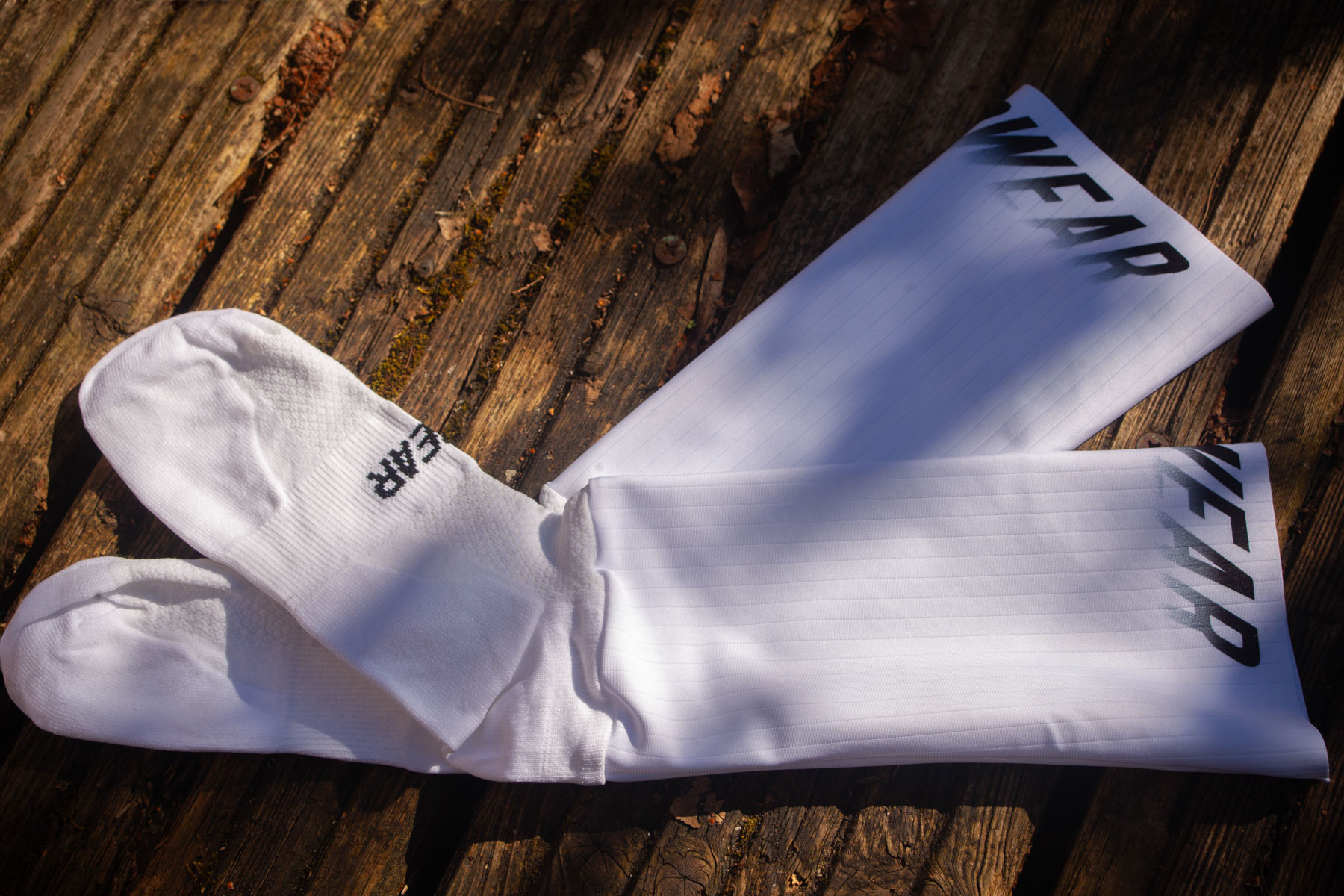
The Aero Fast socks’ upper is made from Lycra 3.0, with the foot made from a 3D-woven Q-Skin silver ion fabric. Warren Rossiter / Ourmedia
The Aero Fast and Aero Dry socks are MB Wear’s most expensive offerings at £29.99 / €34.90. The foot of the socks mirrors the construction of the Pro socks. This seamlessly joins a Lycra 3.0 upper section that’s ribbed for aerodynamic efficiency, according to MB Wear, and extends 19cm above the ankle.
The MB Wear Aero Dry has a lightweight, breathable 19cm upper. Warren Rossiter / Ourmedia
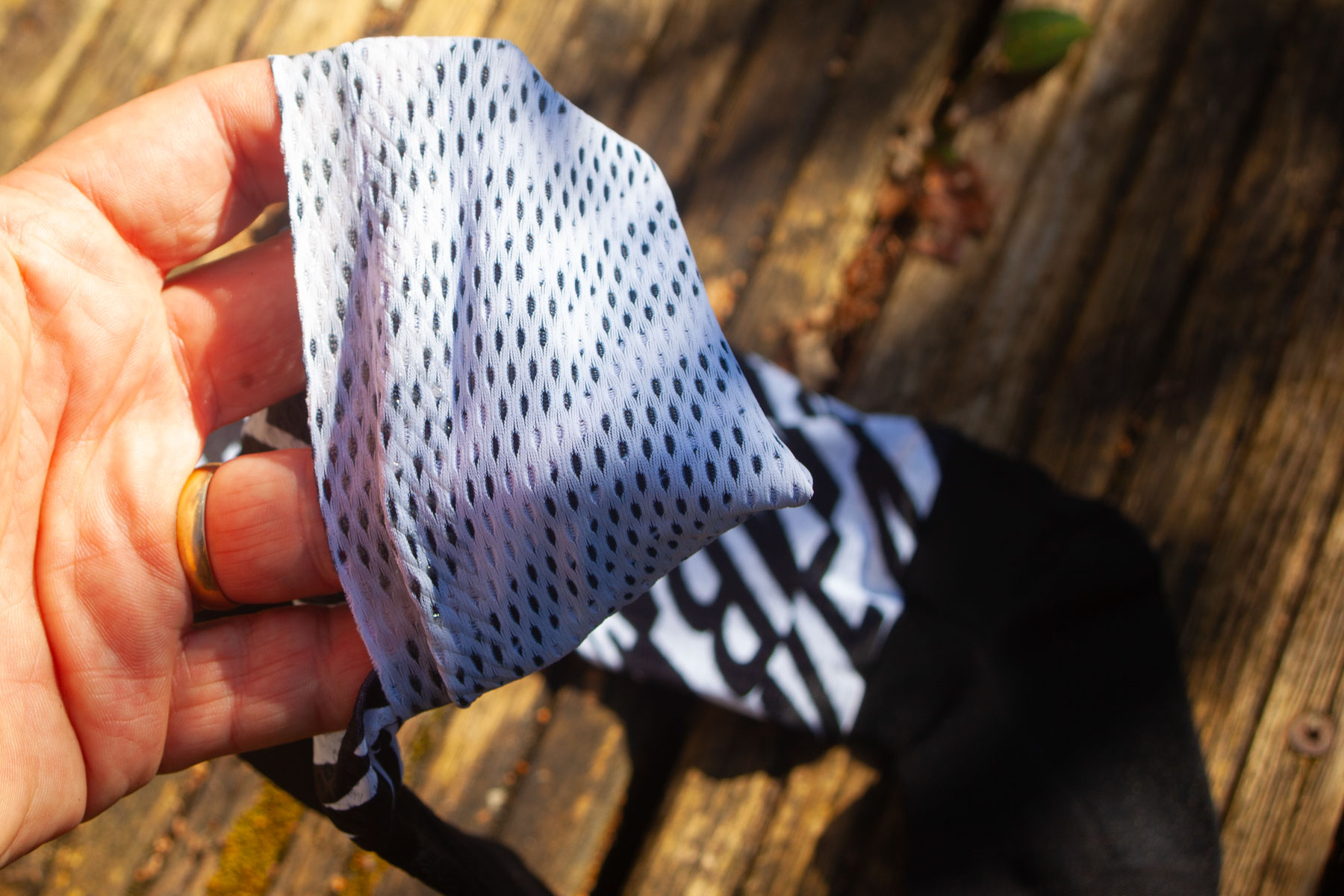
The Aero Dry follows the same design and size, but is made from an ultra-light, highly vented material for fast rides on hot days.
MB Wear’s Aero Dry upper has an ultra-light open breathable material. Warren Rossiter / Ourmedia
Graphene-infused
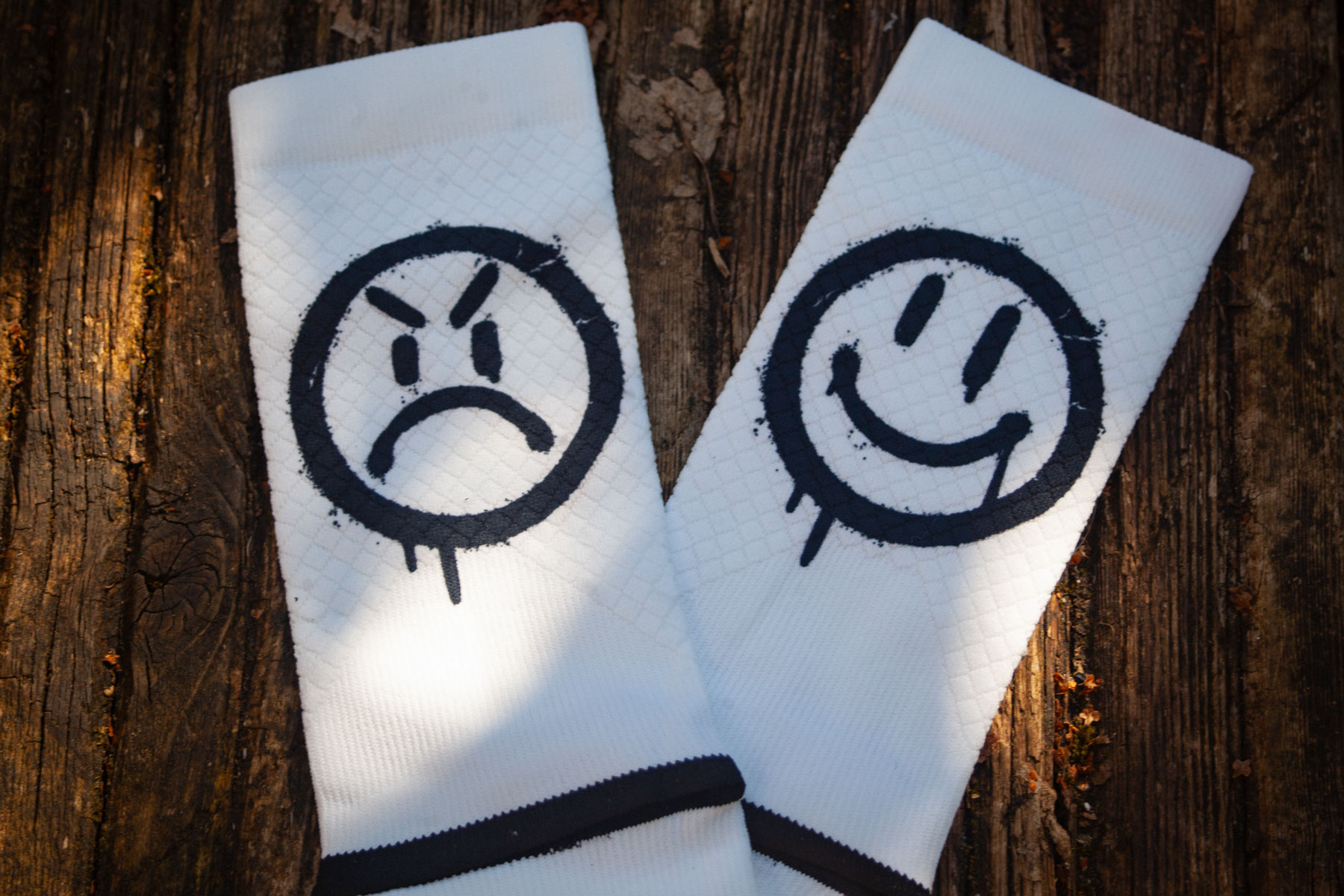
MB Wear’s Smile comes in some great designs. Warren Rossiter / Ourmedia
The Pro Graphene combines Q-Skin fabric with a graphene yarn. This makes for a hard-wearing yet lightweight second-skin fit that offers more protection than the classic Pro Specialis for £19.99 / €22.
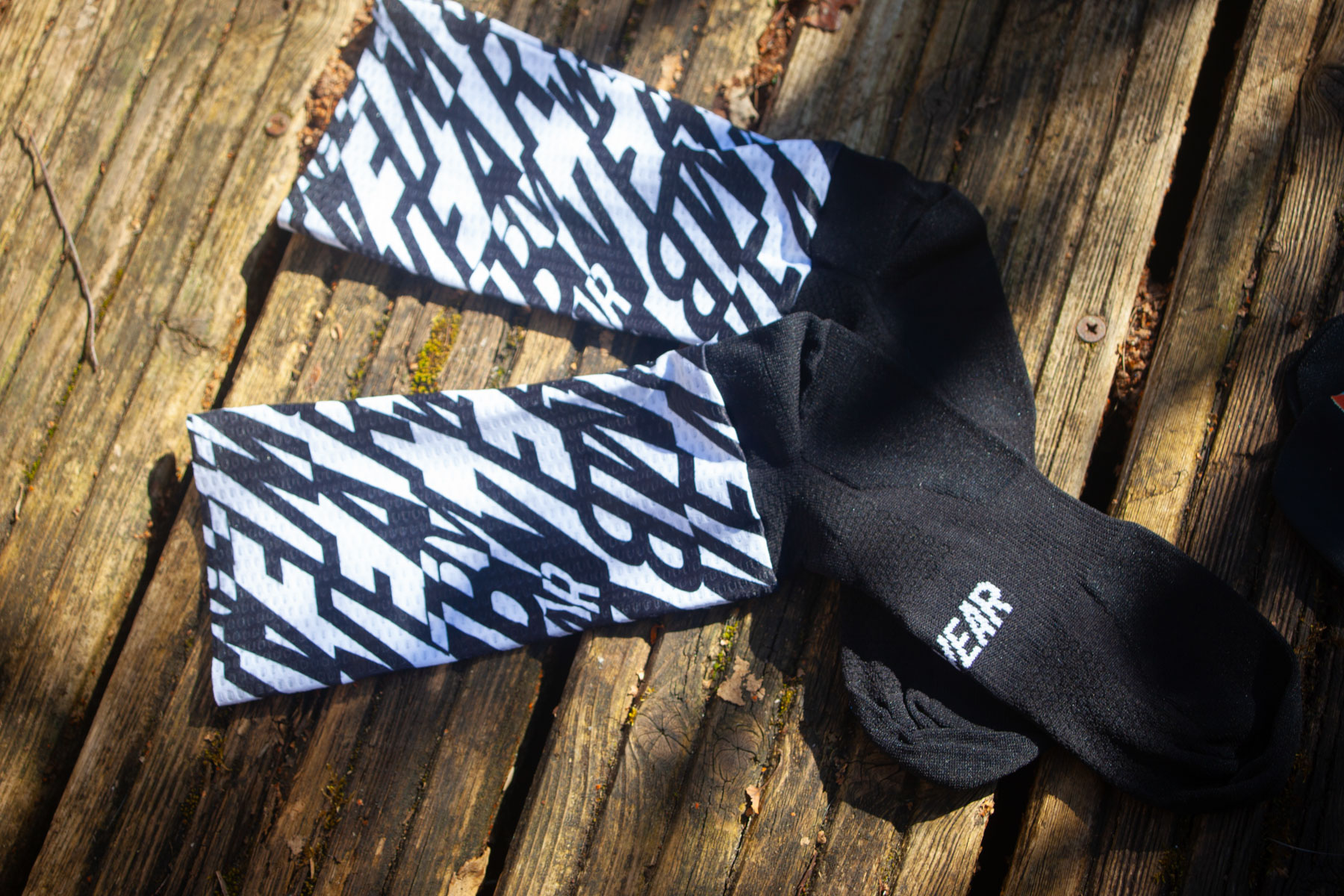
MB Wear’s Fun and Smile socks (£19.99 / €22) are made using Q-Skin’s lightweight breathable fabric that’s ideal for warmer days. With a myriad of colours and designs, these look likely to become my go-to summer option.
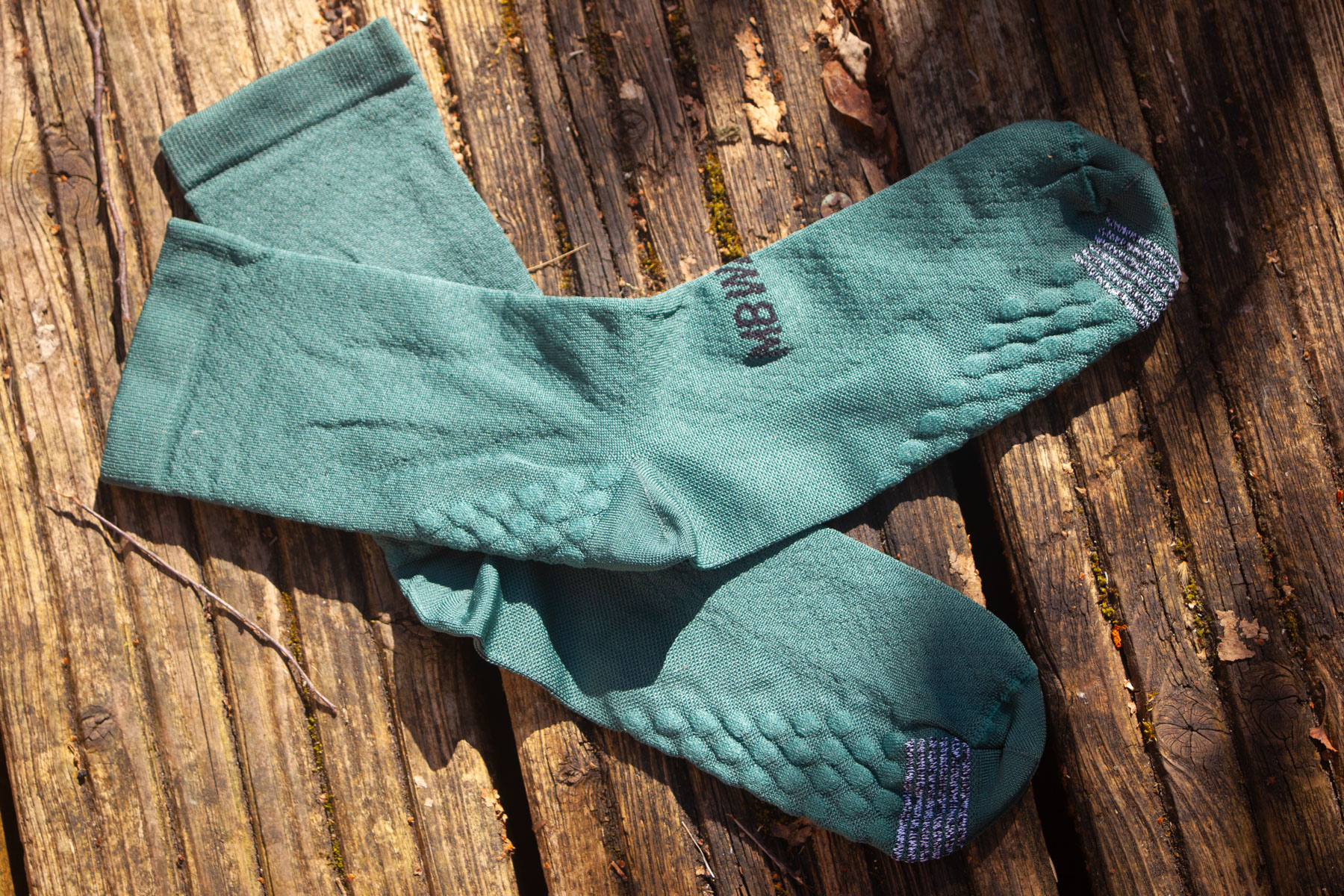
The Comfort sock is designed for gravel and off-road use. Warren Rossiter / Ourmedia
The Comfort sock (£16.99 / €18.90) uses a heavier-weight fabric on the sole, with a 3D-weave pattern that’s claimed to help cushion and support the plantar area and heel. MB says the Comfort is the ideal sock for off-road and gravel riding.
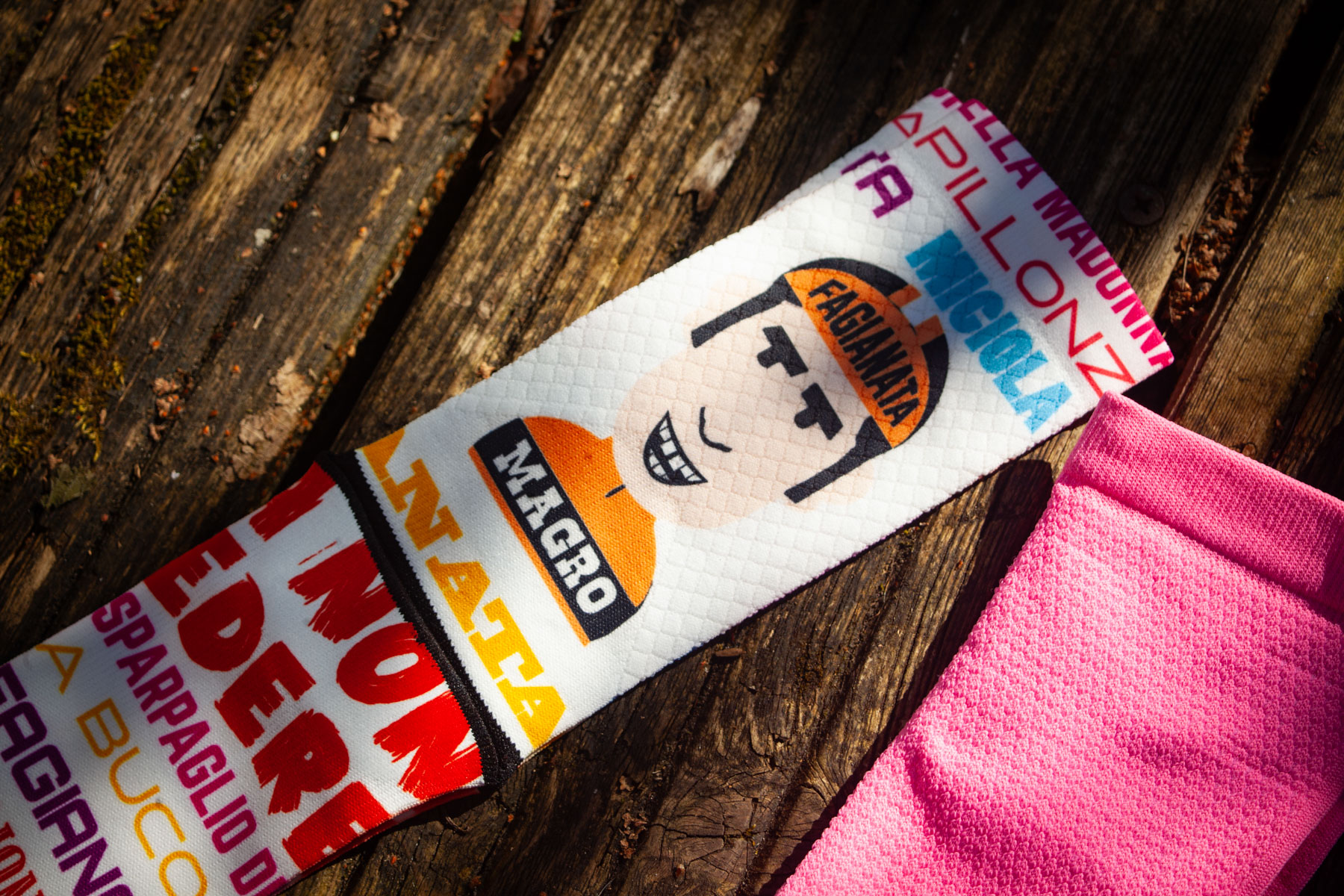
The Fun sock range comes in a wide range of designs. Warren Rossiter / Ourmedia
MB Wear also offers a Night sock with reflective yarns and fluro colours, a Sahara sock for the hottest conditions and the Siberia for – you guessed it – the coldest.
Raspberry Pi prices are going up yet again due to the continued memory squeeze on the industry. To help offset the memory prices for some use-cases, Raspberry Pi also announced the introduction of the Raspberry Pi 4 3GB model at $83 to help fill the void between the 2GB and 4GB options…
The GNOME Project released GNOME 49.5 today as the fourth point release of the latest GNOME 49 “Brescia” desktop environment series with more bug fixes and improvements.
Apertis v2026 is here, bringing a significantly modernized foundation for industrial embedded development. Based on Debian 13 (Trixie), this release delivers updated system libraries, development tools, compilers, and core services, alongside a new default Wayland compositor, a reworked SDK, and smarter packaging pipelines. The result is a more capable, maintainable platform designed to meet the long-term stability and security requirements of industrial products.
The chvt command is an essential Linux built-in utility to help you switch between different TTY screens (or virtual consoles) from the command line interface.