Reducing Europe’s Nuclear Energy Sector Was ‘Strategic Mistake’, EU Chief Says

An anonymous reader quotes a report from Reuters: Reducing Europe’s nuclear energy sector was a “strategic mistake,” European Commission chief Ursula von der Leyen said on Tuesday, as governments grapple with an energy crunch from the Iran war. Europe produced around a third of electricity from nuclear power in 1990 but that has fallen to 15%, she told an event in Paris, leaving it reliant on oil and gas imports whose prices have surged in recent days. Being “completely dependent on expensive and volatile imports” of fossil fuels puts Europe at a disadvantage to other regions, von der Leyen said in a speech. “This reduction in the share of nuclear was a choice. I believe that it was a strategic mistake for Europe to turn its back on a reliable, affordable source of low-emissions power.” The report notes that the EU does not directly fund nuclear energy projects because all 27 member states have not unanimously supported the technology. However, von der Leyen said the Commission plans to provide a 200-million-euro guarantee from the EU’s carbon market to help attract private investment in innovative nuclear technologies.


Read more of this story at Slashdot.

Disney+ gets its own time-sucking vertical video section

It’s not just the major social platforms that know how effective an endless scroll of short videos is at hijacking your dopamine system. Disney+ is adding Verts, a selection of short vertical clips you can scroll through to keep your brain chemistry happy when you are in the bathroom so inclined. The company says it’s a “dynamic feed” to help users “quickly find their next favorite watch,” letting you jump straight in to see the full movie or TV show the clip hails from. Not to mention the side benefit of elbowing out those social platforms, many of which use cut-down clips of Disney-owned content anyway.

Disney said it would be adding vertical video to its premiere streaming platform back in January, and it also launched Verts on the ESPN app last year. Today, it said the addition of vertical clips drove “additional engagement,” but neglected to mention by how much. It’s worth noting Disney’s not an outlier here — Netflix announced a similar pivot back in January as well. 

The company does say, however, that its recommendation engine has an “advanced algorithm” to ensure the clips are relevant to each user. Naturally, Disney is happy to lean on the century or more of content in its library, but also said Verts could broaden out to include “content from creators that reflects our fandoms.” Which you could (and should) take as a plan to at least try to put a tank or two on YouTube’s front lawn.

This article originally appeared on Engadget at https://www.engadget.com/entertainment/streaming/disney-gets-its-own-time-sucking-vertical-video-section-133308487.html?src=rss

This Massive 100-Inch Hisense TV Is $500 Off Right Now

We may earn a commission from links on this page. Deal pricing and availability subject to change after time of publication.

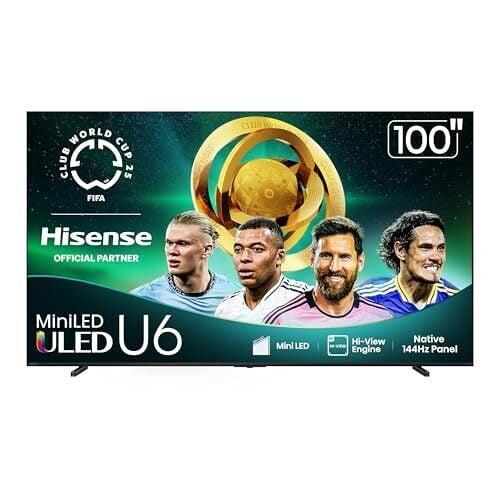
The Hisense U65QF in a massive 100-inch size is currently selling for $1,497.99 on Amazon, down from $1,997, and price trackers show this is the lowest it has reached so far. That price is notable for a screen this large, since 100-inch TVs often cost well over $2,000 even from budget brands. Reviews have also been encouraging. PCMag gave the TV an “outstanding” rating and named it the best budget TV of 2025. The U65QF replaces the earlier U6N, a model many buyers liked because it delivered solid picture quality without a premium price. This newer version builds on that reputation with a brighter panel and a faster refresh rate, which makes it more flexible whether you mainly watch movies, sports, or spend time gaming.

The U65QF is a mini-LED QLED TV with 4K resolution and reaches roughly 1,024 nits of brightness, which is higher than many TVs in this price range. That extra brightness helps HDR formats like Dolby Vision, HDR10, HDR10+, and HLG show stronger highlights and more depth in scenes with bright lights or sunlight. Colors look rich but generally stay natural instead of being overly saturated. That said, as with many mini-LED TVs, some blooming can appear around bright objects against dark backgrounds, but that trade-off is common at this price. Gaming performance is also stronger than you might expect for a budget model, with support for a 144Hz refresh rate, variable refresh rate, and AMD FreeSync Premium Pro. Plus, the measured input lag sits around 13.1 milliseconds at 4K60 and 4.6 milliseconds at 1080p120 (meaning it’s responsive enough for most console or PC gaming), notes this PCMag review. For connections, you get four HDMI ports, including two that support 4K at 144Hz, along with an eARC port for a soundbar or receiver.

One change people may notice immediately is the software. Instead of Google TV, this model runs Amazon’s Fire TV platform. The upside is access to nearly every major streaming service, including Netflix, Disney+, YouTube, Apple TV, and Prime Video, along with Apple AirPlay for streaming from iPhones or Macs. The downside is that while the interface works well, it tends to show a lot of recommendations and ads on the home screen. Alexa voice commands are available, but the TV does not include hands-free microphones, so you have to press the voice button on the remote to speak. None of that affects the picture quality, but it does slightly change the overall experience compared with earlier Hisense models.


Our Best Editor-Vetted Tech Deals Right Now

Deals are selected by our commerce team

Starfleet Academy is the best first season of as Star Trek show ever

The first season of a TV show is a tricky thing. It has to convince people to watch it and justify the show’s existence to the network (or streaming service) execs. It has to deal with actors and writers who may not have fully dialed into the characters and world yet. There are some shows with absolutely stellar first seasons — Stranger Things, Veronica Mars and Ted Lasso are a few — but many other hit shows stumbled out of the gate, like The Office and Supernatural.

Star Trek is not immune to this phenomenon. The Original Series had a decent first season, with classic episodes like “The City on the Edge of Forever.” But the next four shows all have rather weak beginnings, with even fan-favorite The Next Generation stumbling badly with episodes like “Code of Honor.” That show picked up in season three, beginning a trend called “Growing the Beard,” in reference to how Commander Riker’s new beard coincided with the uptick in quality.

This trend unfortunately continued into the current era, with 2017’s Star Trek: Discovery delivering a first season with an overwhelmingly dour tone and a lot of franchise changes that didn’t sit well with fans. The show made some tweaks in season two (including a change in setting that involved traveling 900 years into the future), and showed a lot of improvement with season three. Picard also floundered horribly, with an uneven first season that killed off some fan-favorite characters and also turned the title character into an android. 

Things started looking up after that, with shows like Strange New Worlds all posting strong outings with their first go-arounds. While episodes like “A Quality of Mercy” and “Lift Us Where Suffering Cannot Reach” may not make the list of all-time classics, there are no outright stinkers. It seemed like the franchise as a whole was finally finding its footing in this new streaming era.

Star Trek: Starfleet Academy
L-R: Tatiana Maslany as Anisha, Sandro Rosta as Caleb, Kerrice Brooks as SAM, Bella Shepard as Genesis, and George Hawkins as Darem in season 1, episode 9, of Star Trek: Starfleet Academy streaming on Paramount+.
Michael Gibson/Paramount+

That leads us to Starfleet Academy, which debuted in January on Paramount+. Prior to its premiere, the internet was full of people deriding it as “CW Trek” and declaring that they don’t want to watch a show about “teenyboppers” that wasn’t “real” Star Trek. Now that the show has finished its first season… the internet is still full of people complaining. But many folks who were wary of it at the beginning have been pleasantly surprised — every day there seems to be multiple posts on various Star Trek subreddits along the lines of “Starfleet Academy is actually good?!?” I personally didn’t enjoy the first episode, but episode two turned me around rather quickly, and it seemed that every week brought new converts.

Granted, 10 episodes is a short amount of time to make an impact, but Starfleet Academy did a lot with that number. Four of the episodes are dedicated to the ongoing villainy of Nus Braka, a murderous pirate played with scene-chewing delight by Paul Giamatti. These have all been pretty straightforward adventure stories, which also did a good job of fleshing out not only Braka, but cadet Caleb Mir, whose mother went to prison because of Braka.

The emphasis on Caleb in the first episode made it seem like the show would focus on him, much in the way Discovery focused on Michael Burnham, but he took a back seat as the show explored the other characters as well as its setting. Episode two, “Beta Test,” focused on diplomacy, a long-standing theme of Star Trek, and even shook up the status quo by moving the Federation headquarters from Earth to Betazed. 

Paul Giamatti as Nus Braka and Holly Hunter as Captain Nahla Ake in season 1, episode 6, of Star Trek: Starfleet Academy streaming on Paramount+.
Brooke Palmer/Paramount+

Episodes four and five were more personal stories, with “Vox in Excelso” focusing on soft boy Klingon character Jay-Den as well as the fate of his race in general after hundreds of years, while “Series Acclimation Mil” also gave us characterization of photonic being Sam along with some heartfelt fan service for the Deep Space Nine fandom. Sam would also shine once more in “The Life of the Stars,” an episode that dealt with trauma, but also (again) delivered fan service in a way that didn’t feel like pandering because of how it was used to develop not just Sam, but also the Doctor, a legacy character from Voyager.

It’s not that every episode in season one of Starfleet Academy is a masterpiece – “Vitus Reflux” and “Ko’Zeine” are somewhat weak – but none of them are outright bad, making the batting average of the season rather high. That bodes well for word-of-mouth, as it’s easier to recommend a show when you don’t have to couch it with excuses about how it gets good “eventually.”

It will need that word-of-mouth if it wants to get through a complete four seasons of schooling; season two just finished filming so we’re guaranteed at least that, but there’s a lot up in the air for not just the show, but the entire franchise. Strange New Worlds season four will debut later this year, and then we have an abbreviated season five to look forward to. But past that, nothing firm is on the horizon: Starfleet Academy hasn’t been renewed yet, and projects like the Tawny Newsome-helmed comedy show are still in development with nothing tangible revealed yet. 

Newsome played Beckett Mariner on Lower Decks and worked in the writers room for Starfleet Academy — she’s an example of how Paramount has been building up a roster of talent behind the scenes for the franchise who, even when a show is new, understand the universe and, more importantly, how to work together to make good TV. And that’s going to be important in the next year or so, as Paramount makes decisions about the future of the franchise in the shadow of the recent Skydance merger and the upcoming Warner Bros. purchase. Star Trek has an uphill battle ahead of it, but at least Starfleet Academy’s first season has made it an easier climb.

This article originally appeared on Engadget at https://www.engadget.com/entertainment/starfleet-academy-is-the-best-first-season-of-as-star-trek-show-ever-133000267.html?src=rss

Google’s GFiber internet business is merging with Astound Broadband

Google has announced that GFiber is merging with Astound Broadband, in an agreement that sees Astound’s parent company Stonepeak become the majority owner, with Alphabet retaining a minority stake.

No financial specifics were detailed in a press release, but the new combined business will be an independent provider led by GFiber’s executive team, who Google says will use its “expertise in high-speed fiber innovation to manage the combined network footprint.” Astound already serves over one million customers across the US, and by joining forces Google says the two providers will be able to grant better internet access to more communities.

GFiber, formerly known as Google Fiber, has been around for nearly 15 years, and currently offers speeds of up to 8Gbps on its $150/month Edge 8 Gig plan. A 20 Gig service was expected to leave early access later in 2026.

The fiber broadband service is part of Alphabet’s “Other Bets” portfolio, which also includes Waymo, Verily, and Wing, a combined segment that recorded an operating loss of $16.8 billion in 2025, CNBC reports. The company’s deal with Stonepeak is subject to regulatory approval and is expected to close in Q4 of this year.

This article originally appeared on Engadget at https://www.engadget.com/big-tech/googles-gfiber-internet-business-is-merging-with-astound-broadband-132832086.html?src=rss

Microsoft Abruptly Ends This Is An Xbox Campaign To Prepare For Future Hardware

Microsoft Abruptly Ends This Is An Xbox Campaign To Prepare For Future Hardware
In yet another sign that Microsoft is going all-in with its renewed focus on Xbox and the brand’s transformation back to its console roots, the controversial ‘This is an Xbox’ marketing campaign is being scrubbed from its website. It hasn’t entirely disappeared, but a visit to the blog post announcing the controversial campaign just 16 months

The Five Coolest Houseware Innovations I Saw at The Inspired Home Show’s ‘Inventors Corner’

We may earn a commission from links on this page.

Inventors are like musicians: The ones we can name are rich and famous, but the majority will never be known. While many new products can feel more like gimmicks than actually useful (TikToker Khaby Lame famously made a career out of making fun of silly “innovations”), I can’t help but root for a certain kind of inventor: The ones brave enough to have a small idea that has no chance of earning millions, but might improve lives in a small way. At The Inspired Home Show, I spoke with several inventors aiming to do just that.

What is The Inspired Home Show?

The Inspired Home Show, held in Chicago from March 10-12, is North America’s largest home and housewares event. The event is open to buyers from major retailers—think the kind of housewares and big-box stores where you might buy kitchenware, appliances, or cleaning tools—and to brands from around the world, who showcase their latest products and innovations. The show is held annually, and I attended this year as a new homeowner to see what’s coming to stores this year, and to learn more about the over 2,000 brands offering housewares, tools, and home tech.

What is the Inventors Corner?

The Inspired Home Show is divided into four showroom floors: “Clean + Contain,” “Dine + Decor,” “Wired + Well,” and “International Sourcing.” But a special area is set aside for the “Inventors Corner,” where a few dozen startups have narrow booths to display their niche houseware innovations that they hope catch on.

A crowd of people inside the Inventors Corner area at The Inspired Home Show

Credit: Jordan Calhoun/Lifehacker

There’s a pitchroom-style energy to the Inventors Corner. Separate from the established household brands like KitchenAid or Hamilton Beach, the Inventors Corner is two rows of warm and outgoing entrepreneurs—the underdogs and dreamers of the convention—standing in front of uniform, bespoke booths, all eager to share their innovation and convince buyers that it deserves to be the next big thing. Realistically, few of them will be successful, but I saw at least five innovations that were just cool, creative, or helpful enough that I can’t help but root for them.

The ErgoCup is a Global Innovation Awards finalist

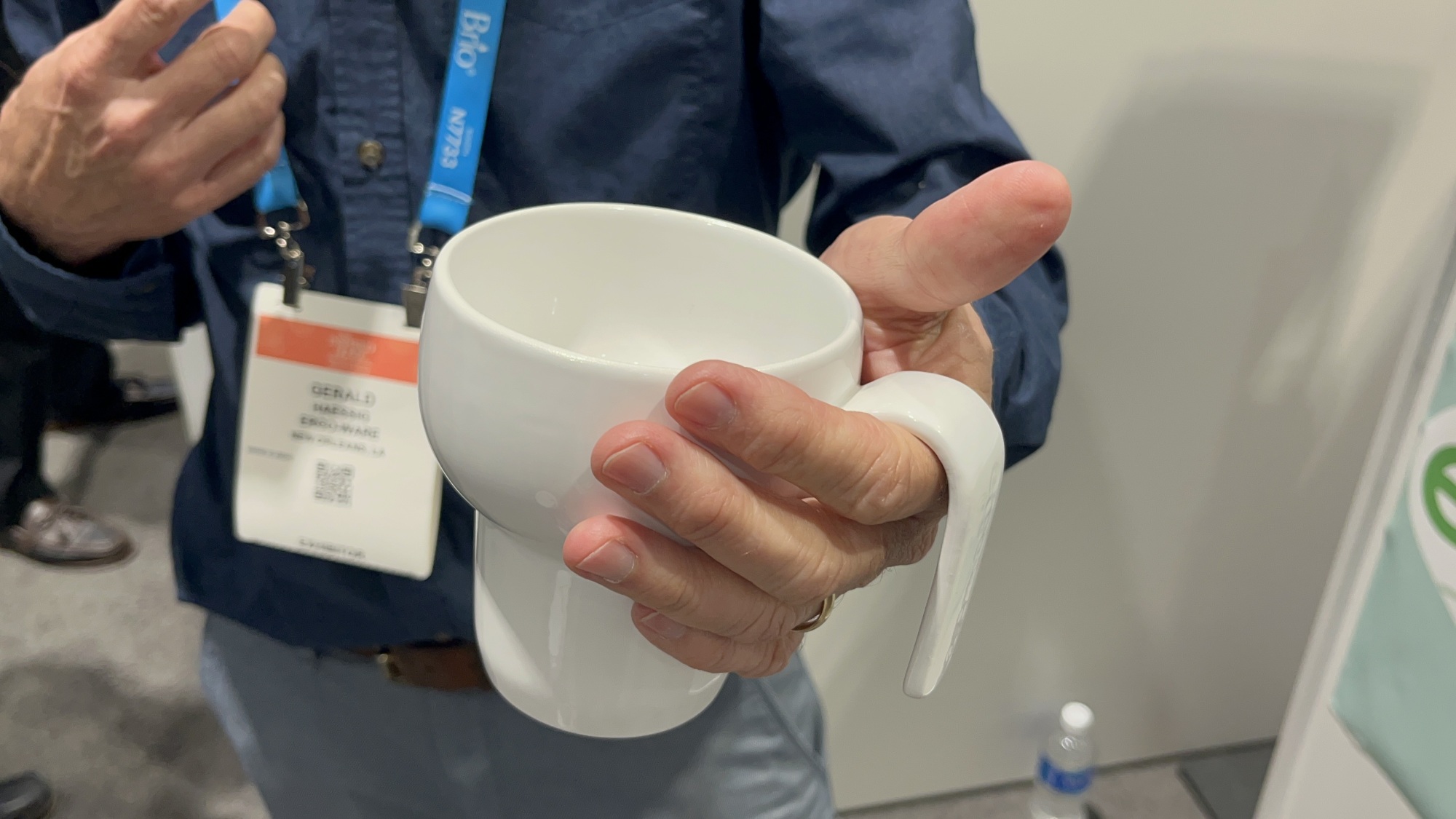
The ErgoCup is the kind of product where I tend to roll my eyes, wondering if anyone needs it. But when I met Gerald, the guy who handcrafts every ErgoCup one by one, I was holding a coffee, and he asked me to hold an ErgoCup instead. When I did, I had to admit that holding an ErgoCup felt good—a whole lot better than the mugs I have at home.

The ErgoCup is designed for people with hand mobility and gripping issues, but it’s also just a well-designed mug that feels easier to hold by basically eliminating the need for grip. It won’t be the type of product you find in stores soon—they’re handmade and not mass produced—but it’s the kind of unique craft item that feels special and makes people ask where you bought it. The ErgoCup is a finalist for the 2026 Global Innovation Awards for product design excellence.

Gerald Haessig, founder of ErgoWare, holding an ErgoCup

Credit: Jordan Calhoun/Lifehacker

The Geo ground-meat cooking tool is spatula-meets-potato-masher

The Geo is specifically made for ground beef (or ground meat, in general), allowing users to easily and evenly break up ground meat. It’s like a combination of a spatula, masher, and slotted spool, and it’s the type of tool you wouldn’t know you needed until you tried it. The Geo is another award finalist for its unique and useful design, and if you cook ground beef often enough, it’s worth considering giving it a try. It only costs $16.

Liddy is the first interlocking, stackable pot lid system

When I found Liddy, my first thought was that it surely existed long before now. My second thought was that I want to get one to replace the mess of pot and pan lids cluttering several of my cabinets and drawers. Liddy is marketed as the world’s first interlocking, stackable pot lid system, which can replace up to six mismatched pot lids (universal pan lids exist, but aren’t interlocking and stackable). It comes in two sizes, and its design allows it to fit on any standard pot or pan, and then it stows away neatly onto a space-saving base station for storage. They’re dishwasher-safe, they end the confusion of which-lid-goes-with-this-pot, and they cost only $50 to eliminate the clutter of pot and pan lids.

Alpha QuickFind is a customizable organization system

Alpha QuickFind is an organization solution for junk drawers: It’s a standalone drawer system meant to be a place to store miscellaneous items (think pens, batteries, office supplies, card decks, cables, loose change, and small tools), turning chaos into order. It’s basically the adult equivalent of having a fancy pencil organizer at school instead of a standard pencil case, and it’ll free your junk drawer to be used for something else. Granted, for $300, you might choose to keep your junk drawer.

My Snapboard is the first snackboard designed to keep charcuterie cold

My Snapboard is a freezable snackboard that keeps food cold while it’s on display. It’s smart in its simplicity: You simply pre-freeze the board before, say, a summer picnic, and its patented design will help retain the temperature keep your food cold despite the summer heat. If you’ve ever taken charcuterie to a park or hosted an outdoor outing, you likely learned how quickly spreads melt, vegetables wilt, and cheese turns spongy. My Snapboard is meant to be an easy fix for that. It costs $50 for the black-and-white version, or $60 for the fancier woodgrain.

Facing heavy losses, Honda cancels its three US-made electric vehicles

Last year, Honda gave Ars a tour of some of its manufacturing facilities in Ohio. The Anna Engine Plant and Marysville Auto Plant had undergone a transformation that added to their capabilities: a massive die cast operation to make electric vehicle battery packs alongside the lines that make engines at Anna, and a gleaming new section of Marysville filled with robots, ready to incorporate three new Honda and Acura EVs into the production mix alongside Accords and Integras.

Only now, they won’t. Earlier today, Honda announced that it’s facing heavy losses for the financial year: between $5.1 billion and $7 billion (820 billion–1.12 trillion yen). To help stanch the flow, it’s sacrificing the Honda 0 SUV, Honda 0 sedan, and the electric Acura RSX, EVs it revealed at CES last year in “nearly production” state.

Honda says there are several reasons for killing off its new EVs before they even reach the market. The first is extremely predictable: the ongoing chaos of the trade war and its tariffs, which have eaten into the profitability of the cars it imports into the US. A second is the US government’s revanchist decision to cease enforcing emissions and fuel economy standards on the auto industry. Although Honda says that “striving for carbon neutrality” is a “responsibility Honda… must fulfill for the future,” it seems that responsibility only applies when being forced by a government.

Read full article

Comments

Google Maps gets its biggest navigation redesign in a decade, plus more AI

Google Maps is one of the company’s core products, which means it hasn’t escaped the shift to Gemini. There will be more opportunities to converse with a robot in Google Maps starting today, but there’s also a new navigation experience on the way. The revamped navigation isn’t as explicitly focused on the AI revolution, but Google stresses Gemini is still key to making it work.

The latest AI shift in Maps is called Ask Maps, and you can probably guess what it does just from its title. Ask Maps is a Gemini-powered conversational system that can plan trips and answer complex questions about locations across the app’s millions of cataloged points of interest.

Ask Maps, Reservation

The new chatbot will be accessible via a button up near the search bar. You can ask it anything you’re likely to find in Google Maps without jumping into another app. You can ask for directions, of course, but it can also plan out road trips and vacations from a single prompt. Ask Maps works like a chatbot, so it accepts follow-up prompts to refine and expand on its suggestions.

Read full article

Comments

I Went to ‘The Inspired Home Show’ As a New Homeowner, and It Forever Changed How I’ll Shop

Your home has a style, but that style was decided for you long before you went into a store. Those decisions were made by buyers who attend shows like The Inspired Home Show, where popular brands from around the world showcase their latest housewares to retailers, who then stock those products in the stores we shop. As a new homeowner myself, I wanted to see what’s coming to stores, so I planned to attend The Inspired Home Show in Chicago from March 10-12. Suffice it to say, there’s a lot to see.

What is The Inspired Home Show?

The Inspired Home Show is organized by the International Housewares Association, a nonprofit trade organization committed to “maximizing the success of the home and housewares industry.” They host the show annually in March, with over 2,000 brands in attendance to showcase their products, network with buyers and tastemakers, and share the latest housewares trends and innovations. The trade show is broken into four categories: “Clean + Contain,” “Dine + Decor,” “Wired + Well,” and International Sourcing.

How attending a housewares expo changed the way I’ll shop

When I bought my first home in November, I began to realize how much discoverability played a role in what I put into my home. Much like how the tables at my local bookstore or the first page of search results that determine what I read, the stock at retailers like Walmart, Home Depot, or Target often shapes the possibilities for my kitchen’s function, the organization in my linen closet, and the appliances on my counter long before the thought crosses my mind. Admittedly, I don’t often care about those things—I rarely find the shelves of big-box stores lacking in options, let alone online shopping as a whole—but I chose to approach the expo with the imagination of a fantasy draft night. Stores are making picks, but what if I don’t like their choices? Being more aware of brands and their products allows me to make my own.

Being aware of brands, products, and sales is generally part of my job, but as a tech-focused brand, my attention leans far more toward Apple, Google, and Microsoft than toward Dreo, Carote, and Vacane. The prevalence of online shopping for tech makes my options for the best tablets, fitness trackers, and digital notebooks feel meaningful. But since becoming a homeowner, I’ve come to realize the prevalence of housewares and home tech is just as broad, only its options are much less known. The more I learned to view housewares, tools, and home tech as a spectrum of countless brands, the more I want to be able to separate the wheat from the chaff.

The housewares market is full of cheap, low-quality crap, and for most of my life, I furnished my apartments with kitchenware, appliances, and cleaning tools as inexpensively as possible. Much of that was due to financial constraints, which I understand only too well. I rolled my eyes when I was told that “there’s nothing more expensive than cheap shoes” when cheap shoes were all I could afford. But my habit of buying cheap housewares persisted for two reasons: a resistance to consumer manipulation (I still remember the first infomercial product I bought as a teen that turned out to be junk), and the belief that housewares brands were all the same.

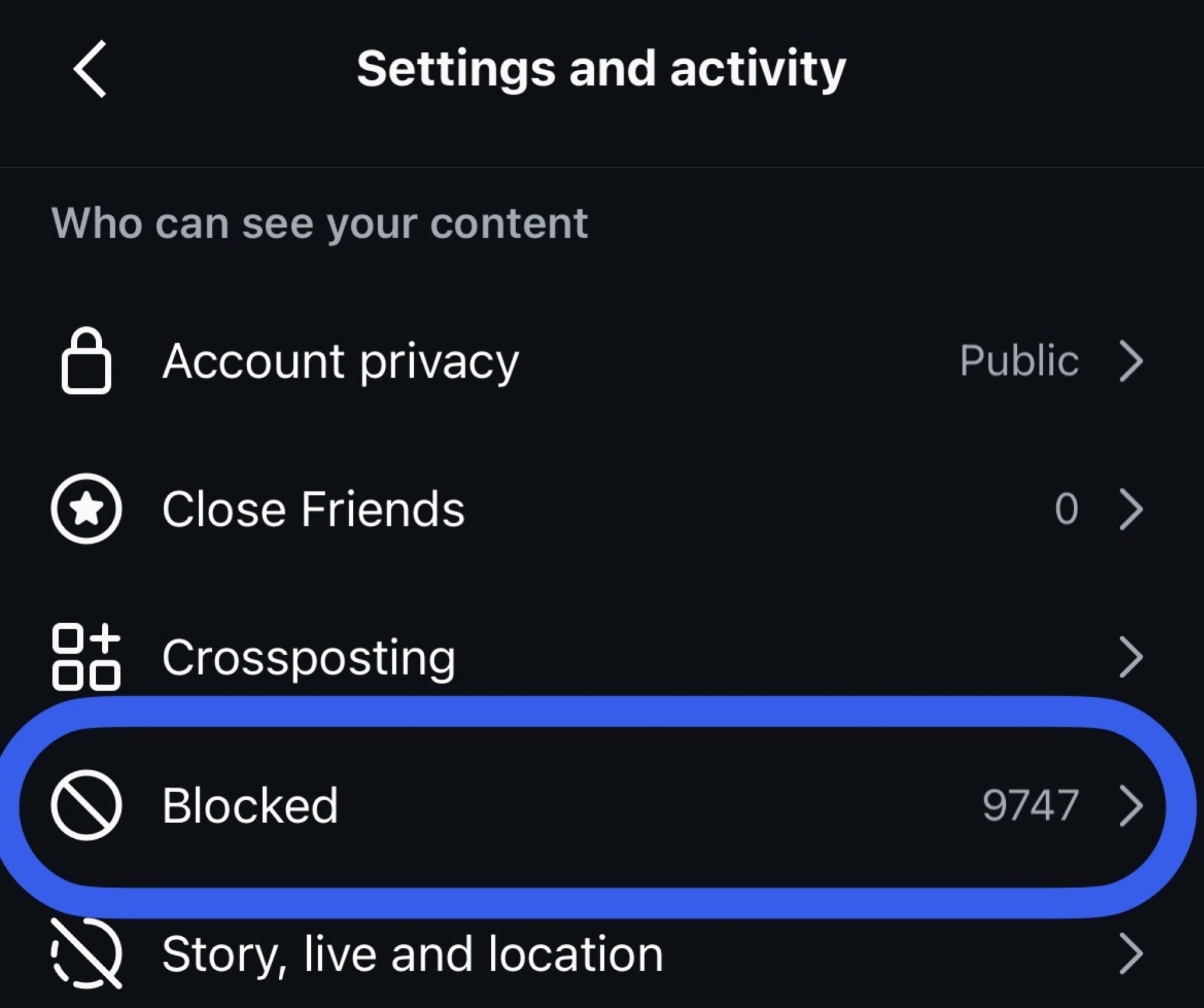
The first of those reasons remains. I religiously use ad blockers online, snooze algorithmic suggestions on social media, and block brands on Instagram. To date, I have nearly 10,000 accounts blocked on Instagram alone, where I manually block every account that tries to sell me a product I don’t need.

The "Settings and activity" menu on Instagram, highlighting 9,747 accounts blocked

Credit: Jordan Calhoun

But the belief that all housewares brands are the same has fallen apart, and walking the showroom floor at a convention dedicated to the industry’s evolution reminds me just how much thought goes into an industry I once easily ignored.

Check out the 2026 Global Innovation Awards winners

Of course, not everyone can attend trade shows, especially ones closed to the public. And while your own brand opinions may come from personal trial and error, word of mouth, YouTubers, or online forums, I hope to include more home-related expos and conventions in the mix. Only when we know what’s available can we make more informed choices of our own, directly from the companies we trust, rather than limiting ourselves to store shelves. To that end, take a look at the winners of the International Housewares Association’s 2026 Global Innovation Awards. You can also check out my experience at the Inventors Corner, where 32 smaller brands share their niche houseware innovations that they hope catch on. Finally, you can stay tuned for the coolest brands I saw at The Home Innovation Show by subscribing to our Home & Garden newsletter, Smarter Home & Living.

Google Maps brings a 3D map to your driving directions

In recent weeks, Google has been busy adding AI features to all of its most popular apps. Following Gmail and Chrome, Maps is now the latest service to get a Gemini makeover, with a redesign of the driving experience headlining the update.       

Google is billing the new “Immersive Navigation” mode as the most significant update to driving directions in Maps in about a decade. Now instead of displaying a 2D map of the area around your car, Maps will render the surroundings in 3D. Google believes this transformation will make it easier for drivers to orient themselves, with the new view giving greater depth to nearby landmarks like buildings and overpasses. 

Behind the scenes, the company’s Gemini models power the experience, deciding how to render elements to remove distractions. Pulling information from Google’s Street View database and aerial photos, Google says its models are also smart enough to know when to highlight road elements like crosswalks, traffic lights and stop signs to ensure you don’t miss an off ramp or important turn. At the same time, Google has made the voice guidance in Maps sound more natural. For instance, when you’re driving along the highway, looking for where you need to get off, the voice assistant will say something along the lines of “go past this exit and take the next one.” I imagine this will be especially helpful when driving in a foreign country with unfamiliar road names. 

The new intelligence Google has built into the redesigned navigation experience extends to alternative routes. Now, when the app suggests taking a different way of getting somewhere, it will detail the associated tradeoffs with that route. For example, it might tell you it might take longer to travel but you’ll encounter less traffic along the way. Before you start your journey, Maps will now also provide a Street View preview of your destination and recommend where to park.     

This being a new release in Google’s self-proclaimed Gemini era, the company has naturally found a way to add its chatbot to Maps. Inside the app, you’ll find a new icon labelled Ask Maps. Tap the icon, write a natural language prompt and Gemini will use all the information contained within Maps to craft a response. 

Google is pitching the feature as a way to get information no traditional map can provide. For example, you could ask Gemini to find you a place where you can charge your phone and grab a cup of coffee, all without having to wait a long time in line. Google suggests finding the answer to a specific question like that would have previously required sifting through countless reviews. Not so anymore. The results Gemini produces through Ask Maps will contain personalized results based on places you searched for and saved in the past. You can also act on any recommendations Gemini surfaces, making it easy to book restaurants, save locations and more.

Google is starting to roll out the new immersive driving experience today in the US, with availability to expand over the coming months to Android and iOS devices, as well as CarPlay, Android Auto and cars with Google built-in. Ask Maps, meanwhile, is rolling out to Android and iOS devices in the US and India, with desktop support coming soon.

This article originally appeared on Engadget at https://www.engadget.com/ai/google-maps-brings-a-3d-map-to-your-driving-directions-123000843.html?src=rss

JBL’s two new Live headphones offer 80 hours of battery each

JBL just released two new pairs of headphones in its pre-existing Live line. There’s the over-ear Live 780NC and the on-ear Live 680NC.

Both sets of headphones have similar specs, despite the difference in design. The biggest news here is likely the battery life. They max out at 80 hours per charge with regular use, which is a fantastic metric. This shrinks to 50 hours when using ANC, but that’s still fairly remarkable. We truly live in a golden age of wireless headphone batteries.

JBL’s new headphones can also fully charge in just two hours, which is nice. They also offer the option for multi-point connections. There are two dedicated microphones for phone calls, with clarity assisted by an AI algorithm.

Some green headphones.
JBL

Both can stream high resolution audio via Bluetooth or a wired connection. The models even look similar, with availability in the same seven colorways. The 680NC, however, is slightly lighter.

There is one major difference between the two. The 780NC includes six microphones for ANC, while the 680NC features four. This likely means that ANC performance will be better with the former, which will be assisted by the design itself. Over-ear headphones offer passive noise isolation.

Those extra microphones do boost the price up a bit. The JBL 780NC headphones cost $250, while the JBL 680NC headphones cost $160. Both are available for purchase right now, with shipments going out by March 15.

This article originally appeared on Engadget at https://www.engadget.com/audio/headphones/jbls-two-new-live-headphones-offer-80-hours-of-battery-each-120044416.html?src=rss

Why Sweating a Ton Doesn’t Mean You Got a Good Workout

Let me introduce you to your good friend, sweat. Ignore the gross feel and the potential for B.O. for the moment, and think about what it does for you: When your body gets too hot, threatening to raise your core temperature over what’s healthy, little glands in your skin squeeze drops of moisture onto its surface. As soon as a breeze hits those droplets, they evaporate, taking some of your body heat away with them.

This is true even during exercise. It’s not the exercise that makes you sweat; exercise just raises your body heat, and it’s the heat that makes you sweat. That’s why you sweat without exercising on a hot day, and why you can sometimes exercise without sweating in a cold environment. In other words, sweat means a lot less than you might think. Sweating doesn’t mean you’re getting a good workout, doesn’t mean you’re losing weight, and it doesn’t tell you much about your fitness level. Let me explain.

You can get a great workout even if you don’t sweat very much

At the same ambient temperature, a harder workout might result in more body heat, so we’ve built up an association between sweating and working hard. It’s deceptive, though.

If you go for an hour-long run in the heat, you’ll sweat buckets. Run an hour on a treadmill at room temperature, and you may not sweat quite as much, but you’ll still be dripping. Go and run an hour in the winter, though, and you’ll barely be damp. That’s because your body doesn’t have to worry about cooling itself down.

Besides the ambient temperature, there’s another factor here: Not all workouts raise your body temperature equally. A heavy strength training workout, with plenty of rest time, may not raise your body temperature enough to make you sweat very much. That doesn’t make it a less-intense workout than, say, an easy jog. So don’t read too much into the amount you sweat.

Why do some people sweat more than others?

One of the biggest differences between people who sweat a lot and those who sweat less is body size. And by “size” I literally mean that—it doesn’t matter whether you’re fat, muscular, tall, or some combination thereof. The more of you there is, the harder your skin has to work to cool you down, and thus the more you sweat.

And then there’s the relationship between surface area and volume. The more skin you have relative to your body size, the more efficiently sweat can cool you. That means smaller people, including children, have a higher surface-area-to-volume ratio, so they can cool down with less sweat. If you lose a substantial amount of weight, you may end up sweating (slightly) less for these reasons. You have less body mass, and your surface-to-volume ratio improves a bit.

On the flip side, the fitter you are, the more you might sweat, as research suggests runners’ bodies turn on the sweat glands sooner than sedentary people, and that they sweat more during the same workout. So sweating more doesn’t mean you’re out of shape; it can mean you’re actually fitter and better adapted to the heat than people who sweat less.

Finally, if you feel like you’re the biggest sweater in your friend group, look at whether you’re actually doing appropriate comparisons. If you’re dripping when you run in the noonday sun and you see your friend post a selfie from the air-conditioned gym, you shouldn’t expect the two of you to sweat the same amount.

What’s the connection between sweat and weight loss?

Sweating a lot during a workout does not mean you’re losing fat, so let’s bust that myth right there. Sweating a lot can make you lose water weight, though, which is only temporary.

Our bodies contain a certain amount of water in our blood and in the various cells and compartments we’re made of. We can lose a little bit of it, become slightly dehydrated, and barely notice. Or we can drink a ton of water and become very hydrated, and have to pee a lot to get back to a normal level. In extreme cases, we can get so dehydrated it threatens our health, but that’s rare with normal activities.

When you sweat, and that sweat evaporates or gets rubbed off (you mop your brow with a towel, let’s say), that’s water leaving your body. You can actually weigh yourself before and after a workout and notice a change in weight if you sweat enough. Every pound of weight you lose is two cups (16 ounces) of water that has left your body. So technically you “lost weight,” but it wasn’t fat. You’re just due to drink two cups of water, and then you’ll be hydrated and happy again.