
Mike Blumenkrantz of Valve’s Linux graphics driver team has landed support for mesh shaders within Mesa’s LLVMpipe software driver…
Monthly Archives: March 2026
GNOME OS Switches To KMSCON Enabled By Default
GNOME OS as the Linux-based OSTree-using distribution that serves as the leading-edge, reference platform of GNOME desktop development is now using KMSCON by default…
What to Expect from Krita Digital Painting App in 2026
Krita developers outline their 2026 roadmap, focusing on a mobile-friendly interface, faster performance, improved color management, and a potential new file format.
FOSS Force’s Top Five Articles — For the Week Ending March 13, 2026
Did you miss this week’s top articles? Here are the five most read article on FOSS Force for the week that just ended.
The post FOSS Force’s Top Five Articles — For the Week Ending March 13, 2026 appeared first on FOSS Force.
Staff complain that xAI is flailing because of constant upheaval
Elon Musk has ordered another round of job cuts at xAI after growing frustrated with the poor performance of its coding product, forcing out several more cofounders and parachuting in “fixers” from SpaceX and Tesla to audit the startup.
The latest overhaul of the 2-year-old startup follows the success of Anthropic and OpenAI, whose AI coding tools have shaken up the software industry, multiple people familiar with the decisions said.
Musk has dialled up the pressure after merging SpaceX with xAI in a $1.25 billion deal, as he attempts to meet a June deadline for what could be the biggest stock market listing in history. The world’s richest man has said his goals are to launch AI data centers into space, build factories on the Moon, and colonize Mars.
Two Long-Lost Episodes of ‘Doctor Who’ Found
Longtime Slashdot reader tsuliga writes: Two new episodes of Doctor Who that were previously lost have been found. The original Doctor Who episodes were wiped or deleted by the BBC because they were not aware of the future use of re-runs of these shows. Ninety-five of the 253 episodes from the program’s first six years are currently missing. How many more episodes are out there waiting to be rediscovered? “The main broadcasters in the UK in the 1960s, 70s, up to the 80s really, junked quite a lot of content,” said Justin Smith, a cinema professor at England’s De Montfort University and film archivist. “In some ways finding missing ‘Doctor Whos’ is the holy grail” of classic TV discoveries, Smith said.
The two episodes were “The Nightmare Begins” and “Devil’s Planet,” both of which aired during the show’s third series in 1965. It features William Hartnell as the Doctor in a story involving archvillains the Daleks — pepperpot-shaped metal aggressors whose favorite word is “Exterminate!” Smith said that for fans of the show, “it’s got it all, it really has. It is intergalactic, it’s got some great performances. It stands up really, really well.”


Read more of this story at Slashdot.
After years of being stood up, ARM64 Linux users finally get Chrome date
Someone, somewhere, ticked a box on a build farm. The wait is overChrome is finally coming to ARM64 Linux devices, years after it turned up on macOS and Windows on Arm.…
NVIDIA 595.44.03 Linux Driver Released With VK_KHR_device_address_commands
Less than a week after their prior NVIDIA Vulkan beta driver in the R595 driver series, today NVIDIA released another new Vulkan beta driver for Linux and Windows systems…
Nanny state discovers Linux, demands it check kids’ IDs before booting
Age-verification laws target operating systems because apparently teenagers having root access is now a safeguarding crisisOpinion A new wave of age verification laws requires kids and teenagers to register before they can use a computer.…
ChatGPT, Other Chatbots Approved For Official Use In the Senate
An anonymous reader quotes a report from the New York Times: A top Senate administrator on Monday gave aides the green light to use three artificial intelligence chatbots for official work, a reflection of how widespread the use of the products has become in workplaces around the globe. The chief information officer for the Senate sergeant-at-arms, who oversees the chamber’s computers as well as security, said in a one-page memo reviewed by The New York Times that aides could use Google’s Gemini chat, OpenAI’s ChatGPT or Microsoft Copilot, which is already integrated into Senate platforms.
Copilot “can help with routine Senate work, including drafting and editing documents, summarizing information, preparing talking points and briefing material, and conducting research and analysis,” the memo said. The document later added that “data shared with Copilot Chat stays within the secure Microsoft 365 Government environment and is protected by the same controls that safeguard other Senate data.” It’s unclear how widely AI is used in the Senate or how widespread it might become, as individual offices and committees set their own rules. The chamber has also not publicly released comprehensive guidance on chatbots, the report notes.
In contrast, the House has clearer policies allowing the general use of AI for limited internal tasks but restricting it from sensitive data or for being used for deepfakes and certain decision-making activities.


Read more of this story at Slashdot.
KDE Frameworks 6.24 Improves Support for Plasma and Kirigami-Based Apps
The KDE Project released today KDE Frameworks 6.24 as the monthly update to this collection of more than 80 add-on libraries to Qt and a companion to the KDE Plasma desktop environment and KDE Gear software suite.
NASA officials sidestepped questions on Artemis II risks—there’s a reason why
When talking about risk during a press conference on Thursday, the NASA officials in charge of the upcoming Artemis II Moon mission hedged their answers.
Reporters’ questions on the risks were certainly valid and appropriate. In an open society, it is vital to set expectations for any hazardous venture such as spaceflight—most importantly for the astronauts actually making the journey, but also for NASA’s workforce, the White House, lawmakers, and members of the public paying for the endeavor.
What’s more, Artemis II will be the first mission since 1972 to fly humans to the vicinity of the Moon. This is not following the well-trodden yet perilous path that astronauts take to reach the International Space Station, just a few hundred miles above Earth.
Woman sneezes out maggots after fly larvae get trapped in her deviated septum
A 58-year-old woman in Greece appears to hold the record for growing a parasitic sheep bot fly in her nose the longest, almost creating a snot rocket that could literally fly.
Usually, when the sheep bot fly accidentally nosedives into a human’s schnoz, the first-stage larvae they deliver don’t actually develop. In contrast, in its normal target—a sheep’s nose—the larvae would move up into the sinuses, feed, grow, and molt into second- and third-stage larvae. From there, the flies (Oestrus ovis) drip from the nose onto the ground, burrow into the soil, pupate, and emerge as adult flies.
For a long time, experts thought that the flies couldn’t complete their development in humans beyond the first larval stage. But a few human cases have been reported in recent decades involving the second- and third-stage larvae. The woman’s case, reported in the Journal of Emerging Infectious Diseases by a medical entomologist and colleagues, goes the furthest yet, finding pupa and a puparium—the hard casing of a pupa—in the woman’s nose.
Meta Ray-Ban Display Major OS Update Brings Widgets, Minigames & New Features
Meta Ray-Ban Display’s first major OS update is rolling out this month, bringing a new app, two new minigames, a widgets system, and more.
The $800 HUD glasses became available to purchase in the US, for those able to secure an in-person demo slot at physical retailers at least, back in October. And in early January, Meta added a Teleprompter app and started rolling out an early access feature allowing you to finger-swipe letters to enter text, detected by the Meta Neural Band. But beyond this, the OS itself remained unchanged.
Meta Rolls Out Neural Band Handwriting Recognition, Delays International Plan
Meta paused the international rollout for Display glasses with Neural Band while handwriting recognition begins in the United States.
 UploadVRIan Hamilton
This month, Meta is rolling out what’s arguably the first major OS update – though notably the OS does not yet have an official publicly disclosed name.
The update brings, two new EMG-controlled minigames, an Instagram Reels feed, widgets, a Calendar app, live captions for phone calls, and more.
New Minigames: GOAT & 2048
Meta Ray-Ban Display shipped with one minigame: Hypertrail. In Hypertrail, you use the Meta Neural Band directional finger swipe gestures to slide a ball on a very simple top-down 2D level left, right, up, or down, with the ball sliding until it hits a wall – or enemy – each time. The enemies follow a looping movement path, and the goal is to guide a ball to the victory point for each level. It’s broadly similar to the smartphone game Tomb of the Mask, though much more basic.
With the new OS update, two new games have been added, GOAT and 2048.
0:00
/0:45
GOAT and 2048 on Meta Ray-Ban Display.
GOAT is essentially a simplified version of the famous smartphone game Doodle Jump. You tap your index finger to your thumb to make the goat jump, and swipe left or right to move, with the goal of getting as high as possible without falling off platforms. The basic platforms just move left to right, while harder ones will crumble within seconds of being landed on, and some provide a vertical boost. All very familiar, if you’ve played Doodle Jump before.
Meanwhile, 2048 is a port of the popular free and open-source puzzle game, wherein you slide numbered tiles to combine them with the goal of making the number 2048.
Instagram Reels
Since launch, the Instagram app on Meta Ray-Ban Display has presented a list of your ten most recent direct message threads. Within these, you could watch received Reels.
With the new OS update, the Instagram app opens to the same kind of Reels feed you get in the center tab of the Instagram smartphone app, or the Horizon OS app.
You scroll Reels by swiping your thumb down against the side of your index finger, and you can double tap your index finger to your thumb to like the Reel, or tap once to open a menu where you can send it to a friend.
You can still access your direct message threads by performing the back gesture.
Widgets & Live Activity Space
Arguably the most significant change to the OS structure itself is the addition of widgets.
As we described in our review, the interface has three main tabs:
• The center home tab (the default) shows the date and time, your notifications, and a Meta AI button, with tiny shortcuts to active audio or navigation at the top.
• The right tab is the two-column applet library: WhatsApp, Instagram, Messenger, Messages, Calls, Camera, Music, Photos, Captions, Maps, Tutorials, and a game called Hypertrail. Four rows are shown at a time, and you navigate vertically to see the rest.
• The left tab features quick controls and settings like volume, brightness, Do Not Disturb, as well as shortcuts to Captions, Camera, and Music.
The new widgets appear not as a fourth horizontal tab, but instead as a new space vertically above the center tab.
Right now there are four widgets: Reminders, Calendar events, Weather, and Stocks. They’re visually similar to what you’d get on other operating systems with widgets, such as smart watches and smartphones.
Live activities such as playing music and navigation also appear in this new top vertical space.
Calendar App
Since August, Meta AI on all Ray-Ban and Oakley smart glasses has been able to access your Google Calendar and Outlook Calendar, if you connect it, meaning the assistant can verbally provide answers about your events and schedule, as well as add new events when you ask.
Meta AI On The Ray-Ban Glasses Can Now Access Your Calendar
Meta AI on Ray-Ban and Oakley smart glasses can now access and add events to your Google Calendar and Outlook Calendar.
 UploadVRDavid Heaney
With the new OS update for Meta Ray-Ban Display, there’s now a dedicated Calendar app in the HUD to privately visually view your schedules and the details of events.
Phone Call Live Captions
Since launch, Meta Ray-Ban Display has been able to show live captions for the person you’re looking at in the physical world, and even to translate between English, Spanish, French, or Italian.
With the new update, you can also enable live captions for the incoming audio on phone calls. This could be helpful if you’re in a noisy environment where it’s difficult to hear the other person.
Spotify “Soundtrack Your World”
Meta and Spotify have partnered to deliver a feature wherein Meta AI picks a matching song based on what you’re currently looking at in the real world.
You can trigger the Soundtrack feature by saying “Hey Meta, play a song to match this view”.
Meta says you can look at any scene, such as a sunset, album cover or concert poster.
Slay the Spire 2 is a bit too familiar for its own good
Do you remember the joyful satisfaction you felt when you really started to understand Slay the Spire?
This isn’t a totally rhetorical question. If you’re reading this piece about Slay the Spire 2—published roughly a week into what promises to be a lengthy Early Access period—I have to assume you’ve put in dozens, if not hundreds (or thousands?) of hours with the original Slay the Spire. At this point, the game probably feels less like a game and more like a comfortable old pair of sneakers. You probably have a favorite character, a preferred set of card synergies to focus on building for that character, and a set of alternative strategies to aim for when the vagaries of chance make that preferred strategy impossible. The game’s plentiful randomization makes each run feel a bit different, but the contours of those runs start to feel a little common to anyone who has tinkered with the game for years.
But think back, if you can, to when Slay the Spire was an exciting new challenge. Remember those first few runs, when you were still deep in the trial-and-error phase of your Slay the Spire journey. You still had to read each new card carefully as it appeared, developing potential strategies on the fly and weighing key deckbuilding and power-building decisions for minutes at a time to maximize your chance of survival. Sure, you failed a lot. But you got a little more confident each time and a little farther every few sessions and just a little more knowledgeable about and immersed in the game’s intricate, well-balanced systems.
Arc Raiders Has Started Replacing AI Voices With Human Ones Which CEO Admits Are Better

Embark’s CEO says ‘most’ of the in-game voice lines are now recorded by real actors
debauit Announced As Debian Source Package Auditor
Announced today was debaudit, a new set of tools and services designed to verify the integrity and reproducibility of Debian source packages…
Let Them Eat Skins: Fortnite Players Are Calling For A Boycott Over V-Buck Price Hikes

No one’s buying Epic’s defense of shrinkflation
Google Chrome Is Finally Getting Native ARM64 Support On Linux
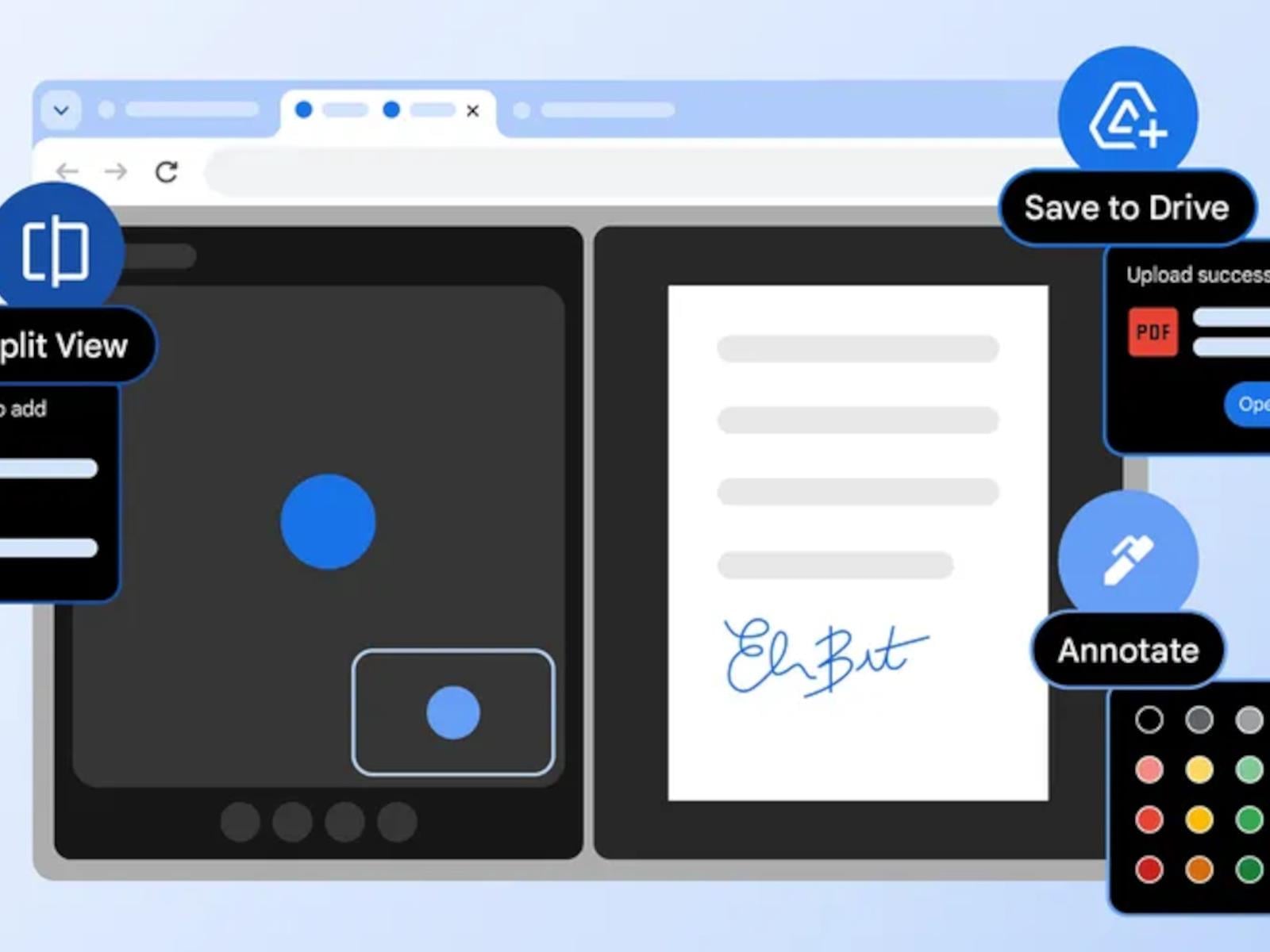
In a welcome move, Google is providing mainline Chrome browser support for ARM64 Linux distros. While Chrome already supports ARM64 and Linux to some degree via Android and Chromebooks, mainline ARM64 support has been limited to workarounds or using the open-source Chromium browser. While Chromium and FireFox are likely to remain the most
Pokopia Fans Are Making Other Pokémon Games’ Iconic Landmarks

The Mystery Dungeon series lives on in Pokopia players’ islands